YouTube AI - 2026-10-12
1. What People Are Talking About
1.1 AI safety coverage shifted from abstract warning to contingency planning and regulation choices 🡕
At least two videos supported this theme. Compared with 2026-10-11, when safety attention centered on a viral debate clip and a medical-failure case study, 2026-10-12 pushed the conversation into response planning: what happens after a catastrophic AI event, and whether voluntary safeguards are enough before that event arrives.

CBS News published the day's biggest video at 819,631 views and 2,100 comments. The clip says Axios reported that leaders at AI companies including OpenAI and Anthropic are planning fallout scenarios if a significant AI cyberattack occurs, which makes the core safety question less theoretical than on prior days: executives are already rehearsing the political and operational aftermath of a first serious incident (video).
Reuters supplied the policy split underneath that fear. Its World Summit AI segment says President Trump is backing voluntary safeguards while many industry insiders argue regulation is necessary, so the same day's safety discussion simultaneously contained high-attention crisis planning and low-attention but explicit disagreement about how oversight should work (video).
Discussion insight: No threaded comments are available in the harvest, but engagement concentrated overwhelmingly on the catastrophic-incident framing: CBS drew 2,100 comments versus Reuters' 5, which suggests the audience responded much more strongly to "day after" scenario planning than to the slower governance argument.
Comparison to prior day: On 2026-10-11, safety was framed as a viral public argument plus a medical-AI failure documentary. On 2026-10-12, it became a mainstream crisis-planning and regulation-governance story.
1.2 AI infrastructure stayed mainstream, but the emphasis moved toward inference economics 🡒
At least two videos supported this theme. Compared with 2026-10-11, when infrastructure literacy was mostly a single Rubin explainer, 2026-10-12 paired that explainer with a long-form inference lecture, which widened the hardware story from "how the chip works" to "how to make inference worth the cost."

Silicon Up Close again carried the broad audience at 572,459 views and 575 comments. The video walks an AI query from cabinets to HBM memory to wiring and transistors, and NVIDIA's Vera Rubin platform post makes the economic claim explicit: next-generation AI factories have to handle long-context, multimodal, always-on workloads at rack scale, with claims of one-fourth as many GPUs to train, 10x higher inference throughput, and 10x lower cost per token at scale (video, NVIDIA).
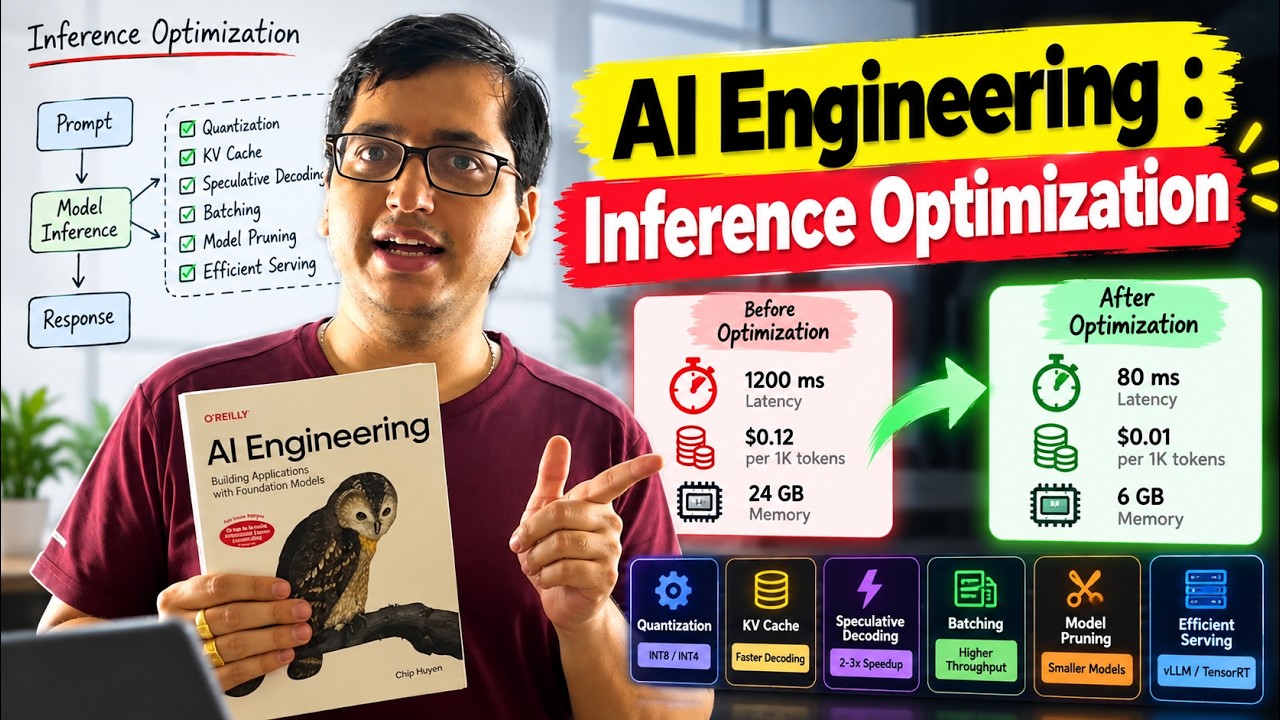
AI & ML with Aayush added the builder-student version of the same theme. The 2:46:55 lesson says "inference is the most valuable category in AI Industry at present" and frames inference engineering as a deep-dive topic worthy of course-length treatment, adapted from chapter 9 of Chip Huyen's AI engineering textbook. The distinctive angle is not novelty but operator pressure: if one of the day's few educational videos is entirely about inference optimization, serving cost and performance are no longer back-office concerns (video).
Discussion insight: The attention split was stark—Silicon Up Close drew 572,459 views and 575 comments while Aayush's course drew 1,690 views and 11 comments—which suggests mass curiosity still sits with visual hardware explanation even as a smaller builder audience studies inference mechanics directly.
Comparison to prior day: On 2026-10-11, hardware literacy itself was the story. On 2026-10-12, the same infrastructure thread extended into inference economics and serving education.
1.3 Meta's personal-agent push tied frontier models to commerce, coding, and wearables 🡕
At least one video supported this theme. Compared with 2026-10-11, when agent coverage was delivered mainly as curriculum and certification material, 2026-10-12 added a single but detailed productization signal: one platform pitching agents as a consumer and commercial computing surface.

Cheeky Pint posted a 2:14:31 conversation with Mark Zuckerberg and Alexandr Wang about Muse Wonder that drew 5,529 views and 52 comments. The description says Meta has already scaled past five gigawatts of AI infrastructure and is willing to make a $100B+ CapEx bet before knowing whether the model will work, while Meta's official Scaling Toward Personal Superintelligence post adds Active Memory, Active Focus, and frontier coding, and the Connect 2026 recap expands the product surface into smart glasses, shopping connectors, GitHub, Notion, Box, and PayPal. The distinctive angle is vertical integration: the file is not just talking about better chat, but about an agent that remembers, sees, codes, shops, and follows the user off the phone and onto wearable hardware (video, Meta Research, Meta Connect).
Discussion insight: Relative to its modest view count, Muse Wonder drew a more engaged niche response than Reuters' regulation clip, which fits the idea that detailed product and infrastructure discussions are smaller-reach but higher-intent signals in this file.
Comparison to prior day: On 2026-10-11, the agent story emphasized open-source learning paths and enterprise exam prep. On 2026-10-12, the file added a vertically integrated personal-agent vision with hardware, connectors, and commerce built in.
2. What Frustrates People
Crisis response for frontier AI is still more imagined than operational
This is High severity because CBS News says leaders at OpenAI and Anthropic are planning fallout scenarios for a significant AI cyberattack, while Reuters shows the policy community is still split between voluntary safeguards and formal regulation. The workaround is scenario planning, summit debates, and media briefings rather than a visible shared incident-response standard. This is directly worth building for.
Inference and infrastructure remain too capital-intensive and complex for most teams
This is High severity because Meta is discussing more than five gigawatts of AI infrastructure and a $100B+ CapEx decision before knowing if Muse Wonder will work (video), while NVIDIA frames Vera Rubin as a rack-scale answer to long-context AI factories and promises lower cost per token at scale (NVIDIA). The workaround is either hyperscale investment or long-form self-education like Aayush's 2:46:55 inference-optimization course (video). This is directly worth building for.
Useful personal agents still depend on too much memory, focus, context, and partner plumbing
This is Medium severity because Meta's own Muse materials emphasize Active Memory, Active Focus, multimodal perception, glasses integration, and a growing list of connectors just to make the agent useful across daily tasks and work (Meta Research, Meta Connect). The workaround is vertical integration inside one ecosystem instead of simpler cross-platform agent defaults. This is competitive to build for.
3. What People Wish Existed
A credible AI incident-response layer
CBS News and Reuters together imply a need for a public, practical playbook that connects preparedness, post-incident communication, and enforceable safeguards before a major AI failure happens. The urgency is High because the day's biggest video is about "day after" planning and the policy response is still unresolved. Partial solutions exist in voluntary safeguards and summit-level debate, but the evidence here shows no shared operational standard. Opportunity: direct.
Inference tooling that brings AI-factory economics down to normal teams
Silicon Up Close, NVIDIA, and AI & ML with Aayush all point at the same practical need: tools that translate rack-scale architecture, throughput, and cost-per-token tradeoffs into decisions smaller engineering teams can act on. The urgency is High because the file spans hyperscale platforms and a multi-hour course just to explain the serving problem. Partial solutions exist in vendor platforms and educational material, but not as a simple neutral operating layer in today's evidence. Opportunity: direct.
Personal agents that remember, see, and act without locking users into one stack
The Muse Wonder discussion and Meta's Connect 2026 recap point to a practical need for agents that retain long-term context, understand multimodal input, and transact across work and shopping surfaces. The urgency is Medium because Meta is clearly building toward it, but the evidence here still describes an emerging platform rather than a settled category. Partial solutions exist in Muse, AI glasses, and partner connectors, but the ecosystem remains vertically integrated. Opportunity: competitive.
4. Tools and Methods in Use
| Tool | Category | Sentiment | Strengths | Limitations |
|---|---|---|---|---|
| Muse Wonder / Muse Wonder Full | Frontier model | (+) | Active Memory, Active Focus, multimodal perception, frontier coding, broad task coverage | Requires hyperscale infrastructure and stays inside a centralized Meta stack |
| Muse connectors + AI glasses | Agent interface / hardware | (+) | Hands-free use, visual context, work and shopping integrations, real-world actuation | Depends on Meta hardware rollout and partner coverage; not a neutral cross-platform layer |
| NVIDIA Vera Rubin platform | AI infrastructure | (+) | Rack-scale co-design, long-context support, high inference throughput, lower cost-per-token claims | Data-center-scale power, cooling, and capital requirements |
| Inference optimization | Serving method | (+) | Treats inference as the highest-value AI category and focuses attention on efficiency | Hard enough to require course-length study; no simple off-the-shelf answer appears in the file |
| Voluntary safeguards vs regulation | Governance method | (+/-) | Keeps deployment moving while oversight options are debated | Reuters shows no consensus, and it does not resolve public trust after a catastrophic event |
The strongest positive sentiment in the file sat with integrated stacks. Meta and NVIDIA were both presenting tightly coupled systems—one at the personal-agent layer, one at the AI-factory layer—while the negative or mixed sentiment attached to governance methods rather than to raw capability.
The clearest workaround pattern was educational and organizational. People were relying on explainers, summit debates, official platform posts, and multi-hour lessons to bridge gaps in understanding around safety, infrastructure, and inference. The migration pattern was also visible: from assistant-style chat toward agents that remember and act, and from server-centric thinking toward rack-scale AI factories.
5. What People Are Building
| Project | Who built it | What it does | Problem it solves | Stack | Stage | Links |
|---|---|---|---|---|---|---|
| Muse Wonder / Muse Wonder Full | Meta Superintelligence Labs | Frontier models for personal and professional agents with memory, focus, multimodal perception, and coding support | Makes long-running, context-heavy agent tasks more useful than simple chat | Active Memory, Active Focus, multimodal model, frontier coding | Shipped | video · Meta Research |
| Muse on AI glasses | Meta | Brings Muse to glasses with voice interaction, visual context, and shopping/work connectors | Gives agents hands-free access and real-world context throughout the day | AI glasses, voice mode, visual AI, partner connectors, Muse agent stack | Beta | Meta Connect |
| NVIDIA Vera Rubin platform | NVIDIA | Rack-scale AI-factory platform that unifies compute, networking, power, and cooling | Supports long-context reasoning and lowers inference cost at scale | Vera CPU, Rubin GPU, NVLink 6, ConnectX-9, BlueField-4, Spectrum-6 | Beta | video · NVIDIA |
| AI Engineering: Inference Optimization | AI & ML with Aayush | Publishes a course-length deep dive on inference engineering | Helps practitioners understand the cost and performance side of deploying models | Video lecture, inference-engineering concepts, Chip Huyen textbook material | Shipped | video |
The strongest build pattern on 2026-10-12 was vertical integration. Meta is building the model, the memory layer, the connectors, and the glasses interface, while NVIDIA is building the rack-scale substrate underneath long-context agent workloads. In both cases, the projects are trying to remove coordination overhead by owning more of the stack.
The secondary pattern was educational infrastructure. Aayush's inference course is not a new product surface, but it is still a build signal: the cost and serving layer has become important enough that long-form instruction now functions as essential operating knowledge for builders trying to keep up.
6. New and Notable
Catastrophic-event planning became an explicit mainstream AI story
CBS News turned Axios reporting about "day after" planning at major AI companies into the file's largest audience spike. That matters because the safety conversation moved beyond generic concern and into visible preparation for political and operational fallout after a serious AI incident.
Meta tied personal agents to both commerce and wearables
Cheeky Pint, Meta's Muse Wonder post, and the Connect 2026 recap together show a more ambitious packaging of agents: memory, coding, voice, shopping, and glasses in one story. That matters because the frontier model race is being translated into a distribution race across devices and partner ecosystems.
Rubin stayed a repeat infrastructure hit while the file added an inference-study counterpart
Silicon Up Close again dominated the technical audience, and AI & ML with Aayush added a nearly three-hour inference-optimization lesson on the same day. That matters because infrastructure interest is no longer only about hardware curiosity; it now includes the economics of serving models well.
7. Where the Opportunities Are
[+++] AI incident response and trust tooling — Evidence comes from CBS News and Reuters. This is strong because the file pairs mass-audience concern about catastrophic AI fallout with visible disagreement over whether voluntary safeguards are enough.
[+++] Inference-cost and infrastructure translation layers — Evidence comes from Silicon Up Close, NVIDIA's Vera Rubin platform post, and AI & ML with Aayush. This is strong because the same day's evidence spans rack-scale vendor claims and course-length education just to help people understand the serving problem.
[++] Cross-platform personal-agent memory and action layers — Evidence comes from Cheeky Pint, Meta's Muse Wonder post, and the Connect 2026 recap. This is moderate because the direction is clear—memory, multimodal inputs, connectors, glasses—but today's evidence is still dominated by one large vendor's stack.
8. Takeaways
- AI safety attention became a preparedness story, not just a warning story. The day's largest item was about leaders planning for the fallout from a significant AI cyberattack, while Reuters showed the governance response is still unsettled. (source, source)
- Infrastructure remained the strongest technical audience magnet. Silicon Up Close again drew a much larger audience than the other technical items, and NVIDIA's Rubin post tied that attention to explicit throughput and cost-per-token claims. (source, source)
- Inference optimization is now important enough to justify course-length study. Aayush's 2:46:55 lesson frames inference engineering as the highest-value AI category, which shows that deployment economics are becoming first-class builder knowledge. (source)
- Meta's agent strategy is broadening from model quality to full-stack distribution. The Muse Wonder discussion plus Meta's own posts tie memory, multimodal reasoning, coding, commerce connectors, and AI glasses into one product direction. (source, source, source)
- Today's builder energy clustered around giant platforms and translation layers, not indie apps. The file's construction signals were Meta's personal-agent stack, NVIDIA's AI-factory architecture, and long-form educational material explaining the inference layer. (source, source, source)