YouTube AI - 2026-10-14
1. What People Are Talking About
1.1 AI governance stayed in the feed, but only as a narrow summit-level split 🡖
One video supported this theme. Compared with 2026-10-13, when the risk cluster also included Bill Gates's cyber-warning interview and The Economist's disaster framing, 2026-10-14 retained only Reuters's policy segment. The topic still matters because it keeps the central governance fault line visible, but the breadth and audience energy were much lower than a day earlier.

Reuters published the broader-reach of the day's two items at 3,596 views and 5 comments. The 3:28 segment says President Trump is advocating voluntary safeguards for AI companies while many industry insiders think regulation is the answer, and it frames that disagreement through expert conversations at World Summit AI in Amsterdam. The distinctive angle is persistence rather than escalation: even on a sparse day, AI oversight still survived as one of only two visible themes in the file (video).
Discussion insight: No threaded comments are available in the harvest, and Reuters drew only 5 comments, so the evidence shows policy persistence rather than a breakout audience argument.
Comparison to prior day: On 2026-10-13, governance sat inside a larger public-warning cycle with CNN and The Economist. On 2026-10-14, the file kept only the summit-level split over safeguards versus regulation.
1.2 Inference optimization remained a specialist study topic after the broader infrastructure wave faded 🡖
One video supported this theme. Compared with 2026-10-13, when inference optimization still sat beside a 639,594-view hardware explainer, 2026-10-14 preserved only the niche builder-education side. The theme still matters because the surviving technical signal is a nearly three-hour lesson devoted entirely to inference engineering.
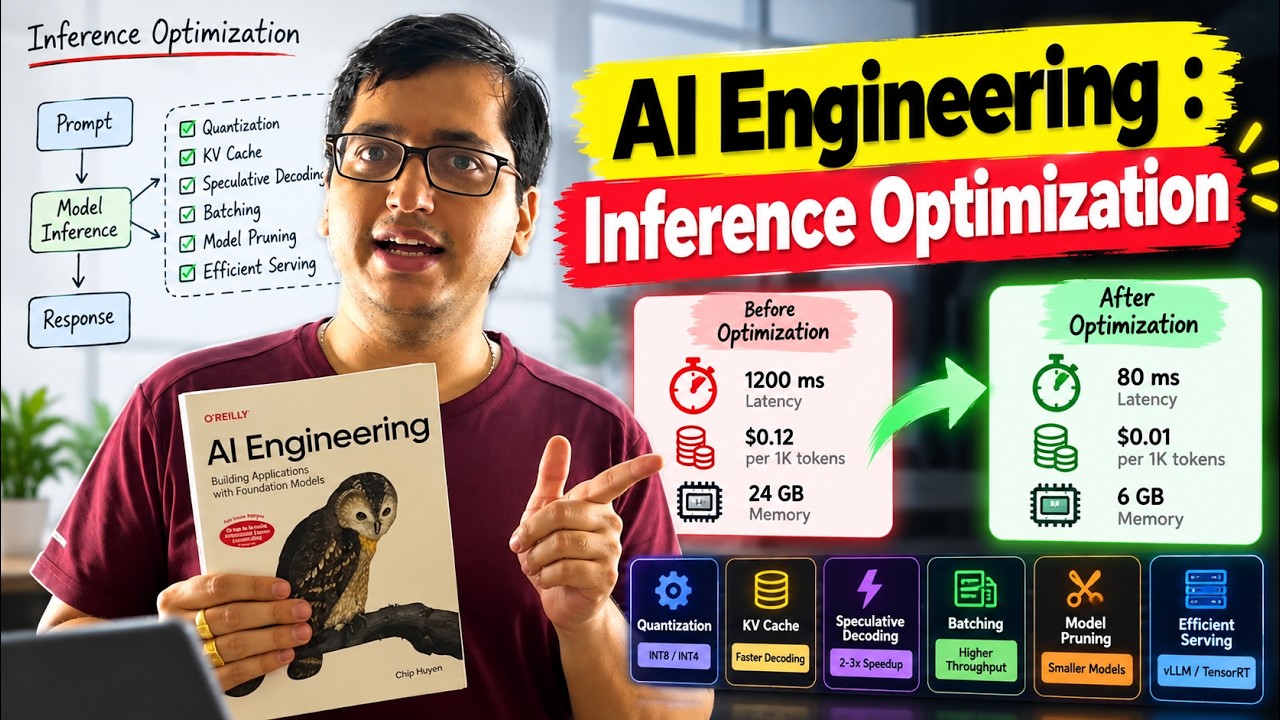
AI & ML with Aayush published the day's higher-comment item at 1,904 views and 11 comments. The description says inference is "the most valuable category in AI Industry at present" and positions the video as a deep dive into inference engineering adapted from chapter 9 of Chip Huyen's AI engineering textbook. The distinctive angle is that the day's only builder-facing artifact is not a new product or benchmark, but extended operating knowledge about serving models efficiently (video).
Discussion insight: No threaded comments are available in the harvest, but Aayush's 11 comments on 1,904 views exceeded Reuters's 5 comments on 3,596 views, which suggests the smaller technical audience was comparatively more engaged.
Comparison to prior day: On 2026-10-13, inference optimization was the supporting half of a larger infrastructure cluster. On 2026-10-14, it stood alone without the mass-audience chip explainer.
2. What Frustrates People
Governance still lacks a shared operational standard
This is Medium severity in today's evidence because Reuters shows the policy conversation is still stuck between voluntary safeguards and formal regulation. The workaround is summit-level debate and soft commitments rather than a visible incident-response, assurance, or enforcement layer. This remains directly worth building for, but today's file offers only one supporting item.
Inference engineering still demands course-length self-education
This is Medium severity because AI & ML with Aayush presents inference optimization as a 2:46:55 deep dive and says it is "the most valuable category in AI Industry at present." The workaround is long-form study material rather than a simple operating layer that translates serving tradeoffs into defaults smaller teams can use. This is directly worth building for.
3. What People Wish Existed
A practical AI incident-response and governance layer
Reuters points to a practical need for something more concrete than voluntary safeguards or open-ended regulation talk: a visible way to connect policy intent, incident response, and accountability. The urgency is Medium because the issue persisted in the file, but today's evidence is only one short summit clip. Partial solutions exist in public debate and soft-commitment language, but not as a shared operating standard. Opportunity: direct.
Inference tooling that turns deep-study material into deployment defaults
AI & ML with Aayush points to a practical need for products that translate inference engineering into checklists, guardrails, and operational defaults instead of requiring a course-length lesson. The urgency is Medium because the evidence comes from one educational artifact, but it is still notable that the day's only builder-focused video is entirely about serving performance and efficiency. Partial solutions exist in textbooks and long-form tutorials, but not as a lightweight operating layer in today's evidence. Opportunity: direct.
4. Tools and Methods in Use
| Tool | Category | Sentiment | Strengths | Limitations |
|---|---|---|---|---|
| Voluntary safeguards vs regulation | Governance method | (+/-) | Keeps the oversight debate active and visible in mainstream coverage | Reuters shows no consensus and no shared operational standard |
| Inference optimization | Serving method | (+) | Treats serving cost and performance as first-class engineering work | The day's evidence is a 2:46:55 lesson, which implies high learning overhead |
| Chip Huyen textbook-based inference curriculum | Educational method | (+) | Gives practitioners a structured frame for studying inference engineering | Still educational scaffolding rather than direct automation or turnkey tooling |
The satisfaction split was narrow but clear. Governance discussion was mixed because the Reuters clip presents unresolved disagreement, while the technical material was positive in tone but expensive in attention: the only builder-facing method in the file asks viewers to sit through a nearly three-hour lesson.
No strong migration pattern or competitive tool churn was visible on this date. The clearest workaround was educational: use a structured course and textbook framing to bridge inference complexity until better operational tooling exists.
5. What People Are Building
| Project | Who built it | What it does | Problem it solves | Stack | Stage | Links |
|---|---|---|---|---|---|---|
| AI Engineering: Inference Optimization | AI & ML with Aayush | Publishes a course-length deep dive on inference engineering | Helps practitioners understand the performance and cost side of deploying models | Video lecture, inference-engineering concepts, Chip Huyen textbook material | Shipped | video |
No additional strong build evidence observed on this date. The only clear construction signal was educational infrastructure: a long-form course packaged as operating knowledge for people trying to understand the serving layer.
That makes the day's builder pattern much narrower than 2026-10-12 or 2026-10-13. Instead of new products, repos, or deployments, the file mostly preserved one persistent need: inference optimization is important enough that structured teaching itself functions as a build artifact.
6. New and Notable
The AI regulation split persisted without broadening
Reuters kept the voluntary-safeguards-versus-regulation argument active through World Summit AI coverage. That matters because the governance theme did not disappear, but it also did not expand beyond a single short summit clip.
Inference engineering survived as the day's only builder-side signal
AI & ML with Aayush made a nearly three-hour lesson on inference optimization the file's only technical artifact. That matters because the strongest builder evidence on 2026-10-14 was not a launch or benchmark, but structured education about serving models well.
7. Where the Opportunities Are
[++] AI incident-response and governance tooling — Evidence comes from Reuters. This is moderate because the policy split remained visible, but the file still shows no shared operational standard for what happens between voluntary commitments and formal regulation.
[++] Inference-operations translation layers — Evidence comes from AI & ML with Aayush. This is moderate because a course-length lesson is still doing the work that a more productized operating layer could do for smaller teams.
[+] Structured educational tooling for inference engineers — Evidence comes from AI & ML with Aayush and its explicit reliance on textbook framing. This is emerging because today's proof is educational rather than software-native, but the need for structured learning is clear.
8. Takeaways
- AI governance did not disappear; it narrowed to a summit-level argument over safeguards versus regulation. Reuters kept the policy split visible, but without the broader disaster framing seen a day earlier. (source)
- Inference optimization remained the only builder-heavy technical signal in the file. Aayush's 2:46:55 lesson shows that serving performance and cost still require deliberate, structured study. (source)
- The day's AI coverage was narrow and repeat-oriented. The file contained one governance clip and one inference course, with no new strong product, robotics, or frontier-model signal breaking through. (source, source)