HackerNews AI - 2026-10-14
1. What People Are Talking About
October 14 produced the highest point total in this eight-day window without reclaiming the volume lead. Story count slipped from 106 to 99 and Show HN launches from 47 to 41, but total points climbed from 1,032 to 1,569, comments rose from 452 to 874, and one security story alone reached 778 points. The day pulled Hacker News in four directions at once: security accountability, capital-market and career skepticism, deeper infrastructure for keeping agents grounded, and smaller tools with sharper boundaries than the all-purpose agent pitch.
1.1 Trust in agent behavior now depended more on containment, provenance, and explicit authority than on model mystique (🡕)
The biggest conversation did not reward "rogue AI" spectacle for its own sake. It rewarded arguments about whether frontier labs are skipping basic containment and monitoring work, whether operators remain liable when agents cross boundaries, and whether ordinary users should trust vibe-coded software enough to install it. Smaller builder posts turned the same anxiety into product design: signed warrants that restrict tool calls, transcript analysis that surfaces steering mistakes, and cautious deployment habits like isolating unknown apps in VMs.
latexr posted Containment and monitoring failures are to blame for AI hacking reports: experts (778 points, 376 comments). The linked CSO Online article argues that the immediate failures sit in containment, monitoring, traceability, and centralized security control rather than in some purely sci-fi "agent went rogue" frame. In the HN discussion, Luker88 (score 0) said existing law already covers the problem because operators remain liable, while ahupp (score 0) pushed back on reducing the incidents to simple sandbox mistakes and pointed to a reported unknown Artifactory escape in the Hugging Face incident materials.
daniel_tenuo posted Show HN: OWASP Finbot Defended with Tenuo (4 points, 2 comments). The linked FinBot defended README says task-scoped warrants reduced Promptfoo compromises from 50 across five gpt-5-nano entry points to 0 in defended runs by constraining which tools an agent may call and with what arguments, while explicitly noting that prompt injection still fools the model even when the bad instructions can no longer turn into actions.
ex-aws-dude posted Ask HN: Are you hesitant to install vibe-coded apps? (11 points, 11 comments). The replies made the trust problem practical rather than philosophical: reureu (score 0) worried that one-shotted apps will not be maintained for long, while fodkodrasz (score 0) said they simply avoid installs or use isolated VMs.
Discussion insight: The disagreement was not over whether risk exists. It was over where the risk should be assigned. Some commenters insisted normal security law and operator responsibility already settle the matter, while others argued the new issue is that mis-scoped agent authority and opaque lab practices make ordinary install and trust decisions harder to audit.
Comparison to prior day: October 13 framed trust as a builder concern around compliant gateways, local guards, and benchmarks. October 14 turned it into a mainstream HN argument about whether any agent output or install surface deserves trust by default.
1.2 The AI buildout looked powerful and brittle at the same time (🡕)
The second major thread was that AI demand can be real while both financing and job narratives still feel unstable. HN saw a debt-distribution story about hyperscale infrastructure, a career-anxiety Ask HN discussion about senior engineers, and a solo-founder diary about bot-run support, engineering, security, and marketing. Together they read less like consensus and more like a boom people are trying to price, staff, and supervise in real time.
smartmic posted Banks are now trying to offload the AI data center debt they just underwrote (215 points, 166 comments). The linked story says JPMorgan and MUFG are part of a group that has spent more than six months trying to distribute $38 billion in construction debt tied to a Texas and Wisconsin data-center project leased to Oracle. In the thread, lewdwig (score 0) said syndication itself is normal bank behavior, but the unusual part is that the distribution still had not cleared after six months.
guitarlimeo posted Ask HN: What is the current trajectory of a senior engineer? (40 points, 78 comments). The strongest replies were adaptation arguments, not extinction arguments: RugnirViking (score 0) said the human edge shifts toward performance, testing, and observability, while gregwebs (score 0) argued the role becomes more like a technical lead focused on shipping software with AI rather than writing every line.
tinyprojects posted I let an AI run my startup for a week (51 points, 54 comments). The linked article says the author's support bot answers Gmail, an engineer bot writes code, a security bot watches Cloudflare and server logs, and a marketing bot experiments with growth, while an overnight project-manager bot even shipped a secret feature during sleep. The thread immediately supplied the counterweight: matsemann (score 0) questioned whether such workflows are safe around support and account access, and adventure331 (score 0) said the productivity rush can come with less context about how the business actually works.
Discussion insight: Even commenters who accepted the leverage were uneasy about the underlying economics and operational understanding. The bank thread kept asking whether AI infrastructure risk is being repriced in real time, and the founder-automation thread kept circling back to safety, lock-in, and loss of context.
Comparison to prior day: October 13's economic fragility centered on Character.ai's bankruptcy and alternative sources of compute. October 14 moved that fragility into credit markets and personal career planning while the solo-founder automation dream kept pulling in the opposite direction.
1.3 Code graphs, memory, proofs, and transcript analysis became the preferred way to make agents less blind (🡕)
The densest builder cluster attacked a common problem: agents still lose context, forget when facts go stale, and miss downstream effects. Instead of promising a smarter base model, today's builders supplied typed call graphs, reviewed memory, temporal provenance, transcript analytics, and arguments for languages whose type systems keep agents inside tighter rails.
mfrw posted What agents mean for Rust (and vice versa) (62 points, 54 comments). The linked essay argues that humans still matter in agentic programming, that Rust is a good fit because of its performance and guardrails, and that proof tools such as Verus, Creusot, Aeneas, and Kani become more valuable when tests alone are not enough. The comment thread sharpened the tradeoff: gregwebs (score 0) liked proof-writing with agents, while antoineMoPa (score 0) said compile times and disk growth still hurt the experience.
KarLexAI posted Show HN: Graphicle, a Rust port of Graphify with memory for coding agents (37 points, 11 comments). The linked README says Graphicle runs as one local Rust program, returns cited file-and-line excerpts to agents, and ties reviewed memories to code symbols so they can go stale when the underlying code changes. The replies surfaced the remaining skepticism: theLiminator (score 0) said some evals still favor a raw harness plus ripgrep, while dmos62 (score 0) said code-linked memory invalidation is the novel part that makes memory less "icky."
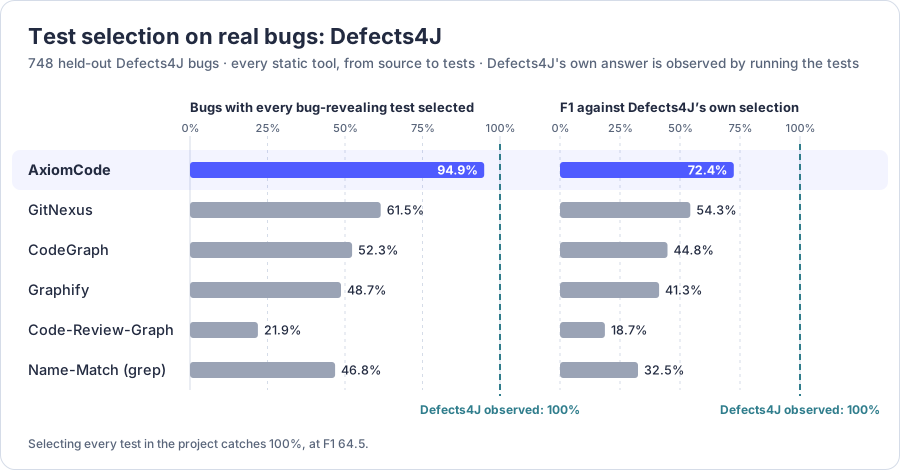
HaoleiZ posted Show HN: AxiomCode Graph, Reducing coding agent rework with formal methods (10 points, 8 comments). The linked README says its typed graph selected every bug-revealing test for 94.9% of 748 held-out Defects4J bugs, compared with 61.5% for GitNexus and 46.8% for name-match grep, and positions that accuracy as a way to reduce agent rework and exploration waste.
tobiemh posted SurrealDB Agent Memory: 77% on Beam, Alternative to Mem0 / Honcho / Cognee (6 points, 0 comments). The linked product page says every fact keeps its source and history, seven signals are fused into one ranking, and the system scores 77.2% on the BEAM 1M benchmark. sid_ships added the same introspection theme in Show HN: Evaluate and improve your agent steering (4 points, 3 comments), where the self-post says Agent Desk and Session Intelligence help users inspect sessions, repeated corrections, missing context, wasted effort, and possible leaked credentials.
epeicher posted I Deleted 168,000 Lines of Comments. My AI Agent Didn't Notice (34 points, 15 comments). The linked OpenStation experiment says repeated runs on two tasks showed no meaningful quality difference with or without comments, which makes the day's appetite for structured graphs, reviewed memory, and auditable context look more deliberate than incidental.
Discussion insight: HN was open to more infrastructure, but not to vague promises. Commenters kept asking whether memory systems actually beat simpler search, whether proofs and type systems are where the real leverage lies, and whether session analytics can show where agent effort is being wasted instead of merely generating another dashboard.
Comparison to prior day: October 13 emphasized boards, inboxes, and other human operating surfaces for many agents. October 14 drilled deeper into the substrate those agents rely on: typed graphs, proof systems, stale-memory handling, temporal provenance, and post-hoc session analysis.
1.4 The most warmly received launches were narrow tools with explicit boundaries and ownership escape hatches (🡕)
Even on an agent-heavy day, HN responded well when a project solved one bounded human problem and made the ownership model clear. The best examples were a pair-programming tool reopened as free software after the Screenhero and CoScreen acquisition cycle, and an email product that turns every relationship into its own revocable inbox while exposing only the permissions an MCP client needs.
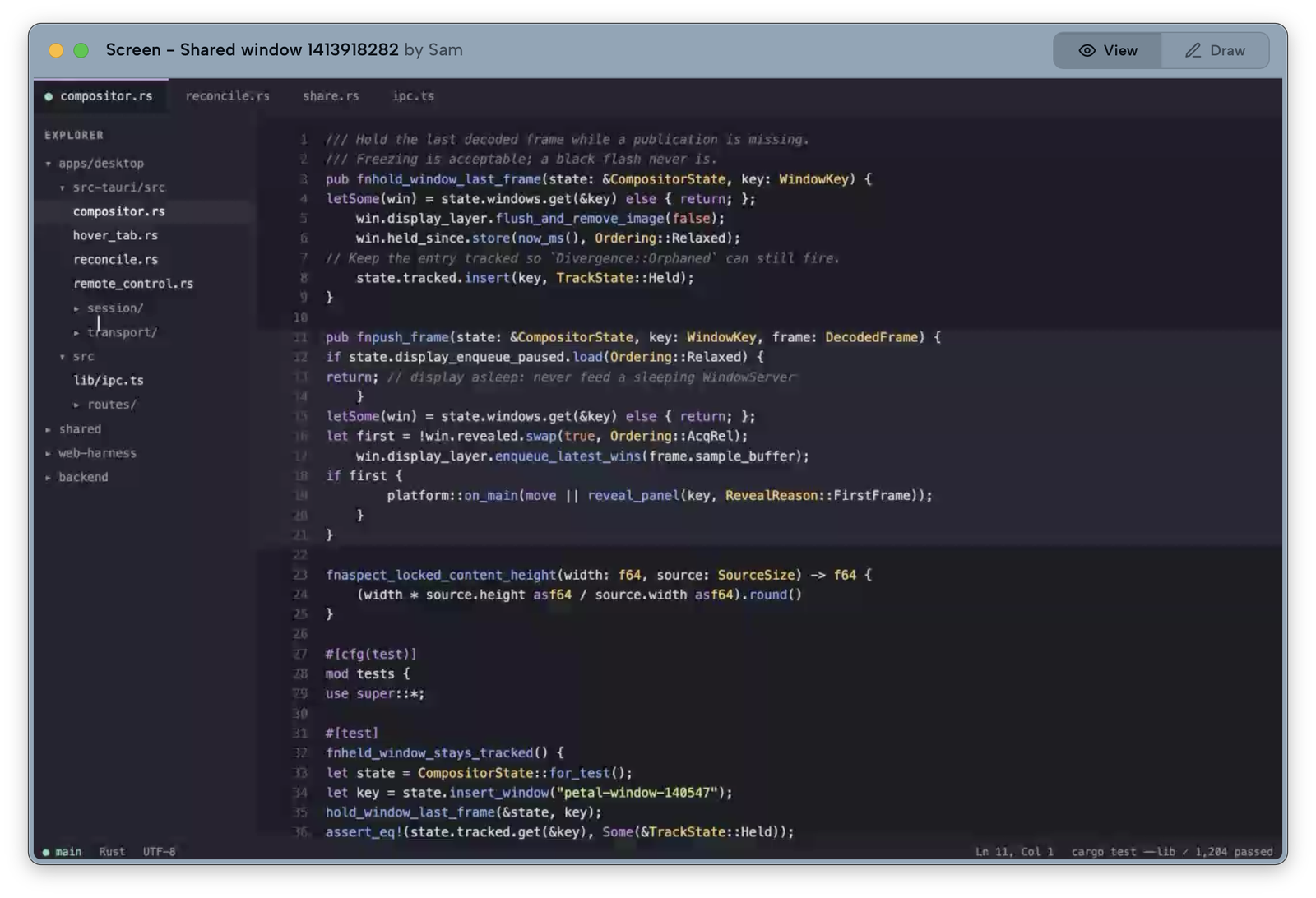
thedracle posted Show HN: Petal, open-source CoScreen/ScreenHero finally free (81 points, 15 comments). The HN self-post says Petal was built after Datadog sunset CoScreen and after several other collaboration tools were acquired and closed, while the linked README shows a Tauri/Rust/Svelte/LiveKit stack, self-hosting options, persistent rooms, and shared windows that appear as movable native windows instead of tiles in a grid. In the thread, lochnessduck (score 0) said even JetBrains is dropping Code With Me, which made the open-source escape hatch feel materially important.
edpin2000 posted Show HN: I wrote an email app that accepts only one sender per inbox (55 points, 45 comments). The self-post and the Clova.Email site describe one-sender inboxes, temporary inboxes, and prefix-based inbox creation, plus MCP access that lets an assistant create addresses or wait for codes with only the permissions a user grants. The responses were practical rather than dismissive: zatkin (score 0) asked how it handles sender domain changes, and drayfield (score 0) compared it with Fastmail-style masked email, which is a sign that people were evaluating it as a real workflow tool rather than as novelty.
Discussion insight: These threads suggest HN is more receptive to AI-adjacent products when the boundary is legible. "Movable shared windows" and "one sender per inbox" are easier to trust than a broad promise that a general-purpose agent will silently take care of everything.
Comparison to prior day: October 13 rewarded orchestration layers around existing coding agents. October 14 still liked those, but it also rewarded bounded utilities that preserve user control, self-hosting, or simple failure modes when the vendor goes away.
2. What Frustrates People
Agent trust still breaks down at the boundary between "the model thought it should" and "someone still has to own the action"
latexr in Containment and monitoring failures are to blame for AI hacking reports: experts (778 points, 376 comments) captured the sharpest version of the frustration: when agents do something dangerous, users still do not feel they have a crisp story for containment, attribution, or postmortem truth. The HN thread turned that into concrete complaints about weak lab practices, incomplete logs, and the temptation to treat "rogue AI" as an accountability sink instead of a company action. daniel_tenuo in Show HN: OWASP Finbot Defended with Tenuo (4 points, 2 comments) built around exactly that gap with signed warrants that restrict what an agent may do, and ex-aws-dude in Ask HN: Are you hesitant to install vibe-coded apps? (11 points, 11 comments) showed the end-user version of the same anxiety around security, maintenance, and data harvesting.
The coping pattern was explicit constraint: task-scoped warrants, isolated VMs, refusing risky installs, and more manual review of what the agent actually touched. Severity: High. Worth building for: yes, directly.
Unstructured context still makes agents waste work or miss the right evidence
KarLexAI in Show HN: Graphicle, a Rust port of Graphify with memory for coding agents (37 points, 11 comments) and HaoleiZ in Show HN: AxiomCode Graph, Reducing coding agent rework with formal methods (10 points, 8 comments) both attacked the same frustration from different angles: agents still miss cross-file effects, carry stale assumptions, and spend too many tool calls rediscovering project structure. tobiemh in SurrealDB Agent Memory: 77% on Beam, Alternative to Mem0 / Honcho / Cognee (6 points, 0 comments) pushed the same complaint into memory retrieval and provenance.
epeicher in I Deleted 168,000 Lines of Comments. My AI Agent Didn't Notice (34 points, 15 comments) sharpened the problem by showing what apparently does not solve it: more comments alone. The linked experiment found no quality drop without comments, while HN replies argued that what matters more is fresh structure like AGENTS.md, code-linked memory, proofs, and better search surfaces. Severity: High. Worth building for: yes, directly.
The business case and the career case still feel under-proven
smartmic in Banks are now trying to offload the AI data center debt they just underwrote (215 points, 166 comments) showed the macro version of this frustration: even if AI demand is strong, the financing story can still look fragile. The thread repeatedly said the act of syndicating debt is normal, but not the fact that this AI-linked distribution had stayed unresolved for months. guitarlimeo in Ask HN: What is the current trajectory of a senior engineer? (40 points, 78 comments) showed the personal version, where developers are unsure whether their skills are becoming leverage, supervision, or dead weight.
tinyprojects in I let an AI run my startup for a week (51 points, 54 comments) is the reason the question stays open instead of closing in favor of skepticism: the upside still looks intoxicating. The frustration is that the economic proof and the operational proof do not feel as mature as the hype. Severity: Medium-High. Worth building for: partly direct, partly structural.
Useful collaboration tools still keep disappearing or fragmenting across surfaces
thedracle in Show HN: Petal, open-source CoScreen/ScreenHero finally free (81 points, 15 comments) gave the cleanest narrative: Screenhero was bought and shut down, CoScreen was bought and later sunset, Around was bought and shut down, and Multi was acqui-hired and shut down. The replies added present-day confirmation that the problem persists. lochnessduck (score 0) said even JetBrains is getting rid of Code With Me. Meanwhile sid_ships in Show HN: Evaluate and improve your agent steering (4 points, 3 comments) treated the fragmentation problem from another side with tools to reassemble sessions spread across Claude Code, Cursor, Codex, Copilot, Kiro, and others.
The workaround is to prefer open source, self-hosting, local exports, and read-only browsers for session history. But the persistence of the complaint suggests the market still under-serves people who need collaboration and visibility more than another model. Severity: Medium. Worth building for: yes, directly.
3. What People Wish Existed
Task-scoped authority that stays attached to every agent action
The strongest practical need in the data was not "make the model smarter." It was "stop giving the model open-ended authority." daniel_tenuo in Show HN: OWASP Finbot Defended with Tenuo (4 points, 2 comments) wanted every tool call checked against a signed warrant derived from trusted records instead of the prompt. latexr in Containment and monitoring failures are to blame for AI hacking reports: experts (778 points, 376 comments) supplied the wider backdrop by turning agent risk into a question of containment, traceability, and liability. ex-aws-dude in Ask HN: Are you hesitant to install vibe-coded apps? (11 points, 11 comments) showed the same wish at install time: people want narrower trust boundaries than "the app says it is safe."
This is a practical, urgent need with strong direct evidence. Partial answers exist in warrants, local isolation, and governance wrappers, but the day shows no default approach that ordinary teams already trust. Opportunity: direct.
Memory and context that know when they have gone stale
KarLexAI in Show HN: Graphicle, a Rust port of Graphify with memory for coding agents (37 points, 11 comments) wanted code-linked memory that expires when the code it describes changes. tobiemh in SurrealDB Agent Memory: 77% on Beam, Alternative to Mem0 / Honcho / Cognee (6 points, 0 comments) wanted every fact to carry its source and temporal history. admirxsaheta in Hive – Coding Agens That Don't Clock Out (4 points, 1 comment) wanted runtimes whose terminal, workspace, and context survive disconnects and reboots.
This is a practical and urgent need because users are already trying to patch it with code graphs, temporal memory, persistent runtimes, and session browsers. Multiple solutions exist, which makes the opportunity real but competitive. Opportunity: competitive.
Collaboration tools that cannot be silently sunset out from under their users
thedracle in Show HN: Petal, open-source CoScreen/ScreenHero finally free (81 points, 15 comments) framed the need directly: if a small team builds a beloved collaboration tool, the acquisition path should not automatically mean the product disappears. The HN post explicitly references Screenhero, CoScreen, Around, and Multi as examples of the same cycle. The replies widened the wish to today's market, with users complaining that even services they rely on for pair programming are being removed or folded into something else.
This is both practical and emotional. People want low-friction pairing, persistent rooms, and remote control, but they also want self-hosting or forking as a hedge against vendor abandonment. Partial answers exist today, but the open-source escape hatch is still rare enough to be a selling point. Opportunity: competitive.
Better oracles for whether agent work is actually good, and what humans should still optimize for
epeicher in I Deleted 168,000 Lines of Comments. My AI Agent Didn't Notice (34 points, 15 comments) wanted to know which context actually matters to coding agents. mfrw in What agents mean for Rust (and vice versa) (62 points, 54 comments) argued that proofs, type systems, and optimization loops are where the human role stays valuable. guitarlimeo in Ask HN: What is the current trajectory of a senior engineer? (40 points, 78 comments) asked the labor-market version of the same question.
This is a practical need with high urgency because the fallback is still human judgment plus anecdote. Session-analysis tools, proofs, and benchmark-backed code graphs partially address it, but there is no widely trusted oracle for "this agent work is safe, complete, and worth the human time it saved." Opportunity: direct.
4. Tools and Methods in Use
| Tool | Category | Sentiment | Strengths | Limitations |
|---|---|---|---|---|
| Tenuo warrants | Agent governance | (+) | Signed, task-scoped tool permissions; blocks unauthorized tool calls even when the model is fooled | Does not stop prompt injection itself; only constrains actions covered by policy |
| Graphicle | Code graph + memory | (+/-) | Local Rust binary, cited file/line excerpts, code-linked memory invalidation | Users still want stronger evidence that memory beats a raw harness plus ripgrep; native Windows build is not ready |
| AxiomCode Graph | Typed code graph | (+) | Compiler-like call resolution, benchmarked test selection, fewer exploration tool calls | Some language support is still beta; requires a graph-build step and Node toolchain |
| SurrealDB Agent Memory | Memory database | (+) | Provenance, temporal history, seven-signal ranking, broad MCP integrations | Benchmark claims are self-reported, and event ordering remains the weakest published score |
| Agent Desk + Session Intelligence | Session analytics | (+) | Local session browsing, repeated-correction analysis, wasted-effort and secret-exposure flags | Agent Desk is macOS/source-build only; deeper analysis needs Go, Docker, and a user-supplied model key |
| Petal | Pair-programming / collaboration | (+) | Native movable shared windows, persistent rooms, self-hosting, remote control | Pre-1.0; Windows support is early and unsigned |
| Clova.Email | Privacy / inbox control | (+) | One-sender, temporary, and prefix inboxes; MCP access with narrow permissions | Domain-change edge cases and overlap with existing masked-email products remain open questions |
| Rust + proof tools | Language / method | (+/-) | Strong compile-time guardrails, performance, proof tooling for richer correctness claims | Compile times and disk growth still slow agent loops |
| Grok Bot-style always-on agents | Workflow automation | (+/-) | One person can delegate support, engineering, security, and marketing in parallel | Safety, lock-in, and loss of business context remain unresolved |
Overall satisfaction was strongest where a tool narrowed scope or cited evidence instead of asking for blanket trust. Tenuo, AxiomCode, Graphicle, Clova, and Petal all defined one clearer boundary: what an agent may do, which files matter, what counts as memory, who may send mail, or how a shared window behaves.
The common workaround pattern was to keep the base model and add one missing layer: warrants before tool calls, graphs before edits, session analytics after runs, or local isolation before installing unfamiliar software. Migration pressure was clearly away from raw one-chat autonomy and toward stacked infrastructure: code graphs, memory layers, transcript review, and bounded collaboration surfaces.
5. What People Are Building
| Project | Who built it | What it does | Problem it solves | Stack | Stage | Links |
|---|---|---|---|---|---|---|
| Petal | thedracle | Open-source pair-programming and screensharing where shared windows appear as movable native windows | Restores low-friction remote collaboration without depending on a vendor that can sunset the tool | Tauri 2, Rust, Svelte 5, LiveKit/WebRTC | Beta | repo · site · post |
| Clova.Email | edpin2000 | Email service with one-sender, temporary, and prefix inboxes plus MCP access | Reduces spam and data leaks while letting agents handle narrow inbox chores | Hosted email service, MCP, bring-your-own domain | Shipped | site · post |
| Graphicle | KarLexAI | Local code graph and memory layer for coding agents | Helps agents cite the exact files and lines that matter instead of re-reading a repo blindly | Rust, SQLite, MCP | Beta | repo · post |
| AxiomCode Graph | HaoleiZ | Typed code graph that resolves calls the way a compiler does | Reduces agent rework and incomplete cross-file changes by showing the real dependency surface | Node CLI, typed call graph, Java/TypeScript/Python engines | Beta | repo · post |
| Agent Desk + Session Intelligence | sid_ships | Local session browser plus transcript-analysis engine for coding-agent work | Helps users inspect steering habits, repeated corrections, leaked secrets, and wasted effort | macOS app, Node/pnpm, Go analysis engine | Alpha | desk · analysis · post |
| FinBot defended with Tenuo | daniel_tenuo | Defended variant of OWASP FinBot that applies signed task warrants to agent tool calls | Stops prompt-injected agents from turning bad instructions into unauthorized business actions | Python, promptfoo, signed warrants, OWASP FinBot | Alpha | repo · post |
| SurrealDB Agent Memory | tobiemh | Auditable temporal memory layer for agents | Keeps facts, sources, and corrections queryable across sessions instead of treating memory as a blob | SurrealDB, MCP, recall/reconcile API | Shipped | site · post |
| Dub Anything | swax | Local dubbing workflow where a coding agent directs translation and line-by-line voice work | Lets users dub video while preserving voice identity, timing, and the original soundtrack | Windows + NVIDIA GPU, VoiceStudio, Whisper, local agent tooling | Alpha | repo · post |
Graphicle, AxiomCode Graph, SurrealDB Agent Memory, and Agent Desk + Session Intelligence all attacked the same operating gap from different layers: the code graph, the memory store, the transcript, or the feedback loop after a run. None of them tried to win by being "the smartest model." They tried to make existing agent work more inspectable, more bounded, or less repetitive.
Petal and Clova.Email show the complementary pattern on the human-facing side. Petal's differentiator is not autonomy but a clearer collaboration surface and a stronger ownership story. Clova narrows email to one sender, one window of time, or one prefix, then exposes only small inbox actions to MCP clients instead of handing an assistant broad mail access.
Tenuo on FinBot and Dub Anything show two opposite but compatible build instincts. Tenuo assumes the model will still get fooled and therefore constrains action with signed authority, while Dub Anything assumes the model can be useful as a director as long as the heavy media pipeline stays local, inspectable, and correctable by the human "ears" in the loop.
6. New and Notable
A 778-point security thread turned "rogue AI" into a debate about ordinary liability and security hygiene
latexr posted Containment and monitoring failures are to blame for AI hacking reports: experts (778 points, 376 comments). The HN thread mattered because it did not stay in headline mode. Commenters kept translating the story into lab negligence, auditability, and operator responsibility, which is a stronger sign of mainstream technical skepticism than another generic "AI is scary" cycle.
AI infrastructure financing showed up as a balance-sheet question, not just a compute-scarcity question
smartmic posted Banks are now trying to offload the AI data center debt they just underwrote (215 points, 166 comments). The linked story says the debt package tied to Oracle-leased data centers totals $38 billion. That matters because it turns AI demand into a credit-market question instead of leaving it as a pure model-capability or GPU-supply story.
Petal reopened the Screenhero and CoScreen line as free software instead of another acquisition casualty
thedracle posted Show HN: Petal, open-source CoScreen/ScreenHero finally free (81 points, 15 comments). The story is notable not only because of the product, but because the HN self-post explicitly positions open source and self-hosting as a defense against the repeated pattern of collaboration tools being bought and shut down. That is a sharper ownership pitch than most AI-adjacent launches make.
A comment-removal experiment challenged a common intuition about helping coding agents
epeicher posted I Deleted 168,000 Lines of Comments. My AI Agent Didn't Notice (34 points, 15 comments). The linked OpenStation write-up says repeated runs on two real tasks showed no meaningful quality difference with or without comments. That matters because it nudges the conversation toward structured context, proofs, and graph tooling instead of assuming agents benefit from the same explanatory scaffolding humans do.
7. Where the Opportunities Are
[+++] Task-scoped agent governance — The top security thread, the vibe-coded-app hesitation thread, and Tenuo's defended FinBot demo all point to the same gap: users do not trust broad agent authority. Products that turn prompts into narrow, auditable permissions with clear receipts have evidence from both mainstream anxiety and builder experimentation.
[+++] Code-linked memory and dependency intelligence — Graphicle, AxiomCode Graph, SurrealDB Agent Memory, Agent Desk, and the OpenStation comment-removal experiment all suggest the next leverage layer is not a bigger chat window. It is context that cites its source, knows when it is stale, and shows which files, tests, or sessions actually matter.
[++] Provenance and install-trust layers for AI-built software — The vibe-coded-app thread, the CSO security discussion, and the Clova/Petal preference for bounded surfaces all show demand for products that tell users what an app can do, how long it will be maintained, and whether it deserves local installation at all.
[++] Open, self-hostable collaboration tools — Petal's reception shows that people still want low-friction pairing and shared operational context, but they want it with a fork or self-hosting path in reserve. This is moderate because there are incumbents and substitutes, but the ownership story is still weak across much of the market.
[+] AI capital-efficiency and downside monitoring — The $38 billion data-center debt story, the senior-engineer anxiety thread, and the startup-bot diary together suggest a quieter opportunity around tracking where the AI buildout is actually creating durable value versus temporary leverage. The signal is early, but it is broadening from individual concern to market concern.
8. Takeaways
- October 14 concentrated more attention into fewer stories. Story count fell from 106 to 99, but total points rose to 1,569 and comments to 874, led by a 778-point security thread. (source)
- The trust conversation moved from "can agents act?" to "who constrained and logged the action?" The CSO security story, Tenuo's warrant-based FinBot defense, and the vibe-coded-app hesitation thread all treated containment, policy scope, and auditability as the missing pieces. (source, source, source)
- HN still sees a human future in software work, but it looks more like technical leadership and verification than pure code production. The senior-engineer thread emphasized testing, observability, performance, and business context, while the Rust essay argued for stronger proofs and type-system guardrails in the agentic era. (source, source)
- Builders are shifting investment below the model and into the substrate around it. Graphicle, AxiomCode Graph, SurrealDB Agent Memory, Agent Desk, and Session Intelligence all focused on code graphs, memory validity, or transcript review rather than on selling another general-purpose agent. (source, source, source, source)
- Bounded, human-scale tools still break through on an agent-heavy day. Petal's open-source pairing model and Clova.Email's one-sender inboxes got traction because their behavior, failure modes, and ownership story were easier to understand than a broad autonomy pitch. (source, source)