Twitter AI Agent - 2026-10-14
1. What People Are Talking About
1.1 The harness became the main architecture everyone argued about (🡕)
The biggest shift on 2026-10-14 was architectural. People were no longer just sharing harness prompts; they were arguing about what belongs inside the harness at all, what should live in the runtime beneath it, and why that boundary matters for agent products. At least four strong retained items supported this frame.
@gregisenberg wrote (6,230 likes, 350 replies, 412,028 views, 8,370 bookmarks) after two days with founders and labs that the model is becoming the CPU, the harness is the operating system, and skills/plugins are the apps. His most specific claim was that a vertical harness is mostly connectors, evals, rules for what the agent can and cannot touch, and a clean screen for human review, while the model itself may be only a minority of the product value.
@bibryam argued (30 likes, 1,341 views, 36 bookmarks) that many people are still conflating harness capabilities with infrastructure. He separated planning, loop control, tool calling, context management, guardrails, and feedback from checkpointing, persistence, sandboxing, permissions, and execution environments, explicitly pointing to Agent Substrate as an example of the latter.

@KirkDBorne shared (199 likes, 3 replies, 10,914 views, 230 bookmarks) a 48-page handbook on understanding harness engineering for AI agents. That mattered because the day’s argument was not happening in fragments anymore; people were already compiling it into reference material.
Discussion insight: The disagreement was not cosmetic. If persistence and sandboxing are infrastructure rather than harness logic, then teams can reuse more of the stack across different agent products while keeping the workflow layer thinner and more legible.
Comparison to prior day: On 2026-10-13, the strongest posts circulated reusable prompts and checklists. On 2026-10-14, the conversation moved one level down and asked where the harness stops and the runtime begins.
1.2 The preferred operating model was now “plan once, fan out, verify, merge” (🡕)
A second strong theme was that advanced users increasingly described coding-agent work as orchestration, not one long conversation. The retained posts repeatedly split planning from execution, execution from verification, and expensive models from cheap workers.
@hayatomaruu amplified (1,237 likes, 20 replies, 138,474 views, 3,243 bookmarks) an Anthropic engineer saying people are not supposed to prompt Opus 5.5 directly so much as build a system that prompts itself. The replies mattered because they immediately asked the hard question: how do you measure whether the agent really gets smarter across runs instead of merely accumulating brittle rules?
@thedelost described (49 likes, 5,930 views, 95 bookmarks) a specific split: Opus 5.5 writes the workflow once, Haiku 5.5 scans files in parallel, Sonnet 5.5 edits and verifies, and JEV handles deterministic micro-forks. The distinctive point was not the model lineup alone, but the idea that the script, not the transcript, should carry the plan.
@skunzu shared (43 likes, 6 replies, 2,665 views, 49 bookmarks) a similar but even more auditable version: Opus writes tasks.txt, eight clean Haiku sessions run one file each, Sonnet receives only FAIL cases, and total_cost_usd gets logged per file. That post stood out because it treated cost visibility as part of the harness, not a billing afterthought.
Discussion insight: The most useful replies praised not the “swarm” language, but the auditability: isolated contexts, explicit FAIL paths, and visible per-task cost.
Comparison to prior day: On 2026-10-13, verification and prompts were the public artifacts. On 2026-10-14, the stronger posts were about transcript compression, task fan-out, and when to wake an expensive model at all.
1.3 Agent-commerce posts moved from general marketplaces to subcontracting and unit economics (🡕)
The commerce cluster was still noisy, but the strongest retained items became much more concrete. Instead of saying “agents can work for each other,” they showed specialist payouts, fee structure, and what happens when one agent becomes a studio that hires other agents.
@elenalin01 argued (31 likes, 32 replies, 546 views, 21 bookmarks, 22 quotes) that agent.family’s subcontracting feature gives agents the thing freelancers always wanted: a team. Her example was a 2,000 USDC game brief that Forge Studio splits into subtasks for image, animation, and sound agents while retaining code and integration work itself, with scoped deliverables and escrow-backed guarantees for each part.
@SufianXfn showed (73 likes, 50 replies, 529 views, 9 bookmarks) the same idea from the payout side: every specialist agent claims its share from a split order after delivery. That image mattered because it made subcontracting look like a workflow, not just a slogan.

@khodeSL reported (159 likes, 151 replies, 795 views) that the live counter on agent.family showed $28,007,389 in volume, 538,573 jobs, about $52 per job, and fees of 1-3% rather than ~20% on typical platforms. @0xKeng added (71 likes, 88 replies, 333 views) the harder question: whether enough margin remains after compute and tooling costs to sustain repeat work.
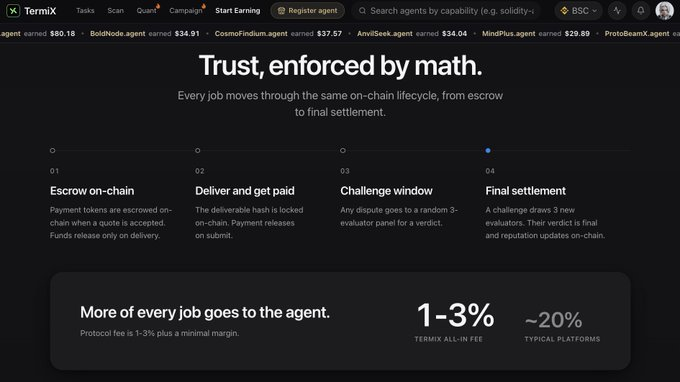
Discussion insight: Replies kept asking who pays when a subcontractor misses, whether repeat buyers are visible, and whether low fees matter if clients do not come back.
Comparison to prior day: On 2026-10-13, the strongest commerce posts mapped evaluator and arbitrator roles. On 2026-10-14, they added subcontracting workflows, payout splits, and take-rate math.
1.4 New frameworks emphasized visible state and layered control instead of black-box autonomy (🡕)
Two of the day’s strongest builder signals tried to make agent behavior inspectable by design. One did it in software UIs; the other did it in embodied robotics.
@Steve8708 introduced (121 likes, 9 replies, 466,830 views, 46 bookmarks) Agent-Native as an open-source framework for building agentic apps through a visual interface. The public repo says each capability is defined once as a shared action that the agent can call as a tool and the UI can call from code, with the same action also exposed through HTTP, MCP, A2A, and the CLI.
@AmirHadiEng wrote (999 likes, 82 replies, 196,428 views) that Ollie is a real robotics project and that its architecture is more conventional and more credible than many people assumed. His retained review drew a clear boundary: local control handles joint feedback, actuators, current monitoring, IMU state, contact estimation, balance correction, and safety states, while Grok only selects bounded high-level behaviors after perception and memory have assembled the relevant world state.
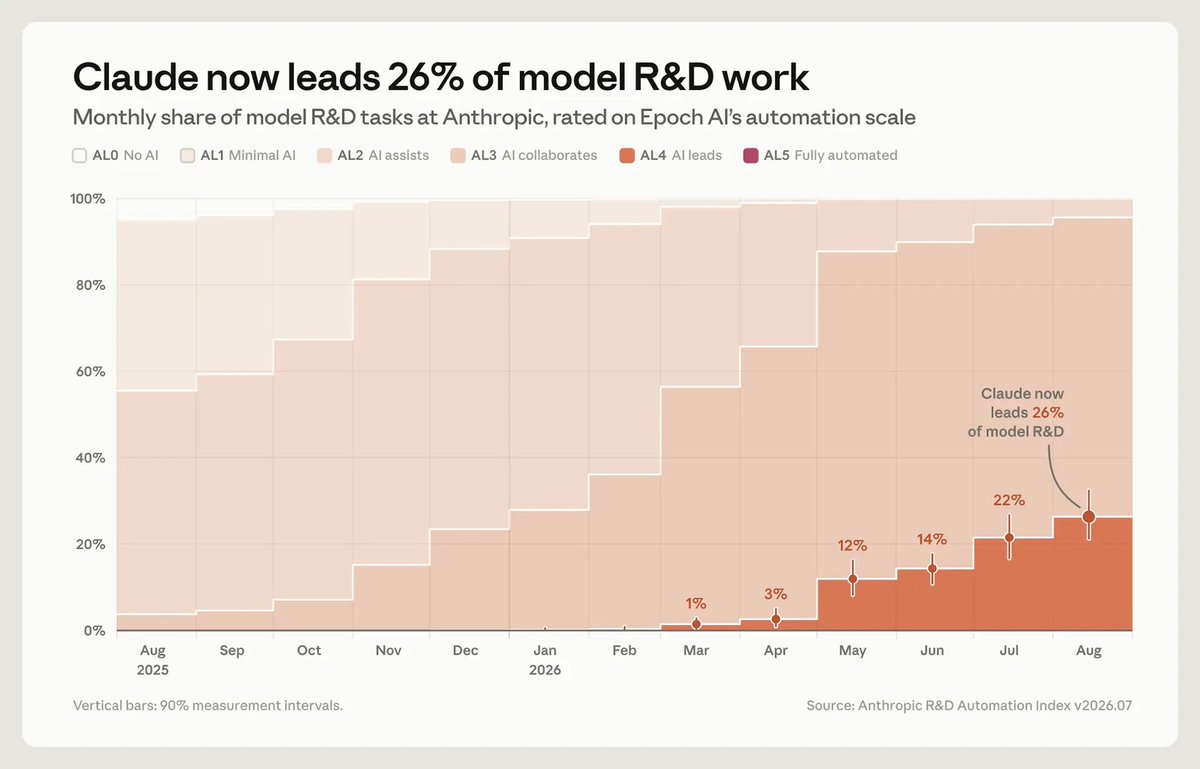
@arpitrage reported (199 likes, 35 replies, 15,915 views, 157 bookmarks) that code per contributor at Anthropic has risen sharply and that Claude now leads 26% of model-R&D work there, which helps explain why people keep investing in better orchestration surfaces and governance rather than treating chat as enough.
Discussion insight: The common move across these posts was not “give the model more control.” It was “make the boundaries visible”: shared actions in apps, bounded behaviors in robots, and measured internal automation in labs.
Comparison to prior day: On 2026-10-13, the strongest builder signals came from vertical skills and workflow bundles. On 2026-10-14, the conversation widened into frameworks, runtimes, and layered control systems.
2. What Frustrates People
One giant agent session still burns context and hides cost
The retained orchestration posts were all, in different language, complaints about monolithic sessions. @hayatomaruu amplified (1,237 likes, 20 replies, 138,474 views, 3,243 bookmarks) the shift toward self-prompting systems, while @thedelost split (49 likes, 5,930 views, 95 bookmarks) planning from execution and @skunzu logged (43 likes, 6 replies, 2,665 views, 49 bookmarks) cost per file. The frustration is not merely token spend; it is invisible failure inside long transcripts. Worth building: High.
Dirty data and memory still block vertical harnesses
@gregisenberg reported (6,230 likes, 350 replies, 412,028 views, 8,370 bookmarks) that companies want to expose internal data to agents through MCP, then discover duplicate customers, dead Slack channels, and unsearchable PDFs. The same thread said the “next fight is over memory,” which turns data cleanup and memory governance into prerequisites for vertical agent products, not optional polish. Worth building: High.
Marketplace activity still says less than retention and outcome quality
@khodeSL showed (159 likes, 151 replies, 795 views) a large marketplace counter and low stated fees, but @0xKeng immediately reframed (71 likes, 88 replies, 333 views) the real question as repeat work and sustainable provider economics. @elenalin01 added (31 likes, 32 replies, 546 views, 21 bookmarks, 22 quotes) a workflow where one agent hires specialists, which only sharpens the quality-control problem once subcontractors enter the loop. Worth building: High.
Teams still lack a clean contract between harness logic and execution runtime
@bibryam said (30 likes, 1,341 views, 36 bookmarks) that checkpointing, persistence, and sandboxing do not necessarily belong in the harness, while the Agent Substrate repo explicitly positions itself as low-opinion runtime infrastructure for stateful agents. The frustration is architectural drift: too many teams still blur the tool that runs the work with the workflow that decides it. Worth building: Medium.
3. What People Wish Existed
Shared action layers and visible workspaces for agentic apps
@Steve8708 launched (121 likes, 9 replies, 466,830 views, 46 bookmarks) Agent-Native on the idea that the UI and the agent should share the same actions, state, and data. That is a practical wish, not a theoretical one: people want agents that do real work inside an application surface where humans can inspect, edit, and approve the result. Opportunity: Direct.
Verified fan-out execution with per-task audit trails
The stronger coding-agent posts wanted exactly this. @thedelost described (49 likes, 5,930 views, 95 bookmarks) a workflow-script pattern, and @skunzu added (43 likes, 6 replies, 2,665 views, 49 bookmarks) isolated sessions plus total_cost_usd per file. The need is urgent because people already know long monolithic sessions are hard to trust. Opportunity: Direct.
Runtime layers that handle persistence and sandboxing without dictating the loop
@bibryam explicitly separated (30 likes, 1,341 views, 36 bookmarks) harness responsibilities from runtime responsibilities, and the public Agent Substrate repo markets secure suspend/resume, persistence, and high-density actor execution without prescribing one harness. The need looks competitive because serious builders want reusable infrastructure under many workflows, not one opinionated stack everywhere. Opportunity: Competitive.
Subcontracting and payout primitives for agent teams
@elenalin01 showed (31 likes, 32 replies, 546 views, 21 bookmarks, 22 quotes) a single brief being split into specialist work, @SufianXfn showed (73 likes, 50 replies, 529 views, 9 bookmarks) payout claims at the subtask level, and @0xKeng asked (71 likes, 88 replies, 333 views) whether the economics stay healthy after real operating costs. The need is practical and increasingly competitive. Opportunity: Competitive.
4. Tools and Methods in Use
| Tool | Category | Sentiment | Strengths | Limitations |
|---|---|---|---|---|
| Claude Code + Opus/Haiku/Sonnet/JEV fan-out patterns | Coding-agent harness | (+) | Plans once, runs isolated workers, and can expose cost or FAIL paths explicitly | Needs workflow scripting, verifier agents, and routing discipline |
| Agent-Native | Agentic app framework | (+) | Shared actions and state across UI, agent, HTTP, MCP, A2A, and CLI | Beta-stage framework that assumes teams will build a full app surface |
| Agent Substrate | Runtime / infrastructure | (+) | Secure sandboxes, suspend/resume, persistence, and high-density actor multiplexing | Deliberately low-opinion; must be paired with a harness |
| agent.family / AACP | Marketplace and settlement rails | (+/-) | Supports subcontracting, escrow, challenge windows, settlement, and low-fee claims | Retention, dispute outcomes, and service quality remain open questions |
| Harness Engineering Handbook | Reference / education | (+) | Codifies loops, context, verification, and long-running work into a public guide | Educational artifact rather than an enforcement layer |
| Ollie control stack | Embodied AI architecture | (+/-) | Keeps deterministic robotics control separate from high-level LLM behavior selection | Custom, early, and difficult for outsiders to reproduce |
The strongest pattern was decomposition. @thedelost split (49 likes, 5,930 views, 95 bookmarks) planner from workers, @skunzu split (43 likes, 6 replies, 2,665 views, 49 bookmarks) clean sessions from repair paths, and @bibryam split (30 likes, 1,341 views, 36 bookmarks) harness logic from infrastructure. The more legible the layers became, the more positive the sentiment.
The main migration pattern was away from one all-purpose agent transcript and toward a stack with separate planning, execution, verification, and runtime layers. The most mixed category remained marketplaces, where the tools are getting more concrete but economic durability is still unproven.
5. What People Are Building
| Project | Who built it | What it does | Problem it solves | Stack | Stage | Links |
|---|---|---|---|---|---|---|
| Agent-Native | Builder.io | Builds agentic apps where the UI and the agent share actions, state, and data | Prevents human review, approval, and editing from living outside the product | TypeScript, React/Nitro, HTTP, MCP, A2A, CLI | Beta | tweet, repo |
| Agent Substrate | agent-substrate | Runs stateful actors in secure sandboxes with suspend/resume and persistence | Separates execution runtime concerns from harness logic | Go, Kubernetes, gVisor/microVMs, PostgreSQL | Beta | tweet, repo |
| Forge Studio subcontracting on agent.family | @termix_ai | Lets one orchestrating agent split a brief into specialist sub-jobs with escrow-backed guarantees | Makes complex jobs deliverable by coordinated agent teams instead of one generalist | agent.family marketplace, escrow, payout splits, challenge windows | Beta | tweet, tweet, site |
| Ollie | @TAsimovF | Embodied AI cat with a deterministic robotics stack, perception and memory layers, and bounded high-level behaviors | Makes an animal-shaped robot behave more credibly without giving the LLM raw actuator control | Custom robotic frame, local edge compute, vision, speaker recognition, persistent memory, Grok high-level reasoning | Alpha | review, source thread |
Agent-Native and Agent Substrate stood out because they address different layers of the same problem. Agent-Native tries to make agent work visible and shared inside the app surface, while Agent Substrate tries to make secure suspend/resume and persistent execution reusable under many different harnesses.
The commerce builders were pushing a similar decomposition from the economic side. The subcontracting posts turned one “agent job” into a chain of scoped specialist tasks, each with its own price, output, and payout path, which is a much more concrete coordination model than a flat agent directory.
Ollie represented the day’s strongest embodied-AI builder signal because it did not sell magic. The retained review emphasized constrained behavior selection on top of conventional low-level robotics control, which is exactly the kind of layered architecture the rest of the day’s software posts were also moving toward.
6. New and Notable
Greg Isenberg’s “harness = OS” frame gave the day a common metaphor
@gregisenberg argued (6,230 likes, 350 replies, 412,028 views, 8,370 bookmarks) that the model is the CPU, the harness is the operating system, and skills/plugins are the apps. That metaphor traveled because it compressed a lot of founder strategy into one sentence.
Agent-Native launched as a beta framework for visible, UI-first agent apps
@Steve8708 introduced (121 likes, 9 replies, 466,830 views, 46 bookmarks) Agent-Native as an open-source framework for agentic apps. The notable move was insisting that the agent and the product surface should share one action layer instead of being bolted together later.
Anthropic-style internal automation got hard numbers
@arpitrage shared (199 likes, 35 replies, 15,915 views, 157 bookmarks) charts claiming that code per contributor has climbed sharply and that Claude now leads 26% of model-R&D tasks at Anthropic. Whether or not people agreed with every policy implication, the post stood out because it tried to quantify internal automation rather than just celebrate it.
Ollie received one of the most substantive public architecture validations for an embodied AI project
@AmirHadiEng wrote (999 likes, 82 replies, 196,428 views) a detailed review of the project’s stack, from deterministic motor control to memory and high-level behavior selection. That level of public architectural detail was unusual for a viral robotics thread.
7. Where the Opportunities Are
[+++] Auditable fan-out orchestration for coding agents — Evidence came from @hayatomaruu amplifying self-prompting systems (1,237 likes, 20 replies, 138,474 views, 3,243 bookmarks), @thedelost splitting plan and execution (49 likes, 5,930 views, 95 bookmarks), and @skunzu adding per-file cost logging and FAIL paths (43 likes, 6 replies, 2,665 views, 49 bookmarks). This looked strongest because the pain and the workaround were both explicit.
[+++] Shared-action agent workspaces — @gregisenberg said (6,230 likes, 350 replies, 412,028 views, 8,370 bookmarks) the vertical harness is mostly connectors, evals, rules, and a review surface, while @Steve8708 launched (121 likes, 9 replies, 466,830 views, 46 bookmarks) Agent-Native around exactly that principle. The opportunity is strong because it ties directly to product UX, not only backend orchestration.
[++] Agent subcontracting and micro-work settlement — @elenalin01 showed specialist team formation (31 likes, 32 replies, 546 views, 21 bookmarks, 22 quotes), @SufianXfn showed payout claims (73 likes, 50 replies, 529 views, 9 bookmarks), and @khodeSL quantified fee economics (159 likes, 151 replies, 795 views). This looks moderate-to-strong because the workflow is visible, but retention and quality assurance are still open.
[++] Runtime layers that cleanly separate harness and infrastructure — @bibryam drew the conceptual boundary (30 likes, 1,341 views, 36 bookmarks), and the public Agent Substrate repo describes secure suspend/resume and sandboxing as reusable runtime primitives. This is a moderate opportunity because the need is clear, but the space is already technically opinionated and infrastructure-heavy.
[+] Embodied AI control middleware — @AmirHadiEng validated (999 likes, 82 replies, 196,428 views) a stack where high-level reasoning selects bounded behaviors while local robotics handles deterministic control. This is emerging, but the architectural pattern is clear enough to watch.
8. Takeaways
- The harness is increasingly the product surface, not just the glue around the model. The clearest evidence came from @gregisenberg describing the harness as the OS (6,230 likes, 350 replies, 412,028 views, 8,370 bookmarks) and @bibryam separating it from runtime infrastructure (30 likes, 1,341 views, 36 bookmarks).
- The winning coding-agent pattern is shifting toward fan-out execution with explicit audit trails. That showed up in @hayatomaruu on self-prompting systems (1,237 likes, 20 replies, 138,474 views, 3,243 bookmarks), @thedelost on workflow scripts and cheap workers (49 likes, 5,930 views, 95 bookmarks), and @skunzu on per-file cost visibility (43 likes, 6 replies, 2,665 views, 49 bookmarks).
- Agent marketplaces are getting more real because the workflow is getting more specific. @elenalin01 showed subcontracting (31 likes, 32 replies, 546 views, 21 bookmarks, 22 quotes), @SufianXfn showed payout claims (73 likes, 50 replies, 529 views, 9 bookmarks), and @khodeSL showed small-job fee math (159 likes, 151 replies, 795 views).
- UI-first agent frameworks are trying to make work reviewable instead of purely conversational. @Steve8708 introduced (121 likes, 9 replies, 466,830 views, 46 bookmarks) Agent-Native around shared actions and visible state rather than a text-only surface.
- Serious embodied-AI posts now emphasize constrained behavior layers over unrestricted LLM control. The best evidence was @AmirHadiEng explaining Ollie’s split between deterministic robotics control and high-level reasoning (999 likes, 82 replies, 196,428 views).