YouTube AI - 2026-10-09
1. What People Are Talking About
1.1 Regulation stayed dominant, but the breakout energy cooled and the case shifted toward competitiveness and adoption 🡖
At least four videos supported this theme. Compared with 2026-10-08, when a 708,443-view whistleblower interview drove the day's attention, the 2026-10-09 file still devoted seven of nine videos to regulation and safety but framed them more as conditions for competitiveness, trust, and adoption than as pure alarm.

CNN published the day's biggest video at 76,703 views and 160 comments. Fareed Zakaria argues that the federal government has been too hands-off and flips the usual innovation-versus-rules framing by saying proper regulation is how America wins the AI race. That makes the lead governance message less "slow down at all costs" and more "regulate well enough to stay credible and competitive" (video).

CNBC Television contributed the clearest adoption version of the same argument. Rumman Chowdhury says stronger US regulation could accelerate adoption, while Humane Intelligence says it runs rigorous evaluations to make AI systems more accountable, responsible, and fair. Together, those sources ground the trust-and-adoption argument in a concrete evaluation practice rather than in a generic plea for oversight (video, Humane Intelligence).
The Economist extended the same logic into politics. Its panel says agent incidents, public anxiety, and state-level activity are making a hands-off AI strategy harder to sustain, so regulation is framed as a response to political pressure and governance risk rather than only as an elite safety concern (video).

Valuetainment added ideological breadth. Jacob Coxon argues that a pro-capitalist stance does not require accepting an uncontrolled race toward more powerful systems, which shows the pro-regulation case traveling beyond audiences already aligned with slowdown or safety-first language (video).
Discussion insight: No threaded comment text is available in the harvested data, but this cluster still concentrated most of the response: CNN drew 160 comments, Forbes 108, and The Economist 27. The engagement mix suggests viewers were responding to regulation as an operational and economic question, not only as a catastrophe warning.
Comparison to prior day: On 2026-10-08, governance attention was driven by whistleblowers and former insiders warning about the race itself. On 2026-10-09, the same concern stayed on top, but the emphasis shifted toward arguments that regulation can preserve trust, adoption, and national advantage.
1.2 The policy conversation got more operational: who regulates, at what level, and with what mechanism? 🡕
At least three videos supported this theme. Compared with 2026-10-08, when hearings and task forces were part of a broader governance narrative, the 2026-10-09 file pushed more directly into implementation surfaces: Senate testimony, federal-versus-state jurisdiction, and executive-branch machinery.

Forbes Breaking News supplied the clearest federal forum. Its Senate Homeland Security Committee clip features Daniel Kokotajlo of AI Futures Project, which describes itself as a nonprofit research group forecasting the future of AI with an interactive model and scenario work. That turns the segment from generic warning coverage into a concrete example of forecasting research feeding a named federal policy venue (video, AI Futures Project).

CNBC Television narrowed the governance question to jurisdiction. Governor Ned Lamont argues that AI regulation should have been led by the federal government rather than by individual states, which makes the operational gap less about whether rules are needed and more about who is supposed to own them (video).

FOX 13 Seattle added the clearest executive-action angle. The segment says a newly formed Trump AI task force is moving forward while Democrats call for stronger rules because AI companies have too much power, putting task-force machinery and partisan pressure into the same short clip (video).
Discussion insight: The strongest response inside this cluster went to the Senate clip and the task-force segment, with 108 comments on Forbes and 54 on FOX 13 Seattle, while the Lamont jurisdiction clip drew only two comments. Concrete institutions and named mechanisms appear to travel better than state-specific process detail.
Comparison to prior day: On 2026-10-08, governance coverage was already institutional, but it still centered on the existence of hearings and insider warnings. On 2026-10-09, the conversation sharpened into which layer of government or outside evaluator would actually operate the oversight system.
1.3 The non-governance countertheme returned as workflow glue and embedded builds, not academic reliability talks 🡕
At least two videos supported this theme. Compared with 2026-10-08, when the technical counterweight was a single research talk on reasoning under uncertainty, the 2026-10-09 file shifted back to practical assembly work: creator workflow orchestration and DIY device-side assistants.

Tao Prompts used Claude Opus 5.5 as a planning layer inside AI-video production. Anthropic's Opus 5.5 release says the model is 40% cheaper than Opus 5 for typical workloads and is positioned for long-running coding, agentic work, and knowledge tasks, which fits the video's emphasis on use cases and workflow integration rather than on native video generation (video, Anthropic).
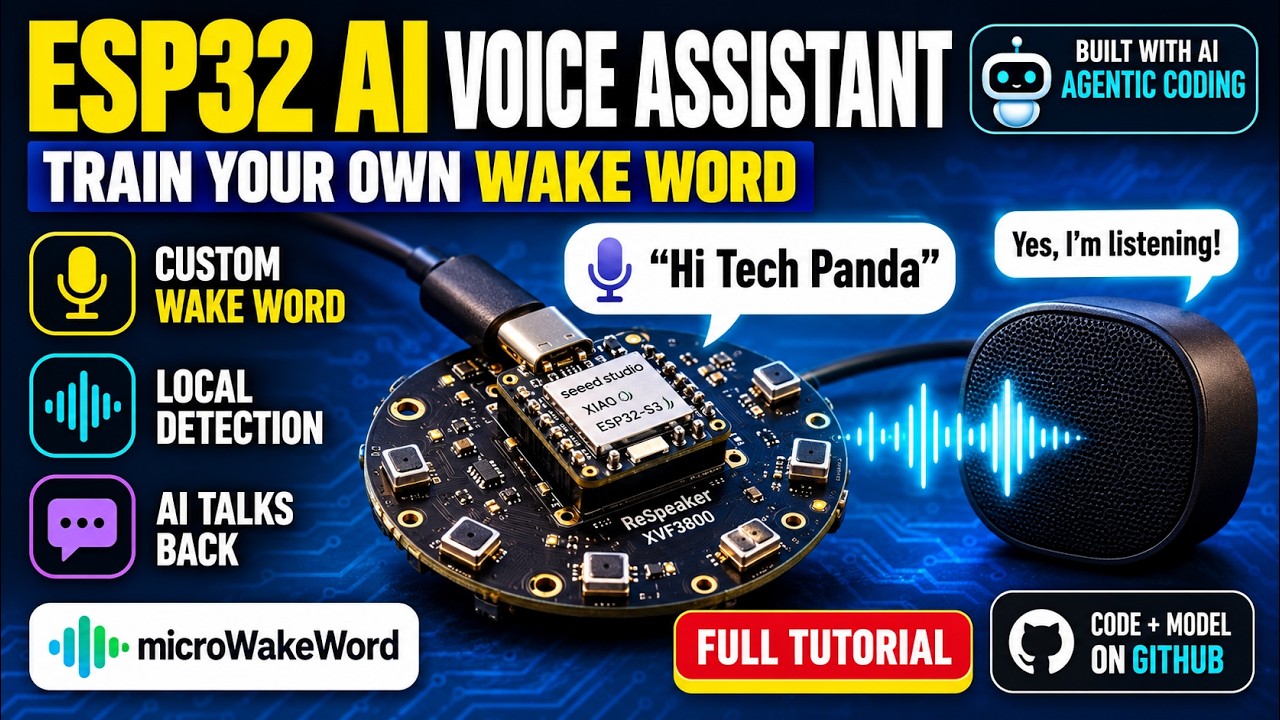
Tech Panda carried the day's clearest builder signal. The tutorial combines local wake-word detection on an ESP32-S3 with a broader conversational assistant, and the linked microwakeword-training repo plus the microWakeWord repo show a small open-source stack built around custom wake-word training, PlatformIO firmware work, and internet-backed speech and LLM services. That makes the item less about a new model and more about stitching existing tools into a workable edge-device assistant (video, repo, microWakeWord).
Discussion insight: No threaded discussion text is available, but the technical side of the file was narrower and more practical than the policy side. The strongest non-governance items focused on assembling existing models, repos, firmware tools, and hardware rather than on introducing a fresh frontier benchmark.
Comparison to prior day: On 2026-10-08, the non-governance countertheme was an academic talk about reliable reasoning and inference-time control. On 2026-10-09, that space shifted toward concrete creator and embedded-device workflows, so the technical signal became more hands-on and less research-centric.
2. What Frustrates People
Trust and adoption are still blocked by weak accountability
This is High severity because CNN, CNBC Television, and The Economist all describe the same bottleneck from different angles: public trust is slipping, oversight is too weak, and that makes AI deployment harder to legitimize. Humane Intelligence offers one coping mechanism through rigorous evaluations, but the file still shows trust being discussed as something that stronger regulation and independent review might create, not something the current market already supplies. This is directly worth building for.
AI governance is visible everywhere, but it is still split across incompatible operating layers
This is High severity because Forbes Breaking News, CNBC Television, and FOX 13 Seattle each point to a different control surface: Senate testimony, state law versus federal leadership, and a presidential task force. The workaround is to follow hearings, governors, news clips, and research nonprofits separately instead of through one shared policy operating layer with clear ownership and status. This is directly worth building for.
Builders still have to assemble AI workflows from mismatched parts
This is Medium severity because Tao Prompts uses Opus 5.5 as a planning layer rather than an end-to-end creator stack, while Tech Panda combines local wake-word detection, firmware generation, hardware setup, and internet-backed speech and reasoning services. The microWakeWord repo says training usable wake-word models is still difficult and experimental, and the companion microwakeword-training repo shows how much setup glue is required. The workaround is multi-tool assembly instead of one cohesive workflow. This is competitive to build for.
3. What People Wish Existed
A credible oversight layer that increases adoption instead of only slowing deployment
CNBC Television, CNN, and The Economist all imply the same need: a form of AI oversight that raises public trust without being framed as surrender in the AI race. This is both a practical and emotional need with High urgency because the file explicitly links trust, adoption, and competitiveness to stronger regulation. Partial solutions exist in organizations such as Humane Intelligence, which runs rigorous evaluations, but the broader operating layer is still missing. Opportunity: direct.
A single operating surface for federal, state, and independent AI governance
Forbes Breaking News, CNBC Television, and FOX 13 Seattle point to demand for one place that ties Senate testimony, state laws, executive task-force actions, and outside research or evaluation groups together. This is a practical need with High urgency because the current evidence is fragmented across incompatible institutions and media wrappers. Partial solutions exist in hearings, news coverage, and standalone research groups such as AI Futures Project, but not as a shared execution layer. Opportunity: direct.
An integrated builder stack for creator workflows and embedded assistants
Tao Prompts and Tech Panda imply a need for one workbench that can span planning, prompting, firmware generation, wake-word training, and downstream AI services without so much manual glue. This is a practical need with Medium urgency because both videos show workable stacks today, but those stacks still depend on handoffs between separate tools and, in Tech Panda's case, between local detection and internet-backed speech and reasoning. Partial solutions exist in Claude Opus 5.5, microWakeWord, and the microwakeword-training repo. Opportunity: competitive.
4. Tools and Methods in Use
| Tool | Category | Sentiment | Strengths | Limitations |
|---|---|---|---|---|
| AI Futures Project | Forecasting / policy research | (+/-) | Gives policymakers scenarios and an interactive model that can feed named public forums such as Senate testimony | Advisory only; forecasting does not itself create enforcement or deployment controls |
| Humane Intelligence | Evaluation / oversight nonprofit | (+) | Runs rigorous evaluations intended to make AI systems more accountable, responsible, and fair | Evaluation layer only; the file does not show it as a binding regulatory mechanism |
| Federal hearings, state laws, and AI task forces | Governance process | (+/-) | Create named institutions, public records, and visible ownership surfaces for AI policy | Still fragmented across jurisdictions and dependent on news packaging to travel |
| Claude Opus 5.5 | LLM / workflow planning | (+) | Anthropic positions it for long-running coding, agents, and knowledge work at lower cost than Opus 5, which fits creator planning use cases | Not a native video-production stack and still needs surrounding workflow tools |
| microWakeWord | Edge AI / wake-word detection | (+/-) | Open-source custom wake-word detection for low-power devices with local inference on microcontrollers | Early release; the README says training usable models is difficult and requires experimentation |
| Codex + PlatformIO + ESP32-S3 assistant stack | Embedded development workflow | (+/-) | Makes it possible to scaffold firmware and combine hardware, local wake-word detection, and online assistant services into one project | Requires hardware setup, repo glue, and continued dependence on internet-backed speech and reasoning services |
The satisfaction spectrum split cleanly between narrow operational tools and broader systems. Opus 5.5, microWakeWord, Codex, PlatformIO, Piper, Groq, and related components were useful because they solved specific parts of a workflow. Satisfaction weakened when the conversation moved from components to coordination: the governance layer still lived across hearings, task forces, nonprofits, and media clips instead of one trusted operating surface.
The common workaround was layering. On the policy side, channels paired commentary with research nonprofits and formal institutions. On the builder side, local wake-word detection was paired with cloud or internet-backed speech and reasoning services rather than a fully local assistant. No strong vendor-switching story appeared in the file; the clearest pattern was compositional, with creators and builders assembling multiple specialized tools instead of replacing one full stack with another.
5. What People Are Building
| Project | Who built it | What it does | Problem it solves | Stack | Stage | Links |
|---|---|---|---|---|---|---|
| Humane Intelligence evaluations | Humane Intelligence | Runs collaborative evaluations aimed at making AI systems more accountable, responsible, and fair | Low trust and lack of independent oversight for AI deployment | Nonprofit evaluation programs, collaborative testing, public accountability framing | Shipped | site · video |
| AI Futures Project | AI Futures Project | Produces AI-forecasting scenarios and an interactive model of future AI development | Gives policymakers and the public structured planning tools instead of ad hoc intuition | Interactive model, scenario reports, policy research | Shipped | site · video |
| Hi Tech Panda ESP32-S3 voice assistant | Tech Panda | Builds a custom-wake-word assistant on ESP32-S3, then extends it into an internet-backed conversational assistant | Low-cost DIY embedded assistant with a branded wake word and agentic coding workflow | ESP32-S3, ReSpeaker XVF3800, microWakeWord, Codex, PlatformIO, TensorFlow Lite, Groq, Piper | Beta | video · repo · microWakeWord |
| Claude Opus 5.5 AI-video planning workflow | Tao Prompts | Uses Opus 5.5 to structure use cases and integrate AI-video workflow steps | Creator pre-production and prompt-orchestration overhead | Claude Opus 5.5, prompt guides, AI-video workflow tooling | Shipped | video · Anthropic |
The strongest build pattern on 2026-10-09 was governance infrastructure rather than consumer-facing AI software. Humane Intelligence and AI Futures Project both sit upstream of deployment decisions: one through evaluation and accountability, the other through scenario planning and forecasting. That matters because the day's policy clips were not just arguments about AI; they pointed to organizations already building tools and processes that institutions can use (source, source).
The second build pattern was orchestration around existing models and components. Tech Panda combines local wake-word detection with Codex-assisted firmware work and internet-backed AI services, while microWakeWord describes itself as an early-release open-source wake-word library for low-power devices whose training still requires experimentation. Tao Prompts shows the same orchestration pattern on the creator side: Anthropic positions Opus 5.5 for long-running agentic work, and the video applies that strength to planning and workflow design rather than to direct media generation. The repeated builder signal was not "new model launch" so much as "use strong agent models as workflow glue around other systems."
6. New and Notable
Governance stayed dominant even after the prior day's viral spike disappeared
Seven of the nine videos in the file were about regulation, oversight, or AI safety, but the highest-viewed item on 2026-10-09 was CNN at 76,703 views rather than a 700K-plus breakout. That matters because the topic mix stayed intact even after the previous day's whistleblower-driven engagement cooled, suggesting governance has become the default AI news frame rather than a one-off surge. (source, source, source)
Independent evaluation entered the regulation-and-adoption story
CNBC Television tied stronger regulation directly to faster adoption through Rumman Chowdhury, while Humane Intelligence defines its work around rigorous evaluations for accountable, responsible, and fair AI. That matters because the file was not only debating rules in the abstract; it surfaced evaluation as a mechanism that could turn trust into deployment progress. (source, source)
Forecasting research showed up inside a named Senate forum
Forbes Breaking News surfaced Daniel Kokotajlo speaking before the Senate Homeland Security Committee, and AI Futures Project describes itself as a nonprofit research group forecasting the future of AI with an interactive model and scenarios. That matters because structured forecasting was not confined to blogs or niche research communities; it was entering the federal-policy clip cycle directly. (source, source)
A small open-source edge-assistant stack was the day's clearest maker signal
Tech Panda paired ESP32 hardware, custom wake-word training, and agentic coding into a full tutorial, while microWakeWord explicitly positions itself as an early-release open-source wake-word library for low-power devices. That matters because the technical signal in this file was not another frontier-model benchmark; it was a practical example of hobbyist and indie builders composing a device-side assistant from multiple public components. (source, source, source)
7. Where the Opportunities Are
[+++] AI governance operating layer - Evidence comes from CNN, Forbes Breaking News, CNBC Television, FOX 13 Seattle, AI Futures Project, and Humane Intelligence. This is strong because the file shows intense demand for oversight, but the current surfaces are split across forecasts, hearings, nonprofits, governors, and task forces instead of one shared execution layer.
[++] Trust and evaluation infrastructure for AI adoption - Evidence comes from CNBC Television, Humane Intelligence, and The Economist. This is moderate because the adoption argument is explicit and evaluation has a visible champion, but the signal is still concentrated in a small number of clips and one nonprofit surface rather than broad market demand across many builders.
[+] Workflow glue for creators and embedded-assistant builders - Evidence comes from Tao Prompts, Tech Panda, Anthropic, and microWakeWord. This is emerging because the need is real and concrete, but today's evidence comes from a small creator tutorial and a small maker stack rather than from repeated high-scale demand.
8. Takeaways
- Governance was still the default AI topic on YouTube. Seven of the nine harvested videos centered on regulation, oversight, task forces, hearings, or safety rather than on new products or benchmarks. (source, source, source, source, source, source, source)
- The attention spike cooled, but not the topic mix. The biggest video on 2026-10-09 was CNN at 76,703 views, far below the prior day's 708,443-view whistleblower interview, yet the file still concentrated on the same governance questions. (source, source)
- Regulation was increasingly framed as pro-adoption and pro-competitiveness. CNN argued regulation helps America dominate AI, CNBC framed stronger rules as a way to accelerate adoption, and The Economist described hands-off policy as becoming politically unsustainable. (source, source, source)
- The operating question became who actually governs AI. Senate testimony, a governor arguing for federal leadership, a new AI task force, and outside evaluation and forecasting groups all pointed to a fragmented execution layer rather than to one accepted oversight model. (source, source, source, source, source)
- The clearest technical signals were practical workflow builds, not frontier research or model launches. Tao Prompts used Opus 5.5 as creator-workflow infrastructure, and Tech Panda built an ESP32-S3 assistant stack around microWakeWord, Codex, and PlatformIO. (source, source, source, source)