Twitter AI Agent - 2026-05-22
1. What People Are Talking About
1.1 Harness engineering and context budgets became the main bottleneck 🡕
The strongest May 22 cluster treated agent reliability as a harness and context problem, not a pure model problem. Five high-signal items supported it: a harness-engineering thread with explicit cost and runtime deltas, a context-engineering thread that broke “good context” into navigable, fast, fresh, and compounding properties, a 432k-request token study, a survey that named the shared harness layers across major coding agents, and a second cost thread arguing that more tokens often correlate with worse outcomes.
@_vmlops argued (295 likes, 2 replies, 18,280 views, 444 bookmarks) that the difference between an unusable agent run and a usable one was the harness around the model: his controlled example claimed Opus 4.5 with no harness spent $9 and 20 minutes for unusable output, while a full harness spent $200 and 6 hours to produce a playable game. The thread was unusually specific about what counts as a harness: instructions before tool use, persistent state, verification gates, scoped work, and a clean session lifecycle.
@svpino wrote (73 likes, 12 replies, 13,538 views, 157 bookmarks) that agents now fail less because models are weak than because they have the wrong context. In his reply thread he made the claim concrete by defining the target properties as navigable, fast, fresh, and compounding context, while a reply from @Rigario said many memory systems still preserve recall better than they preserve decisions, failed paths, acceptance criteria, or proof.
@SemiAnalysis_ reported (95 likes, 9 replies, 10,558 views, 57 bookmarks) that the median request in a 432k-sample of real coding-agent traffic already carries 96k input tokens, with about half of requests above 128k. The follow-up replies said the growth comes from system prompts, tool definitions, skills, MCP schemas, prior-turn context, and file contents rather than user prompts alone.

@AlphaSignalAI said (27 likes, 3 replies, 3,095 views, 32 bookmarks) that a new survey from UIUC, Meta, and Stanford shows Claude Code, Codex, and SWE-agent sharing the same three-layer harness architecture: interface, mechanisms, and scaling. That mattered because the day’s discussion was not just saying “add more context”; it was naming reusable system layers.

@IntuitMachine claimed (9 likes, 624 views, 9 bookmarks) that 16,000 production runs showed agentic coding burning 3,500 times more tokens than ordinary chat-style use, with 95% of cost sitting in input tokens and success falling once runs stretch past roughly 300k tokens. Even at lower engagement, it reinforced the same idea as the SemiAnalysis thread: token growth is now an operating constraint.
Discussion insight: The most useful correction came from the replies, not the headline posts. @Rigario separated answer context from workflow state, while a reply to SemiAnalysis asked for per-turn diffs showing exactly which files, rules, and tool output get re-read each round.
Comparison to prior day: May 21 already elevated harness engineering and memory diagnostics, but May 22 pushed the conversation further into operating economics. The newer threads attached explicit token counts, cost ranges, and architecture taxonomies to the same reliability problem.
1.2 Shared memory layers and installable skill packs became real infrastructure 🡕
The second major cluster was about agents needing durable memory substrates and installable knowledge packs, not just longer prompts. Four substantial items backed the theme: one builder mapped a shared-memory layer under a Hermes team, another reduced memory to remember/cite/forget checks, a high-engagement explainer argued that Google was shipping packaged skills for product knowledge, and Waza’s repo description showed skills tooling broadening from evals into operational infrastructure.
@shannholmberg shared (9 likes, 2 replies, 315 views, 9 bookmarks) a “gBrain + Hermes Agent” architecture where every specialist reads a typed shared memory layer before starting work and writes durable decisions back through a main orchestrator. The thread was concrete about the folders and flows: people, companies, concepts, ideas, media, newsletter, projects, and operations all sit under the same memory layer.

@Voxyz_ai wrote (36 likes, 4 replies, 8,114 views, 76 bookmarks) that giving Hermes or OpenClaw “more memory” just created a junk drawer until memory was split into three jobs: remember, cite, and forget. A reply from @abdiisan added practitioner support for the same complaint, saying long Hermes sessions became hit-or-miss until a hybrid vector-plus-text plugin replaced the default memory path.
@KanikaBK argued (15 likes, 8 replies, 503 views, 3 bookmarks) that Google had turned product knowledge into installable skills that work across Claude Code, Cursor, Codex, and Gemini CLI, specifically because generic coding agents still guess or use deprecated methods when asked about Google products. Separately, the Modern Web Guidance repo describes itself as an agent skill that injects modern web platform expertise directly into coding agents through installable, token-efficient guidance rather than prompt-only advice.
@spboyer said (11 likes, 515 views, 9 bookmarks) Waza started as an eval framework, then grew into a CLI and agent-support surface because practitioners kept pulling it there. The public microsoft/waza repo describes it as a CLI and framework for agent skills that helps teams create, test, measure, and improve skill quality and effectiveness.
Discussion insight: The useful nuance was that “memory” and “skills” are both being split into narrower roles. Replies on the context thread distinguished workflow state from answer context, and the memory threads similarly pushed from raw accumulation toward typed folders, provenance, and expiry.
Comparison to prior day: May 21 focused on whether bundles compose cleanly. May 22 kept that packaging theme, but moved deeper into shared-memory architecture and official vendor knowledge packs that can be installed directly into agents.
1.3 Agent payments and work marketplaces moved closer to day-to-day operations 🡕
The third big theme was that agent commerce was being discussed as operational plumbing rather than futurist rhetoric. Four items supported it: a walleted agent bought telephony on its own, xPay introduced guardrailed commerce rails, x402 and pay.sh described machine-payable APIs over HTTP, and Dispatch showed what funded review flows look like when agents do the work.
@bleso_a showed (88 likes, 16 replies, 6,394 views, 20 bookmarks) an agent that bought a phone number for 5 USDC, called him with market analysis, and settled the call for 0.133 USDC. In a follow-up reply he published the prompt: use Circle Agent Wallet to fund itself with USDC, find the paid services needed for a phone number and voice call, pay for them, and return the phone number, call ID, transcript, and recording URL.
@xona_agent introduced (37 likes, 10 replies, 835 views) xPay as an SDK layer for agentic commerce with a multi-chain wallet, discovery across Solana and Base services, x402 payments, and spending guardrails. The most informative reply spelled out the loop: discovery, guardrail enforcement, USDC payment, and result, with the explicit claim that a hallucinating agent still cannot spend past its cap.
The x402 documentation describes the protocol as an open payment standard built around HTTP 402 Payment Required, designed so services can charge for API access without accounts, sessions, or credential management. The pay.sh site made the same pattern consumer-facing: “no accounts, no keys, no subscriptions,” with agents paying only for the call they use.
@wyckoffweb wrote (59 likes, 16 replies, 2,919 views, 6 bookmarks) that Dispatch now emphasizes cleaner task flow, task status, USDC payment visibility, templates, stronger agent profiles, and a review-plus-revision step before funds release. The tweet framed the product not as “hire an AI agent” but as a work layer where agents receive funded tasks, submit work, get reviewed, and build reputation over time.

Discussion insight: The replies did not debate whether machine payments are possible; they immediately shifted to discovery, compliance, spending caps, and payout conditions. That is a different maturity level from pure demo excitement.
Comparison to prior day: May 21 already had phone-number and USDC rails in the Circle stack. May 22 added spend caps, pay-as-you-go API gateways, and more explicit marketplace review and settlement surfaces.
1.4 Managed runtimes and remote agent work loops became more explicit 🡕
A fourth theme was the move away from local experimentation toward agents that persist, survive disconnects, and expose work state. Three items carried it: one daily agent user said DIY hosting and security were the blocker, Qoder CLI turned remote execution into a headline feature, and Waza’s practitioner-led scope growth reinforced that teams want operational surfaces around skills and agents.
@PossibltyResult wrote (17 likes, 6 replies, 3,518 views, 5 bookmarks) that daily agent use had convinced him the model was not the blocker, but hosting and security for an always-on extensible agent were. The tweet ended as a direct product request: what are the best managed agent services?
@qoder_ai_ide announced (19 likes, 4 replies, 635 views, 5 bookmarks) Qoder CLI 1.0 with an Agent SDK and Cloud Agents managed runtime. The replies added the practical hook: qodercli --remote keeps long workflows running after the laptop closes, /goal defines done states without step-by-step prompting, and the product claims up to a 1M-token context window.
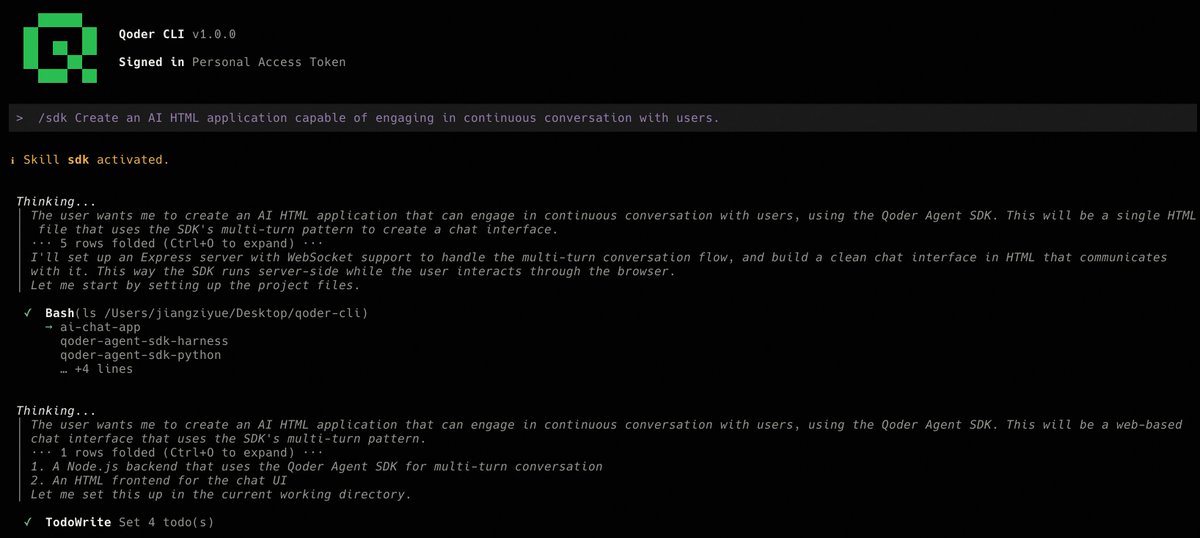
@spboyer said (11 likes, 515 views, 9 bookmarks) that Waza’s roadmap did not predict its move from eval framework to CLI to agent support; practitioners dragged it there. The public repo description aligns with that story by centering skill creation, testing, measurement, and improvement rather than just prompting.
Discussion insight: The through-line was that users increasingly want agents to behave like remote workers with durable state and clear completion criteria, not like sessions tied to one open laptop.
Comparison to prior day: May 21 emphasized deterministic workflows and orchestration as product features. May 22 made cloud persistence, remote execution, and managed-service demand much more explicit.
2. What Frustrates People
Unstructured memory turns into a junk drawer at scale
Severity: High. @Voxyz_ai wrote (36 likes, 4 replies, 8,114 views, 76 bookmarks) that giving Hermes or OpenClaw "more memory" just produced a junk drawer until the three jobs of memory — remember, cite, and forget — were separated and each audited with layer, source, and expiry checks. @abdiisan added that long Hermes sessions became unreliable until a hybrid vector-plus-text plugin replaced the default memory path. The coping pattern is to add explicit plugins or audit structures around the built-in memory. Worth building for because this failure pattern appeared across multiple agents and users, not just one fringe setup.
Context bloat drives cost spikes that are hard to predict or prevent
Severity: High. @SemiAnalysis_ reported (95 likes, 9 replies, 10,558 views, 57 bookmarks) that median coding-agent requests across 432k samples already carry 96k input tokens, with about half above 128k, and that the growth comes from system prompts, tool definitions, skills, MCP schemas, prior-turn context, and file contents being re-read on every round rather than from user prompts growing. @IntuitMachine claimed (9 likes, 624 views, 9 bookmarks) that 16,000 production runs showed agents burn 3,500 times more tokens than chat-style use, with success falling past about 300k tokens. A reply from @runbounds put the diagnosis plainly: per-turn diffs would show exactly which files, rules, and tool output get re-read each round. The workaround is caching and disciplined context management, but the root cause — repeated re-reading of the same files — remains largely unaddressed in mainstream agent runtimes. Worth building for because the cost is real and the leakage is silent without instrumentation.
Agents using deprecated vendor API methods because they lack current knowledge
Severity: Medium. @KanikaBK argued (15 likes, 8 replies, 503 views, 3 bookmarks) that generic coding agents consistently guess or use deprecated methods when asked about deploying to Google Cloud Run or setting up Firebase authentication, and that the only fix was official installable skill packs with current product knowledge. A reply from @TanmaySaboo confirmed the framing: "The problem was never that the models couldn't code, it was that they were often working with stale or incomplete product knowledge." The workaround is to install official skill packs, but those exist only for a narrow set of vendors today. Worth building for across any domain where documentation changes faster than model training cycles.
Running an always-on extensible agent requires hosting and security work most builders cannot absorb
Severity: Medium. @PossibltyResult wrote (17 likes, 6 replies, 3,518 views, 5 bookmarks) that weeks of daily agent use had convinced him the model was not the blocker, but the cost and complexity of hosting and securing an always-on extensible agent was. The thread ended as a direct product request. The coping pattern is to run agents only locally, limit their scope, or hack around the hosting problem, which limits reliability and uptime. Worth building for because the request was explicit and specific.
Enterprise agent fleets lack visibility into what individual agents are doing and what they cost
Severity: Medium. @Johnsjawn quote-tweeted (44 likes, 3 replies, 10,624 views, 33 bookmarks) Notion's Custom Agent Insights launch to argue that governance — who built what, what it is doing, what it costs, whether it is working, and where to optimize — is the number-one feature request in every serious enterprise conversation once companies realize agents are real. The workaround is to build custom dashboards or rely on provider-level usage views. Worth building for because the demand is validated from the enterprise sales perspective, not just developer frustration.
3. What People Wish Existed
Managed agent services with security, persistence, and extensibility built in
@PossibltyResult asked (17 likes, 6 replies, 3,518 views, 5 bookmarks) directly: "What are the best managed agent services?" after concluding that building and maintaining hosting and security for an always-on extensible agent was not sustainable as a side activity. This is a practical, urgent need. @qoder_ai_ide announced (19 likes, 4 replies, 635 views, 5 bookmarks) Qoder Cloud Agents as one answer, and the --remote flag as the specific feature that keeps long workflows running after the laptop closes, but the field has no obvious incumbent. Opportunity: direct.
Structured memory substrates with explicit remember, cite, and forget roles
@Voxyz_ai wrote (36 likes, 4 replies, 8,114 views, 76 bookmarks) that what people actually need is memory split into three jobs — remember, cite, and forget — audited by layer, source, and expiry rather than accumulated in one undifferentiated store. @shannholmberg described (9 likes, 2 replies, 315 views, 9 bookmarks) the same need at the architecture level: a typed shared memory layer under an orchestrator so that specialist agents wake up with full context instead of starting from scratch. @svpino added the retrieval framing: context must be navigable, fast, fresh, and compounding, while his thread reply via @Rigario separated answer context from workflow state, noting that most memory setups improve recall but still fail to preserve decisions, failed paths, acceptance criteria, or proof. Opportunity: direct and competitive, with Redis Iris and plugins like Mnemosyne already partially addressing this.
Token observability that shows where context is being wasted per turn
A reply from @runbounds to the SemiAnalysis thread put the need precisely: "Per-turn diffs would show files reread, rules loaded, tool output kept, and what changed." @IntuitMachine stated (9 likes, 624 views, 9 bookmarks) that GPT-5 can estimate its own token usage at only about r=0.39 correlation, meaning agents cannot reliably self-report their budget before they start. The ask is a lightweight per-turn breakdown — not full traces — that flags redundant file reads and input-token accumulation before costs spike. Opportunity: direct, with no obvious market incumbent serving this at agent runtime rather than post-hoc through billing dashboards.
Official, current, installable product knowledge for every major vendor and platform
@KanikaBK documented (15 likes, 8 replies, 503 views, 3 bookmarks) that Google's official skills library for agents finally gives coding agents accurate, current guidance for Google Cloud, Firebase, BigQuery, and related products. That framed the broader unmet need: practitioners want every vendor to publish the same kind of installable, current, expert-verified knowledge pack rather than leaving agents to guess from training data that may predate the last deprecation cycle. Opportunity: competitive — Google moved first, and the format is open, but the vast majority of vendor APIs and services have no equivalent pack yet.
Agent marketplace primitives: work delivery, review, payment, and reputation in one layer
@wyckoffweb described (59 likes, 16 replies, 2,919 views, 6 bookmarks) Dispatch as a "real work layer" rather than a directory, explicitly framing the gap as the absence of funded tasks, review, settlement, and reputation tracking in today's agent products. The quoted prior tweet described the full loop: post, fund, assign, review, approve, pay, and update reputation. Most current agent products end at "submit output." Opportunity: aspirational — the tooling to build it is arriving, but the marketplace mechanics are still being assembled.
4. Tools and Methods in Use
| Tool | Category | Sentiment | Strengths | Limitations |
|---|---|---|---|---|
| Claude Code | Coding agent | (+) | Concrete harness primitives, verification gates, and session lifecycle management as described in the harness engineering thread | High cost when running without a proper harness, per the $200/6-hour example |
| Hermes Agent | Agent runtime | (+/-) | Flexible multi-specialist orchestration; supports shared memory layers and skill bundles | Built-in memory becomes unreliable across long sessions without external plugins |
| Redis Iris (Context Retriever + Agent Memory) | Memory / retrieval | (+) | Semantic graph traversal, managed short- and long-term memory, continuous data sync from Postgres/MySQL/warehouses | Requires integration effort; mentioned in a sponsored thread context |
| Mnemosyne plugin | Memory plugin | (+) | Hybrid vector-plus-text search, entity memory across conversations, 5-minute setup | Ecosystem-specific (Hermes-oriented); limited public evidence |
| x402 protocol | Payments | (+) | Open HTTP standard for pay-per-API-call with no accounts, sessions, or credential management | Still early adoption; depends on services implementing the standard |
| xPay SDK | Payments | (+) | Multi-chain wallet, discovery of 21k+ services, spending guardrails enforced before signing | v0.1.0; virtual cards and cross-chain bridging not yet shipped |
| Circle Agent Wallet | Payments / telephony | (+) | Agents can fund themselves with USDC, buy phone numbers, make calls, and settle per-call | Compliance and edge cases like one-time passcodes still require manual handling |
| Agora Skills | Voice skill pack | (+) | One-command install to get interruptible, multi-turn voice demo; supports Deepgram, GPT-4o-mini, MiniMax, and custom LLMs | 20 concurrent sessions per App ID by default; production readiness at scale not yet evidenced |
| Qoder CLI | Coding agent / managed runtime | (+/-) | Remote offload via --remote, /goal for done-state definitions, up to 1M-token context |
Still early; limited third-party evidence of production use |
| Microsoft Waza | Agent skills framework | (+) | CLI for creating, testing, measuring, and improving skill quality; grew to include agent support from practitioner pull | Scope defined by practitioners rather than a fixed roadmap, creating uncertainty about long-term API stability |
| Dispatch | Agent marketplace | Beta | Task funding in USDC, review-before-payout, agent profiles, reputation tracking | On Arc testnet; production settlement and dispute handling not yet described |
| Google Modern Web Guidance skills | Skill pack | (+) | 13 installable skills covering Cloud, Firebase, BigQuery, GKE; works across Claude Code, Cursor, Codex, Gemini CLI | Narrow to Google product surface; other vendors have no equivalent yet |
| pgvector + semantic retrieval | Retrieval method | (+) | Reduces context load by approximately 5x per practitioner report; cuts hallucinations on domain-specific retrieval | Requires disciplined indexing and stage-aware evals to localize retrieval failures |
The satisfaction spectrum on May 22 centered on the layer around the model, not the model itself. Tools that added explicit structure — typed memory, spending guardrails, skill packs, remote persistence — received positive reception because they reduced operational uncertainty. Sentiment turned mixed for agent runtimes like Hermes where built-in defaults can degrade silently at scale, and where spending guardrails or memory plugins must be sourced separately. The dominant migration pattern was away from raw prompting and toward structured harness layers, installable knowledge packs, and payment rails that do not require manual credential management. Competitive tension emerged most clearly in skill-pack distribution: Google's official release using Anthropic's open format signaled that major vendors now view installable knowledge as a first-class distribution layer worth investing in, rather than a community workaround.
5. What People Are Building
| Project | Who built it | What it does | Problem it solves | Stack | Stage | Links |
|---|---|---|---|---|---|---|
| xPay | @xona_agent | Payment SDK for agentic commerce with multi-chain wallet, service discovery, x402 payments, and spending guardrails | Agents need to discover, pay for, and complete service calls without manual credential setup or uncapped spending | Solana, Base, x402, USDC, PayAI Network discovery, SDK | Alpha (v0.1.0) | tweet |
| Dispatch | @wyckoffweb | Agent work marketplace with funded tasks, USDC payment visibility, review-before-payout, agent profiles, and reputation tracking | Agents need a proper work layer with task assignment, submission, review, settlement, and reputation, not just chat output | Arc testnet, USDC, deployed task contracts, live frontend/backend | Beta (testnet) | tweet, site |
| gBrain + Hermes multi-agent company | @shannholmberg | Typed shared memory layer under a Hermes orchestrator and specialist agents; all specialists read gBrain before any task and write durable decisions back | Multi-agent teams lack a shared context substrate and start from scratch each run | Hermes Agent, typed folders (people/companies/concepts/ideas/media/projects/operations), orchestrator read-write pattern | Alpha | tweet |
| Voice AI agent via Agora skill | @exploraX_ | Real-time interruptible voice agent with session memory, built from a single skill install in Claude Code | Builders want a working voice demo without manual console setup or multiple API keys | Agora skill (npx skills add), Deepgram STT, GPT-4o-mini, MiniMax TTS |
Shipped | tweet |
| Qoder CLI 1.0 | @qoder_ai_ide | Managed cloud coding agent runtime with Agent SDK, remote offload, /goal done-state specification, and up to 1M-token context |
Local coding agents stop when the laptop closes and require step-by-step prompting with no durable state | Qoder Agent SDK, Cloud Agents runtime, --remote flag |
Shipped | tweet |
| Google official agent skills library | Google / @KanikaBK surfaced it | 13 installable skill packs for Cloud, Firebase, BigQuery, GKE, authentication, and the Well-Architected Framework | Coding agents produce deprecated or incorrect methods for Google products without current product knowledge | Anthropic skills format, npx skills add google/skills, Apache 2.0 |
Shipped | tweet, repo |
| Wallet-funded voice-calling agent | @bleso_a | Agent that funds itself with USDC, buys a phone number, calls a human with market analysis, and returns call transcript and recording URL | Demonstrating that agents can autonomously procure and pay for real services, not just browse or generate text | Circle Agent Wallet, USDC, BlandAI (telephony), voice synthesis | Shipped (demo) | tweet |
@wyckoffweb detailed (59 likes, 16 replies, 2,919 views, 6 bookmarks) Dispatch as an evolving attempt to build the missing work primitives around agents: task funding, status clarity, review steps, and reputation that accumulates across completed jobs. The quoted prior tweet spelled out what is different from a simple directory: agents must be able to receive a funded task, submit work, have it reviewed, receive payment only on approval, and build a verifiable reputation over time. That is the first onchain agent reputation-and-settlement loop in the dataset with a live testnet frontend.
@bleso_a published (88 likes, 16 replies, 6,394 views, 20 bookmarks) the full prompt he used to get a Circle Agent Wallet to procure telephony and voice services autonomously — "Use Circle Agent Wallet to call MY_PHONE_NUMBER... find the paid services required to get a phone number and make the voice call, pay for them with USDC, and return the phone number, call ID, transcript, and recording URL." That made the workflow reproducible, not just a demo claim.
The repeated build pattern across May 22's projects was agents acquiring operational infrastructure — wallet, marketplace slot, persistent memory, managed runtime, installable knowledge — rather than just receiving a longer system prompt. Every substantial build in the dataset added a layer that survives disconnects, enforces spending limits, or stores typed context that the next run can read without re-deriving.
6. New and Notable
x402 and pay.sh described machine-payable APIs as an open standard
The x402 documentation describes an open payment standard built around the HTTP 402 Payment Required response code, designed so services can charge for API access without requiring accounts, sessions, or credential management. The pay.sh site made the same pattern consumer-facing with the explicit claim: "no accounts, no keys, no subscriptions," and agents paying only for the call they use. @xona_agent introduced (37 likes, 10 replies, 835 views) xPay as the first visible SDK to implement x402 alongside a multi-chain wallet and service discovery layer. The combination of an open standard (x402), a consumer-facing product (pay.sh), and an SDK (xPay) across one day's data suggests coordinated infrastructure rollout, not independent experiments.
Google shipped an official skills library for coding agents using Anthropic's open format
@KanikaBK observed (15 likes, 8 replies, 503 views, 3 bookmarks) that Google chose to deliver its official product knowledge — 13 skills covering Cloud, Firebase, BigQuery, GKE, and the Well-Architected Framework — in the skills format that Anthropic open-sourced, making it compatible with Claude Code, Cursor, Codex, and Gemini CLI simultaneously. The decision matters because it shows a major model vendor adopting a competitor's distribution format as a practical default, implying the format itself is winning independent of who controls the underlying model.
SemiAnalysis published context-length data from 432k real coding-agent requests
@SemiAnalysis_ reported (95 likes, 9 replies, 10,558 views, 57 bookmarks) that the median real coding-agent request already carries 96k input tokens and that about half of requests exceed 128k. The follow-up thread said the driver is not longer user prompts but everything the harness loads before the user types: system prompts, tool definitions, skills, MCP schemas, prior-turn context, and file contents. That is the first large-sample empirical grounding for context-size estimates that have previously been theoretical or vendor-specific.
Redis released Iris, a dedicated context and memory platform for agents
A reply in the @svpino context-engineering thread described (73 likes, 12 replies, 13,538 views, 157 bookmarks) Redis Iris as a new platform combining a Context Retriever (semantic graph traversal over live data rather than top-k vector chunks), Agent Memory (managed short- and long-term memory with embeddings, retrieval, and summarization), and Redis Data Integration (continuous sync from relational databases into Redis). The release is notable because it reframes Redis from a cache into an agent-native memory substrate, competing directly with custom memory solutions teams are building from scratch.
7. Where the Opportunities Are
[+++] Token observability and cost-control tooling for agent runtimes — SemiAnalysis documented 96k median input tokens across 432k real requests, IntuitMachine showed 3,500x more tokens than chat-style use with success falling beyond 300k tokens, and a reply called for per-turn diffs to show which files are being re-read. The gap between what runtimes expose (billing totals) and what practitioners need (per-turn, per-file breakdowns with redundancy detection) is wide and unaddressed. Evidence spans empirical data, practitioner complaints, and a clear audience of teams already hitting cost surprises.
[+++] Managed agent hosting with security, persistence, and extensibility — @PossibltyResult made an explicit product request based on daily use; Qoder Cloud Agents and xPay's roadmap (dashboard plus virtual cards) are partial answers. The demand is validated by a practitioner who tried DIY hosting and concluded it was unsustainable, not by someone speculating. The field has no obvious dominant player for always-on agent infrastructure outside the large cloud providers, whose general compute services are not purpose-built for agent lifecycle management.
[++] Structured memory substrates with typed roles and expiry — The remember/cite/forget framework from @Voxyz_ai, the shared gBrain architecture from @shannholmberg, the navigable/fast/fresh/compounding framework from @svpino, and the workflow-state-versus-answer-context split from @Rigario all pointed to the same gap: no off-the-shelf memory layer enforces provenance, expiry, and type-safe categories across multi-agent teams. Redis Iris and Mnemosyne are partial answers, but the pattern repeated enough across independent builders on a single day to indicate sustained demand.
[++] Agent payment rails with spending guardrails and per-call settlement — x402, xPay, Circle Agent Wallet, and pay.sh all appeared on the same day, suggesting a coordinated push toward machine-payable APIs. The guardrail claim from xPay ("a hallucinating agent still cannot spend past its cap") is the key differentiation: not just payment, but bounded payment with pre-execution enforcement. The opportunity is real, but the space is moving fast and several teams are already building.
[++] Installable, current, vendor-verified knowledge packs beyond Google — Google's official skills library showed that product-specific knowledge can be distributed as an installable, agent-compatible pack using an open format. The vast majority of APIs, platforms, and cloud services still have no equivalent. The demand signal from @KanikaBK's thread was that coding agents produce deprecated methods as a recurring failure mode, and one-command installs are now a viable fix. The format is open and available for any vendor to use.
[+] Agent marketplace primitives with onchain reputation and payout logic — Dispatch is the clearest example in the dataset, but it is still on testnet. The quoted tweet described the missing layer as tasks, payments, review, settlement, reputation, and work history — and framed that as what turns a bot into a worker. The opportunity is real but early; the missing pieces are not technical imagination but deployment-grade settlement, dispute resolution, and trusted reputation aggregation.
8. Takeaways
- Harness engineering is now named, formalized, and backed by empirical data. The combination of a controlled cost experiment ($9 without a harness versus $200 with one for a comparable output), a 432k-request token study, and a 100-page academic survey on shared harness architecture moved harness engineering from a practitioner pattern to an acknowledged discipline. (source)
- Context bloat is now an operating cost, not a model limitation. The SemiAnalysis data showing 96k median input tokens — with half above 128k — and IntuitMachine's finding that success declines past 300k tokens together framed context management as an economics and reliability problem, not just a capability one. (source)
- Agent memory needs explicit roles, not just more capacity. The remember/cite/forget framework, the shared typed gBrain layer, and the workflow-state-versus-answer-context distinction all surfaced independently on the same day, pointing to a widely shared practitioner frustration with undifferentiated memory accumulation. (source)
- Agent payments moved from a demo curiosity to coordinated infrastructure. x402, xPay, Circle Agent Wallet, and pay.sh appearing together, along with a concrete wallet-funded phone-call demo, suggests that the payment layer for agents is being assembled in earnest rather than explored in isolation. (source)
- Official vendor skill packs are the emerging delivery layer for current product knowledge. Google shipping 13 skills in Anthropic's open format, compatible with all major coding agents, was the day's most significant distribution signal — because it implies that keeping coding agents accurate on a vendor's own platform now has a first-party, installable answer. (source)