Twitter AI Agent - 2026-07-12
1. What People Are Talking About
1.1 Harness hygiene replaced vague prompt advice 🡕
The densest cluster on July 12 treated agent quality as an operating discipline: define the loop, prune the skill list, route models by lane, and force planning before code generation. Eight high-signal items supported the pattern, and several of them argued that the real bottleneck is not generating more tokens but deciding what should load, when work is done, and what needs review.
@MengTo said (122 likes, 13 replies, 14,807 views, 137 bookmarks) that he now gives agents open-ended goals, lets GPT-5.6 Sol break them into 20+ concrete steps, and then runs each step in its own thread so every change can be committed, reviewed, or rolled back independently. The distinctive angle was not autonomy in the abstract. It was isolation as a control mechanism: one giant context window is replaced by a team of focused workers, and replies added the caveat that cross-step coupling still has to be watched explicitly.
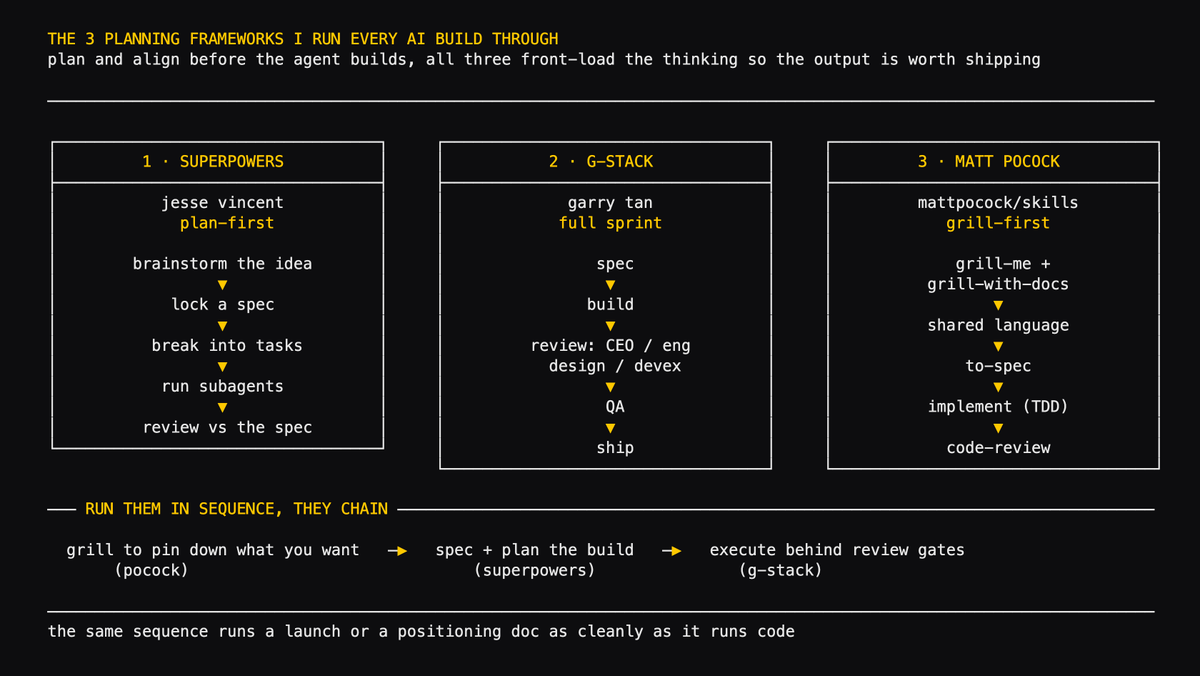
@shannholmberg showed (61 likes, 13 replies, 2,570 views, 65 bookmarks) three planning systems—Superpowers, G-Stack, and Matt Pocock's grill-first skills—that all force the same front half of the workflow: clarify, spec, decompose, review, then ship. The image matters because it turns a fuzzy "plan first" norm into named stages and review gates that can be reused across code and non-code work.
@kunchenguid mapped (67 likes, 18 replies, 3,409 views, 57 bookmarks) a firstmate model org chart where GPT-5.6 Sol or Grok 4.5 runs the fast orchestration loop, Claude Fable 5 handles deeper product and technical design, and a cheaper GPT-5.6 Sol review lane catches mistakes at the end. The attached chart is informative because it makes model choice operational: Grok owns real-time X/news work, Codex or Sol handles feature implementation, and review becomes a dedicated lane rather than an afterthought.

@Voxyz_ai argued (35 likes, 6 replies, 3,305 views, 42 bookmarks) that large global skill bundles are now a liability, because redundant skills force the agent to resolve conflicting instructions and pay extra context tax. He pointed to autoskills, whose README says it scans project files, selects only matching skills from an audited registry, verifies them against SHA-256 hashes, and supports dry runs before writing anything locally.
@pvncher warned (61 likes, 9 replies, 9,698 views, 72 bookmarks) that this discipline reaches all the way down to skill descriptions: if a skill talks about sub-agent use too broadly, GPT-5.6 Sol may activate it more often than intended and burn extra usage. Replies pushed the same lesson from another angle: lower reasoning levels, fewer loaded skills, and shorter descriptions can matter as much as the model choice itself.
@RoundtableSpace shared (89 likes, 10 replies, 49,996 views, 43 bookmarks) the free Learn Harness Engineering course, whose screenshot shows lectures, projects, and a resource library around AGENTS.md, initialization, observability, and handoff. That matters because the harness conversation is no longer only informal advice. It is becoming a public curriculum.
Discussion insight: The common reply pattern was to move policy out of memory and into reusable artifacts. Operators want model lanes, skill filters, review gates, and spec steps to be system behavior, not a sentence they have to remember to type every time.
Comparison to prior day: July 11 centered on repo-wide operating systems for agents. July 12 kept that direction but moved down a level into operator hygiene: skill pruning, model lanes, and reusable planning flows.
1.2 Multi-agent work became more bounded and context-aware 🡕
Multi-agent enthusiasm did not disappear, but the high-signal posts were far more specific about when parallelism helps and what must stay constrained. Builders kept returning to the same constraints: split only independent work, keep each context small, and use gates or stop conditions to cap spend and drift. Six items supplied concrete evidence.
@shivam74689 built (40 likes, 2 replies, 1,284 views, 32 bookmarks) a Parallel Multi-Agent Stock Research System in LangGraph with separate financial, news, social-sentiment, and SEC-filing branches. His argument was explicit: when every branch is independent and always needs to run, a fan-out and fan-in pattern is simpler and faster than routing everything through a supervisor. The screenshot matters because it shows both the orchestration diagram and the finished merged-report surface.

@petergyang summarized (35 likes, 6 replies, 9,015 views, 27 bookmarks) Jared from Cognition's view that strong agents need room to work, but only inside narrow contexts. The most specific claim was that the right split is economic: the goal is to maximize return, not raw token spend, so sub-agents should each get a bounded job and a small context window.
@pvncher asked (56 likes, 11 replies, 4,479 views, 18 bookmarks) for creative ways to use sub-agents in GPT-5.6, and the highest-value reply described persistent worker threads with goal locks, acceptance criteria, heartbeats, and review or ship gates. Another reply said Claude Code with Fable already spins up agent teams automatically, while Codex still needs deliberate prompting to do the same.
@nyk_builderz argued (9 likes, 1 reply, 706 views, 11 bookmarks) that the orchestrator should stay cheap and dumb on purpose, only escalating to expensive sub-agents when a gate says so. That turns multi-agent from a showpiece into a meterable system.
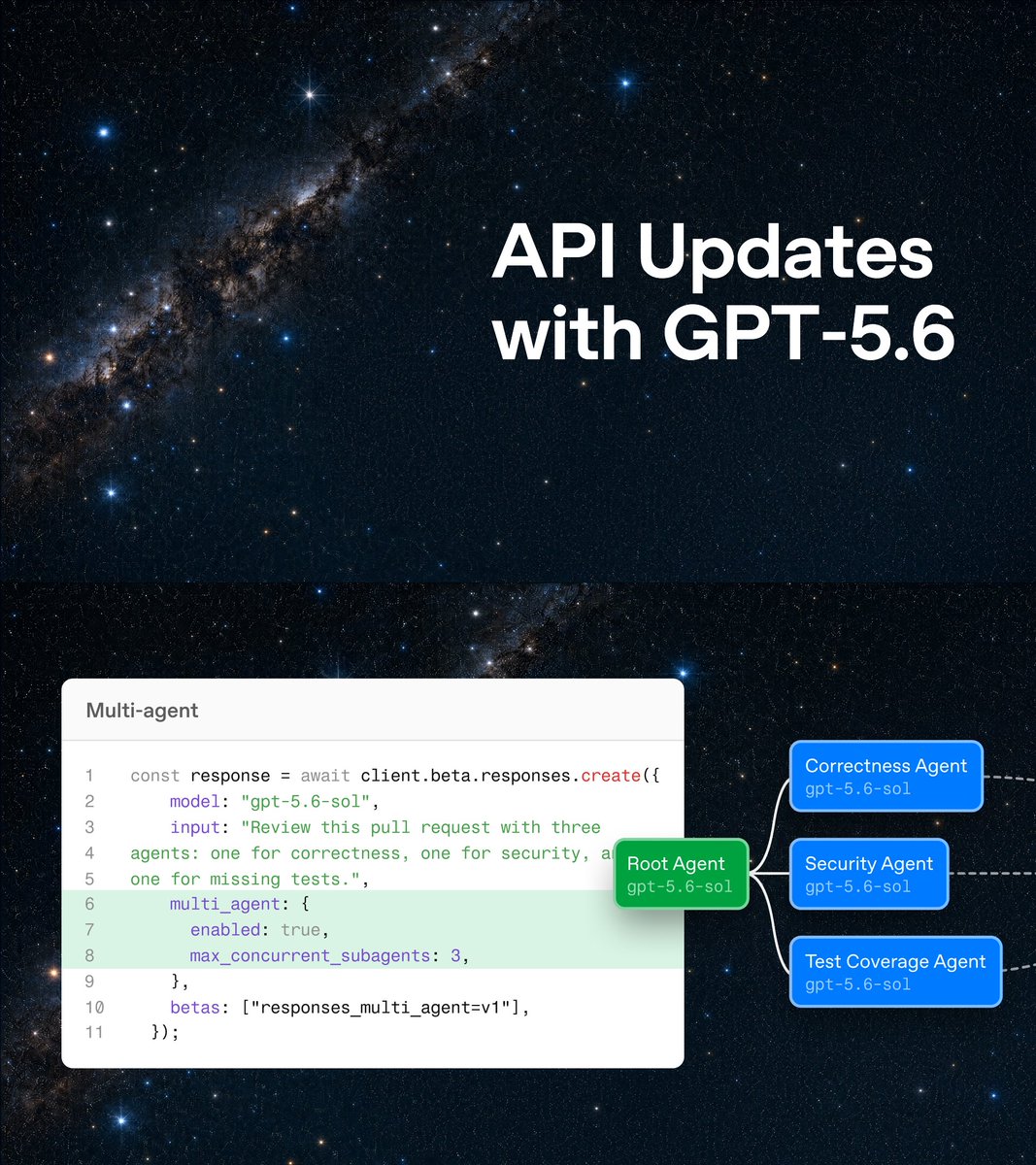
@gabrielchua pointed to (6 likes, 2 replies, 312 views) OpenAI's new Responses API multi-agent guide, which says the root agent can spawn and coordinate sub-agents in parallel but recommends bounded, independent workstreams and a conservative max_concurrent_subagents default of three. The image is informative because it shows the root-agent plus sub-agent pattern as an official product surface rather than a community hack.
Discussion insight: The strongest nuance was anti-maximalist. People wanted multi-agent setups that know when not to branch, when to stop, and how to keep each branch cheap enough to run repeatedly.
Comparison to prior day: July 11 highlighted graph planning and hosted sub-agents as a direction. July 12 translated that into operating guidance about fan-out and fan-in, narrow contexts, and explicit concurrency caps.
1.3 Control layers, specs, and paid agent backplanes got more concrete 🡕
The most productized surface on July 12 was not a new general agent. It was a set of control layers around agents: product-intent files, eval-backed completion checks, supply-chain provenance, and paid service marketplaces. Seven items supported the theme.
@gokulr announced (20 likes, 8 replies, 2,717 views, 21 bookmarks) the ProductSpec MCP server. The new tools let coding agents read scope, acceptance criteria, AI evals, success metrics, and related artifacts, then call check_completion_claim before saying they are done. The public ProductSpec repo says the standard also ships a validator, GitHub Action, agent skills, and Decision Trace support, which turns product intent into a queryable control file instead of a document humans forget to reopen.
@Saanjana_Nikita argued (55 likes, 43 replies, 1,181 views) that production failures are usually boring: fake completion, endless loops, broken tool retries, or context overload. The attached graphic is informative because it names those failure modes directly and ties the fix to evals rather than demos.

@Azurite_ai warned (57 likes, 48 replies, 396 views) about HalluSquatting: the model hallucinates a package or repo name, an attacker claims it first, and the agent installs the wrong thing. The screenshot is informative because it shows the exact danger pattern—a just-created repository flagged as suspicious at install time.

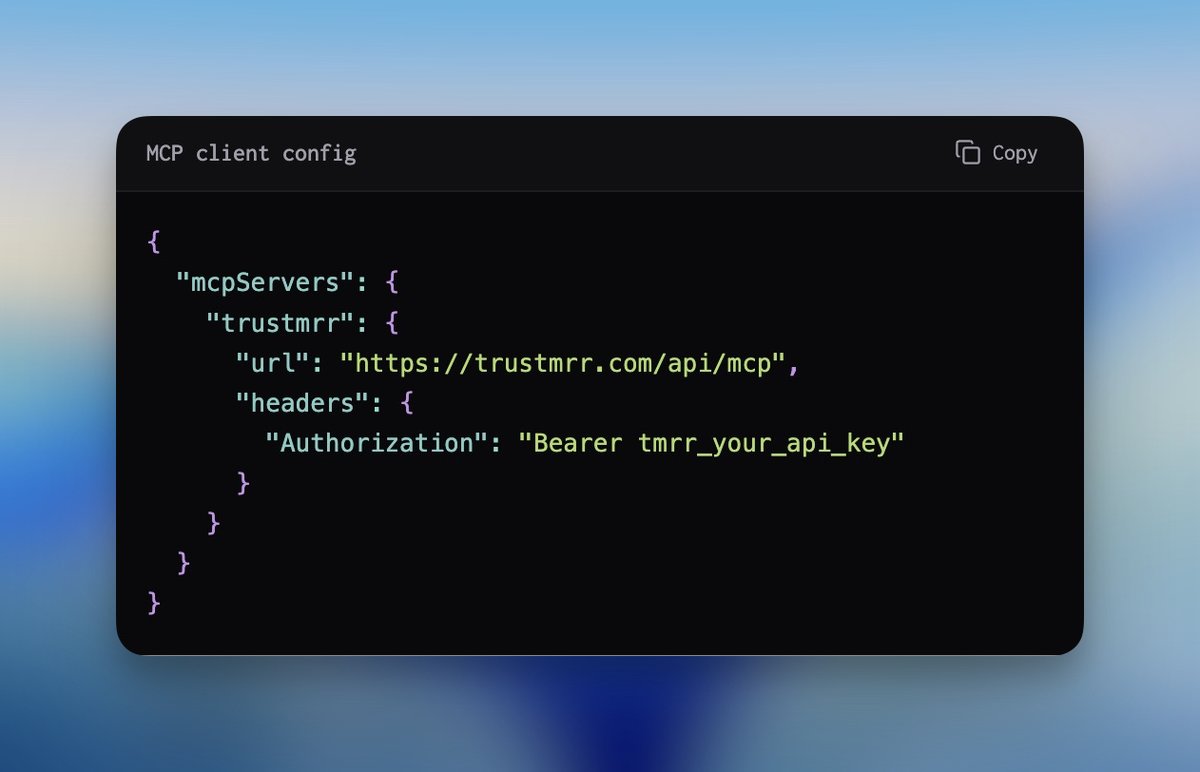
@marclou added (205 likes, 48 replies, 42,886 views, 90 bookmarks) an MCP wrapper for TrustMRR's public API so agents can query startups by revenue, MRR, and marketing channels. The TrustMRR API docs confirm verified startup revenue data, filters for revenue, MRR, asking price, and growth, which makes this a structured business-data surface rather than a scraping shortcut.
@NavenNetwork introduced (63 likes, 14 replies, 3,469 views) Naven Marketplace, where agents can buy paid, verifiable services from providers like CoinGecko, CoinMarketCap, and Nansen. The screenshot matters because it shows the per-call listing model directly, and the x402 overview explains the underlying payment layer as HTTP 402-based programmatic stablecoin payments for AI agents without accounts or sessions.

Discussion insight: Specs, security, and service discovery were all being treated as the same kind of problem: give the agent a narrower trusted surface, then make every external action easier to inspect.
Comparison to prior day: July 11 already had contracts and MCP rails. July 12 made them more concrete with spec-backed completion checks, package provenance warnings, verified revenue APIs, and pay-per-call service marketplaces.
2. What Frustrates People
Context bloat and runaway usage
High severity. @pvncher warned (61 likes, 9 replies, 9,698 views, 72 bookmarks) that verbose skill descriptions and broad sub-agent wording can trigger extra usage under GPT-5.6 Sol, while @Voxyz_ai described (35 likes, 6 replies, 3,305 views, 42 bookmarks) global Codex and Claude Code skill piles as conflicting rules that the model now has to negotiate. @RoundtableSpace showed (53 likes, 15 replies, 43,315 views) a budget-guardrail workflow precisely because an unchecked agent can burn through expensive video generations before anyone notices. People are coping by loading fewer skills, lowering reasoning levels, dry-running installs, and forcing manual checkpoints before costly actions. This is worth building for because the current fix is artisanal pruning, not a first-class tool.
Agents still do not know when they are done
High severity. @Saanjana_Nikita argued (55 likes, 43 replies, 1,181 views) that the real production failures are fake completion, endless loops, broken tool retries, and context overload. @gokulr built (20 likes, 8 replies, 2,717 views, 21 bookmarks) ProductSpec's check_completion_claim tool because agents often cannot see the original scope or acceptance criteria, and @nyk_builderz said (9 likes, 1 reply, 706 views) that repeated "stop and ask" prompting is really a governance rule that belongs in a gate. People are coping with review gates, acceptance criteria, and evals. This is worth building for because several independent posts converged on the same missing primitive: a reusable verifier.
Model routing is still manual and brittle
Medium-High severity. @kunchenguid published (67 likes, 18 replies, 3,409 views, 57 bookmarks) a full org chart just to explain when Fable, GPT-5.6 Sol, Grok 4.5, Codex, and Opus 4.8 should each handle work. @bindureddy promoted (139 likes, 14 replies, 350,566 views) custom coding-agent cocktails, but the most useful reply said the real hard part is classifying which code is novel enough for an expensive model versus boilerplate for a cheaper one. @uday_devops framed (25 likes, 20 replies, 791 views) Claude Code and Cursor as different surfaces entirely—system builder versus coding assistant—rather than drop-in substitutes. People are coping with handcrafted lanes, fallback rules, and tool-specific workflows. This is worth building for because routing logic is still mostly tribal knowledge.
Package and repo provenance became an agent-specific security gap
Medium severity. @Azurite_ai described (57 likes, 48 replies, 396 views) HalluSquatting as attackers claiming hallucinated package or repo names before the agent installs them. @pengsonal added (16 likes, 11 replies, 191 views) a second version of the same trust problem from the framework side: use the official FoundationAgents/OpenManus repo because fake repos and scam tokens share the name. People are coping by preferring audited registries, pinned manifests, and official sources. This is worth building for because agentic installation magnifies mistakes that humans might otherwise catch.
3. What People Wish Existed
Project-scoped skill loaders instead of global skill landfills
The ask was explicit: keep only the skills that add project knowledge the model cannot infer or real commands and checks the team would otherwise forget. @Voxyz_ai said global skill piles have turned into context tax, and autoskills is one partial answer with stack scanning, audited bundles, hash verification, and dry-run installs. This is a practical need, not an emotional one. People want less instruction clutter and fewer accidental activations. Opportunity rating: [+++] direct.
Product-intent control files agents can query before coding
@gokulr described the missing file plainly: what problem is being solved, what is in scope, what is out of scope, what acceptance criteria must pass, what AI evals should run, and what success looks like after launch. ProductSpec MCP is one concrete implementation, but the demand is broader than one project. Agents need a durable control file that survives across repo, issue, prompt, and review boundaries. This is urgent because it sits directly under the repeated complaint about fake completion. Opportunity rating: [+++] direct.
Reusable stop conditions, budget caps, and human checkpoints
People repeatedly asked for safer long runs rather than more autonomy for its own sake. @RoundtableSpace inserted a human checkpoint before costly video generations, @Saanjana_Nikita said reliable teams trust evals instead of demos, and @nyk_builderz wants gates encoded once instead of retyped daily. The practical need is a reusable verifier layer that can stop long runs, meter budget, and escalate at the right time. Existing tools address pieces of this, but the workflow still looks manual. Opportunity rating: [++] direct.
Paid, verifiable service marketplaces for agents
@NavenNetwork wants agents to discover and pay for specialist services per call, while @marclou wants MCP-wrapped business-data APIs that can answer acquisition questions directly. The need is practical: agents need trustworthy external capabilities that are easier to buy and inspect than custom account-by-account integrations. Opportunity rating: [++] direct.
Public harness and loop curriculum that goes past prompt tips
@RoundtableSpace and @RohOnChain both amplified free harness and loop resources because many builders still do not have a shared vocabulary for loops, verifiers, and review gates. This need is partly educational and partly operational: teams want portable patterns they can use this afternoon, not another generic AI course. Opportunity rating: [+] competitive.
4. Tools and Methods in Use
| Tool | Category | Sentiment | Strengths | Limitations |
|---|---|---|---|---|
| Claude Code | Coding harness | (+) | High-autonomy multi-file work, system instructions, long-context reasoning | Less IDE-native feel; needs upfront structure and gates |
| Cursor | IDE coding tool | (+/-) | Fast inline edits, tight feedback loops, side chats for context switching | More reactive than proactive; weaker fit for long-running orchestration |
| GPT-5.6 Sol | LLM | (+) | Strong plan decomposition, backend and review lanes, small-thread work | Usage can spike when skills or reasoning tiers are misconfigured |
| Claude Fable 5 | LLM | (+) | Deep product and technical design, orchestration, adversarial review | Slower or costlier for volume implementation; needs budget guardrails |
| Grok 4.5 | LLM | (+/-) | Fast implementer lane, real-time X and news access | Limits and architecture disagreement become issues in mixed stacks |
| LangGraph | Orchestration framework | (+) | Clear fan-out and fan-in patterns with shared-state sync | Needs deliberate choice between supervisor and parallel patterns |
| autoskills | Skill installer and registry | (+) | Stack detection, audited registry, dry run, hash verification | Only pays off if skills carry real project knowledge or verification value |
| ProductSpec MCP | Spec and control layer | (+) | Scope, acceptance criteria, AI evals, and completion checks as tools | Requires disciplined Product Spec maintenance |
| OpenAI Responses Multi-agent | API runtime | (+) | Hosted sub-agent spawning, shared tools, bounded concurrency | Beta; extra token cost; poor fit for shared mutable state |
| TrustMRR API plus MCP | Data backplane | (+) | Verified startup revenue data and agent-queryable filters | API keys and rate limits; narrow business-data domain |
| Naven Marketplace plus x402 | Agent commerce layer | (+) | Per-call priced, verifiable services and machine payments | Early ecosystem; trust and verification still cost work |
| OpenManus | Open-source agent framework | (+/-) | BYO-LLM general-agent base, CLI and MCP modes, large community signal | Users still bear model costs, and multi-agent flow is marked unstable |
Overall satisfaction was highest when a tool removed a concrete tax instead of promising generic autonomy. @kunchenguid and @bindureddy both split planners, implementers, and reviewers across different models; @pvncher and @Voxyz_ai kept trying to shrink the skill surface; @gokulr moved scope and acceptance criteria into a control file; and @marclou plus @NavenNetwork wrapped external data and services in agent-friendly APIs.
Migration pressure therefore looked less like "pick the one best model" and more like "give each lane a narrower job, a smaller context, and a clearer proof of done." The competitive dynamic was between scaffolds that can route work, verify outcomes, and control cost, not just between model vendors.
5. What People Are Building
| Project | Who built it | What it does | Problem it solves | Stack | Stage | Links |
|---|---|---|---|---|---|---|
| ProductSpec MCP server | @gokulr | Makes product intent queryable by coding agents through MCP tools | Stops implementation drift and weak completion claims | Markdown Product Specs, parser and validator, MCP, GitHub Action | Beta | tweet, repo, editor |
| TrustMRR MCP | @marclou | Wraps a verified startup-data API for agents | Lets agents search acquisition candidates by revenue, MRR, and channels instead of scraping | Public API, MCP, planned ChatGPT app | Beta | tweet, docs |
| Naven Marketplace | @NavenNetwork | Marketplace of paid, verifiable services for autonomous agents | Gives agents on-demand data and intelligence endpoints with per-call settlement | x402, stablecoin payments, service endpoints | Beta | tweet, x402 docs |
| autoskills | midudev via @Voxyz_ai | Detects project stack and installs audited matching skills | Reduces global skill sprawl and random third-party skill installs | Node.js CLI, audited registry, SHA-256 manifest, skills-lock.json | Shipped | tweet, repo |
| OpenManus | FoundationAgents via @pengsonal | Open-source general-agent framework with BYO model backends, CLI, and MCP mode | Gives builders a no-waitlist base for general agents | Python, CLI, MCP, optional multi-agent flow | Beta | tweet, repo |
| Parallel Stock Research Agent | @shivam74689 | Fan-out and fan-in stock research workflow that merges financial, news, social, and SEC agents | Demonstrates where parallel specialists beat a supervisor | LangGraph, Python, shared state, Streamlit UI | Alpha | tweet |
| firstmate agent distro | @kunchenguid | Reusable behavior layer made of prompt, skills, and scripts across multiple harnesses | Gives teams one portable model-routing and review setup instead of rebuilding it in each tool | System prompt, built-in skills, bash scripts, multi-model lanes | Alpha | routing chart, agent distro thread |
ProductSpec MCP and autoskills both move control earlier in the workflow. ProductSpec puts scope, acceptance criteria, and AI evals in front of the agent before it writes code, while autoskills decides which skill bundle is even allowed to load before the run begins.
TrustMRR MCP and Naven Marketplace are backplanes rather than end-user chat experiences. The repeated trigger is the same in both cases: agents need structured external capabilities that are easier to query, price, and trust than ad hoc browser work or one-off integrations.
OpenManus and firstmate show that open-source energy remains split between full frameworks and thinner behavior layers that sit above existing harnesses. shivam74689's stock-research prototype reinforces the day's biggest orchestration lesson: parallel branches help when each subtask owns its own state and the merge point is explicit.
6. New and Notable
Loop engineering became an explicit verifier-first framework
@RohOnChain surfaced a free Loop Engineering Guide that makes a specific claim: the verifier, not the generator, is now the bottleneck. That is notable because it turns a scattered social-media meme into an inspectable framework with open versus closed loops, explicit stop conditions, and Andrew Ng's three-loop model.

ProductSpec MCP turned product intent into a tool surface
@gokulr shipped ProductSpec MCP, and the public repo shows that it is more than a format announcement. It ships a validator, GitHub Action, agent skills, Decision Trace support, and MCP tools that let an agent query scope, acceptance criteria, AI evals, and completion state directly.
HalluSquatting gave the package-hallucination problem a clear attack model
@Azurite_ai named HalluSquatting as the exploit where an attacker claims the package or repository name that an AI agent hallucinates first. That is notable because it reframes a vague "bad install" story as a repeatable supply-chain pattern that security tooling can actually target.
OpenAI's Responses API made hosted multi-agent official in beta
@gabrielchua highlighted OpenAI's multi-agent Responses API guide, which documents root-agent spawning, sub-agent messaging, waiting, and concurrency caps. That matters because the product surface now matches the workflow many operators were still hand-rolling in threads and skills.
7. Where the Opportunities Are
[+++] Product-intent and completion-gate layers — @gokulr, @Saanjana_Nikita, @nyk_builderz, and the Loop Engineering Guide all point to the same missing layer: agents need scope, acceptance criteria, and a claim-check before saying they are done. This is strong because the signal appears as both pain and active building on the same day.
[+++] Context-budget and skill-governance tooling — @pvncher, @Voxyz_ai, and @RoundtableSpace all describe the same tax: too much irrelevant instruction and not enough cost control. This is strong because the savings are immediate and the workarounds are still manual.
[++] Routing and evaluator layers for mixed-model teams — @kunchenguid, @bindureddy, @petergyang, and OpenAI's multi-agent docs all show manual planner, implementer, and reviewer lanes. This is moderate because the need is clear, but the right classifier logic is still workload-specific.
[++] Agent-native paid service backplanes — @marclou and @NavenNetwork show demand for machine-to-machine commerce and structured external data. This is moderate because trust, pricing, and adoption have to develop together.
[+] Dependency provenance and hallucinated-install defense — @Azurite_ai and @pengsonal reveal a narrow but real security gap: agentic installers are easier to trick than careful humans. This is emerging because the exploit pattern is obvious, but the market for automated defenses is still early.
8. Takeaways
- Reliable agent work kept moving down the stack. The strongest discussion was about planning frameworks, skill pruning, and model lanes rather than clever prompts alone. (source, source)
- The verifier became the recurring control surface. ProductSpec's
check_completion_claim, loop-engineering guides, and production-failure threads all converged on the same point: the scarce skill is deciding what counts as done. (source, source) - Multi-agent setups were being used more selectively, not more blindly. Builders favored fan-out and fan-in for independent tasks, cheap orchestrators for gating, and small contexts per sub-agent instead of unlimited branching. (source, source)
- The most concrete commercial energy was in agent backplanes, not agent personalities. TrustMRR and Naven both wrapped external capabilities in structured, payable surfaces that agents can call directly. (source, source)
- Agent-side supply-chain trust is emerging as a real security category. HalluSquatting and the OpenManus provenance warning both show that agentic installers create new ways to smuggle bad dependencies into otherwise normal workflows. (source, source)