Twitter AI Agent - 2026-07-18
1. What People Are Talking About
1.1 Harness engineering became the default explanation for why agents work or fail (🡕)
At least six retained items argued that model quality is no longer the main variable. The day’s strongest posts said the differentiator now lives in harnesses, verification, memory, and control layers. Compared with July 16’s “same model, different system” framing, July 18 made harness engineering the lead noun and attached it to concrete checklists, role boundaries, and operating data.
@0xCodez said (141 likes, 16 replies, 15,712 views, 215 bookmarks) that Anthropic’s internal stack is model, harness, agents, and context, and even highlighted “RAG is an anti-pattern. use grep,” shifting attention from model upgrades to file-backed memory and task-specific harnesses. @sairahul1 argued (134 likes, 18 replies, 15,887 views, 184 bookmarks) that loop engineering is really about triggers, independent checkers, persistent memory, and observability, not just better prompts. @neil_xbt wrote (82 likes, 31 replies, 4,327 views) that “agents are not hard; the harness is hard,” then broke the harness into tools, memory/state, constraints, verification, and orchestration.

@ParamSiddh listed (71 likes, 5 replies, 2,977 views, 89 bookmarks) the specific disciplines AI engineers now need: tool contracts, degraded-mode UX, retrieval evals, observability, safety engineering, multi-tenant isolation, and loop budgets. @cyrilXBT added (110 likes, 31 replies, 11,874 views, 62 bookmarks) a four-layer production-agent model—model, harness, tools, environment—and attached unusually concrete numbers: 93% of permission prompts get approved unread, clarification on complex tasks is only 16.4%, and Anthropic’s team used 16 coordinated agents to build a C compiler that compiled Linux 6.9 for roughly $20,000 in API cost.
Discussion insight: Replies did not ask for more clever prompts. They asked for fixed critic agents, cheaper rejection loops, hard stop conditions, idempotent actions, degraded modes, and human judgment that remains explicit. Even the thread that flirted with “delete the steering” drew a direct reply that reliability drops when steering disappears.
Comparison to prior day: July 16 treated “same model, different system” as a major theme beside provisioning friction. July 18 pushed that frame to the center and wrapped it in named roles, checklists, and production metrics.
1.2 Graphs, memory, and evaluation moved from side features to the next upgrade path (🡕)
At least seven retained items treated agent quality as a state-management and measurement problem. The day moved beyond “use loops” to explicit graph routing, memory curation, and context-quality scoring.
@sairahul1 argued (26 likes, 6 replies, 5,990 views, 42 bookmarks), after quoting OpenClaw founder Peter Steinberger, that loops are giving way to graph engineering: specialized agents, branches, memory, parallel work, conditional routing, and long-running state. @N01ennn reported (45 likes, 11 replies, 1,201 views, 31 bookmarks) that Anthropic’s memory-systems talk centered on CLAUDE.md, skills, versioning, hashing, permissions, in-band memory limits, and “dreaming” to curate memory while agents sleep. @coreyhainesco built (55 likes, 7 replies, 4,558 views, 79 bookmarks) a second-brain skill that compiles captures into an interlinked wiki and answers only from previously collected sources.

@omarsar0 highlighted (35 likes, 16 replies, 3,406 views, 41 bookmarks) ProofAgent Harness and the paper behind it, which scores context quality across role clarity, guardrail coverage, instruction consistency, tool-schema quality, grounding sufficiency, injection hardening, and token efficiency. @nykdotdev argued (11 likes, 4 replies, 636 views, 9 bookmarks) that logs are not enough and Mission Control needs task assignment, execution, review, approval, completion receipts, and verification evidence to operate multiple agent runtimes safely.


Discussion insight: The strongest replies kept insisting on inspectable memory and auditable context boundaries. One responder wanted memory users can edit directly; another said the missing eval target is the exact window of files, tool results, and instructions visible at decision time; another said citation validation should deduplicate source lineage rather than count repeated URLs as independent evidence.
Comparison to prior day: July 16 already surfaced shell-state drift and working-memory conflicts. July 18 escalated that into graph engineering, “dreaming” memory curation, context-scoring rubrics, and explicit control planes above the agent runtime.
1.3 Builders packaged orchestration, research, and runtime control around the model (🡕)
The strongest build activity did not claim a smarter model. It packaged planning roles, citation validation, shared sandboxes, and runtime controls so agents can operate with less manual context copying. At least eight retained items supported this pattern.
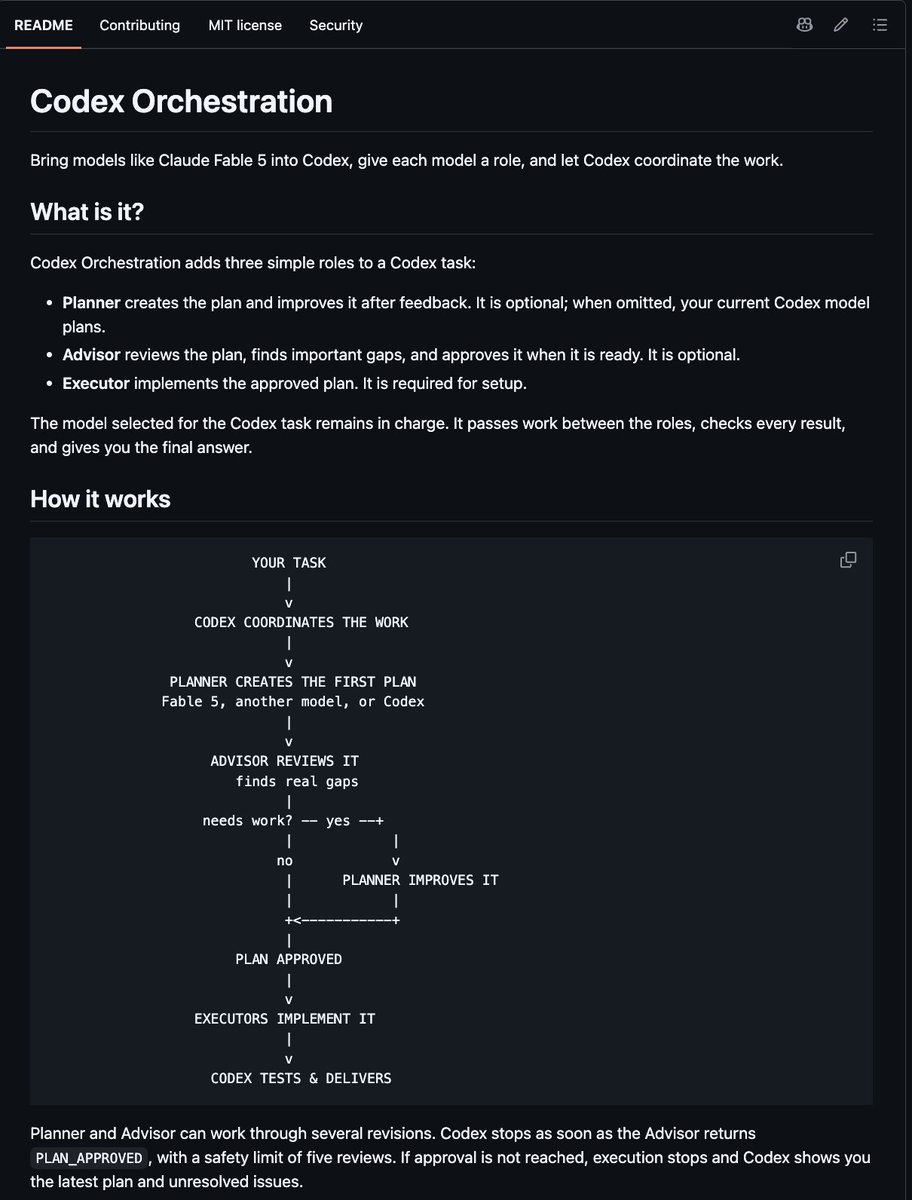
@akshay_pachaar built (62 likes, 18 replies, 7,298 views, 83 bookmarks) an open-source CrewAI coding harness with file tools as memory, subagents, throwaway-VM sandboxing, human approval, and checkpointing. @socialwithaayan showed (29 likes, 16 replies, 13,855 views) Codex Orchestration, where Codex stays the root orchestrator but hands planning, advising, and execution to specialized roles instead of doing everything in one loop.
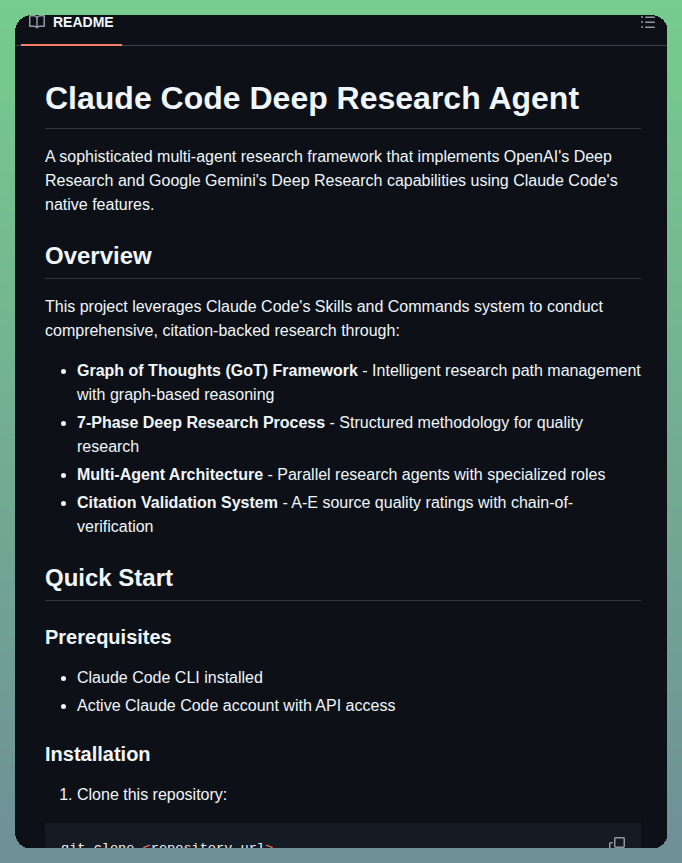
@tom_doerr pointed to (17 likes, 4 replies, 2,926 views, 18 bookmarks) Claude Code Deep Research Agent, whose README calls out Graph of Thoughts, a seven-phase process, parallel research roles, and citation validation. @DanKornas covered (6 likes, 1 reply, 1,061 views, 8 bookmarks) Open Deep Research; LangChain’s own writeup says it splits work into Scope, Research, and Write phases and uses multi-agent only for the parallelizable research portion.

@ClaudeDevs described (61 likes, 7 replies, 22,909 views, 20 bookmarks) Managed Agents that share sandboxes or vault credentials across different models and prompts, while @GrokInsider reported (55 likes, 3 replies, 7,100 views) runtime-level controls such as require_sha, configurable env/cwd inheritance, MCP setup choices, and safer local Bash behavior in Grok Build CLI v0.2.103.
Discussion insight: The replies preferred bounded orchestration over loose swarms. Codex Orchestration supporters emphasized keeping the root orchestrator in charge; a Claude Managed Agents reply said the real value is cleaning human thoughts before handoff; and a deep-research reply argued source-lineage deduplication matters more than raw citation count.
Comparison to prior day: July 16’s builders centered on browser workspaces, deployment surfaces, and provisioners. July 18 moved the packaging layer upward, toward orchestration plugins, deep-research agents, and runtime control planes.
2. What Frustrates People
Memory still breaks because agents remember too much junk and not enough structure
The frustration is not “we need more tokens”; it is that agents forget the right things and preserve the wrong ones. A reply to @sairahul1 explicitly asked for memory people can inspect, update, delete, and add to. @N01ennn reported (45 likes, 11 replies, 1,201 views, 31 bookmarks) that Anthropic’s memory talk was already warning that in-band memory hits a ceiling and needs versioning, permissions, and “dreaming” curation. @coreyhainesco built (55 likes, 7 replies, 4,558 views, 79 bookmarks) a second-brain skill precisely because a flat searchable pile is not enough, and @chenzeling4 surfaced (1 like, 42 views) Context Mode, whose repo pitch is 98% tool-output reduction plus session memory across runs.


Severity: High. The visible coping strategies are external memory layers, wiki-style linking, context compaction, and explicit state synchronization instead of hoping a larger context window will behave like durable memory. This is worth building for directly because the pain appears in both high-engagement threads and low-engagement but highly specific implementation posts.
Logs alone still do not prove completion, review, or correctness
@nykdotdev argued (11 likes, 4 replies, 636 views, 9 bookmarks) that the hard part is no longer getting agents to act but knowing what actually happened: who owned the task, what was executed, what was reviewed, what failed silently, and whether the claimed output was verified. @omarsar0 highlighted (35 likes, 16 replies, 3,406 views, 41 bookmarks) a context-scoring approach because weak context shows up later as hallucination, tool misuse, or prompt-injection exposure, and one reply sharpened the problem by saying the real failure often starts “two steps earlier” when the wrong context window was visible. Even benchmark-positive posts drew the same complaint: a reply under @XFreeze said 69 of 70 on a private benchmark is still marketing unless the task list, contamination checks, and audit trail are public.
Severity: High. People cope by adding review gates, context scoring, source-lineage checks, and completion receipts, but the set still shows a missing layer between “the agent ran” and “the result is trustworthy.” This is worth building for directly because it cuts across coding, research, and multi-agent operations.
Security and execution boundaries remain easy to get wrong
@ParamSiddh listed (71 likes, 5 replies, 2,977 views, 89 bookmarks) prompt-injection defense, data-leak prevention, permission boundaries, tool budgets, and termination conditions as standard engineering concerns, not edge cases. @AiCamila_ posted (2 likes, 46 views) a security blueprint spanning input guardrails, tool and action security, behavior controls, output controls, and monitoring or auditing. @GrokInsider reported (55 likes, 3 replies, 7,100 views) that Grok Build CLI added require_sha to stop remote plugins from following mutable branches or tags, and also removed persistent local shells after directory deletion failures. The public Hugging Face July 2026 incident disclosure made the risk concrete: an autonomous agent system exploited dataset-processing execution paths, escalated with harvested credentials, and forced defenders off hosted frontier models because safety guardrails blocked forensic analysis of real attack artifacts.

Severity: High. The visible coping strategies are plugin pinning, fail-closed defaults, audit logs, and keeping an open-weight or self-hosted fallback for incident response. This is worth building for directly because the pain is no longer hypothetical; both the tweets and the external incident writeup describe concrete failure surfaces.
3. What People Wish Existed
Inspectable memory that can prune, sync, and survive sessions
The need here is practical and urgent: people do not just want bigger context windows, they want memory they can inspect, curate, and trust. Replies under @sairahul1 explicitly asked for memory users can update or delete, @coreyhainesco showed (55 likes, 7 replies, 4,558 views, 79 bookmarks) a linked second-brain instead of a flat note pile, and @chenzeling4 surfaced (1 like, 42 views) Context Mode as a way to shrink noisy tool output while keeping session memory. @AiCamila_ framed (9 likes, 135 views) the missing implementation layers as short-term memory, long-term memory, persistent state, memory management, and synchronization. Partial answers exist today, but the feed still shows a gap between “has context” and “remembers correctly.” Opportunity: direct.
Control planes that turn runs into receipts
People want post-run evidence, not just transcripts. @nykdotdev argued (11 likes, 4 replies, 636 views, 9 bookmarks) that agent operations need task assignment, execution, review, approval, completion receipts, and verification evidence, while @omarsar0 pointed to (35 likes, 16 replies, 3,406 views, 41 bookmarks) context scoring as a leading indicator of whether an agent run will stay reliable. Even benchmark discussion around @XFreeze turned into a wish for auditable task lists, contamination checks, and cost-per-success rather than one-number leaderboard claims. Mission Control and ProofAgent Harness partially address the need today, but the urgency is still high because the pain spans coding agents, research agents, and multi-agent teams. Opportunity: direct.
Graph-based orchestration with clear role boundaries and lineage-aware research
The strongest orchestration wish is not “more agents”; it is better agent decomposition. @sairahul1 said (26 likes, 6 replies, 5,990 views, 42 bookmarks) that graphs are replacing loops because the real system needs branches, memory, conditional routing, and parallel work. @socialwithaayan showed (29 likes, 16 replies, 13,855 views) Codex Orchestration, where the root orchestrator stays in charge while separate roles plan, review, and execute. @tom_doerr pointed to (17 likes, 4 replies, 2,926 views, 18 bookmarks) citation validation as the key missing layer in deep-research clones, and @DanKornas covered (6 likes, 1 reply, 1,061 views, 8 bookmarks) Open Deep Research, whose own blog warns against parallelizing the writing step. This is a practical need with direct competition already forming. Opportunity: direct.
Default-safe execution layers for plugins, tools, and autonomous runtimes
The wish here is for safe defaults that make the dangerous path harder, not for a better safety memo. @AiCamila_ (2 likes, 46 views) wanted every production system to start with layered guardrails, @GrokInsider reported (55 likes, 3 replies, 7,100 views) a real CLI hardening step in require_sha, and the Hugging Face July 2026 incident disclosure showed that defenders also need self-hosted model options when hosted safety systems block forensic analysis. The need is practical rather than emotional: safer plugin resolution, clearer permission boundaries, reversible actions, and incident-ready fallbacks. Opportunity: direct.