Twitter AI Agent - 2026-08-15
1. What People Are Talking About
1.1 Harness and graph engineering displaced model shopping (🡕)
At least eight retained items argued that agent quality now depends more on runtime design than on picking a frontier model. The common vocabulary was no longer just “prompt better.” It was plugin contracts, blast radius, retained reasoning, context compaction, graph structure, recovery, and verifier placement. Compared with August 14's maps and courses, August 15 moved one level deeper into the mechanics of what a harness is allowed to touch and how it should recover when it is wrong.
@zhengyaojiang argued (164 likes, 8 replies, 12,932 views, 91 bookmarks) that Cordis gives DeepSeek Harness a theoretically cleaner way to add and remove components, but also warned that LLM context windows create hidden dependencies that make those contracts much harder to satisfy in practice. The quoted DeepSeek Harness launch and the public repository reinforced the same point from the builder side: models, tools, skills, sessions, loops, orchestration, and UI are all meant to be swappable plugins rather than fixed internals.
@starmexxx argued (47 likes, 13 replies, 8,221 views, 87 bookmarks) that the real differentiator between $200-per-month coding agents is not model IQ but the harness layer that decides what the agent can touch. The thesis was unusually concrete: score tools by blast radius, gate irreversible actions behind approval, sandbox writes, cap token and wall-clock burn, and keep tool-call logs outside the transcript because “what the agent says it did” is not the same as what it actually did.
@daniel_mac8 said (20 likes, 5 replies, 3,234 views, 14 bookmarks) the same model can become a materially better agent with a better harness, citing OpenAI's claim that retained reasoning plus compaction moved GPT-5.6 Sol from 13.3% to 38.3% on ARC-AGI-3. That was the cleanest empirical evidence in the set that model capability and agent capability are now being treated as different optimization targets.
@gippp69 circulated (15 likes, 3 replies, 110 views, 11 bookmarks) a “Building Reliable Agent Systems” checklist that made the new control plane explicit: loop stops, tools and context, memory and recovery, state and permissions, and verification.

Discussion insight: The best replies were not asking for a smarter model. They were asking how to keep logs separate from narration, how to limit permissions without freezing the agent, and whether the whole direction looks more like operating-systems research than prompt craft.
Comparison to prior day: August 14 made harness engineering teachable. August 15 made it operational by focusing on contracts, blast radius, compaction, and graph structure.
1.2 Repos and files became the preferred memory surface for nontrivial agent work (🡕)
A second cluster pushed the “system of record” down into Git repos, markdown files, and explicitly versioned skills. The strongest examples were not from software-only teams. They came from operators treating brand voice, client context, SOPs, and performance history as files that agents can selectively load, update, and share instead of re-explaining the same context inside every chat.
@fivosaresti showed (15 likes, 485 views, 16 bookmarks) a layered “LinkedIn Content Engineering” stack where templates and brand guidelines live in Notion and GitHub, Exa and Pinecone feed the research layer, five agent roles handle strategy through grading, and a human remains the publish gate. The diagram mattered because it showed the whole loop, from research inputs to calendar, QA, and engagement capture, rather than a single-agent demo.

@fivosaresti described (20 likes, 2 replies, 530 views, 18 bookmarks) the more extreme version: a Company OS repo with company data, client context, raw research, plugins, 26 agents, 23 commands, and 79 Claude skills, plus client-specific repos wired to MCPs and CLIs across GitHub, Google Workspace, Airtable, Slack, InstantlyAI, and more. The notable claim was that PR-based governance and safety hooks now gate 94+ risky operations, so the repo is not just storage; it is the coordination surface.
@jordan_ross_8F argued (13 likes, 957 views, 28 bookmarks) that “all marketing ops is going to files,” then walked through why terminals beat chat attachments for long-running work: the terminal can load the two files a task needs, while chat UIs silently re-read and then drop context as the conversation gets longer. The attached repo screenshot made the argument concrete by showing a newsletter workflow living inside a normal GitHub tree.
@theparuchh recommended (17 likes, 4 replies, 97 views, 13 bookmarks) three installable skills for Claude Code, but the standout was claude-mem: a project-memory layer that stops users from re-explaining their stack every session. That same desire surfaced elsewhere in the repo-native threads: once the process is a file, the durable asset is the workflow, not the chat.
Discussion insight: The most useful reply in this cluster said storing voice guides and design systems in the repo makes them checkable. That is the deeper pattern: agents are being asked to work against artifacts that can be diffed, reviewed, and shared.
Comparison to prior day: August 13 and 14 treated skills as reusable packaging. August 15 showed teams pushing the whole operating model into repos, folders, and versioned skill surfaces.
1.3 Multi-agent systems got more bounded, model-agnostic, and domain specific (🡕)
The biggest shift inside multi-agent talk was restraint. Builders were more explicit about when to add agents, what information each agent should receive, and which domains justify specialized pipelines. The strongest posts were less interested in swarms for their own sake than in supervisor patterns, structured summaries, cross-model delegation, and failure attribution.
@reach_vb announced (117 likes, 11 replies, 5,089 views, 24 bookmarks) that multi-agents v2 can now delegate to any supported model as a sub-agent, with the quoted ship post saying this was made reliable enough to run with Luna as well as the stronger default models. The immediate replies asked for workflow docs and BYOK guidance, which is a good signal that users now expect delegation layers to be model-agnostic instead of locked to one vendor.
@monokern argued (2 likes, 1 reply, 33 views, 1 bookmark) that teams should start with one agent and only add a second when they hit a small set of concrete signals such as attention dilution, domain specialization, natural parallelism, or high error cost. The attached paper page added the most important implementation rule in the whole cluster: agents should receive structured summaries and data slices, not the full conversation history.

@biogerontology shared (11 likes, 716 views, 6 bookmarks) MARC v1 as an open-source clinical framework that replaces monolithic prompting with deterministic multi-agent orchestration, separate roles, explicit context passing, and stage-wise failure attribution. The public paper and repository confirmed the broader point: regulated-domain builders want YAML-defined agents, configurable pipelines, and interpretable intermediate outputs.
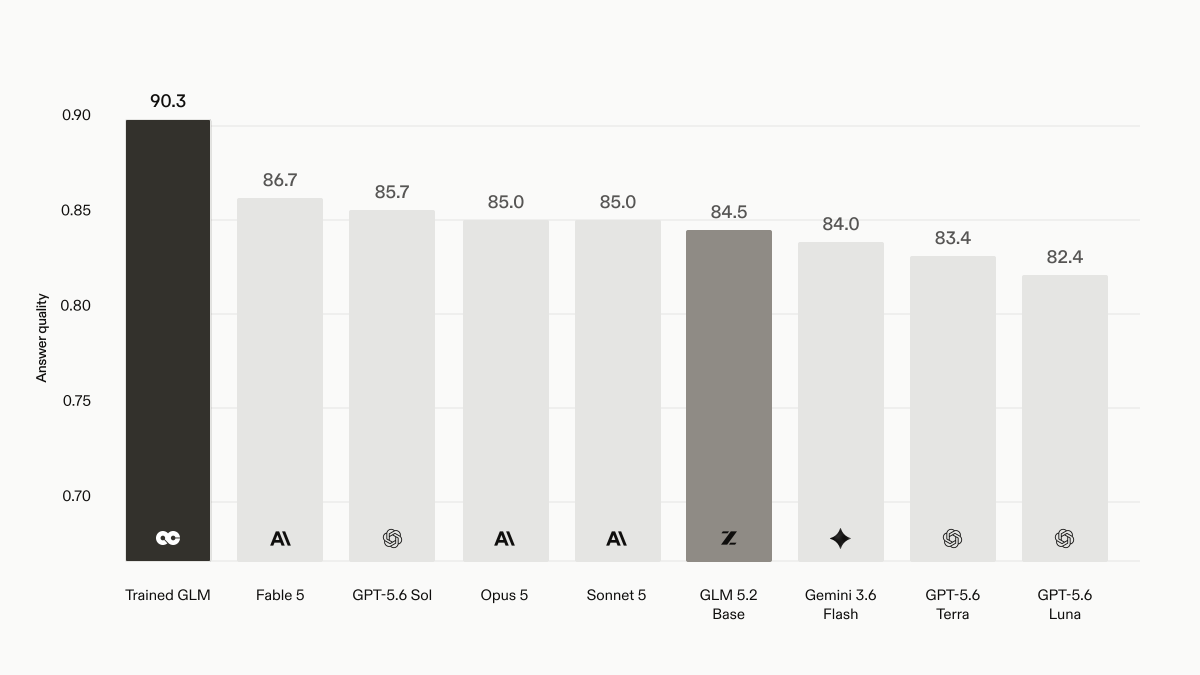
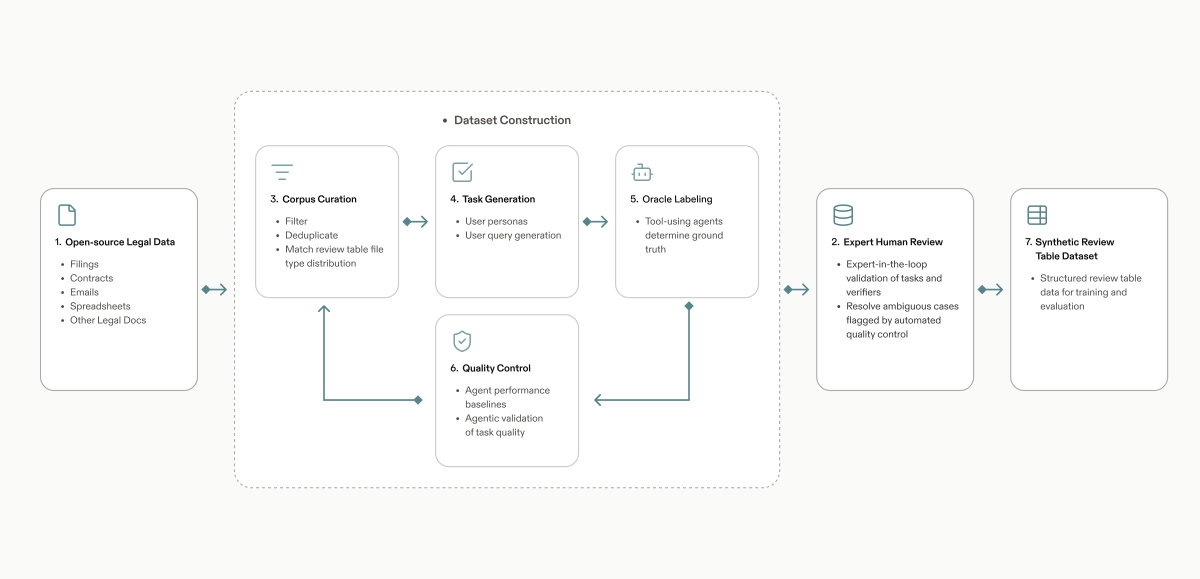
@harvey reported (73 likes, 2 replies, 2 quotes, 28,500 views, 60 bookmarks) a domain-specific version of the same discipline for legal review tables. Harvey said it post-trained GLM-5.2 for a defined workload, then separately tuned the harness so an agentic-search setup matched answer quality while cutting input tokens by 50% and output tokens by 29% versus single-turn RAG.
Discussion insight: The through-line was that multi-agent systems now need explicit rules about who sees what, when specialization is worth the overhead, and how the supervisor verifies the result instead of trusting a transcript.
Comparison to prior day: August 14 already centered planners, reducers, and verifiers. August 15 got more specific about when to add agents at all, how to pass context between them, and where domain-specific pipelines outperform a general-purpose stack.
2. What Frustrates People
Permission surfaces that are still too wide once agents can write, deploy, or SSH
The sharpest frustration was not bad text output. It was that once an agent has live tools, the mistake becomes operational. @starmexxx argued (47 likes, 13 replies, 8,221 views, 87 bookmarks) that a repo-cleanup run with 41 MCP tools and no sandbox expanded into a 423-package blast radius, then laid out the coping pattern people actually want: approval gates for irreversible actions, scratch directories for writes, token and wall-clock caps, and logs that the model cannot rewrite. @prathamgrv summarized (118 likes, 5 replies, 2,494 views, 20 bookmarks) the same design problem as deciding what context the model sees, how failures feed back, and what it can do autonomously without degrading the user experience, and a reply from @makatack_ made the tradeoff explicit: over-constrain the harness and it gets stuck; under-constrain it and it wipes your DB. @DanKornas shared (2 likes, 3 replies, 384 views) MCP SSH Manager precisely because remote-server operations now need read-only modes, restricted modes, and audit logs. Severity: High. Worth building for: High.
Context and memory still decay quietly when too much lives inside chat history
A second frustration was silent degradation rather than visible failure. @jordan_ross_8F argued (13 likes, 957 views, 28 bookmarks) that attaching six files to a chat means the model re-reads all six on every message until the window silently drops earlier context, while retrieval-heavy setups can feel “great Tuesday and useless Thursday” even when the underlying files did not change. @theparuchh recommended (17 likes, 4 replies, 97 views, 13 bookmarks) claude-mem as the quickest fix for that pain, and a reply from @BimbaCrypto said the real win is that session four stops being another round of re-explaining your own stack. The same problem surfaced in a lower-volume but useful Picobot thread: @tom_doerr shared (7 likes, 2 replies, 1,972 views) a single-binary self-hosted agent, and a reply warned that once persistent memory and tool calling live in one process, stale memory can make the wrong tool look correct. Severity: High. Worth building for: High.
Multi-agent systems still sprawl unless summaries, supervisors, and metrics stay explicit
The third frustration was unnecessary orchestration overhead. @monokern argued (2 likes, 1 reply, 33 views, 1 bookmark) that most teams should start with one agent and only split when the task structure forces it, because context protection breaks when every worker gets the full history instead of structured summaries and data slices. @reach_vb announced (117 likes, 11 replies, 5,089 views, 24 bookmarks) model-agnostic subagents in multi-agents v2, but the first replies were already asking for workflow guidance and BYOK rules, which shows the real bottleneck is orchestration discipline rather than model availability. In regulated domains the coping pattern is even stricter: @biogerontology shared (11 likes, 716 views, 6 bookmarks) MARC v1 precisely because it gives separate roles, explicit context passing, and stage-wise failure attribution instead of one opaque long-chain run. People are coping by adding supervisor patterns, mechanical verification, rollback loops, and smaller, task-shaped agent graphs. Severity: Medium to High. Worth building for: High.
3. What People Wish Existed
Context-selecting memory that survives sessions and stays inspectable
The clearest direct need was for memory that keeps work persistent without forcing the model to drag a full transcript through every turn. @jordan_ross_8F argued (13 likes, 957 views, 28 bookmarks) that the terminal wins because it can load the two files a task actually needs while leaving the rest on disk, and he explicitly framed folders as a temporary bridge until products get much better at context management. @theparuchh recommended (17 likes, 4 replies, 97 views, 13 bookmarks) claude-mem for the same reason: it stops users from re-explaining architecture, preferences, and decisions in every session. @fivosaresti showed (20 likes, 2 replies, 530 views, 18 bookmarks) what the fuller version looks like in practice: company and client context live in repos, not in chat. This is a direct need because people already have workarounds; they just want the memory layer to make those workarounds unnecessary. Opportunity: direct.
Portable skills and cross-model subagents that do not lock the workflow to one stack
People also want skills and delegation layers that travel across tools and across models. @reach_vb announced (117 likes, 11 replies, 5,089 views, 24 bookmarks) model-agnostic subagents in multi-agents v2, which immediately triggered requests for documentation and BYOK support. @myfear reported (9 likes, 779 views, 8 bookmarks) that after looking through 1,800 entries on Skills, the hot lists were not mostly coding skills at all but workplace automation, content, marketing, and preference-shaped workflows, which is a strong signal that internal marketplaces need to support many kinds of reusable behavior. @DanKornas shared (6 likes, 2 replies, 732 views) Autoresearch as a skill that installs across Claude Code, OpenCode, and Codex, pushing the same portability idea into improvement loops rather than task execution alone. This is practical but already competitive: the market has cross-model delegation, installable skills, and cross-CLI loop packages, but no default way to keep them locally owned and coherent. Opportunity: competitive.
Persistent operator surfaces that can use real tools while still earning trust
A third need was for agent products that can log in, act, and keep running after the user leaves without turning into an opaque risk surface. @aakashgupta argued (2 likes, 2 replies, 1,415 views, 2 bookmarks) that Grok Bot's real advantage was not product quality but distribution into Cursor Ultra's already-paying, already-trusting install base, because those users have already solved the cold-start problem of letting an agent touch their tools. @DanKornas shared (2 likes, 3 replies, 384 views) MCP SSH Manager as a guardrailed version of the same dream for server work, with named hosts, restricted modes, and audit logs. @starmexxx argued (47 likes, 13 replies, 8,221 views, 87 bookmarks) for pending-approval gates and write sandboxes because, in practice, trust is still earned one permission boundary at a time. This is an urgent product need, but multiple approaches are already competing on persistence, trust, and tooling reach. Opportunity: competitive.
4. Tools and Methods in Use
| Tool | Category | Sentiment | Strengths | Limitations |
|---|---|---|---|---|
| DeepSeek Harness | Agent harness / runtime | (+/-) | Everything-as-plugin design; swappable models, tools, sessions, loops, and UI; strong public attention around Cordis contracts | Still in developer preview; clean modular contracts get messier once LLM context creates hidden dependencies |
| n8n | Workflow automation / agent builder | (+/-) | Visual multi-step agent builder; 1,500+ integrations; human approvals and observability fit real workflow automation | Broad connector reach increases blast radius; failure handling still has to be configured intentionally |
| Practical Loop Engineering | Method / runtime taxonomy | (+) | Clear breakdown of turn-based, goal-based, time-based, and proactive loops; keeps human judgment explicit | A framing tool, not a memory, permission, or verification layer by itself |
| claude-mem + skills ecosystem | Memory skill / skill marketplace | (+/-) | Reduces repeated project explanation; enables fast skill discovery and pre-release security checks | Local instruction ownership, freshness, and quality control remain manual problems |
| MARC v1 | Multi-agent framework | (+) | Deterministic stages, explicit context passing, YAML-defined agents, local or API backends, stage-wise failure attribution | Very early project; clinically shaped workflow and config overhead narrow immediate general use |
| Picobot | Self-hosted agent runtime | (+) | Single ~9MB binary; low-RAM footprint; persistent memory; tool calling; Telegram/Discord integration | Single-process memory and tool calling can make stale-context failures harder to spot |
| MCP SSH Manager | Remote ops / MCP server | (+/-) | 37 SSH-backed tools; read-only and restricted modes; named-server management; optional audit logs | Still exposes high-risk remote actions; safety depends on careful host and scope configuration |
| Autoresearch Anywhere | Improvement loop / skill | (+) | Bounded, metric-driven iteration; rollback on regression; works across Claude Code, OpenCode, and Codex | Only pays off when the team already has a measurable verify step and a clean git workflow |
| Harvey custom GLM-5.2 + agentic search | Domain model / legal harness | (+) | Improved answer and citation quality at lower cost on a defined legal workload; harness tuning also cut token use materially | Highly specialized; depends on domain data, post-training, and human legal review to reproduce |
Overall, satisfaction clustered around systems that narrow scope, keep state outside the chat transcript, and make verification explicit. The positive examples either made the control plane visible (DeepSeek Harness, MARC, MCP SSH Manager, Autoresearch) or made the workflow durable through files, skills, and external memory (claude-mem, Company OS, repo-native agency setups). Migration pressure was visible in three directions at once: from prompt-only work toward harness engineering, from flat chat context toward repo- and file-backed memory, and from single-vendor agent stacks toward portable skills plus model-agnostic delegation. The main complaints were consistent too: too much silent context decay, too much permission surface, and too many “multi-agent” systems that still lack explicit summaries, rollback, or supervisor logic.
5. What People Are Building
| Project | Who built it | What it does | Problem it solves | Stack | Stage | Links |
|---|---|---|---|---|---|---|
| DeepSeek Harness | DeepSeek AI | Pluginized agent harness with swappable models, tools, sessions, loops, sandboxes, and UI | Teams want to change the control plane without forking the whole runtime | TypeScript, Cordis, plugin architecture, web UI | Beta | repo, site |
| Harvey Review Tables custom model | @harvey | Post-trained legal review-table model plus an agentic-search harness | Review-table workloads can produce millions of model calls and become too expensive on general frontier models | GLM-5.2, Applied Compute AC2, synthetic legal data, agentic search, human legal review | Shipped | post, company |
| MARC v1 | Penn-RAIL | Deterministic clinical multi-agent pipeline with explicit context passing and traceable stages | Monolithic clinical prompts hide where extraction, reasoning, or answer generation failed | Python, YAML, Gemini/Ollama, Chroma, prompt templates, decomposer | Alpha | repo, paper |
| Picobot | louisho5 | Lightweight self-hosted agent that runs from a single binary | Typical agent stacks are too heavy for cheap VPS, small servers, or personal always-on deployments | Go, OpenAI-compatible APIs, Docker, Telegram/Discord, persistent memory | Beta | repo |
| MCP SSH Manager | bvisible | MCP server for operating multiple SSH hosts with named tools and guardrails | Teams want remote automation without giving an agent unrestricted shell reach | JavaScript, MCP, SSH, TOML/.env config, audit logs | Shipped | repo, npm |
| Autoresearch Anywhere | rahulthakore16 | Cross-CLI skill for bounded, metric-driven improvement loops | Builders need a repeatable way to let agents improve code without vague “try again” loops | Shell, install scripts, skill files, git, tests/benchmarks | Beta | repo |
| Company OS / AI-Native Services stack | @fivosaresti | Repo-native operating system for an agency, with client repos, skills, MCPs, and human publish gates | Prompt-only workflows do not preserve brand/process context and do not scale across clients or teammates | GitHub, Notion, Exa, Pinecone, Claude, MCP/CLI, Airtable, Slack, InstantlyAI | Shipped | post, post |
The day's most concrete public build story came from @harvey reporting (73 likes, 2 replies, 2 quotes, 28,500 views, 60 bookmarks) a domain-tuned legal review-table system where the largest single July query cost $26,000 and the full workload can reach up to 5 million model queries. Harvey said the custom GLM-5.2 variant improved answer quality by 4-17% and citation quality by 11-19% against frontier baselines, while the companion agentic-search harness matched answer quality and cut input tokens by 50% and output tokens by 29% relative to a single-turn RAG setup. That is notable because the optimization target was not “general AI agent performance,” but one expensive, repeated professional workflow.


A second repeated build pattern was the repo-native operating system. @fivosaresti described (20 likes, 2 replies, 530 views, 18 bookmarks) Company OS and client repos as the shared memory layer for an agency, while @jordan_ross_8F argued (13 likes, 957 views, 28 bookmarks) that a brand voice is a markdown file, a client is a folder, and a skill is an SOP the machine can run. The common trigger is the same: chat-native context is too lossy, so builders are moving the process into files that can be loaded selectively, updated by PR, and reused across people and automations.
A third build pattern was smaller, bounded extensions around existing terminals and servers rather than all-in-one “super agents.” @tom_doerr shared (7 likes, 2 replies, 1,972 views) Picobot as a single-binary agent for cheap infrastructure and channel integrations, while @DanKornas shared (2 likes, 3 replies, 384 views) MCP SSH Manager for guarded remote operations and shared (6 likes, 2 replies, 732 views) Autoresearch as a rollback-first improvement loop. These projects are all narrower than DeepSeek Harness, but the tradeoff is intentional: smaller surfaces are easier to trust, easier to measure, and easier to keep under explicit policy.


Repeated build triggers were clear across the whole section: runaway cost in high-volume professional workflows, chat transcripts that do not preserve durable process, and tool surfaces that are too risky when they are not explicitly permissioned. People are not all building the same thing, but they are converging on the same architecture moves: externalize state, bound the action surface, and optimize the harness for one workflow at a time.
6. New and Notable
Agent distribution as a product moat
@aakashgupta argued (2 likes, 2 replies, 1,415 views, 2 bookmarks) that Grok Bot's real launch advantage was not that it beat every rival on product quality, but that it shipped directly into Cursor Ultra's already-paying, already-trusting user base. That matters because it reframes the adoption problem for persistent agents: getting the user to trust the bot with tools and workflows may be harder than building the bot itself.
Deterministic multi-agent design in a regulated domain
@biogerontology shared (11 likes, 716 views, 6 bookmarks) MARC v1 as an open-source clinical framework with explicit context passing and stage-wise failure attribution, and the public paper plus repository confirmed YAML-defined agents, Gemini/Ollama backends, and a decomposer that can generate a pipeline from a plain-language task description. Even at low engagement, it was one of the clearest signals that domain experts now want interpretable multi-agent systems rather than black-box prompting.
Mechanical self-improvement turned into an installable skill
@DanKornas shared (6 likes, 2 replies, 732 views) Autoresearch as a reusable skill for Claude Code, OpenCode, and Codex. The public repository matters because it packages a specific agent discipline into one installable loop: establish a baseline, make one change, verify, keep or revert, and repeat within a bound.
7. Where the Opportunities Are
[+++] Repo-native memory and workflow operating systems for non-engineering teams — @fivosaresti showed (20 likes, 2 replies, 530 views, 18 bookmarks) Company OS and client repos as the durable context layer for an agency, @jordan_ross_8F argued (13 likes, 957 views, 28 bookmarks) that brand voice, clients, and skills should all be files, and @theparuchh recommended (17 likes, 4 replies, 97 views, 13 bookmarks) memory and skill layers precisely because chat-native context keeps decaying. This is strong because the workaround is already clear, the pain is repeated, and the pattern extends beyond software teams into marketing and services.
[++] Permission, audit, and recovery layers for agents with real-world reach — @starmexxx argued (47 likes, 13 replies, 8,221 views, 87 bookmarks) for blast-radius scoring, approval gates, and write sandboxes, @DanKornas shared (2 likes, 3 replies, 384 views) a guarded MCP SSH layer, and @aakashgupta argued (2 likes, 2 replies, 1,415 views, 2 bookmarks) that persistent bots only work once users already trust them with tools. The opportunity is moderate because many builders now understand the problem, but the available guardrail layers are still fragmented by tool type and workflow.
[+] Model-agnostic delegation and bounded improvement primitives — @reach_vb announced (117 likes, 11 replies, 5,089 views, 24 bookmarks) cross-model subagents, @monokern argued (2 likes, 1 reply, 33 views, 1 bookmark) for only adding agents under six clear conditions, and @DanKornas shared (6 likes, 2 replies, 732 views) a rollback-first autoresearch loop. This is emerging rather than mature: the demand is visible, but users are still asking for workflows, documentation, and default supervisor patterns.
8. Takeaways
- The runtime around the model is where most of the action moved today. Cordis/DeepSeek discussion, blast-radius threads, and OpenAI's retained-reasoning example all treated harness design as a first-class optimization surface rather than an accessory around a model. (source)
- Files and repos are becoming the durable memory layer for agent work outside classic software teams. Fivos Aresti's Company OS and Jordan Ross's repo-native agency workflow both used Git-backed artifacts to keep brand, process, and client context inspectable and reusable. (source)
- Multi-agent systems are being constrained, not just expanded. The most useful guidance today was to add more agents only under explicit conditions, pass summaries instead of whole histories, and preserve stage-wise failure attribution. (source)
- The clearest economic wins came from domain-shaped harnesses and workloads. Harvey's review-table system made the strongest case by tying custom model training and harness changes to concrete answer-quality, citation-quality, and cost improvements on a defined legal workflow. (source)
- Persistent agents now face a trust-and-distribution test as much as a capability test. Grok Bot's install-base argument and MCP SSH Manager's guarded remote-ops surface both pointed to the same market reality: users only hand over real tool access when onboarding and control boundaries already make sense. (source)