Twitter AI Agent - 2026-08-25
1. What People Are Talking About
1.1 Harness engineering became a measurable systems discipline (🡕)
The strongest cluster treated the harness as the main unit of engineering, not a thin shell around a model. At least seven retained items supported this theme, spanning token-accounting, benchmark interpretation, side-by-side runtime comparisons, code-distillation arguments, and concrete release notes. Compared with August 24's focus on shrinking skills and shaping graphs, August 25 pushed deeper into measurable runtime behavior: what stays in context, what moves into code, and how much of the outcome belongs to scaffolding rather than the model.
@_avichawla reported (86 likes, 9 replies, 6,930 views, 83 bookmarks) that two agents running the same model on the same task can differ by nearly 3x in token use because the harness decides what stays in context and how many calls are made. The tweet gave concrete failure modes such as 50k-token tool outputs and oversized tool schemas being reread on every step, then linked TrueForge as a public example of deferred tool loading, sandboxed tool execution, large-result offloading, and subagent-based context disposal. The distinctive angle was economic, not philosophical: the harness was presented as the main reason one agent can look much more expensive than another before model quality changes at all.
@alexxubyte wrote (81 likes, 3 replies, 6,244 views, 66 bookmarks) that harness engineering is the layer that makes an LLM reliable. The attached diagram made that concrete by placing a context builder, policy gate, runtime, observability layer, constraints, and a verify stage around the model, which is more specific than the usual "prompt plus tools" description.

@rohanpaul_ai argued (29 likes, 9 replies, 2,149 views, 20 bookmarks) that the harness around a model explained more benchmark variance than the model itself. The cited Terminal Agents survey was summarized as finding measurable system-level differences while stronger model variants inside the same harness added latency but not extra resolved tasks, which made scaffold selection look like a first-order engineering decision rather than a secondary optimization.
@neural_avb shared (71 likes, 6 replies, 1,793 views, 48 bookmarks) a four-image comparison of Pi, Claude Code, Codex CLI, and OpenCode across tools, memory, compaction, system-prompt size, and support for skills, MCP, and subagents. Even though the post was framed as research notes for a future video, the screenshots turned the day's harness discourse into something inspectable: differences in prompt assembly, sandbox surfaces, and extensibility were shown side by side instead of being implied.
Discussion insight: Replies repeatedly pulled the theme back toward measurement discipline. Under the TrueForge thread, one reply warned that removing context mid-run can break cached prefixes and shift cost in non-obvious ways, while replies to the Terminal Agents post asked for matched-task counts and released scaffold code before treating the headline conclusion as settled. Under the neural_avb thread, one reply said the names and numbers may survive a spot check more easily than higher-level characterizations, which is a warning against over-trusting comparative summaries.
Comparison to prior day: August 24 emphasized progressively loaded skills, review loops, and graph shapes. August 25 kept those concerns but made them more empirical: token deltas, runtime tables, prompt-size comparisons, and code-first distillation patterns replaced looser abstractions.
1.2 Open-source agent infrastructure kept splitting into control planes, scoped workspaces, and vertical packs (🡕)
A second cluster showed open-source work moving away from generic "AI agent" wrappers and toward specialized operating surfaces. At least six retained items fit this theme: a public control-plane radar, a multiplayer startup harness, a local-first security coworker, a vertical sports-analytics skill pack, a coding-agent runtime release, and a product-surface argument from PlanetScale. The repeated pattern was that builders were not only shipping agents; they were shipping the surrounding structures that let teams govern, route, observe, and reuse them.
@nykdotdev reported (68 likes, 11 replies, 5,623 views, 54 bookmarks) that his weekly GitHub radar now clusters around mission-control, awesome-hermes-agent, grok-build, needle, ego-lite, ai-job-search, and maka. The tweet's thesis was explicit: the next OSS wave is not another chat wrapper but harnesses, control planes, local execution, persistent context, and interfaces that make agents useful outside demos.

@thisdudelikesAI reported (14 likes, 4 replies, 932 views) that Y Combinator open-sourced QM, a "multiplayer agent harness for work." The public repo description sharpened the point: each person and each room gets scoped memory, files, permissions, crons, web apps, and sandboxes, while Slack and the web share one identity and admins choose between Strict, Auto, and Dangerous security postures. That is a materially different surface from a single-user chat assistant.
@AndrewYNg reported (33 likes, 10 replies, 5,049 views, 18 bookmarks) a new OpenWorker release aimed at security workflows. The tweet and public site together said the open-source harness can scan code, dependencies, and cloud configuration, keep secrets and tokens local, run open-weight models on-device, and gate consequential actions behind approvals or reviewable pull requests instead of silent execution.
@WalrusQuant built (43 likes, 2,635 views, 83 bookmarks) a sports-analytics skill pack that an agent can install and apply to EDA, time-safe features, baselines, walk-forward validation, leakage checks, calibration, simulation, and reporting. The linked repo mattered because it turned a vague "skill pack" claim into a real vertical package with public docs, install commands, and an optional data toolkit.
@BenjDicken argued (96 likes, 8 replies, 6,227 views, 28 bookmarks) for the same split from a product-company angle: MCP, CLI, and skills should be first-class product surfaces for agents, but strong dashboards still matter for humans who need to monitor the result of agent actions. That made the infrastructure theme less about hobby tooling and more about how established software products may expose parallel agent and human interfaces.
Discussion insight: The replies under the radar post reinforced the same shift rather than contesting it: local execution, account state, permission logs, and lightweight edge runtimes were treated as the next hard surfaces. Under the OpenWorker thread, one reply pushed an important nuance: keeping data local is useful, but defenders still need the harness to expose what the agent can reach, which actions need approval, which rules were loaded, and what evidence supports a proposed change.
Comparison to prior day: August 24's context discussion centered on selective loading and plugin install surfaces. August 25 extended that one level outward into products for teams: control planes, scoped startup workspaces, local security coworkers, and domain-specific skill packs.
1.3 Agent-economy posts moved from listings to verification, settlement, and capability routing (🡕)
The third major cluster kept the marketplace thread alive, but the vocabulary changed. Compared with August 24's focus on discovery and monetization, August 25's retained evidence concentrated on work verification, payment flow, reputation, escrow, and purchasable capabilities. At least five retained items supported this theme, making the day's "agent economy" conversation noticeably more operational than aspirational.
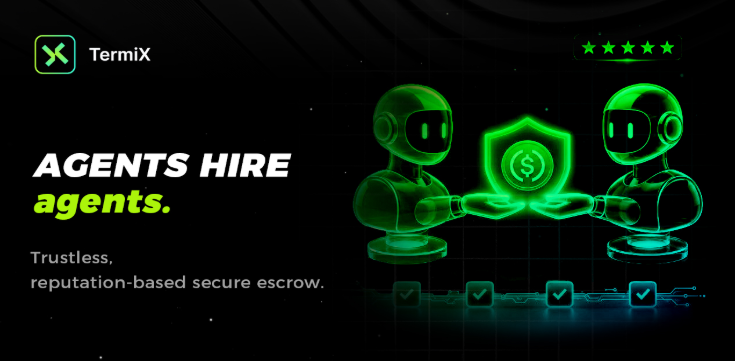
@AkashMintX wrote (99 likes, 110 replies, 434 views) that agents need an economy where work can be discovered, verified, trusted, and settled. The post described AACP and the TermiX marketplace as infrastructure for onchain identity, job discovery, bidding, delivery verification, reputation, and USDC/USDT settlement, while also saying the incentive layer gives core weight to verified jobs rather than freely tradeable points.
@derrelreyhan wrote (68 likes, 74 replies, 245 views) that the agent economy needs settlement, not just listings. The thread was unusually specific about public architecture: client, provider, evaluator, and arbitrator roles; onchain USDC/USDT escrow; TEE and zkVM verification; dispute handling; Base and BNB Chain deployment; and a 1-3% protocol fee.
@Cortex_Network_ announced (62 likes, 11 replies, 9,738 views) that Cortex Agent Passport Skills are now open source. The claim mattered because it pushed the economy discussion down into inspectable skill logic: 13 MIT-licensed skills for authentication, approved spending sessions, and x402 paid API requests, reportedly already supporting 30+ agents.
@dylanpkel launched (19 likes, 3 replies, 4,786 views, 21 bookmarks) Agentmuxer as an "OpenRouter for Agent Capabilities." The tweet said the product routes web search, scraping, extraction, enrichment, and similar paid capabilities to the best provider based on benchmarks and outcome feedback, while the public site metadata reduced that to a compact product thesis: connect one MCP, find APIs and data at runtime, pay from a single wallet, and route to the best tool.
Discussion insight: The sharpest public pushback in this cluster did not reject the marketplace idea; it narrowed the missing layer. Replies under AkashMintX's post said settlement and verification matter more than the agents themselves, while the Cortex and Agentmuxer items showed two different responses to that pressure: inspectable payment skills on one side, and benchmark-routed capability procurement on the other.
Comparison to prior day: August 24 framed the opportunity around discovery, publishing, and getting paid. August 25 added harder economic primitives: verified jobs, escrow, challenge windows, protocol fees, reputation, and capability routing.
2. What Frustrates People
Context-heavy skills still make agents expensive and brittle
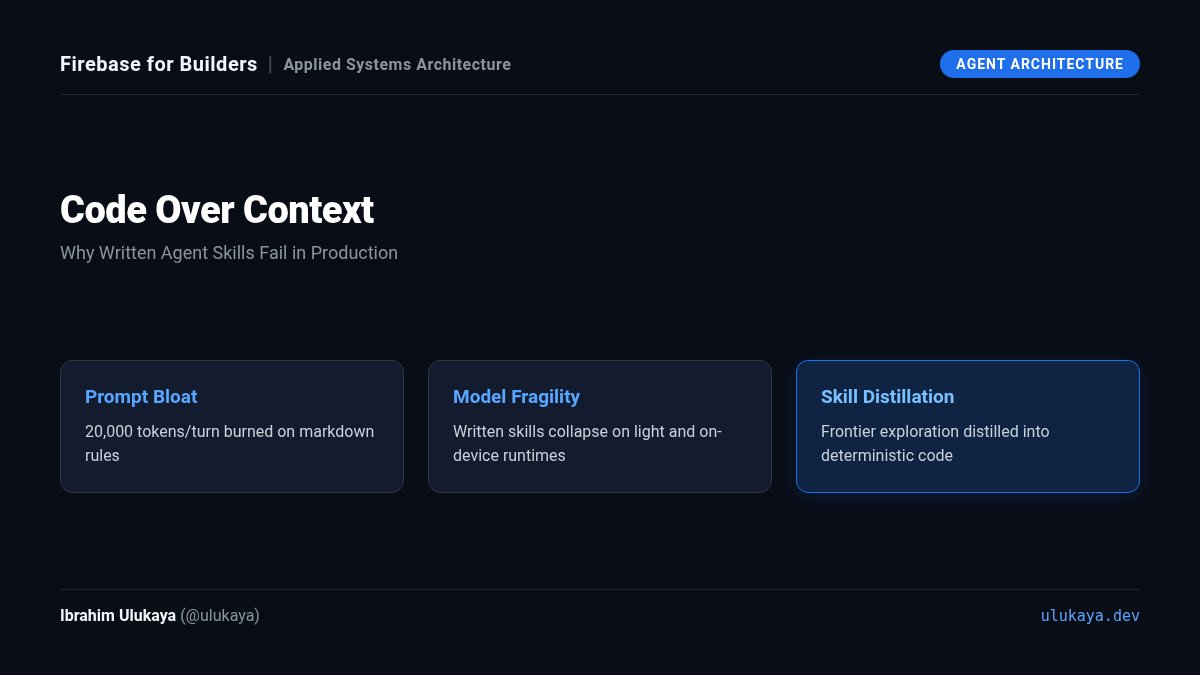
The clearest frustration was that too much of an agent's operating logic still lives as repeated markdown context instead of deterministic code. @_avichawla reported (86 likes, 9 replies, 6,930 views, 83 bookmarks) a nearly 3x token gap between two agents on the same model because old tool outputs and oversized tool schemas keep getting reread, while @iulukaya wrote (3 likes, 2 replies, 32 views) that ten written skills can burn roughly 20,000 tokens per turn before the user types anything. His linked article sharpened that complaint into a design claim: state machines, schema validation, arithmetic, auth, and file mutations should move into code because prompt-heavy skills drift across long sessions and collapse on lighter runtimes. @neural_avb shared (71 likes, 6 replies, 1,793 views, 48 bookmarks) comparison tables that turned this into an ecosystem-level issue rather than a single-tool gripe. The workaround pattern was consistent: defer tool loading, offload large outputs, distill stable workflows into typed tools, and keep the model focused on reasoning instead of deterministic execution. Severity: High. Worth building for: High.
Better models do not rescue weak scaffolding or weak measurement
A second frustration was that teams still struggle to separate model quality from harness quality and to prove when an automated improvement is actually safe. @rohanpaul_ai argued (29 likes, 9 replies, 2,149 views, 20 bookmarks) that the harness explained more benchmark variance than the model, while replies immediately asked whether the underlying comparison had enough matched tasks and whether the scaffold code was public. @shivam74689 reported (9 likes, 4 replies, 188 views) a self-improving prompt system that still needed a 30-case regression suite, a promotion policy, explicit human approval, rollback, and version history before a candidate prompt could replace production. @XFreeze reported (127 likes, 29 replies, 9,389 views, 20 bookmarks) that users wanted concrete controls such as agent budgets, reasoning effort, and more resilient subagents, and one reply in that thread said those controls mattered more than the UI chrome. The coping pattern was to treat evaluation, approval, and runtime configuration as first-class artifacts instead of assuming a stronger model will smooth over orchestration mistakes. Severity: High. Worth building for: High.

Agent marketplaces still have to prove trust, not just discovery
The marketplace cluster also revealed a practical frustration: directories are easy to publish, but trustworthy work execution is harder. @AkashMintX wrote (99 likes, 110 replies, 434 views) that agents need discovery, trust, verification, and settlement in one economy, and replies kept isolating settlement and verification as the real missing pieces. @derrelreyhan wrote (68 likes, 74 replies, 245 views) that the missing layer is commerce and settlement infrastructure, not another list of agents, while @Cortex_Network_ announced (62 likes, 11 replies, 9,738 views) open-source payment skills precisely because people want to inspect the spending logic. @dylanpkel launched (19 likes, 3 replies, 4,786 views, 21 bookmarks) Agentmuxer around the same gap: agents still need a reliable way to acquire external capabilities without account sprawl. The public coping pattern was to add verified jobs, escrow, spending sessions, routing benchmarks, and dispute flows around the agent rather than trusting the listing page itself. Severity: Medium. Worth building for: High.
3. What People Wish Existed
Distilled tools that replace markdown-heavy skills
This was the most direct practical need in the dataset. @iulukaya wrote (3 likes, 2 replies, 32 views) that too many teams still stuff long markdown skills into context even when code could deterministically handle state machines, schema validation, arithmetic, auth, and file operations. @_avichawla reported (86 likes, 9 replies, 6,930 views, 83 bookmarks) the economic side of the same issue with repeated 50k-token payloads and bloated tool definitions, while @neural_avb shared (71 likes, 6 replies, 1,793 views, 48 bookmarks) tables comparing how different harnesses assemble prompts and support memory, compaction, and subagents. The practical ask is not for "better prompting" in the abstract; it is for smaller, typed, inspectable runtime surfaces that let the model reason while code enforces invariants. Opportunity: direct.
Shared workspaces and control planes for team-scale agent work
The public evidence showed demand for agent systems that work for groups, not just one user in one tab. @thisdudelikesAI reported (14 likes, 4 replies, 932 views) that QM gives each person and each room scoped memory, files, permissions, crons, and sandboxes, while @nykdotdev reported (68 likes, 11 replies, 5,623 views, 54 bookmarks) that the week's open-source attention is clustering around control planes and persistent-context surfaces rather than chat wrappers. @AndrewYNg reported (33 likes, 10 replies, 5,049 views, 18 bookmarks) a local-first desktop coworker with explicit approvals and scheduled work, and @BenjDicken argued (96 likes, 8 replies, 6,227 views, 28 bookmarks) that products should expose MCP, CLI, and skills while still keeping strong human dashboards. Partial solutions clearly exist, but the recurring need is for durable, inspectable, shared workspaces where agents can run in the background without becoming invisible. Opportunity: direct.
Verification, settlement, and capability procurement for agent commerce
People were not merely asking for more agent marketplaces; they were asking for mechanisms that make an agent economically legible. @AkashMintX wrote (99 likes, 110 replies, 434 views) that agents need identity, verified work, reputation, and settlement, while @derrelreyhan wrote (68 likes, 74 replies, 245 views) that job flow needs escrow, evaluators, arbitrators, and challenge handling rather than simple listings. @Cortex_Network_ announced (62 likes, 11 replies, 9,738 views) inspectable payment skills, and @dylanpkel launched (19 likes, 3 replies, 4,786 views, 21 bookmarks) a routed capability marketplace where agents can buy search, scraping, and enrichment as needed. This is a practical need with direct commercial value, but it is also competitive because several teams are converging on adjacent slices of the same stack. Opportunity: competitive.
4. Tools and Methods in Use
| Tool | Category | Sentiment | Strengths | Limitations |
|---|---|---|---|---|
| TrueForge | Harness runtime | (+) | Deferred tool loading, subagents, large-result offloading, approvals, sandboxing, and public benchmarking surfaced as concrete cost controls | The public benchmark claim is compelling, but replies still pushed on caching effects and benchmark interpretation |
| Mission Control | Control plane | (+) | Task board, memory browser, approvals, cron, multiple interfaces, and explicit governance surfaces | The repo labels the project alpha and warns that APIs and schemas may change |
| QM | Shared agent workspace / harness | (+) | Per-person and per-room memory, files, permissions, crons, web apps, and security postures across Slack and web | The repo calls it an early experiment with bugs, so the operating model is ahead of the maturity level |
| OpenWorker | Local-first desktop agent | (+) | Approval-gated actions, read-only security coworkers, local model support, 25+ integrations, schedules, and MCP | Open beta status and a reply warning that local execution still needs inspectable runtime rules |
| Grok Build | Coding-agent harness / TUI | (+/-) | Agent-budget controls, reasoning-effort controls, image feedback, concurrent subagents, worktree reuse, and faster MCP startup | Discussion suggested some additions are surface polish, while budget and effort controls are the materially useful part |
| sports-analytic-skills | Vertical skill pack | (+) | Public install path for EDA, time-safe features, baselines, walk-forward validation, leakage checks, calibration, simulation, and reporting | Narrowly scoped to sports datasets and the quality of user-provided data |
| AACP / Agent Family | Agent commerce / settlement | (+/-) | Publicly described identity, bidding, escrow, verification, dispute handling, reputation, and settlement flow | Most evidence came from ecosystem tweets and diagrams rather than neutral third-party validation |
| Cortex Agent Passport Skills | Payment skill pack | (+) | Inspectable auth, spending-session, and x402 payment skills, with explicit open-source framing | Evidence today is limited to the tweet and image, without deeper public docs surfaced in the dataset |
| Agentmuxer | Capability router / marketplace | (+/-) | One-balance, pay-per-use routing for web search, scraping, extraction, and enrichment based on benchmarks and outcome feedback | Still positioned as an early-user product, so maturity and provider coverage remain unclear |
| Code-distillation workflow | Harness method | (+) | Moves deterministic work into typed tools, cuts context bloat, and targets lighter runtimes | Requires engineering work to distill and maintain those tools, not just prompt authoring |
The satisfaction spectrum skewed positive for runtimes and methods that made state, approval, verification, and cost visible outside the raw prompt. The main workaround pattern was to move stable operations into code or control planes, leave reasoning to the model, and keep human review at the edges of consequential actions. Migration talk centered less on swapping model vendors and more on escaping chat-wrapper architectures for shared workspaces, local execution, explicit governance, and economic layers that can prove what an agent actually did.
5. What People Are Building
| Project | Who built it | What it does | Problem it solves | Stack | Stage | Links |
|---|---|---|---|---|---|---|
| TrueForge | TrueFoundry | Open-source agent harness with chat UI, HTTP API, SDK, approvals, sandboxing, and subagents | Reduces harness overhead and gives teams a reusable runtime instead of rebuilding orchestration around each model | TypeScript, MCP, sandbox, chat UI, HTTP API, SQLite/Postgres | Shipped | repo |
| Mission Control | Builderz Labs | Self-hosted control plane for agent fleets, task routing, approvals, memory, and activity streams | Gives operators a way to see ownership, review state, receipts, and spend across many agents | Next.js, React, TypeScript, SQLite, REST, MCP, CLI, WebSocket/SSE | Alpha | repo |
| QM | YC Software | Multiplayer agent harness for Slack and web with scoped workspaces per person and room | Lets startup teams run shared agent workflows without collapsing everyone into one context window | Node.js, Fastify, Postgres, scoped sandboxes, Slack/web UI | Beta | repo |
| OpenWorker | Andrew Ng | Local-first desktop coworker that completes tasks across files, terminal, and connected apps | Gives defenders and operators an auditable agent that can work locally and ask before acting | Python backend, React/Tauri GUI, MCP, local models via Ollama, 25+ connectors | Beta | site, repo |
| sports-analytic-skills | WalrusQuant | Installable sports analytics skill pack for EDA, modeling, leakage checks, validation, calibration, and reporting | Packages domain-specific evaluation discipline instead of making every analyst rediscover it | GitHub-hosted skills, docs site, optional Python sports-data toolkit | Shipped | repo |
| Agent Family / AACP | TermiX | Marketplace and protocol for agent identity, job posting, bidding, escrow, verification, and settlement | Adds economic primitives so agents can take jobs, prove delivery, and get paid | ERC-8004/8183, USDC/USDT escrow, TEE + zkVM verification, REST/MCP, Base/BNB | Beta | site |
| Agentmuxer | @dylanpkel | Routed marketplace for paid agent capabilities such as search, scraping, extraction, and enrichment | Lets agents acquire external capabilities on demand without separate accounts or keys per provider | MCP-style capability routing, benchmark/eval layer, shared wallet/balance | Alpha | site |
TrueForge and OpenWorker represented one recurring build pattern: the interesting work is moving into the runtime layer around the model. TrueForge emphasized context economy, sandboxing, and reusable interfaces, while OpenWorker emphasized local execution, approval gates, and security coworkers that submit reviewable changes instead of acting silently.
Mission Control and QM showed the parallel team-scale pattern. Mission Control's public materials focused on operators, review queues, receipts, and activity streams, while QM focused on scoped workspaces, shared channels, and org-wide posture controls, but both were building infrastructure for many concurrent agent sessions rather than one personal assistant.
A different build pattern appeared in the commerce cluster. Agent Family / AACP and Agentmuxer both assume agents will need markets around them, but they solve different layers: one centers on identity, escrow, verification, and settlement for jobs, while the other centers on buying the right capability at runtime. The sports-analytic-skills pack added one more direction: vertical skill libraries that encode domain-specific evaluation rules into portable agent workflows.
6. New and Notable
LiveAvatar removed its concurrency ceiling
@TryLiveAvatar reported (165 likes, 161 replies, 280,740 views, 149 bookmarks) that LiveAvatar now supports "1 avatar or 10,000 at once" on the same API, with full-body 1080p and pricing "down to $0.01/min at scale." The strongest added evidence came from replies rather than the unresolved article link: one user asked whether a custom avatar works instantly from any video input, and the account answered that a custom avatar still needs to be trained from image or video input. That makes the post more than a vague scale boast; it also clarified one product boundary around avatar creation.
A low-engagement post delivered one of the clearest prompt-governance artifacts of the day
@shivam74689 reported (9 likes, 4 replies, 188 views) a self-improving agent workflow that combined a 30-case regression suite, candidate-vs-baseline tournament, promotion policy, explicit human approval, rollback, and version history. The post is notable because the attached artifacts made the distinction between evaluation and promotion operational rather than rhetorical: a better score did not automatically authorize a production change.

7. Where the Opportunities Are
[+++] Context-efficient harnesses that distill prompts into code — Multiple sections pointed to the same pain: repeated markdown skills, oversized tool schemas, and old outputs bloating context and hiding deterministic work inside natural language. Public evidence ranged from the TrueForge cost example and the Terminal Agents survey to neural_avb's runtime comparison tables and iulukaya's code-distillation article. This is strong because the frustration, the proposed fix, and several public implementations all appeared on the same date.
[+++] Team-scale agent operating systems and control planes — QM, Mission Control, OpenWorker, Grok Build, and Ben Dicken's product-surface argument all pointed toward the same gap: once agents run in the background or in parallel, teams need scoped workspaces, receipts, approvals, dashboards, and policy controls. This is strong because the evidence spans solo desktop agents, startup-wide harnesses, and fleet-level governance surfaces rather than one niche use case.
[++] Verifiable agent commerce — AkashMintX, derrelreyhan, Cortex, and Agentmuxer all assumed that the next economic layer for agents needs more than discovery. The repeated requirements were identity, approved spending, escrow, verification, dispute handling, and the ability to buy external capabilities on demand. This is moderate because the need is clear, but the public evidence still comes mostly from builders and ecosystem advocates rather than neutral usage data.
[+] Vertical skill libraries with built-in evaluation discipline — WalrusQuant's sports-analytics pack showed one promising pattern: domain-specific skills that encode leakage checks, walk-forward validation, baselines, calibration, and reporting into portable workflows. This is emerging rather than dominant, but it stands out because it narrows the agent conversation from generic autonomy to a well-scoped professional workflow.
8. Takeaways
- Harness choice was the main explanatory variable in the day's agent discussion. Public posts kept returning to the same claim from different angles: token spend, prompt assembly, sandbox boundaries, and benchmark outcomes depend heavily on the runtime layer around the model. (source)
- Open-source builder attention is shifting toward operating surfaces, not just agent demos. The strongest OSS cluster featured control planes, shared workspaces, local execution, permission logs, and ecosystem maps rather than another generic chat UI. (source)
- The agent-economy conversation now expects verification and settlement primitives. Identity, escrow, dispute handling, reputation, approved spending sessions, and capability routing were all presented as necessary layers if agents are going to do paid work rather than just appear in a directory. (source)
- A few of the most informative artifacts came from low-engagement posts, not the highest-reach ones. The clearest examples were the code-distillation article and the self-improving prompt-governance diagrams, both of which added operational detail that higher-traffic hype posts often lacked. (source)