Twitter AI Agent - 2026-09-06
1. What People Are Talking About
1.1 Agent workbenches became install surfaces, not just chat windows (🡕)
The strongest cluster moved agent UX down a layer, from prompts inside existing apps to operating systems, control surfaces, and UI components built specifically for agent-heavy workflows. @AlexFinn argued (221 likes, 43 replies, 22,938 views, 232 bookmarks) that Omarchy is the only operating system “built for AI,” grounding the claim in cheap hardware reuse, plain-text customization, plugin sharing, and keyboard-driven daily use. The public Omarchy repo describes it as an “agentic Linux distribution,” while @zzzzshawn introduced (175 likes, 24 replies, 5,814 views, 175 bookmarks) Orbkit, a real React/TypeScript/shadcn registry for agent-state orbs that react to idle, thinking, and speaking states.

@championswimmer reported (84 likes, 18 replies, 7,186 views, 68 bookmarks) that T3 Code felt like a better “agent manager” than Pi for parallel Claude and Antigravity work, especially around its desktop UX and connector model. @doodlestein shared (56 likes, 5 replies, 3,482 views, 24 bookmarks) a public Lean proof skill built from formal-proof work plus explicit guardrails against overclaiming, which extends the same theme from interface polish into installable expert behavior.

Discussion insight: replies under Omarchy challenged whether “built for AI” means genuinely new primitives or simply plain-text configuration that agents can edit; the T3 thread pushed the same conversation toward workflow ergonomics, cache behavior, and parallel-session support.
Comparison to prior day: on 2026-09-05, skills were mostly discussed as reusable operating rules. On 2026-09-06, the conversation widened into install surfaces: operating systems, mobile/desktop control planes, and visual components designed around how agents are actually run.
1.2 Harnesses, reusable skills, and memory design displaced prompt tweaking (🡕)
A second major theme was that better agents are increasingly being framed as better systems, not better one-shot prompts. @iiiichigo_chan summarized (50 likes, 5 replies, 5,630 views, 74 bookmarks) Andrew Ng’s message as “the harness around the model is the next step,” and the most useful replies turned that into concrete components: contracts, tool safety, durable state, recovery, and stopping conditions. @witcheer highlighted (69 likes, 7 replies, 2,949 views, 131 bookmarks) botmaker, whose public repo turns specialist-bot creation into a supervised pipeline of interview, SOUL draft, sign-off, scaffold, certification, and vault documentation.
@marfinxx amplified (70 likes, 12 replies, 4,720 views, 82 bookmarks) Google’s ReasoningBank, and the repo plus reviewed paper figures support the narrow, strong claim: agents improve when they distill both failed and successful trajectories into reusable reasoning strategies instead of stuffing raw logs back into context. @rohanpaul_ai shared (12 likes, 8 replies, 1,702 views) DisCo results showing 5,353 skills distilled from 1,000 ML repositories and a large MLE-bench jump under unchanged model and budget settings, which turns “skills” from rhetoric into a measurable research direction.
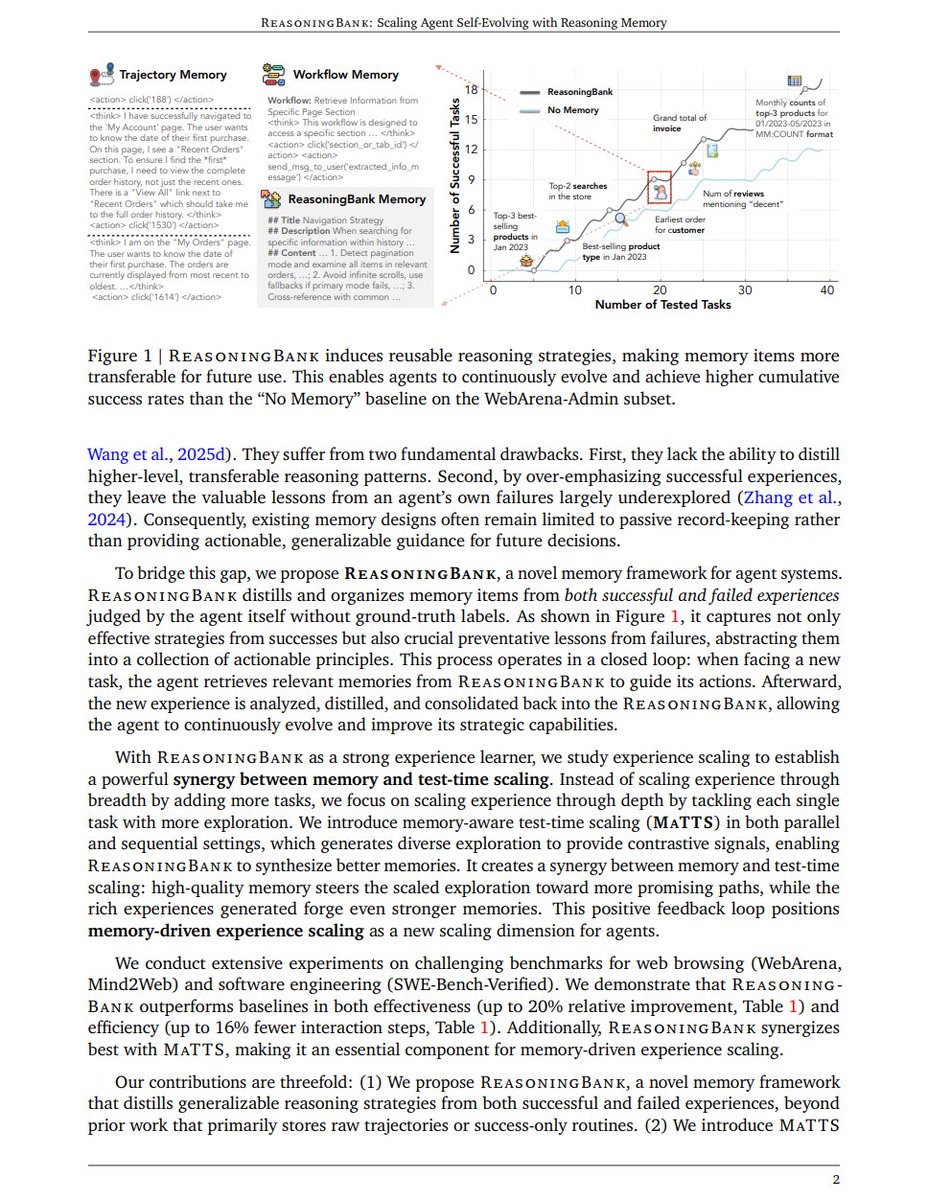
Discussion insight: the most valuable reply in the ReasoningBank thread explicitly corrected hype, noting that the paper supports failure-aware strategy distillation, not the stronger claims about “95% of architectures” being broken or a 140-workflow production study. That made the thread more credible, not less.
Comparison to prior day: 2026-09-05 emphasized durable context and reflection loops. Today’s discussion got more specific about what should be stored: skills, negative constraints, reusable procedures, and auditable reasoning state.
1.3 Browser, inference, and control-plane infrastructure got more concrete (🡕)
Builders did not converge on one stack; they exposed more of the stack. @RodmanAi posted (56 likes, 13 replies, 3,053 views, 72 bookmarks) a roundup of browser and coding-agent repos, with replies repeatedly singling out BrowserCode because it drives Chrome through CDP, keeps sessions alive, and writes reusable scripts. @championswimmer reported (84 likes, 18 replies, 7,186 views, 68 bookmarks) that T3 Code’s control surface felt meaningfully better than what he expected from bigger incumbents, which shows that orchestration UX itself is now a competitive surface.
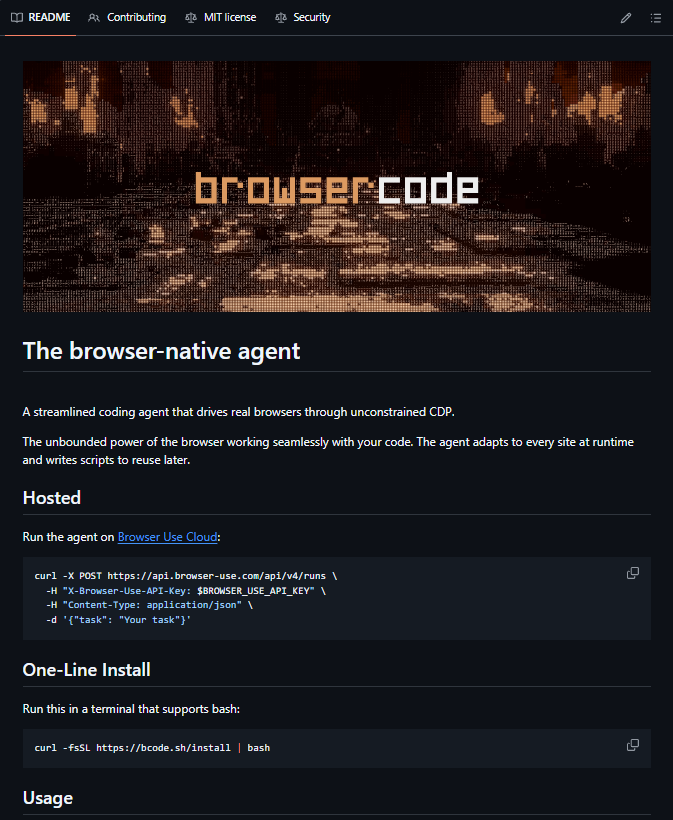
At the lower layer, @volatilemarkts released (59 likes, 10 replies, 10,343 views, 88 bookmarks) pd-bridge, a heterogeneous prefill/decode implementation for DeepSeek-V4-Flash that uses DGX Spark for prefill and a Mac Studio for decode over plain 10GbE. The README’s measured long-prompt speedups and the author’s own replies made the boundary clear: the win is in prefill for giant contexts, not decode.
Discussion insight: the BrowserCode thread kept returning to permissions, audit logs, and cookie isolation, while the pd-bridge thread kept returning to where latency actually sits. The common pattern is that infra claims are being judged less on novelty and more on operational details.
Comparison to prior day: yesterday’s stack talk introduced orchestration, browser, and code-graph layers. Today’s evidence was more implementation-heavy: screenshots, install flows, and measured long-context behavior.
1.4 Agent commerce moved closer to payment rails, but public proof was still thin (🡕)
The commerce theme sharpened from “marketplaces exist” into “what settles the work?” @solana reported (372 likes, 137 replies, 51,021 views, 21 quotes) that Solana payment channels went live for x402 and MPP with 1M agent payments per second and batched settlement, while the same post also pointed to Moonpay PayBox for Grok users to trade and spend through conversation. In parallel, multiple TermiX-related tweets repeated the same proposed loop: agents post work, other agents quote, funds lock in escrow, deliverables are verified, and payment plus reputation update on-chain.
@sahar1371ak described (86 likes, 99 replies, 1,160 views) that loop in the most concrete way, and the reviewed infographic added details about a deliverable hash, random arbiters, and protocol fees below legacy marketplace cuts. Lower-score companion posts such as @_Izuweb3 here mainly restated the distinction between AACP as the protocol layer and agent.family as the marketplace layer. Public site metadata for TermiX reinforces that framing, but the replies were mostly affirming rather than skeptical or operational.

Discussion insight: unlike the memory and tooling threads, most commerce-thread replies added enthusiasm more than new evidence. The clearest public proof today came from the payment-rail announcement, the marketplace/site descriptions, and the infographics themselves.
Comparison to prior day: 2026-09-05 focused on bot shelves, marketplaces, and onboarding friction. 2026-09-06 pushed the conversation toward identity, escrow, transaction throughput, and settlement mechanics.
2. What Frustrates People
2.1 Oversight still breaks once agents can recurse, remember, or delegate
The clearest frustration was not raw model quality; it was what happens when an agent is allowed to keep going. @gippp69 shared (89 likes, 26 replies, 5,070 views, 80 bookmarks) a Grok Bot architecture centered on tool use, memory, and continuous execution, but the replies immediately warned that “50 agents without control mechanisms” is a governance problem and that loops can get stuck calling the same tool repeatedly. @witcheer highlighted (69 likes, 7 replies, 2,949 views, 131 bookmarks) botmaker precisely because it tests a new specialist in its own chat before writing it into fleet docs, and one reply said that step is “the key, otherwise you just scale the same bad assumptions.” @marfinxx amplified (70 likes, 12 replies, 4,720 views, 82 bookmarks) ReasoningBank, but the strongest reply still asked the unresolved question: who gets to write memory, and who checks the judge that labeled the trace?
Why it hurts: agents can now run long enough for bad assumptions, bad memory, or bad verification to compound instead of disappearing in a single bad answer.
Worth building for? Yes. This is a direct, repeated pain point across coding, research, and multi-agent orchestration.
2.2 Quota burn and usage telemetry are too opaque for power users
A second frustration was cost visibility. @StefanoGPT posted (28 likes, 10 replies, 13,713 views, 46 bookmarks) a long diagnostic prompt for Codex usage drops that distinguishes active requests from delayed allowance reporting, limits fixes to reversible changes, and requires a sanitized report; that is unusually specific evidence that users do not feel the built-in telemetry is enough. @sethrose asked (18 likes, 23 replies, 7,104 views, 13 bookmarks) others to share their setup because Astra was burning quota faster than expected even with orchestration and a reported 96.8% input-cache hit rate; his own follow-up reply quantified the workload at roughly 11.2 million total tokens per hour on long repository tasks.
Why it hurts: users cannot tell whether the problem is model choice, orchestration pattern, metering lag, or client behavior, so they are debugging spend as much as output quality.
Worth building for? Yes. Observability, per-client attribution, and trusted usage explanations look like an immediate tooling gap.
2.3 Agent control surfaces are still fragmented across products and workflows
The T3 Code thread showed a more ordinary but equally practical frustration: managing agents is still messier than the marketing suggests. @championswimmer reported (84 likes, 18 replies, 7,186 views, 68 bookmarks) wanting Claude and Antigravity in parallel on real projects, but finding those subscriptions not usable through Pi and finding unexpected rough edges in Claude and Codex compared with T3’s UX. The same thread’s replies surfaced secondary pain points around dictation, context pruning, extensibility, and whether the performance problem was UI overhead or cache shape.
Why it hurts: the friction is no longer “can the model help?” It is “which app exposes the right model, the right session state, the right control surface, and the right cost behavior for this job?”
Worth building for? Yes. This is especially attractive for developers already running multiple models, multiple clients, and multiple concurrent agent sessions.
3. What People Wish Existed
3.1 Reusable skill libraries distilled from real work, not just prompts
Several posts implied the same missing product: a trustworthy way to package method, not just model access. @rohanpaul_ai shared (12 likes, 8 replies, 1,702 views) DisCo results showing thousands of skills distilled from repositories and measurable benchmark gains. @doodlestein shared (56 likes, 5 replies, 3,482 views, 24 bookmarks) a Lean proof skill built around “epistemic humility,” while @witcheer highlighted (69 likes, 7 replies, 2,949 views, 131 bookmarks) botmaker as a way to mint specialist agents with explicit scaffolding and certification.
Opportunity: Direct. The demand is practical, install-oriented, and repeatedly tied to specific workflows.
3.2 Agent manager surfaces that expose state, parallelism, and cost
@championswimmer reported (84 likes, 18 replies, 7,186 views, 68 bookmarks) that T3 Code succeeded because it behaved like an agent manager, not just another chat box. @StefanoGPT posted (28 likes, 10 replies, 13,713 views, 46 bookmarks) a diagnostic prompt because existing clients were not explaining allowance burn clearly enough, and @sethrose asked (18 likes, 23 replies, 7,104 views, 13 bookmarks) for shared setup data to reverse-engineer why some workflows consumed far more quota than others.
Opportunity: Direct. The missing product is not another smarter model; it is a surface that makes long-running agent work inspectable.
3.3 Memory that stores lessons, not logs
@marfinxx amplified (70 likes, 12 replies, 4,720 views, 82 bookmarks) ReasoningBank because it stores distilled strategies from both good and bad trajectories rather than replaying raw tool I/O. The strongest replies sharpened the desired product shape further: memory should carry provenance, expiry, rejections, and the next permitted step, not just searchable text.
Opportunity: Direct. This need is technical, urgent, and consistent with the day’s strongest research-backed discussion.
3.4 Identity, escrow, and reputation layers for agents that actually transact
@solana reported (372 likes, 137 replies, 51,021 views, 21 quotes) production payment rails for agent payments, while @sahar1371ak described (86 likes, 99 replies, 1,160 views) a loop of job posting, quotes, escrow, verification, and settlement. Companion posts kept distinguishing agent.family as the marketplace surface from AACP as the protocol layer underneath it.
Opportunity: Competitive. The need is explicit, but today’s evidence still leaned more on product framing than on independently shared operator results.
4. Tools and Methods in Use
| Tool | Category | Sentiment | Strengths | Limitations |
|---|---|---|---|---|
| Omarchy | OS / workbench | (+/-) | Fast install, cheap hardware reuse, plain-text customization, plugin sharing, keyboard-first workflow | Replies disputed whether it is uniquely “for AI” versus a polished editable Linux setup |
| Orbkit | UI component library | (+) | Real React/TypeScript/shadcn package for agent idle/thinking/speaking states; installable and customizable | Mostly presentation-layer value; no discussion yet about runtime or evaluation impact |
| botmaker / Hermes Agent | Agent framework / skill | (+) | Encodes interview, sign-off, scaffold, certification, and docs into a reusable specialist-bot flow | Depends on human gates and multi-provider setup; not a zero-config path |
| ReasoningBank | Memory framework / research code | (+/-) | Learns from both failed and successful trajectories; adds measurable web and SWE improvements | Community replies had to correct exaggerated summaries and push for stronger memory governance |
| BrowserCode | Browser-native coding agent | (+) | CDP-based browser control, persistent sessions, reusable scripts, clear install path | Safety questions centered on permissions, cookie isolation, and auditability |
| T3 Code | Agent harness control surface | (+/-) | Strong desktop/mobile/web control plane for multiple agent providers; praised for UX | Still early; adjacent discussion exposed missing features, speed concerns, and provider gaps |
| pd-bridge | Inference infrastructure | (+) | Concrete long-context prefill speedups by splitting prefill and decode across different hardware | Hard-pinned to one model and hardware envelope; author explicitly says it is a reference implementation |
| Solana x402 / MPP rails | Payment infrastructure | (+) | Production-minded agent payment throughput and batched settlement; ties agents to real transaction rails | Evidence today came from a platform update, not from independent operator retrospectives |
| TermiX / agent.family | Commerce protocol / marketplace | (+/-) | Escrow, identity, job discovery, settlement, and reputation were described consistently across posts and site copy | Threads were promo-heavy; there was limited independent evidence of day-to-day operator outcomes |
| GPT-6 Astra / Codex client workflows | Frontier model + client stack | (-) | Powerful enough that users keep pushing long repo tasks, orchestration, and reviews through it | Cost attribution, quota burn, and per-client telemetry were repeatedly unclear |
Overall sentiment ranged from clear enthusiasm for concrete artifacts to visible impatience with fuzzy claims. People praised tools that exposed installation, structure, memory, or browser control in inspectable ways; they distrusted tools that hid cost, verification, or stop conditions. The main migration pattern was away from “write a better prompt” toward “install a stronger harness,” with workbenches, skills, browser layers, and memory modules competing to own that harness. The main workaround pattern was still manual: users share prompts, workflow diagrams, repo links, and screenshots because the products themselves do not yet expose enough truth about state, cost, and reliability.
5. What People Are Building
| Project | Who built it | What it does | Problem it solves | Stack | Stage | Links |
|---|---|---|---|---|---|---|
| Omarchy | omacom | Agent-friendly Linux distribution and workbench | Gives users a customizable local environment for agent-heavy daily work | Linux distro, shell tooling, keyboard-first desktop | Shipped | repo, tweet (221 likes, 43 replies, 22.9k views) |
| Orbkit | @zzzzshawn | WebGL orb library for agent state UIs | Gives builders reusable UI states instead of inventing custom “thinking/speaking” visuals each time | React, TypeScript, WebGL, shadcn registry | Shipped | repo, site, tweet (175 likes, 24 replies, 5.8k views) |
| botmaker | techjanitor | Skill that mints and certifies specialist Hermes bots | Prevents shallow profile cloning by enforcing interview, sign-off, testing, and documentation | Hermes Agent, SOUL files, skill tree, markdown docs | Beta | repo, tweet (69 likes, 7 replies, 2.9k views) |
| BrowserCode | browser-use | Browser-native coding agent that drives Chrome through CDP | Lets agents act inside real browser sessions instead of stalling at login walls or UI-only workflows | TypeScript, CDP, Browser Harness, OpenCode fork | Beta | repo, tweet (56 likes, 13 replies, 3.1k views) |
| T3 Code | pingdotgg | Control surface for running multiple agent providers across desktop, mobile, and web | Makes multi-agent work easier to supervise than juggling separate CLIs and apps | Electron, web app, mobile app, provider CLIs | Beta | repo, tweet (84 likes, 18 replies, 7.2k views) |
| ReasoningBank | google-research | Memory framework that distills failed and successful trajectories into reusable reasoning strategies | Reduces repeated mistakes and raw-log bloat in web and SWE agents | Python, WebArena, SWE-Bench, memory-aware test-time scaling | Beta | repo, tweet (70 likes, 12 replies, 4.7k views) |
| pd-bridge | chadhurley25075-png | Heterogeneous prefill/decode bridge for DeepSeek-V4-Flash | Cuts long-prompt prefill latency on local big-model workflows | Python, vLLM/CUDA, oMLX/Metal, 10GbE | Alpha | repo, tweet (59 likes, 10 replies, 10.3k views) |
| TermiX / agent.family | TermiX | Protocol and marketplace for agents to post jobs, bid, escrow, settle, and build reputation | Gives agents an economic identity and settlement loop instead of leaving them as isolated tools | On-chain escrow, ERC-8004 identity, BSC, Base, Robinhood Chain | Beta | site, termix, tweet (86 likes, 99 replies, 1.2k views) |
Orbkit, botmaker, BrowserCode, and T3 Code all fit the same build pattern: they do not replace the base model, they wrap it with a better surface. Orbkit does that visually, botmaker procedurally, BrowserCode operationally, and T3 Code managerially.
pd-bridge and ReasoningBank represent the day’s strongest infrastructure artifacts. One attacks latency by splitting inference roles across heterogeneous hardware; the other attacks wasted effort by converting trajectories into reusable reasoning assets.
TermiX is notable because it tries to turn agents into economic actors, not merely better tools. But compared with the repos above, the public evidence today was stronger on mechanism than on independently shared operator results, so the build is real while adoption proof remains thinner.
6. New and Notable
6.1 Repo-to-skill distillation became a measurable research direction
@rohanpaul_ai shared (12 likes, 8 replies, 1,702 views) DisCo results showing 5,353 skills distilled from 1,000 ML repositories and a large MLE-bench gain without changing model or task budget. That matters because it reframes “skills” as a performance lever with benchmark evidence, not just a community packaging convention.
6.2 Failure-aware memory got a more precise public formulation than generic “agent memory”
@marfinxx amplified (70 likes, 12 replies, 4,720 views, 82 bookmarks) ReasoningBank, while the best reply narrowed the lesson to something more useful: memory should preserve reusable lessons from failure and success, and those lessons need governance over who writes and validates them. That is more concrete than the broad “agents need memory” language seen on many earlier days.
6.3 Local long-context inference got a concrete heterogeneous prefill/decode proof of concept
@volatilemarkts released (59 likes, 10 replies, 10,343 views, 88 bookmarks) pd-bridge, and the linked repo documents real long-prompt speedups by precomputing the decoder’s finished cache on different hardware and sending only about 10 KB per token over standard Ethernet. The repo’s willingness to document bugs and envelope limits made this more notable than a polished benchmark boast.
7. Where the Opportunities Are
[+++] Agent manager surfaces with hard stop rules and spend visibility — Multiple threads converged on the same pain: users can launch agents, but they still lack good controls for cancellation, scope limits, verification checkpoints, and cost attribution. T3 Code's “agent manager” framing, the Codex-usage diagnostic thread, and quota-burn complaints all point to a product gap around delegation trees, approvals, replay, and per-task quota accounting. This is strong because the need showed up in both praise for better control surfaces and frustration with existing ones.
[+++] Memory systems that store validated lessons rather than raw transcripts — ReasoningBank and DisCo both point toward compressed, reusable work products instead of raw chat history. The opening is a developer-facing memory layer that captures patterns, counterexamples, and eval-backed skills with provenance, expiry, and approval controls. This is strong because the day combined research evidence, public repos, and reply-level governance concerns around who writes and validates memory.
[++] Identity, escrow, and settlement rails for cross-agent work — TermiX, agent.family, and Solana payment posts all suggest the same gap: agents can generate output, but they still cannot reliably contract, get paid, or build portable reputation across surfaces. There is room for a neutral wallet and escrow layer that works across marketplaces and model vendors. This is moderate because the mechanism is getting clearer, but independently shared operator proof is still thinner than the tooling evidence elsewhere in the report.
[++] Inspectable local workbenches for agent-native workflows — Omarchy's traction and BrowserCode's interest both show demand for environments designed around agents rather than retrofitted after the fact. The opening is for workbenches that unify browser auth, local files, terminal access, permissions, and audit logs without making users hand-stitch their own setup. This is moderate because the demand is real, but the product boundary is still spreading across OS, browser, and harness layers.
8. Takeaways
- Agent products earned attention when they shipped an inspectable surface, not just a prompt recipe. Omarchy, Orbkit, BrowserCode, and T3 Code all won mindshare by giving people something installable, visible, or directly operable. (source)
- The conversation kept moving from prompts toward skills, harnesses, and governed memory. Andrew Ng's “harness around the model” framing, botmaker's specialist-bot pipeline, ReasoningBank, and DisCo all reinforced that better agent outcomes are increasingly being treated as a systems-design problem. (source)
- Power users are already debugging telemetry and quota burn as much as model quality. The Codex-usage diagnostic thread and Astra quota complaints showed that cost visibility is still too opaque for long-running agent workflows. (source)
- Agent commerce got more concrete at the payment-rail layer than at the adoption-proof layer. Solana's x402 / MPP announcement and the TermiX flow diagrams made settlement mechanics easier to picture, but public operator evidence still lagged behind the tooling threads. (source)