Twitter AI Agent - 2026-09-13
1. What People Are Talking About
1.1 Harness engineering kept outranking model worship (🡕)
The biggest coding-agent cluster kept insisting that the model is not the product boundary. It is the component teams should expect to swap, constrain, and benchmark, while the durable value sits in harness rules, context handling, approval logic, and verification. At least four high-signal tweets pushed that framing from different angles.
@omarsar0 argued (321 likes, 29 replies, 35,434 views, 672 bookmarks) that learning to build a harness is now part of the core AI-engineering skill set because domain-specific reliability, customization, and multi-model control are too important to outsource to a vendor. The highest-value reply did not disagree with the harness thesis; it sharpened it, saying the missing layer is an AI controller that can drive models and harnesses from different providers rather than one harness tied to one model family.
@mardehaym distilled (57 likes, 9 replies, 4,693 views, 52 bookmarks) the same idea into operating rules: keep critical calculations in deterministic tools, require a designated human for consequential actions, audit every step, and design the system so the model is just a config swap. A reply added a concrete eval practice that fits the same worldview: pin the harness commit during test runs so a model swap does not get mistaken for a tooling change.
@matthewcanham translated (125 likes, 11 replies, 10,468 views, 267 bookmarks) the stack into an 11-topic curriculum for PMs, spanning tool use, MCP, RAG, context engineering, memory, harness engineering, evaluation, and sandboxing. That matters because the conversation was no longer limited to infra specialists; people were treating agent-system literacy as a product-management requirement.
@gippp69 packaged (72 likes, 30 replies, 1,164 views, 36 bookmarks) the control-plane version of this argument around a GPT-6 Astra note: split work into reversible, reviewed, and irreversible lanes; keep one controlled writer seat; and treat context size as a cost-governance problem once pricing reprices past 272K input.
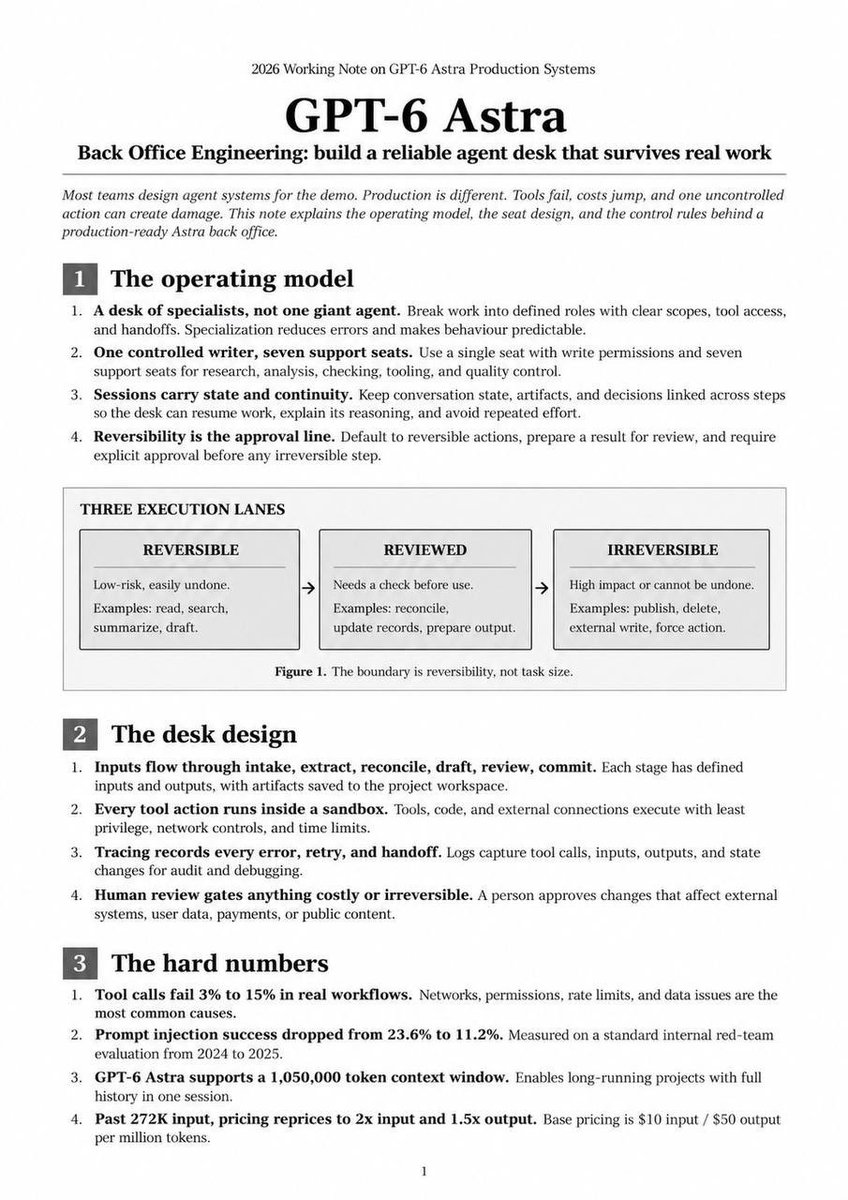
Discussion insight: the strongest replies did not say “skip the harness.” They said the harness still needs another layer above it - a controller, contract tests, or pinned eval conditions - if teams want portability and trust.
Comparison to prior day: 2026-09-12 treated harness engineering as a fast-growing discipline. On 2026-09-13, the tone shifted again: the harness was described less as a useful abstraction and more as the actual intelligence stack teams need to own.
1.2 Context management got specific: schemas, compression, and reusable business memory (🡕)
“Better memory” was not the phrase of the day. The stronger posts described concrete storage layouts, typed state, compression policies, and cost-aware context boundaries. The common move was to stop talking about context as a bigger window and start treating it as a designed system.
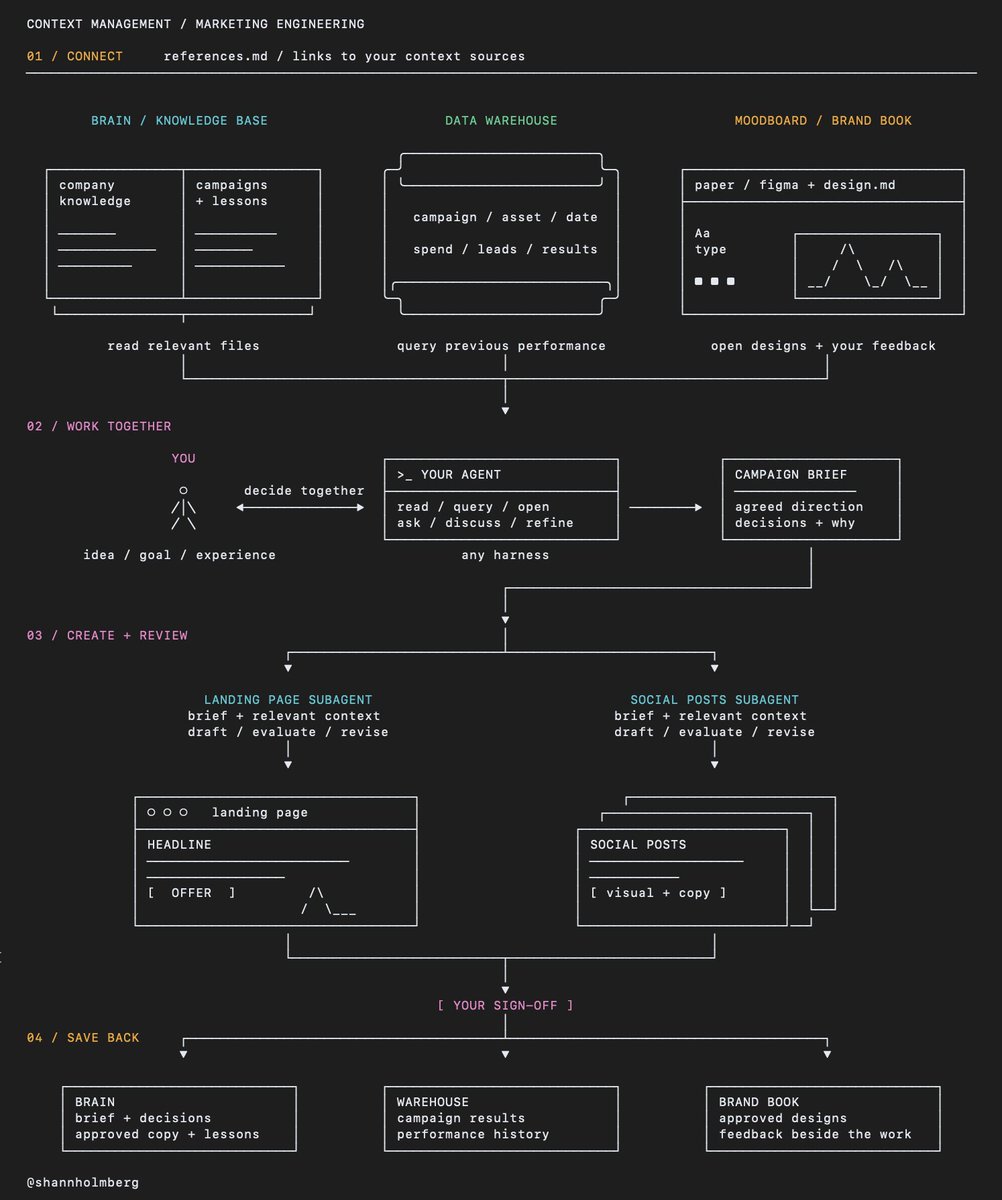
@shannholmberg showed (51 likes, 15 replies, 3,275 views, 57 bookmarks) a marketing-agent architecture built from three context stores: a markdown company brain, a warehouse for queryable performance data, and a live brand book. The post is detailed enough to specify how the agent should read prior campaign decisions, query asset-level performance, open design files, work with the human on the brief, and save approved reasoning back into the system.
@mirku21 highlighted (15 likes, 9 replies, 420 views, 9 bookmarks) Microsoft's ACON work on context compression for long-horizon agents. The public paper says ACON reduces peak token usage by 26-54% while matching or improving baseline accuracy, and its distilled compressors preserve over 95% of teacher performance while lowering compression cost enough for smaller models to stay competitive on long workflows (paper).

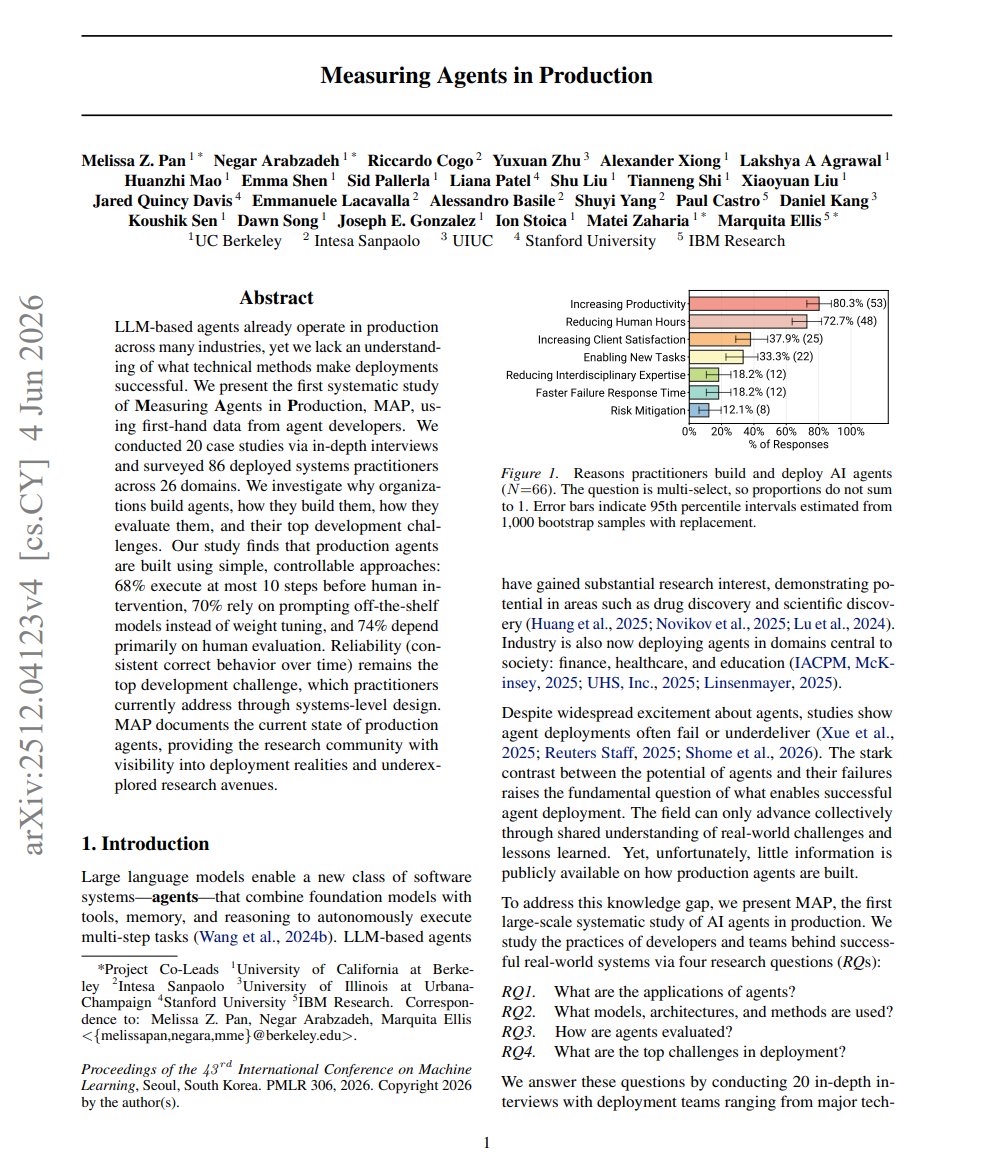
The production-side version of the same point appeared in @marfinxx summarizing (18 likes, 9 replies, 805 views, 16 bookmarks) the MAP paper. The paper reports that 68% of production agents execute at most 10 steps before human intervention and 74% rely primarily on human evaluation, which fits the broader timeline logic: teams are limiting loop depth and managing context because real workloads punish drift, not because they lack access to larger models (paper).
Discussion insight: replies focused on two failure modes: stale decisions that remain in the context after policy changes, and failed tool calls that get dropped from memory even though the error state is exactly what the next step needs.
Comparison to prior day: 2026-09-12 emphasized memory and handoff quality. Today the conversation became much more operational, with typed state compartments, data-warehouse queries, compression thresholds, and explicit sign-off points.
1.3 Public agent-engineering curricula and packaged capabilities kept multiplying (🡕)
A separate cluster treated agent engineering as something people can now learn from off-the-shelf courses, installable skills, and reusable discovery tools. The notable change was not just more educational content; it was more distribution infrastructure around that content.
@adriancortexbt pointed (15 likes, 5 replies, 457 views, 11 bookmarks) to a 37-minute workshop where Anthropic engineers build a managed SRE agent in seven steps: defining the agent, binding it to a live session, debugging a latency incident, and showing that sessions survive refreshes. That is a very different artifact from “here is a good prompt”; it is a public walkthrough for stateful agent operations.
@beamnxw compiled (26 likes, 14 replies, 1,544 views, 37 bookmarks) ten agent skills with 8.01M combined downloads and framed them as a working stack for discovery, pressure-testing, browser work, prototyping, debugging, orchestration, and tool building. The linked Vercel Skills repo backs up the packaging trend directly: it exposes a CLI for installing or using skills from GitHub, GitLab, or local sources across multiple agent environments (repo).
@kv1nsiii made (14 likes, 5 replies, 421 views, 12 bookmarks) the same point from the coding-agent side with a “map, method, catalog” stack: CodeGraph for a local pre-indexed code graph that auto-syncs with edits (repo), HumanLayer's 12-Factor Agents for workflow principles around context ownership (guide), and ClawHub for skill/plugin discovery (site).
Discussion insight: the pushback was not anti-skill. It was that download counts and catalogs are not enough on their own; each packaged capability still needs pass criteria, trace logs, and a clear contract for inputs, outputs, and failure behavior.
Comparison to prior day: 2026-09-12 already featured courses and skill-audit ideas. On 2026-09-13, the stack around learning expanded into registries, local semantic maps, and reusable install flows.
1.4 Trust arguments spread from frontier safety to money-moving agents and agent markets (🡕)
Trust did not appear as one conversation. It appeared as three connected ones: independent evaluators for frontier labs, measurable standards for capital-managing agents, and transaction rules for agent marketplaces. The shared premise was that action requires a stronger proof standard than chat.
@JoshAEngels explained (1,366 likes, 54 replies, 76,584 views, 280 bookmarks) why he left Google DeepMind for METR, arguing that labs are still moving toward recursive self-improvement without sufficient evidence that current systems are aligned enough for it. @EMostaque countered (143 likes, 21 replies, 35,915 views, 58 bookmarks) that board-level oversight is too weak a control and that the field needs stronger access to AI internals and better evaluators, not just general calls to slow down.
For economic agents, @PHAZE_001 argued (166 likes, 68 replies, 2,880 views) and @callmeperry3 argued (26 likes, 13 replies, 7,458 views) that the right evaluation bar is not “is the agent smart?” but whether its performance is risk-adjusted, consistent, and independently verifiable when it handles real capital.
@sytaylor reported (52 likes, 14 replies, 3,914 views, 25 bookmarks) that Visa, Mastercard, and Ant International are converging on a shared Know Your Agent framework for payment agents, with operator linkage, certification, and ongoing monitoring across networks (coverage). At the marketplace layer, @CteaAminah argued (59 likes, 52 replies, 473 views) that discovery will be harder than payment unless agents can compare services by required inputs, output formats, time, price, and trust boundaries, while @0xCindyWeb3 added (68 likes, 57 replies, 723 views) that a useful request must include a deliverable, a budget range, and an enforceable acceptance test before work moves into escrow.
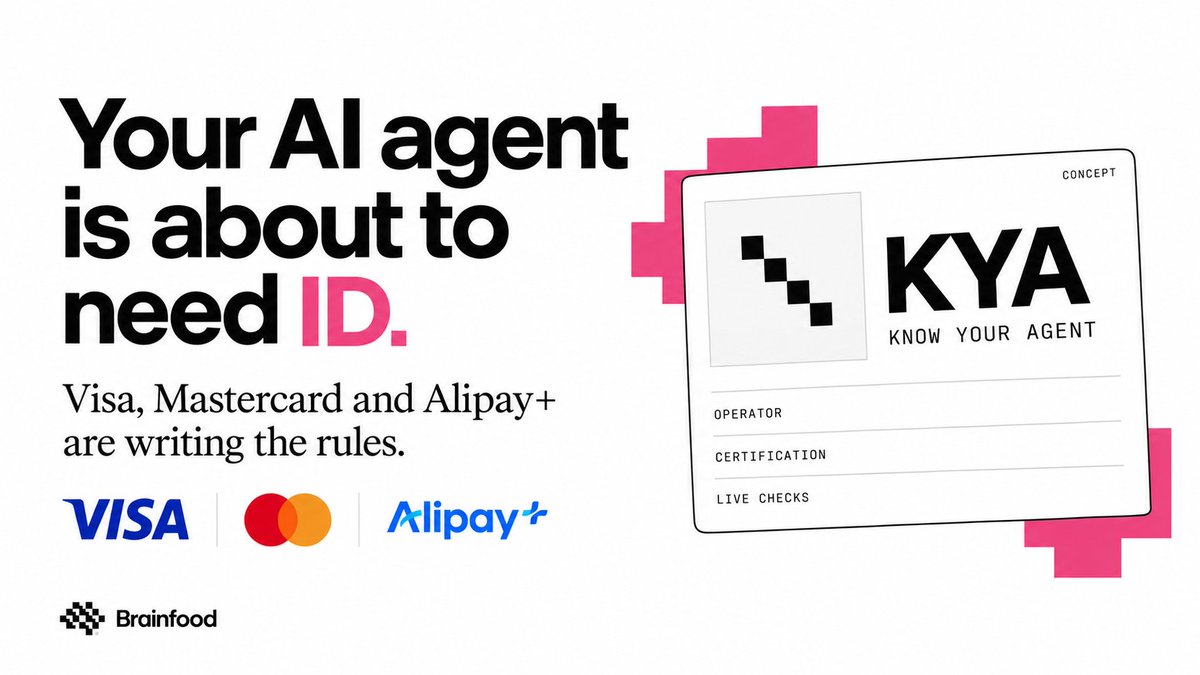
Discussion insight: the most useful replies were about contestability, not branding. People asked how agent reputations get repaired after a false negative, who adjudicates disputes, and how acceptance tests are defined before any work or payment starts.
Comparison to prior day: 2026-09-12 centered trust around escrow, reputation, and buyer scarcity in agent markets. On 2026-09-13, that same concern widened into independent evaluation, payment-network identity, and stronger definitions of what counts as acceptable agent action.
2. What Frustrates People
Context overload still breaks agents before model quality does
Severity: High. The recurring frustration was not that the models are too weak; it was that long-running systems still drown in their own history, stale state, and bulky tool output. @omarsar0 argued (321 likes, 29 replies, 35,434 views, 672 bookmarks) that vendor models do not solve domain-specific reliability by themselves. @shannholmberg showed (51 likes, 15 replies, 3,275 views, 57 bookmarks) the workaround pattern in detail: keep durable business context in markdown, keep performance history in a warehouse, and keep visual rules in a separate brand book instead of stuffing everything into one chat transcript.
The research-backed complaints matched the practitioner ones. @mirku21 highlighted (15 likes, 9 replies, 420 views, 9 bookmarks) ACON's claim that unbounded interaction histories create both context distraction and inference-cost blowups, while the MAP paper cited by @marfinxx found that 68% of production agents stay within 10 steps before human intervention and 74% rely primarily on human evaluation (ACON, MAP). The practical workarounds were consistent: compress state, keep variable tables, query history instead of replaying it, and cap loops before they become expensive drift.
Worth building for? Yes. This pain showed up across strategy posts, operational diagrams, and research papers. Products that own compaction, provenance, and queryable state look directly aligned with what the data says teams need.
Action still outruns evaluation in both labs and production
Severity: High. The day contained repeated warnings that agents are being asked to act before the industry has agreed on how to judge them. @JoshAEngels said (1,366 likes, 54 replies, 76,584 views, 280 bookmarks) current systems are not aligned enough for recursive self-improvement, which is why he joined METR. @EMostaque argued (143 likes, 21 replies, 35,915 views, 58 bookmarks) that even boards are weak evaluators and that the field needs deeper technical access and stronger oversight tools.
That same frustration appeared closer to deployment. @mardehaym called for (57 likes, 9 replies, 4,693 views, 52 bookmarks) deterministic tooling, audit trails, and designated human approval, while @PHAZE_001 argued (166 likes, 68 replies, 2,880 views) and @callmeperry3 argued (26 likes, 13 replies, 7,458 views) that the right metric is risk-adjusted performance, consistency, and verifiability for capital-managing agents. The complaints were specific enough to suggest a gap in the stack: people have many ways to make agents act, but far fewer ways to make those actions legible and contestable.
Worth building for? Yes. This is a direct infrastructure problem, not a vibes problem. The need spans frontier-model oversight, coding-agent verification, and agent-finance controls.
Discovery and job specification remain weak in agent marketplaces and skill ecosystems
Severity: Medium to High. The marketplace discussion kept returning to the same missing layer: a label like “research agent” or “content agent” does not tell another agent what inputs it accepts, what outputs it returns, how long it takes, what it costs, or when it should be rejected. @CteaAminah argued (59 likes, 52 replies, 473 views) that discovery may be harder than payment for exactly this reason. Replies added that agent-to-agent discovery needs machine-readable contracts, SLAs, and failure modes, not just better search.
@0xCindyWeb3 added (68 likes, 57 replies, 723 views) that supply only matters when buyers can publish a specific brief, budget range, and acceptance test before escrow starts. The same concern showed up in the skills/tooling thread: @beamnxw shared (26 likes, 14 replies, 1,544 views, 37 bookmarks) a skills stack, but replies immediately asked for contract tests and trace logs so the stack is composable instead of just popular. @kv1nsiii pointed (14 likes, 5 replies, 421 views, 12 bookmarks) to the same answer in coding tools: better maps, better methods, and better catalogs.
Worth building for? Yes, with moderate competition risk. The need is obvious, but several projects are already racing toward registries, skill catalogs, and machine-readable capability layers.
3. What People Wish Existed
A controller layer above the harness
The clearest unmet systems need was not “a better model.” It was a layer that can decide which model, harness, context store, and approval path to use for a given job. The strongest hint came in reply to @omarsar0, where a builder said the current need is an AI controller that can drive models and harnesses from different providers. @mardehaym and @gippp69 supplied the requirements around deterministic tools, auditability, and reversible-versus-irreversible lanes.
This is a practical need, not an emotional one. People already know roughly what they want: a way to route work across models, preserve accountability, and keep cost or permission boundaries outside any one worker agent. Opportunity: Direct.
Capability registries with machine-readable contracts
The skill and marketplace threads both converged on the same ask: stop making humans and agents guess what a capability really does. @beamnxw surfaced a growing skills stack, the Vercel Skills repo shows a public install and use flow across agent environments (repo), and @kv1nsiii paired discovery with CodeGraph, HumanLayer, and ClawHub. On the marketplace side, @CteaAminah said descriptions need required inputs, outputs, time, price, tools, and trust boundaries before automated demand can work.
This is highly practical and already partially addressed, but the comments show the current solutions are incomplete without tests, provenance, and failure semantics. Opportunity: Competitive.
Evaluators, certifiers, and adjudicators for agents that spend, deploy, or settle
The data repeatedly pointed to a missing trust layer for consequential action. @JoshAEngels framed independent evaluation as core frontier infrastructure, @PHAZE_001 and @callmeperry3 argued for verifiable performance standards in agent finance, @sytaylor pointed to a cross-network KYA framework, and @ajrmdhn___ argued that peer disputes need a precommitted decider before execution starts.
This is practical, urgent, and still fragmented across model labs, finance, payments, and marketplaces. What exists today only partially covers it. Opportunity: Direct.
4. Tools and Methods in Use
| Tool | Category | Sentiment | Strengths | Limitations |
|---|---|---|---|---|
| Custom harnesses | Orchestration/runtime | (+) | Domain control, portability, auditability, deterministic tools | Expensive to build and maintain; still needs controller logic above the harness |
references.md + brain/warehouse/brand-book pattern |
Context management | (+) | Separates durable knowledge, queryable performance, and live design feedback | Requires provenance discipline and active-state cleanup to avoid stale rules |
| ACON | Context compression | (+) | 26-54% lower peak token use with better or preserved accuracy on long tasks | Adds compressor-guideline and distillation complexity |
| MAP-style bounded workflows | Evaluation method | (+) | Matches real production practice: short loops, human checks, off-the-shelf models | Sacrifices open-ended autonomy and accepts minute-scale latency |
| Vercel Skills / ClawHub | Skill registry | (+/-) | Reusable capability packaging, install flows, and discovery | Popularity does not guarantee composability; still needs contract tests and traces |
| CodeGraph | Code intelligence | (+) | Local pre-indexed code graph, auto-sync, browser UI, lower file-thrash | Depends on graph quality and correct indexing across changing repos |
| HumanLayer 12-Factor Agents | Methodology | (+) | Gives builders shared language for prompts, context, state, and tool boundaries | Guidance rather than turnkey infrastructure |
| VoiceStudio | Local multimodal stack | (+) | Local voice cloning, dubbing, ASR/TTS choice, APIs, MCP integration | Active beta and more compute-heavy than plain text-agent stacks |
| KYA frameworks | Payments/protocol | (+/-) | Shared operator identity, certification, and monitoring for spending agents | Needs dispute handling and a way to repair bad scores or false negatives |
The overall satisfaction spectrum leaned positive for tools that add control rather than magic. @shannholmberg and HumanLayer's public guide both favored explicit context ownership over bigger raw transcripts (guide); @mirku21 and the ACON paper backed compression as a measurable fix (paper); and the MAP paper cited by @marfinxx supported short, human-supervised workflows in production (paper).
Migration patterns were also clear. People were moving away from “one chat, one giant context” toward structured context stores, explicit skills, local semantic indexes, and durable sessions. @beamnxw and the Vercel Skills repo showed capability packaging becoming normal (repo), while @kv1nsiii and CodeGraph showed the same push toward reusable code navigation and lower token waste (repo). In multimodal work, @Sumanth_077 surfaced VoiceStudio as a local API-bearing voice stack rather than a cloud-only feature (repo).
5. What People Are Building
| Project | Who built it | What it does | Problem it solves | Stack | Stage | Links |
|---|---|---|---|---|---|---|
| CodeGraph | colbymchenry | Builds a local code graph and exposes it to coding agents | Cuts file-thrashing and reduces context waste when agents navigate large repos | Rust kernel, local .codegraph/ index, MCP server, browser UI |
Shipped | tweet, repo |
| skills | Vercel Labs | CLI for installing or using agent skills from Git/GitHub sources | Packages reusable capabilities instead of copying raw prompt snippets between agents | Node CLI, Git/GitHub/GitLab sources, multi-agent integrations | Shipped | tweet, repo |
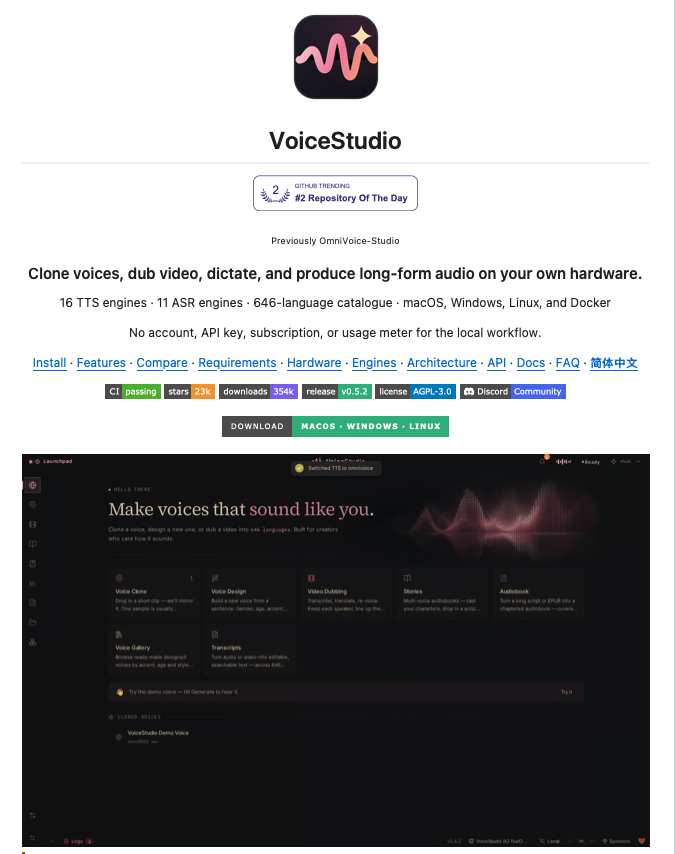
| VoiceStudio | debpalash | Local voice cloning, dubbing, transcription, and audio APIs with agent hooks | Gives agent workflows a private on-device voice layer instead of a cloud-only dependency | Desktop app, 16 TTS engines, 11 ASR engines, local/OpenAI-compatible APIs, MCP server | Beta | tweet, repo, site |
| Orchard | Microsoft Research | Open-source agentic modeling framework with a harness-agnostic environment layer | Reuses sandbox, training, and evaluation infrastructure across SWE, GUI, and assistant agents | Orchard Env, Kubernetes-native service, Qwen3.5-35B-A3B backbone, value reranking | Alpha | tweet, paper, repo |
| ACON | Microsoft Research | Optimizes and distills context-compression rules for long-horizon agents | Prevents long traces from destroying reasoning quality and blowing up token cost | gpt-4.1 teacher, distilled Qwen-14B/Phi-4 compressors, benchmarked on AppWorld and OfficeBench | Alpha | tweet, paper |
The strongest builder pattern was “make the surrounding system legible.” CodeGraph and skills both try to make agent capabilities easier to discover and reuse: one maps the codebase so the agent stops opening files blindly, while the other turns skills into installable artifacts with an explicit source and install path. The common pain point behind both is wasted search and brittle copy-paste context.
The research projects were similarly infrastructure-first. Orchard focuses on a reusable environment layer plus domain-specific recipes, while ACON treats context compression as an optimization problem instead of a manual prompt trick. Both are responses to the same operational reality visible elsewhere in the report: teams want longer-running agents, but only when the environment, memory, and verification story stays under control.

VoiceStudio was the clearest local-first build in the set. It packages cloning, dubbing, dictation, transcription, and agent-facing APIs into one on-device stack, which makes it notable not just as a creator tool but as a concrete example of private multimodal infrastructure that an agent can call without leaving the machine.
6. New and Notable
Measuring Agents in Production became the empirical reference point
The MAP paper surfaced by @marfinxx summarizing (18 likes, 9 replies, 805 views, 16 bookmarks) was the strongest hard-data item in the set. Public paper details put it at 20 deployment-team interviews, 306 practitioners surveyed, and 86 production or pilot systems, with findings that favor short workflows, off-the-shelf models, and human evaluation over open-ended autonomy (paper).
ACON made context compaction look like a first-class optimization problem
@mirku21 highlighted (15 likes, 9 replies, 420 views, 9 bookmarks) ACON as a way to optimize compression guidelines in natural language space and then distill them into smaller models. The public paper's 26-54% peak-token reduction, plus up to 46% improvement for smaller agents on long tasks, made it one of the clearest examples of context engineering turning into measurable systems work (paper).
Payment networks started writing trust rails for consumer agents
@sytaylor reported (52 likes, 14 replies, 3,914 views, 25 bookmarks) that Visa, Mastercard, and Ant International are aligning around a shared Know Your Agent framework. Public coverage says the framework is meant to tie agents to validated operators, shared certification requirements, and ongoing monitoring across payment networks, which is a notable step beyond single-product demos of assistants buying things online (coverage).
7. Where the Opportunities Are
[+++] Context-control infrastructure for long-running agents - This was the strongest multi-source opportunity on the day. @shannholmberg turned context into a three-store architecture, @mirku21 and ACON showed measurable gains from compression (paper), @marfinxx pointed to production data favoring short controlled loops (paper), and @gippp69 made cost thresholds and approval lanes explicit. The evidence points to a real need for products that own compaction, provenance, routing, and safe state handoff.
[++] Capability registries with contracts, not just catalogs - @beamnxw and the Vercel Skills repo show the packaging direction (repo), while @kv1nsiii, @CteaAminah, and @0xCindyWeb3 all point to the same missing layer: machine-readable inputs, outputs, budgets, acceptance tests, and failure semantics. The opportunity is moderate rather than overwhelming because multiple projects are already moving here, but the market still looks early.
[++] Evaluation, certification, and adjudication for consequential agent actions - @JoshAEngels, @EMostaque, @PHAZE_001, @callmeperry3, @sytaylor, and @ajrmdhn___ all describe the same gap in different domains: if an agent can write code, move money, or settle a dispute, someone needs an inspectable standard for whether the action was allowed, correct, and reversible. The need is already visible from research governance down to marketplace escrow flows.
8. Takeaways
- The conversation kept moving up the stack. The most useful posts were about harnesses, deterministic tools, approval logic, and eval conditions, not about picking one better frontier model. (source)
- Context discipline is becoming an engineering problem with measurable payoffs. The strongest evidence came from concrete architectures and papers that reduce token load, bound loop depth, and preserve the state that actually matters. (source)
- Public learning resources are getting operational, not merely inspirational. Workshops, skills CLIs, code-graph tooling, and methodology guides are packaging agent engineering into installable or teachable systems. (source)
- Trust is the hardest unsolved layer once agents can spend, deploy, or settle. Independent evaluators, Know Your Agent frameworks, acceptance tests, and adjudication rules all appeared because the market still lacks a shared proof standard for consequential agent action. (source)