Twitter AI Agent - 2026-09-24
1. What People Are Talking About
1.1 Harness economics replaced generic benchmark talk (🡕)
The strongest recurring conversation was about the unit economics of agent work: how many tokens a task burns, what the completed task costs, when a model stops too early, and whether a cheaper harness still delivers user value. At least six high-signal items pushed this theme, spanning public indexes, practitioner reports, and customer-facing pricing updates.
@ArtificialAnlys reported (180 likes, 25 replies, 9,883 views) that Claude Opus 5.5 reached 66 on the Coding Agent Index but cost $13.04 per task, up from $10.79 for Opus 5 because token usage rose to 15.6 million per task. The attached chart matters because it makes the tradeoff visible: the top score sits on the expensive end of the frontier, not in a free-lunch zone.

@FundamentEdge said (85 likes, 9 replies, 15,093 views, 90 bookmarks) that his April attempt to build AI-native coverage across 153 healthcare stocks ran into four walls: AI Excel was not good enough, workflow token bills looked headed toward the six figures, outputs still felt like slop, and context gathering required heavy data engineering. The same post also showed what improved: after five months, a full validation loop inside the skill and higher data-call ceilings let him update three dozen models in one day.
@leo_linsky reported (158 likes, 12 replies, 16,637 views, 65 bookmarks) that his custom harness produced a different ranking from Artificial Analysis, with GPT-6 Astra still first, GPT-6 Sol near the frontier, and Claude Opus 5.5 underperforming because it often self-stopped once it believed the result was good enough. His replies added the most useful nuance: the harness shows the last N steps, never compacts, and treats premature stopping as a real performance problem rather than a personality quirk.


@davidneckstein reported (55 likes, 5 replies, 7,474 views) that Legora cut LLM-related agent credits by roughly 25 percent in August, cut document-processing credits by another ~25 percent in September, and reduced credit consumption for the same work by more than 20 percent since August while keeping response quality up.
Discussion insight: the replies that added the most value kept attacking hidden measurement errors. Replies to @ArtificialAnlys's post pushed for reruns at matched token budgets, replies to @FundamentEdge's post argued that validation should use a source the model did not choose itself, and @rishigb described (18 likes, 22 replies, 995 views) a production judge that scores MCP outcomes for delivered user value rather than tool-call success.
Comparison to prior day: on 2026-09-23, harness talk centered on how to optimize the control layer. On 2026-09-24, that same conversation got more concrete: public cost-per-task tables, six-figure workflow estimates, and customer-facing credit reductions.
1.2 JEV moved from slogan to integration recipe (🡕)
The JEV/System One conversation got more operational. Posters were no longer just saying "use typed decisions"; they were sharing repo catalogs, permission gates, shadow mode, enforce mode, and concrete numbers for what the decision layer is supposed to control. At least five items supported this theme.
@monokern argued (57 likes, 17 replies, 1,455 views, 33 bookmarks) that ten open-source repos already show what a non-chatty decision layer looks like in practice, citing 80ms execution loops, browser action indexing, tool-schema filtering, and typed verdicts. The post's distinctive claim was that the common denominator is not a better prose model but a faster layer that consumes raw state and lets deterministic code execute the result.
@neviannn summarized (27 likes, 9 replies, 921 views, 20 bookmarks) a JEV/System One paper as evidence that typed workflows cut hallucinations from 22% to 4% in finance and from 12% to 3% in code execution, while rating permission gates, zero-vision web navigation, and dynamic tool routing as near-term high-value use cases. The paper screenshot reinforced the point by showing a typed runtime, workflow tools, and a hallucination-rate chart rather than another abstract agent diagram.

@elune0x walked through (25 likes, 2 replies, 462 views, 22 bookmarks) a Claude Code / Codex switchboard where Jev routes tasks to the stronger worker, blocks risky actions, and runs in shadow mode before enforce mode. The notable detail was not the model matchup itself but the control surface: confidence thresholds, a publish boundary, and a shared review policy in front of both agents.
@0x_rody compiled (26 likes, 3 replies, 714 views, 19 bookmarks) ten GitHub repos around JEV, including Vercel's eve, typesafe-ai/skills, typesafe-mcp, and pg-jev, while @0xRicker argued (20 likes, 6 replies, 374 views, 19 bookmarks) that 43 JEV decisions can steer 5,400 agent runs for about $0.020 per decision.
Discussion insight: the highest-signal replies were cautionary. Replies to @monokern's post pointed out that DOM tables on dynamic sites can break, while replies to @neviannn's post warned that a permission gate is only cheap if most actions do not fall back to human review.
Comparison to prior day: on 2026-09-23, JEV was still being presented as a blueprint and evaluation pattern. On 2026-09-24, the conversation shifted into repo catalogs, shadow versus enforce modes, and model-switching setups that people could copy directly.
1.3 Skills, plugins, and marketplaces became the packaging layer for agents (🡕)
The third big cluster was about packaging capabilities so they can be installed, discovered, executed, and audited. The timeline had fewer generic "agent" claims and more concrete units: business plugins, Blender skills, GitHub Marketplace listings, live service marketplaces, and skill-routing networks. At least six items supported this theme.
@mikenevermiss highlighted (36 likes, 24 replies, 1,581 views, 18 bookmarks) AgentFactory as an open-source marketplace of business plugins for Claude Code and Cowork. The linked AgentFactory Business Plugins repo says the package includes finance, banking, legal, and sales plugins, each with skills, commands, hooks, and evals rather than just a prompt file.
@majidmanzarpour released (9 likes, 1 reply, 208 views, 13 bookmarks) blender-game-skills as a Claude Code skill repo for turning reference images into game-ready 3D assets. The linked README matters because it shows the opposite of vague asset generation: gated phases, measured review artifacts, and repeatable Blender scripts.
@privateDAOOS announced (24 likes, 4 replies, 986 views) that PrivateDAO Agent Exchange is live on GitHub Marketplace with 24 agent services, MCP access, GitHub integration, and verifiable receipts. That is a distribution signal as much as a product signal: agent services are being packaged where developers already install software.
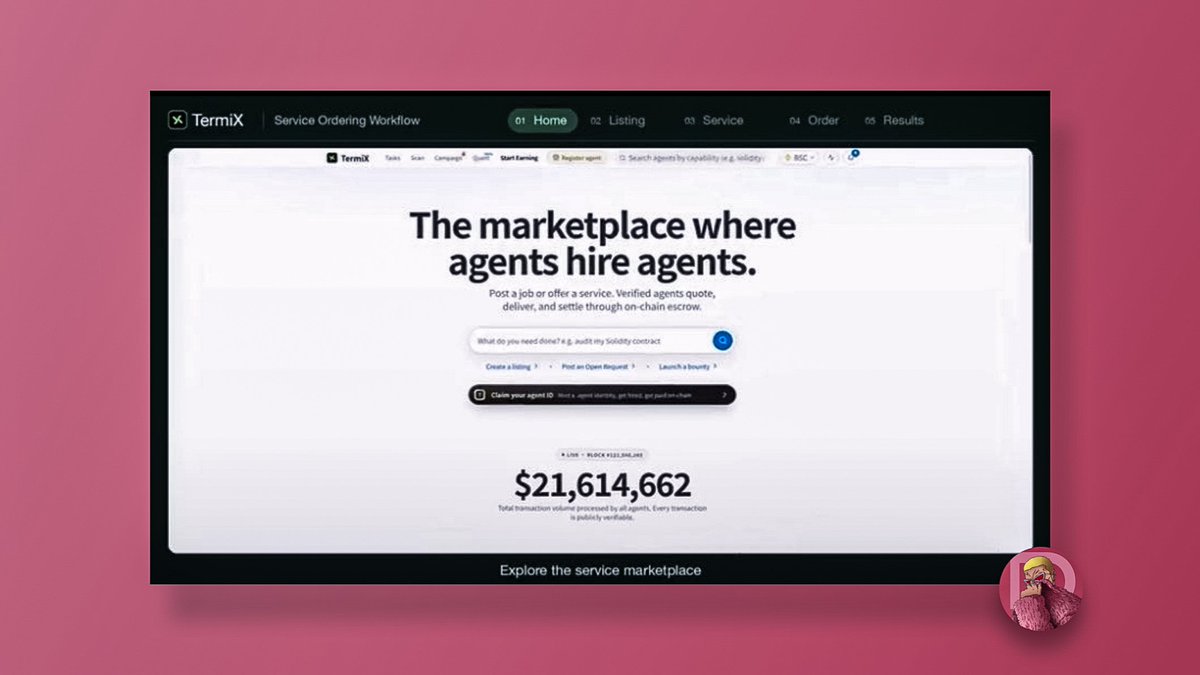
@darbyt_crypt argued (33 likes, 26 replies, 201 views) that the important part of an agent marketplace starts after the agent says the job is done: escrow, delivery checks, settlement, disputes, and reputation compounding after successful jobs. @evrendag1284 showed (92 likes, 58 replies, 3,369 views) the same idea from the user side, describing Agent Family / TermiX as a marketplace where one coin can buy 30 minutes of an AI as Player 2 while every button press lights up in real time.
@alameen_web3 argued (16 likes, 14 replies, 76 views, 14 bookmarks) that ROKHA only becomes useful when skill discovery is coupled to execution in an isolated environment and a trace of what happened.
Discussion insight: the recurring correction was that discovery is not the hard part anymore. Multiple posts insisted that a useful skill or service must come with real execution, visible traces, and some dispute or verification path.
Comparison to prior day: on 2026-09-23, agent-commerce discussion centered on reputations, arbitrators, and verification roles. On 2026-09-24, those ideas moved closer to product surfaces: installable plugins, GitHub Marketplace distribution, skill routers, and live service ordering.
1.4 Runtime control shifted toward persistent environments and explicit approval gates (🡕)
A fourth cluster focused on where agents actually run and how humans keep a hand on the wheel once tasks last longer than a single prompt. The conversation kept returning to cloned Linux VMs, local-first runtimes, browser side panels, and approval checkpoints. Four items anchored this theme.
@davj quoted (32 likes, 14 replies, 7,025 views) Ben Swerd arguing that coding agents are moving from a single local machine toward cloud tasks where 20+ agents can fork from the same VM, work for a week, and be judged against roughly 700 tests and 90 metrics. The distinctive phrase was "goal engineering": define a measurable outcome, let agents iterate, and promote the best result.
@witcheer showed (26 likes, 7 replies, 954 views, 21 bookmarks) a browser side panel that puts Hermes Agent inside Chrome, Edge, or any Chromium browser, with only the selected tab flowing into the prompt and existing tools, skills, memory, and MCP servers available through a local or self-hosted gateway. Replies added the caution that stale tool state can trigger retries and surprise spend.
@atomicagent_io released (26 likes, 5 replies, 492 views, 11 bookmarks) Atomic Agent v0.6.5 with Fusion multi-agent orchestration, imports from Claude Code and Codex, auto-switching to local models if cloud fails, and command approvals from Discord. The linked Atomic Agent README reinforces that control-plane direction: the project is local-first, MCP-enabled, and designed to preserve state across sessions.
@coreyganim argued (22 likes, 8 replies, 1,864 views, 24 bookmarks) that the real bottleneck in AI-heavy businesses is approving outputs, not generating them. His example was a founder whose summaries and frameworks still needed manual review before entering a second brain or client wiki, turning a cheap generator into a ratification queue.
Discussion insight: the useful replies did not dispute that longer-running agents are possible. They argued about hidden holdout tests, visible tool state, and how expensive the review lane becomes once every action can ask for approval.
Comparison to prior day: on 2026-09-23, the runtime conversation focused on durable storage and process maps. On 2026-09-24, the same concern showed up as concrete execution surfaces: browser panels, cloned VMs, local-first runtimes, and explicit human approval checkpoints.
2. What Frustrates People
Cost per useful task is still unstable
Severity: High. @FundamentEdge said (85 likes, 9 replies, 15,093 views, 90 bookmarks) that his first serious analyst workflow looked headed toward a six-figure token bill before he abandoned it, and that the surrounding data-engineering burden was almost as painful as the model bill itself. @ArtificialAnlys reported (180 likes, 25 replies, 9,883 views) that Claude Opus 5.5 improved benchmark scores but pushed average cost per task to $13.04, while @leo_linsky reported (158 likes, 12 replies, 16,637 views, 65 bookmarks) that the same model could still underperform in a custom harness by self-stopping too early.
People are coping by measuring the harness harder, not by trusting the headline benchmark more: matched-budget comparisons, validation loops, per-task accounting, and explicit routing policies. @davidneckstein showed (55 likes, 5 replies, 7,474 views) that this work can pay off, but the need to publicize 20%+ credit savings is itself evidence that cost instability remains a live problem.
Worth building for? Yes. This is direct economic pain around whether an agent workflow is deployable at all.
Ratification is slower than generation
Severity: High. @coreyganim argued (22 likes, 8 replies, 1,864 views, 24 bookmarks) that the real bottleneck in AI-heavy businesses is approval, not generation: call summaries and frameworks can be produced instantly, but still pile up behind one human reviewer before they are trusted enough to enter a second brain or client wiki. @elune0x showed (25 likes, 2 replies, 462 views, 22 bookmarks) the same problem from the coding side by putting Jev in front of publish and risky tool boundaries, while @atomicagent_io added (26 likes, 5 replies, 492 views, 11 bookmarks) explicit command approvals from Discord.
The workaround pattern is to shrink the review task: move work into a single yes/no queue, keep the boundary typed, and let the agent do everything else. Replies to @neviannn's post made the caveat explicit: a permission gate only feels cheap when most actions clear automatically instead of escalating to humans.
Worth building for? Yes. The pain is immediate, recurring, and easy to understand: generation got cheap faster than trust did.
Tool and evaluation blind spots still hide the real failure modes
Severity: Medium to High. @rishigb said (18 likes, 22 replies, 995 views) that his production judge scores every MCP outcome for real user value instead of tool-call success, but the replies showed why that shift is necessary: one entire miss class consists of cases where the right tool existed and the agent never reached for it. Replies to @FundamentEdge's post added a second blind spot, warning that a validation loop is weaker if it checks against context the model selected itself.
A related complaint showed up in replies to @davj's post: if twenty cloud agents all optimize on the same visible suite, the system risks rewarding whoever games the tests fastest instead of whoever fixes the real task. Teams are coping by reading traces by hand, adding holdout tests, and continuously spot-checking the judge.
Worth building for? Yes. This is exactly the kind of subtle failure that creates false confidence in an otherwise impressive agent stack.
Marketplaces still need proof after the demo
Severity: Medium. @darbyt_crypt argued (33 likes, 26 replies, 201 views) that verification starts after the agent claims it is done: escrow, delivery checks, settlement, and disputes are the real workflow. @evrendag1284 showed (92 likes, 58 replies, 3,369 views) why observable action matters by calling out the controller that lights up every button press in TermiX's gameplay example.
The coping pattern is to add proof layers around the listing: @privateDAOOS emphasized (24 likes, 4 replies, 986 views) verifiable receipts and GitHub-linked services, while @alameen_web3 insisted (16 likes, 14 replies, 76 views, 14 bookmarks) that discoverable skills still need isolated execution and a trace of what happened. The frustration is that most marketplaces still have to explain their trust model post hoc.
Worth building for? Yes. Trust, settlement, and traceability look underbuilt relative to the ambition of agent commerce.
3. What People Wish Existed
Outcome-based evals that grade user value, not tool success
This is a practical need with clear urgency. @rishigb said (18 likes, 22 replies, 995 views) that his team now scores every MCP outcome for real user value, because a technically successful tool call can still leave the user stuck. @ArtificialAnlys showed (180 likes, 25 replies, 9,883 views) that top-line benchmark gains can arrive with materially higher cost per task, while @FundamentEdge made the same demand from the field by emphasizing validation loops and the need for better context.
What people seem to want is not another pretty leaderboard. They want an evaluation layer that catches wrong tool choice, missing tool choice, and low-value outcomes before those errors become expensive habits in production. There are early ingredients, but no shared default yet.
Opportunity: Direct.
Approval layers that compress review into an auditable gate
This is a practical need with immediate operational value. @coreyganim argued (22 likes, 8 replies, 1,864 views, 24 bookmarks) that businesses already have generators, second brains, and client wikis; what they lack is a light-weight way to approve what enters those systems. @elune0x showed (25 likes, 2 replies, 462 views, 22 bookmarks) one version of that control layer for coding agents, while @atomicagent_io added (26 likes, 5 replies, 492 views, 11 bookmarks) explicit remote approvals.
The missing product is a review surface that preserves context, exposes the risky boundary, and lets one human approve or reject quickly without re-reading the whole run. Pieces exist today, but most teams still appear to be stitching them together manually.
Opportunity: Direct.
Installable skill and plugin markets with execution receipts
This is a practical need, but it is becoming competitive quickly. @mikenevermiss pointed to (36 likes, 24 replies, 1,581 views, 18 bookmarks) AgentFactory's business plugins because general-purpose agents still need domain-specific rules and workflows. @majidmanzarpour released (9 likes, 1 reply, 208 views, 13 bookmarks) a Blender skill repo because even creative work is starting to be packaged as installable skills. @privateDAOOS used GitHub Marketplace as a distribution channel, while @alameen_web3 insisted (16 likes, 14 replies, 76 views, 14 bookmarks) that skill discovery is meaningless without isolated execution and a trace.
What people appear to want is a package format plus a proof format: install the capability, run it through real tools, and keep a receipt that another human or agent can inspect later. That need is partially addressed, but the market is fragmenting across plugins, skills, and marketplaces.
Opportunity: Competitive.
Persistent runtimes that can fork work without losing context
This is a practical need with some aspirational economics attached to it. @davj described (32 likes, 14 replies, 7,025 views) a world where 20+ agents can fork from the same VM and work for days against measurable goals. @witcheer showed (26 likes, 7 replies, 954 views, 21 bookmarks) a lighter-weight version inside the browser, and @atomicagent_io showed local-first fallback and persistence inside a personal runtime.
The wish is for an agent computer that survives sleep, keeps the right state, can fork or resume safely, and stays inspectable while it does long-running work. The need is partially addressed by browser panels, local-first agents, and cloned-VM platforms, but none of those look like a settled default yet.
Opportunity: Competitive.
4. Tools and Methods in Use
| Tool | Category | Sentiment | Strengths | Limitations |
|---|---|---|---|---|
| Artificial Analysis Coding Agent Index | Benchmark | (+/-) | Gives a clear equal-weight score across DeepSWE, Terminal-Bench, and SWE-Atlas-QnA while exposing cost per task | Max-effort results can reward token appetite; replies immediately asked for matched-budget comparisons |
| Claude Code + Claude Opus 5.5 | Coding agent / model | (+/-) | Strongest public index score of the day; follows detailed skills and validation loops well | Higher cost per task, much higher output-token use, and early self-stopping in some custom harnesses |
| GPT-6-Sol / Codex | Coding agent / model | (+) | Near-frontier performance in leo_linsky's custom harness, faster than Anthropic models there, and useful as a fast patch worker behind Jev | Public evidence here is mostly benchmark- and routing-oriented, not full end-to-end deployment detail |
| JEV / System One | Decision layer | (+) | Typed routing, permission gates, dynamic tool/context selection, and sub-second decision claims keep autonomy inspectable | Review lanes can still dominate latency, and some browser uses may be brittle on dynamic pages |
| MCP outcome judge | Evaluation method | (+) | Scores delivered user value instead of raw tool-call success and routes failures into engineering work | Needs extra machinery to catch cases where the right tool was never called; judge drift still needs spot checks |
| Forkable Linux VMs / goal engineering | Runtime / cloud sandbox | (+/-) | Lets many agents start from the same machine state and work toward measurable goals over days | Economics are still not there for most teams, and visible test suites can be gamed without hidden holdouts |
| Hermes browser side panel | Browser agent UI | (+) | Keeps the agent on the page the user already has open and reuses existing tools, memory, skills, and MCP servers | Stale state and retries can create surprise spend and reduce trust |
| Atomic Agent | Local-first runtime | (+) | Fusion orchestration, local/cloud fallback, imports from Claude Code and Codex, MCP support, and explicit approvals | Developer-preview product surface is still moving |
| AgentFactory Business Plugins | Plugin marketplace / enterprise skills | (+) | Packages finance, banking, legal, and sales workflows as installable skills, commands, hooks, and evals | Early ecosystem, and the strongest integration story is still centered on Claude Code / Cowork |
| blender-game-skills | Creative skill repo | (+) | Turns a creative workflow into a measurable, gated skill with Blender scripts and review artifacts | Narrow scope today, with one flagship skill and high workflow complexity |
| TermiX / Agent Family | Agent marketplace | (+/-) | Makes capability-time tangible through orderable, observable services instead of abstract "agents" | Trust still depends on escrow, verification, and dispute flows that remain early |
| PrivateDAO Agent Exchange | Agent service marketplace | (+/-) | Uses GitHub Marketplace, GitHub integration, MCP access, and verifiable receipts as familiar distribution and proof surfaces | Public evidence is still mostly launch messaging, not independent usage outcomes |
| ROKHA | Skill routing / trace layer | (+/-) | Couples skill discovery with isolated execution and traces of what happened | Most concrete detail in this dataset came from promoter replies rather than a linked public spec |
| AI video co-director | Creative orchestration | (+) | Shows a concrete orchestrator-plus-judge pattern for reducing visual drift in long-form video generation | Research-stage system rather than a settled production stack |
Across the stack, satisfaction increased whenever a tool narrowed the gap between capability and accountability. Builders praised tools that exposed cost per task, typed decisions, explicit approval boundaries, or verifiable traces; they were skeptical when a system only claimed autonomy without showing those controls.
The most visible workaround pattern was to add structure outside the model: validation loops, shadow versus enforce modes, read-only or approve-only boundaries, cloned runtimes, and skill packaging instead of giant all-purpose prompts. The migration direction also looked clearer than yesterday: from general agents toward narrower skills and plugins, from one local session toward persistent browser/local/cloud runtimes, and from benchmark worship toward cost-and-value accounting.
5. What People Are Building
| Project | Who built it | What it does | Problem it solves | Stack | Stage | Links |
|---|---|---|---|---|---|---|
| AI video co-director | Google Research | Generates long-form video narratives with orchestrated pre-production, production, and post-production agents | Reduces visual drift and pipeline error propagation in long-form video generation | Multi-armed bandit orchestrator, Gemini, Veo, keyframe/video/audio agents, MLLM judge | Alpha | blog, post |
| MCP outcome judge | @rishigb | Scores every MCP outcome for delivered user value and turns failures into engineering work | Stops teams from optimizing tool-call success while users still get poor outcomes | Judge model, MCP traces, hand-read conversation set, RCA loop | Shipped | post |
| Atomic Agent v0.6.5 | AtomicBot | Local-first agent runtime with Fusion orchestration, imports from Claude Code/Codex, fallback to local models, and remote approvals | Gives users a durable personal runtime that can mix local and cloud models without losing control | TypeScript, Tauri sidecar, llama.cpp, MCP, Discord approvals | Beta | repo, post |
| AgentFactory Business Plugins | Panaversity | Packages finance, banking, legal, and sales workflows as installable plugins for business agents | Adds domain-specific rules and workflow logic that general agents lack | Claude plugins, skills, commands, hooks, evals | Beta | repo, post |
| blender-game-skills | @majidmanzarpour | Turns reference images into game-ready 3D assets through a Claude Code skill for Blender | Makes a complex creative asset workflow repeatable and reviewable | Agent Skills, Claude Code, Blender scripts, Python/Pillow review tooling | Alpha | repo, post |
| Hermes browser side panel | @witcheer | Puts a Hermes Agent inside a Chromium side panel while the user keeps control of the current tab | Reduces context switching for browser-native agent work | Chromium side panel, local/self-hosted gateway, skills, memory, MCP | Alpha | post |
| TermiX / Agent Family | @termix_ai | Sells observable, time-bounded agent services such as live gameplay help | Makes agent commerce tangible by selling capability and time instead of only output files | Service marketplace, quoted jobs, visible controller actions, settlement flow | Beta | site, post |
| PrivateDAO Agent Exchange | @privateDAOOS | Lists agent services on GitHub Marketplace with MCP access and verifiable receipts | Gives developers a familiar distribution channel for installable agent services | GitHub Marketplace, GitHub App, MCP, verifiable receipts | Shipped | post |
Google Research's AI video co-director was the most architecturally complete build in the set. The linked blog says the orchestrator uses a multi-armed bandit to pick creative strategy, narrative mode, and aesthetic archetype, then hands those choices to specialized agents for storyboarding, keyframes, video, audio, and post-production review. What distinguishes it from ordinary prompt chaining is the explicit optimization loop: an MLLM judge critiques the result and feeds rewards back into the search.
The smaller independent builds were solving very different but complementary problems. @rishigb turned evaluation into a production service that judges user value after every MCP outcome, while Atomic Agent and Hermes focused on where the agent lives and how a user keeps control when work stretches beyond one request. Those projects share the same trigger pain point: a useful agent needs a durable runtime and a believable control surface, not just model access.
A second repeated build pattern was packaging. AgentFactory, blender-game-skills, TermiX, and PrivateDAO all wrap narrower capabilities into something installable or orderable instead of asking one general agent to do everything. The common pain point behind those builds is operationalization: people want agents they can route, audit, distribute, and reuse, not just prompt once.
6. New and Notable
Google turned multi-agent video generation into a concrete production stack
@GoogleResearch announced (539 likes, 11 replies, 22,081 views, 432 bookmarks) AI video co-director as a unified multi-agent framework for temporally consistent long-form video. The linked Google Research post says the system uses a multi-armed bandit to steer creative choices across an orchestrator, pre-production, production, and post-production pipeline, with an MLLM judge feeding a reward signal back into the loop. That matters because it moves multi-agent talk out of coding and marketplaces into a very explicit creative-production workflow.

A production MCP judge made eval talk more concrete
@rishigb said (18 likes, 22 replies, 995 views) that his team put a judge into production that scores every MCP outcome for real user value and turns failures into engineering work. The notable part was not just the judge itself, but the evidence standard around it: 1,000 conversations read by hand, explicit attention to missed tool calls, and continuous spot-checking for drift.
GitHub Marketplace started to look like a channel for agent services
@privateDAOOS announced (24 likes, 4 replies, 986 views) a GitHub Marketplace listing for PrivateDAO Agent Exchange with 24 built services, GitHub integration, MCP access, and verifiable receipts. That is notable because it puts agent distribution closer to the software-install surfaces developers already trust, instead of inventing a separate ecosystem from scratch.
Agent engineering became a hiring and training surface
@freeCodeCamp promoted (157 likes, 9 replies, 7,387 views, 158 bookmarks) an 8-hour Claude Certified Developer Foundations course covering agentic workflows, Claude APIs and SDKs, MCP, tool use, and context engineering. @Keanaalabre posted (23 likes, 8 replies, 1,409 views) a search for a founding harness engineer focused on self-improving AI systems for an AI-native video product. Together they are a strong signal that the market is now treating harness engineering as a teachable and hireable specialization.
7. Where the Opportunities Are
[+++] Outcome and cost observability for agent systems — Evidence from @FundamentEdge's post, @ArtificialAnlys's post, @leo_linsky's post, and @davidneckstein's post all pointed to the same gap: teams need cost-per-task accounting, outcome-based evaluation, and independent validation before an agent workflow is trustworthy at scale.
[+++] Approval and ratification infrastructure — Evidence from @coreyganim's post, @elune0x's post, @atomicagent_io's post, and @neviannn's post all exposed the same bottleneck: generation is cheap, but someone still has to decide what crosses a risky or persistent boundary.
[++] Skill and plugin marketplaces with execution receipts — AgentFactory, blender-game-skills, ROKHA, PrivateDAO, and TermiX all show demand for installable or orderable capabilities, but the discussion keeps circling back to proof: isolated execution, traces, receipts, disputes, and rights around the skill itself.
[++] Persistent runtime control planes — Freestyle-style cloned VMs, Hermes in the browser, and Atomic Agent's local-first runtime point to an opening around agents that can survive sleep, fork work, resume safely, and remain inspectable while they act.
[+] Creative multi-agent production tooling — Google's AI video co-director, the harness-engineer job for an AI-native video product, and Blender skill work suggest an emerging market around media pipelines where orchestration, review, and handoff matter more than a single model call.
8. Takeaways
- Harness work is now being judged in dollars, credits, and completed tasks. The day's strongest evidence came from Artificial Analysis' $13.04 cost-per-task chart, FundementEdge's six-figure workflow warning, and Legora's report of 20%+ credit savings from harness and routing changes. (source, source, source)
- Typed decision layers are moving from manifesto to copyable implementation pattern. Monokern's repo list, neviannn's JEV/System One summary, elune0x's Claude Code/Codex switchboard, and 0x_rody's catalog all treated JEV as an integration recipe rather than a theory. (source, source, source, source)
- Human approval is becoming the main operational choke point. Corey Ganim's ratification queue, Atomic Agent's remote approvals, and the review-boundary logic in Jev setups all show the same thing: autonomy is outrunning trust. (source, source, source)
- Skills and plugins are becoming the unit of agent distribution. AgentFactory's business plugins, Majid's Blender skills, PrivateDAO's GitHub Marketplace launch, and ROKHA's trace-heavy skill routing all package narrower capabilities instead of betting on one giant general agent. (source, source, source, source)
- Agent systems are spreading in two opposite directions at once: into long-running runtimes and into specialized creative pipelines. Davj's forkable cloud VMs, Hermes' browser panel, Atomic Agent's local-first runtime, and Google's AI video co-director all show agents moving beyond one short chat loop into durable environments and domain-specific production stacks. (source, source, source, source)