Twitter AI Coding - 2026-05-27
1. What People Are Talking About
1.1 Antigravity moved from launch discourse to tutorial saturation and workflow recipes 🡕
Google's May 19 launch was still the backdrop, but the higher-signal posts on May 27 were not launch announcements alone. They were tutorials, setup recipes, and workflow pairings. That matters because the feed treated Antigravity as something people wanted to operationalize immediately, not just admire.
@viktoroddy posted (986 likes, 21 replies, 58,698 views, 1,272 bookmarks) a 19-minute tutorial on building an animated site with Antigravity and GPT Image 2. The bookmark count is the clearest signal here: people were saving this as a workflow to copy, not just liking a launch clip.
@primemans argued (131 likes, 29 replies, 11,317 views, 83 bookmarks) that NotebookLM plus Antigravity was an underdiscussed combo. The main post was broad, but the reply thread got specific about autonomous research notebooks, custom business skills, context-aware dashboards, and automatic report or audio generation.
@googledevs announced (155 likes, 10 replies, 11,332 views, 38 bookmarks) Antigravity 2.0 as part of Google's developer update, while @RoundtableSpace amplified (80 likes, 7 replies, 48,780 views, 75 bookmarks) the shift with a four-hour Antigravity course. Long-form tutorial demand was one of the strongest recurring signals in the whole feed.
Discussion insight: Replies under the official Google post were split between excitement about local CLI agents and complaints about incompatibility, production readiness, and whether the newer model tradeoff was actually better. Antigravity won attention, but not unquestioned trust.
Comparison to prior day: On May 26, Antigravity discussion centered on migration from Gemini CLI and whether the transition was coherent. On May 27, the conversation shifted toward tutorials, copied workflows, and NotebookLM pairings.
1.2 Codex and Hermes reliability turned the feed into a repair log 🡕
The biggest Codex cluster was not about a new benchmark. It was about agents breaking, users comparing symptoms, and power users publishing patches while upstream services changed underneath them. The tone was operational rather than aspirational.
@Teknium reported (624 likes, 90 replies, 31,781 views, 54 bookmarks) that OpenAI Codex OAuth issues had been fixed, but only after users ran hermes update. The replies showed that the recovery was not universal immediately, which kept the incident alive as a real operations thread rather than a closed status update.
@zekyure reported (52 likes, 33 replies, 6,784 views) that Hermes was failing against the OpenAI Codex provider even after restarting and updating. The attached screenshot made the failure concrete by showing repeated NoneType object is not iterable errors and fallback failures.
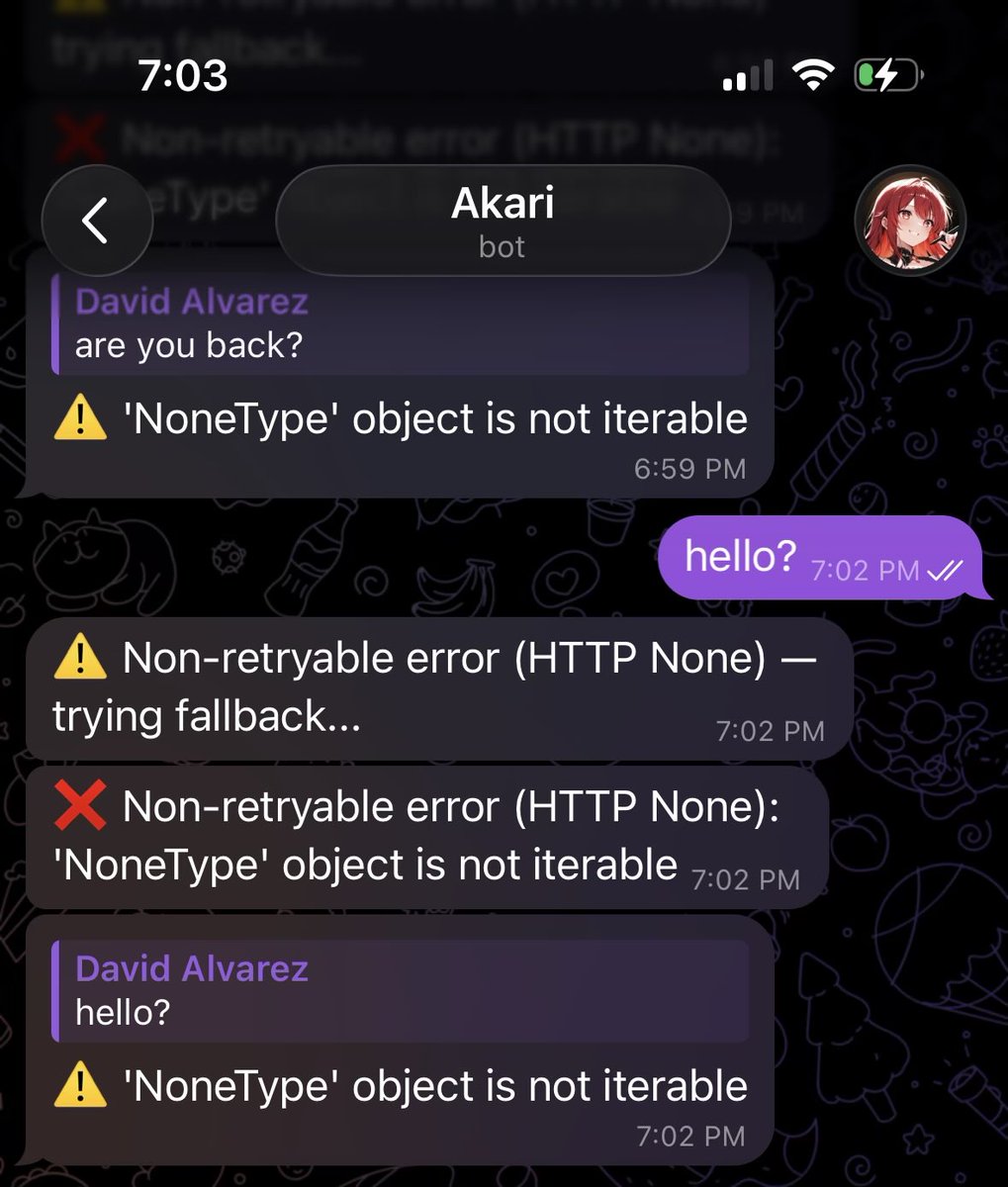
@altryne published (8 likes, 4 replies, 1,234 views, 10 bookmarks) a temporary Hermes patch that catches TypeError when streamed Codex output arrives but the final response.completed frame omits response.output. @thdxr added (34 likes, 6 replies, 1,972 views) that OpenCode had also patched Codex subscription-endpoint issues in v1.15.11, although replies still mentioned invisible permission stalls and one unresolved infinite-loop complaint.
Discussion insight: Users did not respond by abandoning the tools. They responded like operators: switch models, inspect logs, patch the runtime, restart the gateway, and wait for upstream recovery.
Comparison to prior day: May 26 had pricing anxiety and speculation about tool choice. May 27 added concrete same-day remediation steps and screenshots of failures in the wild.
1.3 Policy, quota, and security surfaces are increasingly part of the product 🡕
A second strong cluster was about the control plane around AI coding: private network access, org-level model rules, dashboard surfaces, looming multiplier changes, and supply-chain risk. The category keeps expanding upward into governance.
@OpenAIDevs announced (202 likes, 14 replies, 6,330 views, 104 bookmarks) Secure MCP Tunnel for private MCP servers. The linked OpenAI guide says tunnel-client runs inside the private network, long-polls OpenAI over outbound HTTPS only, and lets ChatGPT, Codex, and the Responses API reach the MCP server without opening inbound firewall ports.
@GHchangelog reported (13 likes, 2,015 views, 6 bookmarks) that enterprise owners can now target specific Copilot models to specific organizations. The linked GitHub changelog confirms targeted model rules and a refreshed one-page interface for enterprise-wide default model availability.
@VazeKshitij warned (286 likes, 40 replies, 21,055 views, 20 bookmarks) that GitHub had raised the Copilot Opus 4.5 multiplier from 3x to 27x, effective June 1, and that many coworkers would not discover the change until they burned through their quotas. @argofowl argued (269 likes, 27 replies, 7,353 views) that Codex's 2x usage promo ending on May 31 would make Pro usage materially tighter, then clarified in a reply that the $200 tier keeps 20x weekly limits but loses the temporary 25x to 20x five-hour bump, while the $100 tier loses both weekly and five-hour doubled limits.
@haydenbleasel showed (34 likes, 3 replies, 1,579 views, 8 bookmarks) a new Codex page in the API dashboard plus an OpenAI Developer plugin inside Codex, which is small as social proof but useful as product evidence that admin and project-bootstrapping surfaces are proliferating.

Discussion insight: The common thread was not only model quality. It was what could be exposed safely, what quota actually existed, and who in the organization got which surface.
Comparison to prior day: May 26 already had budget debate. May 27 added official mechanisms: outbound-only secure MCP, targeted Copilot model rules, and more visible quota changes.
2. What Frustrates People
Reliability breaks at the provider boundary
Severity: High. @Teknium reported (624 likes, 90 replies, 31,781 views, 54 bookmarks) that users needed hermes update after OpenAI changed the Codex OAuth/spec behavior. @zekyure showed (52 likes, 33 replies, 6,784 views) a live Hermes failure with NoneType object is not iterable, and @altryne documented (8 likes, 4 replies, 1,234 views, 10 bookmarks) a code patch plus post-update verification steps because the local fix could be lost later. @thdxr said (34 likes, 6 replies, 1,972 views) OpenCode also had to patch around Codex endpoint instability. People coped by switching models, restarting gateways, and patching runtimes locally. This looks worth building for because the pain interrupts active work, not future planning.
Quotas and multiplier changes are hard to forecast
Severity: High. @VazeKshitij warned (286 likes, 40 replies, 21,055 views, 20 bookmarks) that a Copilot multiplier change could surprise whole teams on Monday morning, while @argofowl turned (269 likes, 27 replies, 7,353 views) the Codex promo rollback into a petition for permanent higher limits. @GHchangelog showed (13 likes, 2,015 views, 6 bookmarks) where some of the coping is heading: org-level model rules rather than one default for everyone. This is worth building for because people clearly need forecasting and routing before the quota is gone.
Trust in AI-coding supply chains is brittle
Severity: High. @AikidoSecurity warned (11 likes, 2 replies, 391 views, 2 bookmarks) that codexui-android had been silently exfiltrating OpenAI Codex auth tokens. The linked analysis says the malicious code lived only in the npm artifact, not the GitHub repo, and posted the full auth.json contents to sentry.anyclaw.store. That means source review alone was not enough. This is worth building for because the attacked asset was exactly the local credential material AI coding tools depend on.
3. What People Wish Existed
Permanent, clearer usage headroom
@argofowl petitioned (269 likes, 27 replies, 7,353 views) for OpenAI to make Codex's 2x limits permanent for Pro subscribers. @VazeKshitij warned (286 likes, 40 replies, 21,055 views, 20 bookmarks) why that matters in practice: team members may not notice a multiplier change until they are suddenly throttled. This is a practical need around quota predictability and durable headroom, not just complaining. Opportunity: direct.
Antigravity-compatible ecosystem support
@jqdsouza said (5 likes, 3 replies, 160 views) that customers were already asking whether Agent Beacon would support Antigravity CLI after Google's transition announcement, and he replied that support had already shipped. Combined with the day's heavy Antigravity tutorial traffic, that reads like a concrete demand for connectors, telemetry, and companion tools to follow the new harness quickly. Opportunity: direct and competitive.
Better runtime status and permission visibility
Low-confidence but still concrete. In replies to @thdxr (34 likes, 6 replies, 1,972 views), one user asked whether Codex stalling was actually a permissions issue because the UI never surfaced the prompt, while @altryne (8 likes, 4 replies, 1,234 views, 10 bookmarks) recommended durable post-update verification because local fixes can disappear after upgrades. The ask is not for a better model. It is for clearer state, better health checks, and less invisible failure. Opportunity: direct.
4. Tools and Methods in Use
| Tool | Category | Sentiment | Strengths | Limitations |
|---|---|---|---|---|
| Antigravity 2.0 / Antigravity CLI | Coding agent | (+/-) | Strong tutorial momentum, local-agent framing, NotebookLM pairings | Mixed confidence on compatibility, production readiness, and model tradeoffs |
| OpenAI Codex | Coding agent | (+/-) | Useful enough that users patched Hermes around it; new dashboard and plugin surfaces are shipping | OAuth, streaming, and subscription-endpoint issues disrupted active work |
| GitHub Copilot / Copilot CLI / Copilot app | Coding agent | (+/-) | New app handled code, tests, and benchmarking; enterprise model rules are expanding; /grill-me planning got praise |
Multiplier shocks and uneven quality keep surfacing |
| Hermes Agent | Model router / harness | (+/-) | Flexible provider routing and same-day update path | Fragile when upstream response formats change |
| OpenCode | Open-source harness | (+/-) | Fast patch response to Codex endpoint issues; inspires new terminals like fisn | Permission-state confusion and loop complaints remain |
| NotebookLM | Research layer | (+) | Useful as a knowledge base paired with Antigravity for research, dashboards, and reports | Evidence today was tutorial-heavy rather than shipped-product-heavy |
| Secure MCP Tunnel | Enterprise integration | (+) | Keeps private MCP servers behind outbound-only HTTPS while exposing them to OpenAI products | Mainly relevant to enterprise operators, not casual solo builders |
/grill-me |
Planning skill / method | (+) | Turns Copilot CLI plan mode into a questioning-based planning workflow | Best for shaping a plan, not for runtime debugging or execution |
Evidence today favored tools that added control around the agent, not just raw generation. @acolombiadev showed (38 likes, 5 replies, 13,288 views, 5 bookmarks) the new GitHub Copilot app reading a blog post, writing code, generating tests, and benchmarking alternatives; @burkeholland showed (17 likes, 2 replies, 1,507 views, 8 bookmarks) Copilot CLI using /grill-me to plan a date picker, then explained (9 likes, 2 replies, 445 views, 4 bookmarks) that he runs it in plan mode so the skill keeps asking questions until the plan is more complete. Meanwhile @OpenAIDevs announced (202 likes, 14 replies, 6,330 views, 104 bookmarks) secure MCP tunnels and @GHchangelog reported (13 likes, 2,015 views, 6 bookmarks) org-level model rules. The common workaround pattern was multi-homing: people keep several harnesses available and move between them as reliability, quota, or governance needs change.
5. What People Are Building
| Project | Who built it | What it does | Problem it solves | Stack | Stage | Links |
|---|---|---|---|---|---|---|
| Copilot Mission Control | Dan Wahlin | Live dashboard for GitHub Copilot CLI sessions, tool calls, tokens, replay, and activity streams | Agent work is hard to monitor from terminal scrollback alone | Tauri 2, Phaser 4, TypeScript, local Copilot session-state files | Beta | tweet, repo |
| fisn | @thealokverse | Early terminal agent inspired by OpenCode | Builders want faster, cleaner local terminals they control end to end | Python CLI scaffold with prompt and config modules | Alpha | tweet, repo |
| Repo Prompt Community Edition | @pvncher / @romainhuet | Planned free and open-source continuation of Repo Prompt's context-builder workflow | Teams still need curated context and orchestration around coding agents | Context-builder agent, multi-agent orchestration, prompt-curation workflows | RFC | tweet, blog |
@DanWahlin built (40 likes, 3 replies, 1,829 views, 17 bookmarks) Copilot Mission Control as a second-monitor UI for live agent work, and the public repo says it reads local Copilot session state, ships sanitized live payloads, and keeps raw reveal actions local only. @thealokverse started (18 likes, 7 replies, 312 views) a much earlier terminal-agent project, but that is part of the signal too: the repo is still mostly scaffold code, which shows how many people are now trying to build their own harness instead of just consume one. Repo Prompt's transition is the opposite end of that spectrum, with @romainhuet welcoming (138 likes, 12 replies, 7,240 views) Eric Provencher to OpenAI while the linked blog post says the app's licensing restrictions are already removed and an open-source Community Edition is coming soon.
6. New and Notable
Private MCP tunnels as an enterprise bridge
@OpenAIDevs announced (202 likes, 14 replies, 6,330 views, 104 bookmarks) a feature that keeps private MCP servers behind outbound-only HTTPS while still making them reachable from ChatGPT, Codex, and the Responses API. That matters because it moves enterprise AI-coding adoption one step closer to existing network boundaries instead of public ingress.
Codex token theft hidden in published artifacts
@AikidoSecurity reported (11 likes, 2 replies, 391 views, 2 bookmarks) that codexui-android had been exfiltrating OpenAI Codex auth tokens. The linked analysis says the malicious code lived only in the npm tarball, not the GitHub repo, which makes this a sharper warning than a normal source-review story.
Agent observability is becoming its own micro-category
@DanWahlin built (40 likes, 3 replies, 1,829 views, 17 bookmarks) a dashboard around Copilot CLI itself rather than another model wrapper. That is notable because it matches the day's broader pattern: once teams depend on agents, replay, visibility, and operator surfaces become first-order product features.
7. Where the Opportunities Are
[+++] Reliability and recovery control planes — Multiple high-signal posts were about Hermes and Codex breakage, local patches, hidden permission stalls, and fallback behavior rather than prompt quality. A product that monitors provider drift, validates sessions, surfaces blocked permissions, and recommends safe fallbacks would solve a same-day pain point visible across Teknium, zekyure, altryne, and OpenCode users.
[++] Spend and entitlement planning across harnesses — The Opus multiplier jump, Codex promo rollback, targeted Copilot model rules, and new OpenAI admin controls all point to the same gap: users need per-task cost forecasting and plan-aware routing before they start work, not after the quota is gone.
[+] Local observability and trust tooling for agent workflows — Copilot Mission Control, secure MCP tunnels, and the Aikido supply-chain warning all point toward a broader category of local-first observability, provenance, and artifact verification for AI coding stacks. The signal is earlier, but it is coherent.
8. Takeaways
- Antigravity attention shifted from launch talk to copied workflows. The strongest posts were tutorials, long-form courses, and NotebookLM combo recipes rather than fresh launch rhetoric. (source)
- Reliability issues are now producing public code patches, not just complaint threads. Hermes and OpenCode users shared concrete fixes, restart steps, and parser explanations when Codex behavior shifted. (source)
- Governance is becoming part of the competitive surface for AI coding tools. Private MCP tunnels, Copilot model rules, and visible quota changes all shaped the day's discussion. (source)
- Builders are increasingly wrapping agents with context, visibility, and orchestration layers. Copilot Mission Control, fisn, and Repo Prompt Community Edition all sit one layer above the model itself. (source)