Twitter AI Coding - 2026-06-05
1. What People Are Talking About
1.1 Control planes, canvases, and worktree orchestration became the product surface 🡕
The strongest workflow conversation was no longer about a single model answering better inside a chat pane. It was about where multi-agent work lives, how it stays inspectable, and what surface coordinates parallel tasks, browsers, and repositories. Six retained items supported this theme.
@thdxr showed (718 likes, 37 replies, 38,727 views, 427 bookmarks) a parallel OpenCode workflow built on git worktrees, then clarified in replies that 1.16.0 is the correct version, that mobile web layouts are being improved, and that OpenCode 2.0 will default to one discoverable instance so every call can connect to the same running server. That makes the product claim less about “parallel agents” in the abstract and more about concrete session, workspace, and process management.
@skirano launched (238 likes, 28 replies, 17,283 views, 152 bookmarks) MagicPath as an official Codex plugin, and the reply thread added the missing specifics: Codex can import UI from a repository, understand its design system, recreate it as an editable canvas, work with images directly on that canvas, and run the workflow inside the Codex browser. That positioned MagicPath less as a design demo than as a shared work surface between the repo and the agent.
@pierrepinna shared (19 likes, 1 reply, 417 views) a Google Cloud Summit slide calling Antigravity 2.0 a “dedicated surface for orchestrating agents, developers, and browsers beyond traditional CLI,” which matches the same shift from command execution toward coordination surfaces.

@chamath argued (73 likes, 16 replies, 26,642 views, 34 bookmarks) that companies now want a control plane above models for spend, routing, and measurable outcomes. That framing lined up with @OpenCodeLog shipping (33 likes, 3 replies, 3,105 views) OpenCode 1.16.0 changes such as worktree moves, multi-server project state, model-level stats pages, and experimental control-plane routes.

@theaiuniverse argued (3 replies, 98 views) that Codex Sites extends the same trend into hosted apps, with prompt-built internal tools, built-in hosting, database hookups, and scheduled refreshes instead of a handoff to external deployment.
Discussion insight: The most useful replies did not debate raw model IQ. They asked how many instances need to run, how routing and spend should be managed, and whether a surface survives the messy coordination work around real sessions.
Comparison to prior day: June 4 already showed AI-coding products escaping the editor into hosted apps, CI, and mobile. June 5 pushed that further into explicit control planes, shared canvases, and worktree-aware orchestration.
1.2 Documentation-first harnesses started looking more important than model choice 🡕
A second major thread argued that the durable advantage is not “which model” but the harness around it: documents, permissions, automated checks, and repeatable workflow structure. Three retained items supported this theme.
@aakashgupta argued (42 likes, 4 replies, 7,292 views, 58 bookmarks) that an OpenAI team lead first banned engineers from touching the keyboard, then spent two months writing documentation before scaling into automated checks and non-engineer shipping. The attached roadmap mattered because it made the progression explicit: repo legibility first, encoded taste second, broader delegation third.

The same author followed up (9 likes, 2 replies, 1,550 views, 14 bookmarks) with a Codex setup used by an OpenAI PM: three automations run before the day starts, prototypes come before PRDs, FAQ docs accompany builds, and permissions are graduated so reads and drafts run freely while human-facing outputs still get review. That is a harness design story, not a prompt-writing story.

@OpenCodeLog documented (33 likes, 3 replies, 3,105 views) the same instinct at the product level: sessions moved into core, /move handles worktree transfers, queued prompts can be edited before execution, and the server now exposes typed routes for sessions, models, providers, filesystem, and commands.
Discussion insight: The sharpest reply under @aakashgupta said the leverage is not “no-code.” It is making the repo legible enough that agents stop guessing. That was the clearest practitioner distillation of the day.
Comparison to prior day: June 4 made agent operations feel more packaged and auditable. June 5 made them feel more procedural: docs trees, FAQ companions, permission tiers, session routing, and queue management.
1.3 Pricing pressure shifted behavior toward subsidies, free-model routing, and token awareness 🡕
The economics discussion kept moving away from flat subscriptions and toward active routing, subsidies, and immediate workarounds. Three retained items supported this theme.
@_0xpainn posted (59 likes, 13 replies, 4,352 views, 95 bookmarks) a 10-minute recipe for running Claude Code inside Antigravity on OpenRouter’s free models, explicitly framing it as a way to avoid Anthropic billing and paid API keys. The replies treated that less as a gimmick than as a serious budget workaround, including a suggestion to add automatic fallback routing across free-model tiers.
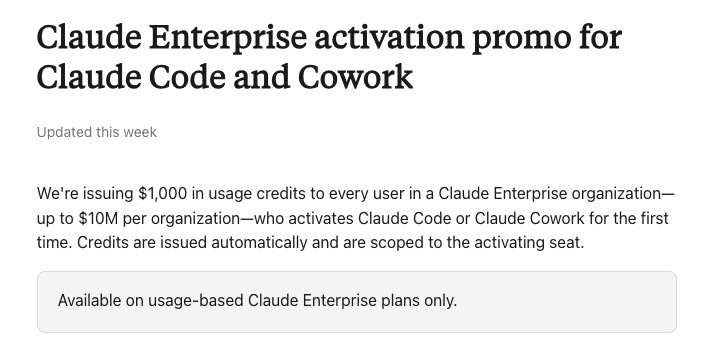
@edzitron reported (158 likes, 10 replies, 9,183 views, 10 bookmarks) that Anthropic is giving away $1,000 of usage credits per user to first-time Claude Code activations, up to $10 million per organization. The screenshot makes the shape of the go-to-market concrete: metered product first, subsidy layered on top.
@slicknet said (9 likes, 1 reply, 770 views) that after GitHub Copilot’s pricing changes, five days of light usage already burned 33% of a monthly token allotment, versus 40% of premium requests in a typical earlier month. That is not just price sensitivity. It is a report that ordinary usage planning changed within a week.
Discussion insight: The notable change was behavioral. Instead of arguing in the abstract about whether AI coding is “worth it,” people were already routing to free models, chasing activation credits, and recalculating what counts as light usage.
Comparison to prior day: June 4 centered on rate cards and credit exhaustion. June 5 showed what people do next: adopt free-model stacks, rely on enterprise promos, and monitor token burn in near real time.
1.4 Trust problems moved from abstract risk to direct lockouts and shipping friction 🡕
The trust conversation became more immediate and less hypothetical. Instead of warning about what might go wrong, people reported losing access mid-workflow or hitting the wall between a prototype and a shippable product. Three retained items supported this theme.
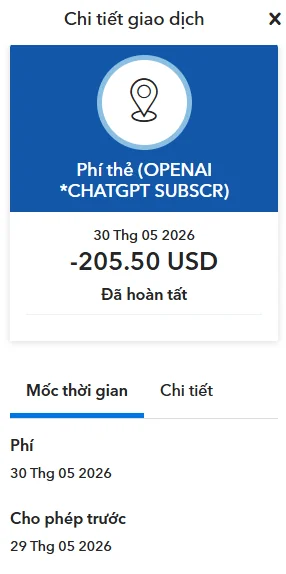
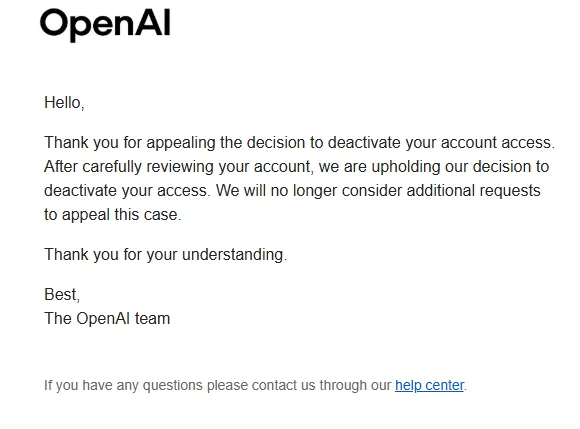
@vinbuildnlog reported (5 likes, 9 replies, 541 views) that a roughly 28-hour Codex workflow with repeated retries and compacting errors ended in account deactivation, and the attached screenshots showed both a fresh renewal charge and a rejection email saying no further appeals would be considered. Replies from other users said the same thing had happened to them and explicitly asked for human review.
@ignis_code reported (9 likes, 2 replies, 425 views) being suspended after using ChatGPT to discuss a drink-spiking detection tumbler, describing it as a context-blind safety false positive that also locked away Codex work. That turned moderation quality into an AI-coding issue because the penalty was workflow loss, not just one rejected answer.

@teeetariq argued (1 reply, 35 views, 1 bookmark) that getting a mobile app from “works in prompts” to “serves real customers” still means auth, RevenueCat, store assets, crash monitoring, hosting, and API keys across a long tail of services. The attached flowchart is useful because it makes the non-prompt work visible instead of just gesturing at it.

Discussion insight: The replies under the lockout posts were not asking for more model power. They asked for refunds, human review, explanation, and a way not to lose ongoing work when policy systems misfire.
Comparison to prior day: June 4 trust gaps were mostly about phishing, session failure, and vendor boundaries. June 5 escalated into multiple first-hand lockout complaints plus a sharper reminder that shipping still breaks well outside the prompt loop.
2. What Frustrates People
Billing and quota changes now distort normal usage
Severity: High. @slicknet said (9 likes, 1 reply, 770 views) that light post-change GitHub Copilot usage already consumed 33% of a monthly token allotment in five days, while @edzitron reported (158 likes, 10 replies, 9,183 views, 10 bookmarks) an Anthropic activation promo built around $1,000 of usage credits per user instead of around flat access. The clearest coping response came from @_0xpainn posting (59 likes, 13 replies, 4,352 views, 95 bookmarks) a way to run Claude Code in Antigravity on OpenRouter’s free models, with replies immediately discussing fallback routing across free tiers. This is worth building for because the pain is already changing user behavior: people are not just complaining about price, they are redesigning their stack around it.
Opaque deactivations and moderation lockouts break active work
Severity: High. @vinbuildnlog reported (5 likes, 9 replies, 541 views) that a roughly 28-hour Codex workflow ended in account deactivation and a rejected appeal, while @ignis_code reported (9 likes, 2 replies, 425 views) being suspended after discussing a drink-spiking detection product idea. The replies under the first post matter as much as the original claim: multiple users said the same thing had happened to them and explicitly asked for a human review path. This is worth building for because the failure mode is catastrophic: users can lose access, history, and in-flight work with little explanation.
Shipping still requires a second job outside the prompt loop
Severity: High. @teeetariq argued (1 reply, 35 views, 1 bookmark) that once an app needs store assets, auth, RevenueCat, crash tooling, hosting, privacy policies, analytics, and API keys, the easy part is over. @aakashgupta showed (9 likes, 2 replies, 1,550 views, 14 bookmarks) how one OpenAI PM compensates by wiring exact-table data sources, FAQ docs, and permission tiers into the harness before shipping anything human-facing. This is worth building for because the pain is broad and repeatable: prototypes are getting easier, but production checklists still sprawl across too many services and handoffs.
Multi-session coordination still needs extra infrastructure
Severity: Medium-High. @thdxr showed (718 likes, 37 replies, 38,727 views, 427 bookmarks) a parallel OpenCode workflow using worktrees, and one reply immediately complained about “port changing fatigue.” The answer was a discoverable server mode today and a single-instance default in OpenCode 2.0. In parallel, @chamath argued (73 likes, 16 replies, 26,642 views, 34 bookmarks) for a control plane above models, and @pierrepinna shared (19 likes, 1 reply, 417 views) Google’s own “orchestrating agents, developers, and browsers” framing for Antigravity 2.0. This is worth building for because the pain is not that agents cannot act. It is that coordinating many of them still requires explicit scaffolding.
3. What People Wish Existed
Budget-aware routing and usage visibility
What people want is not simply “cheaper AI.” They want a layer that shows where tokens are going, routes work to the right model, and makes quotas predictable before the bill or allotment bites. @slicknet showed (9 likes, 1 reply, 770 views) how quickly Copilot usage changed after pricing changes, @_0xpainn shared (59 likes, 13 replies, 4,352 views, 95 bookmarks) a free-model workaround, and @chamath framed (73 likes, 16 replies, 26,642 views, 34 bookmarks) the missing layer as a control plane for model choice and spend. Tools such as Langfuse and Headroom partially address observability and compression, but users still have to assemble the budget logic themselves. Opportunity: direct.
Human-reviewed recovery and continuity when accounts get locked
People are implicitly asking for a safety net around their AI work, not just around model outputs. @vinbuildnlog reported (5 likes, 9 replies, 541 views) losing a long-running Codex workflow to deactivation, and @ignis_code reported (9 likes, 2 replies, 425 views) a suspension framed as a false-positive moderation error. The replies did not ask for better prompts. They asked for refunds, explanations, human review, and a way not to lose current work. Nothing in today’s evidence showed a strong product already solving that continuity problem. Opportunity: direct.
A prompt-to-production shipping layer for AI-built apps
The strongest unmet operational need was a path from “the app basically works” to “the app is ready for real users.” @teeetariq listed (1 reply, 35 views, 1 bookmark) the missing pieces: auth, pricing, screenshots, policies, hosting, analytics, crash tooling, and app-store logistics. @aakashgupta showed (9 likes, 2 replies, 1,550 views, 14 bookmarks) one coping pattern: exact-table data sources, permission tiers, and review gates inside the harness. Existing tools help with slices of that journey, but today’s evidence still showed fragmentation rather than a single dependable path. Opportunity: direct and competitive.
Reusable harnesses and agent work surfaces for non-engineers
People also want starting points that are more durable than one good prompt. @aakashgupta argued (42 likes, 4 replies, 7,292 views, 58 bookmarks) for documentation-first repo setup, @skirano launched (238 likes, 28 replies, 17,283 views, 152 bookmarks) a shared Codex canvas in MagicPath, and @VivekIntel shared (2 likes, 133 views) skill-creator so teams can turn APIs and MCP servers into reusable skills. This is partly addressed today, but in pieces: canvases here, skill generators there, docs and commands somewhere else. Opportunity: competitive.
4. Tools and Methods in Use
| Tool | Category | Sentiment | Strengths | Limitations |
|---|---|---|---|---|
| Codex / Sites | Agent platform | (+/-) | Prototype-to-PR workflows, hosted internal apps, plugins, scheduled updates | Enterprise gating, token pressure, and account lockout risk still show up |
| Claude Code | Agent CLI | (+/-) | Deep repo work, paired-agent workflows, real production use cases | Billing pressure and vendor-account dependence push users toward workarounds |
| OpenCode | Agent runtime | (+/-) | Worktrees, queued prompts, multi-server state, open runtime surface | Session coordination still needs extra setup and UX hardening |
| Google Antigravity | Agent surface / app builder | (+/-) | Dedicated orchestration surface, browser coordination, viable shell for free-model setups | Tooling maturity and downstream shipping work remain uneven |
| MagicPath | Canvas / design workspace | (+) | Repo import, design-system-aware canvas, image handling, Codex-browser flow | New plugin workflow, still tied to Codex/browser context |
| OpenRouter free models | Model router | (+/-) | No-card access, model swapping, low-cost experimentation | Quality and availability depend on free-tier models |
| Langfuse | Observability | (+) | Traces prompts, tool calls, tokens, timings, and subagents | Requires plugin setup plus a separate tracing backend |
| Headroom | Compression middleware | (+) | Large token savings, local-first proxy/wrap/MCP modes, reversible retrieval | Adds another layer to run and tune |
| skill-creator | Skill generation | (+) | Turns APIs, GraphQL, and MCP servers into reusable cross-agent skills | Requires Node-based setup and ongoing skill maintenance |
The tool landscape looked pragmatic rather than brand-loyal. @aakashgupta showed (9 likes, 2 replies, 1,550 views, 14 bookmarks) Codex being used as part of an automation harness, not as a standalone answer engine. @skirano showed (238 likes, 28 replies, 17,283 views, 152 bookmarks) the same thing on the design side with MagicPath, while @thdxr showed (718 likes, 37 replies, 38,727 views, 427 bookmarks) it on the runtime side with worktree-based parallelism in OpenCode.
The most common workaround pattern was to add a layer around the main agent instead of switching agents outright. @_0xpainn used (59 likes, 13 replies, 4,352 views, 95 bookmarks) Antigravity plus OpenRouter’s free models to dodge Claude billing, @langfuse shipped (12 likes, 154 views, 4 bookmarks) tracing for Codex and Claude Code, and @drawais_ai packaged (4 likes, 24 views) Headroom as a compression layer before context reaches the model. That is a meaningful migration pattern: teams are not only choosing a model, they are assembling routing, tracing, compression, and skill layers around it.
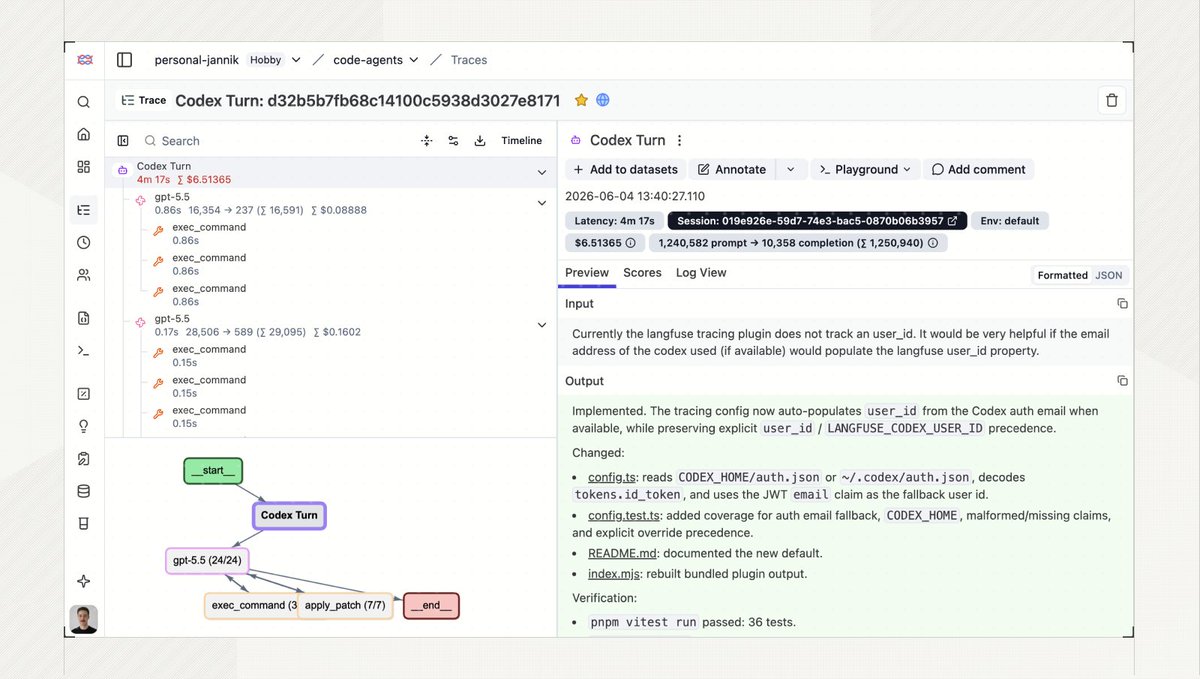
Competitive dynamics followed the same pattern. Antigravity, OpenCode, Codex, and MagicPath were competing on surfaces and coordination models. Langfuse, Headroom, and skill-creator were competing on everything the core agent stack still does poorly by default: visibility, context efficiency, and reusability.
5. What People Are Building
| Project | Who built it | What it does | Problem it solves | Stack | Stage | Links |
|---|---|---|---|---|---|---|
| MagicPath Codex plugin | @skirano | Gives Codex a multiplayer infinite canvas for editable UI work | Repo-to-design handoff is clumsy inside plain chat threads | MagicPath canvas, Codex browser/plugin, repo UI import, design-system-aware editing | Shipped | site / tweet |
| Langfuse Codex integration | Langfuse | Traces Codex sessions, tool calls, tokens, timings, and subagents | Agent work is hard to inspect and cost-control without observability | Codex plugin hooks, Node.js 22+, Langfuse SDK/backend | Shipped | page / tweet |
| Headroom | chopratejas | Compresses agent context before it reaches the model | Context bloat and token cost make long agent sessions expensive | Python/TypeScript, proxy, MCP, wrappers, local retrieval | Shipped | repo / tweet |
| skill-creator | sandiiarov | Generates reusable agent skills from APIs, GraphQL, and MCP servers | Teams repeatedly paste docs or hand-roll wrappers for the same tools | Node.js, npx, OpenAPI, GraphQL, MCP |
Shipped | repo / tweet |
| AI Job Search | Mads Lorentzen | Automates job search, fit scoring, CV tailoring, and cover-letter drafting | Job applications are repetitive and hard to personalize at scale | Claude Code, Bun CLI scrapers, LaTeX, reviewer-agent loop | Alpha | repo / tweet |
| OpenCode 1.16.0 | anomalyco | Ships new runtime/session controls for parallel AI coding work | Multi-session coordination across repos and projects is still awkward | App/TUI/server, v2 sessions, worktrees, typed routes, model stats | Shipped | releases / tweet |
The strongest builder pattern was to wrap the agent, not to replace it. @skirano built (238 likes, 28 replies, 17,283 views, 152 bookmarks) a shared canvas around Codex, @langfuse built (12 likes, 154 views, 4 bookmarks) observability around Codex and Claude Code, @drawais_ai highlighted (4 likes, 24 views) compression middleware around any agent, and @VivekIntel highlighted (2 likes, 133 views) a tool for generating reusable skills around external APIs and MCP servers. The repeated trigger was not “models are too weak.” It was “the workflow around the model is too manual.”


A second pattern was domain-specific agent systems with real workflow depth instead of generic copilots. @VaibhavSisinty shared (2 likes, 1 reply, 94 views, 2 bookmarks) an open-source AI Job Search project built on Claude Code that searches portals, scores fit, drafts materials, then sends them through a reviewer-agent loop. That is notable because the project README, install steps, and workflow diagram all point to a usable vertical system rather than a showpiece demo.

The release-side version of the same pattern came from @OpenCodeLog shipping (33 likes, 3 replies, 3,105 views) worktree moves, queued prompt controls, multi-server home-project state, and typed runtime routes. Across both independent projects and established runtimes, people were building the missing control, inspection, and reuse layers that turn agent sessions into repeatable systems.
6. New and Notable
Codex-adjacent plugins started looking like a real ecosystem
@skirano launched (238 likes, 28 replies, 17,283 views, 152 bookmarks) MagicPath as an official Codex plugin, while @langfuse launched (12 likes, 154 views, 4 bookmarks) tracing for Codex and Claude Code via plugin hooks. That is notable because both tools extend Codex in different directions - one toward shared visual work, the other toward observability - which makes the platform look more like an ecosystem than a single product surface.
Headroom made context compression look like its own devtool category
@drawais_ai highlighted (4 likes, 24 views) Headroom as a local-first layer that sits between any agent and its model, and the tweet cited 10.5k GitHub stars plus workload examples such as 92% token reduction on code search and SRE debugging. That is notable because it reframes context efficiency as middleware that can be wrapped around Claude Code, Codex, Cursor, Aider, and Copilot rather than as a provider-native feature.
Anthropic’s activation promo made subsidy competition explicit
@edzitron reported (158 likes, 10 replies, 9,183 views, 10 bookmarks) that Anthropic is offering $1,000 in credits per new Claude Code user, up to $10 million per organization. That is notable because it shows major vendors competing on who absorbs the first wave of enterprise coding-agent spend, not just on benchmark claims.
OpenCode shipped control-plane language as product reality
@OpenCodeLog shipped (33 likes, 3 replies, 3,105 views) worktree moves, multi-server project state, refreshed model/provider stats, and experimental control-plane routes in OpenCode 1.16.0. That is notable because it turns the day’s “control plane” rhetoric into specific runtime features developers can actually use.
7. Where the Opportunities Are
[+++] Budget-aware agent control layers - Evidence from sections 1, 2, 3, 4, and 6 pointed to the same gap: users are routing around price shocks with free-model stacks, vendors are subsidizing activation with credits, and public discussion is explicitly naming model routing plus cost observability as the missing layer. Langfuse and Headroom solve adjacent pieces, but the budget logic still has to be assembled by the user.
[+++] Prompt-to-production shipping rails - The strongest unmet operational need was not another model. It was everything after the prototype: auth, payments, screenshots, hosting, monitoring, policies, and release logistics. The evidence from @teeetariq and the harness patterns in @aakashgupta make this a strong direct opportunity.
[++] Continuity and recovery around lockouts and policy errors - Multiple first-hand lockout complaints, rejected appeals, and calls for human review show a real need for continuity protections around AI work. The demand is strong, but the buyer could sit with platform vendors, enterprise admins, or an adjacent backup-and-audit layer, which makes it somewhat less straightforward than the top two opportunities.
[++] Reusable harness and skill infrastructure for teams - MagicPath, skill-creator, Langfuse, and OpenCode all pointed to the same pattern: teams want reusable surfaces, commands, and rules so agent work stops depending on one operator’s memory. This is moderate because there are already early solutions, but the stack is still fragmented.
[+] Vertical agent workflows with built-in review loops - AI Job Search shows that individuals can now ship domain-specific systems with a real multi-step workflow, reviewer pass, and output verification. This is emerging because only a few concrete verticals surfaced today, but the pattern looks repeatable anywhere repetitive knowledge work meets structured review.
8. Takeaways
- AI-coding competition is shifting toward coordination layers, not just better model answers. Public evidence today focused on worktrees, control planes, shared canvases, and orchestration surfaces around the agent. (thdxr, skirano, pierrepinna)
- The harness is becoming the product. Documentation, permission tiers, automated checks, and reusable runtime structure showed up more clearly than any one model advantage. (aakashgupta, aakashgupta, OpenCodeLog)
- Pricing is now a design constraint that users actively route around. Free-model stacks, activation credits, and faster-than-expected token depletion all showed that cost is shaping workflow choices in real time. (edzitron, _0xpainn, slicknet)
- Trust failures are hitting access continuity as much as model quality. The strongest negative evidence today was not just bad output. It was deactivation, opaque appeals, and account-level workflow loss. (vinbuildnlog, ignis_code)
- The fastest-growing build pattern is surrounding the agent with tools for inspection, compression, reuse, and vertical workflow depth. Langfuse, Headroom, skill-creator, and AI Job Search each solve a different missing layer around core coding agents. (langfuse, drawais_ai, VivekIntel, VaibhavSisinty)