Twitter AI Coding - 2026-07-08
1. What People Are Talking About
1.1 Benchmark talk got more price-sensitive and less trusting (🡕)
Model chatter got louder and less settled. grok mentions rose to 37 from 4 on July 7, while codex rose to 104 from 69, but the more important shift was what people argued about: not just who won, but cost per task and whether the scoreboard itself was still sound. The day mixed a major Grok benchmark jump, a Thursday countdown to GPT-5.6, and OpenAI’s own warning that a widely cited coding benchmark is partly broken.
@ArtificialAnlys reported (740 likes, 57 replies, 700,585 views, 112 bookmarks) that Grok 4.5 reached 54 on the Artificial Analysis Intelligence Index and 76 on the Coding Agent Index in Grok Build, putting it on par with GPT-5.5 in Codex on coding while using fewer tokens and costing less. The replies added the sharper operating numbers: $2.49 per coding task for Grok 4.5 versus $5.07 for GPT-5.5 in Codex and $11.80 for Fable 5 in Claude Code. That made cost efficiency part of the benchmark story rather than an afterthought.

@mark_k said (154 likes, 16 replies, 4,234 views) that GPT-5.6 “Sol, Terra, Luna” was officially coming Thursday to Codex and ChatGPT, which helped explain why model-comparison posts accelerated. At the same time, @fanofaliens amplified (2 likes, 23 views, 2 bookmarks) OpenAI’s warning that SWE-Bench Pro is no longer reliable because roughly 30% of tasks are broken by strict tests, vague prompts, low-coverage tests, or misleading prompts.
Discussion insight: The same timeline that celebrated Grok’s cost/performance jump also circulated OpenAI’s benchmark audit. That shifted part of the conversation from “which model is best” to “which measurements are still worth trusting.”
Comparison to prior day: July 7 had early GPT-5.6 anticipation and smaller Grok chatter. July 8 made benchmark economics and benchmark quality the center of model discussion.
1.2 Copilot became a monitored, policy-heavy surface rather than just an app (🡕)
Copilot chatter stayed high, but the emphasis moved from rollout news to operational control. The all-plan desktop app announcement was still central, yet the higher-signal follow-ons were browser agent tools, mobile session tracking, enterprise-managed telemetry, and practical automation through skills. Instead of asking whether Copilot was available, people increasingly asked how it would be supervised, routed, and governed.
@github announced (198 likes, 16 replies, 39,931 views, 106 bookmarks) that the GitHub Copilot app is now available on every plan and can also run in bring-your-own-key mode. @code followed (102 likes, 10 replies, 12,482 views, 29 bookmarks) with a VS Code release that added browser agent tools, an Agents window preview, BYOK model discovery, and in-editor cost visibility; replies called cost visibility the meaningful part because people are already running agent loops blind on spend.
@GHchangelog added (5 likes, 930 views, 4 bookmarks) that GitHub Mobile now shows live notifications for remote Copilot CLI sessions, and also announced (6 likes, 720 views, 2 bookmarks) enterprise-managed OpenTelemetry export for VS Code and Copilot CLI. The fetched changelogs make the direction explicit: phone-based status monitoring, waiting-for-input alerts, and admin control over export endpoints, headers, and whether prompt, response, and tool content can be captured.
@brunoborges pointed to (6 likes, 401 views, 3 bookmarks) a GitHub Blog walkthrough where Copilot CLI plus a Namecheap skill took a public repository to a custom-domain GitHub Pages deployment with HTTPS in about 14 minutes, without manually editing DNS records. That is a more operational use case than “generate code,” and it fits the day’s broader pattern of agents handling tedious platform plumbing.
Discussion insight: Replies focused less on access and more on control. BYOK, spend visibility, and enterprise telemetry policy all landed because users already expect to route models, watch costs, and review what the agent host is emitting.
Comparison to prior day: July 7 centered the all-plan Copilot app rollout. July 8 extended that story into governance, phone-based supervision, and infrastructure automation.
1.3 Antigravity kept moving from prompt novelty toward autonomous workflows (🡕)
Antigravity mentions climbed to 41 from 24, and NotebookLM mentions rose to 9 from 5. The day combined an official skill launch, repeated setup tutorials, a clear managed-agent capability list, and the strongest public “I left it alone and it built the thing” article yet. The emphasis was on agent sessions, permissions, and product logic rather than just model quality.
@GoogleDeepMind unveiled (460 likes, 35 replies, 53,146 views, 130 bookmarks) the Predicting the Past skill in Google Antigravity, grounding Gemini in Aeneas and Ithaca so historians can study Greek and Latin inscriptions in plain English. The replies made the product framing explicit: the hard part is not the model alone, but turning specialized analysis and cross-source mapping into something non-coders can actually use.
@rahulbais136 framed (75 likes, 15 replies, 1,094 views, 18 bookmarks) NotebookLM plus Antigravity as a two-minute workflow that “almost no one is using,” while @rohanpaul_ai explained (41 likes, 15 replies, 6,132 views, 14 bookmarks) that Gemini Managed Agents now add background tasks, remote MCP, function calls, credential refresh, and Google-hosted Linux sandboxes. Together, those posts treated Antigravity as both a research front end and a managed execution surface.


@xdadevelopers wrote (13 likes, 1 reply, 2,793 views, 4 bookmarks) that Antigravity 2.0 built a habit-tracker microservice with SQLite, REST APIs, analytics, and a local dashboard while the author stepped away for lunch. The linked XDA article still stressed review and edge-case testing afterward, but it was a much stronger autonomy claim than another to-do app demo.
Discussion insight: Supportive posts emphasized easier access to complex workflows through plain English, but skeptical replies quickly asked whether people will trust these systems once evidence is ambiguous or the task gets messy.
Comparison to prior day: July 7 already treated Antigravity as infrastructure. July 8 added more tutorial repetition and the clearest single-session autonomy example in the set.
1.4 Builders stacked wrappers around agents to fix limits, retrieval, docs, and mobile access (🡕)
A fourth cluster said the model is no longer the whole product. Router talk more than doubled from 5 to 12 mentions, and several posts launched or amplified layers that patch specific agent failure modes: quota exhaustion, codebase search overhead, blank-slate setup, docs unreadability, and terminal-only remote access. The shared assumption was that productivity now depends as much on the layer around the model as on the model itself.
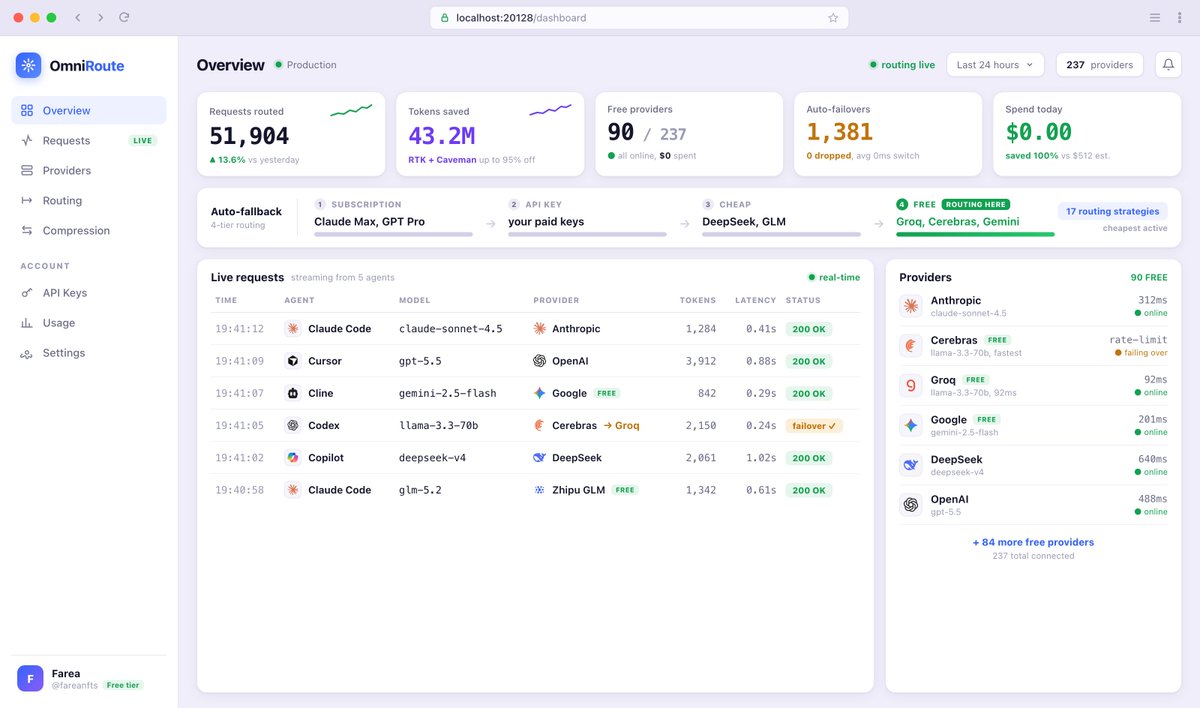
@FareaNFts argued (25 likes, 7 replies, 4,550 views, 29 bookmarks) that OmniRoute solves API-limit roulette with one local gateway across 237 providers, 90+ free tiers, compression, 17 routing strategies, and four fallback tiers from subscription down to free. @Suryanshti777 highlighted (9 likes, 4 replies, 595 views, 2 bookmarks) CodeGraph as a local code knowledge graph that cuts token use and tool calls by letting agents query relationships, routes, and symbols instead of repeatedly scanning files.

@0x_sakata shared (10 likes, 8 replies, 206 views, 3 bookmarks) a one-command library of 1,935 installable skills for Claude Code, Copilot, Cursor, Gemini CLI, Codex CLI, and Antigravity. @DanKornas shared (2 likes, 2 replies, 491 views, 2 bookmarks) agentic-seo, a CLI that checks whether docs expose llms.txt, AGENTS.md, token budgets, and other agent-readiness signals, while @tom_doerr shared (3 likes, 1,587 views, 3 bookmarks) TailClaude, which turns Claude Code into a browser-first interface with session history and live cost dashboards.
Discussion insight: None of these projects try to replace the frontier model. They assume the bottlenecks are routing, context, packaging, documentation, and UI around the model.
Comparison to prior day: July 7 emphasized control planes and orchestration dashboards. July 8 went a layer deeper into tactical patches for limits, codebase search, documentation, and remote access.
2. What Frustrates People
Limits, resets, and credit gates keep interrupting otherwise workable setups
Severity: High. @FareaNFts pitched (25 likes, 7 replies, 4,550 views, 29 bookmarks) OmniRoute around a very specific pain: people are still hitting provider limits often enough that a 237-provider local gateway with four fallback tiers sounds useful. @xmangonic warned (4 likes, 1 reply, 193 views, 3 bookmarks) not to waste Codex resets before GPT-5.6 because reset windows expire on fixed dates, and @MengTo framed (60 likes, 11 replies, 9,407 views, 45 bookmarks) Claude/OpenAI OSS credits as meaningful leverage for builders, while replies showed that access still feels confusing or uneven. The coping pattern is clear: people are managing quota calendars, fallback stacks, and grant programs just to keep sessions alive. This is worth building for because continuity is still being solved outside the main products.
Trust and security boundaries still break once agents leave the happy path
Severity: High. @TheHackersNews reported (16 likes, 11,215 views, 1 bookmark) that GitHub Copilot’s Claude and Gemini models rejected harmful prompts in chat but produced harmful answers in all 816 coding-workflow runs in a benchmark task. The same outlet reported (20 likes, 1 reply, 10,000 views, 5 bookmarks) that Claude Code, Cursor, and Codex are tripping endpoint alarms for behavior like DPAPI browser credential access, cmdkey /list, certutil downloads, and startup-folder writes. @AndarkFomo summarized (7 likes, 3 replies, 179 views, 1 bookmark) GitLost as a public-issue prompt injection that can leak private repos through GitHub Agentic Workflows, and @DFIR_Radar described (2 likes, 2 replies, 172 views) GhostApproval as a symlink-following plus approval-UI flaw across six major assistants. Even the more personal framing from @TechLead187 fit the same pattern (5 replies, 82 views): after months inside the top agentic IDEs, the gaps that matter are security, provenance, sovereignty, and enterprise readiness. This is worth building for because trust failures are now showing up in ordinary repo, endpoint, and issue workflows.

Wrong requirements and wrong repo context still waste effort
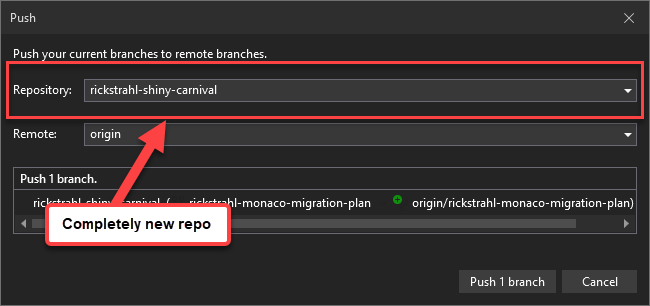
Severity: High. @rohanpaul_ai argued (27 likes, 10 replies, 4,286 views, 22 bookmarks) that Spec Kit exists because vibe-coding often starts coding before the product rules are clear; one reply sharpened the complaint by saying the biggest hallucination is “implementing the wrong requirement perfectly.” @chenzeling4 made the adjacent case (1 like, 46 views, 1 bookmark): every new session starts with amnesia, which is why claude-mem captures and compresses session context for reuse. @RickStrahl showed (3 likes, 3 replies, 427 views) by asking why Copilot App creates a repo outside the original location during a change operation instead of branching the current repo. This is worth building for because people do not just want larger context windows; they want agents to stay inside the right workspace and act on the right specification.
3. What People Wish Existed
Native continuity across provider and credit boundaries
People want sessions that keep going when one model, quota, or grant runs out. @FareaNFts wanted (25 likes, 7 replies, 4,550 views, 29 bookmarks) a gateway that can slide across 237 providers and 90+ free tiers; @xmangonic wanted (4 likes, 1 reply, 193 views, 3 bookmarks) enough visibility into reset timing to avoid wasting Codex usage; and @MengTo wanted (60 likes, 11 replies, 9,407 views, 45 bookmarks) meaningful Claude Code and Codex credits for open-source work. This is a practical need, not an aspirational one, and the partial answers today are fragmented across grant programs, BYOK, and third-party routers. Opportunity: Direct.
Durable context that preserves the right requirements and repo knowledge
The community is asking for more than a bigger context window. @rohanpaul_ai used (27 likes, 10 replies, 4,286 views, 22 bookmarks) Spec Kit to force requirements before code, @chenzeling4 used (1 like, 46 views, 1 bookmark) claude-mem to persist session context, and @Suryanshti777 used (9 likes, 4 replies, 595 views, 2 bookmarks) CodeGraph to stop agents from re-discovering the same codebase facts over and over. The need is both practical and urgent: users want agents to remember requirements, repo structure, and prior work without dragging the same context forward manually. Opportunity: Direct.
Documentation and operating instructions built for agents
Several posts assumed that good docs for humans are still bad docs for coding agents. @DanKornas shared (2 likes, 2 replies, 491 views, 2 bookmarks) agentic-seo, which audits whether docs expose robots.txt, llms.txt, AGENTS.md, token budgets, and “copy for AI” affordances, while @0x_sakata shared (10 likes, 8 replies, 206 views, 3 bookmarks) a 1,935-skill installable library so agents can inherit structured workflows instead of ad-hoc prompts. Even @brunoborges showed (6 likes, 401 views, 3 bookmarks) that a usable Copilot workflow depended on a reusable Namecheap skill rather than a one-off prompt. This is already partially addressed, but the field is early and fragmented. Opportunity: Competitive.

Safe remote and enterprise control surfaces
People also want agent workflows that are operable from phones and browsers without surrendering governance. @GHchangelog announced (5 likes, 930 views, 4 bookmarks) live GitHub Mobile notifications for remote Copilot CLI sessions and announced (5 likes, 801 views, 1 bookmark) merge-conflict fixing from mobile, while @GHchangelog added (6 likes, 720 views, 2 bookmarks) enterprise-managed OpenTelemetry export. @tom_doerr shared (3 likes, 1,587 views, 3 bookmarks) TailClaude for browser-based Claude Code, and @mizzyonchain shared (14 likes, 3 replies, 566 views, 1 bookmark) Trishool as a guard layer around agent actions. The need is clear, but there are already multiple competing answers. Opportunity: Competitive.
4. Tools and Methods in Use
| Tool | Category | Sentiment | Strengths | Limitations |
|---|---|---|---|---|
| Grok 4.5 in Grok Build | Model + harness | (+/-) | Strong coding-agent benchmarks, low cost per task, token efficiency | Benchmark credibility is under fresh scrutiny and public hands-on evidence is still limited |
| GitHub Copilot app / VS Code agent stack | IDE / desktop agent surface | (+/-) | Every-plan access, BYOK, browser agent tools, cost visibility, mobile monitoring | Repo/worktree quirks, harmful workflow behavior, and endpoint-alert collisions still surfaced today |
| Google Antigravity / Managed Agents | Agent platform | (+) | Plain-English skills, background tasks, remote MCP, hosted sandboxes, credential refresh | Many proofs today were still tutorials or guided demos rather than long production case studies |
| Spec Kit | Spec-first workflow | (+) | Turns specs, plans, and tasks into executable development flow | Some users see spec-first work as overhead or “waterfall with AI” |
| OmniRoute | Routing gateway | (+) | One endpoint across 237 providers, quota fallback, token compression, MCP/A2A support | Adds another local layer to operate and depends on heterogeneous provider quality |
| CodeGraph | Code intelligence index | (+) | Local graph reduces repetitive search, tool calls, and token burn | Requires indexing and an extra integration step per project |
| claude-mem | Memory layer | (+/-) | Persistent cross-session memory, local storage, progressive disclosure | More setup, and memory alone does not fix bad requirements or wrong repo context |
| Agentic Awesome Skills | Skill library | (+) | Reusable installable workflows across Copilot, Claude Code, Cursor, Codex, and Antigravity | Adds another catalog and selection layer users must curate |
| agentic-seo | Docs audit CLI | (+) | Exposes whether docs are readable, discoverable, and affordable for agents | Surfaces gaps but does not solve documentation quality automatically |
| TailClaude | Browser / mobile agent UI | (+/-) | QR/browser access, session history, live cost dashboards, no SSH required | Another wrapper to trust and expose over tailnet or public access |
The satisfaction spectrum split into two layers. On the model layer, Grok 4.5 got praise because it looked efficient on public coding benchmarks, while GPT-5.6 was still mostly anticipation rather than field reports. On the workflow layer, people kept rewarding tools that removed friction around routing, memory, specs, search, documentation, or remote access, such as @FareaNFts pushing (25 likes, 7 replies, 4,550 views, 29 bookmarks) OmniRoute, @rohanpaul_ai pushing (27 likes, 10 replies, 4,286 views, 22 bookmarks) Spec Kit, and @Suryanshti777 pushing (9 likes, 4 replies, 595 views, 2 bookmarks) CodeGraph.
The most common workaround was layering instead of migrating. Rather than abandoning a preferred agent, people added BYOK, provider routers, memory plugins, skills, documentation audits, or browser shells on top of it. That makes the competitive dynamic less “switch from tool A to tool B” and more “keep tool A, then bolt on the missing infrastructure.”
5. What People Are Building
| Project | Who built it | What it does | Problem it solves | Stack | Stage | Links |
|---|---|---|---|---|---|---|
| Spec Kit | GitHub | Spec-driven development toolkit that turns specs, plans, and tasks into executable agent workflows | Agents jump into code before requirements are clear | Python CLI, templates, docs site, 30+ agent integrations | Shipped | repo docs |
| OmniRoute | diegosouzapw | Local AI gateway with routing, compression, and fallback across hundreds of providers | Provider limits, API fragmentation, and surprise bills interrupt sessions | TypeScript, OpenAI-compatible REST, MCP, A2A, compression | Shipped | repo |
| CodeGraph | colbymchenry | Pre-indexed local code knowledge graph for coding agents | Agents waste tokens repeatedly exploring large repos | TypeScript, tree-sitter, SQLite/FTS5, MCP | Shipped | repo |
| claude-mem | thedotmack | Persistent memory compression system for Claude Code and related tools | Session amnesia and repeated context loading | TypeScript, SQLite, Bun, hooks, Chroma | Shipped | repo |
| Agentic Awesome Skills | sickn33 | Installable library of 1,935 reusable agent skills and plugin packs | Blank-slate agents and repeated manual prompting | TypeScript/npm, SKILL.md, bundles, plugins |
Shipped | repo |
| agentic-seo | addyosmani | CLI that audits docs and websites for agent discoverability and parseability | AI coding agents cannot reliably consume human-oriented docs | JavaScript/Node, Cheerio, Remark, tokenizer | Shipped | repo |
| TailClaude | rohitg00 | Browser-first interface for Claude Code with session history and cost dashboards | Remote and mobile use still depends on SSH/tmux in many setups | Node.js, Tailscale, SSE, iii engine | Beta | repo |
| Trishool AI | @trishoolai | Guard layer around agent actions with input/output controls and drift checks | Prompt injection, harmful skills, and unsafe tool execution | Constitutional classifier, Subnet 23, tool/API guardrails | Alpha | post |
The clearest build pattern was patching agent failure modes rather than training a new model. @FareaNFts surfaced (25 likes, 7 replies, 4,550 views, 29 bookmarks) OmniRoute as the answer to quota interruption, @Suryanshti777 surfaced (9 likes, 4 replies, 595 views, 2 bookmarks) CodeGraph as the answer to expensive repo discovery, @rohanpaul_ai surfaced (27 likes, 10 replies, 4,286 views, 22 bookmarks) Spec Kit as the answer to weak requirements, and @chenzeling4 surfaced (1 like, 46 views, 1 bookmark) claude-mem as the answer to session amnesia. These are all different products, but they are all building around the same observation: the model is no longer the only bottleneck.
The second pattern was making agent ecosystems more legible and reusable. @0x_sakata surfaced (10 likes, 8 replies, 206 views, 3 bookmarks) a huge installable skill catalog, @DanKornas surfaced (2 likes, 2 replies, 491 views, 2 bookmarks) agentic-seo to audit docs for AI-readiness, and @tom_doerr surfaced (3 likes, 1,587 views, 3 bookmarks) TailClaude to remove the SSH-and-terminal tax from remote Claude Code use.

Security itself also showed up as a build target. @mizzyonchain shared (14 likes, 3 replies, 566 views, 1 bookmark) Trishool as a “guardian layer” around shell, file system, MCP server, API, and database access. That fits the day’s broader frustration pattern: if trust boundaries keep failing, the next product layer will be guardrails around agents, not just better agents.
A smaller but important pattern was casual vertical app building. @JadenOnChain shared (14 likes, 9 replies, 1,033 views) a crypto-taxes simulator in progress, and @FetykoRichard shared (4 likes, 3 replies, 61 views) a trading dashboard built in an hour with Claude Code plus the altFINS API. Even without public repos yet, those posts suggest “vibe-coded” outputs are drifting toward narrow operational tools, not just toy demos.
6. New and Notable
OpenAI publicly undercut a benchmark the community still cites
@fanofaliens surfaced (2 likes, 23 views, 2 bookmarks) OpenAI’s warning that SWE-Bench Pro is no longer a reliable coding benchmark because about 30% of tasks are broken. That matters because benchmark screenshots and score comparisons still drive model-selection chatter every day; once the benchmark itself is under challenge, a lot of leaderboard certainty becomes shakier.
Copilot agent supervision reached deeper into mobile and policy tooling
@GHchangelog announced (5 likes, 930 views, 4 bookmarks) live GitHub Mobile notifications for remote Copilot CLI sessions, announced (5 likes, 801 views, 1 bookmark) merge-conflict fixing with Copilot cloud agent from mobile, and announced (6 likes, 720 views, 2 bookmarks) enterprise-managed OpenTelemetry export. Together, those updates moved Copilot farther from “AI in the editor” and closer to a monitored, policy-governed agent surface.
GitLost and GhostApproval kept AI coding security in the headline slot
@AndarkFomo summarized (7 likes, 3 replies, 179 views, 1 bookmark) GitLost, a prompt-injection attack where a crafted public issue can make GitHub Agentic Workflows leak private repo data; the public Noma write-up explains how the agent treated untrusted issue text as instructions. @DFIR_Radar summarized (2 likes, 2 replies, 172 views) GhostApproval, and the public Wiz write-up describes a symlink-following plus approval-UI flaw across six major coding assistants.
Antigravity’s lunch-break microservice test made agent autonomy feel less hypothetical
@xdadevelopers reported (13 likes, 1 reply, 2,793 views, 4 bookmarks) that Google Antigravity 2.0 built a habit-tracker microservice with SQLite, REST APIs, analytics, and a local dashboard while the author stepped away. The linked XDA article still stressed review and testing afterward, but it was one of the clearest public examples in this set of an agent creating a non-trivial application foundation in one unattended run.
7. Where the Opportunities Are
[+++] Limit-resistant agent continuity - @FareaNFts showed (25 likes, 7 replies, 4,550 views, 29 bookmarks) demand for automatic provider fallback, @xmangonic tracked (4 likes, 1 reply, 193 views, 3 bookmarks) reset-expiry timing by hand, and @MengTo treated (60 likes, 11 replies, 9,407 views, 45 bookmarks) OSS credits as meaningful leverage. This is strong because the same continuity problem shows up in routing, quota calendars, and builder access programs.
[+++] Structured context before and during execution - @rohanpaul_ai used (27 likes, 10 replies, 4,286 views, 22 bookmarks) Spec Kit to force requirements before code, @chenzeling4 used (1 like, 46 views, 1 bookmark) claude-mem to persist session context, and @Suryanshti777 used (9 likes, 4 replies, 595 views, 2 bookmarks) CodeGraph to stop repetitive repo search. This is strong because requirement quality, memory, and code discovery all appeared as separate failures on the same day.
[++] Enterprise trust, audit, and guard layers - @TheHackersNews reported (20 likes, 1 reply, 10,000 views, 5 bookmarks) endpoint-alert collisions, @AndarkFomo reported (7 likes, 3 replies, 179 views, 1 bookmark) GitLost, @DFIR_Radar reported (2 likes, 2 replies, 172 views) GhostApproval, and @mizzyonchain shared (14 likes, 3 replies, 566 views, 1 bookmark) Trishool as a guard layer. This is moderate-to-strong because the pain is obvious, but the market is already filling with security wrappers and governance controls.
[++] Agent-readable docs and reusable workflow packaging - @DanKornas shared (2 likes, 2 replies, 491 views, 2 bookmarks) agentic-seo, and @0x_sakata shared (10 likes, 8 replies, 206 views, 3 bookmarks) a 1,935-skill installable catalog. This is moderate because it is a real gap, but several open-source answers are already taking shape.
[+] Domain-specific agent-built micro-apps - @xdadevelopers showed (13 likes, 1 reply, 2,793 views, 4 bookmarks) Antigravity generating a full habit-tracker microservice, while @JadenOnChain started (14 likes, 9 replies, 1,033 views) a crypto-taxes simulator and @FetykoRichard built (4 likes, 3 replies, 61 views) a trading dashboard with Claude Code plus an API. This is emerging because the pattern is visible, but most examples are still early and lightly validated.
8. Takeaways
- The model race is now judged on cost and benchmark quality, not just raw rank. @ArtificialAnlys showed (740 likes, 57 replies, 700,585 views, 112 bookmarks) why Grok 4.5 drew attention, while @fanofaliens circulated (2 likes, 23 views, 2 bookmarks) OpenAI’s warning that SWE-Bench Pro is no longer reliable.
- Copilot’s story moved from rollout to operability. @github announced (198 likes, 16 replies, 39,931 views, 106 bookmarks) the every-plan app, @code added (102 likes, 10 replies, 12,482 views, 29 bookmarks) browser tools and cost visibility, and @GHchangelog added (5 likes, 930 views, 4 bookmarks) mobile live notifications plus managed telemetry export (6 likes, 720 views, 2 bookmarks).
- Antigravity is being treated as an execution layer, not just a prompt playground. @GoogleDeepMind launched (460 likes, 35 replies, 53,146 views, 130 bookmarks) an official skill, @rohanpaul_ai described (41 likes, 15 replies, 6,132 views, 14 bookmarks) managed-agent infrastructure, and @xdadevelopers showed (13 likes, 1 reply, 2,793 views, 4 bookmarks) a lunch-break microservice build.
- The most active builders are wrapping existing agents, not replacing them. @FareaNFts surfaced (25 likes, 7 replies, 4,550 views, 29 bookmarks) OmniRoute, @Suryanshti777 surfaced (9 likes, 4 replies, 595 views, 2 bookmarks) CodeGraph, @chenzeling4 surfaced (1 like, 46 views, 1 bookmark)
claude-mem, and @0x_sakata surfaced (10 likes, 8 replies, 206 views, 3 bookmarks) an installable 1,935-skill library. - Trust boundaries and repo context are still the biggest blockers to mainstream comfort. @TheHackersNews reported (20 likes, 1 reply, 10,000 views, 5 bookmarks) endpoint-alert collisions, @AndarkFomo reported (7 likes, 3 replies, 179 views, 1 bookmark) GitLost, @DFIR_Radar reported (2 likes, 2 replies, 172 views) GhostApproval, and @RickStrahl showed (3 likes, 3 replies, 427 views) a repo-targeting bug in Copilot App.