Twitter AI Coding - 2026-07-09
1. What People Are Talking About
1.1 GPT-5.6 turned coding chatter into a broader “work” launch (🡕)
The biggest shift on July 9 was that GPT-5.6 stopped being just a coming-soon coding model and became a broader “work” surface story. Compared with July 8, launch-day discussion moved from anticipation into concrete product packaging: Microsoft tied GPT-5.6 to Work IQ and Cowork, GitHub mapped Sol/Terra/Luna into Copilot, and OpenAI watchers focused on a new ChatGPT Work workspace rather than raw benchmark bragging alone.
@satyanadella said (1,057 likes, 74 replies, 113,497 views, 188 bookmarks) that GPT-5.6 with Work IQ arrived in Copilot Chat, Cowork, Microsoft 365 apps, GitHub, and Foundry, explicitly framing the release around “multi-step agentic work” and content creation rather than coding in isolation.
@testingcatalog reported (295 likes, 14 replies, 35,782 views, 57 bookmarks) that ChatGPT Work looked like a dedicated per-user workspace with resettable state, a Demo plugin, artifact creation, email handling, research, and “work pets.” The attached workspace screenshot made the product direction more concrete than the text alone and supported the idea that OpenAI was merging general work surfaces and Codex-style execution into one interface.

@github announced (148 likes, 7 replies, 23,432 views, 16 bookmarks) that GPT-5.6 was rolling into GitHub Copilot as Sol, Terra, and Luna. The linked GitHub changelog gave the operational split: Sol for high-ceiling reasoning over large codebases, Terra as the balanced default, and Luna as the cheapest fast path.
@emollick said (82 likes, 15 replies, 5,998 views, 11 bookmarks) that he understood Claude Cowork as the safer non-coder surface, but did not understand what ChatGPT Work added or removed relative to Codex. One reply guessed that Work might mostly add org controls such as SSO, audit logs, connectors, and data boundaries, which captured the day’s central ambiguity: capability was expanding faster than the product map was clarifying.
Discussion insight: Replies did not dispute that GPT-5.6 had arrived; they questioned how many overlapping surfaces users now had to understand. The conversation shifted from “is GPT-5.6 real?” to “which surface is for execution, which is for governance, and what do I give up when I switch?”
Comparison to prior day: July 8 centered anticipation and leaks. July 9 turned that anticipation into a full product-packaging conversation spanning Microsoft, GitHub, ChatGPT Work, and Codex.
1.2 Model competition became a routing and economics argument, not just a leaderboard (🡕)
The second cluster was still about frontier models, but the emphasis was no longer only “who scored highest.” People compared resets, token burn, context windows, and who owned the best real-world coding flywheel. GPT-5.6 launch traffic rose sharply, while Grok discussion held its ground by arguing cheaper execution and better data advantages rather than simply bigger benchmark numbers.
@bridgemindai argued (438 likes, 64 replies, 22,546 views, 27 bookmarks) that OpenAI had already won goodwill by giving four free usage-limit resets where Anthropic had required four separate $200 subscriptions. The post treated GPT-5.6 as the missing ingredient: generous usage policy mattered, but only if the model quality finally matched it.
@jukan05 argued (507 likes, 62 replies, 58,272 views, 106 bookmarks) that xAI might be better positioned than Codex in coding agents because Cursor likely brings a larger active user base and therefore more real coding data. Replies pushed the same operational question from different angles: whether the acquisition would keep the talent and data flywheel intact, and whether distribution could matter more than a single benchmark jump.
@israfill claimed (15 likes, 10 replies, 1,643 views, 8 bookmarks) that Grok 4.5 was temporarily free in Cursor, used far fewer tokens than Claude Opus, and exposed a 500k context window for long sessions. The images added the concrete workflow angle: Grok Build was not just a model picker, but a coding surface with workspace actions, repo review, docs generation, and large-context claims.

@hqmank showed (313 likes, 21 replies, 31,441 views, 29 bookmarks) that GPT-5.6 Sol had already started appearing inside Codex as a limited preview. The most useful reply was not cheerleading but caution: the real test would be messy legacy codebases with conflicting conventions and partial docs, not launch-day clean-room demos.
Discussion insight: People judged models through host-product behavior: reset policy, direct-host pricing, context windows, and installed user base. Even on GitHub’s official rollout post, replies immediately compared Copilot-hosted GPT-5.6 against using Codex directly for lower cost.
Comparison to prior day: July 8 had rising Grok and GPT-5.6 anticipation. July 9 made GPT-5.6 the dominant topic, but the community still filtered the launch through economics, routing, and distribution rather than treating the model alone as the product.
1.3 Security stories kept pace with the launch hype (🡕)
Even with GPT-5.6 dominating attention, the security lane did not disappear. The strongest posts were not generic warnings about “AI risk”; they were concrete repo and workflow failures where assistants followed the wrong instructions, showed the wrong approval text, or behaved unsafely once they left chat and entered coding workflows.
@Hiteshdotcom warned (93 likes, 16 replies, 3,412 views, 7 bookmarks) that GitLost showed how prompt injection could trick GitHub’s agent into exposing private repository data. The replies made the threat model plainer: public issues and PR comments are attacker-writable text boxes, so once an agent reads them with privileged repo access, “just prompt it carefully” is not a serious defense.
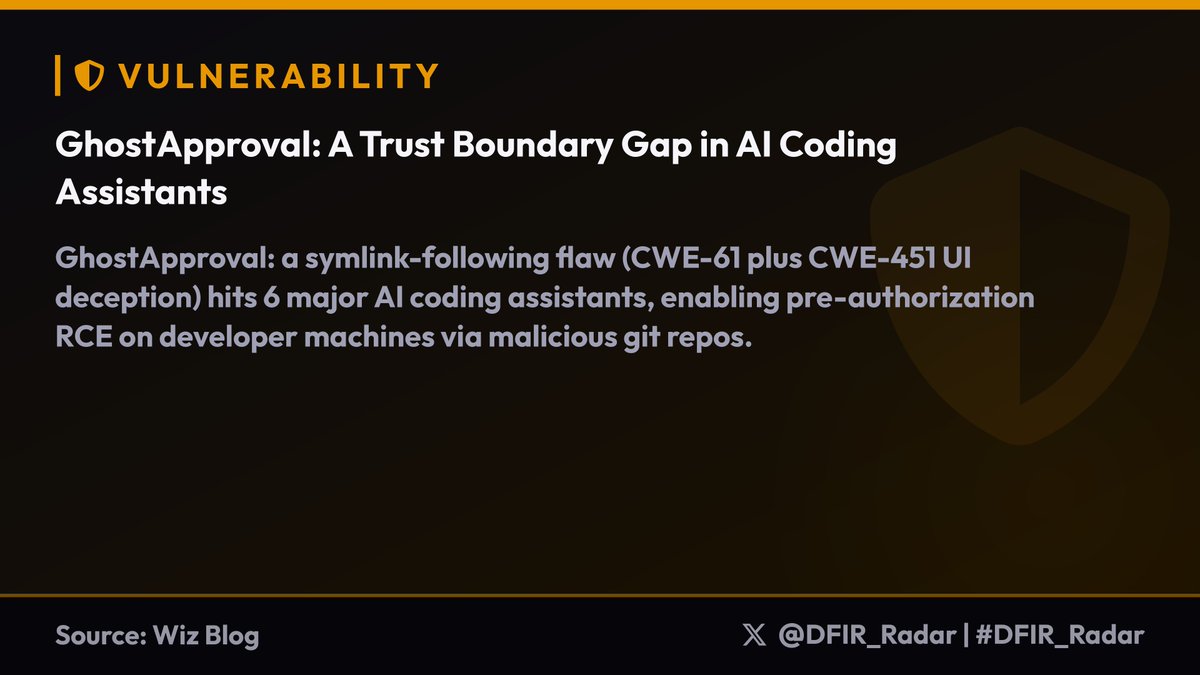
@DFIR_Radar reported (2 likes, 2 replies, 191 views) that GhostApproval exploited symlink following and deceptive approval prompts across six major coding assistants. Its writeup was unusually specific: the agent could identify the symlink internally, while the human-facing approval prompt misrepresented the target file, turning human review into a rubber stamp.
@AISecHub linked (12 likes, 577 views, 10 bookmarks) the paper “GitHub Copilot Refuses Harmful Requests in Chat, Then Writes Them in Code,” which tested 204 malicious prompts and found safe chat refusals did not hold once the same requests were run through an IDE coding-agent workflow.
Discussion insight: The recurring complaint was not that models sometimes make bad decisions. It was that approval layers, repo context, and workflow wrappers still misrepresent what the agent is really doing. Users kept circling back to least privilege, pre-execution controls, and clearer provenance.
Comparison to prior day: Security already mattered on July 8, but July 9 kept it in view despite the launch flood. The most cited failures moved one layer outward, from bad answers to deceptive approvals and privileged workflow execution.
1.4 The layer around agents kept thickening: ecosystems, memory, and lightweight ops (🡕)
The fourth theme was that people increasingly treated the model as only one part of the stack. Posts that resonated most either described a larger ecosystem around agents or shipped small layers that solve memory, orchestration, repo understanding, or workplace integration problems the base models do not solve on their own.
@Suryanshti777 argued (77 likes, 8 replies, 1,907 views, 15 bookmarks) that Google was trying to own the whole AI-agent ecosystem rather than win a single model race. The image mapped Gemini, NotebookLM, Veo, Antigravity IDE, Gemini CLI, Jules, A2A, ADK, and FileSearch API into one connected surface, which made the “ecosystem vs ecosystem” thesis legible in one glance.

@xdadevelopers wrote (16 likes, 1 reply, 3,644 views, 4 bookmarks) that Antigravity 2.0 built a habit-tracker microservice while the author ate lunch. The linked XDA article added the concrete stack details the tweet did not: SQLite, REST APIs, analytics, and a local dashboard, plus the caveat that the result still needed review and edge-case testing.
@taranjeetio introduced (16 likes, 2 replies, 4 quotes, 785 views) openmemory v2 as an open-source CLI for porting coding sessions across Codex, Claude Code, and OpenCode. The linked repo made the positioning explicit: harness lock-in is becoming painful enough that session portability is now its own product.
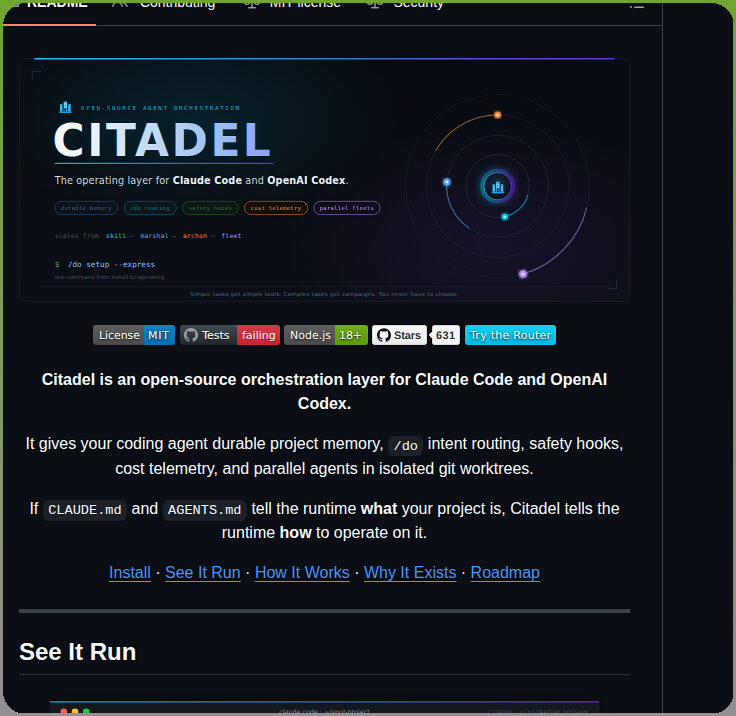
@tom_doerr shared (17 likes, 3,634 views, 19 bookmarks) Citadel, which layers durable project memory, /do routing, safety hooks, cost telemetry, and isolated git worktrees on top of Claude Code and Codex. That post fit the same pattern as the rest of the theme: rather than replacing the frontier model, builders are surrounding it with workflow logic.
Discussion insight: The common assumption was that the bottleneck is no longer only reasoning quality. It is remembering the right context, routing the right workflow, keeping work visible outside the terminal, and plugging agents into broader ecosystems.
Comparison to prior day: July 8 already had orchestration and wrapper talk. July 9 added more concrete evidence that this layer is becoming productized: session portability, repo-level memory, and ecosystem-shaped agent stacks all appeared alongside the model launch itself.
2. What Frustrates People
Limits, resets, and spend visibility still decide which tool people can keep using
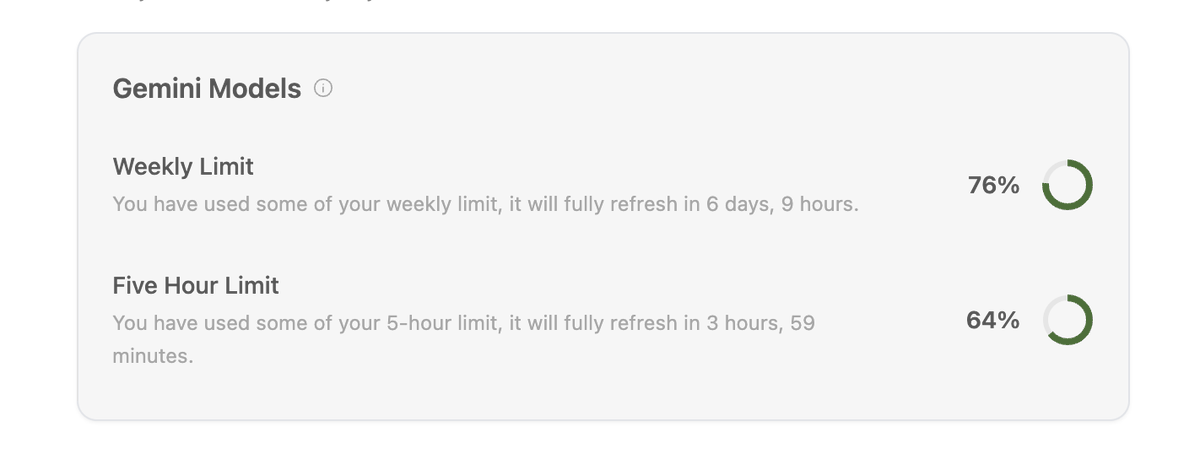
Severity: High. @bridgemindai argued (438 likes, 64 replies, 22,546 views, 27 bookmarks) that OpenAI’s banked Codex resets felt dramatically more builder-friendly than paying for multiple Claude Code subscriptions, while @ASalvadorini complained (2 likes, 3 replies, 468 views) that three hours in Antigravity had already burned 25% of a weekly quota on Gemini 3.5 Flash High. @DFintelligence gave (178 likes, 15 replies, 18,844 views, 165 bookmarks) the opposite side of the same issue by calling 4% of a weekly quota fair for a 50-minute insurance-comparison workflow, and @code shipped (180 likes, 13 replies, 20,637 views, 60 bookmarks) in-editor cost visibility precisely because people are already running agent loops blind on spend. The coping pattern is obvious: hoard resets, exploit free rollout windows, and choose hosts partly on quota ergonomics rather than model quality alone. This is worth building for because continuity still depends on opaque limits.
Product boundaries, installers, and repo targeting still break trust before the model even starts
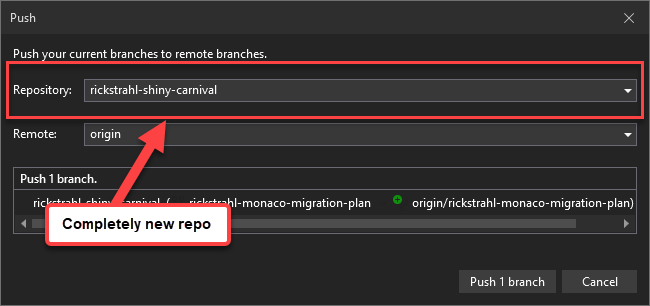
Severity: High. @emollick said (82 likes, 15 replies, 5,998 views, 11 bookmarks) that he could not tell what ChatGPT Work was supposed to be relative to Codex or Claude Cowork, which showed how much naming and packaging confusion remained even on launch day. @adxtyahq showed (11 likes, 8 replies, 1,032 views) Codex CLI docs that did not match the actual installer output, and @RickStrahl asked (5 likes, 4 replies, 859 views) why the GitHub Copilot app created a repo outside the original location instead of branching the current repository. These are not minor UX nits: if users cannot tell what surface they are in, what version they are installing, or which repository the agent is mutating, they will slow down and manually verify every step. This is worth building for because correctness starts before the model’s first token.
Security approvals remain performative in too many workflows
Severity: High. @Hiteshdotcom summarized (93 likes, 16 replies, 3,412 views, 7 bookmarks) GitLost as a prompt-injection path from public text into private repo leakage, @DFIR_Radar described (2 likes, 2 replies, 191 views) GhostApproval as a deceptive approval-path flaw across six assistants, and @AISecHub linked (12 likes, 577 views, 10 bookmarks) the workflow-jailbreak paper showing safe chat behavior collapsing inside IDE execution. In response, @agentguardsco pitched (1 like, 2 replies, 2,239 views) prompt screening and pre-execution authorization across major coding agents, while @Pavlove500 announced (7 likes, 2 replies) Latch as a way to avoid giving agents “master keys.” The coping pattern is to add more layers between the model and the action. This is worth building for because the approval step still fails exactly where people expect it to protect them.
3. What People Wish Existed
Durable memory that survives model switches and answers “why”
People are asking for continuity that is stronger than a bigger context window. @taranjeetio introduced (16 likes, 2 replies, 4 quotes, 785 views) openmemory v2 so sessions can move across Codex, Claude Code, and OpenCode instead of locking users into one harness. @talosbuildss shared (4 likes, 14 views, 3 bookmarks) a graph-based memory layer meant to answer why code exists rather than only what it does, after saying the leading tools failed on history-heavy questions. @tom_doerr shared (17 likes, 3,634 views, 19 bookmarks) Citadel as a durable project-memory and routing layer, while @0xProbabillity highlighted (3 likes, 79 views) Understand Anything as a codebase knowledge graph that works across major coding surfaces. This is a practical and urgent need: people do not want to re-explain the repo every time they change tools or threads. Partial answers exist, but they are fragmented across portability CLIs, graph layers, and orchestrators. Opportunity: Direct.

Real policy and delegation layers instead of trust-me prompts
The security discussion made the missing control surface explicit. @agentguardsco positioned (1 like, 2 replies, 2,239 views) AgentGuard around “screen every prompt, authorize every action, before it executes,” and @Pavlove500 framed (7 likes, 2 replies) Latch as a dashboard for connected agents rather than a system of shared master keys. Those posts were answers to the exact failures exposed by GitLost, GhostApproval, and the workflow-jailbreak paper. The need is practical, not aspirational: users want least privilege, clearer approvals, and policy that travels with the workflow instead of depending on perfect operator vigilance. Opportunity: Direct.
Workspaces that can complete whole business workflows, not just single coding tasks
Another clear wish was for agent surfaces that own an end-to-end unit of work. @testingcatalog reported (295 likes, 14 replies, 35,782 views, 57 bookmarks) that ChatGPT Work was becoming a dedicated workspace for artifacts, messaging, email, and research. @DFintelligence showed (178 likes, 15 replies, 18,844 views, 165 bookmarks) an insurance-benchmark and signup flow that ran while he walked his dog. @xdadevelopers documented (16 likes, 1 reply, 3,644 views, 4 bookmarks) an Antigravity-built microservice, while @Shruti_0810 shared (6 likes, 2 replies, 907 views) an AI Job Search workflow that tailors applications role by role. The need is practical and already urgent: people want agents that can own a durable, reviewable workflow from input to output. There are multiple partial answers, so the opportunity is competitive rather than empty. Opportunity: Competitive.
4. Tools and Methods in Use
| Tool | Category | Sentiment | Strengths | Limitations |
|---|---|---|---|---|
| GPT-5.6 Sol / Terra / Luna | Frontier model family | (+/-) | Broad rollout across Microsoft, ChatGPT, Codex, and Copilot; explicit high/medium/low-cost tiers | Packaging is still confusing, hands-on evidence is early, and economics vary by host |
| GitHub Copilot / VS Code agent stack | IDE / agent surface | (+/-) | Browser tools, parallel agents, repo overview, BYOK discovery, cost visibility, enterprise telemetry controls | Repo-targeting complaints, governance complexity, and replies saying direct Codex may be cheaper |
| ChatGPT Work / Codex | Workspace + coding agent | (+/-) | Dedicated workspace, artifacts, research, messaging, and long-running computer-use style tasks | Unclear split versus Codex and Cowork, launch-day naming confusion, CLI doc mismatch nearby |
| Claude Code | CLI coding agent | (+/-) | Still the reference point for workflows, wrappers, and skills packaging across the set | Expensive subscriptions, portability pain, and repeated security / approval concerns |
| Grok 4.5 / Grok Build / Cursor | Model + harness | (+/-) | Free trial window, 500k context, lower token-burn claims, strong early enthusiasm | Evidence is still early, some claims are marketing-heavy, and rollout limits vary by region and host |
| Google Antigravity | Agent platform | (+/-) | High-autonomy demos, Google ecosystem fit, MCP-style integrations, non-IDE workflow appeal | Quota complaints are strong, trust is still tentative, and many examples remain guided demos |
| Citadel | Orchestration layer | (+) | Durable memory, /do routing, safety hooks, cost telemetry, isolated git worktrees |
Adds setup and another operating layer to maintain |
| openmemory v2 | Session portability | (+) | Moves sessions across Codex, Claude Code, and OpenCode; reduces harness lock-in | Beta scope and limited harness coverage today |
| Understand Anything | Code knowledge graph | (+) | Interactive graph for code and docs, compatible with major coding surfaces | Adds indexing/setup cost and does not itself execute work |
| AgentGuard / Latch | Guardrails | (+) | Pre-execution authorization, dashboards, least-privilege framing | Early products whose value depends on deep workflow integration |
| OpenOPC | Company-mode orchestrator | (+/-) | Role-based delegation, dependency graph, kanban flow, multiple execution backends | Larger setup and coordination surface than single-agent tools |
Overall sentiment was not “agents are failing, abandon them.” It was “agents are useful, but only if the host surface, memory, governance, and spend controls are good enough.” The most common workarounds were to bank resets, chase temporary free windows, add wrappers for routing or memory, and keep a second harness ready when the first one hits a limit. Migration patterns also looked pragmatic rather than ideological: people wanted to try GPT-5.6 from Copilot or Codex without giving up their Claude Code history, while Grok 4.5’s free Cursor window pulled experimenters on price. Competitive dynamics now sit one layer above the raw model: host UX, policy, session continuity, and operating logic are becoming just as important as benchmark performance.
5. What People Are Building
| Project | Who built it | What it does | Problem it solves | Stack | Stage | Links |
|---|---|---|---|---|---|---|
| Citadel | SethGammon | Orchestration layer for Claude Code and Codex with durable memory, /do routing, cost telemetry, and isolated worktrees |
Session resets, manual workflow selection, and unsafe free-form operation | Node.js 18+, git worktrees, Claude Code, Codex | Shipped | repo, post |
| openmemory v2 | mem0ai | CLI and TUI for porting sessions across coding harnesses | Context lock-in when changing tools | CLI/TUI, Claude Code, Codex, OpenCode | Beta | repo, post |
| OpenOPC | HKUDS | AI-native company runtime that drafts org charts, runs kanban work, and delegates to multiple coding agents | Coordinating parallel subagents and reusable organizational memory | Python 3.12, Playwright, browser UI, MCP, Claude Code/Codex/Cursor/OpenCode | Beta | repo, article, post |
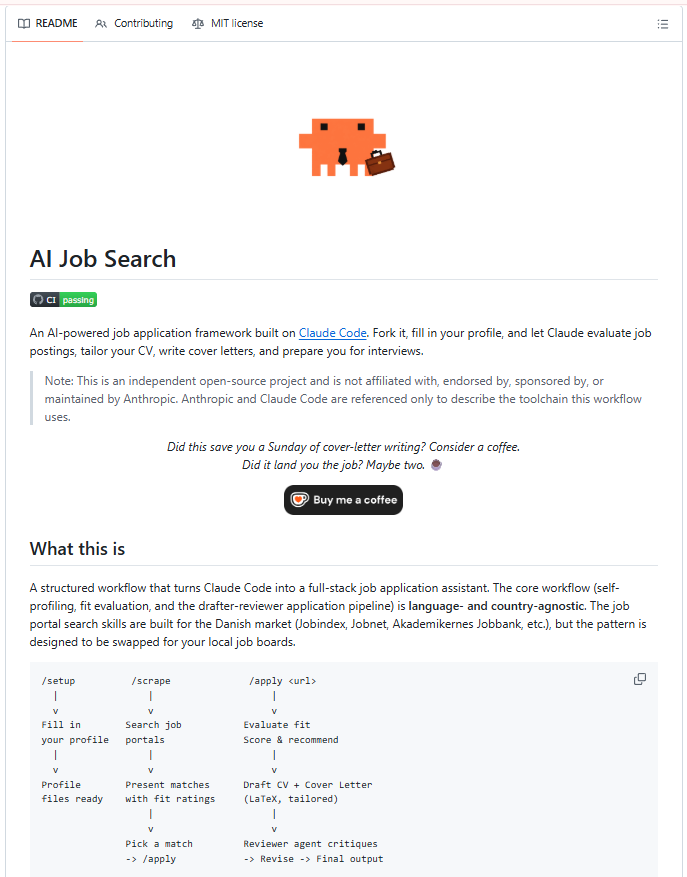
| AI Job Search | MadsLorentzen | Claude Code workflow that scrapes jobs, ranks fit, drafts CVs and cover letters, and runs reviewer plus ATS checks | One-resume-for-all applications and manual tailoring | Claude Code, Python, Bun CLIs, LaTeX, pdftotext | Beta | repo, post |
| Tapestry Skills | michalparkola | Skill pack that turns URLs, transcripts, and articles into action plans | Passive link saving and manual extraction | Claude Code skills, yt-dlp, Whisper fallback, Readability/trafilatura | Shipped | repo, post |
| opencode-status-bar | ardith666 | macOS menu bar app that shows OpenCode state and permission prompts | Constant terminal checking during long runs | Swift 5, Bun/TypeScript, macOS | Shipped | repo, post |
| Talos memory layer | @talosbuildss | Graph-based memory layer that indexes files, symbols, and relationships to answer why-questions | Existing codebase tools fail on historical or causal questions | Custom parser, graph store, unit tests | Alpha | post |
| Understand Anything | Egonex-AI | Plugin that turns codebases and docs into an interactive knowledge graph | Onboarding into very large repos and doc sets | Multi-agent analysis, graph pipeline, Claude Code/Codex/Copilot/Gemini integrations | Shipped | repo, post |
The largest build cluster was clearly memory and continuity. @tom_doerr shared (17 likes, 3,634 views, 19 bookmarks) Citadel as the “operating layer” for Claude Code and Codex, and the repo made the pitch concrete: durable project memory, plain-English workflow routing, lifecycle safety hooks, and /cost telemetry. @taranjeetio introduced (16 likes, 2 replies, 4 quotes, 785 views) openmemory v2 because even trying GPT-5.6 should not force people to abandon the best sessions they had elsewhere.
The second build pattern was workflow packaging. @Shruti_0810 shared (6 likes, 2 replies, 907 views) AI Job Search as a Claude Code-driven job application pipeline, and the external writeup showed why it resonated: /setup, /scrape, /rank, and /apply form a repeatable process with a second reviewer agent, ATS extraction, and PDF compilation instead of one-off prompting. @DanKornas shared (1 reply, 630 views, 3 bookmarks) Tapestry Skills for the same reason from a different angle: learning links become extraction plus action planning, not a dead bookmark.
OpenOPC pushed the same idea further up the abstraction stack. @ScriptByAI shared (2 likes, 2 replies, 28 views) a system that turns one goal into a staffed AI company with org charts, managers, role memory, and dependency-aware task flow. Its article and repo showed this was not just branding: it includes recruiter, PM, developer, reviewer, and integration roles that can delegate work into Claude Code, Codex, Cursor, or OpenCode.

At the smaller end of the stack, @QCXINT_ shared (5 likes, 380 views, 4 bookmarks) opencode-status-bar, and @thdxr showed (213 likes, 11 replies, 12,259 views, 12 bookmarks) OpenCode posting World Cup updates into Slack without a separate app. Together, those posts showed a repeated pattern: once agents can run for a while, builders immediately start adding visibility, notifications, and output channels around them.
6. New and Notable
Repo-level Copilot onboarding got simpler
@GHchangelog announced (10 likes, 1 reply, 1,323 views, 5 bookmarks) that Copilot can now generate a high-level repository overview from the repo home page, summarizing purpose, stack, and contribution guidance. It is a small feature compared with the GPT-5.6 launch, but it targets a real adoption bottleneck: first-contact understanding of an unfamiliar codebase.
Guardrails are starting to look like standalone products
@agentguardsco pitched (1 like, 2 replies, 2,239 views) AgentGuard as one pre-execution policy layer for Claude Code, Gemini CLI, GitHub Copilot, Codex, and generic gateway traffic, while @Pavlove500 announced (7 likes, 2 replies) that Latch had opened access to every user. The notable part is not the branding; it is that multiple builders now assume “approval” must be externalized into a dedicated control surface.

Agent runs are escaping the terminal
@thdxr showed (213 likes, 11 replies, 12,259 views, 12 bookmarks) OpenCode wiring itself into Slack for live updates, and @QCXINT_ shared (5 likes, 380 views, 4 bookmarks) a menu-bar status app for OpenCode. These are lightweight projects, but they point to the same operational truth: once agent sessions get longer, people want ambient status, notifications, and collaborative visibility.
7. Where the Opportunities Are
[+++] Cross-harness memory and repo understanding — The clearest multi-post opportunity was preserving context across sessions, tools, and codebases. @taranjeetio introduced (16 likes, 2 replies, 4 quotes, 785 views) openmemory v2, @tom_doerr shared (17 likes, 3,634 views, 19 bookmarks) Citadel, @talosbuildss shared (4 likes, 14 views, 3 bookmarks) a why-focused memory layer, and @0xProbabillity highlighted (3 likes, 79 views) Understand Anything. The pain is direct and repeated: users lose context when they change harnesses, threads, or repositories, and existing tools still answer structure questions better than history or intent questions.
[+++] Honest permissioning and policy controls — Security evidence pointed at a real market, not a theoretical one. @Hiteshdotcom summarized (93 likes, 16 replies, 3,412 views, 7 bookmarks) GitLost, @DFIR_Radar reported (2 likes, 2 replies, 191 views) GhostApproval, and @AISecHub linked (12 likes, 577 views, 10 bookmarks) workflow-jailbreak results. The matching responses from @agentguardsco pitched (1 like, 2 replies, 2,239 views) and @Pavlove500 announced (7 likes, 2 replies) show that builders already see a product wedge in pre-execution checks, least privilege, and external approval surfaces.
[++] Spend, quota, and host-selection control planes — @bridgemindai compared (438 likes, 64 replies, 22,546 views, 27 bookmarks) banked Codex resets against multiple Claude Code subscriptions, @ASalvadorini complained (2 likes, 3 replies, 468 views) about Antigravity quotas, and @code shipped (180 likes, 13 replies, 20,637 views, 60 bookmarks) in-editor cost visibility. The pattern is stable: model quality matters, but people are making daily decisions based on session longevity, reset timing, and spend transparency.
[+] Domain-specific workflow packs — @Shruti_0810 shared (6 likes, 2 replies, 907 views) AI Job Search, @DanKornas shared (1 reply, 630 views, 3 bookmarks) Tapestry Skills, @ScriptByAI shared (2 likes, 2 replies, 28 views) OpenOPC, and @apify shared (5 likes, 2 replies, 234 views) an Antigravity lead-gen workflow. Together they suggest room for many more vertical packs where the winning feature is not raw intelligence but reliable structure, reviewer loops, and handoff artifacts.
8. Takeaways
- GPT-5.6 dominated by becoming a work-surface story, not just a model drop. @satyanadella said (1,057 likes, 74 replies, 113,497 views, 188 bookmarks) that Work IQ landed across Microsoft and GitHub surfaces, @github announced (148 likes, 7 replies, 23,432 views, 16 bookmarks) Sol/Terra/Luna in Copilot, and @testingcatalog reported (295 likes, 14 replies, 35,782 views, 57 bookmarks) a new ChatGPT Work workspace.
- Host economics mattered almost as much as raw model quality. @bridgemindai argued (438 likes, 64 replies, 22,546 views, 27 bookmarks) that banked Codex resets beat repeated Claude Code subscriptions, @israfill claimed (15 likes, 10 replies, 1,643 views, 8 bookmarks) Grok 4.5 could deliver cheap long-context experimentation, and @code shipped (180 likes, 13 replies, 20,637 views, 60 bookmarks) spend visibility directly into VS Code.
- High-autonomy agent work is real enough to impress, but still blocked by quotas, CAPTCHAs, and review overhead. @DFintelligence showed (178 likes, 15 replies, 18,844 views, 165 bookmarks) a 50-minute insurance workflow, @xdadevelopers documented (16 likes, 1 reply, 3,644 views, 4 bookmarks) an Antigravity-built microservice, and @ASalvadorini complained (2 likes, 3 replies, 468 views) that quota limits could make the same class of workflow unusable.
- The biggest safety failures now sit in the workflow layer around the model. @Hiteshdotcom summarized (93 likes, 16 replies, 3,412 views, 7 bookmarks) GitLost, @DFIR_Radar reported (2 likes, 2 replies, 191 views) GhostApproval, and @AISecHub linked (12 likes, 577 views, 10 bookmarks) workflow-jailbreak results that broke the promise of safe refusals.
- Builder energy is concentrating in the operating layer around frontier models. @tom_doerr shared (17 likes, 3,634 views, 19 bookmarks) Citadel, @taranjeetio introduced (16 likes, 2 replies, 4 quotes, 785 views) openmemory v2, @talosbuildss shared (4 likes, 14 views, 3 bookmarks) a why-focused memory layer, @DanKornas shared (1 reply, 630 views, 3 bookmarks) Tapestry Skills, and @Shruti_0810 shared (6 likes, 2 replies, 907 views) AI Job Search.