Twitter AI Coding - 2026-07-10
1. What People Are Talking About
1.1 The agent harness itself became the product (🡕)
Compared with July 9's launch-heavy GPT-5.6 discussion, July 10 moved one layer outward into the operating surfaces around agents. The strongest posts were not just “new model” posts; they were concrete looks at betas, automations, validation loops, desktop wrappers, and orchestrators that make long-running coding sessions manageable. At least six retained items pointed at the same shift from raw capability to usable workflow.
@thdxr opened (353 likes, 43 replies, 16,741 views, 103 bookmarks) OpenCode 2.0 beta with unusually explicit caveats: separate data storage, possible wipes, broken features, a not-final v2 API, and built-in skills. The beta docs reinforced that this was a real transition and not just a teaser: install currently goes through @opencode-ai/cli@next, the temporary binary is opencode2, and package-manager installs are the only supported path for now.
@burkeholland showed (18 likes, 3 replies, 1,756 views, 6 bookmarks) the GitHub Copilot App triaging Gmail every morning, auto-taking actions above a 95% confidence threshold and updating its own learnings.txt from feedback. That was one of the clearest “agent as routine operator” examples in the set.

@JamesMontemagno asked (19 likes, 2,902 views, 6 bookmarks) the Copilot App to walk his Copilot SDK workshop like a user, open issues, and validate every part of the flow; the linked repo describes a hands-on SDK workshop with an accessibility report built on Playwright MCP. @GithubProjects highlighted (4 likes, 2,361 views, 1 bookmarks, 2 retweets) CodeNomad as a desktop cockpit around OpenCode, and the public repo frames it as a premium workspace with multi-instance sessions, remote access, git worktrees, and sidecars.
Discussion insight: Replies on the OpenCode beta post were not arguing about whether agent-native terminals matter. They immediately tested where the edges were: temporary docs, subagent hangs, and whether v2 was TUI-only. The interest was real; so was the expectation that these surfaces would still break in public.
Comparison to prior day: July 9 was about GPT-5.6 showing up across Microsoft, GitHub, and ChatGPT Work. July 10 was about what people actually do once the launch-day page closes and the harness has to run inbox triage, validate workshops, or coordinate multiple sessions.
1.2 Google and Meta were competing with full stacks, not just standalone models (🡕)
The second major cluster kept the model race in view, but the public evidence was mostly about packaging, rollout surfaces, and connected ecosystems. People were comparing how complete each stack looked: models, IDEs, agent APIs, skills, credits, and product surfaces all bundled together.
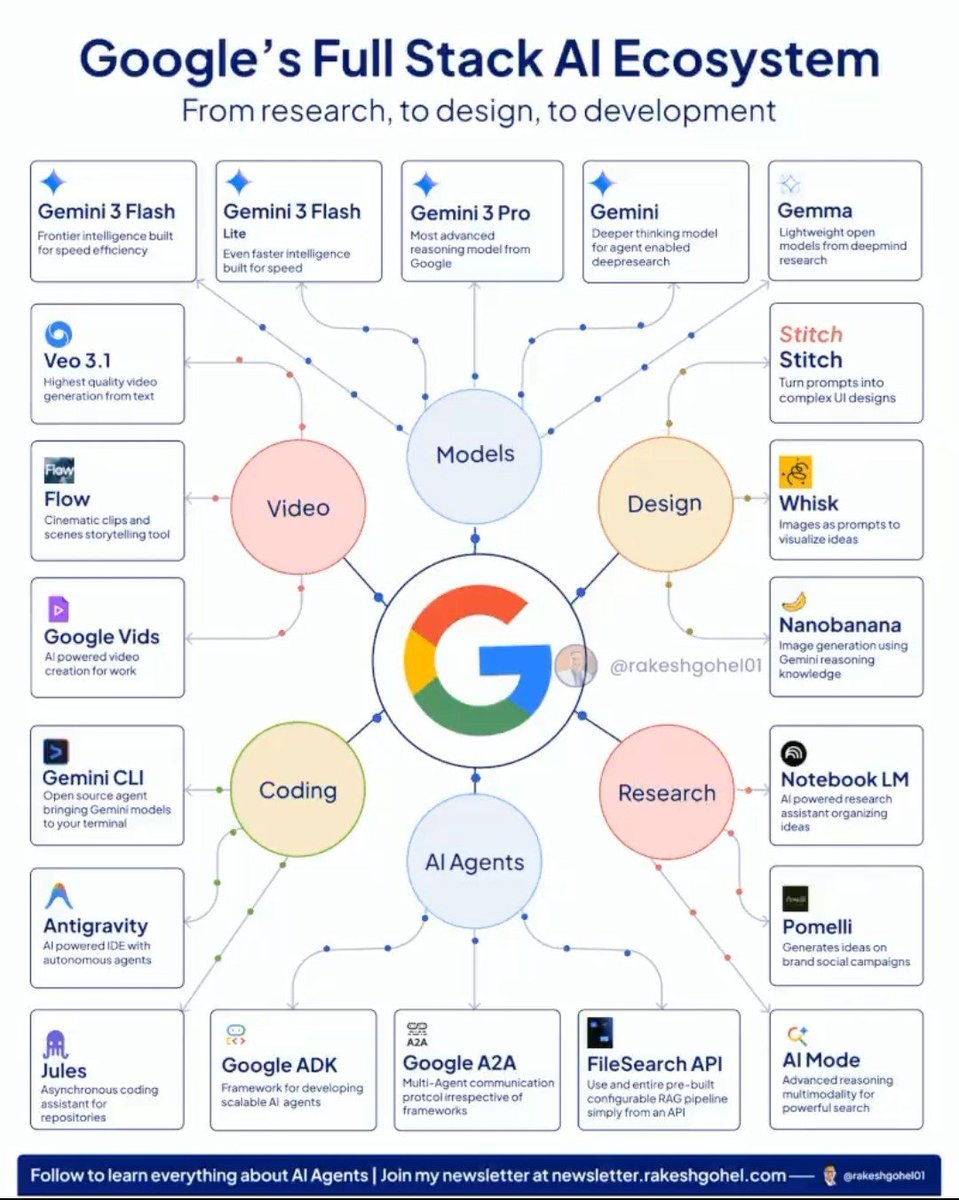
@RamSingh_369 argued (85 likes, 20 replies, 976 views, 17 bookmarks) that Google was trying to own the “entire AI Agent ecosystem,” and the attached map made that claim concrete by grouping Gemini, Gemma, Veo, Stitch, NotebookLM, Gemini CLI, Antigravity, Jules, ADK, A2A, and FileSearch API into one visual stack.
@pamelafox reported (11 likes, 2 replies, 678 views, 2 bookmarks) that GPT-5.6 Sol, Terra, and Luna were already visible in both Microsoft Foundry and GitHub Copilot in VS Code, and her screenshots added the rollout proof plus Sol pricing/configuration details. On the Meta side, @Rakib_Web3 claimed (7 likes, 3 replies, 184 views, 2 bookmarks) Muse Spark 1.1 was landing around 80% on SWE-bench and Terminal-Bench at roughly one-tenth the listed cost of Fable 5 or GPT-5.5, while @StudentOffersHQ shared (4 likes, 1 replies, 265 views, 1 bookmarks) that Meta Model API was launching with $20 in free developer credits for Muse Spark experimentation.

@Reuters reported (6 likes, 6 replies, 21,808 views, 3 bookmarks) that ChatGPT Work was being positioned for white-collar workers who want coding power without the same sticker shock. A lower-signal but telling companion post came from @GamsGo_Global saying (1 likes, 1 replies, 30 views, 1 bookmarks) that the bigger story was OpenAI turning AI into a “complete work layer,” then summarizing plugins, sites, scheduled tasks, and desktop app packaging in one card.
Discussion insight: The strongest posts did not frame “winning” as one benchmark line. They framed it as ecosystem completeness: where the model is hosted, what credits are available, what agent runtime exists around it, and how many related tools already speak the same language.
Comparison to prior day: July 9 already had ecosystem talk, especially around Microsoft and Google. July 10 advanced that from narrative to receipts: actual Foundry screenshots, actual API credits, and actual architecture diagrams.
1.3 Skills, datasets, and harness packs kept turning into first-class products (🡕)
Another clear shift was that people were no longer just sharing prompts or isolated repos. They were shipping installable skill bundles, harness “operating systems,” and agent-trace datasets that treat the coding workflow itself as the product.
@HowToPrompt__ promoted (6 likes, 3 replies, 744 views, 8 bookmarks) ECC as “the operating system for AI agent harnesses,” and the public repo backs that framing with 228,293 stars plus a workflow/memory/security stack spanning many coding clients. @chenzeling4 highlighted (3 likes, 226 views, 5 bookmarks, 1 retweets) Nature Skills, and the public repo describes a 17-skill bilingual research pack for literature search, writing, review simulation, plotting, citation audit, and revision responses across Claude Code, Codex, OpenClaw, OpenCode, and Hermes.

@aquiles_ai introduced (1 likes, 1 replies, 18 views, 1 bookmarks) Alexander-Agentic as a 10,852-example agent-trace dataset, with attached charts breaking out harness usage and model distribution. @WalrusProtocol announced (13 likes, 2 replies, 4,146 views, 1 bookmarks) Walrus Agent Skills with a direct install command, and @apify showed (6 likes, 2 replies, 320 views, 2 bookmarks) the same pattern from the tooling side by wiring Apify actors into Antigravity.
Discussion insight: This cluster pointed to a maturing distribution pattern. Instead of telling users “here is a cool model,” builders increasingly said “here is the workflow pack, skill library, dataset, or harness layer you can install today.”
Comparison to prior day: July 9 already had orchestration and memory wrappers. July 10 broadened that into industrialized workflow distribution: whole harness OSes, whole repo-shaped skill libraries, and public trace corpora for future tuning.
1.4 Trust problems moved from raw model quality to quotas, boundaries, and buried controls (🡒)
The last major theme was operational trust. Many complaints were not that the model was dumb. They were that the host product imposed the wrong limit, hid the relevant control, or ignored the intended mode.
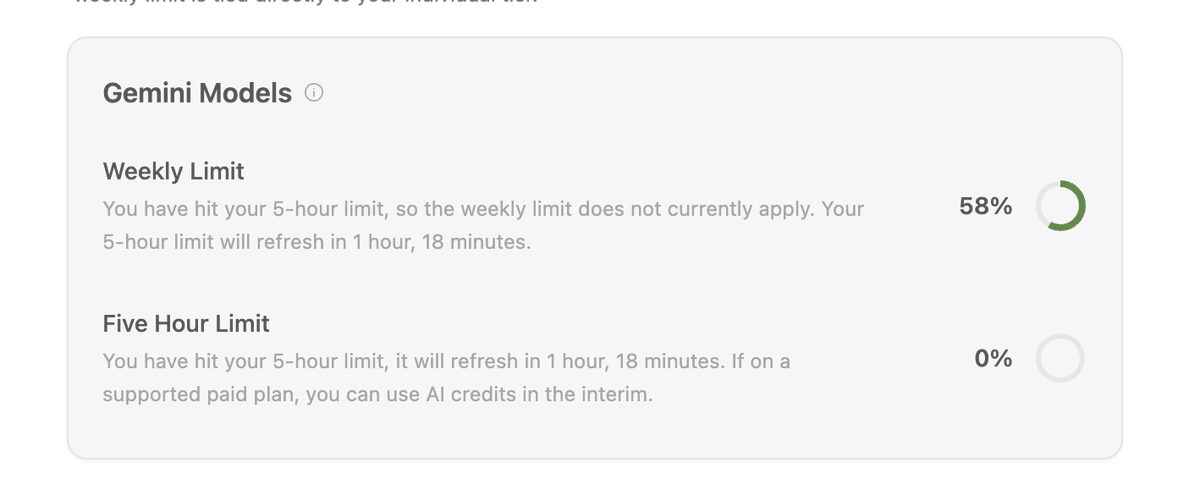
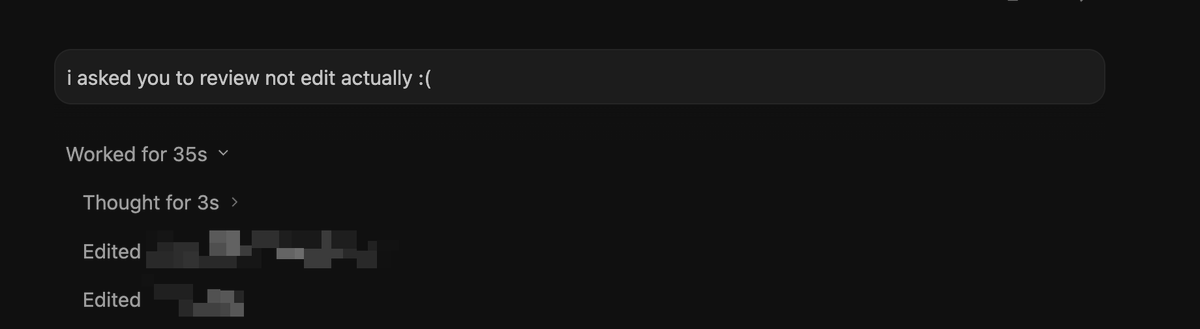
@ASalvadorini showed (4 likes, 2 replies, 252 views, 1 quotes) an Antigravity/Gemini state where the five-hour limit was fully exhausted even though 58% of weekly quota remained. @jc_coder1 complained (2 replies, 95 views) that Antigravity edited files after being asked to “review not edit actually,” and @gavinpurcell argued (3 likes, 2 replies, 257 views) that Claude’s usage tab was hidden too deep compared with Codex.
@Geebonics said (4 likes, 2 replies, 390 views) Codex had effectively disappeared from the mobile app until he realized it had been moved under a new “Remote” tab, and @jfversluis asked (2 likes, 2 replies, 196 views) for a Copilot desktop view that shows every open PR session and the latest status in one place. The common thread was not lack of intelligence; it was missing visibility into what the agent was doing, what state it was in, and how much room was left.
Discussion insight: The community kept demanding the same thing in different words: make the control plane visible. That meant showing quota, mode, review state, unresolved threads, and whether the agent was allowed to act or only inspect.
Comparison to prior day: July 9's trust discourse leaned toward security failures and misleading approvals. July 10 stayed on trust, but in everyday operator terms: hidden usage panels, mis-scoped actions, and session state that was too hard to inspect.
2. What Frustrates People
Limits and usage visibility still interrupt real work
Severity: High. @ASalvadorini showed (4 likes, 2 replies, 252 views, 1 quotes) that hitting Antigravity's five-hour cap could block work even while weekly quota remained, and @LearnInvest2026 shared (1 likes, 2 replies, 86 views) screenshots of GPT-5.6 Sol reasoning settings, remaining quota, extra resets, and cache-hit economics because those controls were already central to how he judged the launch. @gavinpurcell argued (3 likes, 2 replies, 257 views) that Claude's usage panel being buried behind the avatar menu was a UX mistake precisely because he checks it “all the time.” The coping pattern was to watch quotas manually, compare hosts by runway instead of benchmark, and favor products that expose spend or reset state prominently. This is worth building for because session continuity is still gated by hidden or mismatched controls.
Review-only, state-tracking, and mode boundaries still break too easily
Severity: High. @jc_coder1 complained (2 replies, 95 views) that Gemini in Antigravity edited files after being told only to review them, and the screenshot made the failure explicit rather than hypothetical. @jfversluis asked (2 likes, 2 replies, 196 views) for a Copilot desktop view that rolls up open PRs with the latest status and unresolved review threads, while @JamesMontemagno used (19 likes, 2,902 views, 6 bookmarks) the Copilot App to walk his workshop and file issues because he still needed explicit external validation of what the agent broke or skipped.
@ArghZero proposed (2 replies, 15 views) “PACU,” short for pause and check understanding, as a manual workaround: force the agent to restate the task before doing any work. This is worth building for because the most expensive failures were not syntax errors; they were “wrong mode, wrong action, wrong state” failures that users only noticed after time had been spent.
Surface sprawl still makes product boundaries hard to understand
Severity: Medium. @Reuters reported (6 likes, 6 replies, 21,808 views, 3 bookmarks) that ChatGPT Work was meant to bring coding power to white-collar workflows without the same sticker shock, while @GamsGo_Global summarized (1 likes, 1 replies, 30 views, 1 bookmarks) the same shift as OpenAI becoming a “complete work layer” of plugins, sites, scheduled tasks, and desktop tools. Yet @Geebonics said (4 likes, 2 replies, 390 views) he thought Codex had vanished from mobile before discovering it had effectively been moved under “Remote,” and replies to @satyanadella included (1,748 likes, 105 replies, 212,023 views, 290 bookmarks) people saying stronger reasoning claims mattered less than fixing memory and product confusion. This is worth building for because users still spend time figuring out where an agent lives, what it is called, and which interface owns which job.
3. What People Wish Existed
A single control tower for sessions, PRs, and long-running agent work
The clearest practical wish was not “give me another model.” It was “show me the state of the work I already delegated.” @jfversluis asked (2 likes, 2 replies, 196 views) for a Copilot desktop view that shows every still-open PR session and its latest state in one place, while GitHub’s own changelog said the latest GitHub Mobile build had just added filters for active sessions, status, repository, type, agent, and needs-attention sorting. The public CodeNomad repo and the @GithubProjects post (4 likes, 2,361 views, 1 bookmarks, 2 retweets) resonated for exactly this reason: people want session management, remote access, and one cockpit around longer coding runs. Opportunity: Direct.

Better “stop, restate, then act” safeguards
People repeatedly asked for a lightweight workflow that prevents expensive misunderstandings before an agent touches files. @ArghZero proposed (2 replies, 15 views) PACU — pause and check understanding — specifically so agents restate the mission before they start a long coding tear, and @jc_coder1 showed (2 replies, 95 views) why that matters after Antigravity edited files during what was supposed to be a review. @JamesMontemagno using (19 likes, 2,902 views, 6 bookmarks) the Copilot App to validate a workshop and open issues expressed the same need in more operational form: verify first, then trust the run. Opportunity: Direct.
Reusable domain skills instead of one-off prompting
The appetite for installable workflow packs was obvious. @WalrusProtocol shared (13 likes, 2 replies, 4,146 views, 1 bookmarks) Walrus Agent Skills as a drop-in package for multiple coding agents, @apify showed (6 likes, 2 replies, 320 views, 2 bookmarks) an Antigravity lead-gen flow, and @chenzeling4 highlighted (3 likes, 226 views, 5 bookmarks, 1 retweets) Nature Skills as a 17-skill research bundle. People were not asking for an abstract “better AI.” They were asking for pre-built, reusable workflows that already know a domain’s steps, artifacts, and review points. Opportunity: Competitive.
4. Tools and Methods in Use
| Tool | Category | Sentiment | Strengths | Limitations |
|---|---|---|---|---|
| GPT-5.6 Sol / Terra / Luna | Frontier model family | (+/-) | Visible in Foundry and Copilot; clear host-side tiers; Sol already attracting colleague switches from Opus | Users still judged it through host limits, confusing surface boundaries, and hidden usage panels |
| ChatGPT Work / Codex surfaces | Workspace + agent surface | (+/-) | Broader work packaging around plugins, sites, scheduled tasks, desktop, and remote execution | Users still struggled to tell where Codex ended and Work/Remote began |
| Google Antigravity | Agent IDE / platform | (+/-) | Strong ecosystem fit, spec-first workflow, Managed Agents API, and visible integration momentum | Five-hour quota pain, review-mode failures, and a higher planning tax than direct editing |
| Muse Spark 1.1 / Meta Model API | Frontier model + API | (+/-) | Cheap experimentation story, public-preview API credits, and strong benchmark-oriented marketing | Most evidence was still early and heavily framed through promotional comparisons |
| GitHub Copilot App | Agent workspace / automation | (+) | Concrete automations, canvases, workshop validation, and growing session-management features on mobile | Users still wanted better PR rollups, repo targeting, and clearer session-state visibility |
| OpenCode 2.0 | Terminal agent / TUI | (+/-) | Public beta momentum, built-in skills, strong UX enthusiasm, and measurable cold-start performance work | Beta caveats were explicit: possible data wipes, plugin incompatibilities, unfinished APIs, and temporary docs |
| Claude Code | CLI coding agent | (+/-) | Strong design judgment in direct comparison, large command surface, and rich plugin/skill ecosystem growth | Usage remains a frequent complaint, and users are inventing PACU-style safeguards to reduce misunderstandings |
| Agent Zero | Orchestrator / framework | (+) | Expanding orchestrator that can command multiple coding clients with rich settings, plugins, and interface controls | More configuration surface means more product complexity to learn and manage |
| ECC | Harness operating layer | (+) | Massive install base, explicit skills/agents/commands framing, and cross-client workflow packaging | The scope is large enough that it behaves more like a system than a lightweight plugin |
| Nature Skills | Skill pack | (+) | Focused bundle for research-heavy coding and writing tasks across several agent hosts | It is specialized by design, so its value depends on matching the right scientific workflow |
Overall, the satisfaction spectrum still centered on “useful, but only with the right host surface.” People were willing to try GPT-5.6, Muse Spark, and Antigravity, but they kept measuring them through quota behavior, rollout friction, and workflow visibility rather than raw benchmark scores alone. The most common workarounds were explicit budget discipline (working-paper guidance), PACU-style restatement checks (post), and adding wrappers or dashboards around the core harness instead of trusting the base surface.
Migration patterns were pragmatic. @pamelafox said (11 likes, 2 replies, 678 views, 2 bookmarks) colleagues were already switching from Opus to Sol in Microsoft-hosted surfaces, while the XDA comparison still favored Claude Code over Codex and Antigravity on the same website brief. Competitive dynamics therefore looked split: models were still fighting on cost/performance, but the winning product story was increasingly about whether the host gave users enough control, visibility, and reusable workflow structure.
5. What People Are Building
| Project | Who built it | What it does | Problem it solves | Stack | Stage | Links |
|---|---|---|---|---|---|---|
| OpenCode 2.0 | @thdxr | Beta terminal agent with built-in skills and a new v2 runtime | Aging plugin/API model and limited workflow ergonomics in earlier OpenCode | TUI, built-in skills, multi-provider LLM connections | Beta | docs, post |
| CodeNomad | NeuralNomadsAI | Desktop cockpit around OpenCode with session management, remote access, and worktree-aware UI | Long AI coding sessions are hard to monitor from a raw terminal alone | TypeScript, OpenCode, git worktrees, sidecars | Beta | repo, post |
claude-video /watch |
bradautomates | Plugin/skill that lets coding agents inspect video frames and transcripts directly | Transcript-only summaries miss what was actually on screen | Python, yt-dlp, ffmpeg, captions/Whisper fallback, Claude Code/Codex/Cursor/Copilot/Gemini CLI | Shipped | repo, post |
| BeaverMath | CharlesScottBradley | Terminal math renderer that turns LaTeX into readable output without mutating source text | Raw ASCII math is hard to read inside agent terminals | Rust, terminal rendering, LaTeX parsing | Alpha | repo, post |
| ECC | affaan-m | Agent-harness operating system with skills, agents, memory, and security patterns | Ad-hoc harness setup and inconsistent agent workflows | JavaScript, shell, TypeScript, Python, Go, Java | Shipped | repo, post |
| Nature Skills | Yuan1z0825 | 17-skill research pack for literature search, writing, plotting, and review workflows | Academic and scientific tasks need stronger task structure than generic coding prompts | Python, markdown skills, Claude Code/Codex/OpenClaw/OpenCode/Hermes | Shipped | repo, post |
| Agent Zero v2.4 | agent0ai | Orchestrator that can command several coding clients and expose a broader agent control surface | Teams want one orchestrator above multiple harnesses instead of one harness per workflow | Python, Linux desktop environment, plugins, MCP/A2A, multi-client orchestration | Shipped | repo, post |
| Alexander-Agentic | @aquiles_ai | Public dataset of 10,852 agent traces formatted for training agentic models | Frontier-model traces and harness distributions are usually private | Dataset, Transformers messages schema, multi-harness traces | Shipped | post |
| managed-antigravity-gas | codeas | Skill-driven workflow for building and deploying Google Apps Script through Antigravity and Managed Agents API | Turning one-off Workspace automations into serverless, repeatable agent workflows | Python, custom skills, clasp, Gemini Managed Agents API, Google Apps Script |
Alpha | article, repo, post |
| Singularity Grid v1.7.6 | @x402_Layer | OpenAI-compatible tool-calling grid with MCP access and deployment hooks | Builders want tool-calling infrastructure beyond one hosted assistant | Tool calling, MCPs, AI deployment, managed context windows | Shipped | post |
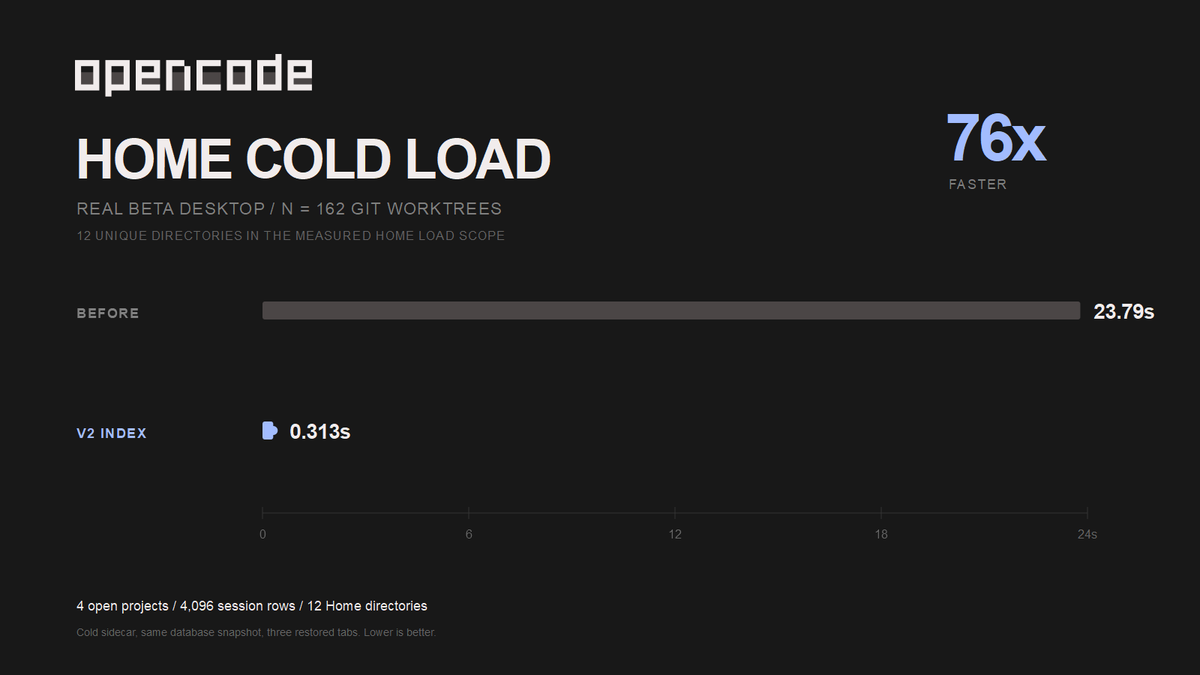
The biggest build cluster was clearly the operating layer around existing coding agents. @thdxr opening (353 likes, 43 replies, 16,741 views, 103 bookmarks) OpenCode 2.0 beta, @GithubProjects highlighting (4 likes, 2,361 views, 1 bookmarks, 2 retweets) CodeNomad, @Agent0ai shipping (5 likes, 1 replies, 288 views, 1 bookmarks) Agent Zero v2.4, and @HowToPrompt__ boosting (6 likes, 3 replies, 744 views, 8 bookmarks) ECC all pointed to the same pattern: the market is thickening around the harness, not just the model. Even the smaller OpenCode performance update from @LukeParkerDev showing (15 likes, 4 replies, 1,157 views, 1 bookmarks) a cold-start drop from 23.79s to 0.313s fit this theme — product energy was going into operating the agent smoothly.

Another cluster was workflow packaging for specific jobs. @apify showed (6 likes, 2 replies, 320 views, 2 bookmarks) lead-gen through Antigravity and MCP actors, @ivankutil mapped (2 likes, 121 views, 1 bookmarks) a serverless Apps Script path through Managed Agents API, @WalrusProtocol published (13 likes, 2 replies, 4,146 views, 1 bookmarks) a skills distribution page, and @chenzeling4 surfaced (3 likes, 226 views, 5 bookmarks, 1 retweets) a research-heavy skill pack with large public adoption. The public evidence suggests people are no longer satisfied with one big general-purpose assistant; they want installable domain workflows.

Small but concrete utility builds also kept surfacing. @beaverd built (43 likes, 5 replies, 3,203 views, 9 bookmarks) BeaverMath to make equations readable inside terminals, while @_vmlops shared (1 likes, 1 replies, 144 views, 1 bookmarks) a VibeJam winner where an experienced iOS engineer used Claude Code to build a capybara food-delivery game and paired it with Suno, ElevenLabs, and Tripod3D. Those are very different projects, but the trigger was the same: once the agent can do more of the work, builders start closing the small ergonomic gaps around it.

The more defensive build pattern also mattered. @DarkWebInformer linked (44 likes, 7,607 views, 35 bookmarks, 8 retweets) RemoveWindowsAI, and the public repo has 12,293 stars and frames itself around disabling Copilot, Recall, Input Insights, and related Windows AI components. Even that anti-AI script belongs in the builder landscape because it shows that some of today’s most visible “AI coding” projects are really control or removal layers around AI surfaces people no longer want.
6. New and Notable
Reflective memory stopped being a vague aspiration
@antigravity pointed (19 likes, 7,250 views, 19 bookmarks, 2 retweets) to a reflective-memory build series that explicitly separated learning the user, learning the job, and defining the boundary between agent and harness. The notable part was not just “memory matters” — that was already known — but that the implementation discussion had become structured enough to package as an architecture and build guide.
Multi-agent oversight screens became part of the story
@SPAC89 said (3 likes, 1 replies, 918 views, 2 bookmarks) twelve hours with GPT-5.6 Sol Ultra had changed his workflow, and the attached dashboard mattered more than the rhetoric: it showed concurrent auditors, judges, a runner, and a pipeline architect in one board. That same “control room” logic also showed up in GitHub’s mobile changelog, which added filters and sorting specifically for growing Copilot session lists.
OpenCode’s performance work looked measurable, not rhetorical
@LukeParkerDev reported (15 likes, 4 replies, 1,157 views, 1 bookmarks) that OpenCode Desktop 2 home loading had been reworked, and the attached benchmark slide quantified the improvement: 23.79 seconds down to 0.313 seconds across a desktop setup with 162 git worktrees. That was a useful reminder that agent tooling still wins or loses on mundane latency, not only on reasoning benchmarks.
7. Where the Opportunities Are
[+++] Session-control and review-state dashboards — Evidence came from multiple directions: @jfversluis wanting a merged PR/session state view, GitHub’s mobile filters update, @gavinpurcell complaining that usage was buried, @Geebonics being confused by the new Remote tab, and @SPAC89 making the many-agent control board visible. The gap is strong because users already delegate work; they just cannot inspect it cleanly enough.
[+++] Domain-specific skills and workflow packs — @WalrusProtocol, @apify, @chenzeling4, and @ivankutil all showed the same demand from different angles: people want workflows that already know the domain steps, tools, and handoff artifacts. This is strong because the market signal was not one repo or one ecosystem; it was repeated packaging pressure across research, storage, lead generation, and Google Workspace automation.
[++] Spend, quota, and host-selection control planes — @ASalvadorini showed a five-hour cap blocking work even with weekly room left, @LearnInvest2026 surfaced reset and cache metrics as part of launch evaluation, and @pamelafox plus @StudentOffersHQ showed how rollout and credits change host choice. The opportunity is moderate because many tools already expose parts of this, but few appear to unify usage, resets, pricing, and model routing cleanly.
[+] Agent-trace datasets and evaluation artifacts — @aquiles_ai publishing Alexander-Agentic, @zenorocha surfacing a Fable 5 benchmark with tool-pick outcomes, and the XDA three-way website comparison all pointed to the same emerging need: shared, public evidence for how these systems actually behave. This is still early, but the signal is rising because builders are starting to package traces, scorecards, and comparison artifacts as products in their own right.
8. Takeaways
- The conversation moved from launch-day model hype to operator surfaces. OpenCode 2.0 beta, Copilot automations, workshop validation, and CodeNomad all got more attention than another abstract benchmark claim. (source)
- Full-stack ecosystem framing got stronger on both the Google and Meta sides. The evidence was not just rhetoric; people posted rollout screenshots, architecture diagrams, and API-credit offers that made the packaging tangible. (source)
- Trust failures were mostly about control planes, not raw intelligence. Users complained about five-hour caps, hidden usage panels, review-only runs that turned into edits, and mobile surfaces that renamed or buried core features. (source)
- Reusable workflow packs are becoming a real product category around coding agents. Nature Skills, ECC, Walrus Agent Skills, Apify MCP flows, and managed Antigravity/App Script setups all treated structured workflow distribution as the main value. (source)
- Public datasets and benchmarks are starting to matter as infrastructure, not just marketing. Alexander-Agentic and the new Fable 5 benchmark both turned agent behavior into shareable artifacts that others can inspect, compare, and build on. (source)