Twitter AI Coding - 2026-07-19
1. What People Are Talking About
1.1 Skills and specifications are being treated as the reusable layer around agents 🡕
The strongest practical theme was packaging repeatable engineering judgment rather than prompting a model from scratch. One high-engagement thread presented GitHub's Spec Kit as a six-step path from project constitution through specification, planning, tasks, and implementation, while a second thread treated agent skills as installable inventory. The evidence also shows that discovery does not solve quality control: the skills-directory author estimated that only about half of the catalogue was useful and singled out a smaller trusted core.
@DivyanshT91162 presented (124 likes, 6 replies, 11,538 views, 262 bookmarks) Spec Kit as a workflow for turning an idea into a living specification that multiple coding agents can execute. The Spec Kit repository describes the same open-source process and documents its constitution, specify, plan, tasks, and implementation stages; a reply added the important limitation that a drifting specification still causes agent errors.
@undefinedKi highlighted (89 likes, 20 replies, 8,833 views, 160 bookmarks) skills.sh as a cross-agent package manager and directory. Its attached directory snapshot is substantive: it organizes skills into planning, TDD, debugging, documents, design, and tooling rather than treating them as generic prompts.

Discussion insight: The practical disagreement was not over whether skills help; it was about curation. The skills.sh author said that the Anthropic, Vercel, and Obra material formed the dependable core, while the rest still needs filtering.
Comparison to prior day: The July 18 discussion had already elevated skills discovery. On July 19, the discussion added a clearer complementary pattern: skills package reusable procedures, while specifications constrain the work they are asked to perform.
1.2 Long-running agents are being framed as a planning and verification problem 🡕
Posts about loops, orchestration, and multi-model routing emphasized execution discipline over a single model winner. The concrete guidance was to use verifiable end states, inspect plans rather than accepting them wholesale, separate creator and verifier roles, and route work based on context, deployment, permissions, and reliability.
@petergyang shared (14 likes, 3 replies, 1,435 views, 9 bookmarks) an interview with a Claude Code team member on /loop, /goal, and workflows. The accompanying write-up says /goal needs a verifiable finish line, plans should be read manually, and separate creator and verifier sub-agents are useful; it also reports that Claude Code's system prompt was cut by 80%.
@prasad_pilla described (6 likes, 4 replies, 245 views) a software-factory approach where Claude and GPT are interchangeable execution backends for planning, repository reading, patches, review, testing, debugging, and handoffs. The Alan site presents model independence and SaaS, hybrid, on-prem, and air-gapped deployment as product choices, matching the post's emphasis on routing and operational reliability.
@Trion129 reported (3 likes, 1 reply, 167 views, 4 bookmarks) lower usage with oh-my-opencode-slim while keeping quality acceptable. Its repository documents specialized background agents, multi-model council runs, model presets, bundled verification skills, and configurable permissions; the usage claim itself remains one user's experience.
Discussion insight: The sharpest recurring constraint is not merely model quality. One Kimi CLI reply warned that loading more repository context can make an agent more confidently wrong when it stops exposing uncertainty.
Comparison to prior day: July 16 centered on independent grading, skills, and narrow delegation lanes. July 19 continued that direction with more operational detail: verifiable goals, explicit creator-verifier separation, model routing, and permission-aware orchestration.
1.3 Coding assistants are still being judged on interface capability and operational reliability 🡒
GitHub Copilot's planned markdown prompt composer, an XDA three-tool dashboard comparison, and user-reported Codex performance concerns kept the day grounded in the actual experience of using agents. The comparison evidence is narrow but specific: the same dashboard brief produced a fast but shallow Copilot result, a more complete but token-heavy Claude Code result, and the author's preferred Codex result.
@basiclines announced (97 likes, 7 replies, 20,012 views, 63 bookmarks) markdown prompting in early staff preview for the GitHub Copilot app. A related quote post says a more powerful prompt composer was scheduled next; replies asked what practical benefits richer prompting beyond images and attachments would provide.
@xdadevelopers compared (10 likes, 4,003 views, 2 bookmarks) Claude Code, Codex, and GitHub Copilot on one finance-dashboard brief. The linked comparison says Copilot was fastest but left static workflows, Claude Code was functionally deeper but slower and close to its usage limit, and Codex was the author's preferred balance of polish and completeness.
@jun_song amplified (54 likes, 21 replies, 6,149 views, 19 bookmarks) reports alleging Codex-related Mac lag and excess SSD writes. The linked Reddit report could not be independently retrieved, so this is a user-reported concern rather than a confirmed defect; its screenshot and replies make clear that users want an explanation and a reliable mitigation.

2. What Frustrates People
Agent outputs remain hard to trust without explicit verification
Severity: High. The loop discussion makes the failure mode specific: people can let an agent run longer, but that is not evidence that the result is correct. @petergyang shared (14 likes, 3 replies, 1,435 views, 9 bookmarks) guidance to plan by finding unknowns and to avoid simply glazing over an AI plan; the source article recommends a verifiable end state and separate creator and verifier agents. A Kimi CLI reply to @RituWithAI argued (9 likes, 4 replies, 243 views, 6 bookmarks) that larger repository context had made its agent more confidently wrong rather than sharper. The visible workaround is human review plus a separate evaluation pass; this is worth building for because it is a direct operational gap, not a request for another model.
Skill abundance creates a curation and trust problem
Severity: Medium. @undefinedKi promoted (89 likes, 20 replies, 8,833 views, 160 bookmarks) a catalogue of more than 930,000 skills, but a commenter immediately asked how many were actually useful. The author's own answer, that perhaps half are useful and a few publishers form the solid core, makes the coping strategy clear: users still need to sift the library or have another agent sift it. This is worth building for because distribution is present, but quality, provenance, and task-fit remain manual judgments.
Reliability worries can outweigh coding-assistant capability claims
Severity: High, but unverified. @jun_song reported (54 likes, 21 replies, 6,149 views, 19 bookmarks) user allegations that Codex overload causes Mac lag and SSD wear; one reply described overheating and a reinstall attempt. The linked report was unavailable for independent review, so the evidence does not establish causation, but it does establish that users are seeking a clear diagnosis and safe remediation rather than feature advice. This is worth building for as transparent agent-resource telemetry and support tooling.
3. What People Wish Existed
A trustworthy way to choose and install agent skills
The skills.sh thread shows a direct practical need for selection rather than a larger directory. @undefinedKi described (89 likes, 20 replies, 8,833 views, 160 bookmarks) package-style installation across many agents, while the discussion narrowed confidence to a few named publishers and suggested having Claude sift the catalogue. A useful missing layer would expose quality evidence, publisher provenance, compatible agents, permissions, and task triggers before installation. Opportunity: Direct.
Guardrails that keep specifications and long-running work on track
Spec Kit's structured stages and the Claude Code interview point to the same need: agent work should carry an understandable finish line from requirements through verification. @DivyanshT91162 shared (124 likes, 6 replies, 11,538 views, 262 bookmarks) a specification-first workflow, but a reply warned that spec drift still produces errors; @petergyang shared (14 likes, 3 replies, 1,435 views, 9 bookmarks) complementary advice to set verifiable goals and read the plan. The need is practical and urgent for people delegating multi-step work. Opportunity: Direct.
One operational layer for multi-model, multi-environment execution
@prasad_pilla said (6 likes, 4 replies, 245 views) that production differences show up in context, routing, local/cloud execution, authentication, permissions, and runtime startup rather than only in code-generation quality. @Trion129 added (3 likes, 1 reply, 167 views, 4 bookmarks) a personal report of lower usage with multi-model delegation. The need is a control surface that makes routing, cost, capability, and approval choices legible across agents. Opportunity: Competitive.
4. Tools and Methods in Use
| Tool | Category | Sentiment | Strengths | Limitations |
|---|---|---|---|---|
| Spec Kit | Specification-driven development | (+/-) | Documents a reusable constitution-to-implementation workflow that can work with different coding agents | A reply says specifications can drift and still yield agent errors |
| skills.sh | Agent skill registry/package manager | (+/-) | Installs, finds, lists, updates, and removes skills across multiple agents | The author estimates only about half of the catalogue is useful; curation remains necessary |
Claude Code /goal, /loop, and workflows |
Agent execution method | (+) | Uses verifiable endpoints, iterative planning, parallel tasks, and creator-verifier separation | Requires people to read plans and define an outcome that can actually be checked |
| Kimi CLI | Terminal coding agent | (+/-) | Supports terminal file edits, shell commands, web fetching, MCP, ACP, and autonomous planning | The repository is transitioning to Kimi Code CLI; a reply challenges the assumption that more context improves results |
| oh-my-opencode-slim | Multi-model agent orchestrator | (+) | Provides specialized background agents, model presets, a multi-model council, and configurable permissions | A lower-usage claim comes from one user rather than a controlled comparison |
| GitHub Copilot app prompt composer | Coding-agent interface | (+/-) | Adds markdown prompting in early preview, with a more capable composer planned | Replies ask for clearer evidence of practical benefits beyond richer input formatting |
| Codex, Claude Code, and GitHub Copilot comparison | Coding-agent comparison | (+/-) | Uses one identical dashboard brief to surface speed, functionality, design, and token-use tradeoffs | It is a single-author test on one application, not a general benchmark |
The satisfaction spectrum favored structured, multi-stage work over an allegiance to one model. The Claude Code interview recommends removing obsolete instructions and separating verification; the Alan practitioner account puts routing, permissions, deployment, and runtime reliability beside model choice. The visible migration pattern is toward using models as interchangeable lanes, while the main counterweight is the continuing need for human review, curation, and resource transparency.
5. What People Are Building
| Project | Who built it | What it does | Problem it solves | Stack | Stage | Links |
|---|---|---|---|---|---|---|
| Kimi CLI | @RituWithAI sharing MoonshotAI's project | Terminal agent that can edit code, run commands, fetch pages, plan, and connect through MCP and ACP | Offers a terminal-native coding-agent option with interoperability surfaces | Python CLI, Kimi models, MCP, ACP, OpenAI-compatible APIs | Shipped | Repo · Tweet |
| Flow Control | @thesherlocker | Configures one supported LoFree Flow Lite 84 keyboard through native macOS and WebHID interfaces | Supplies a configuration path where the keyboard lacks native VIA support | SwiftUI/AppKit, IOHID, WebHID, GPT-5.6 Sol/Codex Mode-assisted development | Alpha | Repo · Tweet |
| oh-my-opencode-slim | @Trion129 sharing the project | Routes codebase exploration, research, review, UI work, and scoped implementation among specialized agents | Lets users allocate quality, speed, and cost across models rather than forcing one model to do every task | OpenCode plugin, multi-model agents, skills, MCP, code-intelligence tooling | Beta | Repo · Tweet |
| Zeroprep | @ramsri_goutham and team | Generates an animated presentation as the speaker talks and exports it as PDF or PowerPoint | Removes advance presentation preparation for live talks | GPT-Realtime 2.1, Gemini 3.1 Flash Lite Image, React, HTML, CSS | Alpha | Tweet |
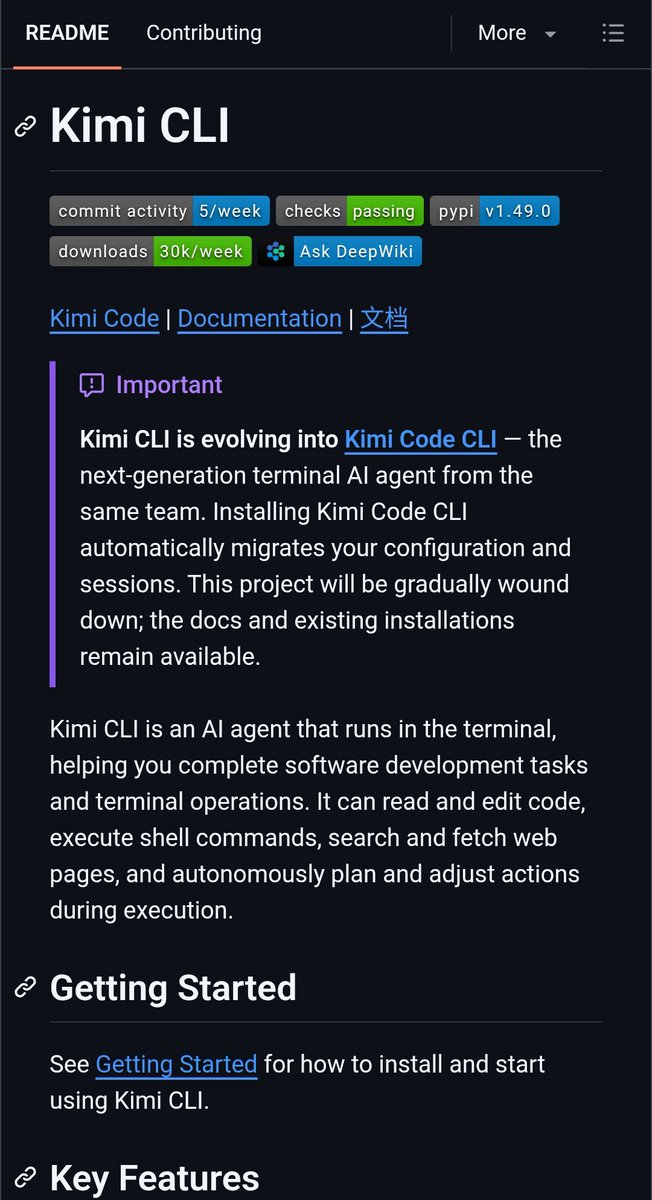
Kimi CLI is notable because its README confirms a usable terminal agent surface but also says the project is transitioning to Kimi Code CLI. The screenshot makes that migration and the agent's claimed terminal capabilities visible, while the reply thread supplies the necessary caution that long context should be stress-tested rather than assumed to improve correctness.
Flow Control is a more bounded build pattern: its README limits support to one observed keyboard variant, requires a wired connection, snapshots state before writes, verifies readback, and deliberately leaves out firmware flashing and other risky recovery operations. The repeated pattern across these projects is not raw code generation; it is placing agent capability inside a constrained product or delegation boundary.
6. New and Notable
Markdown prompting is coming to the GitHub Copilot app
@basiclines announced (97 likes, 7 replies, 5 quotes, 20,012 views, 63 bookmarks) that markdown prompting was available to staff in early preview and was coming to the broader Copilot app. A related quote post (25 likes, 1 reply, 3,115 views) says the app was getting a more powerful prompt composer. The signal matters because it shifts structured prompting from a plain-text convention into a first-class product surface, although the replies do not yet establish a clear user-visible payoff.
A controlled three-tool dashboard test surfaced different tradeoffs
@xdadevelopers shared (10 likes, 4,003 views, 2 bookmarks) a test using the same finance-dashboard requirements for Claude Code, Codex, and GitHub Copilot. The article gives the result more substance than a generic preference poll: Copilot was fastest, Claude Code produced deeper workflows but consumed more time and tokens, and Codex won that author's balance of finish and functionality. It is a narrow comparison, but it evaluates implementation depth rather than only a landing-page screenshot.
Hackathon projects are using multimodal real-time stacks
@ramsri_goutham announced (43 likes, 9 replies, 1 quote, 1,680 views, 17 bookmarks) a first-place Codex hackathon project, Zeroprep. The team says it listens to a talk, uses GPT-Realtime 2.1 to control visuals, produces asynchronous imagery with Gemini 3.1 Flash Lite Image, renders React/HTML/CSS scenes, and exports the result. The notable signal is the combination of speech understanding, image generation, and presentation rendering in a live workflow rather than a standalone chat interaction.
7. Where the Opportunities Are
[+++] Verification and drift control for delegated engineering work — Spec Kit's staged process, the warning about specification drift, the Claude Code advice to use verifiable goals and manual plan review, and the Kimi reply about confident errors all identify the same gap. Teams need a layer that can show whether work still matches the specification, what is uncertain, and what evidence supports completion.
[++] Skill registries with quality, provenance, and permission signals — The skills.sh thread shows demand for cross-agent installation and a broad library, while its own discussion says users cannot assume most entries are useful. A registry that exposes trusted maintainers, task applicability, agent compatibility, access scope, and outcome evidence would reduce the current manual filtering step.
[++] Multi-model routing with operational guardrails — The Alan practitioner description, oh-my-opencode-slim's specialized lanes, Kimi's interoperability, and the dashboard comparison all move model selection beyond a single leaderboard. The opportunity is a control plane that records task fit, cost, context, deployment, permissions, checks, and handoff outcomes.
[+] Agent resource and reliability observability — The user reports around Codex-related Mac lag and SSD wear are not independently confirmed, but they show demand for transparent process, I/O, thermal, memory, and background-task telemetry. A diagnostic surface that links resource behavior to a specific agent session could turn vague safety concerns into actionable evidence.
8. Takeaways
- The highest-signal workflow claim was specification-first, not prompt-first. Spec Kit's six visible stages and its substantial engagement show demand for reusable project constraints, while the reply about spec drift shows why those constraints need active checking. (source)
- Skills are becoming an installation unit for agent behavior, but the trust layer is incomplete. skills.sh offered package-style cross-agent distribution, and its author still said users need to sift the catalogue for a smaller useful core. (source)
- Long-running agents are being operationalized through verifiable goals and separate review. The Claude Code team interview favors explicit finish lines, manual plan inspection, and creator-verifier separation rather than blindly extending agent runtime. (source)
- Real-world coding-assistant choice is broader than code generation quality. One same-brief test differentiated speed, workflow completeness, visual finish, and token cost, while the software-factory account added routing, permissions, and runtime reliability. (source)
- Builders are applying agents to bounded products and orchestration systems. Flow Control limits a hardware configurator to a documented supported boundary, while Kimi CLI and oh-my-opencode-slim offer terminal and multi-agent execution surfaces. (source)