Twitter AI Coding - 2026-08-06
1. What People Are Talking About
1.1 Antigravity widened from demo surface to working agent platform (🡕)
At least five substantive posts made Antigravity the day's clearest Google-owned surface for AI coding, but the evidence split sharply between shipped artifacts and rumor traffic. The strongest items were open-source builds, command surfaces, and subagent methods; the highest-engagement side cluster was still unverified Gemini speculation.
@antigravity showed (697 likes, 22 replies, 33,039 views, 231 bookmarks) Gemma Translator, an offline translation device built with Antigravity. The thread replies gave the concrete architecture: Raspberry Pi 5 hardware, LiteRT-LM running Gemma 4 on-device, Moonshine speech recognition, Kokoro text-to-speech, and a React UI. The linked gemma-translator README matched those details and added deployment scripts, so this was a reproducible build pattern rather than a teaser.
@googlegemma amplified (675 likes, 28 replies, 47,612 views, 219 bookmarks) the same device and added that the code and STL files were open-sourced. That mattered because it turned the project from a single impressive thread into a Google-backed artifact other builders can inspect and recreate.
@googleaidevs shared (87 likes, 5 replies, 6,903 views, 68 bookmarks) a set of Antigravity commands for navigation, background tasks, utilities, and research subagents. Even though the linked X article was not publicly readable here, the public Antigravity CLI page corroborates the same terminal-first surface: slash commands, subagents, and configurable utilities.
@GoogleCloudTech highlighted (3 likes, 300 views) "Swarm Coding" as a subagent pattern inside Antigravity 2.0, and the quoted write-up described ephemeral specialists as a way to avoid memory dilution and split complex work. That was a smaller signal, but it reinforced the same shift from one big agent session toward managed, specialized workers.
@Mr_Salio circulated (297 likes, 66 replies, 35,650 views, 29 bookmarks) claims that Gemini 3.5 Pro was already accessible through Antigravity under another label. Unlike the items above, the attached image was only a branded title card and one reply directly said the release was not happening that day, so this cluster read as hype around the platform rather than concrete product evidence.
Discussion insight: The concrete Antigravity posts were about operating agents: local hardware, repeatable commands, and subagent coordination. The noisiest counterexample was not another build, but rumor-driven model chatter, which made the platform look more mature than the surrounding speculation.
Comparison to prior day: August 5 already made Antigravity the visible front door for Google's coding-agent features. August 6 extended that from product surface to reproducible build pattern with open-source hardware, subagent techniques, and deeper operational detail.
1.2 Governance, quotas, and security moved into the product surface (🡕)
At least six substantive posts treated AI coding as something that now needs pricing knobs, policy layers, review thresholds, and audit tooling, not just better completion quality. The day's strongest operational evidence came from screenshots, docs, and architecture diagrams rather than broad opinion.
@OpenAIDevs launched (489 likes, 35 replies, 27,010 views, 178 bookmarks) Codex Security Review in research preview. The public security review docs say it adds repository-context analysis, threat-model support, severity thresholds, and PR invocation commands, which is materially more specific than a generic "AI security scanner" claim.
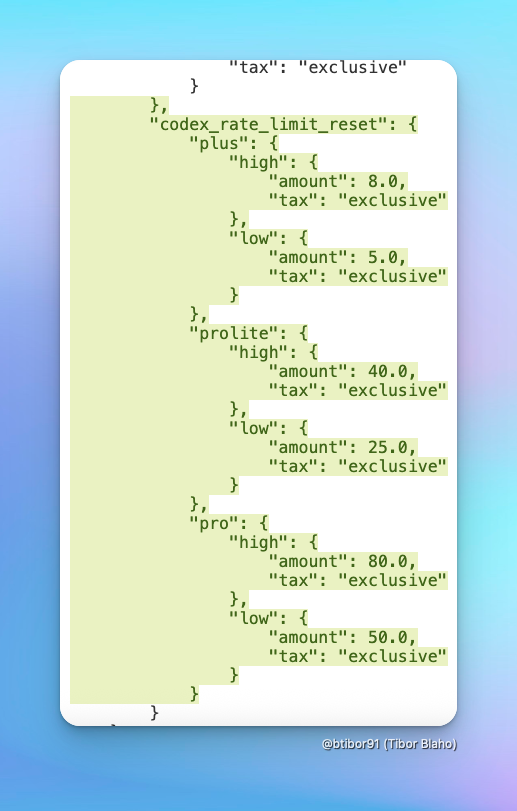
@btibor91 reported (342 likes, 51 replies, 25,021 views, 34 bookmarks) apparent paid rate-limit reset plumbing for Codex. The reviewed screenshot showed tiered reset amounts for plus, prolite, and pro plans, turning quota anxiety into a concrete monetization artifact.
@wieslawsoltes complained (27 likes, 9 replies, 2,064 views) that light work on GPT-5.6 Luna consumed most of a month's GitHub Copilot credits in one day. The screenshot matters because it showed the actual usage page at 1,020 of 1,500 credits with 26 days left before reset.

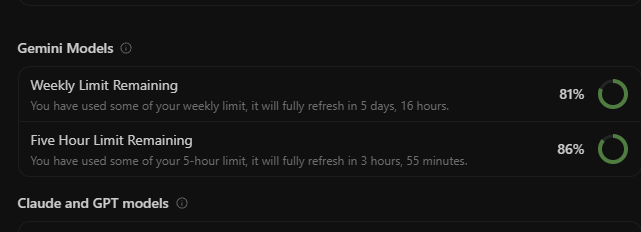
@evandromoisinho said (4 likes, 2 replies, 273 views) a Gemini-on-Antigravity failure loop burned 19% of quota. The reviewed screenshot showed partially depleted weekly and five-hour limits after the bad session, which made this a second concrete quota-loss example outside OpenAI and GitHub.
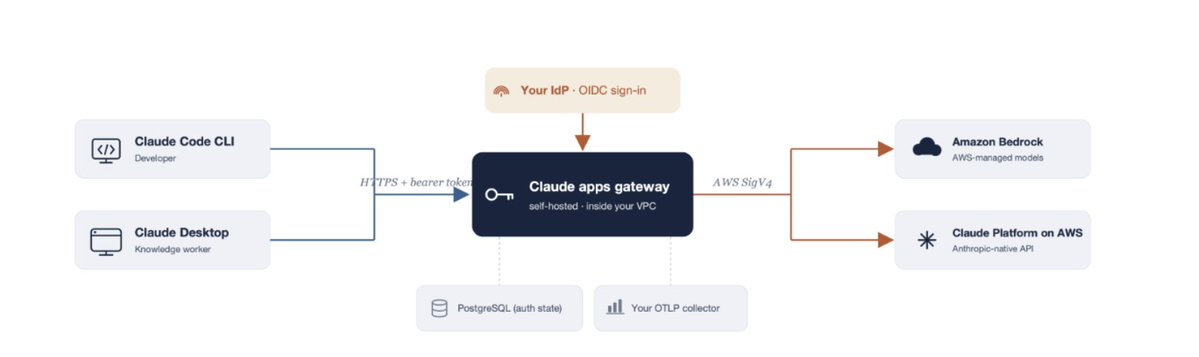
@sagar_batchu argued (13 likes, 3 replies, 51 views) that AWS shipping a control plane for Claude Code proves agents are now a spend and permissions surface. The official AWS Claude apps gateway post matches that reading with SSO, centralized policy, per-user or per-group spend caps, OTLP telemetry, OIDC, and PostgreSQL-backed auth state.
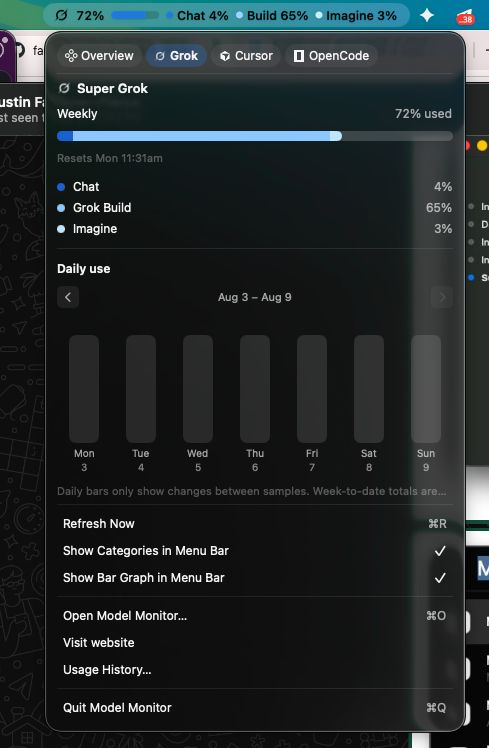
@gubatron recommended (3 likes, 2 replies, 41 views) ModelMonitor as a real-time quota meter for Grok, Cursor, and OpenCode. Its existence was evidence in itself: users are already building their own usage-visibility layer because vendor plans still feel hard to reason about.
Discussion insight: The reply pattern was strict. Codex Security Review drew interest only when commenters believed repository context could reduce spam, and AWS-control-plane discussion immediately pushed beyond spend caps toward durable receipts proving what an agent actually changed. People were not arguing against governance; they were arguing that it has to be auditable.
Comparison to prior day: August 5 centered outages, routing, and disappearing resets. August 6 pushed further into productized control: paid reset hooks, live credit burn screenshots, security-specific review flows, monitoring utilities, and official gateway architecture.
1.3 The long tail kept shipping thin layers above the model (🡕)
At least eight smaller builder posts converged on the same idea: don't replace the base model, wrap it with better context packaging, retrieval, portability, or supervision. The lower-engagement tail was unusually dense with concrete repositories that each fixed one workflow problem.
@sulekhat95 surfaced (9 likes, 393 views) book-to-skill, whose README and reviewed image both claim 24x-51x fewer tokens by converting books or document sets into reusable skills with on-demand chapter loading. That is a very direct response to the prompt-bloat complaints already circulating in this topic.
@aiedge_ introduced (16 likes, 3 replies, 2,476 views, 23 bookmarks) Prime Agent, a persistent coding harness with a long-lived Python environment, built-in subagents, and a /refine command that rewrites prompts, memory, and skills during a session. The useful nuance came from replies that immediately questioned whether session-level refinement counts as real self-improvement, which made the discussion more rigorous than launch copy alone.
@alindnbrg posted (2 replies, 30 views) AI Engineer Coach, then followed up (2 replies, 19 views) with CocoIndex Code and again (2 replies, 27 views) with asm. In sequence, those three posts mapped a practical stack: coach the agent after the session, retrieve only the right code before generation, and keep skills synchronized across many harnesses.
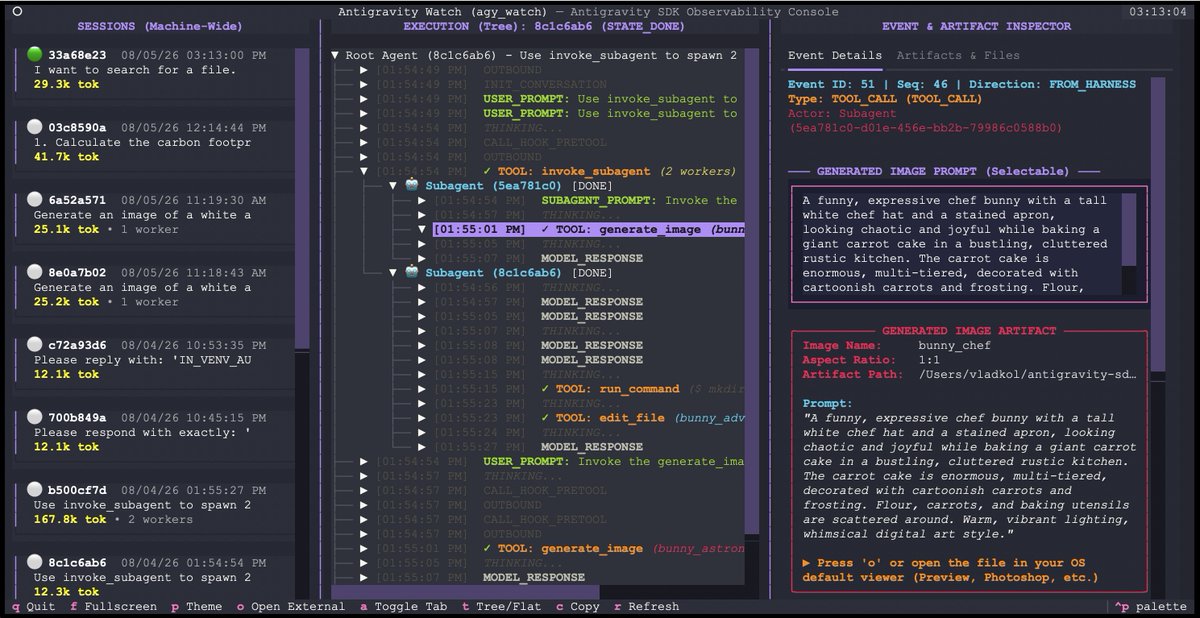
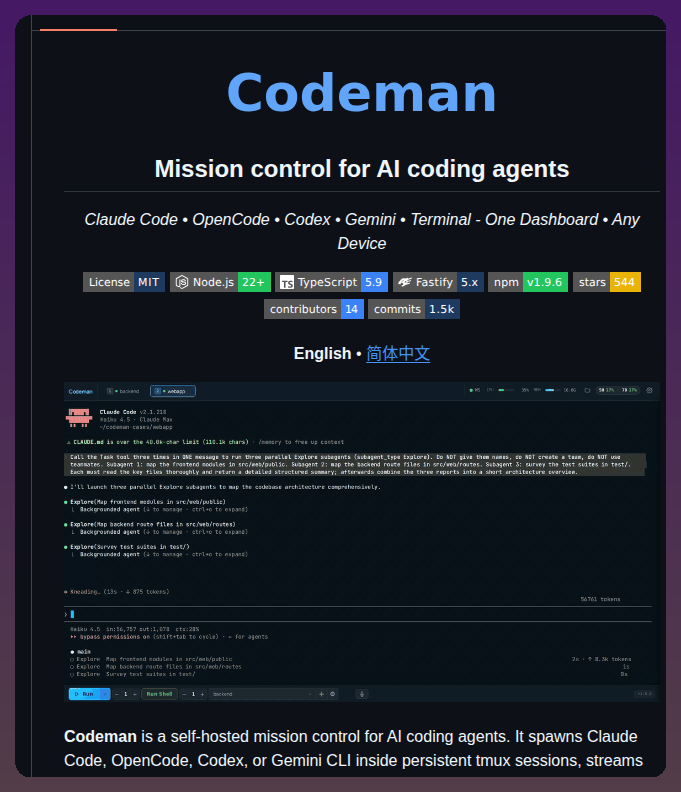
@DanKornas summarized (1 like, 2 replies, 686 views) Agentic Plugin Marketplace as one Markdown source that emits harness-native artifacts across six environments, while @vladkol showed (5 likes, 1 reply, 381 views) agy_watch and @tom_doerr presented (2 likes, 1,356 views, 7 bookmarks) Codeman for observing and operating those agents once they are live. The repeated pattern was infrastructure around the workflow rather than another claim of a better underlying model.
Discussion insight: These builders were solving different jobs, but the shared move was structural. Package knowledge once, retrieve code surgically, distribute skills across tools, and add mission control after launch. Even the Prime Agent thread turned quickly from benchmark excitement to the narrower question of what durable improvement should actually mean.
Comparison to prior day: August 5 centered context compression and reusable skills. August 6 kept that theme but broadened it into code retrieval, skill portability, agent observability, and persistent multi-harness control.
2. What Frustrates People
Quota burn and opaque plan economics
This was a High-severity frustration because it directly cut sessions short and made users think about credits before they thought about code. @btibor91 surfaced apparent paid Codex reset hooks, @wieslawsoltes showed GitHub Copilot burning 1,020 of 1,500 monthly credits on light GPT-5.6 Luna use, and @evandromoisinho said a Gemini-on-Antigravity failure loop cost 19% of quota in one go. The coping behavior was either to accept overage-style pricing, reduce usage, or install a visibility layer like ModelMonitor. This looks worth building for because the complaints span OpenAI, GitHub, and Google rather than one isolated outage.
Security review only matters if it is quiet and provable
This was a Medium-to-High frustration because commenters treated false positives as a product-ending flaw, not a minor annoyance. @OpenAIDevs launched Codex Security Review, but one reply warned that if it "misses one real vulnerability or floods devs with noise, teams will disable it in a week," while another said repository context is the only version that matters and a third pointed to dependency-chain blind spots. @sagar_batchu used AWS's Claude apps gateway as proof that identity, policy, and spend controls are now required, but one reply still asked for readback and durable receipts after agent writes. People are willing to add governance; they are not willing to trust it without evidence trails.
Skills, plugins, and sessions still splinter across harnesses
This was a Medium-severity frustration, but the solutions were unusually concrete. @alindnbrg described skills scattering across Claude Code, Codex, Cursor, and Windsurf before asm, while @DanKornas described a marketplace that still has to emit harness-native artifacts for six environments from one Markdown source. @tom_doerr and @vladkol added mission-control and observability layers above those CLIs, which is itself evidence that fragmentation is not temporary. This looks worth building for because builders are normalizing around multi-harness reality instead of waiting for vendors to converge.
Agents still need manual grounding before they can help
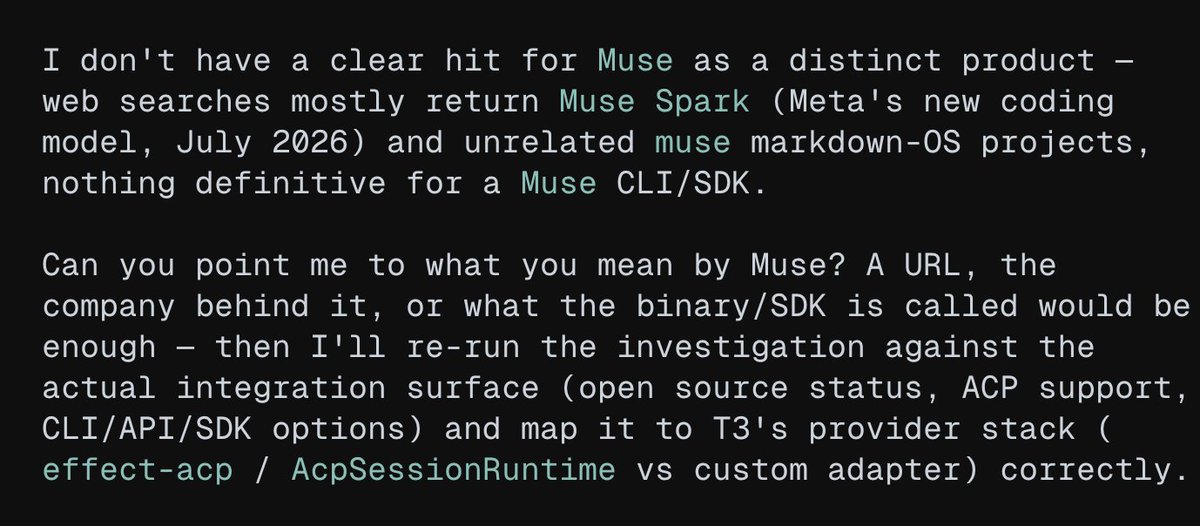
This was a Medium frustration with outsized symbolic impact. @theo showed Muse failing to identify Muse as a product without a URL, company name, or binary reference, and that screenshot became a shorthand critique of launch quality. The practical coping pattern is still manual: paste a link, restate the product, or provide the exact surface name before the agent can start. That makes self-knowledge and workflow-aware discovery feel less like polish and more like table stakes.
3. What People Wish Existed
Native quota, spend, and policy control with receipts
This need was practical and urgent. @btibor91, @wieslawsoltes, and @evandromoisinho all surfaced the same pain from different products: users can see the burn after the fact, but not enough policy or prediction before it happens. AWS's Claude apps gateway partially addresses this with SSO, spend caps, and telemetry, and ModelMonitor partially addresses it with local monitoring, but neither closes the loop on proving what an agent changed for a given cost. Opportunity rating: direct.
One portable source of truth for skills, plugins, and commands
This need was also practical, and the builders were already trying to satisfy it. asm exists because skills scatter across provider-specific formats, and Agentic Plugin Marketplace exists because one environment's plugin has to be re-expressed for the next. These tools partially solve the problem, but their very existence shows that users still want a canonical workflow format that survives tool switching. Opportunity rating: direct.
Retrieval and context shaping that run before token burn
The day's context tools all implied the same unmet need: decide what the model should see before it starts scanning or re-reading everything. book-to-skill turns long references into chapter-addressable skills, CocoIndex Code builds an AST-aware local index so agents fetch only relevant code, and the Swarm Coding write-up attached to @GoogleCloudTech framed subagents as a way to avoid memory dilution. These are strong partial answers, but the repeated demand is for a default context governor built into the workflow. Opportunity rating: direct.
Workflow-aware self-knowledge and agent supervision
This need mixed practical and reputational pain. @theo showed how bad it looks when a new coding agent cannot identify its own product surface, while @cyrilXBT framed "Agentic AI Developer" as a formal operator role via GitHub's GH-600 certification. On the tooling side, AI Engineer Coach, agy_watch, and Codeman all partially answer the need for supervision, but discovery, self-description, and post-action review still live in separate products. Opportunity rating: competitive.
4. Tools and Methods in Use
| Tool | Category | Sentiment | Strengths | Limitations |
|---|---|---|---|---|
| Antigravity | Coding agent workspace | (+/-) | Terminal-first workflow, subagents, background tasks, and a clear surface for Google-owned agent features | Quota-burn complaints and rumor-heavy model chatter still muddy the experience |
| Codex Security Review | Security review service | (+/-) | Repository-context review, threat-model files, severity thresholds, PR-native workflow | Trust depends on low noise; replies questioned dependency-chain blind spots |
| GitHub Copilot | Coding assistant/workspace | (+/-) | Broad ecosystem reach, formal operator credential momentum, familiar developer surface | Credit burn complaints made plan economics feel hard to justify |
| Claude apps gateway for AWS | Agent control plane | (+) | SSO, centralized policy, spend caps, OTLP telemetry, no long-lived laptop credentials | Governance is stronger than proof of post-change correctness |
| ModelMonitor | Usage monitor | (+) | Real-time cap tracking and history across Grok, Cursor, and OpenCode | Users still need an external monitor because providers do not expose enough by default |
| book-to-skill | Context packaging | (+) | 24x-51x token reduction claim, chapter-level loading, cross-tool compatibility | Requires up-front document conversion and maintenance |
| Prime Agent | Persistent coding harness | (+/-) | Long-lived Python environment, built-in subagents, /refine, model-agnostic connectors |
"Self-improving" claim drew skepticism in replies |
| AI Engineer Coach | Usage analytics | (+) | Local log analysis, anti-pattern detection, context scoring, prompt-to-skill hints | Early long-tail project with little engagement evidence so far |
| CocoIndex Code | Retrieval/search | (+) | AST-aware local semantic index, token savings claim, skill/MCP integration | Adds local indexing setup before value appears |
| asm | Skill manager | (+) | One CLI/TUI for 19 providers, GitHub installs, JSON output, security audit | Exists because skill formats remain fragmented across harnesses |
| Agentic Plugin Marketplace | Plugin/skill distribution | (+) | One Markdown source emits harness-native artifacts for six environments | Another abstraction layer to maintain, with harness-specific generators underneath |
| agy_watch | Agent observability | (+) | Zero-code tracing, multi-agent trees, file previews, policy audit surface | Specific to Antigravity SDK workflows |
| Codeman | Mission control | (+) | Persistent tmux sessions, browser streaming, scheduled jobs, multi-CLI management | Self-hosted operational overhead |
| VoiceClaw Realtime | Voice control surface | (+) | Apple Watch and phone control for OpenClaw or OpenAI Realtime sessions | Requires companion and tunnel setup, so it remains a niche interface |
Overall sentiment was positive on thin workflow layers and mixed on the core paid surfaces. People liked tools that saved tokens, improved retrieval, or exposed more state, but they were far less satisfied with opaque quotas, fragile trust models, and vendor-specific lock-in.
The dominant workaround pattern was to add structure around the model: chapterized skills instead of giant prompts, AST indexes instead of blind file scans, external quota meters instead of waiting for product dashboards, and browser or terminal control planes instead of one ephemeral CLI window. The clearest migration pattern was away from single-harness assumptions toward portable skills, persistent sessions, and multi-agent supervision. Competitive dynamics now look as much about economics and governance as about model quality.
5. What People Are Building
| Project | Who built it | What it does | Problem it solves | Stack | Stage | Links |
|---|---|---|---|---|---|---|
| Gemma Translator | google-gemma / @antigravity | An offline translation device that shows an on-device agent workflow | Removes cloud dependence for multilingual voice interaction and proves Antigravity can drive a real hardware build | Gemma 4, LiteRT-LM, Moonshine, Kokoro, React, Python, Raspberry Pi 5 | Alpha | post, repo |
| VoiceClaw Realtime | Benjamin Badejo | An Apple Watch voice interface for OpenClaw and OpenAI Realtime sessions | Lets users delegate and monitor agent work away from the laptop | watchOS, iPhone companion, OpenClaw, OpenAI Realtime/Live, tunnel relay | Shipped | post, site |
| book-to-skill | virgiliojr94 | Converts books and docs into reusable skills with chapter-level loading | Avoids paying to re-read long references every session | Markdown skills, PDF/EPUB/DOCX ingestion | Shipped | post, repo |
| Prime Agent | Prime Intellect | A persistent coding harness with /refine and built-in subagents |
Keeps state alive across tasks and lets the harness update its own working instructions | Python runtime, model connectors, subagents, harness memory | Beta | post, repo |
| AI Engineer Coach | Microsoft | Reads local coding-agent logs and flags anti-patterns | Helps teams detect bad habits, context issues, and prompts worth turning into skills | Local log analysis, GitHub Copilot/Claude/Codex logs, dashboard | Beta | post, repo |
| CocoIndex Code | cocoindex-io | Builds an AST-aware semantic code index for agents | Cuts token burn by retrieving the right functions before broad file scans | Tree-sitter, local semantic index, Skills/MCP integration | Beta | post, repo |
| asm | luongnv89 | One CLI/TUI for discovering and installing agent skills across providers | Fixes cross-harness skill fragmentation | CLI/TUI, provider adapters, JSON output, security audit | Shipped | post, repo |
| Agentic Plugin Marketplace | wshobson | Generates harness-native plugins, agents, skills, and commands from one source | Avoids duplicated workflow definitions across tools | Markdown source, generators, plugin-eval, multi-harness artifacts | Shipped | post, repo |
| agy_watch | vladkol | A zero-instrumentation observability console for Antigravity agents | Gives live execution trees, artifact previews, and policy auditability | CLI/TUI, Antigravity SDK hooks, SQLite, CAS | Beta | post, repo |
| ModelMonitor | Faulkner Pearce | A native usage tracker for Grok, Cursor, and OpenCode | Makes remaining quota visible in real time | Native macOS app, local history export, provider usage adapters | Beta | post, repo |
| Codeman | Ark0N | Browser mission control for persistent coding-agent sessions | Keeps multiple CLI agents alive, viewable, and schedulable | tmux, browser streaming, scheduled jobs, multi-CLI orchestration | Shipped | post, repo |
Gemma Translator and VoiceClaw Realtime showed the control surface stretching beyond a laptop. Gemma Translator mattered because the repo and thread documented a full offline stack on Raspberry Pi hardware, while VoiceClaw mattered because its reviewed images showed real spoken task delegation and progress tracking on an Apple Watch rather than a concept video alone.


book-to-skill, CocoIndex Code, and Prime Agent formed the clearest context-and-state cluster. One packages books into reusable skills, one retrieves the right code before the agent opens files blindly, and one keeps a durable working environment alive across subagents and refinement passes. The shared pattern was to reduce wasted context and preserve useful state instead of asking the base model to do everything from scratch.


The portability and oversight cluster was equally strong. AI Engineer Coach, asm, Agentic Plugin Marketplace, agy_watch, ModelMonitor, and Codeman all assume that agents need coaching, portability, observability, or mission control after generation. Multiple builders independently shipping that supervision layer is stronger evidence than one big launch thread because it shows repeated demand from different directions.


6. New and Notable
GH-600 made agent operation a formal credential
@cyrilXBT framed (63 likes, 12 replies, 6,341 views, 32 bookmarks) GitHub's GH-600 certification as the first formal signal that "Agentic AI Developer" is becoming a named role. The public Microsoft Learn page confirms the certification covers deploying, integrating, operating, and governing AI agents in production software workflows, which makes this more than social-media career talk.

Muse's self-awareness miss became a launch-quality benchmark
@theo mocked (386 likes, 28 replies, 43,907 views, 22 bookmarks) Muse for not understanding what Muse was. The reason it mattered was not just comedy value: the screenshot showed a coding agent asking for a URL, company name, or binary because it could not ground its own product surface, and that turned self-knowledge into a public launch criterion.
Codex Security Review tried to make security-specific review a normal PR step
@OpenAIDevs introduced (489 likes, 35 replies, 27,010 views, 178 bookmarks) a security-only review mode that uses repository context and threat-model files inside pull-request review. That was notable because it shifts AI security review from a separate scanning concept toward an ordinary workflow surface, even if the replies made clear that teams will judge it by precision rather than novelty.
7. Where the Opportunities Are
[+++] Agent control planes with spend, identity, and receipts — Evidence came from Copilot credit burn, Codex reset monetization hints, Gemini quota loss, ModelMonitor, and AWS's official gateway architecture. This is strong because both the pain and the partial solutions showed up across multiple vendors, and the unresolved gap is the same everywhere: who spent what, what did the agent touch, and what proof came back.
[+++] Cross-harness workflow portability — asm, Agentic Plugin Marketplace, Codeman, and VoiceClaw all exist because commands, skills, and sessions fragment across tools. This is strong because independent builders are already spending time on the glue layer instead of waiting for any one vendor to become the standard.
[+++] Retrieval and context-shaping middleware — book-to-skill, CocoIndex Code, Swarm Coding, and Prime Agent all try to narrow context before token burn or state drift takes over. This is strong because the signal appears in both complaints and shipped projects: people want agents to read less, retrieve better, and hold cleaner state.
[++] Repo-aware security verification — Codex Security Review and its reply thread showed real demand, but also an unusually high bar around false positives, dependency depth, and evidence quality. This is moderate because buyers clearly want it, yet they are likely to disable weak implementations quickly.
[+] Edge and wearable control surfaces — Gemma Translator and VoiceClaw showed concrete interest in agent access beyond the desktop. This is emerging because the builds were real and visually persuasive, but the audience is still smaller and the workflows remain specialized.
8. Takeaways
- Antigravity looked strongest when it was attached to real artifacts, not leak chatter. Gemma Translator provided open-source code, hardware details, and a reproducible offline stack, while the highest-engagement Gemini rumor cluster provided much weaker proof. (source)
- Governance is becoming product work inside AI coding. AWS's Claude apps gateway and Codex Security Review both treated policy, review thresholds, and auditability as first-class surfaces rather than back-office concerns. (source)
- Quota pain is now cross-vendor and concrete. The same day produced evidence of Codex reset monetization, GitHub Copilot credit burn, and Gemini quota loss, which means usage economics are shaping workflow design across competing stacks. (source)
- The most active builders were shipping middleware above the model. book-to-skill, CocoIndex Code, Prime Agent, and related projects all tried to package context, retrieve less, or preserve better state instead of competing on raw model quality. (source)
- Cross-harness fragmentation is no longer theoretical. The presence of asm, Agentic Plugin Marketplace, Codeman, and VoiceClaw in one day's dataset shows that people increasingly expect workflows to survive movement between multiple agent shells. (source)
- The operator role around agents is hardening into a recognized discipline. GH-600's public certification framing matched the broader dataset: people are now shipping monitors, gateways, review layers, and coaching tools for the humans supervising agents. (source)