Twitter AI Coding - 2026-08-10
1. What People Are Talking About
1.1 Installable operating systems for agents are replacing one-off prompt craft (🡕)
At least six substantive items treated the main AI-coding problem as workflow discipline rather than raw model IQ. The shared move was to pull planning, testing, review, memory, and approvals out of the transient chat context so they survive handoffs and long runs. Compared with August 9, when workflow engineering first became the visible frame, August 10 pushed that idea into installable kits, routines, and explicit proof loops.
@ForwardEditor shared (316 likes, 10 replies, 16,830 views, 511 bookmarks) a Codex micro-pattern built around define-goal: let a higher-effort model rewrite the task, hand execution to a cheaper worker thread, then use the stronger model again as judge. The important signal was not the exact prompt trick; it was that users now describe coding work as routed stages with role separation and acceptance checks.
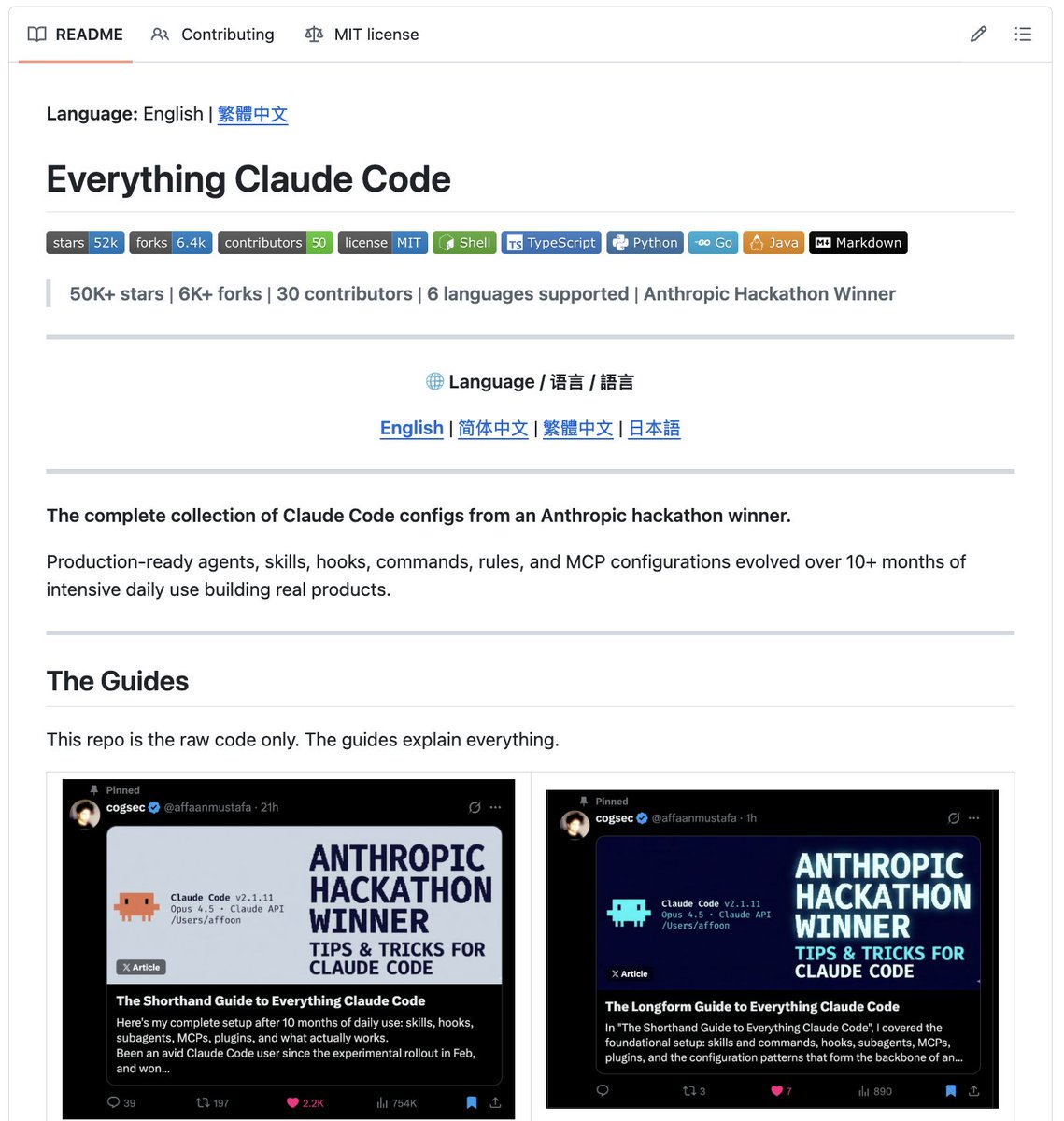
@heyrimsha pointed to (15 likes, 14 replies, 994 views, 8 bookmarks) ECC, which packages plan → test → implement → review → verify → remember → improve into one cross-harness operating layer. The tweet and linked repo both frame the problem the same way: the agent can write code, but it still needs a durable engineering system above it.
@DanKornas described (9 likes, 3 replies, 1,258 views, 8 bookmarks) AG Kit as the same instinct from Google Antigravity's side: a .agents/ workspace contract with specialists, workflows, persistent memory, MCP guidance, and a narrow PreToolUse safety gate. The image is informative because it shows rules, orchestration, memory, packaging, and validation as first-class product surface rather than optional prompting habits.
@traversymedia showed (12 likes, 1,170 views, 3 bookmarks) an AI Blueprint workflow built around visible PLAN, BUILD, and PROVE stages, with spec review before implementation and archived history after validation. The public evidence again pointed to the same conclusion: people want the loop made inspectable.
Discussion insight: Replies did not argue that prompts no longer matter. They argued that the real win comes when the plan, pre-fix test, acceptance rules, and memory writeback remain sticky across sessions instead of being re-explained every time.
Comparison to prior day: August 9 framed workflow engineering as the frontier. August 10 showed that idea being turned into installable operating layers and repeatable build routines.
1.2 Portable packaging is real; now people are arguing about trust, installs, and authority (🡕)
At least five retained items assumed skills and MCP portability is no longer hypothetical. The conversation moved up a layer into who may install a package, what permissions it gets, how real work gets delegated through it, and where the authority boundaries should live. That is stronger than August 9's packaging debate because the day showed both the official spec and working operational examples.
@_vmlops reported (17 likes, 5 replies, 1,194 views, 8 bookmarks) that Google joined Agent Plugins as a core maintainer and summarized the portable directory contract around plugin.json, skills/, and mcp.json. Google's own launch post confirms the same structure and is explicit that install flows, permissions, sandboxing, trust, and provenance are deliberately outside v1.

@sabir_huss50540 pointed to (5 likes, 1 reply, 859 views, 4 bookmarks) google/skills, which the repo describes as Google-authored skill packs plus bundled plugins for Claude Code, Codex, and Antigravity. That made the portability story operational: users are not just debating packaging, they are installing current cloud procedures so the agent stops guessing against stale docs.
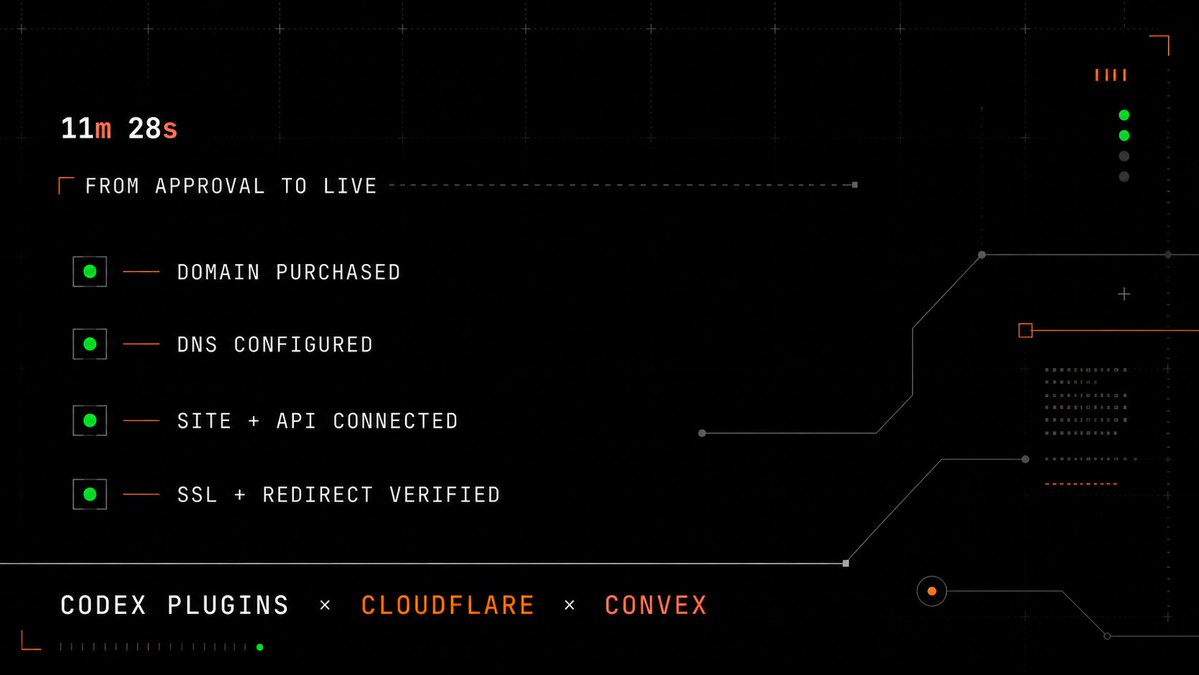
@waynesutton reported (20 likes, 7 replies, 1,461 views, 4 bookmarks) that after installing Cloudflare and Convex plugins in Codex, one prompt handled domain purchase, DNS, site and API connection, SSL, and redirects. The screenshot is informative because it compresses the claim into a visible checklist and a completion time.
@frantzfries summed up (15 likes, 1,163 views, 12 bookmarks) the practical complexity from the other side: API, OpenAPI, MCP, App, Skills, Plugin, and marketplace semantics are already hard enough that experienced users are still mapping which layer does what.
Discussion insight: The sharpest replies were about capability manifests, socket permissions, and revocation, not file layout. Distribution is getting standardized faster than authority.
Comparison to prior day: August 9 made portable plugins look credible. August 10 showed them doing real work and made the missing trust layer much harder to ignore.
1.3 Shared memory is becoming a product surface, not just a workaround (🡕)
Several of the strongest builder signals were no longer about picking the smartest model. They were about keeping service context, preferences, and project history alive across sessions, tools, and agents. That is a step beyond August 9's “same interface, different backend” behavior: today's products are selling remembered context as the main differentiator.
@SpotifyEng launched (14 likes, 4 replies, 1,210 views, 11 bookmarks) Xirp as a vendor-neutral agentic development environment for Claude Code, Gemini CLI, and Codex. The public Xirp site says the missing knowledge is a retrieval problem rather than a documentation problem: agents can be technically correct and still operationally wrong because ownership, dependencies, and architecture decisions live in Slack threads or in people's heads.
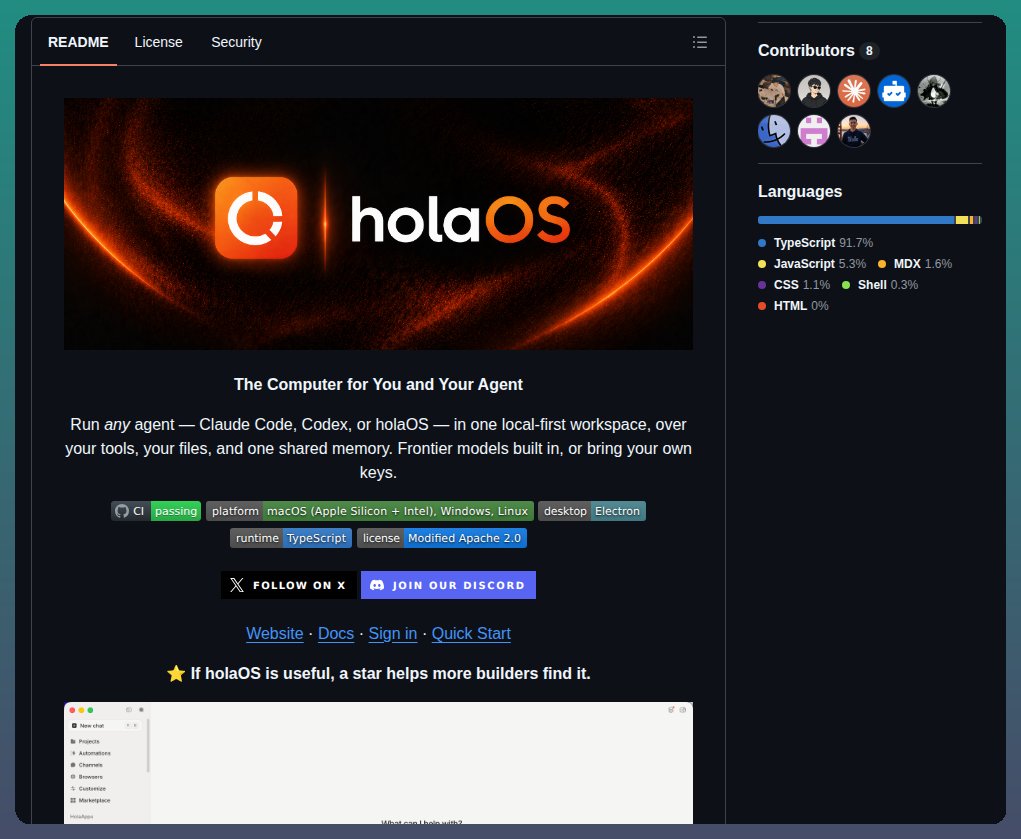
@tom_doerr shared (6 likes, 8 replies, 1,373 views, 8 bookmarks) holaOS, whose repo describes a local-first workspace where Claude Code, Codex, or holaOS all run over the same files, tools, and shared memory. The README matters because it makes the promise concrete: the memory stays local, readable, and reusable across agents instead of being trapped in one vendor's transcript.
@DanKornas highlighted (1 like, 1 reply, 552 views, 2 bookmarks) OpenCode Memory, and @PrajwalTomar_ described (3 likes, 2 replies, 269 views) a 6:37 AM routine where Claude Code started itself, filtered eighteen overnight candidates down to one, and sent the surviving digest to his phone. In both cases, the differentiator was not a better answer in one session; it was remembered context plus a system that can resume and route work later.
Discussion insight: The strongest positive language attached to memory that is inspectable and local, not to hidden context stitched together behind the scenes.
Comparison to prior day: August 9 showed users stabilizing the interface while swapping the backend. August 10 turned persistent memory and retrieval into an explicit product category.
2. What Frustrates People
Agents still forget the project unless users bolt memory on afterward
This was a High-severity frustration because it sits underneath multiple otherwise unrelated builds. @heyrimsha said (15 likes, 14 replies, 994 views, 8 bookmarks) that every session still needs to be told to plan first, test before fixing, review its own work, and remember what it learned. @SpotifyEng launched (14 likes, 4 replies, 1,210 views, 11 bookmarks) Xirp around the same pain point, and the product site says the real failure mode is not missing docs but missing retrieval of ownership, dependency, and architecture context. @DanKornas highlighted (1 like, 1 reply, 552 views, 2 bookmarks) OpenCode Memory as a direct fix: capture durable technical context when the session goes idle and inject it back later.
This is worth building for directly because the coping behavior is already clear. People are adding memory vaults, local vector stores, workspace contracts, and retrieval layers so they do not have to reprompt the same decisions every day.
Usage, entitlements, and spend are still too opaque
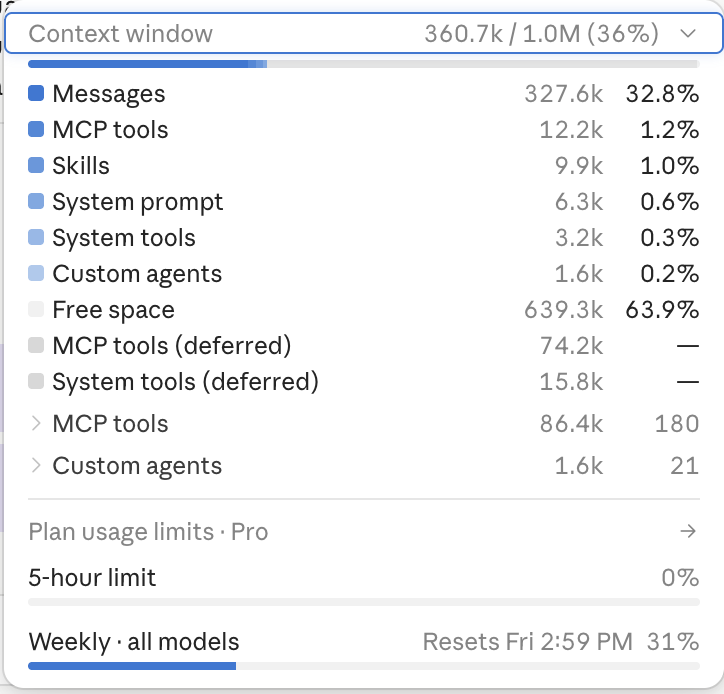
This was also High severity because it changes which tool people can use at all. @csharpfritz said (17 likes, 9 replies, 1,776 views) that if your Copilot account is attached to an enterprise plan there is no personal-use plan to fall back to, and after hitting the GitHub limit he moved to Codex, Claude, and Antigravity instead. @lippebsd asked (2 replies, 19 views) for a simple Codex context-usage view with per-session and per-day breakdowns across messages, MCP tools, skills, and system prompt weight so users can avoid hitting limits unexpectedly. @pengsonal pitched (65 likes, 5 replies, 3,278 views, 68 bookmarks) ZCode's free 3M GLM-5.2 tokens per day explicitly as a replacement for Cursor, Claude Code, and GitHub Copilot costs.
This is worth building for directly. The evidence is not just people complaining about pricing; it is people asking for usage ledgers and switching providers when the ledger is missing.
Trust is still thin once skills, plugins, or background agents can act on their own
This landed between Medium and High severity. @_vmlops reported (17 likes, 5 replies, 1,194 views, 8 bookmarks) a packaging standard that intentionally leaves permissions and provenance to each client, and the replies immediately asked for capability manifests, revocation, and shared compliance fixtures. @deepfates objected (17 likes, 3 replies, 593 views) to invisible Claude Code skills he could not turn off. @vasuman argued (107 likes, 14 replies, 14,499 views, 135 bookmarks) for background agents, but one of the strongest replies pushed back that the unsolved problem is still trusting AI with complex multi-step workflows that require human judgment. Separately, @elshayib_ said (18 likes, 4 replies, 852 views) Antigravity is still basically unusable as a developer harness.
This is worth building for, but the product bar is higher than “more automation.” Users want clear authority boundaries, opt-outs, and proof that the harness itself will not quietly do the wrong thing.
3. What People Wish Existed
Durable memory and retrieval that can be inspected instead of guessed
The clearest practical need was not “more context” in the abstract. It was context that survives sessions, remains visible, and can be shared across tools. @SpotifyEng framed (14 likes, 4 replies, 1,210 views, 11 bookmarks) Xirp around retrieving service knowledge that already exists but is hard to surface at the right moment, while @tom_doerr showed (6 likes, 8 replies, 1,373 views, 8 bookmarks) a local-first workspace where multiple agents reuse one memory store. @DanKornas added (1 like, 1 reply, 552 views, 2 bookmarks) the most direct artifact with OpenCode Memory, which stores project memories and user profile data in local vector-backed shards. Opportunity: Direct.

Spec-driven build loops with visible gates, review, and proof
People were repeatedly asking for the same emotional outcome: do not make me trust a black box. @traversymedia showed (12 likes, 1,170 views, 3 bookmarks) AI Blueprint as a visible spec-driven loop, @DanKornas described (9 likes, 3 replies, 1,258 views, 8 bookmarks) AG Kit as repeatable workflows plus a safety gate, and @PrajwalTomar_ described (3 likes, 2 replies, 269 views) a routine where a brief, director, council, memory, and gate structure can run while he sleeps. The need is practical rather than aspirational: users want to see where the agent is in the loop, where they can intervene, and what evidence proves the work is done. Opportunity: Direct.


Permission, provenance, and usage ledgers for skills and plugins
The packaging layer is arriving faster than the control layer above it. Google's Agent Plugins post says v1 intentionally leaves install mechanisms, permission models, sandboxing, and trust verification to each client. In the thread, @_vmlops surfaced (17 likes, 5 replies, 1,194 views, 8 bookmarks) replies pushing for capability manifests and revocation, @deepfates objected (17 likes, 3 replies, 593 views) to hidden skills he could not disable, and @lippebsd asked for (2 replies, 19 views) a concrete usage breakdown so context overhead stops being invisible. Users are not just asking whether a plugin works; they want to know what it can do, what it cost, and how to turn it off. Opportunity: Direct.
Vertical skill packs that carry current procedures or domain knowledge
Two different items pointed to the same product need: in fast-moving domains, base model knowledge is not enough. @sabir_huss50540 surfaced (5 likes, 1 reply, 859 views, 4 bookmarks) google/skills as maintained cloud procedure packs for Claude Code, Codex, and Antigravity, while @DanKornas highlighted (1 like, 2 replies, 727 views, 2 bookmarks) SciAgent-Skills, whose public benchmark claims a jump from 65.3% baseline to 92.0% on BixBench-Verified-50 with a life-sciences skill library. This is a real need where procedures change quickly or where domain methods matter more than generic code generation. Opportunity: Competitive.
4. Tools and Methods in Use
| Tool | Category | Sentiment | Strengths | Limitations |
|---|---|---|---|---|
| Agent Plugins | Standard | (+/-) | Portable wrapper for skills and MCP; components fail independently | v1 leaves install, permissions, sandboxing, trust, and provenance to each client |
| Google Skills | Skill library | (+) | Google-authored current procedures; installs into Claude Code, Codex, and Antigravity | Google-specific scope; repo is still under active development |
| ECC | Operating layer | (+) | Reusable plan/test/review/memory system across many harnesses | Large surface area; value depends on actually enforcing the loop |
| AG Kit | Workspace contract | (+/-) | Antigravity-native .agents/ contract, safety hook, rollback-aware updates |
Production guarantee centers on Antigravity; another layer to maintain |
| OpenAI Codex | Coding agent / plugin host | (+/-) | Goal-definition workflows, plugin-based ops, strong ecosystem momentum | Shared usage buckets, hidden-skill complaints, unclear usage breakdown |
| Xirp | ADE / workspace | (+) | Vendor-neutral sessions tied to service context via Portal | Early public beta; external evidence on limitations is still thin |
| holaOS | Local-first workspace | (+) | Shared local memory across Claude Code, Codex, and the built-in agent | Desktop or self-host setup overhead; modified Apache 2.0 license |
| OpenCode Memory | Memory plugin | (+) | Local vector memory, auto-capture, profile learning, web UI | Extra plugin/config surface; retrieval quality evidence is still early |
| ZCode / Z.ai | IDE / model bundle | (+/-) | 3M free GLM-5.2 tokens per day, Goal Mode, subagents, BYOK | Claims are mostly promotional; maturity and governance are unclear |
| GitHub Copilot | Coding agent surface | (+/-) | Familiar IDE surface, enterprise governance stack, plugin ecosystem support | Personal versus enterprise plan split and limited usage visibility complaints |
| Google Antigravity | Coding workspace | (-) | Rich Google-adjacent ecosystem and native support from kits like AG Kit | Still described as unusable by some practitioners; free-request complaints linger |
The day did not show a winner-take-all stack. It showed people wrapping agent surfaces with memory, rules, and routing so they can keep the workflow while changing the backend. @ForwardEditor used (316 likes, 10 replies, 16,830 views, 511 bookmarks) Codex as a staged goal-rewrite plus judge loop, @waynesutton used (20 likes, 7 replies, 1,461 views, 4 bookmarks) Codex plugins for domain and DNS operations, and @tom_doerr used (6 likes, 8 replies, 1,373 views, 8 bookmarks) holaOS to keep one memory surface across multiple agents.
The strongest positive sentiment attached to tools that preserve context or package current procedures. The strongest negative sentiment attached to opacity and quota state. @csharpfritz hit (17 likes, 9 replies, 1,776 views) Copilot limits without a personal-plan fallback, @lippebsd asked for (2 replies, 19 views) a usage ledger, and @elshayib_ called (18 likes, 4 replies, 852 views) Antigravity basically unusable.
Migration behavior was explicit. @pengsonal pitched (65 likes, 5 replies, 3,278 views, 68 bookmarks) ZCode as a price-driven replacement for Cursor, Claude Code, and Copilot, while @deliprao argued (7 likes, 1 reply, 1,255 views, 6 bookmarks) that harness quality is still tightly coupled to model choice, with Pi working best for model-agnostic use and Codex working best around OpenAI models.
5. What People Are Building
| Project | Who built it | What it does | Problem it solves | Stack | Stage | Links |
|---|---|---|---|---|---|---|
| Xirp | Spotify | Vendor-neutral ADE for managing Claude Code, Gemini CLI, and Codex sessions with service context | Agents can be technically correct but operationally wrong when they lack ownership and dependency context | Session manager, Portal integration, retrieval layer | Beta | site |
| ECC | affaan-m | Cross-harness operating layer with skills, memory, hooks, and security scanning | Repeated prompting and workflow drift across sessions | JavaScript, Shell, TypeScript, Python, Go, Java, markdown skills | Shipped | repo · site |
| AG Kit | vudovn | Antigravity-first .agents/ workspace contract with workflows, memory, and safety hook |
Persistent context and destructive-command safety inside Google's coding workspace | TypeScript, Node.js, Python, Antigravity hooks/plugins | Beta | repo |
| holaOS | holaboss-ai | Local-first workspace where Claude Code, Codex, or holaOS share one tool surface and memory store | Switching agents without resetting context | TypeScript, Electron, local memory, integrations, MCP | Beta | repo · site |
| Google Skills | Google-authored skill packs and bundled plugins for cloud procedures | Stale cloud knowledge and hallucinated commands on fast-moving platforms | Python repo, markdown skills, plugin bundles | Shipped | repo | |
| open-kritt | Kritt-ai | Self-hosted multi-agent vulnerability research platform with validation and ranking | One giant “find bugs” prompt rarely validates exploitable issues | JavaScript, Docker Compose, Codex / Claude Code / OpenRouter | Beta | repo · site |
| Council of High Intelligence | 0xNyk | Deliberation framework that routes different analytical personas across coding agents | Hard decisions and unattended routines need disagreement and verdict structure | Shell, markdown agents/skills, multi-provider routing | Shipped | repo |
| SciAgent-Skills | jaechang-hits | 199 scientific skills that improve coding-agent performance on bioinformatics tasks | Base agents lack domain methods, parameters, and troubleshooting guidance | Markdown skills, registry.yaml, Claude Code/Codex/Cursor integrations | Shipped | repo · site |
The most important build pattern was not “new model.” It was “new operating layer around the model.” @SpotifyEng launched (14 likes, 4 replies, 1,210 views, 11 bookmarks) Xirp around the idea that the missing ingredient is retrieval of service knowledge, while @tom_doerr showed (6 likes, 8 replies, 1,373 views, 8 bookmarks) holaOS as one local-first workspace where the memory, tools, and apps stay constant even when the agent changes.
@heyrimsha pointed to (15 likes, 14 replies, 994 views, 8 bookmarks) ECC and @DanKornas described (9 likes, 3 replies, 1,258 views, 8 bookmarks) AG Kit as two versions of the same thesis: package the workflow once, make the gates explicit, and stop rebuilding the engineering loop from scratch in every prompt. @traversymedia showed (12 likes, 1,170 views, 3 bookmarks) the same instinct in a lighter-weight form with AI Blueprint, where spec, build, and proof stages stay visible to the user.

A second build pattern was “domain knowledge as installable leverage.” @sabir_huss50540 surfaced (5 likes, 1 reply, 859 views, 4 bookmarks) Google Skills as current cloud playbooks for agent shells, and @DanKornas highlighted (1 like, 2 replies, 727 views, 2 bookmarks) SciAgent-Skills, whose public benchmark claims a 65.3% to 92.0% jump on BixBench-Verified-50 without fine-tuning. Both say the same thing in different domains: if the method changes faster than model training, ship the method as skills.


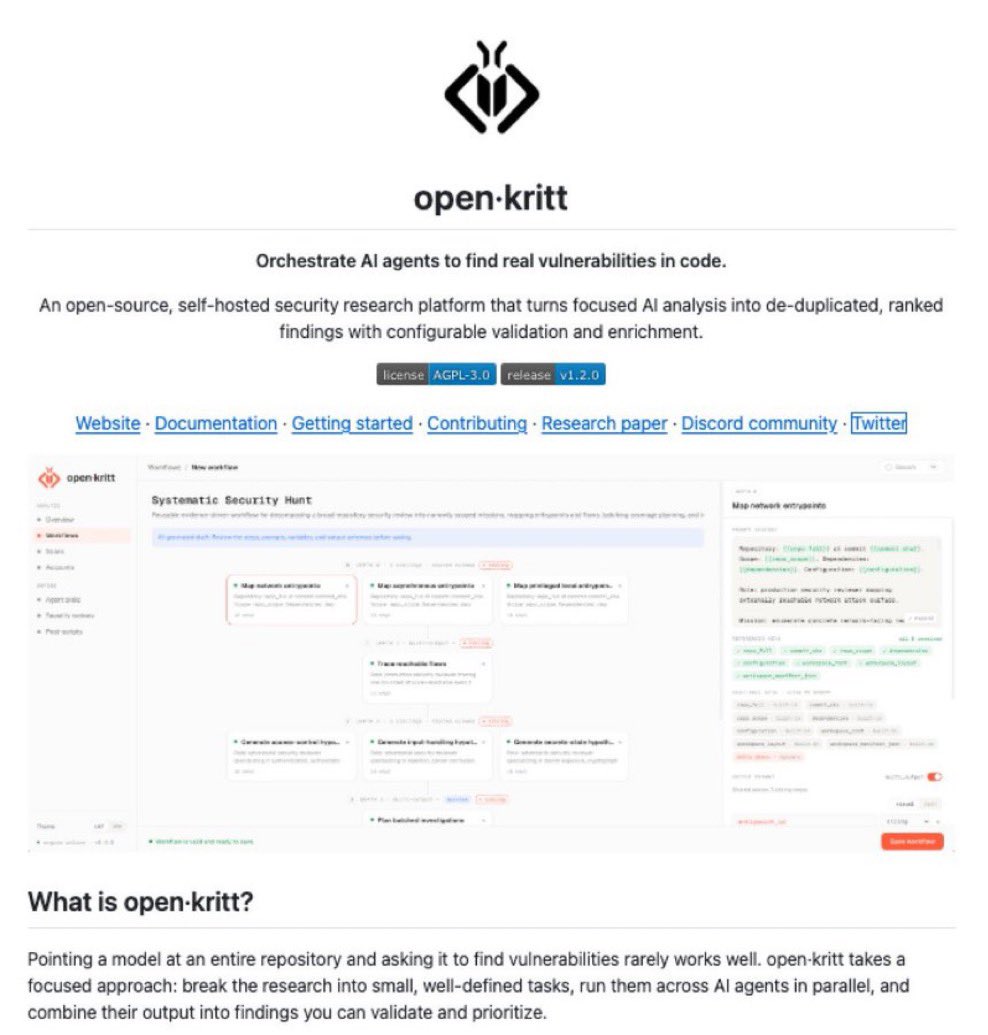
The most concrete multi-agent security build in the feed was @He1s_Sammy pointing to (24 likes, 7 replies, 699 views) open-kritt, which the public repo describes as breaking vulnerability research into focused tasks, running them across agents, validating findings, and ranking severity. That is the same operating-layer pattern again, applied to security research rather than general development.
6. New and Notable
Claude output watermarking became an explicit product policy
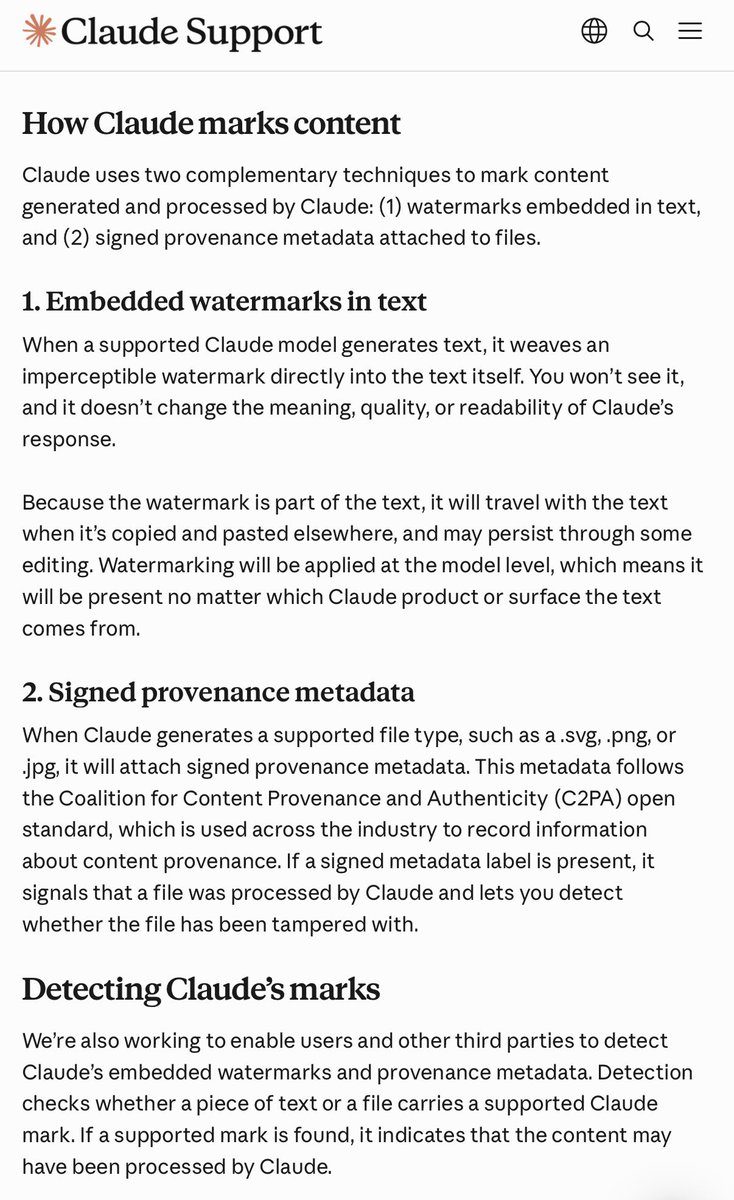
@dr_cintas pointed to (5 likes, 2 replies, 710 views, 5 bookmarks) Anthropic's new support article on how Claude marks AI-generated content, and the linked help page says Claude now uses two mechanisms: embedded text watermarks and signed provenance metadata for supported file types. The tweet matters for the AI-coding topic because it explicitly says the policy applies across Claude surfaces, including Claude Code.
Enterprise control planes for coding agents are getting mapped as their own stack
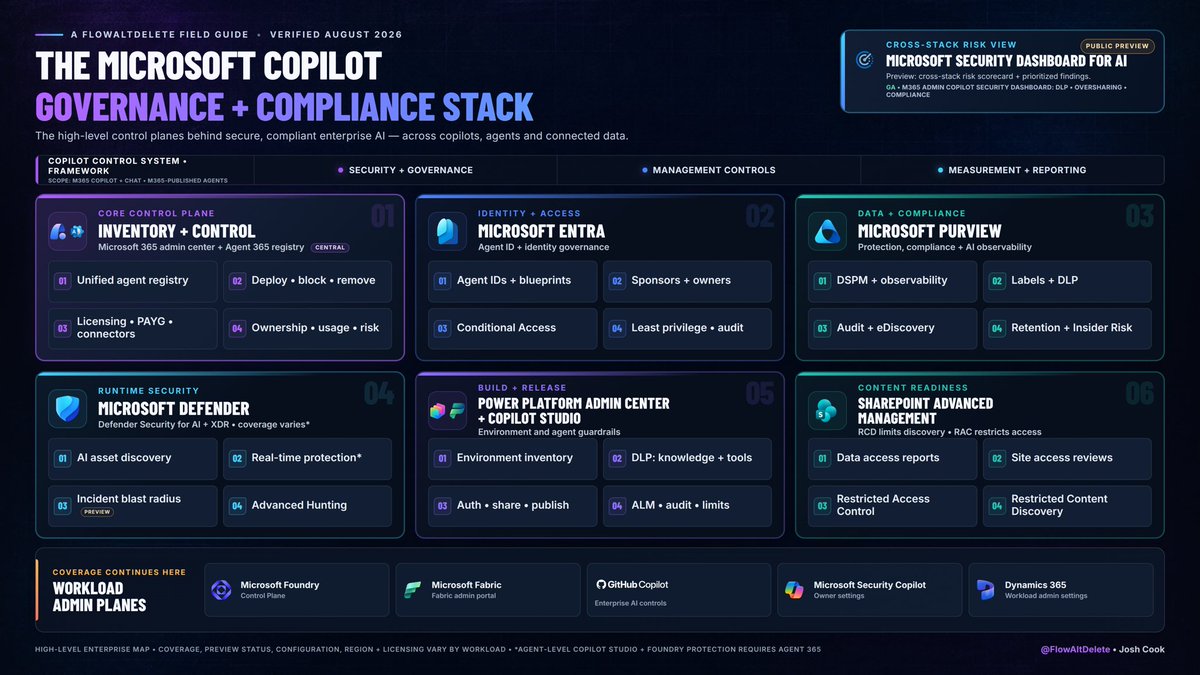
@FlowAltDelete mapped (45 likes, 5 replies, 2,632 views, 48 bookmarks) a Microsoft Copilot governance and compliance stack across Entra, Purview, Defender, Power Platform, SharePoint, Foundry, Fabric, GitHub Copilot, Security Copilot, and Dynamics 365. The image is notable because it treats coding-agent governance as a multi-plane control problem instead of a single product setting.
7. Where the Opportunities Are
[+++] Cross-session memory and retrieval layers for coding work — Sections 1, 2, 3, and 5 all pointed here: Xirp framed missing context as a retrieval problem, holaOS made shared local memory a core feature, OpenCode Memory productized auto-capture, and multiple workflow kits existed mainly to stop agents from forgetting. This is strong because the pain showed up across enterprise, local-first, and solo-builder products rather than in one niche.
[+++] Trust, permission, and usage control planes above plugins and skills — Agent Plugins standardized packaging faster than permissions, provenance, revocation, or usage accounting. The Google blog, _vmlops thread, lippebsd's usage-view request, and deepfates' invisible-skill complaint all point to the same missing layer. This is strong because the ecosystem already has enough portability to expose the control gap.
[++] Spec-driven build loops with visible proof gates — ECC, AG Kit, AI Blueprint, and the agent-council routine all packaged plan/review/prove structure instead of asking the user to remember it. This is moderate because the demand is obvious and repeated, but there are already several credible open-source takes.
[++] Quota and entitlement optimization for agent-heavy workflows — Copilot account segmentation complaints, Codex usage-visibility requests, and aggressive free-token alternatives such as ZCode all show that cost and entitlement state still steer tool choice. This is moderate because users are already switching tools over it, but the field is getting crowded with credits, routers, and bundle offers.
[+] Domain-specific skill packs that outperform base agents without retraining — Google Skills and SciAgent-Skills both showed that current procedures and deep domain methods can be shipped as installable skills. This is emerging rather than universal because the evidence was strongest in cloud operations and bioinformatics, but the public benchmark and procedure-pack examples were concrete.
8. Takeaways
- The biggest AI-coding conversation was about packaging the workflow, not improving the prompt. ECC, AG Kit, AI Blueprint, and define-goal loops all treated planning, testing, review, and memory as reusable system layers. (source)
- Portable plugins are now real enough that trust and permissions have become the main unresolved issue. The public Agent Plugins launch and the replies around capability manifests made that shift explicit. (source)
- Persistent memory is becoming a first-class product category for coding workspaces. Xirp, holaOS, and OpenCode Memory all sold retrieval and cross-session recall as the core value proposition. (source)
- Quota design and usage opacity still drive tool switching. Users asked for per-session context ledgers and moved away from Copilot after hitting shared-plan limits. (source)
- Domain-specific skill packs are one of the clearest ways to improve outcomes without retraining a model. Google Skills focused on current cloud procedures, while SciAgent-Skills published a concrete benchmark jump in bioinformatics work. (source)