Twitter AI Coding - 2026-08-15
1. What People Are Talking About
1.1 Antigravity and Gemini 3.7 Flash kept moving from showcase demos to specific engineering chores (🡒)
Antigravity still dominated the topic, but the framing got narrower and more operational. The biggest posts were not generic “build anything” claims; they were concrete chores such as generating native auth screens, orchestrating cross-cloud data pipelines, and shipping an educational game end to end. At least four substantive items supported the cluster, and the replies kept dragging the conversation back to regressions, enterprise fit, and harness quality.
@antigravity showed (466 likes, 33 replies, 20,991 views, 56 bookmarks) Gemini 3.7 Flash generating native auth screens across SwiftUI, React Native, Jetpack Compose, and Flutter. The interesting part was not only the cross-framework output; replies immediately asked how to stop new features from breaking existing ones and how much harness setup was still required, which turned a flashy demo into a reliability discussion.
@antigravity described (304 likes, 12 replies, 14,552 views, 64 bookmarks) a second workflow where Gemini 3.7 Flash reasons across BigQuery, PostgreSQL, and Cloud Storage, runs self-healing build and debug loops, and uses native PDF parsing. That thread produced sharper practitioner nuance: one reply said self-healing needs a confidence threshold or it just automates the wrong fix faster, while another asked for an enterprise edition.
@Google pointed to (76 likes, 1 reply, 20,104 views, 20 bookmarks) an educational-game build with Google AI Studio and Antigravity. The linked AI_Andrew thread adds the key evidence: Antigravity did not only generate code, it built, tested, recorded demo GIFs and screenshots, and pushed outputs to GitHub.
@antigravity amplified (115 likes, 9 replies, 13,267 views, 13 bookmarks) a changelog update for docs and search. The replies made it more useful than a normal changelog post: Antigravity said the CLI now supports Gemini API keys and base-URL overrides, while another reply reported that business accounts still could not see Gemini 3.7 Flash.
Discussion insight: The positive signal stayed attached to concrete output, but the skepticism stayed attached to the harness. Replies asked about regressions, confidence thresholds, enterprise packaging, and account availability more than they argued about benchmark rankings.
Comparison to prior day: On 2026-08-14, the feed emphasized website optimization, broader rollout, and flashy cross-surface demos. On 2026-08-15, the strongest evidence shifted toward narrower production tasks: auth flows, pipelines, docs, and CLI keys.
1.2 Cost ceilings and long-session performance became model features, not footnotes (🡕)
The second cluster was about whether a coding workflow stays affordable and responsive after the novelty wears off. People compared tools on weekly reset policies, per-task cost, and giant-session ergonomics rather than only on “best model” status. Four different items pushed the same conclusion: price and session overhead are now part of the product, not afterthoughts.
@DanDr1s reported (126 likes, 31 replies, 11,439 views, 14 bookmarks) that OpenAI is offering paid Codex usage resets, with a full weekly reset at $80 for some $200/month Pro users and smaller $8 offers for some Plus users. The replies focused on the most damaging detail: redeeming a reset appears to move the next weekly reset date forward, so users read it as a pricing policy, not a courtesy boost.
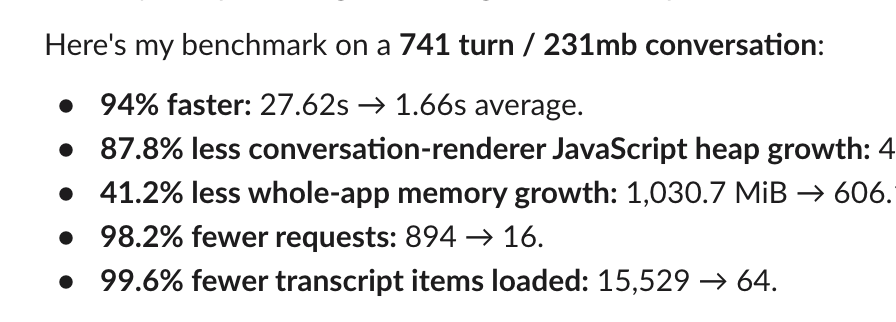
@DanDr1s shared (78 likes, 7 replies, 2,778 views, 10 bookmarks) a benchmark for a 741-turn, 231 MB ChatGPT and Codex conversation showing 94% faster load times, 87.8% less conversation-renderer heap growth, 98.2% fewer requests, and 99.6% fewer transcript items loaded. The claim mattered because it targeted the exact failure mode heavy users already feel: old agent chats turning into sluggish archives.
@analogalok argued (3 likes, 1 reply, 62 views) that “the $0 cost per task era” has arrived, citing a chart with OpenCode plus Gemini 3.7 Flash at effectively $0.00 per task and DeepSeek at $0.07 while some frontier stacks sit around $6 to $12. The engagement was small, but the artifact was useful because it made the cost spread visible rather than abstract.
@Av1dlive claimed (11 likes, 8 replies, 434 views, 5 bookmarks) to have replaced a $200/month ChatGPT habit with OpenCode Go at $10/month plus a free DeepSeek Harness workflow. Replies emphasized that proof-bearing diagrams and editable flow maps felt more useful than paying for a pricier default stack.
Discussion insight: The replies were not asking which model is smartest. They were asking whether limits are fair, whether long chats stay usable, and whether cheaper stacks are already good enough for day-to-day work.
Comparison to prior day: Pricing anxiety was already visible on 2026-08-14, but today it became more concrete: checkout screenshots, exact reset amounts, session-scale performance numbers, and explicit “I switched” cost comparisons.
1.3 Workflow scaffolding is where people are still inventing new leverage (🡕)
A third theme treated skills, orchestration, sandboxing, and observability as the real place where progress is happening. The strongest posts were not promising another universal coding assistant; they were packaging brittle operational work into reusable loops, plugins, and isolated environments. The shared pattern was simple: define the workflow around the model, not just the prompt inside it.
@github showed (60 likes, 8 replies, 20,273 views, 25 bookmarks) GitHub Copilot CLI and a community Namecheap skill taking a repo from zero to a live GitHub Pages site on a custom domain with HTTPS in about 14 minutes. The linked GitHub blog post fills in the public mechanics: enable Namecheap API access, install the skill, let it replace parking records with GitHub Pages DNS records, add the CNAME, and verify the result.
@eptwts said (23 likes, 10 replies, 793 views, 16 bookmarks) one of the biggest unlocks in vibe-coding complex systems is asking the agent to maintain a visual flow of backend processes and update it whenever the code changes. The replies made the need even clearer: one person said a skill for that already exists, and another said the map reveals parts of the system nobody remembered building.
@DanKornas introduced (7 likes, 2 replies, 770 views) Autoresearch as an autonomous iteration skill for Claude Code, OpenCode, and OpenAI Codex. The public repo describes a goal-metric-loop workflow with mechanical verification, rollback on regressions, bounded iterations, and a 14-command toolkit rather than open-ended tinkering.
@neil_xbt argued (35 likes, 5 replies, 363 views) that OpenSandbox matters more than another model release. The public OpenSandbox README backs that up with concrete infrastructure: SDKs, CLI, MCP support, Docker and Kubernetes runtimes, Credential Vault, and strong-isolation options including gVisor, Kata Containers, and Firecracker.
Discussion insight: Even small posts converged on the same rule: people do not want the model improvising from scratch every run. They want packaged skills, visible maps, isolated runtimes, and loops that can prove they improved something.
Comparison to prior day: On 2026-08-14, the operating-layer discussion centered on safety defaults, specs, and event models. On 2026-08-15, the same layer looked more installable: skills, sandboxes, orchestration loops, and task-specific automation.
2. What Frustrates People
Regressions and opaque self-healing in agent-led builds
This was the clearest High-severity frustration under the day’s biggest demos. In replies to @antigravity auth-screen demo (466 likes, 33 replies, 20,991 views, 56 bookmarks), one user said that adding new features can break features that were already working and asked what prompt prevents the cycle. In replies to @antigravity cross-cloud pipeline demo (304 likes, 12 replies, 14,552 views, 64 bookmarks), another user warned that self-healing needs a confidence threshold or it just automates the wrong fix faster.
The coping behavior was not “trust the model more.” It was to add scaffolding around it. @eptwts recommended (23 likes, 10 replies, 793 views, 16 bookmarks) forcing the agent to keep an up-to-date backend flow map so humans stop going blind to fast-moving generated code. This looks worth building for directly because the pain is not getting a prototype started; it is keeping a project coherent after repeated edits.
Pricing and quota policy still feel adversarial
This was another High-severity pain point because the complaints were specific, monetary, and immediate. @DanDr1s reported (126 likes, 31 replies, 11,439 views, 14 bookmarks) paid Codex resets at $80 for some Pro users and $8 for some Plus users, and the replies zeroed in on the claim that redeeming a reset moves the next weekly reset date forward.

Lower in the feed, people were already reacting by switching stacks instead of waiting for pricing clarity. @analogalok argued (3 likes, 1 reply, 62 views) that production developers should not pay frontier-model prices when OpenCode plus Gemini 3.7 Flash or DeepSeek can get task costs near zero, and @Av1dlive said (11 likes, 8 replies, 434 views, 5 bookmarks) a $10 OpenCode setup plus free DeepSeek Harness replaced a $200/month ChatGPT habit. This is worth building for if the product helps people predict spend before they burn credits, not after.
Persistent agents solve one pain and introduce another
Persistence attracted attention, but the replies showed why it is still a Medium-severity operational problem. @RoundtableSpace pitched (24 likes, 5 replies, 14,286 views) Grok Bots as a persistent cloud computer where files and apps survive across sessions, but replies immediately asked what happens when an app needs an update and joked that saved state can become a haunted house when OAuth expires or a modal appears in the wrong place.
A more formal version of the same problem appeared in @FlowAltDelete mapping (12 likes, 498 views, 5 bookmarks) two different Microsoft Copilot harnesses. The image says the harness is selected at creation time and cannot transfer later, which means stateful workflows gain structure but also lock in early choices. This looks worth building for competitively: teams want persistence, but they also need upgrade paths, reset paths, and visible state repair.
3. What People Wish Existed
A living system map for fast-moving AI-written code
The clearest practical need was not a bigger model window; it was a map that stays current while the agent keeps editing. @eptwts said (23 likes, 10 replies, 793 views, 16 bookmarks) the best unlock for complex vibe-coded systems is an auto-updating visual flow of backend processes, because otherwise it becomes too easy to lose track of what the agent actually changed. Replies supported that framing rather than dismissing it: one said a packaged skill already exists, another said these maps expose “rooms nobody remembered building.”
This is a practical need, not an aspirational one. Current workarounds are manual diagrams or skills layered on after the fact. Opportunity: Direct.
Spend forecasts before the session becomes expensive
People were openly asking for a way to reason about cost before committing to a workflow. @DanDr1s reported (126 likes, 31 replies, 11,439 views, 14 bookmarks) paid Codex resets with policy confusion around how they affect the next weekly allowance, while @analogalok argued (3 likes, 1 reply, 62 views) that per-task cost has already diverged enough to make premium defaults wasteful for many production jobs. @Av1dlive added (11 likes, 8 replies, 434 views, 5 bookmarks) a direct buyer behavior signal: replacing a $200 monthly habit with a $10-plus-free stack.
What people want is not another pricing page. They want a planner that connects workload shape, likely token burn, reset rules, and model routing before a long run starts. Opportunity: Direct to competitive.
Portable workflow packs that bring tools and instructions together
Multiple posts pointed to the same operational wish: install one package and get the tool plus the usage guidance in the client you already use. @github showed (60 likes, 8 replies, 20,273 views, 25 bookmarks) a Namecheap skill handling DNS work inside GitHub Copilot CLI, while @cosmicjs announced (1 like, 87 views) that Cosmic’s MCP server and Agent Skills now install as one Agent Plugin across Cursor, VS Code, GitHub Copilot, and Kiro. The linked Cosmic post makes the benefit explicit: one package ships both the MCP server and the skills that teach the agent how to use it.
This is a practical and competitive need because developers are already switching between clients. They do not want to reassemble the same setup every time. Opportunity: Competitive.
Enterprise-ready access and packaging around fast models
Some of the most explicit wish-language in the dataset came from the Antigravity replies rather than the main posts. A reply under the cross-cloud pipeline demo said Antigravity “would be even better if it had an enterprise edition,” and a reply under the changelog thread said business accounts still could not access Gemini 3.7 Flash even when personal accounts could. The same replies asked for ACP-style or app-level surfaces instead of juggling separate CLI and IDE experiences.
This is both practical and urgent: the model may be fast enough already, but availability, account parity, and deployable packaging are still uneven. Opportunity: Direct to competitive.
4. Tools and Methods in Use
| Tool | Category | Sentiment | Strengths | Limitations |
|---|---|---|---|---|
| Gemini 3.7 Flash | LLM / coding model | (+/-) | Fast enough for auth-screen generation, cross-cloud pipelines, and end-to-end game builds; cheap enough to invite loop-heavy usage | Still judged against stronger Pro-class models; trust drops when self-healing claims outrun guardrails |
| Antigravity | Agent shell | (+/-) | Strong demo surface for cross-framework output, pipeline orchestration, docs/search, and CLI Gemini API keys | Users still report regressions, extra harness setup, business-account rollout gaps, and a need for enterprise packaging |
| GitHub Copilot CLI / App | Agent shell | (+) | Turns brittle chores such as DNS setup, PR/test loops, and live-site cleanup into guided workflows | Often depends on extra skills or connected services, so the surrounding package matters as much as the model |
| Codex / ChatGPT Work | Coding assistant | (+/-) | Publicly visible work is going into making giant sessions much faster and lighter | Paid resets and weekly-limit policy changes created direct backlash |
| OpenCode | CLI agent | (+) | Attractive daily-driver economics, cheap swarms, and easy pairing with lower-cost models | Feature completeness and harness maturity still get questioned in replies |
| OpenSandbox | Sandbox infrastructure | (+) | Isolated environments, Credential Vault, CLI/SDK/MCP surface, and direct integrations for coding CLIs | No strong limitations surfaced today; the likely cost is deployment complexity rather than lack of capability |
| Latitude | Observability | (+) | One-line tracing, issue grouping, semantic search, replay-style verification, and agent dispatch | Requires API-key/project setup and a team willing to instrument before it pays off |
| Autoresearch | Skill / iteration engine | (+) | Goal-metric-loop workflow, mechanical verification, rollback, bounded iterations, and cross-agent support | Only works when success can be measured clearly; some hook guardrails are Claude Code-specific |
| Cosmic Agent Plugin | Plugin packaging | (+) | One install ships MCP tools plus skills across Cursor, VS Code, GitHub Copilot, and Kiro | GitHub Copilot support is still settling, and ChatGPT/Codex are not yet covered by this package |


The overall satisfaction spectrum favored tools that removed friction around cost, setup, or verification. Users were positive when a product made agent work cheaper, easier to install, more observable, or more structured; they were negative when the same tools hid pricing policy, broke working code, or left too much state implicit.
The clearest workarounds were to route work onto cheaper model stacks, add verification loops, and package instructions with the tool instead of relying on memory. Migration patterns ran from expensive frontier defaults toward OpenCode plus DeepSeek or Gemini-style pairings, and from hand-edited setup toward skills, plugins, and orchestrators.
Competitive dynamics were increasingly about packaging rather than raw model identity. Gemini 3.7 Flash kept surfacing because Antigravity wrapped it in concrete demos; GitHub Copilot kept surfacing when it shipped real operational workflows; and infrastructure projects such as OpenSandbox, Latitude, and Autoresearch got attention because they make whatever model you choose behave better.
5. What People Are Building
| Project | Who built it | What it does | Problem it solves | Stack | Stage | Links |
|---|---|---|---|---|---|---|
| OpenSandbox | opensandbox-group | General-purpose sandbox platform for AI applications and coding agents | Agents need isolated execution, credential handling, and runtime control without replacing their existing CLI | Multi-language SDKs, CLI, MCP, Docker, Kubernetes, gVisor, Kata Containers, Firecracker, Credential Vault | Shipped | repo |
| Autoresearch | uditgoenka | Autonomous iteration skill that loops on a measurable goal and reverts bad changes | Vague “improve this” prompts without proof or rollback | Claude Code/OpenCode/Codex skills, git, verification loops, hooks | Shipped | repo |
| Latitude | latitude-dev | Observability and repair platform for AI agents | Teams shipping agents without trace visibility or grouped failures | Telemetry SDKs, sessions, tool-call observability, MCP, CLI, agent dispatch | Shipped | repo |
| Anthropic Cybersecurity Skills | mukul975 | Structured security skill library for coding agents | Generic agents lack senior-analyst security workflows | agentskills.io, 817 skills, 29 domains, 6 framework mappings, multi-agent compatibility |
Shipped | repo |
| AgentBar | dannypostma | macOS menu-bar monitor for live coding-agent sessions | Hard to see which local agent session needs attention | Swift/macOS app, local session polling, Claude Code/Grok/Codex hooks | Shipped | repo |
| SP Permissions Explorer | Aimery Thomas | SharePoint Copilot app for interactive access review and guarded writes | Text-only Copilot answers are weak for permissions administration | SPFx 1.24, React 17, SharePoint REST, Microsoft 365 Copilot, Heft | Beta | repo |
| Cosmic Agent Plugin | Cosmic JS | Portable package that ships MCP tools plus skills across editors | Repeating MCP and skill setup in every client | Agent Plugins spec, MCP, bundled skills, credentialed and signup server modes | Shipped | repo, blog |
@neil_xbt highlighted (35 likes, 5 replies, 363 views) OpenSandbox as infrastructure rather than another assistant wrapper. The public repo confirms why it matters: it does not ask teams to abandon Claude Code, Cursor, Codex, or Gemini CLI; it gives them isolated runtimes, CLI and MCP surfaces, secure credential injection, and stronger containment beneath those tools.

@DanKornas introduced (7 likes, 2 replies, 770 views) Autoresearch as a skill for repetitive improvement work instead of one-shot prompting. The public repo’s core distinction is procedural: define a goal, measure the baseline, make one change, verify mechanically, and revert if the metric gets worse. That makes it a workflow engine for agent work, not just a prompt library.

@gideonxqt framed (13 likes, 4 replies, 93 views, 9 bookmarks) Latitude as “open-source Sentry, but for AI agents,” and the public Latitude README backs that up with traces, grouped issues, semantic search, agent dispatch, and replay-style verification. @MAXdeg0 surfaced (42 likes, 23 replies, 1,398 views, 18 bookmarks) a different kind of layer: Anthropic Cybersecurity Skills, a large structured skill library that gives agents domain procedures instead of leaving them to improvise security work from scratch.
The smaller utilities point in the same direction. @joelmoss linked (1 like, 43 views) AgentBar as a local session-awareness utility, @schneika pointed to (3 likes, 31 views, 3 bookmarks) SP Permissions Explorer as a guarded Copilot admin surface, and @cosmicjs packaged (1 like, 87 views) MCP plus skills into one plugin install. The repeated build pattern was clear: people are not racing to publish new base models; they are building focused operating layers that make existing agents safer, more observable, more portable, or more task-specific.
6. New and Notable
OpenAI exposed both the price and the optimization work behind long Codex sessions
Two separate tweets made the same underlying system newly visible. @DanDr1s reported (126 likes, 31 replies, 11,439 views, 14 bookmarks) paid Codex usage resets with confusing effects on the next weekly allowance, while the same account shared (78 likes, 7 replies, 2,778 views, 10 bookmarks) benchmark work aimed at making a 741-turn, 231 MB ChatGPT and Codex conversation dramatically lighter. Together they made session economics legible from both directions: how much a heavy user might pay, and how much infrastructure work is going into keeping giant sessions usable.
Community skills reached real operational chores
The most notable packaging signal was that public skills were handling work that developers usually dread rather than only helping with prompts. @github showed (60 likes, 8 replies, 20,273 views, 25 bookmarks) a community Namecheap skill wiring up custom-domain DNS for GitHub Pages, and @cosmicjs announced (1 like, 87 views) a plugin package that ships both MCP tools and the skills to use them across several clients. That matters because it shifts “skill” from reusable prompt snippet to installable operational surface.
7. Where the Opportunities Are
[+++] Regression-safe agent scaffolding — The strongest evidence of the day came from enthusiasm for concrete agent output paired with anxiety about what happens on the sixth or tenth edit. Antigravity replies described working features breaking after new changes, the cross-cloud pipeline thread called for confidence thresholds on self-healing, and eptwts argued for living system maps. OpenSandbox, Latitude, and Autoresearch point toward the same opening: products that make long-running agent work observable, verifiable, and easy to recover when it drifts.
[++] Spend and quota orchestration — Paid Codex resets, per-task cost charts, and explicit switches to OpenCode plus DeepSeek or Gemini show that people are already routing work by economics. A useful product here would estimate likely cost before a run, choose a cheaper good-enough path automatically, and warn when a workflow is about to cross into expensive territory or reset-policy traps.
[+] Portable operational skill packs — GitHub’s Namecheap workflow, Cosmic’s plugin bundle, SP Permissions Explorer, and AgentBar all show appetite for narrow packages that turn a recurring chore into an installable agent capability. The emerging opportunity is not another general assistant. It is small, portable workflow products that carry tools, instructions, and guardrails together.
8. Takeaways
- Concrete engineering chores beat abstract AI-coding hype. The day’s top engagement went to Antigravity demos for native auth screens and cross-cloud pipelines, not generic “agentic future” claims. (auth screens)
- Session economics now shape product perception as much as raw capability. Pricing friction around Codex resets and visible work on huge-session performance both landed as major signals because heavy users care about cost and usability together. (paid resets)
- The strongest builder energy is going into operating layers around agents. OpenSandbox, Latitude, Autoresearch, and Anthropic Cybersecurity Skills all add isolation, observability, verification, or domain knowledge beneath existing model shells rather than replacing them. (OpenSandbox)
- Installable skills and plugins are starting to own brittle operational work. The Namecheap skill for GitHub Pages and Cosmic’s Agent Plugin both show that packaging tools with instructions is becoming a product category of its own. (GitHub Copilot CLI + Namecheap)