Twitter AI Coding - 2026-08-17
1. What People Are Talking About
1.1 Complete agent products, not isolated models, drove the strongest Codex conversation (🡕)
The biggest discussion cluster treated AI coding tools as full products with uptime, memory, remote-control surfaces, price, and ownership tradeoffs rather than as abstract model rankings. At least four distinct items supported the shift: a top-engagement Codex checklist framed the product around reliability and resets, a long comparison post weighed Grok Bot against Hermes and ChatGPT Work on persistent-computer UX, Codex Remote for iOS supplied a concrete mobile-control example, and Rakazo turned the same product category into a self-hosted build.
@thsottiaux framed (4,539 likes, 615 replies, 247,224 views, 228 bookmarks) Codex as “almost 100% reliable,” “occasional resets,” “open-source,” and “will have Astra,” and the attached uptime panel is what made the post land: it showed Codex Web at 99.98% uptime and the API, CLI, and VS Code extension at 100%. The replies immediately complicated the celebration with concrete complaints about paid-plan exhaustion, users burning through Sol faster than Opus, and requests for a reset product that does not push the next weekly allowance back another seven days.

@petergyang compared (160 likes, 27 replies, 24,766 views, 110 bookmarks) Grok Bot, Hermes, and ChatGPT Work on the product axis users now seem to care about most: does the agent have a persistent computer, how much setup does it require, and how painful is the UI. The attached comparison card is unusually dense evidence: Hermes is open and customizable but DIY, ChatGPT Work gets the best marks for browser use and voice but is “confusing across Chat, Work, and Codex,” and Grok Bot feels best as a persistent cloud computer but starts at $200/month.

@viticci argued (6 likes, 2 replies, 363 views) that Codex Remote for iOS is uniquely strong because it can start from the phone rather than requiring a Mac handoff first. His screenshots matter more than the claim alone: one shows the multi-thread remote UI on iPhone, another shows Codex walking through a hardware-control sequence, and the post ends with specific missing pieces rather than hype alone, including widgets, iOS framework integrations, and Files app access.
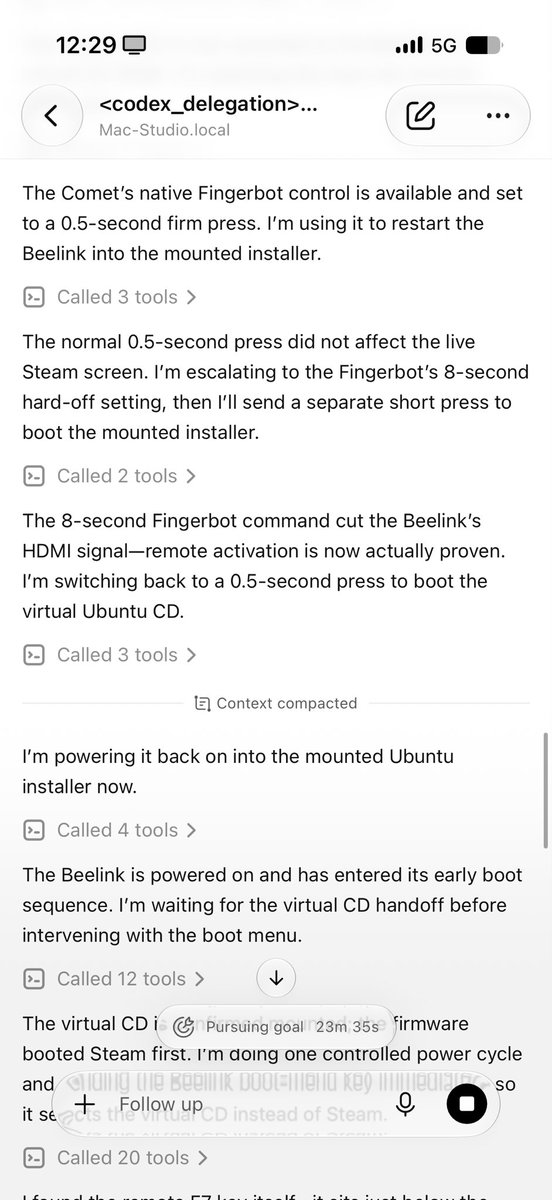
@Granite0x highlighted (53 likes, 8 replies, 4,056 views, 88 bookmarks) Rakazo as an open-source Grok Bot alternative, and the public Rakazo repo adds the important details: one thread and one computer per bot, web/desktop/mobile clients, bot spawning, bring-your-own model, and Docker/E2B/desktop sandbox choices. The repo README also makes the tradeoff explicit: it is early beta and still expects Docker, Postgres, and an operator willing to self-host.
Discussion insight: The replies were not mostly about benchmark wins. They were about reset policy, rent-versus-own tradeoffs, whether a persistent computer is worth $200/month, and whether remote surfaces really let work continue from a phone.
Comparison to prior day: On 2026-08-16, Codex discussion centered on 1M context, hidden model switches, and quota boundaries. On 2026-08-17, the same product was judged more like a complete operating environment: uptime, remote access, memory, UI clarity, and ownership of the underlying computer.
1.2 Antigravity and Gemini 3.7 Flash moved back toward the center, but the skepticism got more operational (🡕)
Antigravity returned as a stronger cluster than the previous day, and this time the discussion mixed official demos, pricing, workflow guidance, and feature-parity complaints. At least five items reinforced the same pattern: Google pushed a one-prompt landing-page demo, a pricing post positioned Gemini 3.7 Flash as a production workhorse, a developer guide translated that into operating advice, a practitioner said they could not go back to 3.6 Flash after extended testing, and another user questioned why voice input worked for Gemini but not Claude inside Antigravity.
@Google showed (629 likes, 38 replies, 118,902 views, 333 bookmarks) Gemini 3.7 Flash plus Nano Banana and Omni generating an interactive landing page in Antigravity from a single prompt, including copy, images, and video. The replies made the post more useful than the demo itself: several responders said the real test is whether the page stays editable after the first “move this” request, whether the copy is any good on the first shot, and whether the generated components survive A/B testing and evaluation.
@0xerfa summarized (158 likes, 61 replies, 4,460 views) the public Gemini 3.7 Flash rate card at $0.75 per million input tokens and $3.75 per million output tokens through the end of 2026, then double that afterward, with rollout across the Gemini API, Antigravity, AI Studio, Android Studio, Gemini Enterprise, and Gemini Spark. The replies were mixed enough to matter: some called the launch price aggressive for production agents, while others still read it as expensive enough to require careful routing.
@JackWoth98 shared (195 likes, 8 replies, 27,581 views, 120 bookmarks) the day’s clearest operational guide for Gemini 3.7 Flash: change thinking level by task, feed the model screenshots or connected design tools, and use Antigravity subagents with model: flash. That was a small but important signal that the conversation is moving from “look what it can do” to “here is how you actually drive it.”
@thtbee_ reported (49 likes, 7 replies, 3,798 views, 14 bookmarks) that after days of testing they could not go back to 3.6 Flash, while still promising a breakdown of what was good and what was broken. Even without the linked long-form article, that tweet added first-hand, non-official validation that 3.7 Flash felt materially different in day-to-day use.
@ash_twtz asked (43 likes, 36 replies, 2,448 views) why Antigravity exposes voice input for Gemini but not Claude. That complaint mattered because it turned a model launch story into a surface-parity story: users were not only comparing output quality, they were comparing which model gets the better product treatment.
Discussion insight: The skepticism around Antigravity was no longer “can it build something flashy?” It was “does it stay editable, does the copy hold up, what does the price imply at scale, and why do some models get better surfaces than others?”
Comparison to prior day: On 2026-08-15 and 2026-08-16, Antigravity’s strongest examples were auth screens, pipelines, docs, and specialized workflows. On 2026-08-17, the cluster got broader and more commercial: landing pages, launch pricing, official usage guidance, and product-surface parity questions.
1.3 Review, observability, and control layers kept growing around the agent output flood (🡕)
A third cluster focused less on generating code and more on surviving the amount of agent work now landing on teams. The common pattern was explicit control surfaces: review-depth settings, session dashboards, shared skill managers, response-to-diagram canvases, and data showing why the review problem is getting harder in the first place. This was one of the clearest continuations from the prior week, but with more emphasis on inspection and triage than on raw installation.
@github announced (204 likes, 17 replies, 47,704 views, 58 bookmarks) Balanced versus Lite Copilot code review depth, with org- and repo-level defaults. The replies immediately pushed the abstraction further by saying review depth should follow change risk rather than file count, which makes the feature read as a first official attempt to ration agent attention sensibly.
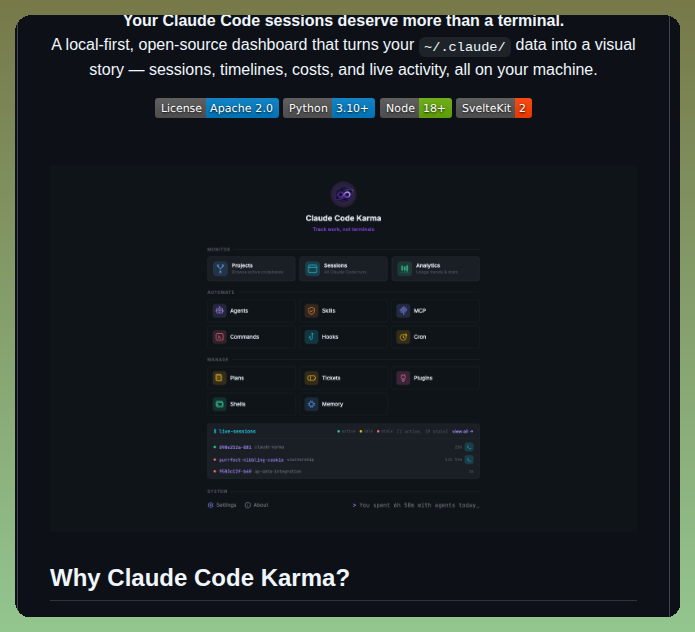
@tom_doerr pointed to (7 likes, 2 replies, 1,485 views, 5 bookmarks) Claude Code Karma, and the public repo explains the appeal: a local-first dashboard over ~/.claude/ session data that surfaces timelines, costs, tool calls, shells, skills, hooks, and tickets. That is exactly the kind of “make the invisible work legible” layer that heavy agent users keep inventing.
@DanWahlin showed (10 likes, 1 reply, 673 views) a “Visualize It” canvas for the GitHub Copilot app that turns a long agent answer into an architecture diagram, flowchart, sequence, or timeline, then lets Copilot refine it. The post was modest in reach, but it directly targets a pain point that plain summaries do not solve: people often need to see the structure before they can review the change.
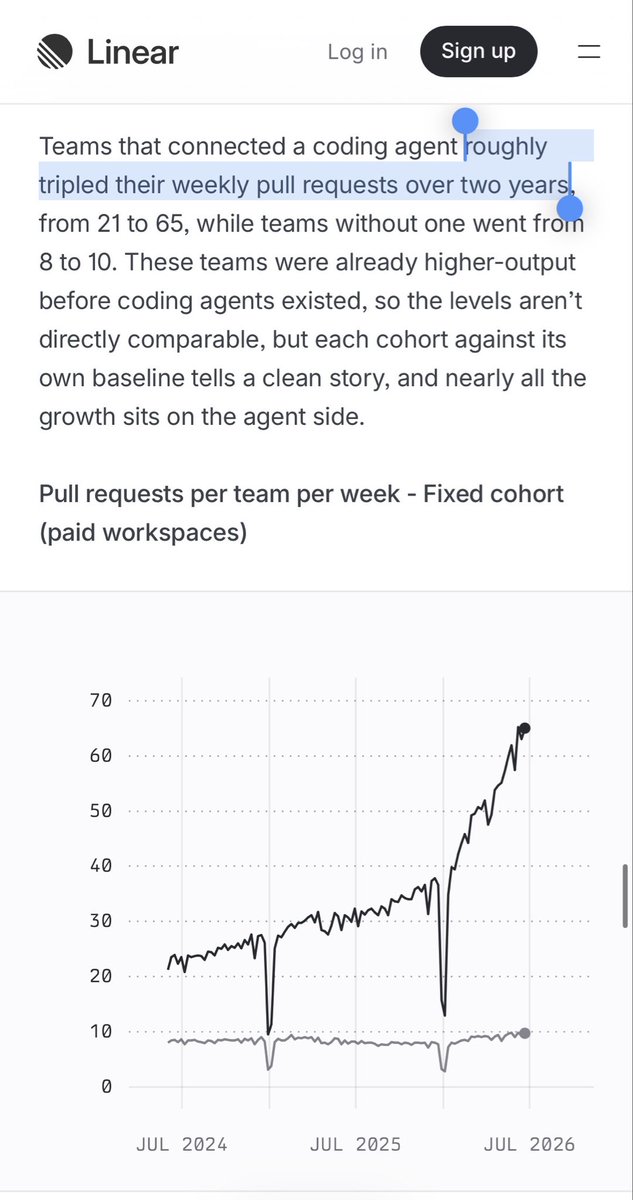
@GergelyOrosz warned (14 likes, 2 replies, 2,454 views, 4 bookmarks) that code reviews may stop holding up at many startups, and the linked Linear report gives the strongest numbers in the dataset for why: pull requests opened per workspace are up 111% versus a June 2024 baseline, and coding-agent teams roughly tripled weekly pull requests from 21 to 65 while traditional teams moved from 8 to 10.
Discussion insight: People were not merely asking for “better AI.” They were asking for better ways to size reviews, inspect sessions, reuse skills across clients, and convert dense output into something a human can verify quickly.
Comparison to prior day: On 2026-08-15 and 2026-08-16, skills and observability already mattered. On 2026-08-17, the same layer tilted more clearly toward review capacity and interpretability: right-sized reviews, PR-volume data, session analytics, and diagram views.
2. What Frustrates People
Access, pricing, and feature parity still feel inconsistent across accounts and surfaces
This was a High-severity frustration because it appeared in both big and small posts, and it was concrete rather than theoretical. The highest-engagement Codex thread of the day still drew replies about burning through paid usage in two days and wanting a reset option that does not shove the next weekly reset back another seven days under @thsottiaux post (4,539 likes, 615 replies, 247,224 views, 228 bookmarks). On the Gemini side, @0xerfa surfaced (158 likes, 61 replies, 4,460 views) a temporary Gemini 3.7 Flash launch price that some replies called aggressive and others still called expensive for production agents.
The more damaging evidence was that access rules and surfaces do not appear consistent even before pricing questions start. @ash_twtz asked (43 likes, 36 replies, 2,448 views) why Antigravity voice input works for Gemini but not Claude, and @GundiThore complained (4 likes, 4 replies, 196 views) that a paid Gemini account was blocked from Antigravity while free Google accounts still worked. This looks worth building for directly. The pain is not just “models cost money”; it is “I cannot predict which account, model, or surface will let me do the work.”
Review burden is rising faster than teams can comfortably inspect it
This was another High-severity pain point, and the evidence crossed product announcements, public data, and security failures. @github introduced (204 likes, 17 replies, 47,704 views, 58 bookmarks) Balanced versus Lite review depth because not every pull request deserves the same amount of agent attention. @GergelyOrosz warned (14 likes, 2 replies, 2,454 views, 4 bookmarks) that code reviews may stop holding up at startups, and Linear's public report backs that warning with numbers: pull requests are up 111% versus June 2024, while coding-agent teams went from 21 to 65 pull requests per team per week.
The most concrete failure story came from @galnagli reporting (37 likes, 1 reply, 2,279 views, 9 bookmarks) that an AI attacker reached Snowflake's internal Jira through a crafted GitHub issue title after a vulnerable change had been introduced by “Copilot Autofix powered by AI.” Even if the thread summarized someone else’s research, the public artifact was still precise: the complaint was not “AI code feels risky”; it was that an AI-generated fix removed the safe version and another AI system exploited the result.

This is worth building for directly because the coping behavior is already visible: right-sized review modes, diagrams, dashboards, and more explicit verification layers. The pain is repeated, practical, and close to production risk.
Persistent and remote agent workflows are still compelling but awkward to own
The demand here was obvious, but so were the gaps. In @petergyang comparison (160 likes, 27 replies, 24,766 views, 110 bookmarks), Grok Bot had the cleanest persistent-computer experience but started at $200/month, Hermes stayed open and customizable but required DIY setup, and ChatGPT Work still had confusing product boundaries and could not authenticate into favorite apps yet. @viticci loved the unique iPhone-first Codex Remote flow, but still asked for widgets, iOS framework integrations, and Files app access.
@Granite0x pitched (53 likes, 8 replies, 4,056 views, 88 bookmarks) Rakazo as the answer to those tradeoffs, but the public repo still labels it beta and expects Docker, Postgres, and operator effort. This looks worth building for competitively. Severity: Medium-High. The need is clear, but users are still choosing between rent, setup pain, and missing integrations.
Hosted-assistant dependence is still an operational risk
The evidence here was thinner, but it was direct. @githubstatus reported (13 likes, 11 replies, 2,638 views) degraded Copilot availability, and @FredTerzi said (14 likes, 2 replies, 215 views, 3 bookmarks) the impact was lower only because he was already running Qwen locally. That is a useful distinction: some users are no longer solving downtime with patience; they are solving it with fallback stacks.
This looks worth building for if the product can make failover, local fallback, or degraded-mode routing automatic. Severity: Medium.
3. What People Wish Existed
A cross-provider control plane for access, spend, and surface parity
What people kept asking for was not one more flagship model. It was a way to predict which account, model, and surface will actually cooperate before the session starts. @0xerfa posted Gemini 3.7 Flash pricing and rollout details, @ash_twtz pointed to a Gemini-versus-Claude voice-input gap inside Antigravity, @GundiThore described paid-account access behaving worse than free-account access, and replies under @thsottiaux thread asked for clearer reset economics.
This is a practical need, not an aspirational one. People are already routing work around confusing access rules manually. Opportunity: direct.
Reviewable representations of agent work instead of more prose
The strongest wish today was not for more output. It was for output humans can inspect quickly. @github added Balanced and Lite review depth because one-size-fits-all review was no longer holding up. @DanWahlin built a Copilot canvas that turns responses into diagrams, and @tom_doerr shared Claude Code Karma because terminal logs and JSONL files are too hard to reason about at scale.
Linear's public numbers make the urgency plain: coding-agent teams roughly tripled weekly pull requests from 21 to 65, according to the report @GergelyOrosz cited. That is effectively wish-language backed by workflow data. Opportunity: direct.
Portable persistent computers without closed pricing or DIY pain
@petergyang laid out the current tradeoff cleanly: Grok Bot has the built-in persistent computer but costs $200/month, Hermes is customizable but DIY, and ChatGPT Work still has product and auth friction. @viticci showed what the desired end state looks like on mobile—full phone-first remote control with voice—and @Granite0x surfaced Rakazo as the open build aimed at that gap.
The wish here is clear: keep the persistent computer, memory, and remote-control convenience, but remove either the closed pricing or the operator pain. Opportunity: direct to competitive.
Shared skill lifecycle across clients and agents
@DanKornas argued that coding-agent skills should not need separate upkeep in every client, and the public Skills Manager repo spells out the product shape users want: Library → Collection → Mount, multi-agent installs, discovery, and local lifecycle controls. This is wish-language in product form. Users want one reusable skill inventory, not five copies of the same instructions scattered across tool-specific folders.
Current partial answers exist, but they are still fragmented by client. Opportunity: competitive.
4. Tools and Methods in Use
| Tool | Category | Sentiment | Strengths | Limitations |
|---|---|---|---|---|
| Codex / Codex Remote | Coding agent / remote workflow | (+/-) | Strong product perception around uptime, open-source trajectory, iOS-first remote control, and voice-driven thread dispatch | Paid-plan exhaustion, reset complaints, and open questions around “Astra” and product clarity |
| Gemini 3.7 Flash | LLM / coding model | (+/-) | Strong enough to draw explicit upgrade sentiment from 3.6; official guidance now covers thinking levels, screenshots, and subagent use | Launch pricing still drew mixed reactions, and users are still waiting to see long-run production value |
| Antigravity | Agent shell | (+/-) | Powerful one-shot generation demos and broad rollout across Google surfaces; supports Gemini voice input and subagent workflows | Users questioned editability after the first change request and complained about model-surface feature gaps |
| ChatGPT Work | Persistent work surface | (+/-) | Best-in-class browser use and voice in the day’s comparisons; still a daily-driver for some power users | Confusing split across Chat, Work, and Codex; browser cannot auth favorite apps yet |
| Grok Bot | Persistent cloud computer | (+) | Strongest “agent has its own computer” product feel in comparisons; simple and focused UX | $200/month starting price and less flexibility for multi-thread workflows |
| Hermes | Self-hosted agent runtime | (+/-) | Open source and highly customizable | DIY setup burden remained the main complaint, even when replies argued setup is getting easier |
| Rakazo | Self-hosted persistent runtime | (+) | Brings persistent bot computers, model choice, and sandbox choice into an inspectable self-hosted product | Still beta and requires Docker, Postgres, and operator effort |
| GitHub Copilot review depth | Review control surface | (+) | Lets teams map agent effort to change complexity and set defaults at org/repo level | Still only a coarse control; replies wanted review tuned to riskier code paths, not just depth |
| Skills Manager | Skill lifecycle management | (+) | Reusable Library → Collection → Mount model, multi-agent installs, discovery, and local-first control | macOS-only app and still another layer teams must adopt deliberately |
| Claude Code Karma | Observability | (+) | Turns local session data into timelines, costs, tool-call history, and live activity without a cloud dependency | Best fit for users already deep into Claude Code workflows rather than casual agent users |
The satisfaction spectrum favored tools that owned a complete workflow boundary: persistent computers, phone-first remotes, explicit review depth, shared skill libraries, or local observability. Friction appeared when the user still had to guess which account would work, how much the run would cost, or where the real state of the agent lived.
The most common workarounds were to self-host or go local when hosted products got expensive or unavailable, package reusable skills instead of re-copying them between tools, and convert long prose into dashboards or diagrams. Migration pressure was moving away from generic chat surfaces and toward persistent agent computers, as well as away from per-client configuration sprawl and toward shared control planes.
Competitive dynamics looked less like “which frontier model wins?” and more like “which product makes the model usable under real constraints?” Codex, Antigravity, Grok Bot, ChatGPT Work, Rakazo, Skills Manager, and Copilot all got attention because they changed the operating surface around the model, not because they introduced a new benchmark result.
5. What People Are Building
| Project | Who built it | What it does | Problem it solves | Stack | Stage | Links |
|---|---|---|---|---|---|---|
| Rakazo | elie222 | Open-source Grok Bot alternative with one thread and one computer per bot | Gives teams a persistent agent computer without renting a closed control plane | TypeScript, React 19, Electron, Expo, Hono, Postgres, Prisma, Better Auth, Graphile Worker, Docker/E2B/desktop sandboxes | Beta | post · repo |
| Claude Code Karma | JayantDevkar | Local-first dashboard for Claude Code sessions, timelines, costs, tools, shells, hooks, and tickets | Turns buried ~/.claude/ session data into something humans can inspect and search |
Python, Node, SvelteKit, local ~/.claude/ data |
Shipped | post · repo |
| Skills Manager | yibie | Native macOS app for discovering, grouping, mounting, and updating skills across coding agents | Removes duplicate skill upkeep across Codex, Cursor, Copilot, Gemini CLI, and other clients | SwiftUI, Swift 6, SwiftData, local Library → Collection → Mount workflow | Shipped | post · repo |
| Visualize It | @DanWahlin | GitHub Copilot canvas that turns agent responses into diagrams and lets Copilot refine them | Makes long, abstract agent responses easier to review and discuss | GitHub Copilot app, diagram canvas, architecture/flowchart/sequence/timeline views | Alpha | post |
Rakazo was the most structurally ambitious build in the set. The public README makes its angle unusually clear: one bot gets one thread and one computer, users bring their own model and sandbox, and the product can run without a Rakazo-operated control plane. That makes it less a “prompt wrapper” than a direct attempt to unbundle persistent agent computers from a closed vendor product.
Claude Code Karma and Visualize It attacked a different bottleneck: understanding what agents already did. Karma turns local session logs into timelines, cost views, tool histories, and ticket links, while Visualize It tries to convert a long Copilot answer into a reviewable diagram instead of another wall of prose.
Skills Manager was the cleanest “control plane for the control plane” build. Its public README says the core model is Library → Collection → Mount, which means skills live once, get grouped for a workflow, then mount into one or more agents on demand instead of being copied into each client separately.

Visualize It was smaller in reach but important in direction. The point is not another model feature. The point is to produce an artifact a human can interrogate quickly when the agent’s natural-language answer is too long or too abstract to review efficiently.

The repeated build pattern was clear: builders were mostly working on the operating layer around agents. They were not announcing new base models. They were building persistence, observability, lifecycle management, and representation tools so existing agents could be trusted, reused, or inspected.
6. New and Notable
Linear put hard numbers under the “too many PRs” concern
The notable part of @GergelyOrosz post (14 likes, 2 replies, 2,454 views, 4 bookmarks) was not the warning alone. It was that the linked Linear report gave public workflow numbers strong enough to anchor the warning: pull requests per workspace are up 111% versus a June 2024 baseline, coding-agent teams went from 21 to 65 pull requests per team per week, and AI now authors just under half of all issues created in Linear. That turns “review overload” from a vibe into a measurable workflow shift.
The Snowflake/Jira exploit made a full AI-on-AI failure chain public
The second notable signal was how specific the Snowflake thread became. @galnagli said (37 likes, 1 reply, 2,279 views, 9 bookmarks) an AI attacker reached Snowflake’s internal Jira through a crafted public GitHub issue title after the vulnerable change had been introduced by “Copilot Autofix powered by AI,” while @wiz_io amplified (7 likes, 2 replies, 727 views) the same claim. That mattered because the failure was not described as general sloppiness; it was described as a chain where one AI system introduced the bug, another AI review layer missed it, and another AI system exploited it.
7. Where the Opportunities Are
[+++] Review, audit, and visualization layers for agent output — Evidence runs across sections 1-6: Copilot review depth, Claude Code Karma, Visualize It, Linear’s PR-growth data, and the Snowflake Autofix failure all point the same way. Teams do not just need more generation. They need faster ways to inspect, size, diagram, and verify what agents already produced.
[++] Portable persistent agent computers — Peterg Yang’s Grok Bot/Hermes/ChatGPT Work comparison, Viticci’s iPhone-first Codex Remote workflow, and Rakazo’s self-hosted runtime all show strong demand for agents that keep state, stay logged in, and can keep working across sessions. The opportunity is moderate because the need is obvious, but current answers still split between expensive hosted products and operator-heavy self-hosting.
[+] Cross-agent skill, access, and routing control planes — Skills Manager, Gemini surface-parity complaints, paid-versus-free account inconsistencies, and launch-price debates all suggest room for a layer that decides where a task should run and how shared skills should follow it. The signal is emerging rather than dominant, but the pain is concrete enough to support focused products.
8. Takeaways
- The strongest AI-coding posts were about product shape, not model IQ. The biggest Codex and persistent-computer threads focused on uptime, resets, remote control, memory, and who owns the computer, not on benchmark bragging. (source)
- Antigravity regained momentum, but the crowd now tests it on editability, pricing, and parity. Google’s one-shot landing-page demo got attention, yet the useful replies immediately asked whether the page survives follow-up edits, whether the copy holds up, and why Gemini gets better voice treatment than Claude. (source)
- The review bottleneck is becoming measurable enough that product controls are following it. GitHub shipped adjustable review depth on the same day that Linear’s public data and Gergely’s summary reinforced just how fast PR volume is climbing on coding-agent teams. (source)
- Builders are spending more energy on the operating layer around agents than on new models. Rakazo, Claude Code Karma, Skills Manager, and Visualize It all try to make existing agents more ownable, inspectable, reusable, or understandable. (source)