Twitter AI Coding - 2026-09-02
1. What People Are Talking About
1.1 Antigravity shifted from general momentum to concrete Gemini 3.8 rollout signals (🡕)
The strongest Twitter cluster was no longer abstract praise for Google's coding stack. It was concrete evidence-gathering around what had changed inside Antigravity on the day Gemini 3.8 Flash launched: model-picker removals, binary references to additional models, firsthand reports that limits felt looser, and an official pricing-and-availability post from Google. At least four separate items supported this theme.
@thtbee_ reported (109 likes, 11 replies, 7,983 views, 5 bookmarks) that Gemini 3.5 Flash had disappeared from the Antigravity model picker and treated that as a launch signal for Gemini 3.8 Flash. The replies turned that into a product-readiness discussion rather than a benchmark argument: one user said they would not miss 3.5, while another immediately asked for a stronger Pro tier.

@mrfanduu reported (389 likes, 31 replies, 21,629 views, 31 bookmarks, 8 quotes) that glm-5.2-fp8 references had been spotted inside antigravity-cli 1.1.24. The image matters because it turns a rumor into a specific surface, provider, and display name tied to a binary audit, and the replies immediately argued over whether Google should be shipping GLM 5.2 or 5.3 instead.

@SalenoXP said (302 likes, 35 replies, 17,219 views, 26 bookmarks, 3 quotes) Antigravity usage suddenly felt "BUFFED," to the point that either Google had raised limits or Gemini 3.8 Flash was materially more efficient than what had been serving similar workloads before. That was one of the clearest practitioner posts of the day because it evaluated the product through quota behavior instead of through benchmark scores.
@Google announced (58 likes, 4 replies, 12,907 views) that Gemini 3.8 Flash was available that day across Antigravity, Google AI Studio, Android Studio, Gemini Enterprise, Google AI Pro and Ultra, AI Mode in Search, and Gemini in Google Sheets, with introductory pricing of $0.75 input and $3.75 output per 1M tokens.
Discussion insight: Users were reading model pickers, binaries, and quotas the way teams once read release notes. The replies show that launch-day sentiment was not just "Google is back"; it was "which surface changed, which tier is missing, and what does that imply about what ships next?"
Comparison to prior day: On 2026-09-01, Antigravity conversation centered on /boost, 3.7 Flash showcase examples, and public claims of research-grade results. On 2026-09-02, that energy turned into concrete rollout watching around Gemini 3.8 Flash and adjacent model surfaces.
1.2 GitHub Copilot became the distribution layer where model launches met real-world evaluation (🡕)
GitHub Copilot showed up less as a coding assistant brand and more as a switching layer for models, inference cost controls, and long-running agent claims. At least five high-signal items supported this: GitHub's Claude Fable 5.1 launch, product-surface confirmation inside Copilot, a public one-shot game demo, SOMA's compression layer for Copilot, and reply threads focused on reviewability and governance.
@github announced (153 likes, 23 replies, 21,087 views, 14 bookmarks, 3 quotes) that Claude Fable 5.1 was generally available in GitHub Copilot for long-running coding tasks, deep codebase research, and complex agentic workflows. The replies added the key enterprise caveat: unlike other Claude models in Copilot, Fable 5.1 requires data retention by default for Anthropic safety classifiers, with zero-retention access available only to eligible enterprise customers under a time-bound exception. A separate reply from @enhansai argued that long-running work fails differently from short tasks because it can go wrong "three steps back" while still compiling.
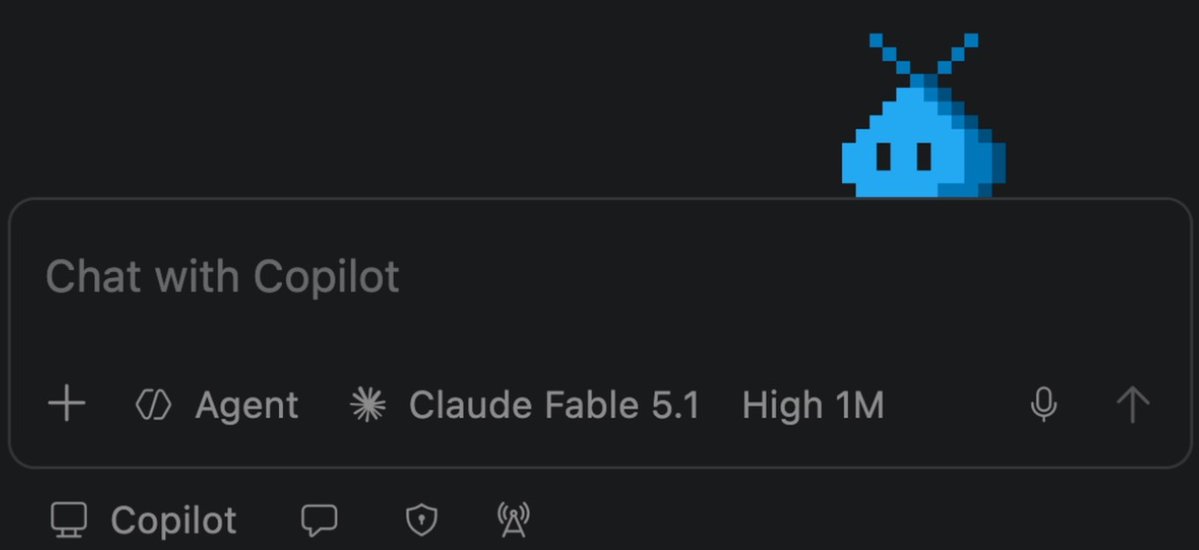
@code echoed (157 likes, 13 replies, 18,603 views, 13 bookmarks) the launch from the product account, and the screenshot shows Fable 5.1 selectable inside Copilot Agent mode. The most useful replies were not cheering; they were asking whether the model could recover from wrong turns, avoid inventing helper files, and stay reviewable on real codebases.
@burkeholland published (67 likes, 17 replies, 5,169 views, 26 bookmarks) a live browser game after giving Copilot a single prompt to build a first-person multiplayer game where a baby bird explores a countryside. He later said he had added small details after the first run, but that the camera controls, environment, weather, structures, creatures, and interactivity were largely part of the one-shot output, and he put the result online at fledglinggame.com despite warning that it was on the cheapest hosting tier and not tested for load.
@LisaFlorentina8 summarized (11 likes, 12 replies, 395 views) SOMA's GitHub Copilot launch: DeepSeek V4 Pro sessions were getting about 10% token savings from compressing repeated agent context before it hit the model, with $5 in credits and no platform fees during early access. The important detail was architectural rather than financial: SOMA was positioned as a layer between the agent and the model, not as a model replacement.

Discussion insight: The community reaction was already beyond launch-day novelty. The Copilot threads kept coming back to governance gates, data-retention defaults, recovery from wrong turns, and whether savings layers or stronger models change the day-to-day experience enough to justify trust.
Comparison to prior day: On 2026-09-01, Copilot appeared more as a modernization and code-review surface. On 2026-09-02, it looked more like the enterprise distribution layer where new models and new infrastructure get battle-tested.
1.3 Specs, skills, and marketplaces kept replacing freeform prompting as the control layer (🡕)
The anti-slop answer was still not "use a smarter model." It was "add structure, package judgment, and distribute it." Four items made that especially clear: a spec-first workflow pitch around Spec Kit, a sprawling map of agent stores and registries, Obsidian vault skills, and marketplace memory plugins.
@txbrraa argued (56 likes, 18 replies, 790 views, 11 bookmarks) that GitHub's Spec Kit fixes the biggest problem with vibe coding by forcing a specification before implementation. The linked repo describes a reusable process built around /speckit-constitution, /speckit-specify, /speckit-plan, /speckit-tasks, /speckit-implement, and /speckit-converge; the strongest replies said the real test is whether the spec still matches the code after the third change request, not whether the initial demo looks clean.
@illyism claimed (14 likes, 7 replies, 4,413 views, 79 bookmarks) that "traditional SEO is dead" because AI agents, plugins, and skills now need distribution inside first-party stores, canonical registries, hosted MCP directories, and community catalogs. The thread named ChatGPT apps and GPTs, Claude Marketplace, Claude Code catalogs, Cursor Marketplace, GitHub Copilot plugins, the official MCP Registry, Smithery, Glama, PulseMCP, and Vercel marketplace surfaces, which made discovery itself look like a new category problem.
@RoundtableSpace highlighted (37 likes, 12 replies, 24,962 views, 4 bookmarks) obsidian-skills, a cross-tool skill set that lets Claude Code, Codex, and OpenCode read, write, organize, and control an Obsidian vault. The screenshot is useful because it shows actual install paths across marketplace commands, npx skills, and local Claude/Codex/OpenCode directories, while the replies split between excitement about memory persistence and concern about note-level prompt injection.

@DhravyaShah announced (11 likes, 3 replies, 837 views) that supermemory was live in the Cursor marketplace and could plug into Cursor, Claude Code, Codex, Amp, Google Antigravity, Grok Bot, Grok Build, Pi, Hermes, and OpenCode. That broadened the day's story from static skills toward portable memory layers and MCP-style plugins.

Discussion insight: The replies in this cluster were notably operational. Instead of asking for better prompts, they asked how packaged rules persist across sessions, where they should be distributed, and how to stop a local knowledge base from becoming a new attack surface.
Comparison to prior day: On 2026-09-01, reusable rules and skills were already a live theme. On 2026-09-02, the center of gravity moved outward from "write better rules" to "package them, list them, and make them portable across tools."
1.4 Local-first and orchestration layers kept wrapping existing agents rather than replacing them (🡕)
A separate but related theme was the growth of infrastructure that keeps familiar agent workflows while swapping the backend, search layer, or control plane underneath. Four items stood out: Unsloth for local models behind existing agents, Agentic API for server-side orchestration in front of vLLM, zg for local-first retrieval, and Orca for side-by-side worktree orchestration.
@starmexxx said (24 likes, 12 replies, 1,026 views, 13 bookmarks) that Unsloth makes paid subscriptions "optional" by letting users run open models locally behind Claude Code, Codex, and OpenCode. The linked repo confirms support for local GGUF and MLX models, OpenAI- and Anthropic-compatible APIs, and direct commands such as unsloth start claude and unsloth start codex.
@techNmak described (14 likes, 1 reply, 734 views, 14 bookmarks) Agentic API as a stateful layer in front of vLLM that owns conversation state, tool-call loops, continuation, persistence, and OpenAI-compatible Responses behavior. The repo makes the positioning explicit: the client sends one call, while the gateway handles state hydration, server-side tools, streaming, and continuation.

@QwenDevs shared (11 likes, 2 replies, 415 views, 6 bookmarks) zg, a local-first search tool that combines semantic search, BM25, hybrid retrieval, and rg in one interface for both developers and agents. The repo frames it as a way to reduce broad scans, repeated tool calls, and context bloat.
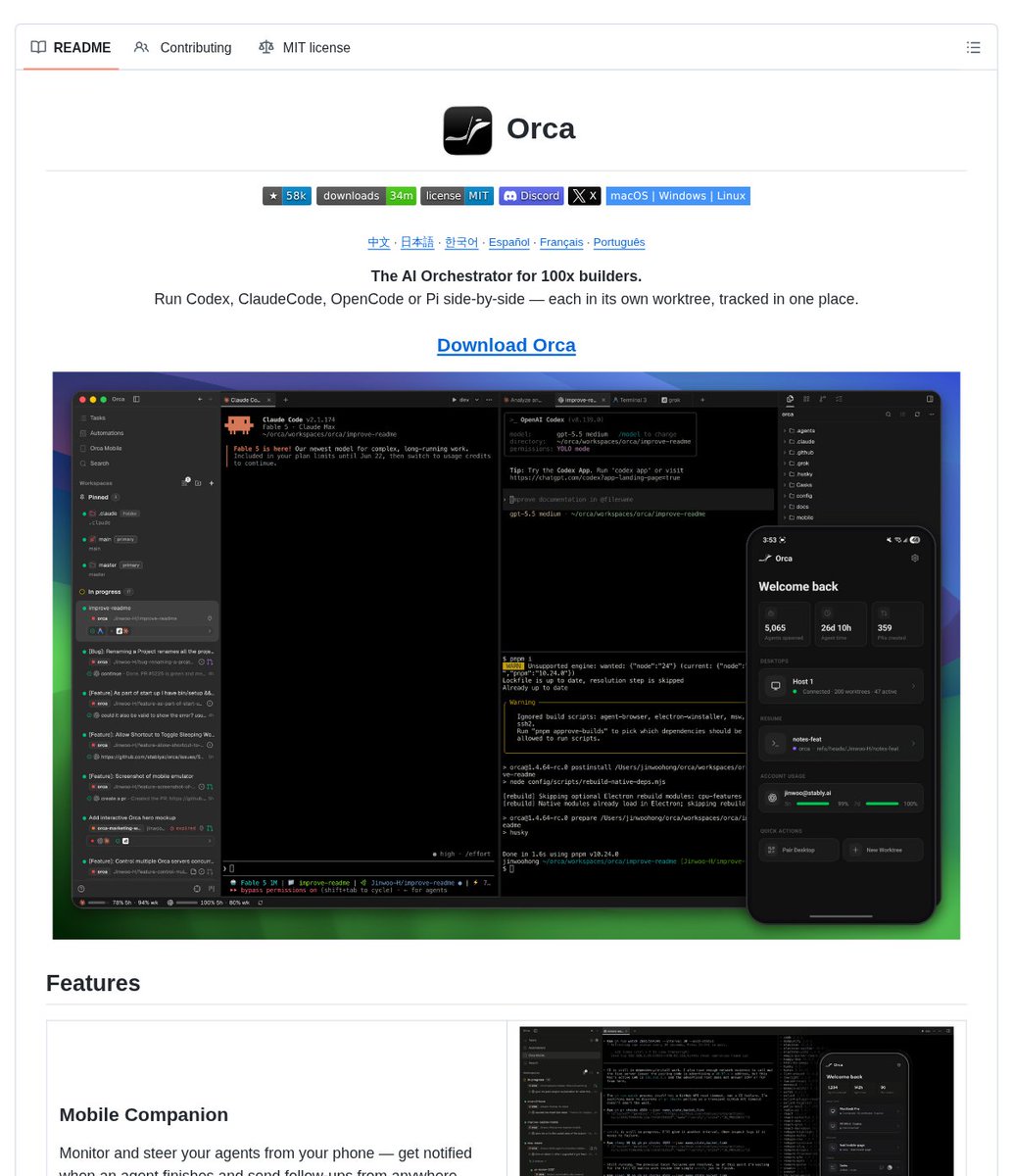
@DanKornas surfaced (2 likes, 3 replies, 402 views) Orca, an orchestration environment that runs Codex, Claude Code, OpenCode, or Pi side by side in separate worktrees, tracks them in one workspace, and adds a mobile companion for notifications and follow-ups. The reply thread sharpened the main value proposition: parallel agents are manageable once each one gets its own git lane.
Discussion insight: The recurring promise in this cluster was continuity. Users want to keep the tools and habits they already have while changing cost, privacy, state management, retrieval quality, or parallelism under the surface.
Comparison to prior day: On 2026-09-01, cost-control discussion focused on compression and local APIs as workarounds. On 2026-09-02, that workaround layer looked more productized: search, orchestration, stateful gateways, and local runtimes were all getting their own clear product stories.
2. What Frustrates People
Long-running agents still fail in execution and review even when the reasoning looks strong
The sharpest frustration was that strong model launches still do not solve the operational mess around long-running work. In the Fable 5.1 launch thread, @enhansai replied that long tasks can fail "three steps back" while the final output still compiles, and @phicerhq added that recovery from wrong turns, context retention, reviewability, and reliability are what teams will actually judge. @SnorkelAI added a more specific benchmark claim: on Terminal-Bench+, Fable 5.1's errors clustered in termination, tool use, and output formatting rather than in reasoning, even while the model used 58% fewer tokens per successful run. Severity: High. This is worth building for because people are asking for better execution traces, better recovery points, and clearer review artifacts, not just better prose.
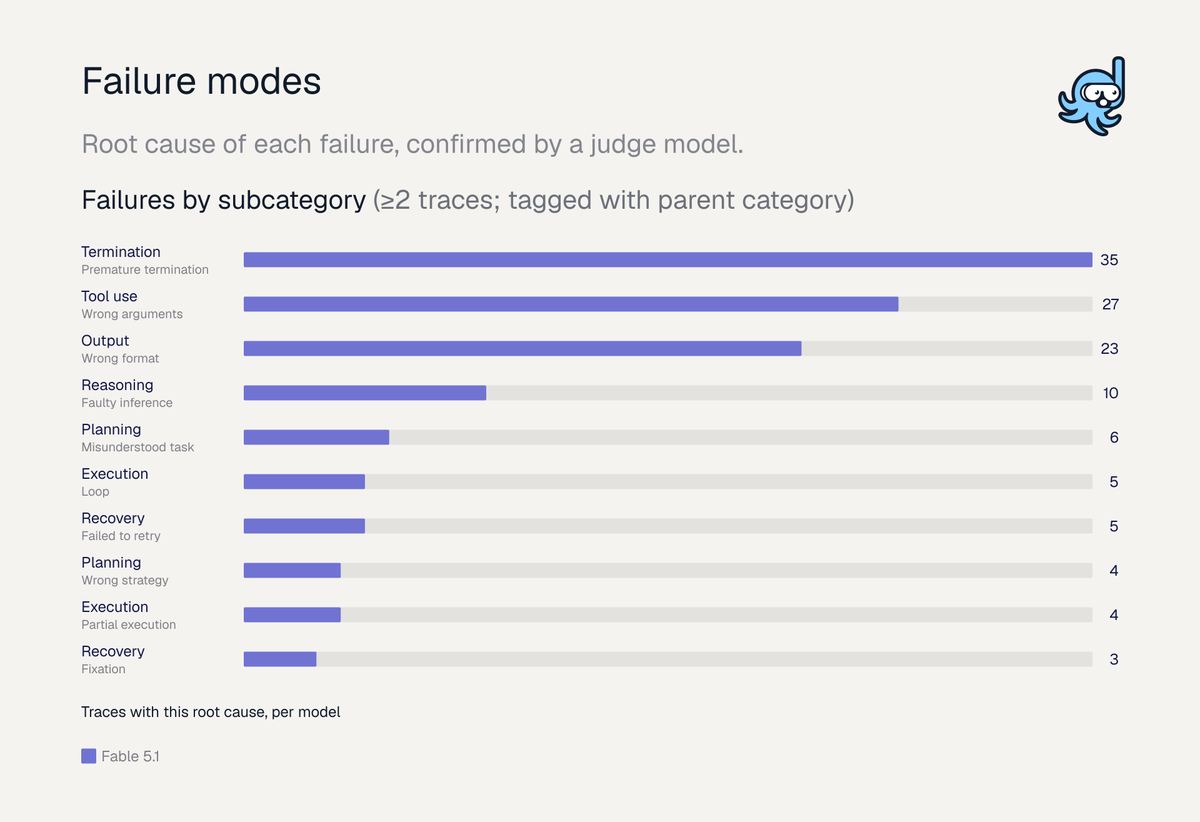
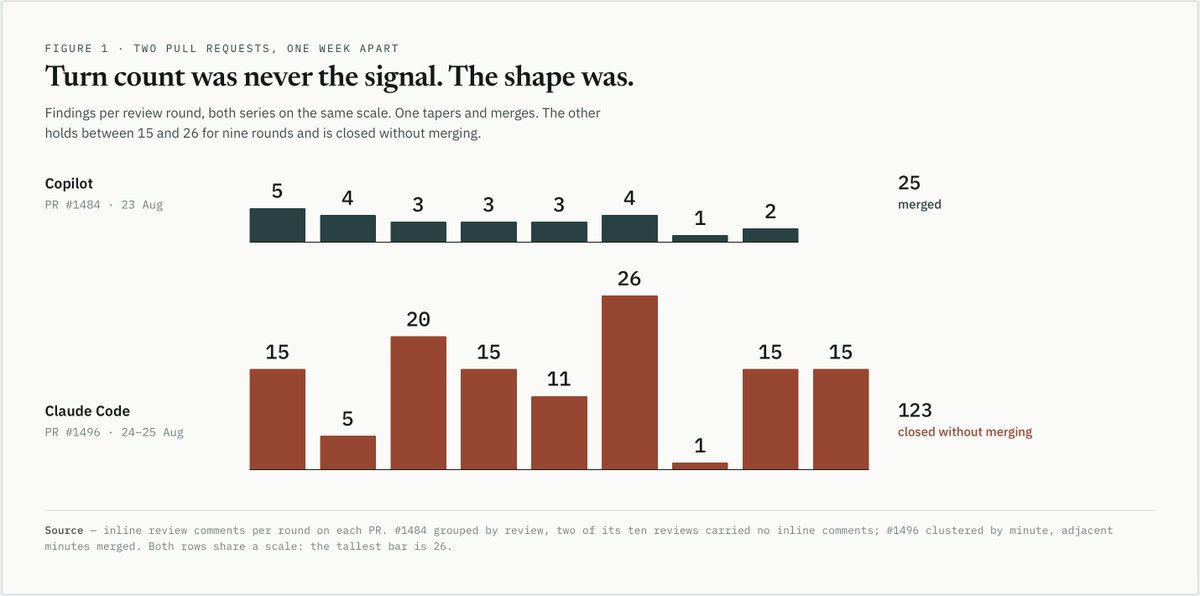
@kimburgaard described a first-hand version of the same problem in PR review. He said Copilot review findings on one PR tapered from 5, 4, 3, 3, 3, 4, 1, 2 and merged, while a Claude Code review attempt on a cached-token billing PR took nine rounds and still produced 123 inline findings before he closed it without merging. His workaround was not to abandon AI review, but to build public review-triage skills that suppress speculative and latent findings unless they point to high-risk production damage.

The best coping pattern in the dataset was to insist on explicit proof. @rseroter pointed to an Antigravity Teamwork walkthrough whose screenshot shows 758 passing tests, 247 passing E2E tests, clean typecheck, and a clean production build before declaring victory. That is exactly the kind of evidence missing from the weaker launch-day claims.
Product evaluation is being distorted by hidden routing, quota behavior, and cost-control layers
People were clearly frustrated that they often learn what changed in a product by watching limits, missing models, or compression banners rather than by reading a clear changelog. @SalenoXP said Antigravity suddenly felt more generous, while @thtbee_ tracked a model-picker removal and @mrfanduu tracked a hidden binary reference. On the Copilot side, @LisaFlorentina8 framed SOMA as a way to claw back about 10% of token cost without changing the visible workflow, while @github had to explain in replies that Fable 5.1 also carries a data-retention default in Copilot. Severity: Medium-High. This looks worth building for because users want transparent limit accounting, model-routing visibility, and cost controls they can inspect.
The frustration shows up most clearly when people try to move from marketing to actual usage. @SimonasLTU1 said that trying Fable 5.1 through OpenRouter burned through a small balance quickly, and the screenshot captured the exact credit-exhaustion error modal. @starmexxx answered that frustration with a local-first alternative: keep Claude Code or Codex as the front end, but point them at open models on your own machine through Unsloth.
Mobile and follow-up surfaces still break down on real coding workflows
The weakest part of the day was not desktop agent capability but what happens once people leave the main workstation. @heitor_lessa said ChatGPT Work plus a Codex workaround on mobile still felt unfinished enough that he might cancel next month, and his screenshots show why: interrupted streaming and an unknown error while handling a PR-related workflow. Severity: Medium. This is worth building for because long-running agent workflows increasingly need escalation, follow-up, and review from a phone, and the current surfaces still fail at exactly those handoff moments.
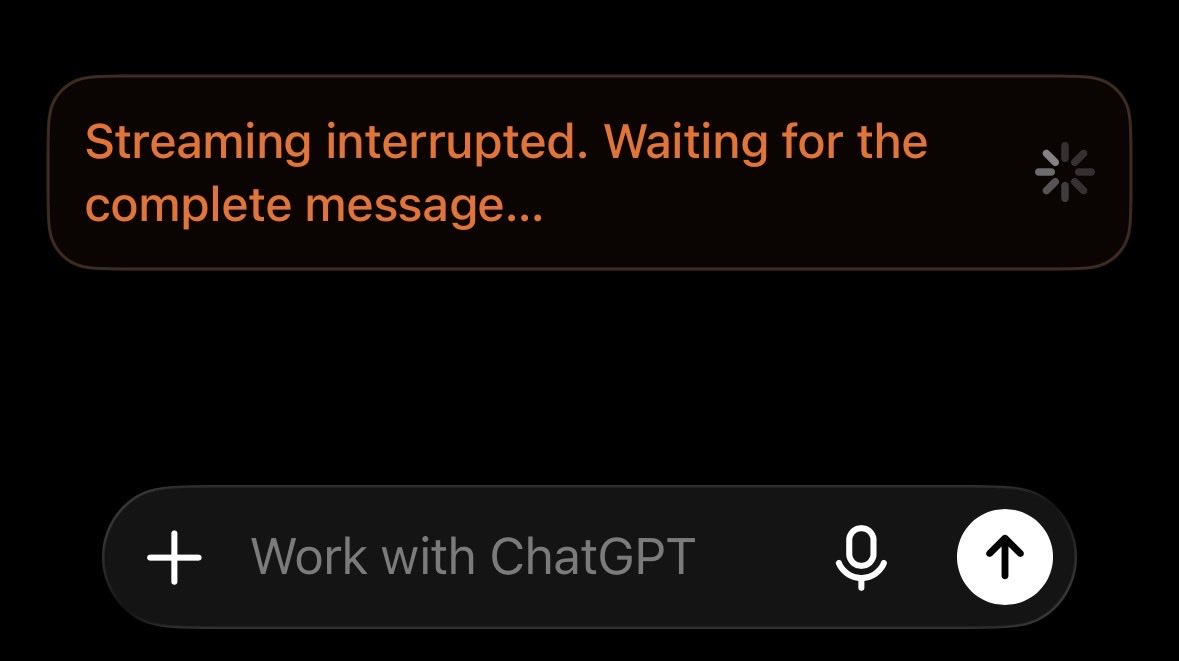
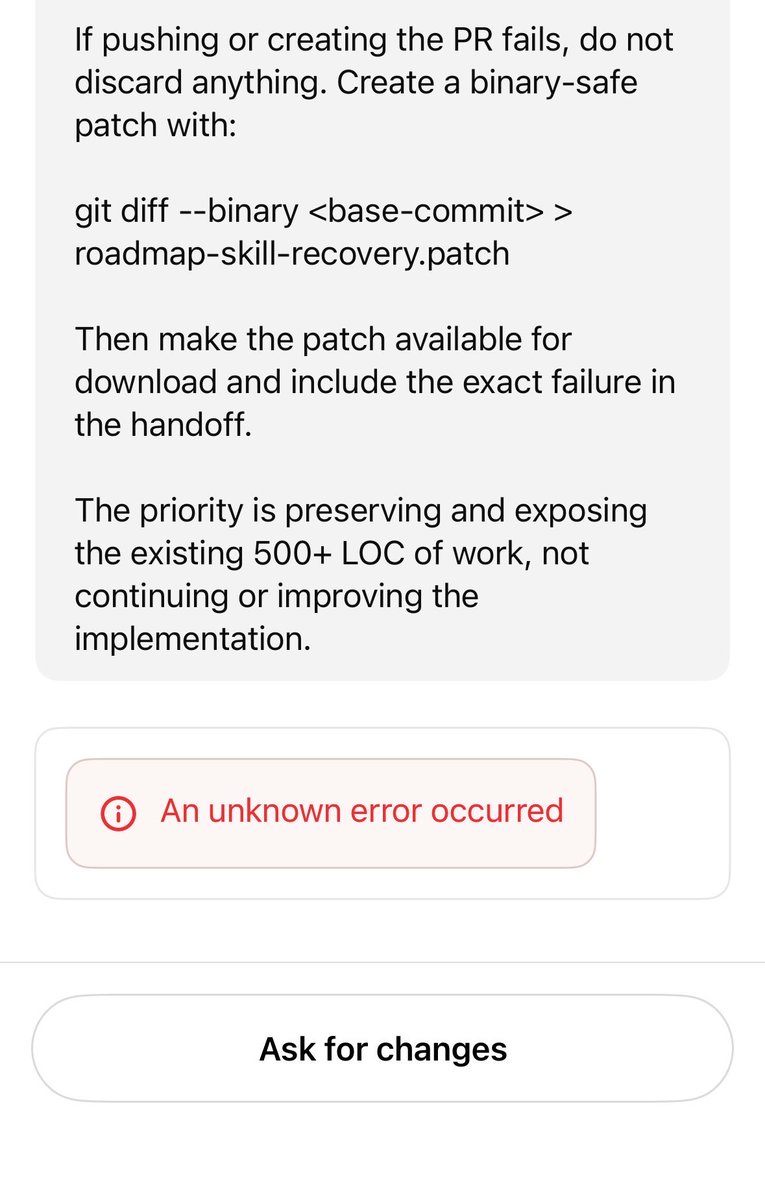
By contrast, @DanKornas surfaced Orca partly because it includes a mobile companion for notifications and follow-ups, and @kimburgaard showed how much triage work accumulates once AI review loops start spinning. The contrast suggests the unmet need is not "AI on a phone" in the abstract; it is a reliable control surface for unfinished agent work.
3. What People Wish Existed
Verifiable long-running workflows with explicit checkpoints
What people wanted most was not another autonomous mode, but a way to trust one. The replies to GitHub's Fable 5.1 launch kept asking for recovery from wrong turns, context retention, and reviewability, while @rseroter pointed to a Teamwork flow that proves completion with passing tests and builds, and @kimburgaard ended up building review-triage skills just to stop PR review churn. This is a practical, urgent need because users already have long-running agents; they lack a standard proof layer. Opportunity: direct.
Portable skills, memory, and knowledge layers that work across agent hosts
People are clearly asking for workflow intelligence that survives tool boundaries. @RoundtableSpace showed Obsidian skills that work across Claude Code, Codex, and OpenCode, @DhravyaShah showed supermemory reaching Cursor plus a long list of other hosts, and @illyism mapped an entire discovery layer of stores, registries, and directories where those packages now compete. The need is practical and strategic: people want persistent behavior and memory, but they do not want to rewrite it for every harness. Opportunity: competitive.
Cheaper, inspectable infrastructure under the same visible workflow
A large share of the day's builder energy went into replacing the hidden plumbing rather than replacing the front end. @LisaFlorentina8 described SOMA as a compression layer under Copilot, @starmexxx pitched Unsloth as a way to keep Claude Code or Codex while running local models, @techNmak described Agentic API as a server-side state and tool layer in front of vLLM, and @QwenDevs positioned zg as a local-first retrieval layer for both developers and agents. The need is highly practical, and people are already experimenting with it. Opportunity: competitive.
Reliable remote control for unfinished agent work
The Burke Holland game demo, Orca's mobile companion, and Heitor Lessa's mobile ChatGPT Work complaints all point to the same need: once a task outlives a single desktop session, people want a dependable way to monitor, unblock, approve, or stop it from somewhere else. Today's evidence suggests the emotional part of this need is control, not convenience. Opportunity: direct.
4. Tools and Methods in Use
| Tool | Category | Sentiment | Strengths | Limitations |
|---|---|---|---|---|
| Gemini 3.8 Flash | LLM | (+) | Officially launched across Antigravity and other Google surfaces; users reported stronger effective limits on real workloads | Users were inferring changes from picker churn and quota behavior before clear product explanations arrived |
| GitHub Copilot with Claude Fable 5.1 | IDE and agent harness | (+/-) | Strong public claims on long-running tasks and deep research; live demo output like Fledgling Game made the upside tangible | Data retention defaults, execution failures, helper-file drift, and reviewability still worry practitioners |
| Spec Kit | Workflow process | (+) | Gives agents an explicit spec, plan, task, and converge loop before code changes start | Users still question whether the spec stays aligned after several later change requests |
| Antigravity Teamwork | Multi-agent workflow | (+) | Public walkthrough emphasized specs, subagents, tracking, audit, and passing tests before completion | Trust depends on whether those verification artifacts are actually exposed to the operator |
| SOMA | Compression and routing layer | (+/-) | About 10% token savings in Copilot with DeepSeek V4 Pro and a claim of longer sessions without changing the visible workflow | Launch support was limited to DeepSeek V4 Pro, and users still need proof that savings hold on broader workloads |
| Unsloth | Local model runtime | (+) | Lets Claude Code, Codex, and other agents run against local open models through compatible APIs | Requires local hardware, setup effort, and a willingness to operate your own runtime |
| Agentic API | Gateway and runtime layer | (+) | Moves state hydration, tool loops, streaming, and persistence server-side for open-model backends | Early-stage infrastructure with install and integration overhead compared with hosted products |
| zg | Search and retrieval | (+) | Combines semantic search, BM25, hybrid retrieval, and rg in one local-first interface for humans and agents |
Newer workflow that still requires indexing and habit changes before it pays off |
| Orca | Orchestration IDE | (+) | Gives each CLI agent its own worktree, plus mobile monitoring and diff annotations | Mainly useful once a team is already juggling multiple agents and worktrees |
| obsidian-skills and supermemory | Skills and memory | (+/-) | Portable knowledge access and memory across vaults, marketplaces, and multiple agent hosts | Hidden instructions, vault hygiene, and memory-persistence safety become a new risk surface |
Overall sentiment was capability-positive but operations-cautious. People liked stronger models, spec-first workflows, local backends, and better retrieval, but the day repeatedly showed that the missing pieces are review loops, governance, and product transparency. The main migration patterns were from freeform prompting to spec-first methods, from hosted-only APIs to local or open-model backends, and from single-session agents to orchestrated worktrees with memory and mobile follow-up layers.
5. What People Are Building
| Project | Who built it | What it does | Problem it solves | Stack | Stage | Links |
|---|---|---|---|---|---|---|
| Fledgling Game | Burke Holland | Live browser-based first-person multiplayer game where a baby bird explores a countryside | Demonstrates how far a long-running Copilot session can get from a single prompt before manual polish | GitHub Copilot, browser deployment | Beta | tweet, site |
| Spec Kit | GitHub | Open-source spec-driven development toolkit with constitution, specify, plan, tasks, implement, and converge stages | Reduces vague-prompt drift and forces structured planning before code changes | specify-cli, workflow commands, GitHub-maintained repo |
Shipped | repo, tweet |
| obsidian-skills | kepano | Cross-tool skills that let Claude Code, Codex, and OpenCode operate on an Obsidian vault | Gives agents a local knowledge base and repeatable vault actions instead of blank-slate sessions | Agent Skills spec, Obsidian, Claude Code, Codex, OpenCode | Shipped | repo, tweet |
| SOMA for GitHub Copilot | SomaSubnet | Compression layer under Copilot that reduces repeated context before it reaches DeepSeek V4 Pro | Cuts token cost and extends session life without changing the front-end workflow | Context compression, GitHub Copilot, DeepSeek V4 Pro | Beta | tweet |
| Agentic API | vLLM project | Rust-native gateway that gives open-model backends stateful Responses API semantics, server-side tools, and persistence | Removes the need for every client to rebuild conversation state and tool orchestration | Rust, vLLM, SQLite, OpenAI-compatible Responses API | Alpha | repo, tweet |
| zg | Zvec team | Local-first search tool for developers and agents combining semantic, BM25, hybrid, and rg retrieval |
Reduces broad scans, repeated tool calls, and context bloat during code search | Node.js CLI, local indexing, semantic and lexical retrieval | Shipped | repo, tweet |
| Orca | stablyai | Desktop and mobile orchestration environment for running multiple CLI agents side by side in isolated worktrees | Prevents parallel agents from stepping on the same git state and gives remote follow-up controls | Separate git worktrees, desktop workspace, mobile companion | Shipped | repo, tweet |
| Supermemory Cursor plugin | Supermemory team | Marketplace plugin that exposes persistent memory to Cursor and a long list of other agent hosts | Keeps context and memory portable across agent surfaces instead of trapped inside one host | Cursor marketplace plugin, MCP-style tools and resources | Shipped | tweet, marketplace |
Fledgling Game was the day's clearest "show, don't tell" artifact. @burkeholland did not just post a video; he published the game at fledglinggame.com and said much of the visible world came from the initial one-shot prompt, while also disclosing that the hosting was cheap and untested. That combination of public artifact plus caveat made the claim much stronger than a polished demo clip alone.
A second build pattern was preserving the familiar interface while swapping the layer beneath it. SOMA sits between Copilot and the model to compress context, Agentic API sits between clients and vLLM to own state and tool loops, and zg sits between the user and the codebase to compress search work into better-ranked evidence. None of those tools asks the user to abandon the surrounding workflow.
The third repeated pattern was externalizing memory and coordination. obsidian-skills and supermemory push context into reusable packages or plugins, while Orca turns multi-agent work into an explicit worktree-and-mobile control problem instead of a pile of overlapping sessions. The common trigger behind these builds is not lack of raw model capability; it is the operational friction of keeping agent work inspectable, repeatable, and portable.
6. New and Notable
Qwen3.8-Max-0902 took the top public WebDev leaderboard slot
@Alibaba_Qwen said (91 likes, 7 replies, 5,530 views, 7 bookmarks, 7 quotes) that Qwen3.8-Max-0902 reached #1 on Code Arena: WebDev at 1691. The quoted benchmark post from @arena said that put it 3 points above Claude Opus 5, 17 above Kimi K3, and 22 above the previous Qwen3.8-Max, while also claiming a strong Pareto position on price. That mattered because it gave the day a concrete non-Google, non-GitHub model-comparison signal.
Benchmarks were being used to sell delegation, especially for newer developers
@Gyome1_ argued (5 likes, 108 views) that a GitHub-based study found 26% average output gains when developers hand tasks to an AI agent, with the largest gains going to junior developers. The accompanying chart on monthly distinct languages after Claude adoption is what made the post notable: it pushed the conversation beyond "agents are faster" toward "agents may broaden what less-experienced developers attempt."

Public benchmark talk also got more specific about how strong models fail
@SnorkelAI reported (3 likes, 64 views) that Fable 5.1 beat Opus 5 on debugging and games in its Terminal-Bench+ evaluation while using fewer tokens per successful run, but emphasized that failure roots clustered in execution rather than reasoning. That framing is notable because it matches the practitioner's complaint in launch replies: model progress is real, but the remaining failure modes are increasingly operational.
7. Where the Opportunities Are
[+++] Verification and triage layers for long-running agent work — Evidence spans GitHub's Fable 5.1 launch replies, SnorkelAI's execution-heavy failure breakdown, R. Seroter's Teamwork verification screenshot, and kimburgaard's 123-finding PR churn story. The opportunity is strong because teams already trust agents enough to run long tasks, but still lack a standard way to checkpoint, classify findings, and prove completion.
[++] Drop-in infrastructure that changes cost, state, or retrieval without changing the front end — SOMA, Unsloth, Agentic API, and zg all make the same bet from different angles: users want to keep Copilot, Claude Code, Codex, or OpenCode while replacing the expensive or opaque layer underneath. The opportunity is moderate-to-strong because the pattern shows up across cost control, self-hosting, stateful orchestration, and search.
[+] Packaging and distribution for portable skills, memory, and agent add-ons — illyism's registry map, obsidian-skills, and supermemory all point to the same emerging surface area: skills and plugins now need discovery, installation, compatibility, and trust signals across many hosts. The opportunity is real, but more crowded and competitive than the verification or infrastructure layers.
8. Takeaways
- Google's coding stack narrative hardened into product-surface evidence. The story moved from general 3.7 Flash enthusiasm on the prior day to specific Gemini 3.5 picker removal, a public Gemini 3.8 Flash launch, and even binary-audited GLM references inside Antigravity tooling. (thtbee_, Google, mrfanduu)
- Copilot's value proposition is expanding, but so is the review burden around it. GitHub used Copilot to launch Claude Fable 5.1 and users published ambitious artifacts like Fledgling Game, yet the most substantive replies focused on data retention, wrong-turn recovery, and PR-review churn rather than on raw model IQ. (GitHub, Burke Holland, kimburgaard)
- The preferred fix for AI coding slop is now structure, not more prompting. Spec Kit, Obsidian skills, supermemory, and registry maps all point to the same operational instinct: codify the workflow, package it, and make it portable across hosts. (txbrraa, RoundtableSpace, DhravyaShah, illyism)
- Builders are increasingly swapping infrastructure beneath familiar agents instead of replacing the agents themselves. SOMA compresses context under Copilot, Unsloth swaps in local models behind Claude Code and Codex, Agentic API moves orchestration in front of vLLM, and zg compresses search work into better-ranked evidence. (LisaFlorentina8, starmexxx, techNmak, QwenDevs)