Twitter AI Coding - 2026-09-06
1. What People Are Talking About
1.1 Control surfaces, shared memory, and proof layers overtook one-model talk (🡕)
The strongest cluster was no longer "which frontier model is best?" It was "how do you keep agent work visible, resumable, and reviewable once the session gets long?" At least seven separate items supported that shift, spanning GitHub's official canvases push, repo-native planning contracts, transcript forensics, live codebase maps, and verification-gated multi-agent plugins.
@github said (115 likes, 12 replies, 33,169 views, 70 bookmarks) that canvases give agent workflows a durable shared surface to track what ran, changed, and still needs review. The linked GitHub post is more specific than the tweet: it frames canvases around explicit workflow states, persisted drafts, and named human approval points, using Java modernization and site-content workflows as the example cases for why chat history alone stops being enough once agents are doing real work at length.
@DanKornas introduced (4 likes, 3 replies, 460 views, 3 bookmarks) OpenCode Swarm as an architect-led team of internal coding roles inside one OpenCode session, and the linked README says those roles are gated by reviewer and test approval, backed by resumable .swarm/ state, and supported by an independent read-only auto-review pass. That mattered because it treated verification as the product, not as an afterthought after code generation.

@DanKornas also said (4 likes, 2 replies, 512 views, 1 bookmark) that manifest-dev keeps a project's direction, next task, and definition of done inside the repo. The public README backs that up with a three-artifact workflow - North Star, Ticket, and per-run Manifest - plus /figure-out, /define, and /do commands that turn vague requests into acceptance criteria and evidence-backed completion.

@noisemakerjon shared (5 likes, 2 replies, 280 views, 2 bookmarks) shell-forensics, a skill that reads Codex, Claude Code, OpenCode, and Cursor transcripts and turns shell behavior into a report. The README's example findings were concrete: 38,176 commands across 874 sessions, a 30 percent failure rate when models wrote POSIX syntax into PowerShell, and much lower failure rates when Python was fed through heredocs instead of python -c one-liners.
@stretchcloud argued (7 likes, 3 replies, 352 views, 2 bookmarks) that the real scaling failure is shared context, not model quality: agents reread the repo, forget prior decisions, and cannot see each other's work. The same post used Campfire to pitch shared semantic memory, replayable sessions, and worktree isolation, while @Piyuzz713 described (3 likes, 2 replies, 28 views) Map Room as a real-time view of what files an agent actually inspected.
Discussion insight: The replies were asking for provenance, not more fluent output. Under GitHub's canvases post, one reply said every state change needs to point back to the exact agent run and artifact that produced it, while another asked whether canvases are append-only history or an editable summary. That same "show me what really happened" instinct also drove shell-forensics, Map Room, and Swarm's independent review step.
Comparison to prior day: On September 5, orchestration and supervision were already rising through meta-harnesses, browser tools, and routing layers. On September 6, that idea became more concrete: the conversation shifted toward persistent surfaces, repo-native contracts, transcript audits, and explicit gates that prove work instead of just organizing it.
1.2 Token discipline and local escape hatches became the practical response to frontier pricing (🡕)
The second major cluster was about cost control in long-running agent loops. The tweets were less interested in generic capability rankings than in repeated context, quota burn, price inflation, and which infrastructure can keep useful coding throughput without frontier-model bills. At least six items supported this theme.
@0x_Kalista argued (10 likes, 11 replies, 286 views) that the important problem is session history and repeated tool output getting resent to the model, not raw model quality. The quoted SOMA launch and attached Copilot graphic made that concrete: the layer claims to compress files, tool traces, and stale state before they hit DeepSeek V4 Pro in GitHub Copilot, starting at about 10 percent token savings while keeping the same agent workflow.

@StefanoGPT posted (42 likes, 11 replies, 21,340 views, 69 bookmarks) a long community diagnostic prompt for Codex users who think their allowance is draining unusually fast, complete with environment checks, reversible local fixes, and a 75-minute idle-observation protocol. That was stronger than a complaint tweet because it showed the community already packaging repeatable debugging workflows around usage opacity; replies also added nuance, with Stefano explicitly saying some users were seeing normal behavior and the cause was not yet proven.
@robinebers said (16 likes, 8 replies, 1,754 views) that Astra's better token efficiency does not offset repeated price jumps, listing a move from GPT-5 pricing to Astra at $10 per million input tokens and $50 per million output tokens. @Joelc_eth countered (15 likes, 1 reply, 402 views, 1 bookmark) with GitHub's HydraFusion research preview, and the linked post confirms the counter-argument is orchestration: single, cascade, and critique workflows that GitHub says cut estimated TerminalBench 2.1 cost by 67 percent relative to Claude Opus 5 while improving verified quality by 4.9 points.
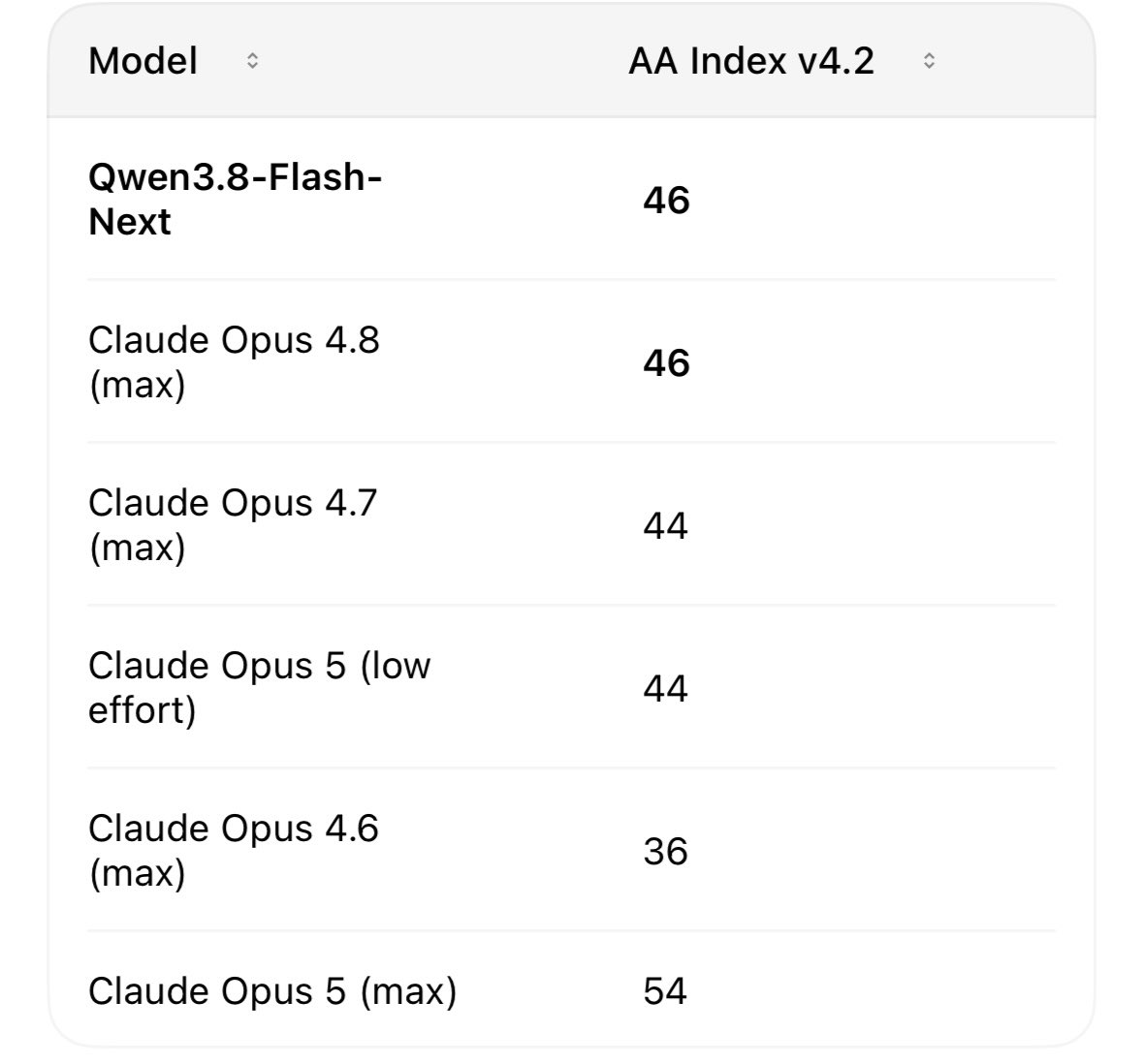
@0x0SojalSec reported (10 likes, 3 replies, 1,402 views, 20 bookmarks) that Qwen3.8-27B can run in full BF16 on a free Kaggle TPU with about 130 tok/s decode, 10k tok/s prefill, native 262k context, and an OpenAI-compatible endpoint for Claude Code, Codex, and OpenCode. A second local-economics example came from @ItsCuthulhu saying (1 like, 2 replies, 292 views) they were running Qwen3.8-Flash-Next on a single DGX Spark and cancelling most subscriptions; the linked README and attached images added operating details such as a 99 GB checkpoint, native 262k context, and measured decode up to 162.9 aggregate tok/s at eight streams.
Discussion insight: The skepticism was practical, not ideological. Replies under the Kaggle TPU post asked whether OpenAI-compatible endpoints actually hold up on real multi-turn tool loops, while the Codex-usage thread kept separating true background consumption from delayed reporting or local configuration issues.
Comparison to prior day: September 5 spent more energy on Astra rollout surfaces, pricing cards, and benchmark-style speed claims. September 6 narrowed the question to "how do I keep long agent sessions affordable?" - through compression, diagnostics, smarter routing, or moving part of the workload onto free or local infrastructure.
1.3 Vendors kept packaging agent work as governed ecosystems and role bundles (🡒)
Large-platform messaging stayed strong, but the emphasis moved from raw model launches toward governed bundles: compliance wrappers, official training series, broad stack diagrams, and ready-made role packs. At least five items supported this theme.
@GoogleCloudTech said (232 likes, 6 replies, 25,842 views, 33 bookmarks) that Gemini Enterprise subscriptions now bring Antigravity under Google Cloud's standard security and compliance protections. The replies sharpened the real value proposition: one response called the compliance umbrella the line that gets a product through procurement, and another argued that the key issue is not the model but delegated authority, scoped tool access, and revocation per task.
@googlecloud promoted (99 likes, 3 replies, 6,830 views, 48 bookmarks) a four-part live technical series on Gemini Enterprise Agent Platform and Antigravity covering ADK logic, long-term state, and secure deployment. @AiswaryaVenkit1 framed (37 likes, 3 replies, 692 views, 12 bookmarks) the same platformization instinct through Azure AI Foundry, and the attached ecosystem map enumerated model providers, agent toolchain components, monitoring systems, and trust-and-safety services in one stack diagram.

@codeby_jack said (10 likes, 6 replies, 44 views, 1 bookmark) that Anthropic released 10 finance agents for Claude across research, modeling, valuation, accounting, and KYC workflows. The attached graphic mattered because it showed these as role bundles tied to real data and office systems, not just prompt templates.

@itsPaulAi reminded (15 likes, 6 replies, 3,182 views, 12 bookmarks) that students can get Google AI Pro or AI Plus bundles that include higher Gemini and Antigravity limits, NotebookLM, 5 TB of Drive storage, and other Google surfaces. That post mattered because it showed distribution strategy and usage limits becoming part of the product story alongside the underlying models.
Discussion insight: The replies stayed focused on governance. Under the Google Cloud compliance announcement, respondents kept returning to procurement, blast radius, access scope, and revocation, which is a different tone from consumer-side model hype and closer to standard enterprise software buying criteria.
Comparison to prior day: September 5 centered Antigravity's expanding product surface and creator-facing demos. September 6 kept Google in the middle of the conversation, but the emphasis moved toward enterprise controls, official enablement programs, and role-based agent packaging across Google, Azure, and Anthropic ecosystems.
2. What Frustrates People
Cost visibility breaks down before the work does
The sharpest frustration was not simply that frontier coding models cost money. It was that people do not feel they can see the spend clearly enough while a long-running task is still in flight. @StefanoGPT posted (42 likes, 11 replies, 21,340 views, 69 bookmarks) an entire diagnostic workflow for Codex allowance drain, including environment inspection, reversible fixes, and an idle observation protocol, which is stronger evidence than a one-line complaint because it shows users already need a playbook just to understand whether their usage is normal. @robinebers argued (16 likes, 8 replies, 1,754 views) that Astra's efficiency gains still do not cancel out repeated price increases, and @0x_Kalista pitched (10 likes, 11 replies, 286 views) context compression precisely because repeated file and tool history has become a billable cost line.
A smaller but vivid example came from @Mr_Chartist showing (3 likes, 1 reply, 3,226 views, 1 bookmark) 798.41 GB of 30-day bandwidth use, including 253.03 GB for Node, 172.82 GB for ChatGPT, and 86.16 GB for Claude. That does not measure token cost directly, but it reinforces the same operational feeling: agentic building is resource intensive even before a developer sees a cloud invoice. Severity: High. This looks worth building for because the workaround behavior is already visible in public: diagnostics, compression, routing, and local-model escapes.
Agents still waste effort on cold starts, repeated scans, and missing durable state
The next frustration was repeated context rebuilding. GitHub's canvases article, linked from @github's post (115 likes, 12 replies, 33,169 views, 70 bookmarks), explicitly says chat-only workflows bury the plan, decision points, validations, and approval moments in scrollback, creating a coordination tax whenever someone has to reconstruct what happened. @stretchcloud described (7 likes, 3 replies, 352 views, 2 bookmarks) the same issue more bluntly: agents open dozens of files to find one function, then lose the result by the next session. @Piyuzz713 built (3 likes, 2 replies, 28 views) Map Room to show file-by-file exploration in real time, which only makes sense if not being able to see the search path is already painful.
The enterprise case study from @siddontang pointing to (11 likes, 2 replies, 407 views, 6 bookmarks) Google's Spanner migration blog showed how teams cope today: a spec, generated code, compile, test, fix, repeat loop with explicit parity checks. Severity: High. This is build-worthy where products can preserve state across sessions, share it across agents, and expose which context actually mattered.
Verification and tool trust still lag generation speed
Several of the day's most concrete projects existed because people do not trust "the model said it's done" as a sufficient completion signal. @DanKornas framed (4 likes, 3 replies, 460 views, 3 bookmarks) OpenCode Swarm around required reviewer and test gates, and @DanKornas framed (4 likes, 2 replies, 512 views, 1 bookmark) manifest-dev around explicit acceptance criteria and evidence-backed completion. @noisemakerjon used (5 likes, 2 replies, 280 views, 2 bookmarks) shell-forensics to inspect what coding agents actually do in the shell, and @HadjKamara built (6 likes, 3 replies, 196 views) mcpvet because MCP servers can auto-run with developer privileges before anyone reviews the config carefully.
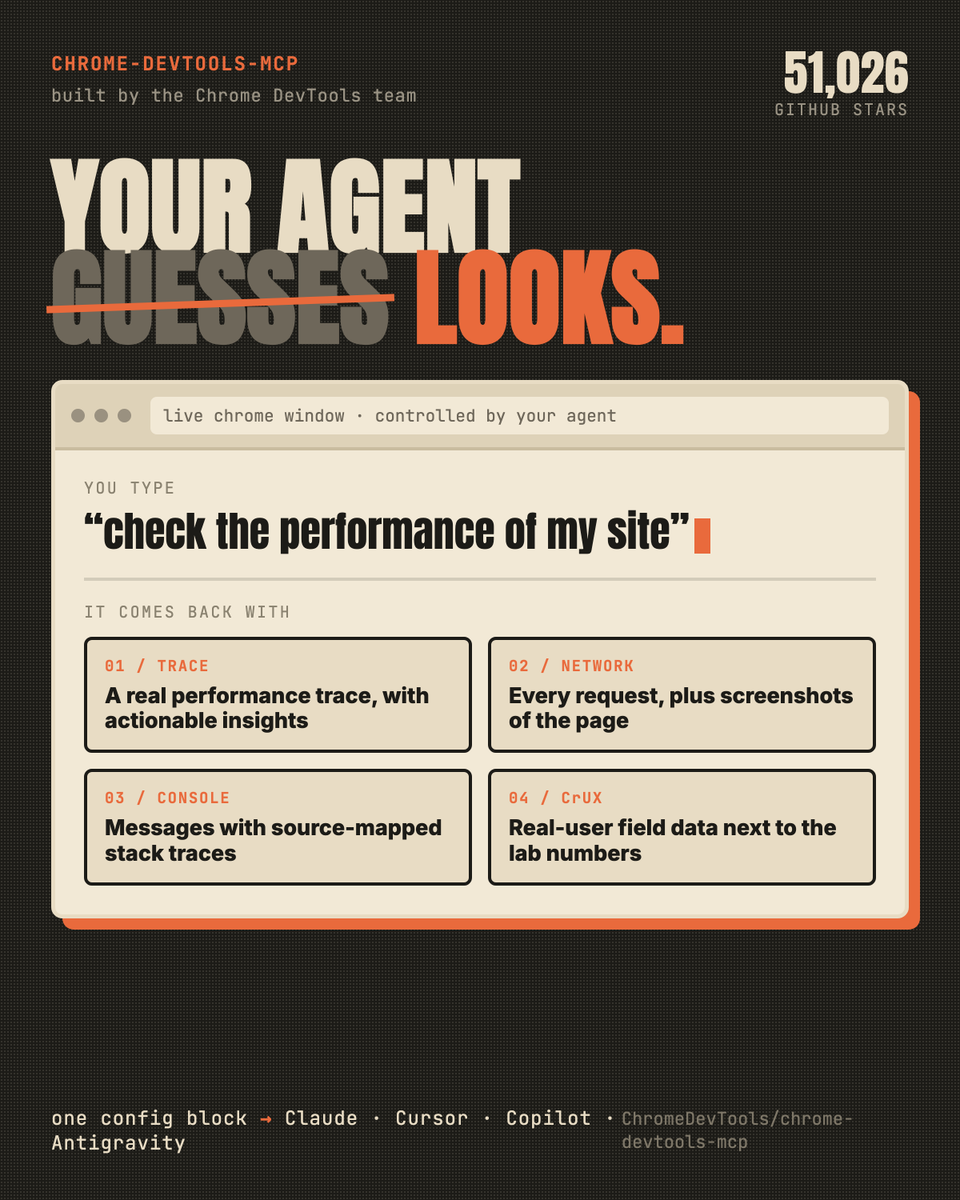
Browser-grounded tools are another workaround for the same trust problem. @DuncanRogoff highlighted (3 likes, 3 replies, 390 views, 1 bookmark) chrome-devtools-mcp because it lets an agent inspect a live site, record a real trace, and read actual network and console output instead of guessing from screenshots and prose. Severity: High. This is worth building for because users are already assembling multi-step verification stacks by hand.
3. What People Wish Existed
A shared control plane that keeps state, provenance, and review visible
The clearest need was not another chatbot window. It was a durable place where multiple agents and humans can see workflow state, evidence, and approval points without reconstructing the session from scrollback. GitHub's canvases post, linked from @github's tweet (115 likes, 12 replies, 33,169 views, 70 bookmarks), explicitly argues for that surface; @stretchcloud asked for (7 likes, 3 replies, 352 views, 2 bookmarks) shared memory and replayable sessions across agents; and @Piyuzz713 built (3 likes, 2 replies, 28 views) Map Room because users want to watch what an agent actually inspected. This is a practical need with repeated evidence. Opportunity: direct.
A real token cockpit with routing, compression, and early warning before runaway spend
People were effectively asking for a control panel that tells them when a task is burning context, whether the burn is expected, and what cheaper execution path is available. @StefanoGPT wrote (42 likes, 11 replies, 21,340 views, 69 bookmarks) a diagnostic prompt because that cockpit does not exist; @0x_Kalista sold (10 likes, 11 replies, 286 views) context compression as a direct answer; and @Joelc_eth pointed to (15 likes, 1 reply, 402 views, 1 bookmark) HydraFusion's cascade and critique routing as another way to spend premium reasoning only where it matters. This is a practical and urgent need. Opportunity: direct.
Portable skills and domain workflows that survive a harness switch
The conversation kept rewarding reusable procedures over one-off prompts. @DanKornas presented (4 likes, 2 replies, 512 views, 1 bookmark) manifest-dev as a repo-native contract for any agentic coding CLI, @noisemakerjon published (5 likes, 2 replies, 280 views, 2 bookmarks) shell-forensics as a reusable transcript-reading skill, and @codeby_jack surfaced (10 likes, 6 replies, 44 views, 1 bookmark) Anthropic's finance-agent pack as a prebuilt domain workflow. The practical request underneath all three is the same: keep the workflow asset when the preferred model or client changes. Opportunity: competitive.
Safer MCP and external-tool execution before autonomous agents make the first call
MCP adoption is clearly pulling demand for better trust and audit layers. @HadjKamara built (6 likes, 3 replies, 196 views) mcpvet to scan risky configs before merge, while @DuncanRogoff highlighted (3 likes, 3 replies, 390 views, 1 bookmark) chrome-devtools-mcp and @CapFrameX added (8 likes, 3 replies, 154 views, 2 bookmarks) an MCP server to a performance-analysis app. People want the benefits of tool-grounded agents, but they also want origin checks, permission boundaries, and clearer inspection of what those tools can do. Opportunity: direct.
4. Tools and Methods in Use
| Tool | Category | Sentiment | Strengths | Limitations |
|---|---|---|---|---|
| GitHub Copilot Canvases | Workflow surface | (+) | Makes workflow state, drafts, and approvals durable instead of burying them in chat | GitHub's own blog says canvases are an upfront investment that can cost thousands of AI credits to shape well |
| HydraFusion | Model orchestration | (+) | Uses single, cascade, and critique patterns to trade cost against verified quality at runtime | GitHub calls it a research preview and says first-turn, single-prompt tasks are the best fit today |
| SOMA | Context compression | (+/-) | Targets repeated files, tool traces, and stale state; early users cite about 10 percent token savings | Early access, first Copilot integration is DeepSeek V4 Pro, and today's savings are still modest |
| Gemini Enterprise Agent Platform / Antigravity | Agent platform | (+/-) | Adds enterprise compliance framing, ADK workflows, long-term state, and secure deployment messaging | Public evidence today was mostly high-level packaging and training claims rather than measured operator results |
| Azure AI Foundry | Enterprise stack | (+) | Broad model access, agent toolchain integrations, monitoring, and trust controls in one platform map | The cited evidence was an ecosystem diagram, not hands-on performance evidence |
| Gentle-AI | Harness configurator | (+) | Adds memory, skills, guardrails, routing, and multi-runtime support across many coding agents | It configures existing agents rather than replacing them, so teams still inherit underlying runtime behavior |
| Qwen local recipes | Local/open model stack | (+/-) | Native 262k context, OpenAI-compatible endpoints, and alternatives to frontier subscriptions on TPU or DGX Spark | Free TPU hours are capped, and the DGX recipe still needs a 99 GB checkpoint and substantial hardware |
| chrome-devtools-mcp | Browser MCP | (+) | Gives agents a live browser, traces, screenshots, console output, Puppeteer control, and CrUX data | Requires MCP setup and browser access before the agent can use it |
| mcpvet | MCP security scanner | (+) | Audits MCP configs across major agentic IDEs, checks origins, and can block risky changes in CI | The README explicitly scopes v1 to static configuration, not runtime tool-description poisoning |
| OpenCode Swarm | Multi-agent governance | (+) | Architect-led specialized agents, reviewer and test gates, independent auto-review, and resumable state | Adds process and plugin complexity, and it is specific to OpenCode |
| manifest-dev | Repo-native planning | (+) | Keeps project direction, the next task, and done criteria in-repo with evidence-backed completion | The README says it costs more tokens and work up front than direct prompting |
| shell-forensics | Agent observability | (+) | Extracts real shell behavior and failure patterns from Codex, Claude Code, OpenCode, and Cursor transcripts | It is diagnostic and post-hoc rather than preventive |
| CapFrameX MCP | Vertical MCP app | (+) | Exposes recorded captures, stats, diagnosis, and live system data to MCP clients with no extra install | Windows and game-performance specific rather than a general coding tool |
Overall satisfaction skewed positive when a tool reduced ambiguity rather than when it merely added another powerful model. @github positioned (115 likes, 12 replies, 33,169 views, 70 bookmarks) Canvases as a way to stop losing workflow state in chat, @Joelc_eth positioned (15 likes, 1 reply, 402 views, 1 bookmark) HydraFusion as a way to stop paying frontier-model prices on every leg of the task, and @DuncanRogoff positioned (3 likes, 3 replies, 390 views, 1 bookmark) chrome-devtools-mcp as a way to replace guesswork with direct browser evidence.
The common workaround pattern was to move from one giant, opaque loop toward layered execution: lighter models first, escalation only when needed, persistent memory, and independent review. Migration behavior ran in two directions at once. Some users tried to lower spend with compression and routing, while others looked for local or free-open alternatives such as Qwen on Kaggle TPU or DGX Spark. Competitive pressure was therefore less "model A versus model B" than "which stack gives me visibility, bounded cost, and believable verification."
5. What People Are Building
| Project | Who built it | What it does | Problem it solves | Stack | Stage | Links |
|---|---|---|---|---|---|---|
| OpenCode Swarm | @DanKornas | Turns one OpenCode session into an architect-led team of specialized coding agents with gates | "The model said it's done" is not enough for production trust | OpenCode plugin, Bun/Node, .swarm/ state, read-only review sessions |
Shipped | repo |
| manifest-dev | @DanKornas | Keeps project direction, task definition, and done criteria inside the repo | Vague agent requests drift and completion claims are hard to verify | Markdown skills, CLI plugins, repo-native manifests | Shipped | repo |
| shell-forensics | @noisemakerjon | Reads coding-agent transcripts and reports shell-command patterns and failures | Teams cannot easily inspect what their agents really did or why commands failed | Python, transcript parsers, HTML report output | Shipped | repo |
| mcpvet | @HadjKamara | Scans MCP configs for risky commands, secrets access, origin issues, and known attack patterns | Auto-executed MCP servers create a security-review gap before merge | npm CLI, pattern library, GitHub Action | Shipped | repo |
| Map Room | @Piyuzz713 | Visualizes a coding agent's file-by-file codebase exploration in real time | It is hard to see what context an agent actually used while navigating a repo | Web app, SpacetimeDB | Alpha | site |
| Safe Trade Copilot | @Snipermemecoin | Splits a trading workflow into analyst and risk-officer roles over Binance MCP data | AI trading chat can jump too quickly from analysis to action | Binance Agent OS MCP, prompt roles, audit logging | Alpha | repo · demo |
| CapFrameX MCP | @CapFrameX | Exposes performance captures, statistics, and live-system diagnosis through MCP | Agents cannot directly inspect frametime and sensor data in a performance workflow | .NET 10, PresentMon, localhost MCP server | Shipped | release · setup |
| Gentle-AI | @G_Programming | Configures existing coding agents with memory, skills, guardrails, and deterministic workflows | Different agent runtimes start cold and behave inconsistently across tasks | Go CLI, Engram memory, skills, optional MCP tooling | Shipped | repo |
| Who Is Building What? | @1997harkirat | Shows a living map of builders and projects in Bangalore | Builders need faster discovery of collaborators and interesting local projects | Web app, Codex-assisted buildathon project | Beta | site |
The most repeated build pattern was not "yet another model wrapper." It was observability and governance around agent work. @DanKornas presented (4 likes, 3 replies, 460 views, 3 bookmarks) OpenCode Swarm as a verification-gated team inside one session, while the same author presented (4 likes, 2 replies, 512 views, 1 bookmark) manifest-dev as a way to pin direction and acceptance criteria in the repo itself. Those two projects attack different parts of the same trust problem: one governs execution, the other governs what the work is allowed to mean.
@noisemakerjon shared (5 likes, 2 replies, 280 views, 2 bookmarks) shell-forensics and @Piyuzz713 shared (3 likes, 2 replies, 28 views) Map Room, and both projects point to the same underlying frustration: agents already generate lots of activity, but operators still struggle to see what commands ran and what files the agent actually looked at. The fact that two separate builders attacked shell-level observability and codebase-path visibility independently is a strong signal that inspection itself has become a product category.
Security and bounded execution showed up as a second repeated pattern. @HadjKamara built (6 likes, 3 replies, 196 views) mcpvet to block risky MCP configs before merge, while @Snipermemecoin built (1 like, 35 views, 2 bookmarks) Safe Trade Copilot around explicit limits, a separate risk role, and mandatory human confirmation. Even outside coding itself, the build pattern was the same: separate analysis from permission, then keep an audit trail.
A third pattern was turning existing software into agent surfaces instead of building net-new agents from scratch. @CapFrameX added (8 likes, 3 replies, 154 views, 2 bookmarks) MCP support to a Windows performance-analysis tool, and @1997harkirat built (25 likes, 6 replies, 212 views, 1 bookmark) a builder-discovery map during a Codex-supported buildathon. The common move was to use agent tooling as a layer on top of an existing workflow or community graph, not as a standalone novelty app.
6. New and Notable
Browser-grounded debugging crossed from niche trick to mainstream agent primitive
@DuncanRogoff highlighted (3 likes, 3 replies, 390 views, 1 bookmark) chrome-devtools-mcp from the Chrome DevTools team as a 51,026-star project that lets agents open a live Chrome window, record performance traces, inspect network requests, read source-mapped console messages, drive Puppeteer actions, and query CrUX data. That mattered because it turned browser access into direct evidence, not an aspirational roadmap item.
Google's Spanner migration post gave the day its clearest enterprise workflow example
@siddontang pointed to (11 likes, 2 replies, 407 views, 6 bookmarks) a Google Cloud case study where a headless Antigravity CLI pipeline helped automate a dual-write migration across more than 30 DAOs. The linked post did not pitch "AI writes code" in the abstract; it described a bounded loop of spec, generation, compile, test, fix, and parity validation, which is materially more concrete than the average workflow thread.
Local and free-open deployment recipes kept getting stronger
@0x0SojalSec reported (10 likes, 3 replies, 1,402 views, 20 bookmarks) Qwen3.8-27B on a free Kaggle TPU with native 262k context and an OpenAI-compatible endpoint, while @ItsCuthulhu reported (1 like, 2 replies, 292 views) a single-DGX-Spark Qwen3.8-Flash-Next setup intended to replace recurring subscriptions. Together those posts mattered because they pushed the local/open conversation from hobbyist enthusiasm toward measured throughput, deployment recipes, and compatibility with mainstream coding-agent clients.
7. Where the Opportunities Are
[+++] Token-aware agent operations - Evidence came from multiple directions: @StefanoGPT building (42 likes, 11 replies, 21,340 views, 69 bookmarks) a Codex-usage diagnostic workflow, @0x_Kalista selling (10 likes, 11 replies, 286 views) context compression, @Joelc_eth surfacing (15 likes, 1 reply, 402 views, 1 bookmark) runtime orchestration, and local Qwen posts offering escape hatches from subscription cost. This is strong because the pain is already concrete, repeated, and operational.
[+++] Proof layers for autonomous coding - GitHub canvases, OpenCode Swarm, manifest-dev, shell-forensics, Map Room, and chrome-devtools-mcp all point to the same need: keep a durable record of what the agent saw, decided, changed, validated, and still needs human judgment on. This is strong because multiple independent builders are attacking adjacent parts of the same trust gap.
[++] Portable skills and packaged workflows - manifest-dev, shell-forensics, Gentle-AI, and Anthropic's finance-agent bundle all suggest that reusable procedures are becoming more valuable than one-off prompts. This is a moderate opportunity because the need is clear, but competition is rising quickly across vendors, open-source plugins, and cross-runtime skill libraries.
[++] Safe MCP operations - mcpvet, chrome-devtools-mcp, CapFrameX MCP, and Safe Trade Copilot together show that tool-grounded agents are getting more useful and more dangerous at the same time. The opportunity is moderate because the problem is real now, but buyers may split between scanners, permission layers, hosted gateways, and vertical MCP applications.
[+] Agent surfaces for existing software and communities - CapFrameX MCP, Who Is Building What?, and the cited internal-knowledge-base pattern show a smaller but credible opportunity to add agent access to workflows that already have valuable data, users, and decisions. The signal is emerging rather than dominant, but it keeps appearing whenever someone can expose a real system instead of inventing a new standalone agent app.
8. Takeaways
- The conversation moved up a layer from models to workflow control. GitHub's canvases push, OpenCode Swarm, manifest-dev, shell-forensics, and Map Room all focused on preserving state, exposing evidence, or proving completion instead of arguing for one more model benchmark. (source)
- Cost control is now about session mechanics, not only model pricing. SOMA's Copilot compression pitch, HydraFusion's cascade-and-critique routing, and the Codex-usage diagnostic workflow all treated repeated context and unnecessary premium reasoning as the spend problem to solve. (source)
- Enterprise packaging is being sold on governance language. The strongest official Google Cloud replies were about compliance umbrellas, delegated authority, and revocation scope, while Azure AI Foundry and Anthropic finance agents were framed as full-stack or role-based operating environments. (source)
- Builders are racing to instrument and constrain agents, not just unleash them. mcpvet, Safe Trade Copilot, chrome-devtools-mcp, and CapFrameX MCP all added inspection, bounded permissions, or real-system evidence around agent actions. (source)
- Local and free-open alternatives are becoming practical enough to influence behavior. Qwen on Kaggle TPU and DGX Spark were both presented as viable ways to keep strong coding throughput while reducing subscription dependence, and both came with concrete context and throughput numbers rather than generic open-source enthusiasm. (source)