Twitter AI Coding - 2026-09-12
1. What People Are Talking About
1.1 Observable agent work is moving from nice-to-have to product surface (🡕)
The strongest shift on September 12 was away from generic "AI can code" excitement and toward tooling that explains what the agent did, where it changed the codebase, and how a team can review or constrain that work. OpenAI, GitHub, and independent builders all surfaced the same demand from different angles: attribution, audit trails, and evidence-backed review are becoming first-class product features.
@thsottiaux announced (1,976 likes, 364 replies, 156 bookmarks, 176,186 views) that OpenAI is bringing in the Git AI team, describing its open-source tool as a way to help developers understand how coding agents contribute to their codebase. That landed because it named the exact missing layer many people have been circling for days: not better autocomplete, but clearer attribution for agent-authored work.
@GHchangelog linked (9 likes, 1 bookmark, 1,257 views) GitHub's Copilot code review update, which now auto-resolves addressed comments, generates smarter commit messages for applied fixes, and uses a broader set of shell tools for deeper validation. In the accompanying GitHub changelog, GitHub says Lite reviews now use an ensemble of agents and increased addressed comments by 47% for high-severity findings, 31% for medium, and 11% for low while cutting review cost by about 8%.
Independent builders were solving the same problem from outside the big platforms. @DanKornas introduced (11 likes, 4 replies, 4 bookmarks, 861 views) Hive, which keeps deterministic filters and merge gates in front of any LLM work on GitHub issues and PRs. @agenticgirl shared (2 replies, 43 views) Agent Beacon, an open-source telemetry layer that normalizes prompts, tool calls, file changes, approvals, and token usage across 21+ runtimes. Together, those posts made observability look less like a compliance add-on and more like a core part of serious agent workflows.
Discussion insight: The common ask was not "make the model smarter." It was "show me what happened, make writes observable, and leave behind evidence I can audit later."
Comparison to prior day: September 11 emphasized guardrails and evaluators around agents. September 12 shifted that conversation closer to the working surface itself: contribution attribution, shell-backed review, and cross-runtime telemetry.
1.2 Antigravity kept shipping, but the real conversation was still about intervention and limits (🡒)
Antigravity remained one of the loudest product threads, but the center of gravity moved from launch novelty to operator control. The official story was about richer workflow surfaces; the user story was about what happens when you want to intervene, reprioritize, or keep the system running under real limits.
@googledevs summarized (323 likes, 32 replies, 77 bookmarks, 45,555 views) a bundle of Antigravity updates: /boost for focused multi-agent reasoning, improved /teamwork-preview, inline generative artifacts, and updated Git plus terminal controls. The highest-value replies were not about whether those features exist. They were about how to trust them: keeping planning parallel while repo writes stay serial and observable, and asking for safer permission behavior around routine commands.
@rodydavis posted (163 likes, 38 replies, 33 bookmarks, 13,244 views) the v2.13.0 release, but the replies supplied the more durable signal. Users asked for project pinning and reordering in the sidebar, and one asked to see model thinking "just like Codex." Rody's answers mattered because they showed where the current boundary sits: sort and filter exist, and verbose thinking can be enabled, but people still feel the need for more direct intervention tools.
@ai_for_success reported (193 likes, 16 replies, 38 bookmarks, 9,357 views) that Teamwork Preview works well on complex projects because multiple agents plus verification outperform a single loop, but the same setup can burn through a Pro five-hour limit in 30 to 40 minutes on high settings. That made the praise more credible, not less: it was exactly the kind of complaint people make when the feature is useful enough to hit real ceilings.
The broader ergonomics critique came from @xdadevelopers, whose article teaser (23 likes, 10 bookmarks, 8,094 views) linked to an XDA comparison arguing that Antigravity's queues and scheduled tasks are compelling, but manual intervention still requires jumping into a separate IDE. That sharpened the day's underlying theme: delegation is getting better, but hybrid human takeover is still where products meaningfully differ.
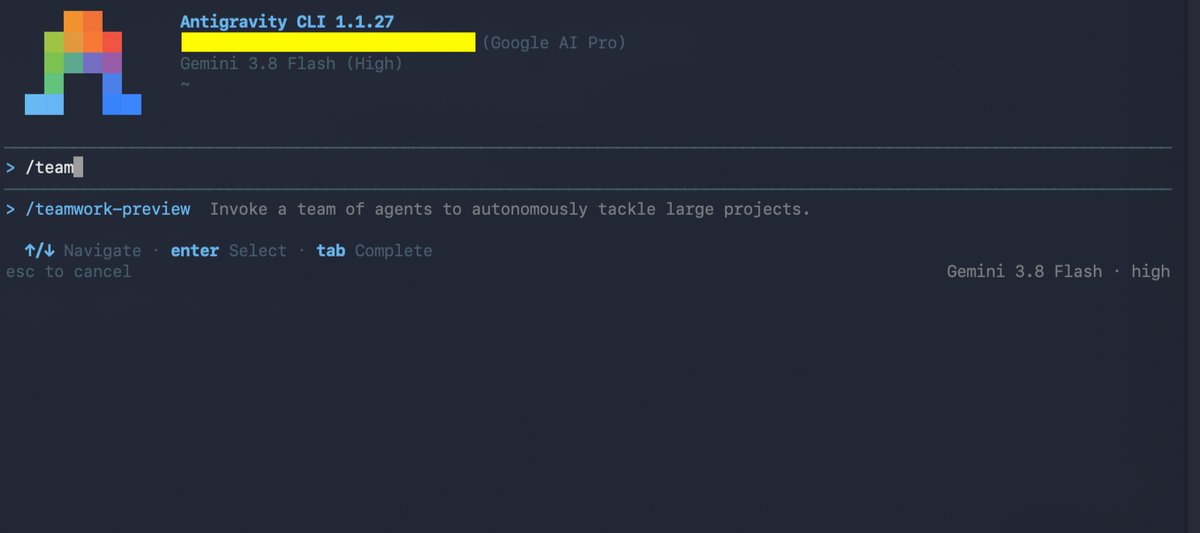
Discussion insight: People increasingly accept queueing and delegation. The remaining friction is the handoff back to the human: reorder this project, pin this workspace, show the reasoning, and let me step in without breaking context.
Comparison to prior day: September 11 was more about Antigravity's newly visible surfaces. September 12 kept those surfaces in view, but the discussion became more operational: intervention, ergonomics, and the rate-limit ceiling once teamwork mode actually helps.
1.3 Routing, optionality, and pricing logic are now part of the product (🡕)
A third theme was that model choice is no longer just a capability debate. People are increasingly evaluating coding tools by whether they preserve vendor optionality, expose real economics, and make tier logic understandable before an expensive run starts.
@GergelyOrosz highlighted (33 likes, 13 replies, 9 bookmarks, 5,357 views) what he called a massive difference between Claude Code and Codex: Codex lets users choose any model and keeps the harness open source, while Claude Code stays closed and model-coupled. The quoted explanation from Tibo mattered because it made the product rationale explicit: if changing model providers only needs a few lines of code, forcing a fork is needless overhead and companies want that optionality preserved.
@thdxr said (148 likes, 14 replies, 2,659 views) OpenCode Go had two consecutive break-even weeks, framing that as a milestone because too many products in this category are either burning money or quietly leaning on data resale. The replies turned cost visibility itself into a feature: one user praised OpenCode Go for showing estimated usage ranges directly on the main page, and thdxr said those economics should improve further as they deploy their own GPUs.
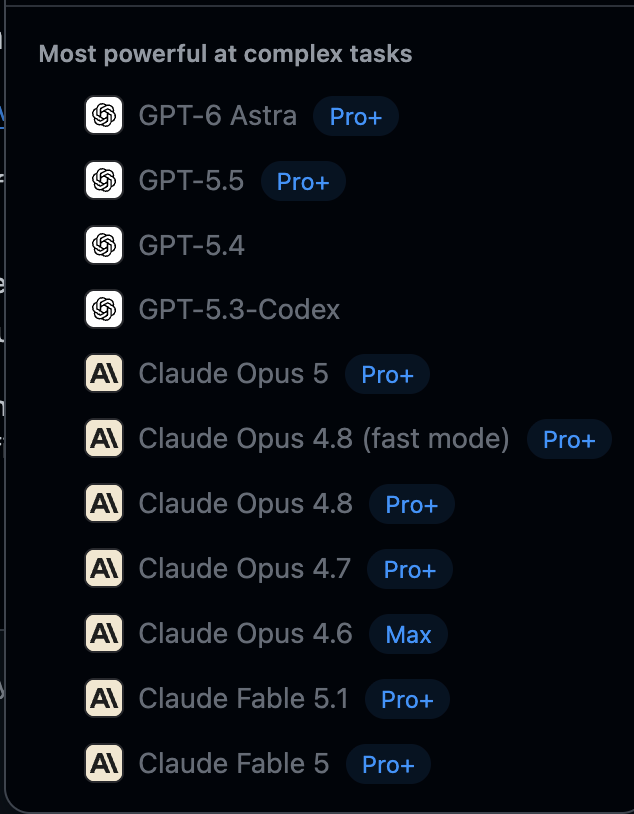
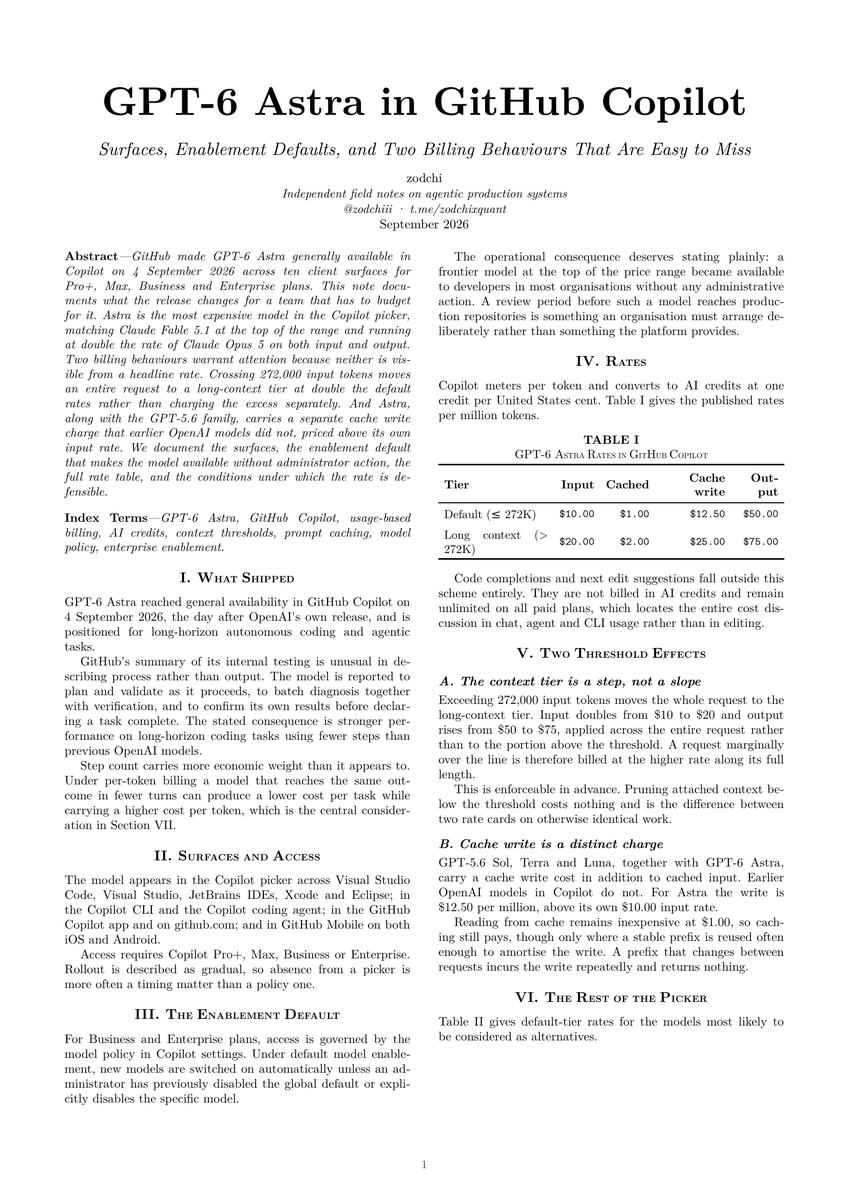
Hosted pricing confusion showed up just as clearly. @ex0t1clol mocked (14 likes, 1 bookmark, 1,274 views) GitHub Copilot's model picker for putting Claude Opus 4.6 on Max while Astra, GPT-5.5, and several Claude variants live on Pro+. @0x_rody warned (7 likes, 1 reply, 2 bookmarks, 180 views) that GPT-6 Astra had been auto-enabled by default and attached the rate details most likely to surprise teams: a price step above 272K input tokens and a separate cache-write charge.
The corrective thread came from @shantanugoel pointing (1 reply, 3 bookmarks, 129 views) to Quesma's RTK cost analysis. Their conclusion was blunt: cutting visible terminal chatter is not the same thing as reducing actual spend, and in their benchmark DeepSeek task cost rose about 17% on average. That fit the rest of the day well. Users were rewarding products that reveal cost structure, not just products that promise it feels cheaper.
Discussion insight: Routing is increasingly judged like infrastructure, not UX frosting. People want optionality, solvency, predictable quotas, and pricing that can be explained before a repo-wide run starts.
Comparison to prior day: September 11 made Copilot look like a routing and pricing layer. September 12 broadened that logic beyond Copilot: open harnesses, break-even economics, and clear usage surfaces now look like durable differentiators.
1.4 Local-first memory, open backends, and context discipline are converging (🡕)
The fourth theme was that more of the interesting work is happening around the model rather than inside it. Persistent local memory, reusable workspace state, API-compatible open backends, and better context curation all showed up as parts of the same emerging stack.
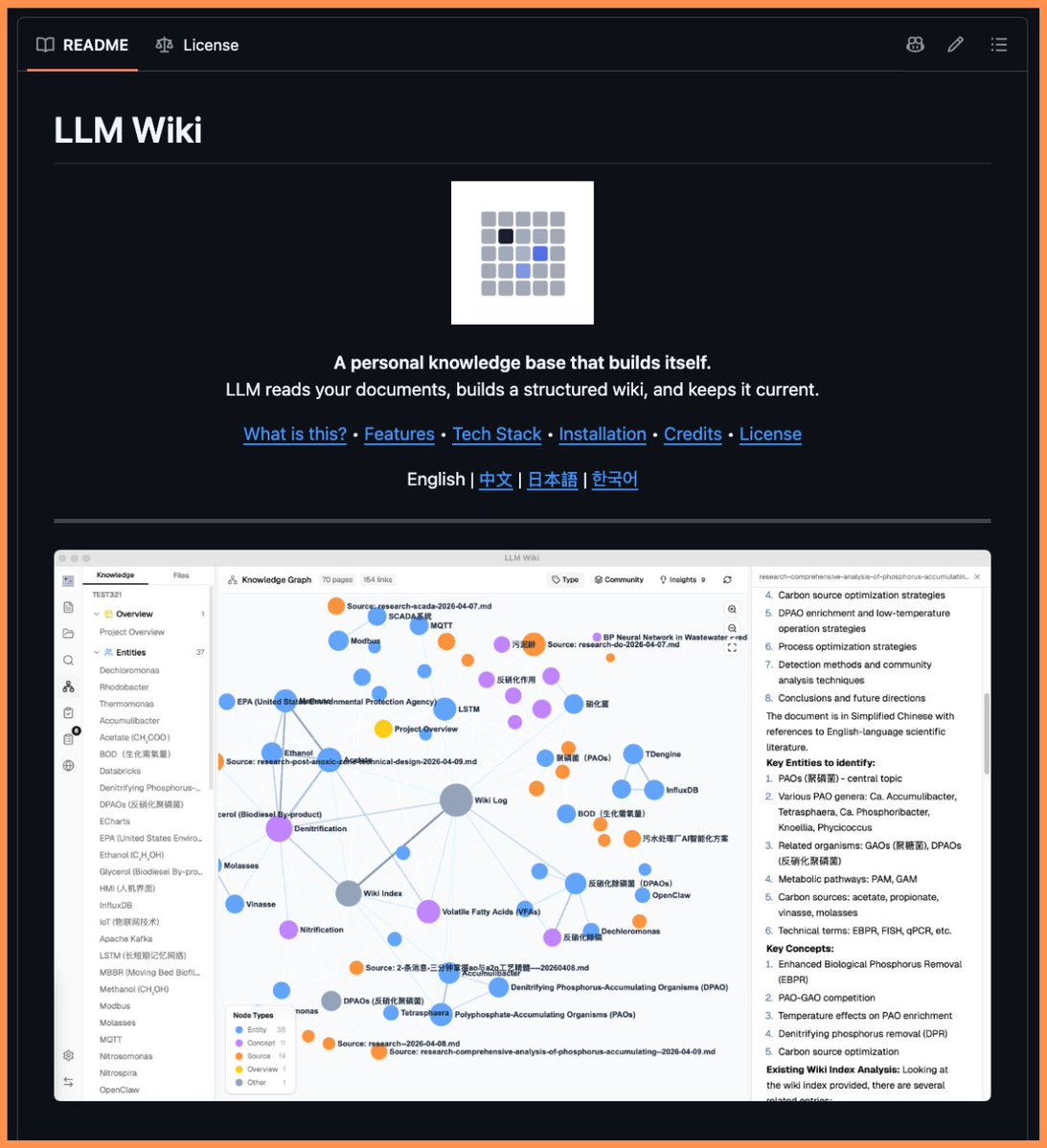
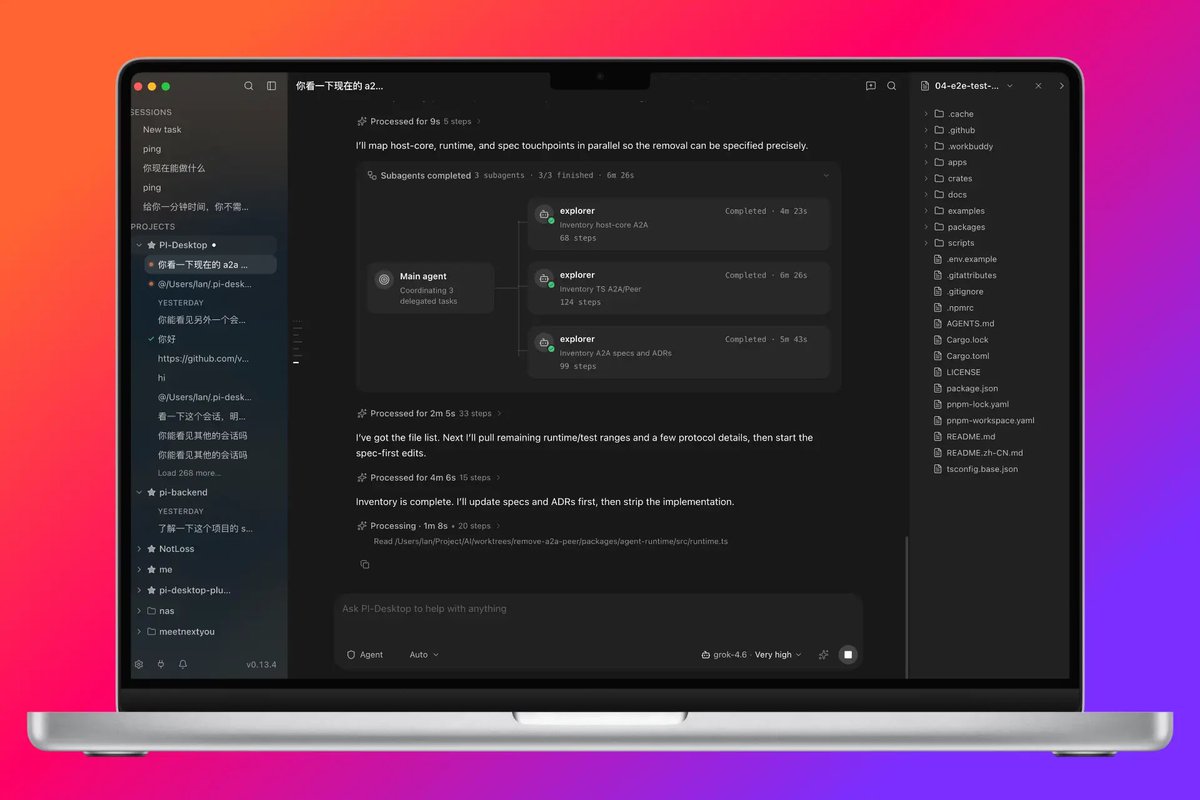
@hasantoxr surfaced (27 likes, 6 replies, 25 bookmarks, 3,837 views) LLM Wiki as a local desktop app that incrementally builds a wiki and knowledge graph from documents, works as an Obsidian vault, and exposes an MCP server so Claude Code and Codex can query it. @tonysimons_ flagged (5 likes, 4 bookmarks, 527 views) PI-Desktop as a local-first command center for coding agents that imports Codex, Claude Code, and OpenCode sessions while supporting MCP, skills, subagents, and plugins. Both projects treat long-running context as a workspace problem, not just a prompt problem.
That same pattern appeared in instruction hygiene. @Voxyz_ai warned (5 likes, 4 bookmarks, 412 views) that instructions helping Sol or Luna can overconstrain Astra, so model switching should trigger an audit of AGENTS-style rules and skills. @heyrimsha translated (3 likes, 2 replies, 2 bookmarks, 230 views) Anthropic's point into plainer language: bigger context windows do not solve "context rot" if the wrong documents, tool output, and history are all competing for attention.
Open backends reinforced the trend. @Oluwaphilemon1 argued (4 likes, 2 replies, 2 bookmarks, 252 views) that Qwen3.8-27B running in BF16 on free Kaggle TPU compute with an OpenAI-compatible API could become a practical drop-in backend for familiar coding clients. The question was no longer just "which frontier model wins" but "how much of the familiar agent UX can I keep while changing the engine underneath?"
@iammukeshm made (22 likes, 2 replies, 12 bookmarks, 578 views) the human-side version of the same argument: if AI gives you 60 lines of working code and you cannot tell whether the auth is safe, the model did not remove the need for engineering judgment. It made the surrounding workflow more important.
Discussion insight: The competitive edge is shifting toward memory shape, workspace persistence, instruction loading, and backend flexibility — the operating system around the agent rather than a single best model.
Comparison to prior day: September 11 already hinted at memory curation and guardrails. September 12 made that much more concrete through local-first products, open-model backends, and direct warnings about model-specific instruction drift.
2. What Frustrates People
Opaque quotas, tier logic, and cost claims that only become clear after the run starts
The clearest frustration was not simply that good models cost money. It was that users often could not tell what a task would cost, which tier unlocked which model, or whether a claimed optimization actually reduced the bill. @ai_for_success showed (193 likes, 16 replies, 38 bookmarks, 9,357 views) the operational version of this problem: Teamwork Preview was useful enough to hit a five-hour Pro limit in 30 to 40 minutes. @ex0t1clol complained (14 likes, 1 bookmark, 1,274 views) that Copilot's model picker made the tiering logic look arbitrary, while @0x_rody attached (7 likes, 1 reply, 2 bookmarks, 180 views) a concrete Astra rate card showing the 272K context step-up and separate cache-write charge.
The sharpest corrective came from @shantanugoel, who linked (1 reply, 3 bookmarks, 129 views) Quesma's RTK benchmark to argue that less visible output is not the same as lower real spend. The most positive counterexample was @thdxr celebrating (148 likes, 14 replies, 2,659 views) OpenCode Go break-even and the visible $15-60 usage range in replies. Severity: High. The workaround pattern was to stay on cheaper or open backends, manually watch usage, or adopt third-party trackers because native product surfaces still hide too much of the economic model.
Better delegation, but still awkward intervention and weak permission boundaries
A second frustration was that agent tools are getting better at autonomous work faster than they are getting better at human takeover. @rodydavis pulled (163 likes, 38 replies, 33 bookmarks, 13,244 views) direct requests for project pinning, reordering, and reasoning visibility. @xdadevelopers linked (23 likes, 10 bookmarks, 8,094 views) a month-long comparison that praised Antigravity's queues and scheduled tasks but still criticized the need to jump to a separate IDE to intervene manually.
The security version of the same frustration came from @dextns, who argued (1 like, 2 replies, 20 views) that "read" and "delete" permissions are still too often fused together, so the safest pattern is to give agents copies of data, separate observation from mutation, and log every action somewhere a human can revisit. Hive and Agent Beacon are both evidence that builders see this gap too: teams want serial writes, clearer approvals, and durable logs rather than one all-powerful session. Severity: Medium-High. The main coping behavior today is to bolt on process outside the agent rather than trust the default boundary.
Generated code still fails quietly when the human, prompt, or defaults are wrong
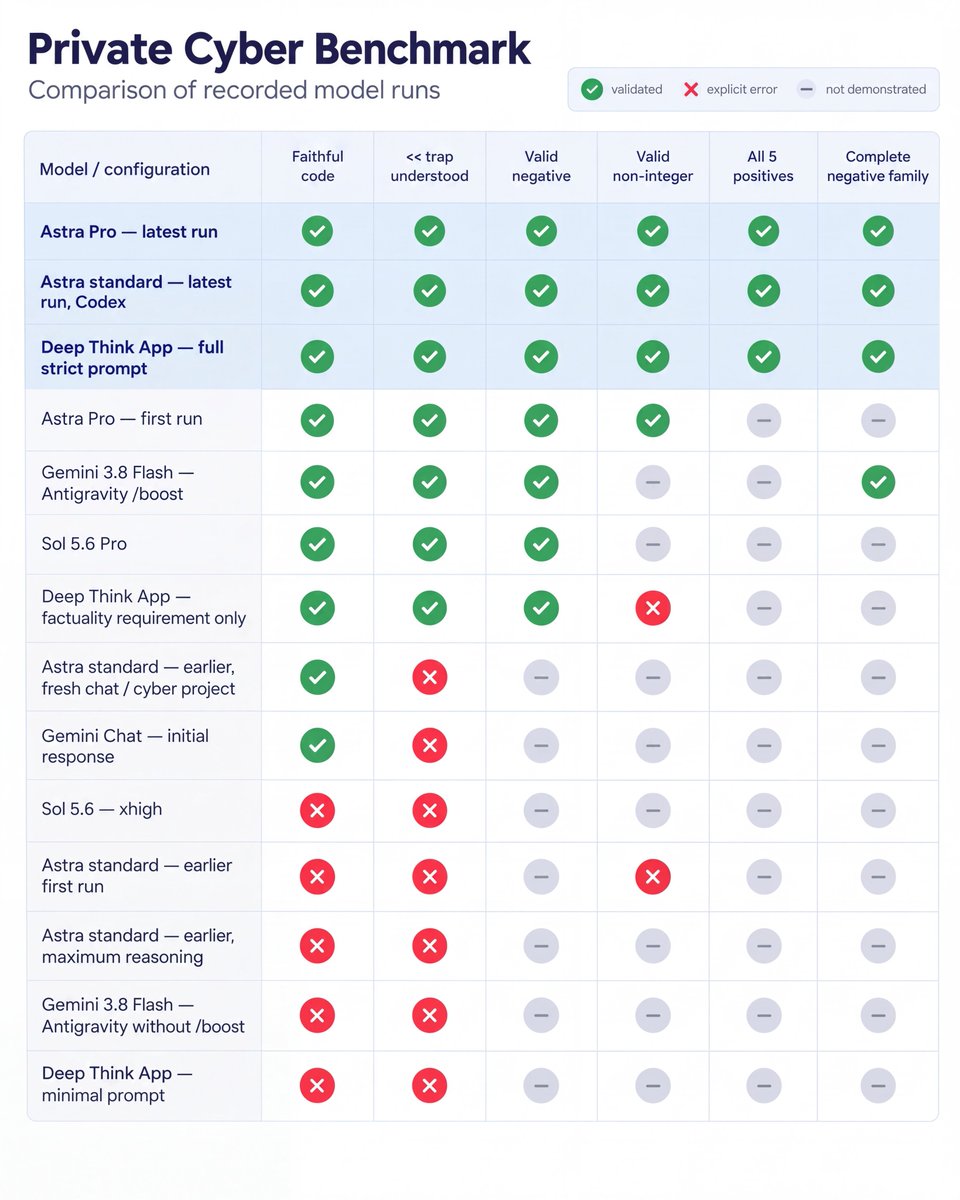
The third frustration was quieter but arguably more important: models can produce working-looking output that still fails at judgment. @iammukeshm spelled it out (22 likes, 2 replies, 12 bookmarks, 578 views) with the example of AI handing you 60 lines of working code while leaving you unable to tell whether the auth is safe or the validation is missing. @Soso_fun_yt shared (7 likes, 2 bookmarks, 268 views) a small private cyber benchmark where the same underlying capability looked very different depending on /boost, prompt strictness, and explicit requirements.
@Voxyz_ai added (5 likes, 4 bookmarks, 412 views) the model-switching version of the problem: guidance that helped Sol or Luna can overconstrain Astra, and cleaning up prompts for one model can remove test commands or acceptance criteria another model still needs.

Severity: High for production work, even when the volume of complaints is smaller than the quota thread. The workaround is stricter acceptance criteria, smaller context, more review, and more experienced humans — which is exactly why context engineering, audit tools, and workflow packaging were so visible today.
3. What People Wish Existed
Budget maps that understand agent topology, not just total tokens
The cost thread implies a fairly specific missing product. People do not just want a monthly meter. They want a task-aware budget view that shows which model, subagent, or long-context decision is about to make the run expensive. @ai_for_success made the pain concrete with fast limit burn in Teamwork Preview, @0x_rody surfaced the hidden Astra thresholds, and @thdxr showed why visible usage ranges are landing well. Bot Tracker is a partial answer, but the broader need is still open. Opportunity: direct.
Permission models that separate seeing from changing
@dextns described the clearest desired shape: let an agent inspect one way, mutate another way, never point it at live data by default, and keep an action trail for later review. The observability posts from Git AI, Hive, and Agent Beacon all reinforce the same product gap from different directions. Teams do not want all-or-nothing autonomy; they want permission boundaries that match real workflow risk. Opportunity: direct.
Model-specific instructions and context routers
@Voxyz_ai warned and @heyrimsha showed that a still-underserved need remains: rules, skills, and background context should load differently depending on the active model and the current step of work. The missing product is not another giant prompt template. It is a reliable router for instructions, examples, tools, and files so that switching from Astra to Sol to an open model does not silently degrade the workflow. Opportunity: competitive.
Hybrid workspaces for long-running agent sessions
The Antigravity replies plus the XDA comparison suggest people still want a smoother human takeover surface: reorder the project list, pin work that matters, inspect reasoning, review diffs, and step in without jumping between multiple disconnected interfaces. PI-Desktop is the clearest emerging answer, but today's discussion shows the need is broader than one product. The demand is for a workspace where long-running sessions, permissions, files, and manual edits all stay in one place. Opportunity: competitive.
4. Tools and Methods in Use
| Tool | Category | Sentiment | Strengths | Limitations |
|---|---|---|---|---|
Google Antigravity /teamwork-preview and /boost |
Agent harness | (+/-) | Multiple agents plus verification, queues, scheduled tasks, inline artifacts, and improved Git/terminal surfaces | Pro users reported hitting five-hour limits quickly, and manual intervention still feels split across surfaces |
| Codex open harness | Agent harness | (+) | Supports any model, keeps the harness open source, and preserves vendor optionality | Economic and governance behavior still depends on the surrounding product and operator choices |
| GitHub Copilot + GPT-6 Astra | Hosted multi-model layer | (+/-) | Broad surface area, frontier-model availability, and deeper shell-backed code review | Tier confusion, default enablement, 272K context price step, and separate cache-write charges |
| OpenCode Go | Open-model subscription | (+/-) | Visible usage ranges, break-even discipline, and explicit economic transparency | Still proving long-term sustainability and self-hosted GPU economics |
| RTK | Output-compression layer | (+/-) | Can reduce visible chatter and shorten some loops | Quesma's benchmark suggests savings are meagre and real cost can even rise |
| LLM Wiki | Memory system | (+) | Persistent local wiki, knowledge graph, source-grounded pages, Obsidian compatibility, MCP access | Adds setup and curation overhead outside the core coding client |
| PI-Desktop | Local-first workspace | (+) | Keeps sessions, files, diffs, permissions, model switching, plugins, and imports in one place | Still in early preview, with interfaces and APIs evolving |
| Hive | Pre-LLM orchestrator | (+) | Deterministic gates, queue-aware cadences, merge controls, and multi-backend support | Classifier edge cases still need human judgment and operator setup |
| Agent Beacon | Telemetry layer | (+) | Unified cross-runtime logs, local JSONL, SIEM forwarding, and durable activity trails | Another operating layer to deploy and maintain |
| Open-weight local backends (Qwen3.8-27B, DeepSeek V4.1 Flash) | Inference backend | (+) | API-compatible, cheaper or more accessible compute, fast prefill/throughput, can slot under familiar clients | Many headline numbers are launch claims rather than independent audits; setup still takes work |
| Context engineering and requirements-first prompting | Method | (+) | Raises verification depth, reduces context rot, and makes model behavior more legible | Easy to overfit to one model or bury the agent under too much procedural guidance |
The day's tool satisfaction was highest where products exposed operating reality instead of hiding it. That is why Codex optionality, OpenCode Go's visible usage range, Hive's deterministic pre-LLM pipeline, and Agent Beacon's normalized telemetry all landed as meaningful differentiators rather than side features.
Methodologically, the conversation kept moving away from "bigger prompt, bigger model" thinking. @heyrimsha translated (3 likes, 2 replies, 2 bookmarks, 230 views) Anthropic's context-engineering guidance into a concrete rule: load the right documents, tools, memory, and message history at the right moment, not all at once. @Soso_fun_yt showed (7 likes, 2 bookmarks, 268 views) the same principle from another angle, with a benchmark where /boost and stricter requirements changed the outcome more than raw model tier alone.

The backend story was equally important. @MrAhmadAwais claimed (18 likes, 5 replies, 370 views) that Command Code served 3.1 trillion paid DeepSeek V4.1 Flash tokens in the model's first 24 hours, while @Oluwaphilemon1 argued (4 likes, 2 replies, 2 bookmarks, 252 views) that Qwen3.8-27B on free Kaggle TPU compute plus an OpenAI-compatible API makes open backends easier to plug into familiar agent clients. Even when those numbers are treated cautiously, the migration pattern is clear: developers want to keep the harness and swap the engine.

5. What People Are Building
| Project | Who built it | What it does | Problem it solves | Stack | Stage | Links |
|---|---|---|---|---|---|---|
| Hive | Hive Commons, surfaced by @DanKornas | Triages GitHub issues and PRs, then dispatches selected work to agents behind deterministic gates | Open-source maintenance queues get messy before an LLM should touch them | Go binary, shell gates, Docker Compose/Podman, Claude/Copilot/Gemini/Goose backends | Shipped | tweet (11 likes, 4 replies, 4 bookmarks, 861 views) · repo |
| Agent Beacon | Asymptote Labs, surfaced by @agenticgirl | Normalizes prompts, tool calls, file changes, approvals, errors, and token use across runtimes | Teams lack one auditable timeline across local, browser, CI, and cloud agent work | Endpoint binary, TypeScript SDK, OpenTelemetry schema, JSONL, SIEM exports | Shipped | tweet (2 replies, 1 bookmark, 43 views) · repo |
| LLM Wiki | nashsu, surfaced by @hasantoxr | Builds a persistent local wiki and knowledge graph from source documents | RAG repeatedly rereads sources instead of maintaining durable, navigable context | Desktop app, local HTTP API, Obsidian vault, MCP server, agent skill, provider-flexible model endpoints | Shipped | tweet (27 likes, 6 replies, 25 bookmarks, 3,837 views) · repo |
| PI-Desktop | vastsa contributors, surfaced by @tonysimons_ | Gives coding agents a local-first workspace for sessions, files, diffs, reviews, and permissions | Agent work is fragmented across terminals, editors, and hosted tabs | Electron, Rust host core, pi Agent Harness, plugins, MCP/Skills/Subagents | Beta | tweet (5 likes, 4 bookmarks, 527 views) · repo |
| gstack | Garry Tan, surfaced by @thegreatest_sv | Turns Claude Code into a role-based virtual engineering team | One generic agent lacks reusable specialist workflows | Slash commands, Markdown, Bun, Node, Claude Code roles and skills | Shipped | tweet (13 likes, 5 replies, 6 bookmarks, 140 views) · repo |
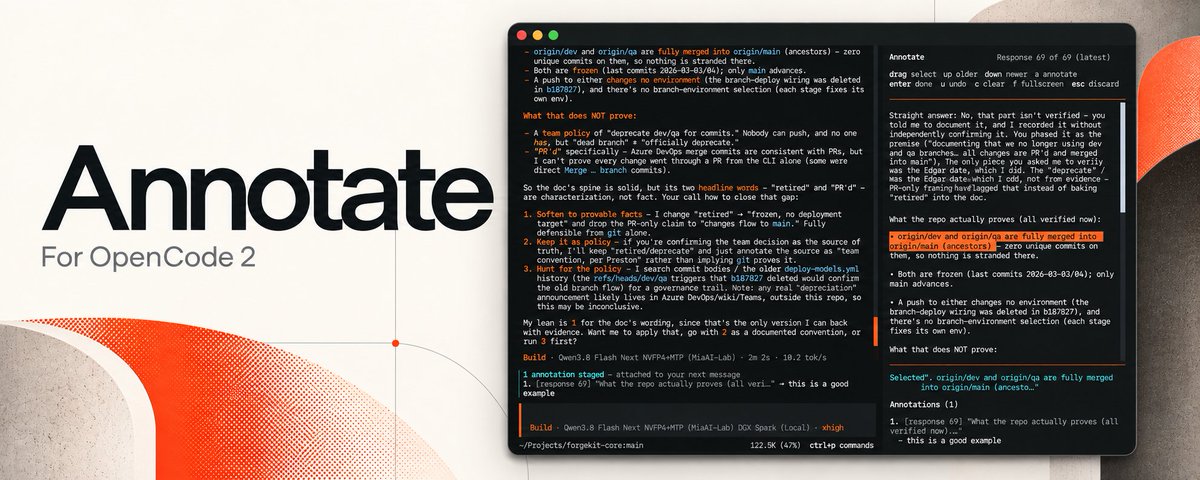
| Annotate for OpenCode 2 | @iamprestonlogan | Attaches comments to selected spans in earlier assistant responses | Correcting long transcripts through a new free-form prompt loses precision | OpenCode 2 plugin; exact implementation stack not stated | Beta | tweet (2 replies, 15 views) |
| Bot Tracker | @HumanPerson | Tracks usage, credits, and reset times across AI/API providers, including Copilot | Native usage surfaces are confusing or incomplete | iOS app plus widgets; exact implementation stack not stated | Beta | tweet (1 like, 1 reply, 1 bookmark, 91 views) |
| Lilydrift | @NickHirras | Small ripple-matching game shipped from spec to deploy in one afternoon | Tests whether one builder can deliver a full product loop with multiple model roles | Claude, Claude Code, Gemini, Flutter, Flame, deterministic replay test, wasm, Cloudflare Pages, GitHub CI/CD | Shipped | tweet (1 like, 2 replies, 20 views) |
The clearest workflow-packaging build was gstack. Even though it arrived through a roundup post, the underlying repo makes the point concrete: specialist roles, review flows, QA, and release steps are being open-sourced as reusable behavior around an existing agent instead of being left as private prompt craft.
LLM Wiki and PI-Desktop show a second, stronger cluster: builders are productizing long-running local state. One turns private documents into cited memory the agent can query; the other gives sessions, diffs, permissions, and model switching a dedicated workspace instead of scattering them across terminal panes and hosted tabs.
Hive, Agent Beacon, and Bot Tracker attack the trust gap from three different sides. Hive constrains work before the agent acts. Agent Beacon records what the agent did across runtimes. Bot Tracker translates opaque quotas into a human meter. That combination is notable because it shows builders wrapping observability, policy, and cost visibility around the agent instead of trying to replace the agent itself.


The smaller product stories were equally instructive. @NickHirras described (1 like, 2 replies, 20 views) writing a game spec with Claude, implementing it with Claude Code, getting an icon from Gemini, and shipping through GitHub CI/CD and Cloudflare Pages by dinner. @iamprestonlogan shipped (2 replies, 15 views) Annotate for OpenCode 2, which solves a smaller but real workflow problem: how to critique one specific span in a long agent response without re-explaining everything in the next turn.

6. New and Notable
OpenAI published one of the clearest public measurements yet of the shift from chat to agent fleets
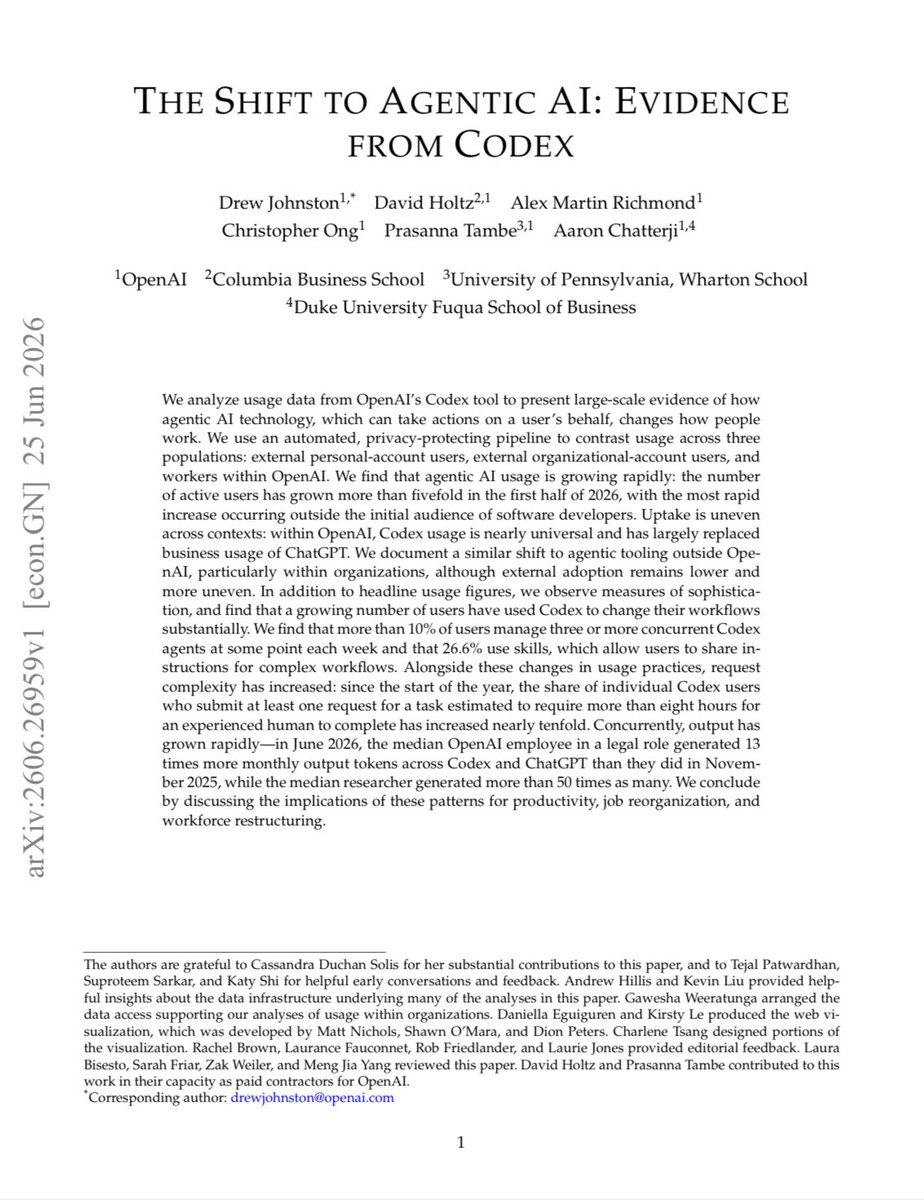
@beamnxw highlighted (13 likes, 6 replies, 8 bookmarks, 252 views) OpenAI's paper The Shift to Agentic AI: Evidence from Codex. The attached first page makes the core findings inspectable: agentic AI usage among Codex users grew more than 5x in the first half of 2026, more than 10% of users managed three or more concurrent agents, and 26.6% used skills to share instructions across workflows. The abstract also says median legal output rose 13x and median researcher output rose more than 50x relative to late 2025.
GitHub's hosted review layer became more agentic behind the scenes
@GHchangelog reported (9 likes, 1 bookmark, 1,257 views) that Copilot code review now auto-resolves addressed comments and uses more shell tools for deeper analysis. The fetched GitHub changelog adds the more important detail: Lite reviews now use an ensemble of agents rather than one agent working alone. This matters because it shows mainstream hosted review moving toward the same multi-agent and evidence-backed patterns that independent builders have been exploring in public.
Google's Mechanize deal suggests the moat is moving upstream of the chat UI
@wallstengine reported (276 likes, 22 replies, 43 bookmarks, 31,750 views) that Google completed a $1.5B+ talent and technology deal with Mechanize, with hires joining DeepMind's midtraining efforts. That matters less as finance gossip than as a product signal: if the money is going into midtraining, coding improvement, and evaluation talent rather than another surface wrapper, the competitive edge is moving upstream into the systems that shape agent quality before the user ever opens the tool.
7. Where the Opportunities Are
[+++] Observable contribution and audit layers — The Git AI announcement, Copilot's deeper shell-backed review, Hive's deterministic gates, and Agent Beacon's telemetry all point to the same gap: teams want a durable record of what the agent changed, how it validated the result, and where the human approval boundary sat. This is strong because the signal appears across frontier labs, platform vendors, and small builders on the same day.
[+++] Cost-aware agent operations — Antigravity's fast quota burn, Copilot's confusing tier logic, Astra's hidden thresholds, OpenCode Go's visible usage range, Bot Tracker's widget, and Quesma's RTK benchmark all show repeated demand for pre-run budget prediction and per-workflow cost visibility. This is strong because the pain is concrete, repeated, and already spawning workaround products.
[+++] Model-specific instruction and context routers — Voxyz's Astra warning, Anthropic's context-engineering guidance, and the Soso benchmark all show that defaults and prompt framing can dominate outcome quality. This is strong because even advanced users are discovering quality cliffs caused by instruction carryover, context rot, or missing acceptance criteria rather than by raw model weakness.
[++] Permission-split autonomy with reviewable actions — dextns, Hive, and Agent Beacon together describe a real product shape: separate read from write/delete, keep live data off by default, and log every action for later review. The need is clear and practical, but product adoption still looks early.
[++] Local-first workspaces and durable memory — LLM Wiki, PI-Desktop, and the open-backend discussion around Qwen and DeepSeek all suggest there is room for products that preserve local state, portable sessions, and backend flexibility without giving up modern agent UX. The signal is moderately strong because multiple distinct solutions are already surfacing, but usage evidence is still early.
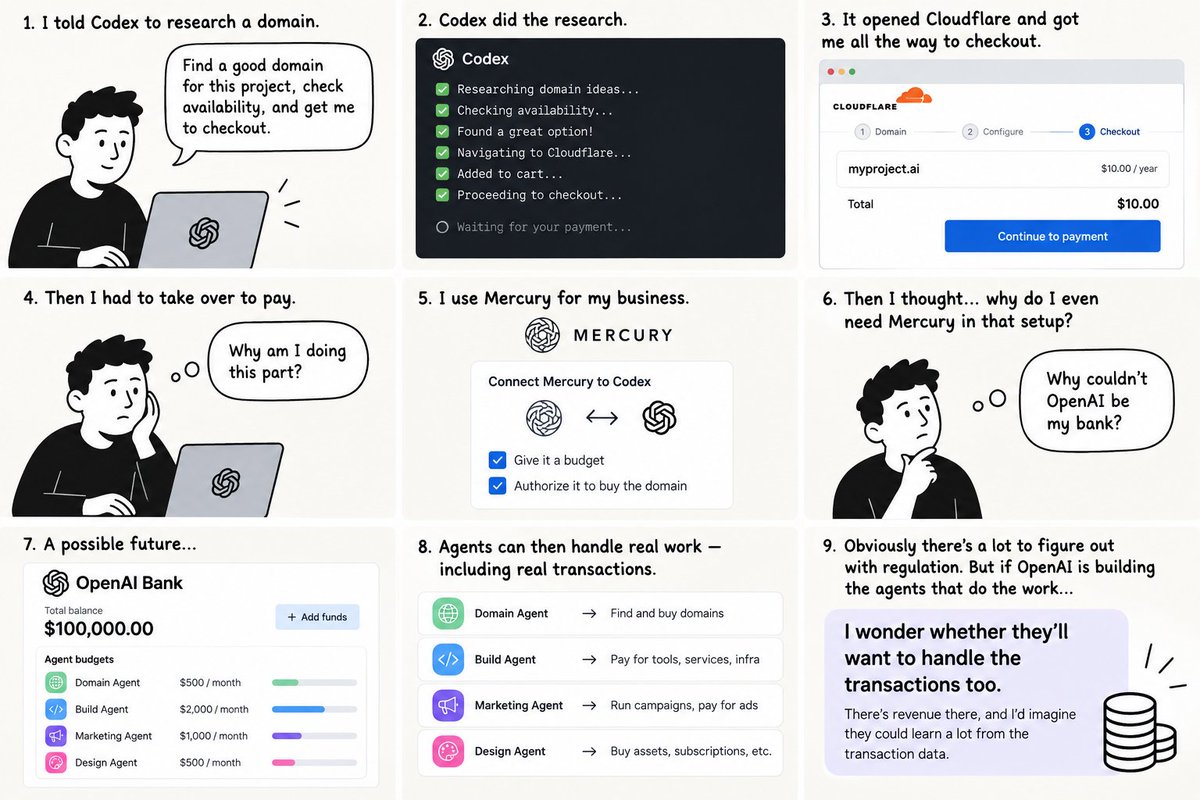
[+] Budgeted transactions and agent commerce — @reeder1865 imagined (3 likes, 1 reply, 2 bookmarks, 60 views) an "OpenAI Bank" where different agents get separate budgets for domains, build tools, and bills after Codex already reached a Cloudflare checkout screen. This is still speculative, but it is unusually concrete about how delegated spending controls might evolve if agents keep taking on real operational work.
8. Takeaways
- The conversation moved above raw code generation and into observability. The Git AI hire, Copilot's shell-backed review changes, Hive, and Agent Beacon all treated attribution, auditability, and evidence as product features rather than optional governance layers. (source; source; source)
- Useful multi-agent workflows are now hitting operational ceilings faster than capability ceilings. Teamwork Preview praise came bundled with five-hour-limit complaints, while Copilot tier confusion, Astra pricing details, and RTK skepticism showed that cost visibility is now a core part of product quality. (source; source; source; source)
- Open harnesses and swappable backends gained real credibility. Codex optionality, OpenCode Go's break-even push, PI-Desktop's provider-agnostic workspace, and the Qwen TPU discussion all point toward a future where developers keep the workflow and change the model under it. (source; source; source; source)
- Prompting is turning into operational context design. The biggest quality lessons today were about context routing, acceptance criteria, and model-specific instruction hygiene, not just about choosing a smarter model. (source; source; source)
- Builders are filling the gaps around the model, and the Codex paper suggests this is structural. LLM Wiki, PI-Desktop, Hive, Bot Tracker, Annotate, and Lilydrift all sit above or around the raw model experience, while OpenAI's Codex paper shows multi-agent and skills usage growing quickly enough to justify that new tooling layer. (source; source; source; source; source; source)