Twitter AI Coding - 2026-09-13
1. What People Are Talking About
1.1 Harnesses are becoming the product surface (🡕)
The highest-signal discussion moved another step away from “which base model is best” and toward the layer that loops, routes, constrains, and repairs agent work. Five separate high-signal items framed the harness, not the model, as the durable asset: a control plane for tools, memory, approvals, context compaction, and repeatable work.
@gregisenberg argued (59 likes, 10 replies, 97 bookmarks, 3,489 views) that “agent harnesses are the new GPT wrappers,” defining the harness as the layer that keeps a model working step by step, gives it tools, manages long-running memory, and decides when it must stop and ask a human. The replies added concrete implementation detail rather than generic agreement: @ragzoi called the harness “the control plane” for tool ACLs, memory writes, stop rules, model routing, and correction loops, while @leononrails said the real work sits in “stop and ask a human,” not just cross-model routing.

@Trylions framed (3 likes, 2 replies, 221 views) OpenAI’s Agents API as “the Codex harness as a product,” listing managed sessions, orchestration, context compaction, tool search, subagents, recovery, and environment choice as the real offer. The attached diagram made that packaging legible by splitting the system into an application layer, a managed Agents API session layer, and a sandbox that actually runs commands and touches files.
@arkyyang translated (2 likes, 2 replies, 33 views) the new Ecdysis paper into product-builder advice: only patch failures that repeat across tasks, separate diagnosis from editing, and use cheaper models to evolve shared scaffolding. The paper’s attached benchmark table matters because it is one of the day’s few concrete research artifacts aimed at improving the runtime harness itself rather than the base model.
Discussion insight: Harness talk stayed operational. People named permissions, memory writes, stop conditions, failure diagnosis, and recovery behavior as the thing that needs improvement, which is meaningfully different from generic “better coding AI” talk.
Comparison to prior day: September 12 emphasized observability, attribution, and code-review depth around agents. September 13 pushed one layer deeper: the harness itself became the product being sold, bundled, and even trained.
1.2 The workspace is being redesigned for multi-agent execution (🡕)
A second theme was that teams are no longer treating the editor window as the whole environment. Browser workspaces, task-local worktrees, Kubernetes workloads, and even agent-oriented operating systems appeared as different answers to the same question: how do you keep several agents moving at once without losing reviewability or corrupting the codebase?
@bridgemindai said (111 likes, 40 replies, 22 bookmarks, 4,500 views) that trying Omarchy, a Linux distro “built for AI agents and vibe coding,” could change how they build after a lifetime on Mac. The interest was real, but the replies added a harder edge: the top skeptical response asked how “made for AI agents” Linux can be if Codex lacks Linux computer use and Claude’s app support is limited there.
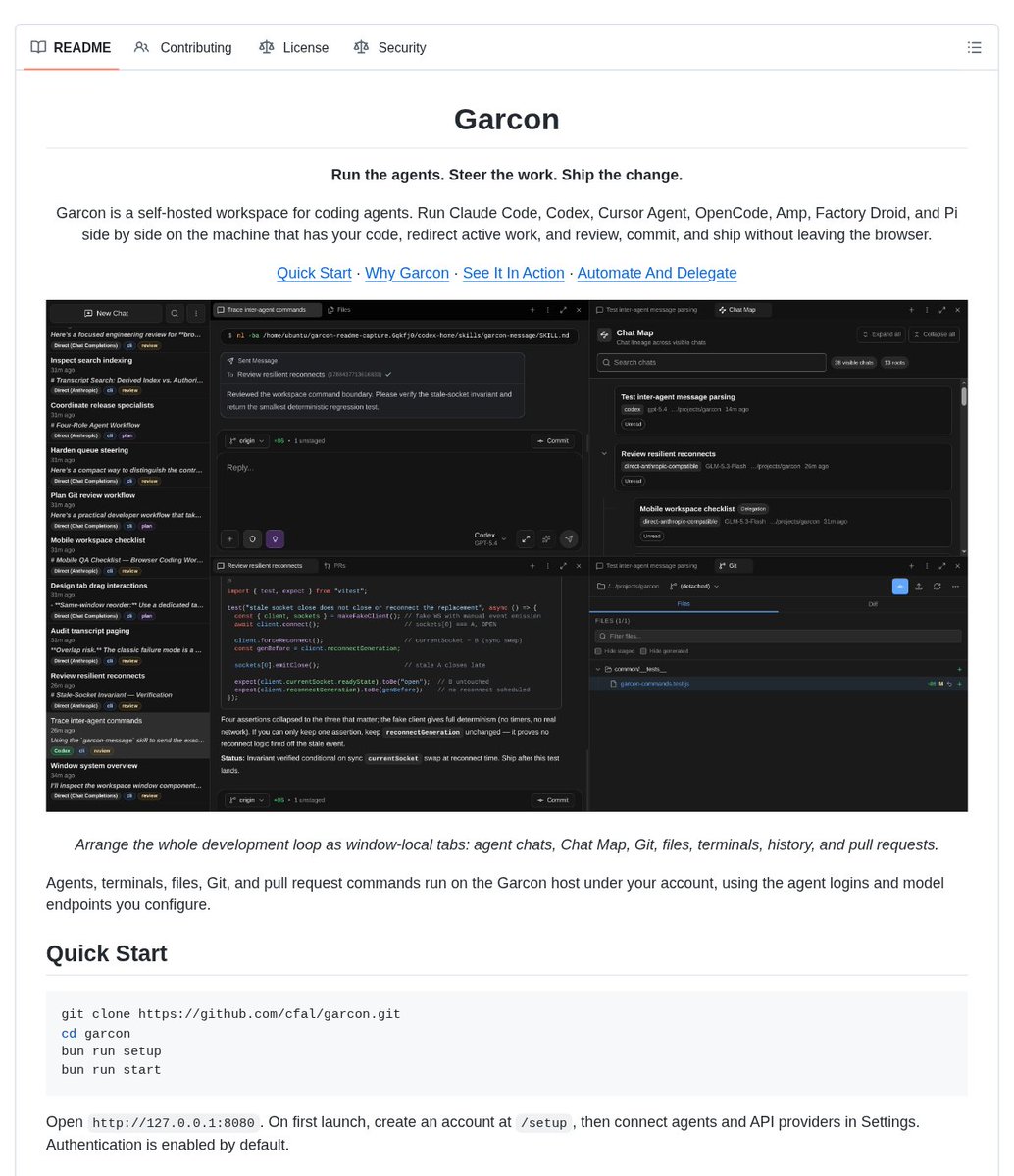
@DanKornas introduced (8 likes, 4 replies, 664 views) Garcon as a self-hosted browser workspace for running Claude Code, Codex, Cursor Agent, OpenCode, Amp, Factory Droid, and Pi side by side with terminals, files, Git, and pull-request controls. In the public Garcon repo, it is described as a TypeScript/Bun workspace that keeps delegated results, chat lineage, files, terminals, and Git visible together rather than splitting them across tools.
@undefinedKi summarized (4 likes, 2 replies, 4 bookmarks, 119 views) a Conductor workflow where every task gets its own worktree, review stays in PR comments instead of ad hoc edits, and contracts or interfaces are marked as human-owned. The attached one-pager was unusually specific: one worktree per task, four PRs open at once, and a protected region where agents may propose changes but a human still reviews every line before merge.

The same operating problem appeared one layer lower in infrastructure. @DanKornas also presented (2 likes, 2 replies, 456 views) Kelos, and the public Kelos repo describes it as a Kubernetes-native framework that turns agents into Tasks, Sessions, Workspaces, and AgentConfig resources instead of leaving them to run on developer laptops.
Discussion insight: The consistent ask was not more autonomy in the abstract. It was steerability: isolate the task, preserve lineage, keep review in diffs and PRs, and make it obvious which chat touched which change.
Comparison to prior day: September 12’s discussion centered on intervention and workflow limits inside existing products. September 13 surfaced more builder-authored answers: new workspaces, new orchestration layers, and even new operating environments for agents.
1.3 Quota and billing friction remained a first-order blocker (🡒)
The most persistent negative signal stayed the same as earlier in the week: people believe capable tools exist, but they do not trust the quota, reset, and billing surfaces around them. Three separate complaints on September 13 showed the problem at different levels: depleted quotas, perceived post-reset degradation, and failed-payment recovery.
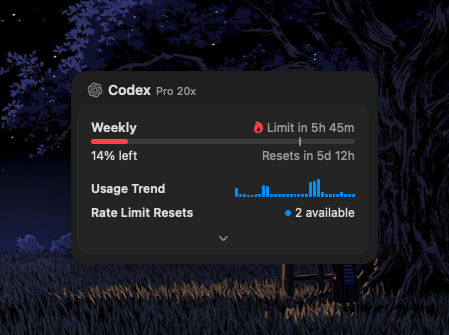
@bil0090 reported (61 likes, 16 replies, 2,285 views) that after the latest reset, the same Codex workflow now ran slower and exhausted usage much faster than before. The attached screenshot grounded that complaint with a Codex Pro 20x weekly bar showing just 7% left.
@buildwithrajath asked (38 likes, 18 replies, 1,412 views) whether OpenAI had “nerfed Codex again,” saying Astra limits were already brutal and Sol now also felt depleted after only a few serious tasks. @therealmc92 added (1 reply, 145 views) a billing-operations version of the same problem: a failed credit-card transaction apparently dropped the account off its 20x ChatGPT Pro plan with no grace period to resolve the charge.
@melvindvivas connected (54 likes, 10 replies, 84 bookmarks, 4,171 views) the quota issue directly to output that other developers use, saying a large share of his Codex time now goes into maintaining open-source agent tooling and asking whether OpenAI could help support that work. That complaint landed because it was paired with specific public repos rather than vague dissatisfaction.
Discussion insight: The frustration was broader than “AI is expensive.” Users were objecting to unpredictability: resets that feel worse than before, plans that can disappear after payment issues, and usage ceilings that make ongoing maintenance work harder to justify.
Comparison to prior day: September 12 already showed concern about model tiering and rate ceilings. September 13 made the cost problem more operational: maintenance work, account recovery, and recurring workflow reliability all surfaced as blockers.
1.4 Useful context is increasingly packaged as maps, skills, and bundles (🡕)
The context conversation kept moving away from “write a better prompt” and toward shipping reusable structures that compress search, tool discovery, and platform knowledge. Shared code graphs, skill registries, and installable cloud bundles all pointed to the same pattern: what matters is not just more context, but better-packaged context.
@kv1nsiii recommended (20 likes, 7 replies, 16 bookmarks, 566 views) a “map, method and catalog” stack: CodeGraph for a shared local index, HumanLayer for a context-engineering workflow, and Clawhub for packaged skills and plugins. The public CodeGraph repo describes a 100%-local graph that wires into Claude Code, Codex CLI, Gemini CLI, Antigravity, Cursor, and GitHub Copilot, auto-syncs on file changes, and exposes a browser UI; replies immediately focused on stale-symbol handling and whether graph retrieval reduces file-thrashing.
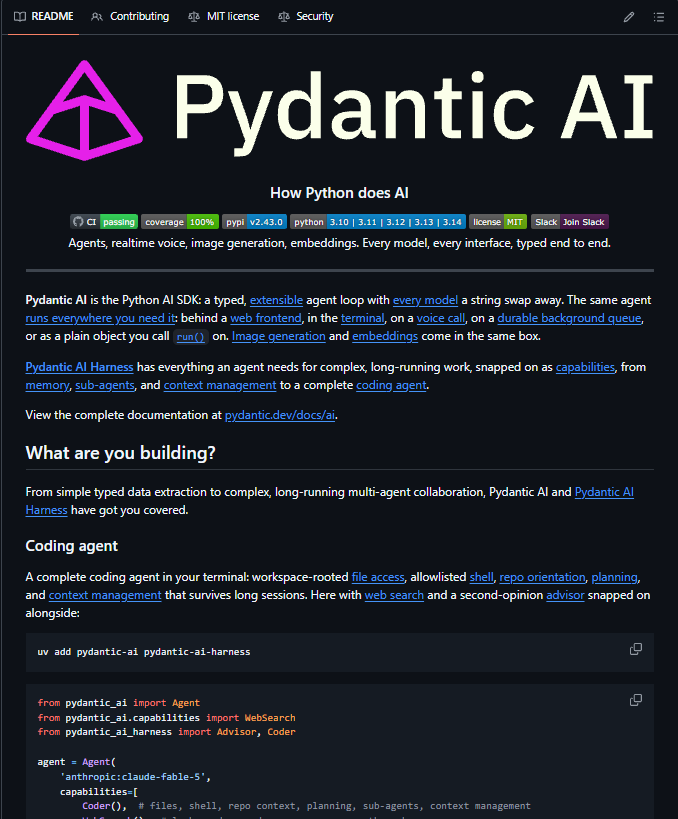
@Shruti_0810 collected (34 likes, 16 replies, 42 bookmarks, 2,344 views) a broader open-source stack — Browser Use, OpenHands, OpenClaw, Computer Use, Codex, Pydantic AI, LangGraph, MCP servers, Letta, and CrewAI — as the repos that make agents “actually useful.” The attached screenshots helped make that concrete by showing Pydantic AI’s typed agent surface and Codex CLI’s local-agent framing instead of another abstract list.
@DivyanshT91162 argued (12 likes, 4 replies, 11 bookmarks, 1,243 views) that Google Cloud’s new developer plugin gives agents a full capability package rather than a loose pile of docs and tools. In the public Google Cloud announcement, Google says the google-cloud-developer plugin bundles authentication, authorization, project management, gcloud guardrails, and Developer Knowledge MCP grounding in official docs under the open Agent Plugins specification.
Discussion insight: Packaging alone is not enough. Replies kept adding the same qualifiers: retries, approval steps, clear failure paths, and safe execution still decide whether a packaged capability is production-worthy.
Comparison to prior day: September 12 talked more about context discipline and model-specific instruction hygiene. September 13 emphasized distribution: indexes, registries, and installable capability bundles that can be reused across tools.
2. What Frustrates People
Quota resets, plan cliffs, and billing recovery that do not feel trustworthy
The strongest frustration was operational, not conceptual. Users were not debating whether Codex or Astra can do useful work; they were saying the same workflows now feel harder to sustain because quotas drain faster, resets feel weaker, and billing failures have no safe recovery window. @bil0090 reported (61 likes, 16 replies, 2,285 views) that the same Codex workflow that previously lasted three to four days now burns through usage much faster after a reset, while @buildwithrajath asked (38 likes, 18 replies, 1,412 views) whether Astra and Sol had both effectively been nerfed. @therealmc92 added (1 reply, 145 views) that a failed credit-card transaction apparently knocked their business off a 20x ChatGPT Pro plan with no grace period to resolve the charge.
This is severe because it hits the people doing repeatable, production-adjacent work rather than one-off demos. @melvindvivas explicitly tied (54 likes, 10 replies, 84 bookmarks, 4,171 views) usage limits to maintaining open-source infrastructure that other developers rely on. The main coping strategies visible in the dataset were switching across plans and models, leaning on open/local tooling, and rationing serious runs. Worth building for: High, because the complaint spans cost visibility, account-state recovery, and confidence in ongoing usage rather than simple price sensitivity.
Multi-agent work still breaks down without isolation, provenance, and redirect controls
A second frustration was that parallel agents are easy to start but hard to keep legible once they begin touching the same codebase. @undefinedKi summarized (4 likes, 2 replies, 4 bookmarks, 119 views) a workflow built around one worktree per task, PR-only review, and human-owned regions precisely because “two agents in one working directory” is where collisions begin. @DanKornas positioned (8 likes, 4 replies, 664 views) Garcon around the same pain: tiled chats are not enough unless you can redirect a run in flight, see delegation lineage, and review diffs without leaving the workspace. Even the positive Omarchy adoption post from @bridgemindai drew (111 likes, 40 replies, 22 bookmarks, 4,500 views) immediate replies questioning whether Linux agent workflows actually have the right computer-use support yet.
People are coping by adding explicit process outside the model: isolate branches, push every task through PRs, protect human-owned files, and move orchestration into tools like Garcon or Kelos. That is revealing on its own. The demand is not for more raw autonomy; it is for safer concurrency. Worth building for: High, because multiple independent posts converged on the same missing control surface.
Default behavior is still too brittle on “simple” tasks
The third frustration was that models and agents can look competent while still failing quietly when the prompt, routing, or retrieval layer is underspecified. @Soso_fun_yt shared (8 likes, 315 views) a compact cyber benchmark where Gemini 3.8 Flash in Antigravity missed the central difficulty without /boost, while stricter prompts and verification requirements materially changed outcomes across Deep Think, Astra, and Sol. @kv1nsiii made (20 likes, 7 replies, 16 bookmarks, 566 views) the codebase version of the same complaint: agents still open “40 files to answer one question” unless they get a map, a method, and a catalog first. Replies to @Shruti_0810 added (34 likes, 16 replies, 42 bookmarks, 2,344 views) that permissions, retries, and clear failure paths are what separate a demo stack from a reliable one.
The workaround pattern was consistent: pre-index the codebase, tighten acceptance criteria, add structured skills or plugins, and keep a human review stage between diagnosis and edits. Worth building for: Medium-High. The need is real, but the space is already competitive because open-source stacks like CodeGraph, Pydantic AI, Browser Use, and packaged skill systems are already trying to solve pieces of it.
3. What People Wish Existed
Budget-aware agent control planes
The loudest practical need was not “make it cheaper” in the abstract. It was “make the cost surface legible before I commit to the run.” @bil0090 showed (61 likes, 16 replies, 2,285 views) a reset that no longer preserved the same workflow headroom, @buildwithrajath asked (38 likes, 18 replies, 1,412 views) whether quotas were being “nuked,” and @therealmc92 wanted (1 reply, 145 views) something as basic as a grace period after a blocked payment. This is a practical and urgent need. Partial answers exist in local/open tools and model-switching setups, but the missing product is a live budget map that understands long sessions, subagents, resets, and billing state before work starts. Opportunity: direct.
A reviewable way to run several agents at once
The second wish was for multi-agent work that stays understandable under real load. @undefinedKi recommended (4 likes, 2 replies, 4 bookmarks, 119 views) separate worktrees, PR-only review, and human-owned code regions; @DanKornas built (8 likes, 4 replies, 664 views) Garcon around visible coordination and in-flight steering; and @DanKornas positioned (2 likes, 2 replies, 456 views) Kelos as the infrastructure answer for people who do not want those agents living on laptops. This is a practical need with Medium-High urgency: the work is already happening, but the operating surface is still improvised. Garcon, Kelos, and Conductor-style workflows partially address it today. Opportunity: direct.
Plug-and-play capability bundles instead of hand-rolled setup
Several posts implied a wish for agents that arrive with the right map, tools, and docs already connected. @kv1nsiii said (20 likes, 7 replies, 16 bookmarks, 566 views) agents need “a map, a method and a catalog,” while @DivyanshT91162 highlighted (12 likes, 4 replies, 11 bookmarks, 1,243 views) Google’s google-cloud-developer plugin as a single installable bundle for auth, project management, gcloud operations, and official docs. This is mostly practical rather than emotional, and the urgency is Medium because viable partial solutions already exist in CodeGraph, Browser Use, MCP servers, and Google’s plugin system. Opportunity: competitive.
Better default reasoning on deceptively small tasks
The benchmark thread from @Soso_fun_yt showed (8 likes, 315 views) a more subtle wish: users do not want to discover that the model’s deeper reasoning only appears after adding /boost, rigid “REQUIREMENTS,” or much stricter verification criteria. The need is practical, but it also carries an emotional edge because it erodes trust in whether a short prompt will be treated seriously. There are partial answers today in stricter prompt templates, typed agent frameworks, and manual review, but nothing in the dataset suggests that ordinary defaults solve it reliably. Opportunity: competitive.
4. Tools and Methods in Use
| Tool | Category | Sentiment | Strengths | Limitations |
|---|---|---|---|---|
| Codex | Coding agent | (+/-) | Repo-aware task execution; visible in open-source maintenance, local agent workflows, and multi-agent orchestration setups (melvindvivas (54 likes, 10 replies, 4,171 views); Shruti_0810 (34 likes, 16 replies, 2,344 views)) | Repeated complaints about worsening limits, slower runs, and brittle plan recovery (bil0090 (61 likes, 16 replies, 2,285 views); buildwithrajath (38 likes, 18 replies, 1,412 views); therealmc92 (1 reply, 145 views)) |
| GPT-6 Astra | Model / orchestrator | (+/-) | Strong orchestrator role in the Astra+Luna setup; latest Astra Pro run met every criterion in Soso’s benchmark and did so quickly (melvindvivas (54 likes, 10 replies, 4,171 views); Soso_fun_yt (8 likes, 315 views)) | “Brutal” quota pressure and sensitivity to task framing or plan limits (buildwithrajath (38 likes, 18 replies, 1,412 views); Soso_fun_yt (8 likes, 315 views)) |
| GPT-5.6 Luna | Model / subagent | (+) | Used as the default execution model in melvindvivas’s public Codex orchestration setup, suggesting trust in it for worker/subagent tasks (codex-astra-luna-orchestrator) | Still sits inside the same Codex usage envelope that developers say is hard to sustain (melvindvivas (54 likes, 10 replies, 4,171 views)) |
| Claude Code | Coding agent | (+/-) | Frequently treated as a baseline agent that should work with shared indexes, browser tools, workspaces, and worktree-based review flows (kv1nsiii (20 likes, 7 replies, 566 views); DanKornas (8 likes, 4 replies, 664 views)) | Parallel use still pushes people toward external structure such as task-local worktrees, PR-only review, and protected human-owned regions (undefinedKi (4 likes, 2 replies, 119 views)) |
| Google Antigravity | Coding agent / workspace | (+/-) | Shows up as a serious platform for benchmarked agent work and as a compatible target for installable cloud capability bundles (Soso_fun_yt (8 likes, 315 views); DivyanshT91162 (12 likes, 4 replies, 1,243 views)) | Without stronger prompting or /boost, it can settle too early on deceptively simple tasks (Soso_fun_yt (8 likes, 315 views)) |
| Omarchy | OS / environment | (+/-) | Positioned as an “agentic Linux” environment attractive enough to pull a lifelong Mac user into testing it for AI workflows (bridgemindai (111 likes, 40 replies, 4,500 views)) | Replies immediately questioned whether Linux agent support is actually mature enough, especially around computer use (bridgemindai (111 likes, 40 replies, 4,500 views)) |
| CodeGraph | Code intelligence / index | (+) | Shared local code graph, auto-sync on file changes, browser UI, and agent integrations across Codex, Claude Code, Gemini, Cursor, Antigravity, and GitHub Copilot (kv1nsiii (20 likes, 7 replies, 566 views); CodeGraph repo) | Replies asked whether the graph stays accurate through large refactors and generated-code churn (kv1nsiii (20 likes, 7 replies, 566 views)) |
| Browser Use | Browser agent / automation | (+/-) | Open-source browser agent plus CLI and hosted API; cited as part of the useful open-source agent stack and explicitly supports existing agents (Shruti_0810 (34 likes, 16 replies, 2,344 views); Browser Use README) | Replies noted that real difficulty lies in modal handling, DOM changes, and keeping sessions stable mid-task (Shruti_0810 (34 likes, 16 replies, 2,344 views)) |
| Google Cloud Developer Plugin | Plugin / cloud operations | (+) | Bundles auth, project management, gcloud operations, best practices, and official docs via MCP into an installable package under an open standard (DivyanshT91162 (12 likes, 4 replies, 1,243 views); Google Cloud announcement) | Replies wanted exact visibility into what gcloud operation and target resource the agent will touch before it runs (DivyanshT91162 (12 likes, 4 replies, 1,243 views)) |
| Garcon | Workspace / orchestration | (+) | Browser workspace for side-by-side agents, in-flight steering, provenance-labeled messages, diff review, and PR controls (DanKornas (8 likes, 4 replies, 664 views); Garcon repo) | Even supportive replies said the hard test is whether redirected chats can still prove which hunk came from which agent (DanKornas (8 likes, 4 replies, 664 views)) |
| Kelos | Infra / orchestration | (+) | Moves coding agents into Kubernetes Tasks, Sessions, and pipelines with reusable config, triggers, and isolated workloads (DanKornas (2 likes, 2 replies, 456 views); Kelos repo) | Public docs require a Kubernetes 1.28+ cluster plus cert-manager, so the operational bar is much higher than a laptop-native setup (Kelos README) |
Overall sentiment ran from positive on specialized control layers to mixed on the primary paid agents themselves. People looked happiest when a tool reduced thrash or made work reviewable: shared indexes, visible workspaces, packaged cloud skills, and isolated orchestration all landed better than generic “AI can do X” posts. The common workarounds were to route around quotas with alternate tools, move agents into worktrees or browser/Kubernetes control planes, and pre-package context with graphs or skills. The main migration pattern was from single-session laptop use toward managed or layered systems: Astra routing Luna, Codex exposing a harness API, Garcon turning chats into visible workspaces, and Kelos turning them into workloads. Competitive pressure is now clearest in the control plane around the model, not just in the model itself.
5. What People Are Building
| Project | Who built it | What it does | Problem it solves | Stack | Stage | Links |
|---|---|---|---|---|---|---|
| Codex Astra Orchestrator + Luna Subagents | @melvindvivas | Configures Codex so Astra orchestrates and reviews while Luna handles execution subagents | Gives teams a public, opinionated model-routing setup for multi-agent Codex work instead of ad hoc role selection | Python, TOML, Codex CLI configs, setup scripts | Shipped | repo |
| AI Backends | @melvindvivas | Runs common AI tasks and multi-turn tool-using agents across local and cloud providers | Gives builders one API surface for local models, hosted providers, and simple agent scenarios | Node/HTTP API, Ollama, LM Studio, OpenRouter, OpenAI, Anthropic, Google AI Studio | Shipped | repo, site |
| Local Evals | @melvindvivas | Local-first evaluation app for document-to-JSON, text-to-JSON, and tool-call proposals | Lets teams inspect eval inputs, outputs, scores, and logs without shipping the workflow to a hosted evaluator first | TypeScript, local storage, OpenAI-compatible APIs | Shipped | repo |
| CodeGraph | @kv1nsiii highlighted @getcodegraph | Builds a local code graph and wires it into many coding agents | Reduces file-thrashing and token waste when agents navigate large codebases | Rust-powered CLI/MCP, browser UI, local index | Shipped | repo |
| Garcon | @DanKornas / cfal | Self-hosted browser workspace for running several coding agents side by side with Git and PR review | Keeps multi-agent work steerable and reviewable instead of scattering chats, terminals, and diffs across tools | TypeScript, Bun, browser UI, host-side Git/PR operations | Shipped | repo, site |
| Kelos | @DanKornas / kelos-dev | Runs coding agents as Kubernetes Tasks, Sessions, and pipelines | Moves agent execution off laptops and into reusable, isolated workloads with triggers and shared config | Go, Kubernetes, cert-manager, webhooks, GitHub/Jira/Linear triggers | Shipped | repo |
| Inkwake | @sarthakguptadev | Browser boat-racing game with AI rivals, boost, minimap, and mobile controls | Demonstrates that GitHub Copilot is being used to ship playable end-user products, not just agent infrastructure | Browser/web game stack (not specified publicly) | Shipped | site |
The strongest builder pattern was not “one more code assistant.” It was shipping control layers around assistants. @melvindvivas showed (54 likes, 10 replies, 84 bookmarks, 4,171 views) that split cleanly by linking one repo for orchestration, one for provider abstraction, and one for local evaluation, while also saying that maintaining them is now a major share of his Codex usage.
Garcon, Kelos, and CodeGraph all attacked the same bottleneck from different sides. @DanKornas introduced (8 likes, 4 replies, 664 views) Garcon as the visible workspace layer, then returned (2 likes, 2 replies, 456 views) with Kelos as the infrastructure layer. @kv1nsiii argued (20 likes, 7 replies, 16 bookmarks, 566 views) that tools like CodeGraph exist because smarter models still start from ls unless they get a better map first.
Inkwake was the outlier worth keeping. @sarthakguptadev said (4 likes, 1 reply, 426 views) GitHub Copilot helped build a live browser racing game with AI rivals and mobile controls. That matters because it shows the day’s coding-agent discussion still included end-user shipping, even while most of the higher-signal builder energy moved toward the infrastructure around how agents work.
6. New and Notable
Harness training entered the research stream
@arkyyang surfaced (2 likes, 2 replies, 33 views) the new Ecdysis paper, which explicitly targets runtime harness improvement rather than base-model tuning. The post’s summary and attached benchmark table highlighted three concrete claims: recurring faults should be grouped across tasks before patching shared scaffolding, diagnosis should be separated from editing, and harness evolution can transfer across models while cutting iteration cost. That is notable because it turns a very Twitter-native idea — “the harness matters more than the prompt” — into a measured research result with reported gains up to 59.33% average accuracy and 1.84x faster training.

The “post-AI data stack” is being drawn around agent harnesses and feedback loops
@iandmacomber said (8 likes, 3 bookmarks, 159 views) that this is what working at Ramp feels like now: a router, data layer, tools, and agentic product experiences built to reason about ROI on token spend, tool vendors, and workflow signals. The attached architecture diagram was the distinctive part. It labeled a “Data Agent Harness” sitting between data stores and interfaces, with company context feeding tools, models, and skills, and a feedback loop of artifacts, analysis, decisions, usage, and evals flowing back into the system.

7. Where the Opportunities Are
[+++] Spend-aware agent operations — Evidence appears across sections 1, 2, and 3. @bil0090 reported (61 likes, 16 replies, 2,285 views) faster quota burn after resets, @buildwithrajath asked (38 likes, 18 replies, 1,412 views) whether Astra and Sol had effectively been nerfed, and @therealmc92 said (1 reply, 145 views) a failed payment knocked a business off its 20x plan with no grace period. @melvindvivas added (54 likes, 10 replies, 84 bookmarks, 4,171 views) the builder-side version by tying usage limits directly to open-source maintenance work. The strong opportunity is not another dashboard; it is an operations layer that predicts cost, routes work across models or environments, and handles billing-edge states without throwing teams off a plan mid-workflow.
[++] Reviewable multi-agent workspaces — Evidence spans sections 1, 2, and 5. @DanKornas introduced (8 likes, 4 replies, 664 views) Garcon, returned (2 likes, 2 replies, 456 views) with Kelos, and @undefinedKi summarized (4 likes, 2 replies, 4 bookmarks, 119 views) a one-worktree-per-task process. Together they converged on the same missing surface: visible lineage, in-flight steering, PR-only review, and durable state outside the chat. The opportunity is moderate rather than maximal because multiple builders are already shipping here, but the demand is concrete and repeated.
[++] Packaged context and capability layers — @kv1nsiii recommended (20 likes, 7 replies, 16 bookmarks, 566 views) a map/method/catalog stack, @Shruti_0810 collected (34 likes, 16 replies, 42 bookmarks, 2,344 views) the open-source repos that make agents “actually useful,” and Google’s public cloud plugin announcement showed that even platform vendors are now bundling capabilities this way. This is a competitive opportunity because credible partial solutions already exist, but the ecosystem is still fragmented by platform, toolchain, and safety model.
[+] Harness evaluation and self-improvement — @arkyyang surfaced (2 likes, 2 replies, 33 views) Ecdysis as a harness-improvement paper, and @Soso_fun_yt showed (8 likes, 315 views) how orchestration and stricter requirements materially changed benchmark outcomes. The signal is earlier than the workspace or budget themes, but it is one of the clearest places where research and product practice touched on the same day.
8. Takeaways
- The conversation kept moving from models to control planes. @gregisenberg argued (59 likes, 10 replies, 97 bookmarks, 3,489 views) that harnesses, not wrappers, are where tools, memory, stop rules, and reusable job logic now live.
- Builders are shipping the missing layers around coding agents faster than they are shipping new end-user AI coding experiences. @melvindvivas linked (54 likes, 10 replies, 84 bookmarks, 4,171 views) orchestration, provider abstraction, and local eval tooling in one post, while @DanKornas added (8 likes, 4 replies, 664 views) a workspace layer and returned (2 likes, 2 replies, 456 views) with an infrastructure layer.
- Quota and billing friction still undermine trust in otherwise useful tools. @bil0090 showed (61 likes, 16 replies, 2,285 views) only 7% weekly Codex quota remaining after a reset, @buildwithrajath asked (38 likes, 18 replies, 1,412 views) if Astra and Sol had been nerfed, and @therealmc92 said (1 reply, 145 views) a failed payment cost them their 20x plan.
- Reusable maps, skills, and plugins are becoming the preferred way to package context. @kv1nsiii recommended (20 likes, 7 replies, 16 bookmarks, 566 views) a map/method/catalog stack, while @DivyanshT91162 pointed (12 likes, 4 replies, 11 bookmarks, 1,243 views) to Google Cloud’s bundled plugin model.
- Research and practitioner workflows are converging on the same lesson: diagnose failures before patching the harness. The Ecdysis paper and @undefinedKi summary (4 likes, 2 replies, 4 bookmarks, 119 views) both emphasized explicit review stages, bounded changes, and keeping agent edits inside a more controlled process.