Twitter AI Coding - 2026-09-24
1. What People Are Talking About
1.1 Local and hybrid execution expanded from code edits into surrounding systems (🡕)
Local agent work stayed the strongest theme, but the conversation widened beyond "Gemma runs offline" into device control, robot orchestration, and the missing-model frustrations inside the same harness. At least five items supported the theme: Google Gemma's local LiteRT announcement, Google Devs' hybrid multi-agent framing, a concrete complaint that Antigravity still exposes Opus 4.6 instead of 5.5, Google's Home MCP walkthrough, and a robot-swarm demo repo built on Antigravity.
@googlegemma announced (538 likes, 20 replies, 23,926 views, 343 bookmarks) that the Antigravity SDK can now run Gemma 4 locally with LiteRT and OpenAI-compatible endpoints such as Ollama, llama.cpp, and vLLM. The linked Google Developers blog post says the current path is optimized for Gemma 4 26B A4B, recommends more than 24GB of VRAM or unified memory, and shows a hybrid audit workflow where Gemini 3.8 Flash planned from filenames while 97.2% of tokens stayed local. That turned "offline agents" from a privacy slogan into a described operating pattern: cloud planning when needed, local execution for the bulk of the work.
@googledevs followed up (585 likes, 32 replies, 38,693 views, 224 bookmarks) with the more explicit pitch that local or hybrid multi-agent workflows can audit, patch, and test code on-device with zero API fees. The replies were less celebratory than operational: one asked for laptop-class latency numbers, another called hybrid the pragmatic default because local still handles routine work better than the hardest cases, and a third said the scarce skill is naming what actually passed before trusting the build.
@heyorvian said (6 likes, 431 views, 2 bookmarks) that Google's early-access Home MCP server can expose Google Home devices to Claude Cowork, OpenClaw, or Antigravity, but with sensitive actions such as door unlocks blocked. The screenshot mattered because it showed setup and the safety rail in the same flow: agents can read device state and event history, yet Google is still telling users to start with non-sensitive devices and verify behavior.
@GoogleCloud_IN shared (5 likes, 817 views, 1 bookmarks) a separate boundary-pushing example: Cyrus Wong using Antigravity to orchestrate six humanoid robots with high-level intents, plus a linked agy-humanroid-agents repo. That is still a small-signal demo, but it expands Antigravity's perceived use case from coding assistant to general orchestration layer.
@Ananth7e argued (50 likes, 10 replies, 1,957 views) that Antigravity should add Opus 5.5 because it is still stuck on Opus 4.6. The attached screenshot mattered because it turned the complaint into visible product-state evidence rather than a vague request.

Discussion insight: The replies kept collapsing the local-agent story into operator questions: how much memory the flagship path needs, how fast it is on a normal laptop, whether tool loops actually stay local, and whether the harness exposes the frontier models people now want.
Comparison to prior day: September 23 established that offline Gemma 4 workflows were shipping. September 24 broadened that motion into homes, robots, and day-to-day complaints about the model catalog sitting on top of the local runtime.
1.2 GitHub and Copilot discussion moved deeper into review operations and parallel agent management (🡕)
The second strong theme was that GitHub and Copilot posts were less about autocomplete magic than about how to supervise multiple agents and large review surfaces without losing control. At least five items supported the theme: GitHub's huge-pull-request rendering thread, its Dependabot review automation, the new unified inline suggestions model, Pamela Fox's parallel-work deck, and her MCP-plus-skills workshop.
@github showcased (81 likes, 14 replies, 38,679 views, 17 bookmarks) the Copilot app rendering a pull request with 2,200 files, more than 1 million changed lines, and 400-plus inline comments. The linked engineering post says the team kept deterministic code geometry separate from dynamic comment geometry, then measured comments lazily near the viewport so comment reflows did not constantly rebuild the code layout. This is not a model-quality story; it is a review-surface architecture story.
@github also shipped (47 likes, 11 replies, 12,433 views, 19 bookmarks) a Copilot app automation that reviews open Dependabot pull requests, groups them by risk, checks CI status, and prepares a short summary before the workday starts. The sharpest reply did not reject the idea; it said the "low risk" bucket only matters if someone is measuring how often it was wrong.
@code wrote (39 likes, 4 replies, 6,402 views, 13 bookmarks) that GitHub Copilot's new inline suggestions model now handles completions, Next Edit Suggestions, and longer-distance edits in one model. The linked VS Code engineering post says the bigger gain was not just fewer model calls, but the ability to choose the right edit behavior for the moment, plus a client-side change that flipped dismissal rate from a 15.9% increase to a 10.1% decrease in testing.
@pamelafox shared (8 likes, 479 views, 8 bookmarks) a WeAreDevs talk that frames developers as "engineering managers for agents" and treats environment, timing, and ownership as the three dimensions of parallelization. In the slide deck, worktrees, isolated ports, separate staging environments, and bounded monitoring are all treated as prerequisites for parallel agent work rather than optional polish.
@pamelafox later shared (6 likes, 266 views, 4 bookmarks) a second workshop focused on MCP servers and agent skills in GitHub Copilot. The slides make the practical distinction explicit: when to package knowledge as a skill, when to expose tools through MCP, and how auth patterns differ when the server is private-network, key-based, or browser-based.

Discussion insight: The interesting questions were operational and auditable: whether risk grouping has an error budget, how agents avoid worktree and port collisions, how enterprise auth is handled, and which reusable setup belongs in a skill instead of a prompt.
Comparison to prior day: September 23's GitHub conversation centered on sandboxing and huge-pull-request performance. September 24 kept the review-surface focus, then added scheduled review automation and explicit playbooks for parallel agent operations.
1.3 Plan economics and model availability returned as workflow-breaking concerns (🡕)
Pricing and plan design came back as a central topic after taking a back seat to local execution the previous day. At least four items supported the theme: praise for OpenAI's regular Chat allowance, fears that pricier tiers will degrade cheaper ones, concern that GPT-5.6 Sol could disappear from Codex, and a screenshot-based rumor of a $500 "Pro Max" plan.
@TokenGremlin said (234 likes, 34 replies, 7,863 views, 23 bookmarks) that regular OpenAI Chat message limits, not Work or Codex, are the main reason they stay subscribed, estimating something close to 3,000 GPT-5.6 Sol messages a week and saying they never found the wall even after 1,500. The replies complicated the praise: one person said a Mac Studio is replacing $200-per-month capped usage, while another said their 20x Pro plan now trips "too many messages" after a single prompt.
The mood flipped later when @TokenGremlin warned (167 likes, 34 replies, 3,030 views, 6 bookmarks) they would cancel if OpenAI launches an expensive tier, worsens cheaper-plan limits, and folds Chat into Work or Codex. That post drew replies arguing that Opus 5.5 already feels like a better value and that pricing pressure is now directly influencing model loyalty.
@GalinaLyamina argued (58 likes, 4 replies, 1,558 views, 8 bookmarks) that Codex should not remove GPT-5.6 Sol because GPT-6 Sol feels worse "creatively and technically." The quoted benchmark thread matters because it gives the complaint operational shape: on one 105-hidden-bug task, GPT-6 Sol was the cheapest option but scored below Astra, GPT-5.6 Sol, and Opus 5.5. Replies then made the real point explicit: a cheaper model stops being cheaper once the user has to spend extra time checking it.
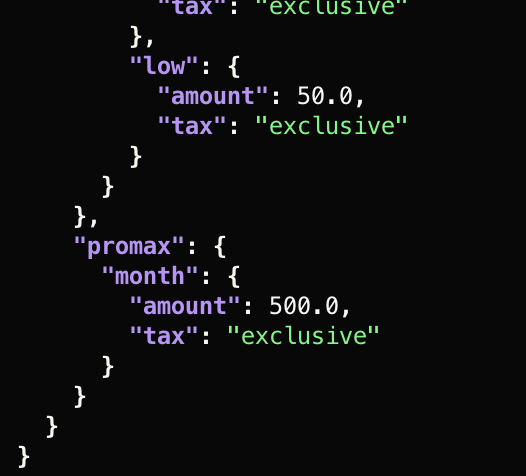
@dev_majd posted (8 likes, 2 replies, 894 views, 2 bookmarks) a screenshot containing a promax.month.amount value of 500.0, which is why the "Pro Max" rumor spread at all. The evidence is still a screenshot rather than a public pricing page, but the screenshot itself was enough to sharpen the day's anxiety around tier creep.
Discussion insight: Users were not talking about plan limits as abstract pricing trivia. They were translating them into concrete moves: keep a cheaper chat plan, buy local hardware, stay on a model that still feels reliable, or switch tools if a familiar model disappears.
Comparison to prior day: September 22 was about launch-day pricing math and reset timing. September 24 broadened that into subscription politics: fear of forced upsells, concern over disappearing models, and more willingness to threaten a tool switch.
1.4 Flash-class executor models drew interest, but mostly as cheap first passes that still need supervision (🡕)
The fourth theme was a wave of hands-on testing around very fast coding models that people were willing to use as executors, but not yet trust as finishers. At least three items supported the theme, all centered on the anonymous OpenCode model "Space Bunny."
@hqmank reported (21 likes, 6 replies, 1,447 views, 5 bookmarks) that Space Bunny rebuilt a 3D globe dashboard from a reference image, but only after more than a dozen turns. The useful detail came from the replies: about half of that time went into getting the globe texture right, which turns the result into a speed-plus-supervision datapoint rather than a generic "it works" boast.
@superalesha said (10 likes, 4 replies, 579 views, 2 bookmarks) the same model was "very, very fast" but lacked precision while building a voxel turtle with a city on its back. One reply immediately proposed the practical workflow split: use the fast model as the executor, then pin a slower model for the final pass.
@dhruvtwt_ added (13 likes, 3 replies, 507 views) a quantitative note that their runs used roughly 88K context, reached about 75 tokens per second, and were happening on a model advertised with 1M context. Even that post ends with "waiting for proper benchmarks," which is a good summary of the whole theme: curiosity is real, but trust is still provisional.
Discussion insight: The community seems willing to tolerate lower precision when the model is cheap, fast, and easy to rerun. The trade they are testing is not "best model overall" but "good enough executor for a narrow slice of the workflow."
Comparison to prior day: September 23's experimentation focused more on local backends and protocol layers. September 24 added a visible wave of hands-on reports from flash-class executors that are fast enough to tempt people into new routing strategies.
2. What Frustrates People
Pricing tiers and model churn now feel like product risk, not just billing detail
The loudest non-technical frustration was that plan design now feels inseparable from workflow reliability. @TokenGremlin praised (234 likes, 34 replies, 7,863 views, 23 bookmarks) OpenAI's regular Chat allowance because it still feels generous enough for heavy weekly use, but the replies immediately turned that into a comparison against capped $200 plans and local-hardware escape hatches. Hours later, the same account said (167 likes, 34 replies, 3,030 views, 6 bookmarks) they would cancel if a more expensive tier makes cheaper tiers worse or folds Chat into Work or Codex.
The same anxiety showed up as model-catalog fear. @GalinaLyamina argued (58 likes, 4 replies, 1,558 views, 8 bookmarks) that Codex should not remove GPT-5.6 Sol because it remains better than GPT-6 Sol for her workflow, and the quoted benchmark thread gave the complaint concrete shape by showing GPT-6 Sol as the cheapest option but not the best one on a 105-hidden-bug task. @dev_majd added (8 likes, 2 replies, 894 views, 2 bookmarks) a screenshot containing a promax.month.amount of 500.0, while @Ananth7e showed (50 likes, 10 replies, 1,957 views) that Antigravity still surfaces Opus 4.6 rather than Opus 5.5.
People are coping by splitting usage across products, buying local compute, or threatening to switch tools when a trusted model disappears. That is not a pricing preference; it is workflow hedging. Severity: High. Worth building: High.
Prompt-only guardrails still feel too weak for real agent work
The second major frustration was that too many agent setups still depend on prompt text where people want hard boundaries. @DanKornas introduced (6 likes, 12 replies, 613 views, 2 bookmarks) Stop That Shit as a skill-plus-guard against scope creep, needless hashing, intent violations, and task thrashing, and the replies immediately asked for better handoff reporting and checks against first real dependency calls rather than green-looking containers. @tweetpraveen summarized (5 likes, 16 replies, 436 views) the same instinct more bluntly: "docker run is not an AI agent sandbox," then listed microVMs or gVisor, externalized keys, blocked npm or MCP egress, session budgets, read-only CI or tests, active-CPU billing, and external audit logs.
@DanKornas also highlighted (6 likes, 2 replies, 437 views, 1 bookmarks) nono as a least-privilege sandbox with editable profiles, tool-level child sandboxes, and credential controls, while @hackerlogs reported (1 like, 2 replies, 31 views) Darktrace research alleging that client-side session history can be rewritten so an agent treats fake prior authorization as real. Even Google's Home MCP walkthrough came with visible limits: @heyorvian noted that door unlocks stay blocked.

The workarounds are all externalized controls: skill guards, least-privilege profiles, restricted device scopes, and treating agent session databases as security-sensitive state. That behavior says people still do not trust the prompt alone to define authority. Severity: High. Worth building: High.
Cheap executors can save money and still waste time
The third frustration was subtler: fast, cheap coding models are attractive, but only when the correction cost stays acceptable. @hqmank said (21 likes, 6 replies, 1,447 views, 5 bookmarks) Space Bunny got a 3D globe dashboard close to the reference image, but only after more than a dozen turns, and about half of that effort went into fixing the globe texture. @superalesha called (10 likes, 4 replies, 579 views, 2 bookmarks) the same model "very, very fast" while also saying it lacked precision and took four hours to shape a voxel scene, with a reply suggesting a slower model should handle the final pass.
@dhruvtwt_ added (13 likes, 3 replies, 507 views) that their own Space Bunny runs were hitting about 75 tokens per second at roughly 88K context, but they were still waiting for proper benchmarks. That is the frustration in one sentence: speed is easy to notice; reliability takes longer to prove.
People cope by routing these models to drafts, narrow executor roles, or playful prototypes, then reserving slower or more expensive models for sign-off. That works, but it means the cheap model did not actually remove the human review loop. Severity: Medium. Worth building: Medium-High.
3. What People Wish Existed
Current-model local runtimes, not just local runtimes
The strongest practical need was not merely "run locally." It was "run locally without getting stuck on yesterday's model menu." @googlegemma announced (538 likes, 20 replies, 23,926 views, 343 bookmarks) local Gemma 4 with LiteRT and OpenAI-compatible endpoints, and the Google blog post described a hybrid workflow where 97.2% of tokens stayed on-device. But @Ananth7e immediately asked (50 likes, 10 replies, 1,957 views) for Opus 5.5 in Antigravity, with a screenshot showing the harness still on Opus 4.6, while replies to the Gemma launch wanted actual laptop latency numbers and clearer hardware guidance.
This is a practical need, not an aspirational one. People already want to keep code local, control devices through Home MCP, or run hybrid cloud-plus-local workflows. They do not want the tradeoff to be privacy in exchange for stale model choice. Opportunity: Direct.
Hard boundaries that survive tool calls, rewrites, and fake history
People were explicit that prompts are not enough. @tweetpraveen wrote (5 likes, 16 replies, 436 views) that "docker run is not an AI agent sandbox" and then listed seven production controls that sit outside the agent. @DanKornas packaged (6 likes, 12 replies, 613 views, 2 bookmarks) the same instinct into Stop That Shit, while his later nono post (6 likes, 2 replies, 437 views, 1 bookmarks) framed least-privilege profiles, tool sandboxes, and credential proxies as first-class runtime features.
The need sharpened further when @hackerlogs reported (1 like, 2 replies, 31 views) Darktrace research alleging that fake client-side history can convert an old refusal into apparent authorization. Today's partial answers exist, but they are fragmented across prompts, wrappers, profiles, and operator discipline. Opportunity: Direct.
Parallel-agent coordination that does not turn the developer into a human message bus
The clearest quote of the day came from @rcdexta, who pitched (5 likes, 1 reply, 1,343 views, 2 bookmarks) AX with the line "Stop being the intercom between your coding agents." The same underlying need showed up in @pamelafox's worktree-and-subagent deck, in her MCP and skills workshop, and in GitHub's Dependabot automation, which turns a repetitive inbox problem into a bounded morning artifact instead of another live conversation.
This is a competitive need. Multiple people are building pieces of it—message relays, worktree playbooks, scheduled automations, and model-routing plugins—but the daily evidence says coordination overhead is still too manual for ordinary development teams. Opportunity: Competitive.
Cost-aware routing that knows which steps deserve the expensive model
The day was full of evidence that users want routing logic, not just more models. @TokenGremlin keeps a subscription because regular Chat limits feel usable, while @GalinaLyamina wants GPT-5.6 Sol retained because the cheaper GPT-6 Sol path still creates extra checking work. @superalesha described Space Bunny as a fast executor that still lacks precision, and @DanKornas explicitly positioned Fable Orchestrator as a way to keep premium reasoning on planning, architecture, and verification instead of "every grep."
That is a direct need with visible buying behavior behind it. Users already think in routing layers—cheap for volume, expensive for judgment—but most products still make them orchestrate that split manually. Opportunity: Direct.
4. Tools and Methods in Use
| Tool | Category | Sentiment | Strengths | Limitations |
|---|---|---|---|---|
| Antigravity SDK | Agent runtime | (+) | Offline and hybrid orchestration, local OpenAI-compatible endpoints, clear privacy pitch | Needs high-memory machines for the flagship local path and still draws model-catalog complaints |
| Gemma 4 26B + LiteRT | Local model / runtime | (+) | Zero API fees, private on-device execution, hybrid builder pattern | Google recommends more than 24GB VRAM or unified memory, and users still want better latency guidance |
| GitHub Copilot app | Agent IDE / review surface | (+/-) | Huge-PR rendering, Dependabot automation, growing review settings surface | Low-risk summaries still need measurement, and more settings create more state to manage |
| GitHub Copilot Inline Suggestions 3-in-1 model | Editor model | (+) | One model for completions, next edits, and longer-distance edits; fewer artificial tool boundaries | Gains depend heavily on client orchestration, caching, and rendering choices |
| Git worktrees + agent skills | Workflow method | (+) | Clean isolation for parallel agents, reusable environment setup, explicit auth or port rules | Requires extra setup around ports, staging, and ignored local state |
| GPT-5.6 Sol / GPT-6 Sol | LLM / coding model | (+/-) | Broad availability and cheaper nominal pricing on GPT-6 Sol | Users dispute GPT-6 Sol quality and fear that GPT-5.6 Sol may disappear from trusted workflows |
| Space Bunny | Flash-class coding model | (+/-) | Very fast execution, long-context experimentation, multimodal input | Low precision, many corrective turns, and no strong public benchmark confidence yet |
| Jev | Decision / routing layer | (+) | Fast, cheap typed decisions that can drive stateful apps | Public evidence is still mostly demos, checklists, and working-note diagrams |
| Stop That Shit | Skill / guard | (+) | Names common agent failure modes, supports read-only modes, and enforces file or dependency limits | Still needs good acceptance checks and thoughtful handoff reporting |
| nono | Sandbox | (+) | Least-privilege profiles, child tool sandboxes, and credential proxying outside prompt text | Profile authoring and quickly evolving APIs add setup friction |
| AX | Multi-agent messaging | (+) | Lets multiple coding agents message each other locally without human relaying | Early-stage evidence is limited to one demo and article thread |
| Fable Orchestrator | Orchestration plugin | (+) | Routes routine volume away from premium models and adds ledger-based close-out checks | Depends on a multi-model stack and disciplined workflow adoption |
| Fly Sprites + Nebius | Agent compute / inference bridge | (+) | Persistent isolated Linux computers for agents, with Nebius keys kept in connectors instead of the runtime | Requires Sprite and Nebius setup and is not itself a spending cap |
Overall satisfaction was highest when the tool reduced hidden operator work: a local runtime that keeps code private, a review surface that stays fast at absurd scale, or a workflow that isolates each agent before problems start. Satisfaction turned mixed when the surface hid important state, such as which model is actually available, how much plan headroom is left, or whether a "cheap" executor is just creating more verification work downstream, which is exactly how people framed Antigravity's model-menu gap, GitHub's review-surface scaling, and Space Bunny's correction cost. (Antigravity source, GitHub source, Space Bunny source)
The common workarounds were explicit splits and wrappers. People are pairing cloud planners with local builders in Antigravity, using fast models such as Space Bunny for executor work while reserving slower models for the final pass, isolating concurrent agents in worktrees, and wrapping sessions with nono or Stop That Shit instead of trusting the prompt to carry policy. Cost-aware routing is already happening manually even when the product does not expose it directly. (Google hybrid workflow, Pamela Fox worktrees, nono)
The competitive dynamic is shifting away from "which single model is smartest" toward "which stack keeps my workflow legible." GitHub is pushing on review surfaces and automations, Google is pushing local and hybrid runtime capacity, and independent builders are filling the gaps with guards, sandboxes, orchestration plugins, and agent-to-agent messaging. (Dependabot automation, Gemma local, AX)
5. What People Are Building
| Project | Who built it | What it does | Problem it solves | Stack | Stage | Links |
|---|---|---|---|---|---|---|
| Smart home controller | @burkeholland | A stateful home-control interface built inside GitHub Copilot with Jev | Shrinks the distance from plain-language intent to a deployed controller | GitHub Copilot, Jev | Alpha | tweet |
| Dependabot review automation | @github | Reviews open Dependabot PRs, groups them by risk, checks CI, and writes a summary | Reduces repetitive dependency-review triage before the workday starts | GitHub Copilot app automation, CI status checks, plain-language instructions | Shipped | tweet |
| agy-humanroid-agents | @GoogleCloud_IN | Uses Antigravity to orchestrate six humanoid robots from high-level intent prompts | Avoids heavier ROS-style orchestration for this demo workflow | Antigravity, humanoid robots, high-level intent routing | Alpha | repo, tweet |
| Stop That Shit | @DanKornas | A skill and guard that constrains scope, files, dependencies, and verification behavior | Prevents agents from adding unrequested work, hashes, or extra side effects | Skill wrapper, boundary checks, read-only modes, subagent limits | Shipped | tweet |
| nono | @DanKornas | A least-privilege CLI sandbox for Claude Code, Codex, Copilot, Pi, and others | Keeps agents from getting whole-machine access by default | Sandbox profiles, filesystem and network rules, credential proxying | Beta | tweet |
| tin | @egeozin | An open-source marketing workflow system callable from Claude Code, Codex, or Cursor | Replaces generic "slop" loops with opinionated workflows, evals, and retries | MCP integration, workflow evals, retries, scheduled runs | Beta | tweet |
| AX | @rcdexta | Lets Claude, Codex, Grok, OpenCode, and Pi message each other locally in named sessions | Removes the need for the developer to relay messages between agents | Local TUIs, cross-agent message routing, session-aware replies | Beta | tweet |
| Fable Orchestrator | @DanKornas | A Claude Code plugin that routes planning, routine work, and hard slices to different models | Stops premium models from being spent on grep, bulk reading, and low-stakes volume | Claude Code plugin, Fable 5, Sonnet 5, Opus 5, ledger and hooks | Beta | tweet |
| Sprites + Nebius toolkit | @flydotio | Setup scripts for running Codex, OpenCode, Pi, or Claude Code inside Fly Sprites using Nebius inference | Gives agents durable isolated computers without pasting inference keys into the runtime | Fly Sprites, Nebius connectors, setup scripts, local adapters | Beta | repo, tweet |
The GitHub examples and the guardrail tools were the clearest repeated build pattern. GitHub's Dependabot automation narrows autonomy to a bounded nuisance with visible outputs, while Stop That Shit and nono externalize policy into files, profiles, and explicit checks instead of leaving authority implicit in the prompt. That is a recurring shape today: builders are packaging supervision and blast-radius control, not just another general-purpose chat loop.
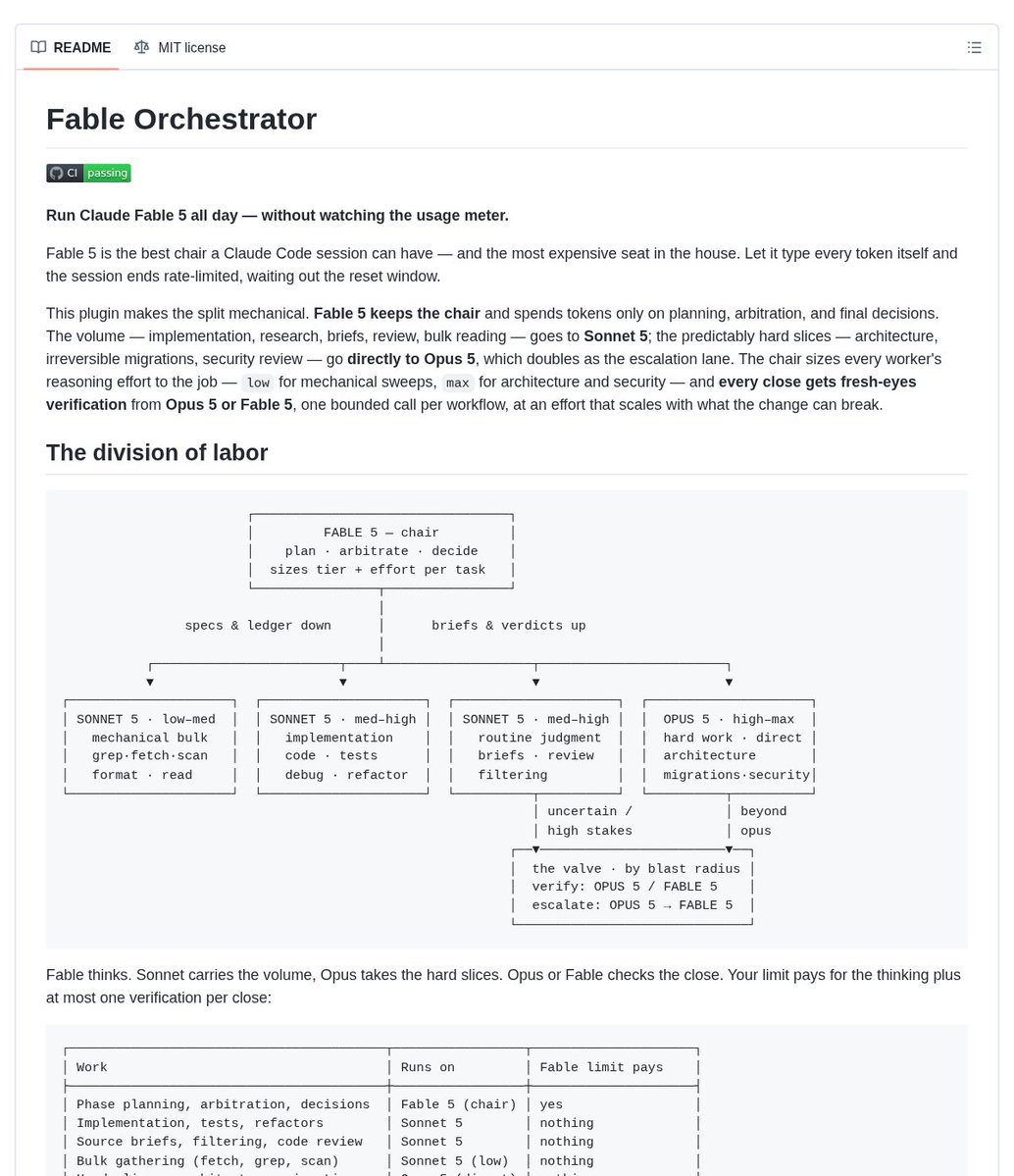
Fable Orchestrator, AX, and tin all point at the same second pattern: coordination is becoming its own product surface. Fable turns cost-sensitive model routing into a ledgered workflow, AX removes manual relay between terminal agents, and tin replaces free-form agent wandering with staged jobs, evals, and retries. Even the Flash- or Space-Bunny-style experimentation elsewhere in the dataset fits that pattern: people are increasingly comfortable assigning narrower jobs to narrower components.

The infrastructure projects round the story out. The Antigravity robot-swarm repo uses high-level intent routing instead of a heavier robotics stack, and Fly's Sprites-plus-Nebius toolkit separates durable agent compute from inference credentials by keeping the key in a connector rather than the runtime. Across these builds, the common trigger is not "I want a smarter model." It is "I want clearer boundaries, cheaper routine work, or less operator relay."
6. New and Notable
Home devices became an MCP target
@heyorvian highlighted (6 likes, 431 views, 2 bookmarks) Google's early-access Home MCP server, describing a flow where Claude Cowork, OpenClaw, or Antigravity can inspect Google Home device state, read event history, and control supported devices. The interesting part was not raw novelty, but the visible constraints: Google blocks sensitive actions such as door unlocks and explicitly tells users to start with non-sensitive devices. That makes Home MCP notable as a control-surface expansion with safety boundaries already in view.
Agent traffic is starting to be treated as something to route, not just block
@0xDevShah launched (9 likes, 1 reply, 76 views, 4 bookmarks) Agent Detection-1, which claims to classify whether a visitor is a person or an agent, identify which agent it is, and then route helpful agents toward MCP servers, llms.txt, or agent cards while blocking scrapers and credential stuffers. The supporting evidence is still early and promotional, but it is a distinct signal: some builders now assume Claude Code, Codex, and similar agents are already acting on the web as users, and they want observability plus differentiated handling rather than blanket bot blocking.
Session history itself is becoming a security boundary
@hackerlogs reported (1 like, 2 replies, 31 views) that Darktrace researchers found client-side transcript histories can be rewritten so an agent treats fake prior authorization as real, with the tweet claiming sandboxed Active Directory takeover was possible after enough fabricated history. Even with the tweet's own caveat that this is not a remote zero-day and still requires local database writes, the signal matters because it moves the threat model from "bad prompt" to "bad transcript integrity." That broadens what teams have to protect when they operationalize coding agents.

7. Where the Opportunities Are
[+++] Governed local and hybrid agent stacks — Evidence came from multiple sections at once: Gemma 4 plus LiteRT inside Antigravity, the Home MCP early-access flow, the humanoid-robot orchestration repo, the Opus 5.5-in-Antigravity complaint, Stop That Shit, and nono. The opportunity is strong because first-party teams and independent builders are converging on the same bundle of needs: keep work local when possible, expose current models, and move real authority into guardrails that survive tool calls and state changes. (Gemma source, Home MCP source, nono source)
[++] Parallel-agent control planes and review operations — GitHub's huge-pull-request rendering work, Dependabot triage automation, Pamela Fox's worktree and skills playbooks, AX's local agent messaging, tin's workflow-specific retries and evals, and Fable Orchestrator's ledgered model routing all point in the same direction. The signal is moderate-to-strong because the pain is obvious and repeated, but the likely winners may look more like workflow infrastructure than end-user chat products. (GitHub source, Pamela Fox source, AX source)
[+] Cost-aware model routing and plan management — The praise for regular Chat limits, fear of a $500 Pro Max tier, desire to retain GPT-5.6 Sol, and willingness to use Space Bunny as a fast executor all show users already thinking in marginal-cost layers. This is an emerging opportunity because demand is concrete, but first-party products could absorb a lot of the value if they expose clearer routing, quota, and fallback controls. (limits source, pricing rumor, Space Bunny source)
8. Takeaways
- Local execution is no longer a side demo; it is becoming surrounding infrastructure. Gemma 4 plus LiteRT was discussed alongside Home MCP device control, robot orchestration, and model-catalog complaints inside the same Antigravity surface. (source)
- GitHub and Copilot are competing on review and operations surfaces as much as on code generation. Huge-PR rendering, scheduled Dependabot triage, and a unified inline suggestions model all point to workflow infrastructure as the battleground. (source)
- Plan design now directly affects tool trust. Users tied their loyalty to message ceilings, feared forced upsells, and objected to losing specific models they already trust inside Codex. (source)
- Fast specialist models are being tested as executors, not yet as finishers. The strongest Space Bunny reports praised speed while still describing many corrective turns, missing precision, or the need for a better final-pass model. (source)
- Safety layers are solidifying into products. Stop That Shit, nono, and the Darktrace-style fake-history warning all show teams treating agent boundaries, transcript integrity, and least-privilege execution as first-class product work. (source)