Twitter AI Coding - 2026-10-07
1. What People Are Talking About
1.1 Antigravity's real workflow demo was overshadowed by access workarounds and Argon breadcrumbs (🡕)
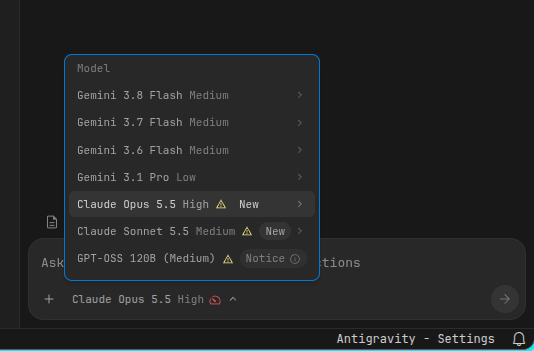
Antigravity still dominated the feed, but October 7 was less about a clean launch moment and more about the messy path around it. At least four cited items supported the same story: Google had real, public workflow evidence for serious mobile development, while users spent as much energy on family-sharing tricks and pricing-page clues as they did on the product itself.
@antigravity showed (906 likes, 43 replies, 37,256 views, 501 bookmarks) an Android loop that starts from a prompt, pulls designs through Stitch MCP, builds Jetpack Compose components, verifies them in an emulator, and runs the final build on a physical device. That mattered because it was concrete shipping evidence, not benchmark rumor. The replies immediately turned practical: one asked for a built-in browser, while another called out the emulator-validation step as the part that makes the loop useful for real Android work.
@googledevs amplified (218 likes, 14 replies, 27,864 views, 126 bookmarks) the same workflow from an official developer account. That second post made the theme harder to dismiss as a one-off demo, because the public message from Google was consistent: Antigravity is being positioned as a real design-to-device coding surface.
@kunal_twts shared (484 likes, 61 replies, 35,369 views, 444 bookmarks) a workaround for getting Opus 5.5 or Sonnet 5.5 inside Antigravity through Google's Jio family-sharing offer. The replies are what made the post more than a hack: one person recommended a cheap OpenCode Go subscription instead, while another pointed to third-party proxy tooling, showing how quickly access friction turns users into quota arbitrageurs.
@HarshithLucky3 found (151 likes, 18 replies, 24,671 views, 26 bookmarks) a Google One upgrade URL containing argon_limit_reached. That is not a launch announcement, but it is the kind of operational breadcrumb that people were treating as evidence of how Argon access might be packaged. Several replies were immediately about whether Ultra subscribers would get the first wave and what the limits might look like.
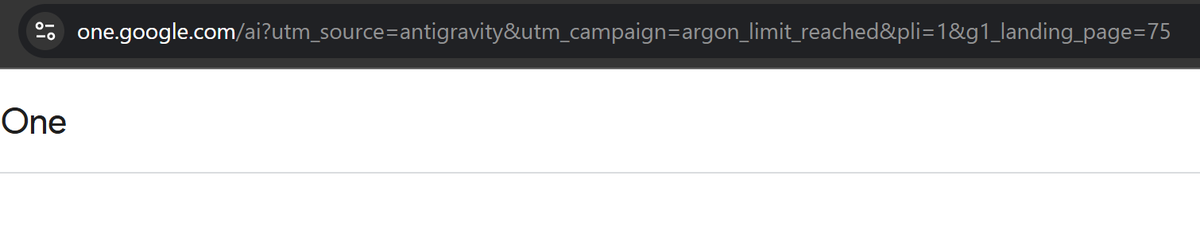
Discussion insight: This was not simple model fandom. The highest-signal behavior was entitlement spelunking: switching accounts, checking upgrade redirects, and trading cheaper routes in replies while Google's own Android demo kept interest high.
Comparison to prior day: Compared with October 6, which was heavier on release-watch and deprecation clues, October 7 pushed the same Antigravity conversation one step deeper into access engineering and billing-route interpretation.
1.2 Windows and GitHub made local-plus-cloud routing look like a real mainstream path (🡕)
The other major storyline was Microsoft's attempt to make local agent execution feel less like a hobbyist experiment and more like a vendor-backed default. The combination of launch messaging, technical documentation, and product screenshots gave this theme much stronger receipts than most local-model discourse usually has.
@satyanadella announced (245 likes, 39 replies, 19,533 views, 43 bookmarks) that Windows and GitHub Copilot are moving toward "Hybrid Intelligence," where Copilot can hand work to local models such as MAI Code 1.1 Flash, keep sensitive work on-device, and use MXC as a local sandbox boundary. The launch copy is ambitious, but it also maps directly to a real product direction that users can evaluate: cheaper local turns, explicit on-device execution, and better trust boundaries.

The linked Microsoft article on local models and sandboxed tools adds the concrete numbers the tweet alone lacks. It says the local MAI Code 1.1 Flash variant uses a 137B-parameter mixture-of-experts model with 6.8B active parameters, is quantized down to 53 GB on device, peaks at 75.5 GB memory at 256k context, and that Copilot Auto will decide when to use local versus cloud inference. Just as importantly, the article is careful about boundaries: local inference does not make the whole session offline, because tool execution and model execution have different trust and network edges.
@msdev stated (24 likes, 3 replies, 3,072 views, 8 bookmarks) that GitHub Copilot will soon determine whether a task is better handled by on-device intelligence or by cloud-scale models. That phrasing mattered because it framed local models as part of a routing system, not as a separate niche mode that users have to micromanage.
@mweinbach posted (68 likes, 2 replies, 4,210 views) screenshots of local inference in GitHub Copilot on RTX Spark hardware. Those images turned the story from architecture copy into an actual product surface that people could recognize and compare.

Discussion insight: The part of this theme that landed was not raw model nationalism. It was the promise that sensitive work can stay on-device while credits go further, with routing and sandboxing handled by the platform instead of by a pile of user scripts.
Comparison to prior day: Compared with October 6's more general interest in local and self-hosted stacks, October 7 added a major-vendor rollout with specific model, hardware, routing, and sandbox details.
1.3 Wrappers, connectors, and protocols kept becoming the real product surface (🡕)
More of the feed was about running existing agents better, not replacing them. The strongest builder signals were wrapper layers that reuse subscriptions, connectors that expose local work to the outside world, and shared protocol work that makes different tools easier to compose.
@DavidOndrej1 launched (53 likes, 10 replies, 3,484 views, 34 bookmarks) Cloudroom as an open-source Rust core plus desktop app for heavy coding-agent use. The Cloudroom docs say each cloud thread gets its own sandbox, can keep running after the laptop is closed, and can be teleported between a Mac and the cloud while preserving history. The replies made the commercial logic explicit: people already paying for Codex, Claude Code, or Cursor do not want another meter on top.
@Droppyformac claimed (10 likes, 341 views, 3 bookmarks) that 171 of the last 236 merges into Droppy Code came out of Droppy Code itself. The Droppy Code README backs up the wrapper thesis with a native Swift and SwiftUI app that assigns each thread its own git worktree, supports inline approvals, and offers a Hydra mode for helper agents across multiple provider protocols.
@thdxr introduced (167 likes, 14 replies, 3,621 views, 45 bookmarks) OpenTunnel as a way to create public URLs for services running on a local machine. The post's distinctive angle was not just "another tunnel": it emphasized end-to-end encryption, an embeddable SDK, and imminent OpenCode integration, while a reply clarified that the current implementation behaves as a TCP proxy with SNI requirements.
@mitchellh reported (218 likes, 17 replies, 6,552 views, 21 bookmarks) that his program-status specification was already integrated in four tools and had in-progress PRs or verbal support from several more within 24 hours. That made the protocol layer itself part of the day's story: once agents multiply, shared status reporting becomes product infrastructure.
Discussion insight: The competitive move here was not "train a better model." It was "make the same models easier to route, compose, expose, and keep aligned across sessions."
Comparison to prior day: Compared with October 6's marketplace and registry mood, October 7 felt more infrastructure-heavy and more protocol-minded.
1.4 Verification and safety work finally had concrete artifacts, not just slogans (🡕)
The trust layer matured noticeably on this date. Instead of vague complaints about unreliable agents, the feed surfaced actual tools, benchmarks, and papers that try to verify, grade, or constrain agent behavior.
@vicky_grok argued (19 likes, 5 replies, 515 views, 7 bookmarks) that AI coding agents need to prove their work, not just claim success. The public ProofShot repository gives that claim substance: it records browser video, screenshots, console output, server logs, and can upload the resulting proof artifacts directly to a GitHub pull request.
@MichaelGannotti flagged (48 views) GitHub ReviewBench as a new public benchmark for AI code review. The linked ReviewBench article says it uses 219 public pull requests from 187 repositories across 19 languages, modeled after 103.9 million GitHub PRs, with public data, judge prompts, and runner code.

@dani_avila7 summarized (14 likes, 8 replies, 896 views, 14 bookmarks) a secure-coding-agent paper that reviewed 40 harnesses and 10 security mechanisms, then tested prompt-injection-style attacks across 23 tasks and 2,500 runs. The attached matrix is the key evidence: most protections are opt-in rather than default, and the post says attacks succeeded 96% of the time when auto-approve was enabled.

@Voxyz_ai explained (8 likes, 2 replies, 561 views, 6 bookmarks) why Codex Auto-review often appears inactive: if the main session runs with full access or --yolo, almost nothing gets sent to the reviewer. The post's chart added the operational detail missing from most summaries, showing 720 reviewed actions out of 10,000 total and only 7 blocked, which is useful context for how "review" works in practice rather than in marketing copy.

Discussion insight: The trust problem is no longer abstract. People want video proof, public benchmarks, harness-security matrices, and review policies that can actually stop risky behavior instead of just sounding careful.
Comparison to prior day: Compared with October 6's emphasis on why review and security layers are needed, October 7 added more finished artifacts: an open benchmark, a verification CLI, a harness-security paper, and detailed review-policy guidance.
2. What Frustrates People
Access and entitlement rules are still too opaque
The clearest frustration signal was that people kept reverse-engineering access instead of simply using the product. @kunal_twts shared (484 likes, 61 replies, 35,369 views, 444 bookmarks) a family-sharing workaround to unlock better models inside Antigravity, and the replies immediately treated that as a fragile loophole rather than a normal path. @HarshithLucky3 pointed (151 likes, 18 replies, 24,671 views, 26 bookmarks) to an argon_limit_reached string in a Google One upgrade URL because official packaging still felt unclear enough that users were inspecting redirects for clues. The coping pattern was not trust in the plan page; it was account switching, checkout spelunking, and watching for who gets the first wave. Severity: High. Worth building: High.
Cost ceilings and subscription fragmentation are shaping tool choice more than features
People were explicit that they do not want one more bill on top of the ones they already carry. @DavidOndrej1 launched (53 likes, 10 replies, 3,484 views, 34 bookmarks) Cloudroom with "use your existing subscriptions" as a headline feature, and the replies said the quiet win was avoiding a second meter on top of Claude Code or Codex. @Droppyformac highlighted (10 likes, 341 views, 3 bookmarks) thread continuation after hitting usage limits as a product feature, which only makes sense if limit collisions are normal. @calbuldelis69 posted (65 likes, 72 replies, 1,085 views, 29 bookmarks) a sprawling directory of free tiers, temporary promo routes, and router credits, then warned readers not to trust "unlimited" claims or send sensitive data through public APIs. The common coping strategy was meter stacking, promo hopping, and subscription reuse. Severity: High. Worth building: High.
Verification and safety still demand too much manual discipline
Even when the models are capable, operators still need to wire in their own proof and safety layers. @Voxyz_ai explained (8 likes, 2 replies, 561 views, 6 bookmarks) that Codex Auto-review effectively does nothing if the main session runs with full access or --yolo, so users have to manage approval policy and reviewer settings correctly before the protection even starts. @vicky_grok argued (19 likes, 5 replies, 515 views, 7 bookmarks) for ProofShot because agents still cannot be trusted to verify their own UI work, and the ProofShot repo turns that concern into a concrete browser-recording workflow. @dani_avila7 summarized (14 likes, 8 replies, 896 views, 14 bookmarks) a harness-security study where attacks reportedly worked 96% of the time under auto-approve. The message across all three items was the same: safe defaults are still not default enough. Severity: High. Worth building: High.
3. What People Wish Existed
Quota-aware routing and entitlement management
The strongest practical wish was for a control plane that understands plans, limits, and access rules before a session breaks. @kunal_twts showed (484 likes, 61 replies, 35,369 views, 444 bookmarks) that users will share family plans and swap accounts just to reach the right model surface, while @HarshithLucky3 treated (151 likes, 18 replies, 24,671 views, 26 bookmarks) a checkout URL as rollout evidence because the official plan boundary was still unclear. @DavidOndrej1 made (53 likes, 10 replies, 3,484 views, 34 bookmarks) "use your existing subscriptions" a flagship Cloudroom feature, and @Droppyformac advertised (10 likes, 341 views, 3 bookmarks) thread continuation after hitting limits. This is a direct, practical need with obvious workflow value. Opportunity: Direct.
Proof-first agent workflows that show what actually happened
People do not appear to want less autonomy. They want stronger receipts. @vicky_grok framed (19 likes, 5 replies, 515 views, 7 bookmarks) ProofShot around the exact missing layer: browser video, screenshots, console logs, server logs, and PR-ready artifacts. @MichaelGannotti flagged (48 views) ReviewBench because code review agents also need a public yardstick, not just anecdotes. @Voxyz_ai added (8 likes, 2 replies, 561 views, 6 bookmarks) operational advice on how to keep auto-review from being bypassed by full-access sessions. This is a practical need, not an aspirational one. Opportunity: Direct.
Secure hybrid execution with shared status and clearer boundaries
The local-model push only felt compelling when it was paired with boundary controls and interop. @satyanadella promoted (245 likes, 39 replies, 19,533 views, 43 bookmarks) on-device work plus MXC sandboxing, and the linked Microsoft article made clear that routing, local inference, and tool isolation are distinct layers that need to cooperate. @mitchellh showed (218 likes, 17 replies, 6,552 views, 21 bookmarks) rapid adoption for a shared program-status specification, while @dani_avila7 circulated (14 likes, 8 replies, 896 views, 14 bookmarks) evidence that default-off protections still fail badly under auto-approve. The desire here is for agent systems that are both composable and easier to trust. Opportunity: Direct, but competitive.
4. Tools and Methods in Use
| Tool | Category | Sentiment | Strengths | Limitations |
|---|---|---|---|---|
| Antigravity | Agent shell | (+/-) | Real Android prompt-to-device workflow with Stitch MCP, emulator validation, and device execution | Access still feels unstable enough that users share family-plan workarounds and inspect upgrade URLs for clues (source, source) |
| GitHub Copilot Hybrid Intelligence + MXC | Agent runtime | (+) | Automatic local/cloud routing, on-device MAI Code 1.1 Flash, sandboxed tool execution, better pitch for sensitive work | Rollout is still upcoming, and the article is explicit that local inference does not make the session fully offline (source) |
| Project HydraFusion | Orchestration mode | (+) | Single, Cascade, and Critique workflows; reported 67% lower cost than Opus 5 on TerminalBench 2.1 with higher verified quality | Still a research preview, so real production behavior is still being validated across developer workloads |
| Claude Haiku 5.5 in GitHub Copilot | Model | (+) | Fast, lightweight option for subagents, terminal tasks, and quick edits; early testing said it matched Sonnet 5 on many coding tasks with fewer tokens and steps | Usage-based billing and gradual rollout; admins may need to manage model policy (source) |
| ProofShot | Verification CLI | (+) | Browser video, screenshots, console logs, server logs, HTML viewer, and PR upload in one agent-agnostic workflow | Adds a separate verification loop on top of browser automation rather than replacing the underlying browser-control tools (source) |
| Cloudroom | Orchestration platform | (+) | Reuses existing subscriptions, runs persistent local or cloud threads, isolates each cloud agent in its own sandbox | Hosted version is invite-only, while self-hosting requires running the open-source core yourself (source) |
| Codex Auto-review | Approval workflow | (+/-) | Can review risky actions separately and reduce manual approval fatigue when configured correctly | Much less useful if the main agent is running with full access or --yolo, so policy hygiene matters |
| Program status specification | Interop protocol | (+) | Gives terminals and agent shells a shared way to report long-running program state; adoption started quickly across multiple tools | Still very early and only valuable if the broader ecosystem keeps implementing it |
The satisfaction spectrum was wide, but the migration pattern was consistent. People were not searching for one permanent winner; they were combining a high-capability shell, a cheaper small model, and some kind of wrapper or router that preserves their existing subscriptions. Antigravity had real excitement but also real access friction. GitHub Copilot's local-routing pitch landed because it paired model choice with sandboxing and credit savings. Meanwhile, @calbuldelis69 showed (65 likes, 72 replies, 1,085 views, 29 bookmarks) how much of the community still lives in a world of temporary free tiers, gateway credits, and promo surfaces that may disappear at any time.
5. What People Are Building
| Project | Who built it | What it does | Problem it solves | Stack | Stage | Links |
|---|---|---|---|---|---|---|
| Cloudroom | @DavidOndrej1 | Runs coding agents locally or in isolated cloud sandboxes, with threads that can keep running when the laptop is closed | Heavy agent use without babysitting sessions or paying a second meter on top of existing plans | Open-source Rust core, Linux sandboxes, desktop app, direct use of Codex / Claude Code / Pi / Cursor subscriptions | Beta | tweet, docs, repo |
| ProofShot | AmElmo | Records browser sessions, screenshots, console logs, server logs, and bundles them into proof artifacts and PR comments | Agents can build UI but cannot reliably prove what actually happened without a verification layer | Open-source CLI, agent-browser integration, GitHub PR upload workflow | Shipped | tweet, repo |
| Droppy Code | @Droppyformac | Native macOS app that manages multiple coding-agent providers with threads, approvals, git worktrees, and Hydra helper teams | People want one surface for many agents, plus continuation when a provider or thread hits limits | Swift, SwiftUI, macOS app, multiple provider protocols, per-thread git worktrees | Shipped | tweet, repo |
| OpenTunnel | @thdxr | Creates public URLs for services running on a local machine, with end-to-end encryption and an embeddable SDK | Local apps and agent outputs still need a clean way to be shared outside the developer's machine | Tunnel relay plus SDK, planned OpenCode integration, TCP proxy behavior with SNI | Alpha | tweet |
| Tiny Clips Studio mode | @JamesMontemagno | Adds an interactive editing surface for a cross-platform capture app with transitions, zooms, and speed controls | A reminder that agent workflows can produce user-facing apps, not just more meta-tooling for developers | Windows and macOS desktop app, GitHub Copilot app used for autonomous build and test | Beta | tweet, site |
Cloudroom and Droppy Code point at the same larger pattern: builders are increasingly wrapping existing agent CLIs and subscriptions instead of trying to replace them with a fresh model stack. In both cases, the differentiation is operational: thread management, worktrees, approvals, cloud persistence, and smoother multi-provider switching.
ProofShot and OpenTunnel are narrower, but their narrowness is exactly why they matter. ProofShot isolates the "prove it" problem into a reusable CLI, while OpenTunnel isolates the "share a thing running on my laptop" problem into a reusable encrypted utility. Those are both classic signs of a market moving from general demos toward missing-production-piece tools.
Tiny Clips was the notable exception to the meta-tooling pattern. The Tiny Clips site describes a free, no-account capture app for Windows and macOS, and the Studio-mode tweet is one of the few posts in the dataset that framed autonomous coding as a path to a real end-user desktop feature rather than to another builder wrapper.
6. New and Notable
ReviewBench gives AI code review a public yardstick
@MichaelGannotti flagged (48 views) GitHub ReviewBench as a shipped research preview, and the linked ReviewBench article makes clear why it matters: the benchmark uses 219 public pull requests from 187 repositories across 19 languages, modeled after 103.9 million GitHub PRs, with a public dataset, public judge prompts, and a public runner. That is a stronger evaluation artifact than the usual "we tested on our own internal tasks" claim, even if the tweet itself sensibly warned readers to wait for third-party reproduction.
GitHub is extending secret detection from alerts into active coding workflows
@GHchangelog announced (4 likes, 637 views, 4 bookmarks) a new purpose-built model for leaked-secret detection. The corresponding GitHub changelog entry says the model already upgrades existing AI-detected password alerts and is planned for push protection plus Copilot /security-review checks. The important product nuance is that the future push-protection and security-review checks will be opt-in and AI-credit-consuming, which means security posture and budget policy are starting to merge.
Claude Haiku 5.5 formalizes the small-model worker role inside Copilot
@github announced (84 likes, 10 replies, 12,094 views, 10 bookmarks) that Claude Haiku 5.5 is now generally available in GitHub Copilot for fast, high-volume work such as subagents, quick edits, and terminal tasks. The linked changelog entry says early testing found it matched Sonnet 5 on many coding tasks while using fewer tokens and steps, which is exactly the kind of tradeoff people in this dataset were searching for.
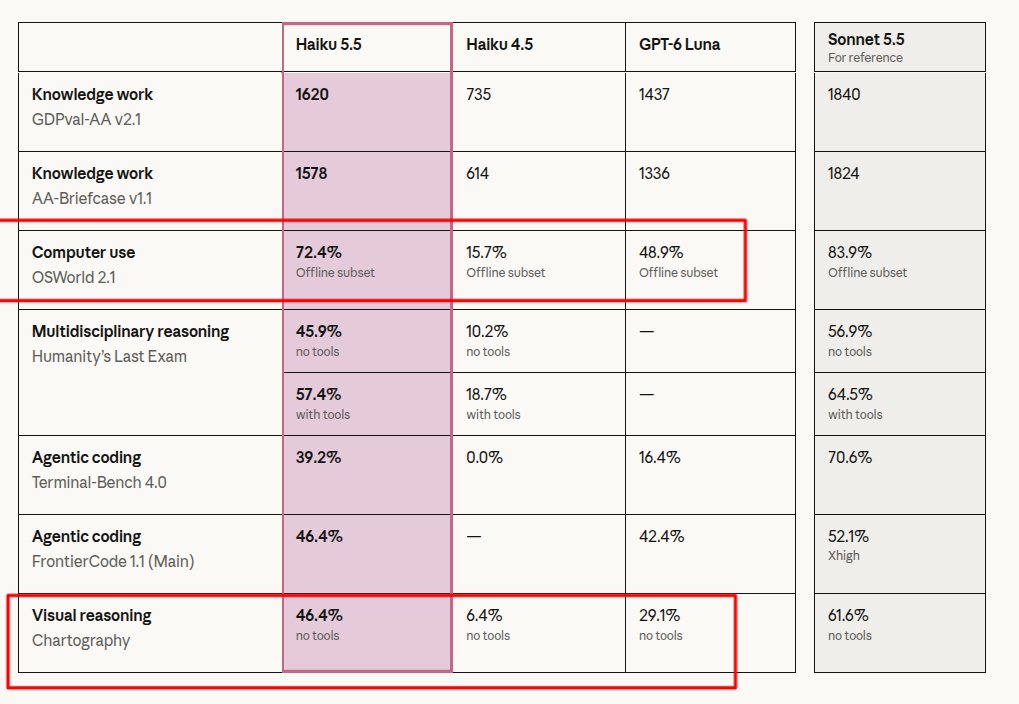
@rohanpaul_ai added (6 likes, 3 replies, 990 views) the more operator-relevant benchmark claims: lower latency, an effort setting for cost-versus-accuracy tuning, and large reported gains on OSWorld 2.1 and Chartography relative to Haiku 4.5. That made Haiku 5.5 feel less like a generic launch and more like an attempt to define the cheap, always-on worker tier in multi-agent coding setups.
The program-status specification became an overnight interop signal
@mitchellh reported (218 likes, 17 replies, 6,552 views, 21 bookmarks) that his program-status specification was already integrated in Amp, Factoryai, TUIOS, and libghostty, with Claude Code, Codex, OpenCode, Pi, and others showing support or in-progress work within a day. In a feed increasingly focused on multi-tool workflows, that kind of rapid coordination around a small protocol mattered because it suggested the ecosystem knows shared status reporting is becoming table stakes.
7. Where the Opportunities Are
[+++] Quota-aware routing and entitlement management — The evidence spanned both complaints and product responses. Users were sharing family-plan workarounds for Antigravity access (source), reading billing redirects for rollout clues (source), and praising wrappers that reuse existing subscriptions instead of adding fresh spend (source). This is strong because the pain is frequent, the workaround behavior is already public, and multiple builders are converging on the same solution shape.
[+++] Proof-carrying agent workflows — ProofShot, ReviewBench, Codex Auto-review guidance, and the secure-coding-harness paper all point at the same gap: agents can produce output faster than they can produce trustworthy evidence about that output (source, source, source, source). This is strong because it has both enterprise pull and clear implementation primitives: screenshots, logs, replay, scoring, and policy review.
[++] Secure hybrid local-cloud execution — Microsoft's Copilot direction and GitHub's secret-detection roadmap suggest a growing market for stacks that route some work locally, keep sensitive context on-device when possible, and apply stronger security checks before code or secrets escape (source, source, source). This is moderate because the demand is obvious, but platform vendors are already moving aggressively.
[+] Cross-agent status and connector fabric — The fast uptake of the program-status specification and the attention around tools like OpenTunnel show a quieter but real need: once several agents and utilities are running at once, developers need shared status, reliable exposure of local services, and less glue code between harnesses (source, source). This is emerging rather than fully proven, but it is exactly the sort of infrastructure category that becomes indispensable once multi-agent work stops being novel.
8. Takeaways
- Antigravity had real product momentum, but access friction kept stealing the spotlight. The strongest confirmed evidence was a prompt-to-device Android workflow, yet two of the day's most engaged supporting posts were a family-sharing workaround and an
argon_limit_reachedbilling breadcrumb rather than a broad release notice. (source, source, source) - Local execution became credible only when it came with routing, hardware, and sandbox receipts. Microsoft's messaging landed because it paired local MAI Code inference with Copilot Auto routing and MXC boundaries, not because "run models on your PC" was new by itself. (source, source)
- The most active builder layer sat above the models, not inside them. Cloudroom, Droppy Code, and OpenTunnel all tried to improve how existing agents are routed, hosted, exposed, or coordinated rather than promising a brand-new foundation model. (source, source, source)
- Verification and safety are now a separate product category. ProofShot, ReviewBench, the harness-security paper, and Codex Auto-review guidance all addressed trust, replay, evaluation, or approval control instead of raw generation quality. (source, source, source, source)
- The community still cares when agentic coding produces an actual end-user feature. Tiny Clips Studio mode stood out because it was a concrete desktop product improvement built and tested autonomously in the GitHub Copilot app, which was rarer than the many posts about wrappers and control planes. (source, source)