Twitter AI Coding - 2026-10-11
1. What People Are Talking About
1.1 Trust moved outside the agent (up)
Twitter AI-coding discussion kept returning to the same practical question: how do you let an agent touch real code without giving it the whole machine? The strongest evidence came from shipped or near-shipped control layers, not abstract safety talk: sandboxed execution, managed model defaults, manual MCP startup, and traceable session logs.
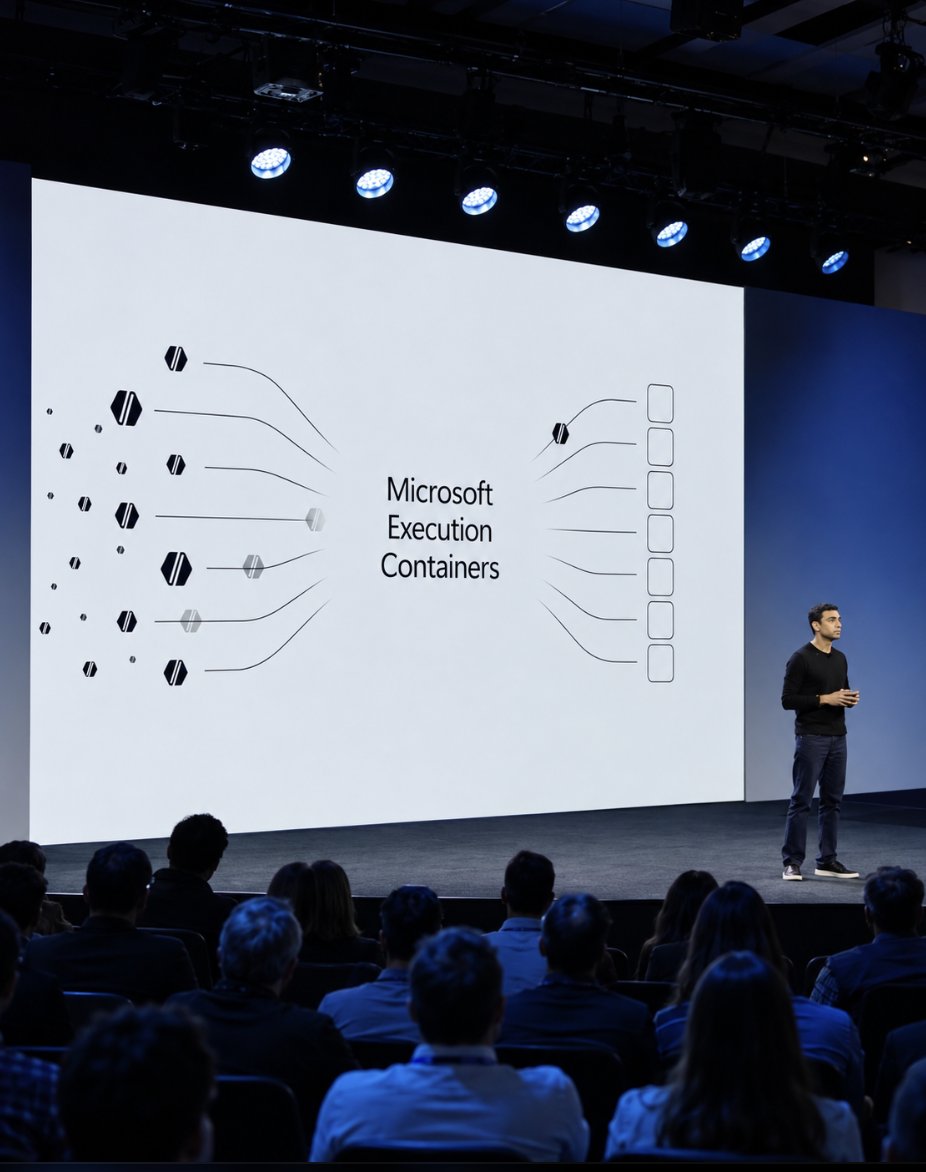
@twtayaan reported (245 likes, 41 replies, 17,106 views, 159 bookmarks) that Microsoft Execution Containers, or MXC, gives agents file, network, and system-resource boundaries enforced outside the agent's control, with a shared JSON policy model across Windows, Linux, and macOS. The public microsoft/mxc repo matched the tweet's framing: MXC is a cross-platform sandboxed code-execution layer with backends such as Bubblewrap on Linux and existing integrations for GitHub Copilot, Codex, Replit, and OpenClaw, with Claude Code support planned.
@GHchangelog announced (12 likes, 1,295 views) that Copilot for JetBrains now has enterprise-managed default models, quick-fix diagnostics, and manual control over MCP server startup. @TheDailyViber argued (2 replies, 45 views) that Copilot app OpenTelemetry gives teams traces of model calls, tool calls, slow spans, and errors when an agent leaves a questionable diff, turning "what did it do?" into something inspectable instead of guesswork.
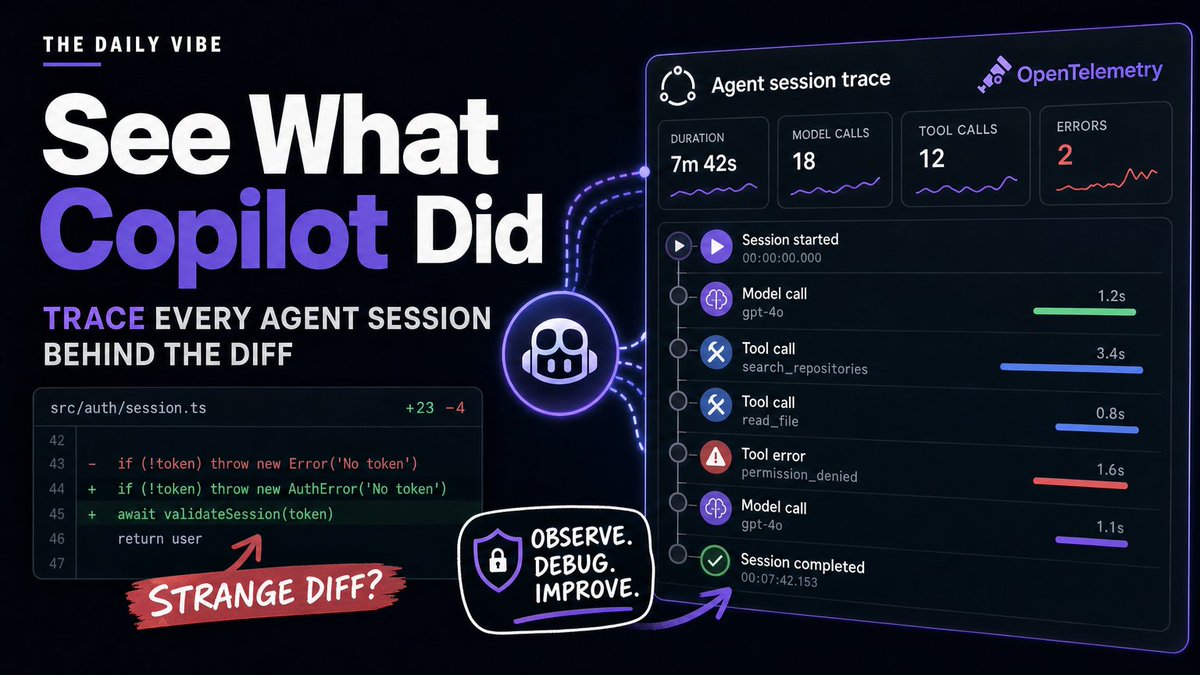
Discussion insight: The trust story was not one-sided. @spencerclarkdev warned (8 replies, 463 views) that default OTel output from Qwen Code, Codex, and Claude Code can expose prompts, file reads, memories, or email-linked metrics if configured carelessly. The day's trust theme was therefore "more control," not "more data by default."
1.2 Harness and context engineering became the competitive layer (up)
Instead of arguing only about which frontier model is best, many posts treated harness behavior, tool loading, and prompt structure as the real performance levers. The common claim was that the same model can look smart, slow, or wasteful depending on how the shell around it injects time, tools, and context.
@teortaxesTex argued (42 likes, 15 replies, 3,804 views, 25 bookmarks) that Claude Code versus Codex differences were increasingly about harness compatibility rather than tool count. The attached benchmark table, quoting @maksym_andr, showed GPT-6 Astra following requested work duration far more closely than Fable 5.1 and staying stronger even under a harness swap, while replies pointed to clock reinjection and instruction loading as likely causes rather than raw frontier-model quality.

@ScarletKc collected (3 likes, 512 views) a denser cross-vendor version of the same idea: Anthropic's tool-search docs say a 55K-token multiserver setup can be cut by more than 85 percent, OpenAI presents tool search as cache-preserving deferred loading, Cursor says dynamic context discovery reduced MCP-tool tokens by 46.9 percent, and GitHub says cutting Copilot's default toolset from 40 to 13 improved benchmark success by 2 to 5 points. @OrenMe showed (3 likes, 55 views, 1 bookmark) the same optimization at the prompt level: VS Code's experimental chat.copilot.stabilityOrderedPrompt.enabled setting moved stable instructions earlier and session-specific content later, raising cache reads from 14.5K to 23K and lowering reported credits from 5.9 to 1.6 in his two-session test.

@ajutqs measured (3 replies, 65 views) a related runtime effect from real task logs: Codex on gpt-6.1-sol rose from 19 output tokens per second on Oct 8 to 36 on Oct 11 with Fast off, while Fast mode helped research, coding, and writing more than browser tasks that mostly waited on page loads.
Discussion insight: Replies kept separating "model quality" from "harness quality." One reply to teortaxes said the same model flips from sharp to lost when the shell changes; another said trimming instructions made the same model faster and cheaper overnight.
1.3 Limits, routing ambiguity, and task continuity shaped adoption (up)
The day's product debate was less "who has the smartest model?" than "what can I actually keep using without interruption?" Hidden routing rumors, plan cuts, 5-hour limits, and broken thread handoffs all affected tool choice more directly than benchmark screenshots.
@0xtoberry flagged (115 likes, 27 replies, 7,656 views) an unconfirmed Antigravity routing rumor: Gemini 3.8 Flash appeared to route to Argon for some users, and Gemini 3.1 Pro seemed to route to 3.8 Flash in Antigravity. The post explicitly treated it as unconfirmed, but its traction showed how much users were still inferring rollout state from surfaced model IDs instead of getting a clear vendor explanation.
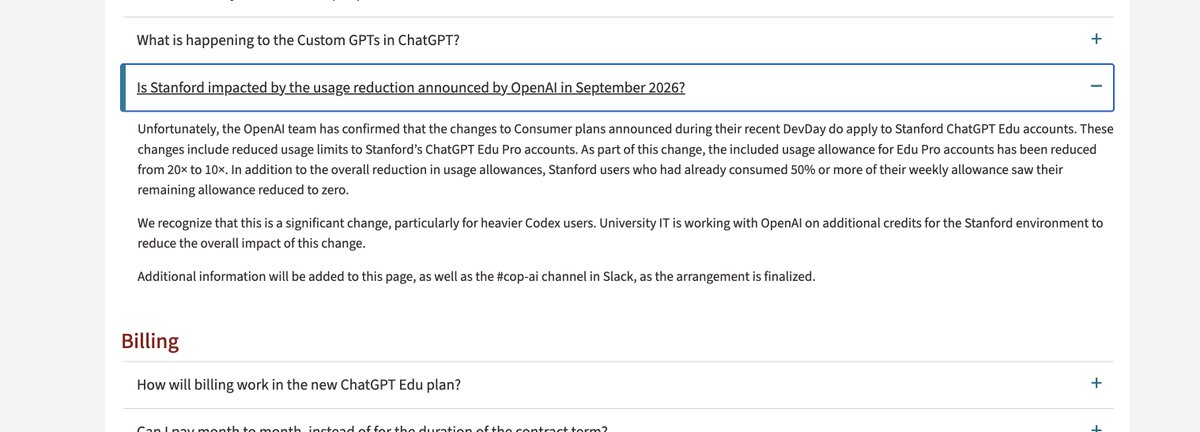
@SamPassey3 said (36 likes, 2 replies, 2,447 views, 6 bookmarks) that Stanford's ChatGPT Edu Pro users had their promised 20x Codex plus Chat usage reduced to 10x mid-contract, with the attached screenshot adding the hardest detail: users who had already consumed 50 percent or more of weekly allowance could see the remainder reduced to zero. @Ananth7e argued (80 likes, 26 replies, 3,907 views) that a future OpenAI model win would make today's quota decisions hurt more, and the attached poll showed users slightly preferred "no 5h limits, same usage" (38.7 percent) over "5h limits, 2X week usage" (32.4 percent).
@jessepollak reported (28 likes, 6 replies, 7,115 views) that Dots and Codex task connectivity on computers was broken in both directions, and the linked GitHub issue documented placement-version and placement-region errors when Dots tried to read user-created Codex threads. One reply called that failure "unusable" for long-running project work, while @JustLingonberry asked (29 likes, 23 replies, 826 views) whether anyone else had basically stopped using Codex after switching to Opus 5.5.
Discussion insight: Limits and continuity broke flows in different ways, but the practical result was the same: users were willing to change tools as soon as one surface interrupted ongoing work more often than a rival.
1.4 Builders kept wrapping agents with new execution layers (up)
The strongest builder energy went into wrappers around agents, not into new base models. People shipped layers for reverse engineering, presentation, multi-agent control, mobile plugins, webhook-based research delegation, and PR review automation.
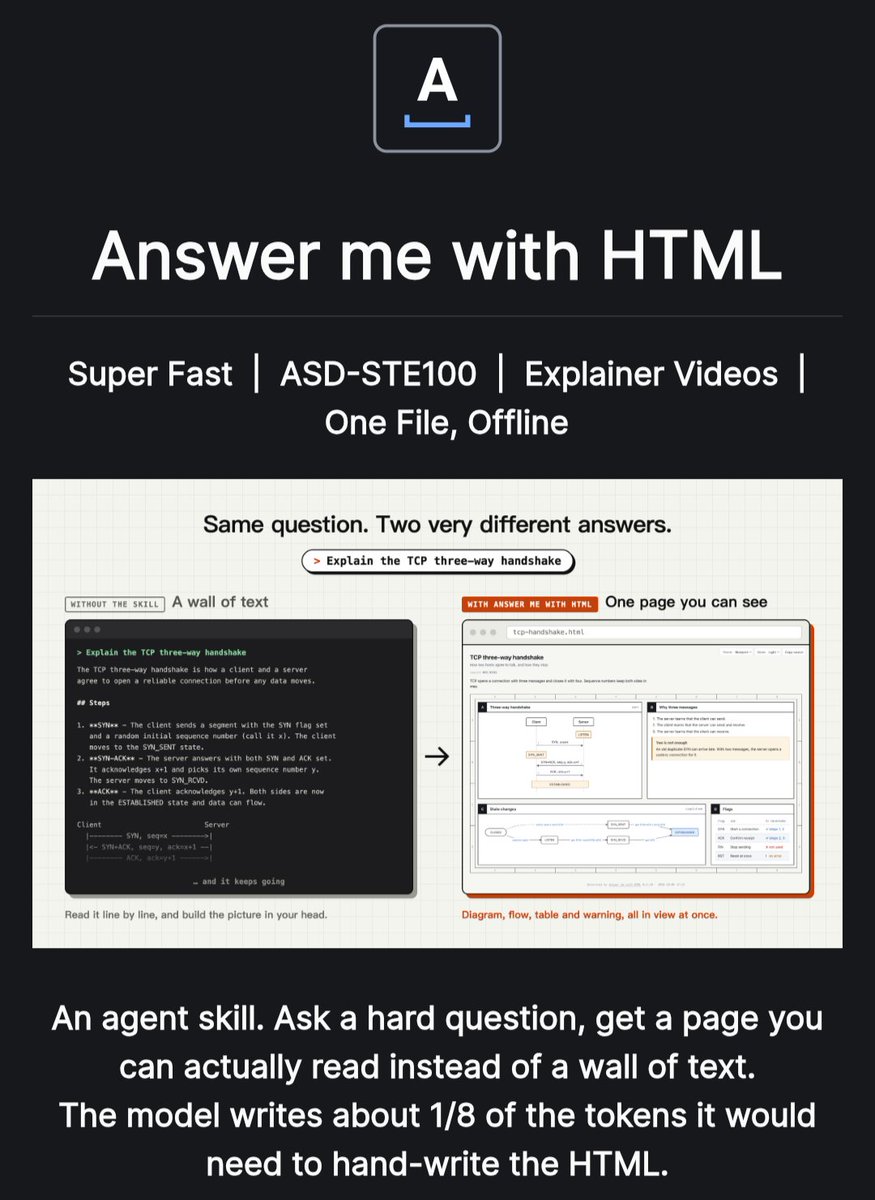
@celineodier highlighted (35 likes, 26 replies, 484 views) REA, an open-source repo that lets agents reverse engineer app behavior locally and explain how features work "with proof" without needing source code. @DivyanshT91162 showed (9 likes, 7 replies, 595 views, 8 bookmarks) that "Answer me with HTML" turns agent markdown into standalone HTML explainers with diagrams, comparison tables, and offline viewing, while also claiming about one-eighth the output tokens and 2.6x faster generation in the author's benchmark.
@DanKornas described (10 likes, 7 replies, 784 views) ReevesAgents as a tmux-backed local workspace for running Claude Code, Codex, Kimi, and OpenCode side by side, and announced (3 replies, 403 views) Ordewell as a plan-first orchestrator that isolates code-changing tasks in their own worktrees and only passes them when completion markers appear. @badlogicgames said (67 likes, 9 replies, 4,123 views, 21 bookmarks) that pi-mobile now has hot-reloadable, networked plugins with multi-user and multi-surface support, while @agentnative_ shared (4 likes, 3 quotes, 451 views, 5 bookmarks) a webhook flow that lets Claude Code hand off live X research to GrokBot and continue once the answer returns.
2. What Frustrates People
Quota cuts and limit design interrupted real work
Severity: High. @SamPassey3 said (36 likes, 2 replies, 2,447 views, 6 bookmarks) Stanford ChatGPT Edu Pro users lost the 20x allowance they thought they had already paid for, dropping to 10x and sometimes losing the rest of a partially used week. @Ananth7e argued (80 likes, 26 replies, 3,907 views) that limit design matters as much as total allowance, because 5-hour caps can interrupt tasks mid-run, and his poll slightly favored "no 5h limits, same usage" over a higher weekly allowance with the cap restored. @JustLingonberry asked (29 likes, 23 replies, 826 views) whether anyone else had simply stopped using Codex after using Opus 5.5, showing that usage friction was already converting into switching behavior. Worth building: High.
Dots and Codex continuity broke exactly where users expected long-running help
Severity: High. @wynand_schoeman summarized (52 likes, 13 replies, 401 views) DevDay as a push toward agents that remember context across dialogs plus Codex that can run on a computer, a phone, or entirely in the cloud. Against that backdrop, @jessepollak reported (28 likes, 6 replies, 7,115 views) that Dots could neither manage existing computer tasks not created by Dots nor see tasks created by Dots reliably, and one reply said that made the product unusable for driving many long-running project tasks. People are coping by falling back to local sessions, third-party control layers, or manual prodding. Worth building: High.
Observability still felt risky when defaults were unclear
Severity: Medium to high. @TheDailyViber argued (2 replies, 45 views) that Copilot app traces can show model calls, tool calls, errors, and diff context when a session goes sideways, which is exactly the kind of evidence teams need. But @spencerclarkdev warned (8 replies, 463 views) that default telemetry in Qwen Code, Codex, and Claude Code could include prompts, file reads, memories, or email-linked metrics unless configured carefully. @GHchangelog announced (12 likes, 1,295 views) manual MCP startup control for JetBrains, which reads like one coping mechanism: tighten runtime control first, then widen trust gradually. Worth building: High.
Hidden routing and hidden harness behavior made performance hard to reason about
Severity: Medium. @0xtoberry flagged (115 likes, 27 replies, 7,656 views) model-routing behavior that looked real in Antigravity but remained unconfirmed. @teortaxesTex argued (42 likes, 15 replies, 3,804 views, 25 bookmarks) that harness compatibility changed time sense and effort regulation enough to alter perceived model quality, and @OrenMe showed (3 likes, 55 views, 1 bookmark) that prompt-ordering alone could slash reported credits in one test. People are coping by watching surfaced model IDs, comparing shells instead of only models, and manually tuning context order. Worth building: Medium.
3. What People Wish Existed
A continuity layer that survives dialogs, devices, and agents
The strongest practical need was not a smarter answer box. It was continuity that survives moving between Dots, Codex, phone, computer, and cloud without dropping the task. @wynand_schoeman framed OpenAI's own product direction around remembered context and multi-surface Codex, while @jessepollak showed how painful it is when that handoff fails in practice. ReevesAgents and Ordewell partially answer the same need from the outside by keeping local runs visible and structured, but the day's evidence says continuity is still fragmented. Opportunity: Direct.
Sandboxes and traces that prove what happened without oversharing
MXC, Copilot app tracing, JetBrains runtime controls, and the telemetry warning thread all pointed at the same wish: make agent actions inspectable, but do not require teams to leak prompts, files, or identities to get that visibility. @twtayaan described a sandbox enforced outside the agent, @TheDailyViber showed the value of session traces, and @spencerclarkdev showed why defaults matter. Current answers exist, but the workflow still feels pieced together rather than integrated. Opportunity: Direct.
Explanations that are visual, compact, and commentable
@DivyanshT91162 retained attention because it named a real pain: agents can explain a system, but the answer often arrives as a terminal dump. "Answer me with HTML" exists because a diagram-rich offline page is easier to read, share, and comment on than a long scroll of Markdown, and the project claims that offloading layout to the CLI also cuts output tokens sharply. This looks like a practical need, not just presentation polish. Opportunity: Competitive.
Cost-aware harness tuning that happens automatically
The day produced unusually concrete evidence that prompt ordering, tool search, dynamic context discovery, and harness time injection change cost and quality materially. @ScarletKc, @OrenMe, @teortaxesTex, and @ajutqs all pointed to optimizations that most users still have to discover manually. A layer that tunes those choices automatically per task would address an active need. Opportunity: Direct.
4. Tools and Methods in Use
| Tool | Category | Sentiment | Strengths | Limitations |
|---|---|---|---|---|
| Microsoft Execution Containers | Sandbox runtime | (+) | External file, network, and resource controls; cross-platform JSON policy; already integrated with multiple agent surfaces | Still early in ecosystem rollout and not yet universal across all coding agents |
| Dots and Codex | Agent surface | (+/-) | Memory across dialogs, cloud plus computer plus phone story, fast-moving first-party investment | Thread continuity bugs, quota confusion, and switching pressure |
| Claude Code and Opus 5.5 | Coding agent | (+/-) | Strong enough output quality to pull some users away from Codex | Competes inside the same quota and telemetry-trust conversation as rivals |
| Tool search and dynamic context discovery | Context-loading method | (+) | Lower token load, better cache preservation, benchmark gains across multiple vendors | Experimental, vendor-specific, and still exposed mostly through docs or niche settings |
| Stability Ordered Prompt | Prompt-structure method | (+) | Improved cache reuse and much lower reported credits in one test | Changes instruction order and may not generalize across runtimes or workloads |
| OpenTelemetry tracing for coding agents | Observability | (+/-) | Lets teams inspect model calls, tool calls, errors, and timing behind a bad diff | Privacy-sensitive defaults and enterprise-only configuration paths |
| REA | Reverse-engineering workflow | (+) | Local proof-oriented inspection of apps, sites, and binaries with multiple agent CLIs | Does not give source code or permission to copy what it finds |
| Answer me with HTML | Output-rendering layer | (+) | More readable answers, diagram support, offline sharing, lower token demand | Best suited to explanation-heavy tasks and adds a render step |
| ReevesAgents | Local multi-agent orchestration | (+) | tmux-backed agents, CLI/TUI/Web UI, optional MCP control, local JSON state | Adds coordination overhead and assumes comfort with local provider CLIs |
| Ordewell | Plan-first orchestration | (+) | Editable plans, per-task runner choice, worktree isolation, completion-marker verification | Still early and adds planning overhead before execution |
| Open Code Review | PR review automation | (+) | One-workflow setup, diff-only review, inline comments, budget controls | API cost management and pinning details require operator care |
| pi-mobile plugins | Mobile and multi-surface runtime | (+) | Hot reloadable, networked, multi-user plugins that extend agent surfaces beyond desktop | Release timing and open-source status were still being asked in replies |
Overall satisfaction skewed positive for wrappers that improved control, readability, or coordination, and mixed for first-party agent surfaces where quota, routing, or continuity issues were still live. Migration pressure was visible: @JustLingonberry asked (29 likes, 23 replies, 826 views) whether people had effectively stopped using Codex after trying Opus 5.5, while @teortaxesTex argued (42 likes, 15 replies, 3,804 views, 25 bookmarks) that the shell around the model still explains part of that preference.
The most important competitive dynamic was not "which vendor has the smartest base model?" It was "which workflow wastes fewer tokens, hides less state, and interrupts fewer tasks?" Tool search, prompt ordering, sandboxes, multi-agent planners, and HTML rendering were all answers to that larger workflow question.
5. What People Are Building
| Project | Who built it | What it does | Problem it solves | Stack | Stage | Links |
|---|---|---|---|---|---|---|
| REA | morluto | Reverse engineers apps, sites, and binaries with local agent help and proof-oriented outputs | Lets builders inspect how a feature works without source access | Local reverse-engineering workflow, multi-agent CLI support, desktop/mobile/web targets | Shipped | GitHub |
| Answer me with HTML | QingYunA | Turns agent Markdown drafts into standalone HTML explainers with diagrams and tables | Replaces unreadable terminal dumps with shareable visual outputs | Markdown-to-HTML rendering, diagram generation, offline HTML delivery | Shipped | GitHub |
| ReevesAgents | mertkayacs | Runs multiple coding CLIs side by side inside one local workspace | Organizes multi-agent local runs without forcing everything into one provider | tmux, CLI/TUI/Web UI, optional MCP, local JSON state | Shipped | GitHub |
| Ordewell | ordewell | Turns one goal into an editable task plan with isolated code-changing worktrees | Makes multi-agent runs easier to inspect and verify before merge | Planner, per-task runners and models, worktrees, completion markers | Beta | GitHub |
| Open Code Review | Alibaba | Adds AI PR review to GitHub with one workflow file and operational controls | Brings repeatable review coverage to every push without running PR code | GitHub Action, npm CLI, OpenAI-compatible or Anthropic endpoints | Shipped | GitHub |
| pi-mobile plugins | @badlogicgames | Adds hot reloadable, networked plugins to a mobile agent surface | Extends agent workflows to multi-user and multi-surface mobile control | Networked plugin runtime, mobile surface, durability support | Beta | tweet |
| GrokBot webhook for Claude Code | Agent Native | Sends work from Claude Code to GrokBot over a webhook and resumes when research returns | Adds live X-native research without stopping the coding session | Claude Code prompt/skill, webhook, GrokBot | Shipped | guide |
@celineodier highlighted (35 likes, 26 replies, 484 views) REA as a way to ask an agent how another product implemented a feature and get back a proof-backed explanation instead of a guess. The important pattern is not just reverse engineering. It is local, agent-assisted inspection becoming a normal workflow rather than a specialist security exercise.
@DivyanshT91162 showed (9 likes, 7 replies, 595 views, 8 bookmarks) that "Answer me with HTML" treats the output layer as its own product surface. The model writes the content, while the CLI handles layout and diagrams, which is why the project can claim both a more readable result and lower output-token usage.
@DanKornas described (10 likes, 7 replies, 784 views) ReevesAgents as a local workspace that keeps provider CLIs in tmux while exposing CLI, TUI, Web UI, and optional MCP controls around the same runs. In a separate post, he announced (3 replies, 403 views) Ordewell, which moves even further toward explicit coordination by making the plan editable before execution and isolating code-changing tasks in their own worktrees.


@DegenOfWallSt showed (1 like, 1 reply, 108 views, 1 bookmark) that Open Code Review is less a toy reviewer than an operational workflow: secrets and variables must be set, the token budget can be capped, fork PRs stay diff-only, and pinning the action SHA alone is not enough because the CLI is installed from npm at runtime. The recurring build pattern across the whole section was clear: the new projects wrapped agent work in structure, not just more text generation.
6. New and Notable
Microsoft turned sandboxing into an explicit agent runtime
@twtayaan reported (245 likes, 41 replies, 17,106 views, 159 bookmarks) MXC as a concrete answer to a question that normally gets hand-waved away: which files, networks, and resources can the agent touch, and who enforces that boundary? The notable part was not just another sandbox claim. It was the combination of cross-platform support, JSON policy, and named integrations with existing coding-agent surfaces.
Four vendors pointed at the same tool-loading strategy
@ScarletKc collected (3 likes, 512 views) an unusually useful cluster of docs from Anthropic, OpenAI, Cursor, and GitHub. Despite different language, they all described the same operating principle: load fewer tools, later, and preserve cache reuse wherever possible. That kind of cross-vendor convergence is stronger evidence than any one announcement by itself.
Harness tuning finally came with numbers people could inspect
The day produced several measurable claims instead of vague "feels faster" talk. @teortaxesTex shared (42 likes, 15 replies, 3,804 views, 25 bookmarks) a benchmark screenshot about duration following across harnesses, @OrenMe showed (3 likes, 55 views, 1 bookmark) cache-read and credit differences from stability-ordered prompts, and @ajutqs measured (3 replies, 65 views) a near-doubling of Codex output speed across real tasks over four days. The notable shift was not just optimization. It was optimization becoming visible and discussable in public.
OpenAI's multi-surface Codex story moved faster than its continuity layer
@wynand_schoeman summarized (52 likes, 13 replies, 401 views) DevDay as a push toward Dots memory, GPT-6.1 Sol, Astra Ultrafast, Pro 500, and Codex Cloud across computer, phone, and cloud. On the same day, @jessepollak reported (28 likes, 6 replies, 7,115 views) that task connectivity between Dots and local Codex work was broken. The notable signal was the gap between the product story and the day-to-day reality of thread continuity.
7. Where the Opportunities Are
[+++] Cross-tool continuity and memory for long-running work - The Dots and Codex bug, the DevDay push toward cloud plus phone plus computer workflows, and the popularity of ReevesAgents and Ordewell all point to the same gap: users need tasks, context, and control state to survive across surfaces without brittle handoffs. The best opening is a continuity layer that is inspectable, portable, and not tied to one provider.
[+++] Safe execution bundles that combine sandboxing, tracing, and privacy guards - MXC, Copilot app tracing, JetBrains startup controls, and the telemetry-warning thread together show demand for a package that can say both "the agent stayed inside these boundaries" and "here is the evidence" without leaking more than necessary. Trust tooling is becoming its own product category.
[++] Cost-aware harness optimization - Tool search, dynamic context discovery, prompt ordering, and speed logging all showed that many of the biggest wins now come from how the session is structured, not from switching models. A product that automatically tunes tool loading, cache friendliness, and prompt layout per task would meet a current operator need.
[++] Output and review layers that replace terminal dumps with inspectable artifacts - "Answer me with HTML" and Open Code Review succeeded because they turn agent work into something humans can actually evaluate: a rendered page, an inline PR comment, a bounded review summary. There is room for more products that convert raw agent output into formats built for reading, approval, and audit.
[++] Multi-agent planners with explicit dependencies and isolated execution - ReevesAgents, Ordewell, pi-mobile plugins, and the GrokBot webhook flow all treated orchestration as a separate problem from generation. The opportunity is strongest where the coordination layer makes plans visible, keeps agents isolated, and preserves one clear control surface for the human.
8. Takeaways
- The trust stack is moving into the product layer. MXC, JetBrains runtime controls, and Copilot session tracing showed that agent safety and inspectability are being packaged as features, not left to local convention.
- Harness and context engineering are now first-order levers. Public evidence around tool search, prompt ordering, duration following, and speed measurements showed that workflow plumbing can change cost and perceived quality as much as the model choice.
- Quota design and continuity bugs are directly shaping adoption. Stanford's plan cut, the 5-hour-limit poll, the Dots/Codex issue, and switching chatter around Opus 5.5 all showed that interruptions matter more than marketing.
- Builders are shipping wrappers around agents rather than trying to outdo frontier models. The day's strongest projects focused on reverse engineering, HTML presentation, multi-agent control, mobile plugins, PR review, and webhook delegation.
- The clearest opportunities are in memory, control, and inspectability. The evidence was strongest wherever a product made agent work easier to continue, cheaper to structure, safer to run, or easier for humans to review.