Twitter AI - 2026-05-14
1. What People Are Talking About
1.1 Dependability is becoming the definition of AI engineering 🡕
The strongest signal on May 14 is that Twitter's AI conversation is rewarding systems that can be measured, audited, and improved in loops, not just demoed. At least six retained items support this: a high-engagement voice benchmark thread, a CEO-level buying heuristic centered on eval criteria, a role-definition article for AI engineers, a CAD-specific benchmark, a trace-based router for LLM classification, and a persistent-memory layer for coding agents. The shared idea is that "AI that works" increasingly means AI with benchmarks, receipts, and production feedback.
@XFreeze claimed (1,797 likes, 388 replies, 644,502 views, 80 bookmarks) that Grok Voice Think Fast 1.0 is now the top model on the τ-Voice benchmark. The attached chart is the important part: it shows Grok leading the overall score and most domain slices, so the post is being used as operational evidence rather than generic hype.

@tbpn shared (46 likes, 9,534 views, 28 bookmarks) Max Levchin's rule for buying AI tools: if the vendor can explain the evaluation criteria, the product is worth piloting; if not, "it's slop and you're being sold a story." @FrontendMasters linked (6 likes, 602 views) an essay arguing that AI engineering is a distinct application-layer role built around a build-eval-improve loop, not just "a developer who uses LLMs" (article).
@gNucleusAI introduced (45 views) Parametric CAD Bench, a domain-specific benchmark for agentic CAD work. The site says it scores geometry, constraints, parametric correctness, topology, workflow success, and efficiency, and its opening leaderboard puts GPT-5.5 plus Codex first at 83.2 while also making cost visible at $170 per run (benchmark). @LeopolisDream pointed to (47 views) TRACER, whose repo and site say it routes the predictable 90% of classification traffic to a lightweight ML surrogate while parity-gating against the teacher LLM (GitHub, site). @Dinosn highlighted (14 likes, 1,311 views, 12 bookmarks) agentmemory, a persistent memory layer for coding agents that says it reaches 95.2% retrieval R@5 on LongMemEval-S and works across multiple MCP-capable clients (GitHub, site).

Discussion insight: The replies under the Grok benchmark thread do not reject benchmarking. They argue over whether the benchmark captures real experience: one reply says the voice quality got worse, and another says usage time was cut back. The debate has shifted from "should we measure this?" to "did you measure the thing users actually feel?"
Comparison to prior day: May 13 already leaned toward traces and auditability. May 14 pushes the same idea further into job definitions, buyer heuristics, domain-specific benches, and cost-aware routing.
1.2 Physical infrastructure constraints are moving into the AI conversation 🡕
The second theme is that people are talking about AI as a physical systems problem. Fiber density, cooling, component shortages, and electricity supply showed up as first-class constraints. The conversation is not only about better models; it is about whether racks, cables, and power systems can sustain the next deployment wave.
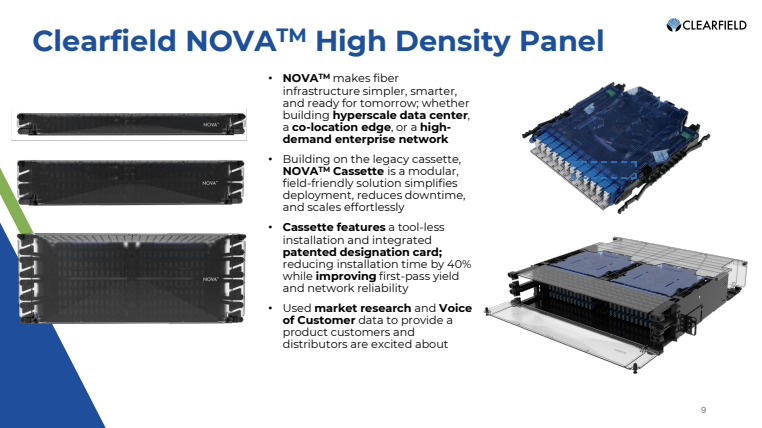
@BryzonX argued (42 likes, 4 replies, 2,137 views, 25 bookmarks) that fiber-management hardware is becoming strategic AI infrastructure. The attached product image and Clearfield's own page line up on the same operational detail: the NOVA HD panel supports up to 384 LC ports in 4RU, aimed at dense data-center interconnects (product page).
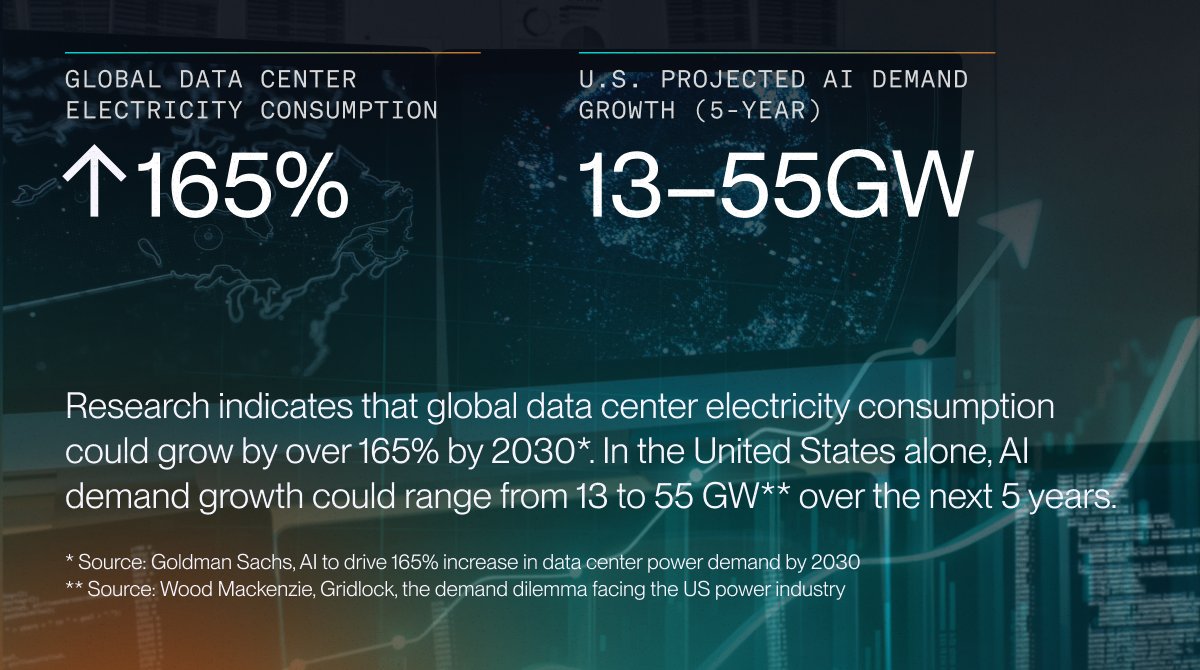
@jun_song warned (25 likes, 3 replies, 1,347 views) that cloud AI is unlikely to get cheaper soon because DRAM, NAND, turbines, cooling, and power are all constrained, and he does not expect stabilization before 2028. @xenergynuclear framed (7 likes, 207 views) the same problem from the supply side: its slide deck says AI queries use roughly 10 times the energy of conventional search, projects 13-55 GW of U.S. AI demand growth over five years, and presents a four-unit Xe-100 plant as a 320MW answer to that demand.
Discussion insight: These posts drew less argument than the benchmark threads, but the convergence is notable: separate accounts landed on the same bottlenecks of fiber density, cooling, and round-the-clock power.
Comparison to prior day: May 13 focused on the runtime layer around agents. May 14 moves one layer lower into racks, cables, and electricity.
1.3 Security and governance are widening from app hardening to international coordination 🡕
The third major theme is that AI security is being discussed at two levels at once: concrete deployment hardening and high-level governance. One cluster of posts focuses on exposed MCP servers, jailbreaks, and misconfigurations. Another cluster talks about AI guardrails as something the U.S. and China may need to coordinate around directly.
@Dinosn shared (62 likes, 2,348 views, 44 bookmarks) Tencent Zhuque Lab's AI-Infra-Guard, whose README describes one platform for OpenClaw scans, agent scans, MCP and skills scans, AI infra vulnerability scans, and jailbreak evaluation. The current release notes say the May 14 v4.1.8 release expanded coverage to 64 AI components, while the self-hosting guide explicitly warns that the app lacks auth and should not be exposed on public networks (GitHub).
@MsftSecIntel warned (6 likes, 636 views, 7 bookmarks) that exploitable misconfigurations in AI and agentic applications can lead to remote code execution, credential theft, and access to sensitive internal tools and data. Microsoft's corresponding blog makes the warning concrete: it says more than half of cloud-native workload exploitations stem from misconfigurations and that 15% of remote MCP servers are severely insecure and allow unauthenticated access to sensitive data and operational capabilities (blog).
@FirstSquawk reported (42 likes, 10 replies, 12,206 views) that OpenAI proposed a global AI governance body led by the U.S. and including China, modeled after the IAEA. The replies split between support for a shared safety body and suspicion that regulation would be used to freeze out competitors.
Discussion insight: Technical-security posts stayed concrete: MCP auth, exposed services, and red-teaming coverage. Governance replies were much less settled, oscillating between cooperation and fears of regulatory capture.
Comparison to prior day: May 13 emphasized private runtimes and controlled execution. May 14 adds hard numbers about exposed MCP infrastructure and a more explicit U.S.-China governance frame.
2. What Frustrates People
Proofless AI claims still do not survive contact with users
@tbpn shared (46 likes, 9,534 views, 28 bookmarks) the bluntest version of the complaint: if a vendor cannot explain its eval criteria, the product is "slop." The same frustration appears in practice under @XFreeze's benchmark thread (1,797 likes, 388 replies, 644,502 views, 80 bookmarks), where benchmark wins immediately triggered replies about degraded voice quality and shorter usage windows instead of celebration alone. The FrontendMasters article makes the same point in job-language: demos are easy, dependability is the work. People are coping by building tighter eval loops, domain-specific harnesses, and cheaper routing layers like TRACER instead of trusting raw frontier-model output. Severity: High. Worth building for: yes.
AI infrastructure is running into fiber, cooling, and power ceilings
@BryzonX argued (42 likes, 4 replies, 2,137 views, 25 bookmarks) that dense AI racks are turning fiber management into a strategic bottleneck, and Clearfield's own product page backs the concrete part of that claim with a 384-port 4RU panel built for data-center interconnects (product page). @jun_song added (25 likes, 3 replies, 1,347 views) that DRAM, NAND, turbines, cooling, and power are all tight enough that cloud AI price hikes look likely. @xenergynuclear made (7 likes, 207 views) the same problem legible with slides forecasting 13-55 GW of U.S. AI demand growth over five years. The common workaround is not a workaround at all yet; it is mostly forward planning, component substitution, and selling new rack- or power-layer hardware. Severity: High. Worth building for: yes.
Agent deployments are still shipping with dangerous defaults
@MsftSecIntel warned (6 likes, 636 views, 7 bookmarks) that misconfigured AI and agentic apps are already exposing organizations to RCE, credential theft, and access to internal tools. Microsoft's own blog says more than half of cloud-native workload exploitations stem from misconfigurations and that 15% of remote MCP servers are severely insecure and unauthenticated (blog). @Dinosn shared (62 likes, 2,348 views, 44 bookmarks) AI-Infra-Guard precisely because teams need one place to red-team agents, MCP servers, infrastructure, and jailbreaks. Current workaround: more scanning, more hardening, and more private/internal deployments. Severity: High. Worth building for: yes.
3. What People Wish Existed
Verifiable AI outputs by default
The clearest unmet need is for systems that can prove what they did, why they did it, and whether the result should be trusted. @tbpn's thread (46 likes, 9,534 views, 28 bookmarks), the "dependability" framing in FrontendMasters' article, the CAD-specific scoring in Parametric CAD Bench, and the parity-gated routing pitch in TRACER all point in the same direction. This is a practical and urgent need with partial answers already shipping. Opportunity: direct.
Simpler AI stacks that do not require a new database or full-price LLM call for every step
@mjovanovictech argued (24 likes, 3 replies, 802 views, 21 bookmarks) that many AI features can stay inside PostgreSQL with pgvector instead of adding Pinecone, Qdrant, or Weaviate. TRACER makes the same simplification move on inference cost by routing easy classification calls to traditional ML, and agentmemory does it on developer workflow by persisting context across coding-agent sessions (GitHub, site). People want AI infrastructure that fits into the systems they already run, not one more parallel stack. Opportunity: direct.
Secure and auditable agent deployment standards
The Microsoft security post and AI-Infra-Guard builder signal both show the same gap: teams need defaults that make agents safe before they touch internal systems. The OpenAI-governance-body thread extends that wish from app security to international standards. This is a practical need with some early tools and many unresolved governance arguments. Opportunity: competitive.
Planning tools for AI power and interconnect demand
The Clearfield and X-energy posts show a quieter unmet need: teams want better ways to reason about fiber density, cooling, and power procurement before AI demand turns into an infrastructure failure. Today the conversation is still split across hardware marketing, power projections, and operator commentary. Opportunity: aspirational.
4. Tools and Methods in Use
| Tool | Category | Sentiment | Strengths | Limitations |
|---|---|---|---|---|
| τ-Voice Bench / Artificial Analysis voice benchmarking | Benchmark method | (+/-) | Gives a concrete, domain-level scoreboard for production-style voice-agent performance | Replies show users still question whether benchmark wins match live product quality and usage limits |
| pgvector | Database / vector search | (+) | Keeps embeddings beside relational data and preserves joins, filters, transactions, and pagination | Not every workload fits a single Postgres-based setup, especially at larger scale |
| AI-Infra-Guard | AI security / red teaming | (+) | Covers OpenClaw scans, agent scans, MCP and skills scans, infra vulnerability scans, and jailbreak evaluation | Self-hosted deployment is positioned for internal use and explicitly lacks auth for public exposure |
| agentmemory | Coding-agent memory layer | (+) | Cross-agent memory, local retrieval, MCP tooling, and explicit benchmark claims around recall and token savings | Still early and self-reported; buyers need to validate the claims in their own workflows |
| Parametric CAD Bench | Domain-specific evaluation harness | (+) | Extends agent evaluation into CAD with geometry, constraint, parametric, topology, workflow, and efficiency scoring | Early benchmark with a small first leaderboard and visible cost/quality tradeoffs |
| TRACER | Routing / cost optimization | (+) | Uses teacher traces to route easy classification traffic to cheap ML surrogates while parity-gating quality | Best fit is repeated classification-style decisions, not every agent workflow |

Summary: The positive attention today clusters around tools that make AI less ambiguous. Two simplification patterns stand out: keep AI features inside existing systems where possible, as with pgvector, and stop paying frontier-model prices for predictable work, as with TRACER. The security stack is also becoming more explicit: AI-Infra-Guard and Microsoft's guidance treat MCP servers, agent workflows, and cloud-native deployment patterns as distinct operational surfaces that need their own controls.
5. What People Are Building
| Project | Who built it | What it does | Problem it solves | Stack | Stage | Links |
|---|---|---|---|---|---|---|
| AI-Infra-Guard | Tencent Zhuque Lab | Red-teaming platform for OpenClaw, agents, MCP/skills, infrastructure, and jailbreak evaluation | Teams need one place to scan AI stacks across multiple risk surfaces | Docker, OpenClaw scans, Agent Scan, vulnerability database, web UI | Shipped | GitHub |
| agentmemory | rohitg00 / iii engine | Persistent memory runtime for coding agents across MCP-capable tools | Coding agents lose context between sessions and across clients | Node.js, hooks, MCP, BM25 + vector + graph retrieval | Shipped | site, GitHub |
| Parametric CAD Bench | gNucleus AI | Benchmark suite for agentic parametric CAD design and multi-step CAD workflows | Generic evals miss geometry, constraints, and parametric correctness in CAD work | Sandboxed CAD evaluator, geometry/spec scoring, leaderboard | Beta | site |
| TRACER | adrida / DeepRecall | Routing layer that sends easy classification calls to an ML surrogate and defers hard cases to the teacher LLM | Repeated LLM classification work is too expensive and too slow to run at full price every time | Python SDK, trace fitting, calibrated acceptor, hosted endpoint | Beta | site, GitHub |
| NOVA HD Panel | Clearfield | High-density fiber panel for enterprise and data-center interconnects | AI racks need denser, better-managed fiber interconnects without adding more footprint | 1RU/2RU/4RU panel variants, NOVA cassettes, optical modules | Shipped | product page |
@Dinosn shared (62 likes, 2,348 views, 44 bookmarks) AI-Infra-Guard as a live product surface, not a concept. The README is detailed enough to count as builder evidence: Docker deployment, a local web UI, OpenClaw integration, and a release cadence that expanded coverage to 64 AI components on May 14.
@Dinosn also pointed to (14 likes, 1,311 views, 12 bookmarks) agentmemory, whose site frames memory as infrastructure for coding agents rather than a feature inside one IDE. The distinctive angle is cross-agent continuity: one memory runtime, many MCP-capable clients, with local retrieval and explicit benchmark claims around recall and token savings.
The repeated build pattern is application scaffolding around AI work. Parametric CAD Bench and TRACER both treat the missing layer as operational control: one scores agent work in a specific domain, the other strips cost out of predictable classification loops while keeping a measured quality gate. Clearfield's NOVA panel is a different kind of builder signal, but it answers the same underlying pressure: once AI systems move from demos to scaled deployment, the bottleneck often sits in the surrounding system rather than the model itself.
6. New and Notable
Microsoft quantified the MCP exposure problem
The most concrete new number of the day came from Microsoft's May 14 security writeup: it says more than half of cloud-native workload exploitations stem from misconfigurations, and 15% of remote MCP servers are severely insecure and allow unauthenticated access to sensitive internal data and operational capabilities (blog). That turns "agent security risk" from a vague concern into a measurable deployment problem.
agentmemory is trying to turn coding-agent memory into infrastructure
@Dinosn surfaced (14 likes, 1,311 views, 12 bookmarks) agentmemory as a product for persistent context across Claude Code, Cursor, Codex CLI, Gemini CLI, and other MCP-capable clients. The interesting part is not memory in the abstract; it is the claim that one shared runtime can sit underneath many agent interfaces and keep the context layer local and benchmarked (site).
Parametric CAD Bench pushes eval culture into mechanical design
@gNucleusAI announced (45 views) a benchmark that grades AI agents on parametric CAD work rather than text-only tasks. That matters because it extends the day's "show me the receipts" mood into a domain where visual similarity is not enough and the artifact must stay editable, constrained, and spec-correct (benchmark).
7. Where the Opportunities Are
[+++] Verifiability and evaluation infrastructure — The strongest multi-section signal is that people want AI systems they can score, route, prove, and debug. The evidence spans Grok's benchmark thread, the eval-first buying heuristic from Max Levchin's interview, the FrontendMasters "AI engineer" framing, Parametric CAD Bench, TRACER, and the builder interest around agentmemory.
[+++] AI deployment bottleneck tooling — Clearfield's dense fiber gear, Jun Song's supply-chain warning, and X-energy's power-demand slides all point to the same gap: AI deployments are colliding with physical constraints. Products that help teams plan, manage, or reduce those bottlenecks look strong.
[++] Secure-by-default agent deployment — Microsoft's hard numbers on insecure MCP servers and the breadth of AI-Infra-Guard's scan surface show a real need for security controls designed specifically for agents, MCP endpoints, and cloud-native AI apps.
[+] Simpler application-layer AI architecture — pgvector, TRACER, and agentmemory all win by removing complexity rather than adding it. The emerging opportunity is not one more framework, but tools that let teams keep AI inside familiar databases, workflows, and local runtimes.
8. Takeaways
- Twitter's AI conversation is treating evals as table stakes, not optional polish. Grok's benchmark lead, Levchin's eval-first buying rule, and the FrontendMasters build-eval-improve argument all point the same way. (source)
- Domain-specific benchmarks are spreading beyond coding and chat. Parametric CAD Bench scores geometry, constraints, parametric correctness, and workflow success for agentic CAD tasks. (source)
- Developers are looking for simpler AI stacks, not more moving parts. The pgvector thread argues many teams should keep vectors inside Postgres, while TRACER routes predictable work out of the expensive LLM path. (source)
- Cross-agent memory is becoming its own product layer. agentmemory is being positioned as a shared runtime for coding-agent context across multiple MCP-capable clients. (source)
- AI scale is showing up as a fiber-and-power problem, not only a model problem. Clearfield's 384-port panel pitch, Jun Song's component bottleneck warning, and X-energy's power-demand slides all make the physical constraint visible. (source)
- Agent security risk is no longer abstract. Microsoft's May 14 post says more than half of cloud-native workload exploitations stem from misconfigurations and 15% of remote MCP servers are severely insecure. (source)
- Red teaming is becoming a full-stack AI product category. AI-Infra-Guard packages agent, MCP, infrastructure, and jailbreak scanning into one platform with an active release cadence. (source)
- AI governance talk is expanding from enterprise policy to U.S.-China coordination. The OpenAI-governance-body thread shows that even high-level safety coordination is now being argued out in public AI timelines. (source)