Twitter AI - 2026-06-15
1. What People Are Talking About
1.1 Benchmark realism and training know-how got more candid (🡕)
The strongest technical cluster was not a new model launch. It was a more candid conversation about how frontier systems are actually tuned and judged: scaling laws instead of neat recipes, brute-force eval matrices instead of a few curated tests, and visible embarrassment around benchmark hype that later looked flimsy. Three high-signal items pointed at the same shift from polished scores to operational reality.
@yacineMTB asked (579 likes, 53 replies, 52,581 views, 236 bookmarks) how teams choose hyperparameters for large language model training and whether muP or learning-rate decay still matter. The most substantive replies argued that labs often fit scaling laws for batch size and learning rate on smaller runs, then accept hardware-constrained critical-batch-size tradeoffs rather than some perfect optimum, while treating muP as an open question rather than a solved recipe.
@edzitron argued (506 likes, 5 replies, 20,905 views, 42 bookmarks) that a previously viral AI-benchmark personality should have embarrassed the outlets and commentators that amplified him. The signal here was less the original scandal than the mood around it: the post drew agreement that benchmark virality and benchmark credibility are not the same thing.
@clairevo wrote (26 likes, 5 replies, 5,549 views, 30 bookmarks) that Braintrust uses coding agents to run large benchmark matrices against database systems and then turns a strong engineer's "vibe check" into scoring functions. Her framing made the operational gap explicit: hard technical hypotheses used to be too expensive to test broadly, so teams settled for one or two manual checks.
Discussion insight: The replies did not reject evaluation. They kept moving the source of truth away from neat public scoreboards and toward scaling-law heuristics, private test matrices, and human review loops.
Comparison to prior day: June 12 focused on building more realistic benchmarks. June 15 pushed one step further, into candid operator talk about how easily benchmarks are overfit, gamed, or reduced to a handful of trusted internal checks.
1.2 Inference efficiency and local deployment moved from theory to specific numbers (🡕)
A second dense cluster was about concrete throughput, power, and hardware-fit evidence. Instead of vague claims that inference is getting cheaper, people shared diagrams, benchmarks, and desktop experiments that tried to show exactly where the gains are coming from and what still breaks.
@NielsRogge explained (72 likes, 1 reply, 4,567 views, 63 bookmarks) speculative decoding by quoting LMSYS's DFlash launch. The linked public write-up says DFlash uses a block-diffusion drafter plus KV injection inside SGLang's Spec V2 flow, and that the Qwen 3.5 397B-A17B setup reached more than 4.3x baseline throughput and 1.5x native MTP throughput at concurrency 1 on HumanEval (LMSYS blog, SGLang docs).

@sudoingX reported (73 likes, 11 replies, 4,017 views, 24 bookmarks) running the open-weight Nex-N2-Pro 397B-A17B locally on an AMD Strix Halo box with 128 GB of unified memory at roughly 18 tokens per second. The replies supplied the missing reality check: IQ1_M was only a rough quant, ROCm and kernel support were still catching up, and the 128 GB configuration price had to be corrected upward in follow-ups.
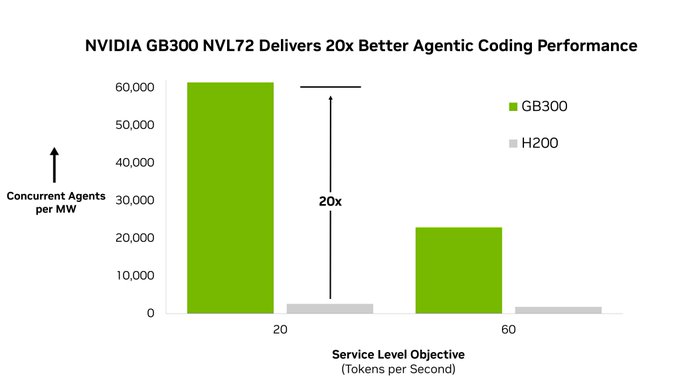
@NVIDIAAP reported (9 likes, 1 reply, 212 views) the launch of AgentPerf as a benchmark built around real coding-agent trajectories rather than single-turn chat. NVIDIA's public write-up says tool calls are simulated to isolate compute performance, and that GB300 NVL72 handled up to 20x more concurrent agents per megawatt than H200 on the benchmarked workload (NVIDIA blog).
@Cikyyy2 shared (8 likes, 393 views, 11 bookmarks) slopsome as a public fit-and-benchmark tool for local models, highlighting 319 model profiles, user-submitted tokens-per-second data, and local-versus-API cost comparisons (slopsome).

Discussion insight: Interest in local and efficient inference was real, but replies immediately challenged vendor-style pricing, driver maturity, and quant quality claims. The community wants reproducible measurements, not just screenshots.
Comparison to prior day: June 13 emphasized cost-aware routing and embedded workflows. June 15 brought the same concern down to hardware, throughput, and fit-planning numbers.
1.3 Builders dug into agent primitives: grounding, memory, and verifiable execution (🡕)
The strongest builder signal sat below the app layer. Instead of another AI wrapper, the notable projects attacked harder infrastructure problems: how facts stay auditable, how memory adapts while reasoning, how harnesses improve themselves, and how inference can be verified instead of blindly trusted.
@OpenBMB introduced (3 likes, 95 views) FactNet as a response to a grounding trilemma: authenticity, scale, and structure rarely coexist in current factual resources. The public repo describes a three-layer graph built from Wikidata and Wikipedia, and the tweet says the release packages 1.7 billion assertions, 3.01 billion evidence spans, and benchmark builders for knowledge-graph completion, multilingual QA, and multilingual fact checking (paper, repo).

@RituWithAI argued (8 likes, 3 replies, 83 views, 6 bookmarks) that most agent memory systems are built on the wrong assumption: retrieve first, reason later. The linked MRAgent paper says its Cue-Tag-Content graph and active reconstruction loop improve LoCoMo and LongMemEval by up to 23% while cutting token and runtime cost (paper, repo).

@jiqizhixin reported (12 likes, 2 replies, 766 views, 6 bookmarks) that Xiaomi's Darwin Agent Team built HarnessX, a harness foundry that composes, adapts, and evolves prompts, tools, memory, and control flow. The public repository makes the same claim more bluntly: behavior switching is still expensive, so HarnessX separates model configuration from the harness and uses trace-driven evolution to improve the stack over time (paper, repo).

@Shaughnessy119 argued (11 likes, 1 reply, 2,622 views, 11 bookmarks) that open weights still need an open serving layer, framing Ambient as a market for verifiable inference rather than just another model endpoint. Ambient's site says its Proof of Logits system verifies inference on 600B+ parameter models, while Ambient Desktop turns that thesis into a local-first workstation with project boards, resumable tasks, and visible provider fallbacks (Ambient, Ambient Desktop).

Discussion insight: The most ambitious builder work sat below the UI layer. Instead of shipping another chat wrapper, teams kept shipping provenance, memory, harness, and serving primitives.
Comparison to prior day: June 9 through June 11 emphasized harnesses and governed agent products. June 15 dug deeper into the parts those systems still lack: byte-level evidence, reconstructive memory, harness evolution, and verifiable inference.
2. What Frustrates People
Benchmark trust still depends on tacit operator knowledge
Severity: High. @yacineMTB asked (579 likes, 53 replies, 52,581 views, 236 bookmarks) basic but foundational questions about large-model hyperparameter selection, and the best answers came from replies about scaling laws, critical batch size, and unresolved muP tradeoffs rather than from a clean public playbook. @clairevo wrote (26 likes, 5 replies, 5,549 views, 30 bookmarks) that elite teams can now brute-force large benchmark matrices with coding agents, then still rely on an engineer's vibe check as the scoring gold standard. @edzitron argued (506 likes, 5 replies, 20,905 views, 42 bookmarks) that benchmark virality should have embarrassed the people who promoted it. The coping pattern is private evals, operator heuristics, and human review. This is worth building for because the frustration is repeated across training, product evaluation, and public credibility.
Local AI still has a gap between “it runs” and “it is usable”
Severity: High. @sudoingX reported (73 likes, 11 replies, 4,017 views, 24 bookmarks) a 397B local run on AMD Strix Halo, but the replies quickly exposed the pain points: rough driver support, low-bit-quality doubts, and price corrections for the hardware itself. @Cikyyy2 shared (8 likes, 393 views, 11 bookmarks) slopsome precisely because people need VRAM-fit calculators, real-user tokens-per-second benchmarks, and local-versus-API cost views before downloading anything. A more mature coping pattern appeared in @sabir_huss50540 promoting (9 likes, 6 replies, 327 views) Open WebUI as the self-hosted layer once a local stack is actually working; the public repo confirms local RAG, multi-provider support, and role controls (repo). This is worth building for because interest in private/local inference is obvious, but the path from benchmark screenshot to dependable setup is still too brittle.
Static retrieval and weak grounding still break long-horizon agents
Severity: High. @OpenBMB introduced (3 likes, 95 views) FactNet by explicitly naming the problem: current factual resources force a tradeoff between authenticity, scale, and structure. The public repo confirms that FactNet responds with a grounded multilingual graph plus benchmark builders for KGC, MKQA, and MFC (repo). @RituWithAI argued (8 likes, 3 replies, 83 views, 6 bookmarks) that today’s memory-augmented agents all retrieve before they reason, which makes their context rigid too early; the MRAgent abstract says its reconstructive memory loop improves LoCoMo and LongMemEval by up to 23% while reducing token/runtime cost (paper). This is worth building for because both posts describe concrete failure modes in current agent systems and pair them with direct, open artifacts rather than generic complaints.
3. What People Wish Existed
Repeatable evaluation and training systems that expose their assumptions
The strongest practical need was not one more leaderboard. It was tooling that makes the hidden judgment layer visible. @yacineMTB asked (579 likes, 53 replies, 52,581 views, 236 bookmarks) questions that should have had standard answers, while @clairevo described (26 likes, 5 replies, 5,549 views, 30 bookmarks) teams brute-forcing benchmark matrices and then scaling an expert's vibe check into scoring functions. @edzitron captured (506 likes, 5 replies, 20,905 views, 42 bookmarks) the social cost when public benchmark claims outrun credibility. This is a practical need with obvious buyers in labs and product teams. Opportunity: direct.
Honest local-AI planning and private-stack setup tools
People are clearly willing to run more inference locally, but they still need help deciding what will actually fit, perform, and stay stable. @Cikyyy2 shared (8 likes, 393 views, 11 bookmarks) slopsome as a fit calculator plus benchmark layer, while @sudoingX showed (73 likes, 11 replies, 4,017 views, 24 bookmarks) that even a successful 397B local run still invites pushback on quant quality, driver support, and real hardware pricing. @sabir_huss50540 promoted Open WebUI as the privacy-preserving interface once the stack works. This is a practical need with immediate utility, but the market will be competitive because benchmark sites, local runtimes, and self-hosted interfaces can all move into it. Opportunity: competitive.
Reconstructive memory layers for long-running agents
@RituWithAI argued that current memory systems retrieve too early and cannot adapt once new evidence appears, while the MRAgent paper says a Cue-Tag-Content graph plus active reconstruction improves long-memory benchmarks by up to 23% (paper). This is a practical need rather than a speculative one: agent builders already have the failure mode, and the proposed fix is concrete enough to benchmark. Opportunity: direct.
Auditable grounding and verifiable inference layers
The dataset showed demand for two kinds of trust infrastructure at once. @OpenBMB presented FactNet as a way to keep factual claims tied to multilingual byte-level evidence, while @Shaughnessy119 argued that open models still need a serving layer users can verify instead of merely trust. Ambient's public materials explicitly pitch Proof of Logits inference and a reviewable local-first workstation as that answer (Ambient, Ambient Desktop). This is practical infrastructure demand, but it will be competitive because providers, open-source stacks, and blockchain-style networks are all chasing it from different directions. Opportunity: competitive.
4. Tools and Methods in Use
| Tool | Category | Sentiment | Strengths | Limitations |
|---|---|---|---|---|
| DFlash + Spec V2 | Inference engine | (+) | Parallel block drafting, KV injection, and major throughput gains in SGLang | Needs dedicated draft checkpoints and frontier-serving infrastructure |
| AgentPerf | Agent benchmark | (+/-) | Measures chained coding-agent workloads and agents-per-megawatt rather than single prompts | Early benchmark; tool calls are simulated and first-round results were heavily vendor-amplified |
| llama.cpp + ROCm/Vulkan on AMD Strix Halo | Local inference stack | (+/-) | Makes large unified-memory local runs possible, including frontier-scale quantized models | Rough setup, price corrections, and low-bit-quality concerns remain |
| slopsome | Deployment planner | (+) | VRAM fit, crowd benchmark data, and local-versus-API cost comparison in one place | Depends on user-submitted data and does not solve runtime/driver issues |
| Open WebUI | Self-hosted AI interface | (+) | Private local chat, RAG, multi-provider support, and admin controls | Requires users to operate their own models and infrastructure |
| FactNet | Grounding dataset / knowledge graph | (+) | Auditable multilingual evidence and public benchmark builders for factual evaluation | Heavy research pipeline; not a turnkey product layer |
| MRAgent | Agent memory framework | (+) | Dynamic reconstructive memory improves long-context reasoning with lower token/runtime cost | Research-stage complexity is higher than simple retrieve-then-reason pipelines |
| HarnessX | Agent framework | (+) | Modular behavior composition plus trace-driven harness evolution | Beta project that still has to prove itself in real production workloads |
| Ambient + Ambient Desktop | Verified inference / workstation | (+/-) | Auditability, durable tasks, and a concrete story for open-model serving and reviewable work | Early product/network maturity and its coordination model are still being proven |
Overall satisfaction was highest when a tool made constraints measurable instead of hiding them. DFlash, AgentPerf, slopsome, and Open WebUI all drew attention because they made throughput, hardware fit, privacy, or cost legible rather than abstract.
The clearest migration pattern is away from static retrieval, benchmark screenshots, and pure API dependence. In their place, the dataset showed reconstructive memory, multilingual evidence grounding, local/private stacks, and harnesses that keep adapting after deployment. Competitive dynamics are splitting in two directions at once: local/self-hosted stacks versus provider-managed ecosystems, and static agent wrappers versus systems that keep evolving their own scaffolding.
5. What People Are Building
| Project | Who built it | What it does | Problem it solves | Stack | Stage | Links |
|---|---|---|---|---|---|---|
| DFlash + Spec V2 | LMSYS, Z Lab, Modal, and SGLang, shared by @NielsRogge | Speeds up frontier-model inference with block-diffusion drafting and overlap scheduling | Baseline autoregressive decoding leaves too much throughput on the table for large models | Qwen 3.5 397B-A17B, block diffusion drafter, KV injection, SGLang speculative decoding | Beta | tweet, blog, docs |
| FactNet | OpenBMB, TsinghuaNLP, TU Munich, Modelbest, and Minzu University, shared by @OpenBMB | Builds a multilingual fact graph with auditable byte-level evidence and benchmark generators | Existing grounding resources trade off authenticity, scale, and structure | Wikidata, Wikipedia, Elasticsearch, KGC/MKQA/MFC benchmark builders | Alpha | tweet, paper, repo |
| MRAgent | NUS researchers, shared by @RituWithAI | Uses a Cue-Tag-Content graph and active reconstruction for long-horizon memory reasoning | Retrieve-then-reason memory pipelines lock in the wrong context too early | Tool-calling LLM loop, graph memory, LoCoMo and LongMemEval evaluation | Alpha | tweet, paper, repo |
| HarnessX | Xiaomi Darwin Agent Team, shared by @jiqizhixin | Composes, adapts, and evolves agent harnesses instead of hand-rewriting them per task | Behavior switching across coding, research, memory, and guardrails is still expensive | Processor pipeline, model routing, trace-driven AEGIS evolution, benchmark feedback | Beta | tweet, paper, repo |
| Ambient + Ambient Desktop | Ambient, discussed by @Shaughnessy119 | Pitches verifiable open-model inference plus a durable local-first workstation for agent work | Open weights still rely on opaque serving layers and brittle workspace tooling | Proof of Logits, open-model serving market, project boards, provider routing, local desktop app | Beta | tweet, site, desktop repo |
| slopsome | slopsome, shared by @Cikyyy2 | Helps users estimate what models fit their hardware and compare local versus API economics | Local AI adoption is slowed by opaque VRAM, throughput, and cost expectations | Model/GPU stat engine, crowd benchmark data, VRAM and cost calculators | Shipped | tweet, site |
DFlash stood out because it turned speculative decoding from a paper concept into an immediately deployable serving tactic. The key distinction was not just the quoted 4.3x throughput figure, but that the public blog and SGLang documentation explain how the block-diffusion drafter and overlap scheduler fit into a real inference stack.
FactNet and MRAgent attacked trust from opposite ends of the agent problem. FactNet makes factual grounding auditable across 316 languages with explicit evidence pointers, while MRAgent tries to fix memory access itself by letting retrieval paths evolve during reasoning instead of freezing them up front. HarnessX sits between them as the orchestration layer, treating the harness around the model as the thing to optimize and retrain.
Ambient and slopsome addressed the adoption layer around open and local models. Ambient tries to make serving auditable and persistent, while slopsome helps users answer a more immediate question first: what hardware, speed, and price envelope make local inference realistic at all.
6. New and Notable
Speculative decoding got a concrete open-source speed story
DFlash plus Spec V2 mattered because the day did not stop at a benchmark claim. @NielsRogge surfaced the release, and the linked LMSYS post plus SGLang docs explained the mechanism well enough for other teams to reproduce: block-diffusion drafting, KV injection, and overlap scheduling at 397B scale (LMSYS blog, SGLang docs).
Grounding and memory became first-class agent infrastructure problems
FactNet and MRAgent were notable because both treated trust failures as system-design problems rather than prompt problems. @OpenBMB presented FactNet as a billion-scale multilingual grounding layer with public benchmark builders, while @RituWithAI highlighted MRAgent's reconstructive memory loop and its up-to-23% benchmark lift (FactNet repo, MRAgent paper).
Local and private AI tooling looked less fringe
The combination of a 397B local run, a public hardware-fit calculator, and an aggressively self-hosted chat layer made local AI look like a practical workflow question instead of a hobbyist curiosity. @sudoingX showed the frontier-scale run, @Cikyyy2 shared the planner layer, and @sabir_huss50540 pushed Open WebUI as the self-hosted interface layer (Open WebUI repo).
7. Where the Opportunities Are
[+++] Reproducible frontier evaluation and training operations - The yacineMTB, clairevo, and edzitron posts all pointed at the same gap: benchmark credibility still depends on tacit heuristics, internal matrices, and human reviewers. A product that makes those assumptions explicit and auditable would answer a repeated, budget-relevant pain point.
[+++] Grounded memory and evidence layers for agent systems - FactNet and MRAgent both attack trust failures that current agents still have: weak provenance and rigid retrieval. The opportunity is strong because the failure modes are concrete and the public research artifacts already suggest measurable ways to improve them.
[++] Local AI planning, benchmarking, and private UX - sudoingX, slopsome, and Open WebUI show real demand for local/private stacks, but also show how fragmented the current path is across hardware fit, runtime quality, and interface setup. There is room for products that make local AI legible and dependable rather than merely possible.
[++] Verifiable open-model serving - Ambient's thesis is that open weights need an auditable serving layer, not just downloadable checkpoints. This is a moderate opportunity because the pain is real, but the solution space is crowded with provider platforms, open-source stacks, and crypto-network experiments.
[+] Harness auto-optimization for domain agents - HarnessX suggests a future where the harness around the model is continuously adapted and retrained from traces. The signal is still early, but if benchmark gains hold outside research settings, this becomes a meaningful product layer for specialized agents.
8. Takeaways
- June 15's strongest AI conversation was about credibility, not spectacle. The clearest signals were a public request for real training heuristics, a blunt critique of benchmark virality, and a description of teams scaling expert evaluation with coding agents rather than trusting a few polished scores. (source, source, source)
- Inference progress is increasingly being argued with engineering artifacts that others can inspect. DFlash's public blog and docs, AgentPerf's methodology write-up, and local-hardware fit tools all pushed the conversation toward throughput, power, and reproducibility rather than generic “faster model” claims. (source, source, source)
- Trustworthy agents now look like a systems problem. FactNet, MRAgent, and HarnessX each attacked a different layer of the same issue: factual provenance, adaptive memory, and the harness around the model. (source, source, source)
- Local, private, and verifiable alternatives are no longer niche side conversations. The day's evidence ranged from a 397B local run to Open WebUI's self-hosted interface and Ambient's argument for auditable serving, showing that provider independence is becoming a real design constraint. (source, source, source)