Twitter AI - 2026-06-20
1. What People Are Talking About
1.1 Agent work was framed as orchestration and operator skill, not just better prompting (🡕)
The strongest high-signal posts treated AI progress as a coordination problem. The emphasis was on who can set up agents, retain experience across runs, and decompose work into reliable sub-systems rather than who can write the flashiest prompt. Three different items supported that shift: one labor-market post, one research artifact, and one retrieval-architecture argument.
@gregisenberg wrote (230 likes, 44 replies, 7,905 views, 174 bookmarks) that the most valuable skills right now are setting up agents, running local models, building distribution, and combining robotics with AI. @dair_ai reported (17 likes, 3 replies, 1,243 views, 18 bookmarks) Skill-MAS, a paper and code release that keeps a frontier model frozen while evolving a reusable text-based meta-skill for task decomposition, agent engineering, and workflow orchestration (paper, repo). @pauliusztin_ argued (15 likes, 3 replies, 791 views, 14 bookmarks) that recursive language models can make parts of retrieval infrastructure optional by decomposing large-file, codebase, and deep-research tasks into smaller investigations.

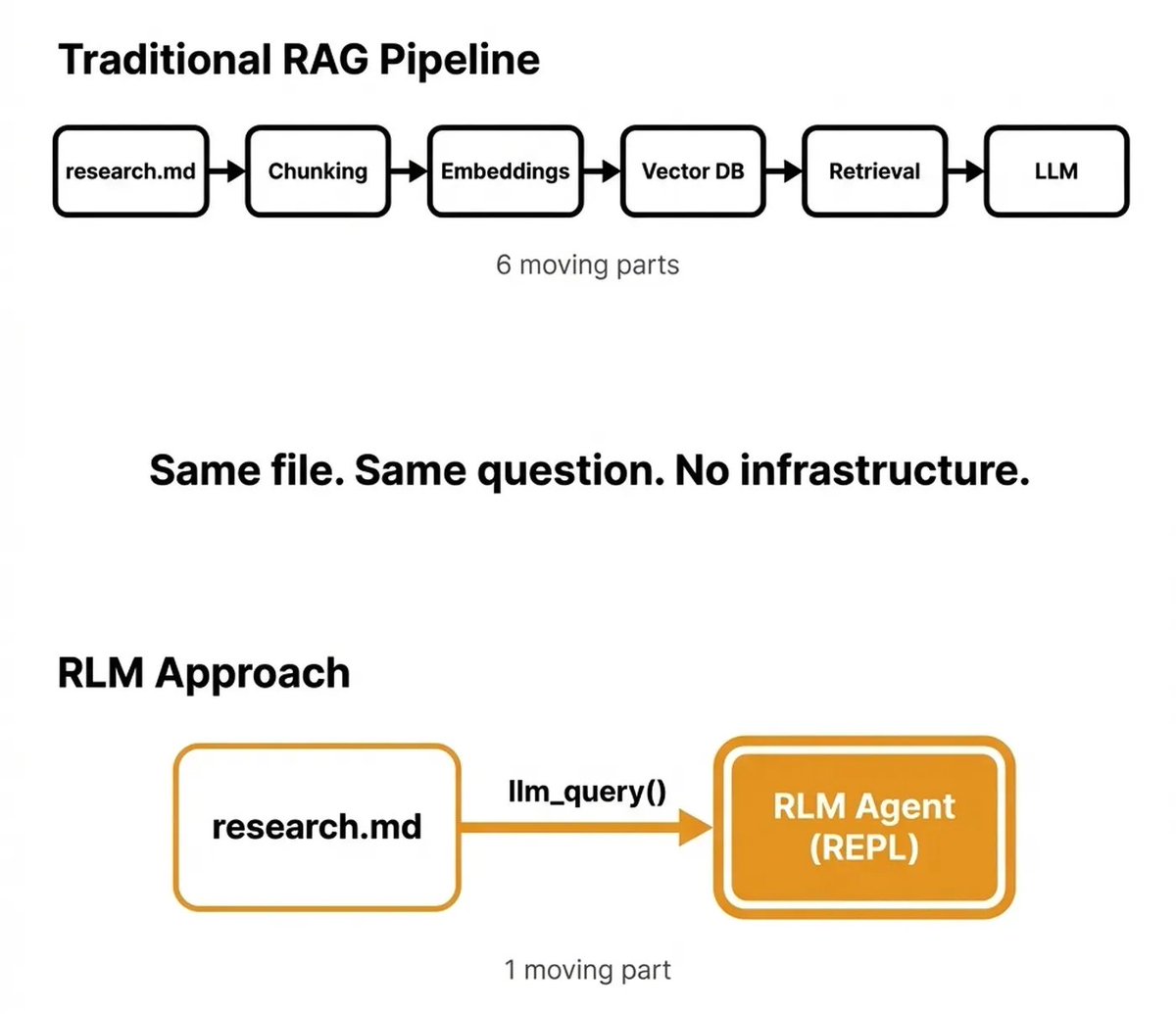
Discussion insight: Replies made the same point in plainer language. A reply to Greg Isenberg's post said the real divide is between people who can set up and run local AI, people who can do robotics, and people who can build an audience; a reply to the Skill-MAS thread asked whether its reflection loop survives distribution shift, which shows interest but also skepticism about orchestration claims.
Comparison to prior day: June 19 focused on runtime trust, governance, and production controls for agents. June 20 moved one step earlier in the stack toward who can coordinate agent work and how orchestration itself can learn.
1.2 Economics and model-market pressure became harder to ignore (🡕)
The day's most forceful economic posts were not about model IQ. They were about whether AI demand can justify current capex, whether cheaper Chinese models can squeeze premium pricing, and whether local hardware is now good enough to replace recurring subscription spend.
@FoamOnTheRunway argued (100 likes, 17 replies, 17,468 views, 50 bookmarks) that the AI bubble has already popped even if semiconductor stocks have not repriced yet, citing falling GPU rental rates, hyperscalers shifting from debt to equity financing, and weaker post-subsidy demand. @C_Barraud wrote (47 likes, 3 replies, 3,399 views, 13 bookmarks) that Chinese models are winning the usage, cost, and adoption battle on OpenRouter, while also noting that token share is not the whole market. Three separate local-compute posts pushed the same cost story from the builder side: @gippp69 summarized (30 likes, 17 replies, 1,360 views, 19 bookmarks) a $400 used-GPU home rig built to replace a $110-$260 monthly hosted stack, @starmexxx claimed (38 likes, 13 replies, 2,660 views, 17 bookmarks) that an M4 Mac mini beat an RTX 5060 Ti in a cited local benchmark, and @0xRicker said (25 likes, 3 replies, 534 views, 21 bookmarks) a Minisforum mini PC could hold 70B and 120B local models in memory.


Discussion insight: Replies split between enthusiasm for lower-cost local setups and skepticism about how much OpenRouter token share says about the whole market. One reply to the OpenRouter thread called it only a tiny slice of total token use, while replies to the Mac mini post focused on power draw and immediate purchase intent.
Comparison to prior day: June 19 already showed builders looking for cheaper test environments and local execution. June 20 escalated that into a broader pricing and monetization narrative spanning semiconductor valuations, API token share, and home-lab replacement math.
1.3 Serious AI deployment talk kept moving into domain and institutional infrastructure (🡕)
The most credible builder posts below the model layer came from teams talking about specific deployment environments: African-language voice systems and military planning. These were not general “AI will change everything” claims; they were stack descriptions tied to concrete operating contexts.
@Abba_kakaa wrote (45 likes, 8 replies, 403 views) that reliable voice AI needs more than speech models: datasets, transcription pipelines, annotation systems, benchmarking, dialect evaluation, retrieval, tool execution, monitoring, and feedback loops. Dialectra's public site backs that up with concrete infrastructure and benchmark numbers including 1,240 verified Hausa hours, 680 Fulfulde hours, 420 Kanuri hours, and post-train WERs of 8.2%, 11.4%, and 13.1% (Dialectra). @shashj quoted (22 likes, 4,842 views) a commander from 9 Deep Recce Strike Brigade saying the HIVEMIND large language model was creating plans in hours instead of days, and the linked British Army Review says Project Asgard let the Strategic Reserve Corps triage masses of data from open source to Above Secret at a previously unimaginable pace and scale (CHACR PDF).
Discussion insight: The common pattern was full-stack thinking. Dialectra's thread explicitly argued that the future winners will understand the whole value chain from speech collection to deployment, while the Army example framed LLM value as planning speed and data triage inside an existing institution rather than as a consumer assistant.
Comparison to prior day: June 19 pushed downstack into dialect data, benchmarks, and power. June 20 extended that same movement into visibly deployed systems: voice infrastructure for African languages and AI-assisted planning for military headquarters.
2. What Frustrates People
Orchestration know-how is still scarcer than model access
Severity: High. @gregisenberg said (230 likes, 44 replies, 7,905 views, 174 bookmarks) that agent setup, local model operations, and distribution are now top-tier skills, which implies that access to models is no longer the main bottleneck. @dair_ai reported (17 likes, 3 replies, 1,243 views, 18 bookmarks) a whole research direction devoted to improving orchestration without retraining weights, and @pauliusztin_ said (15 likes, 3 replies, 791 views, 14 bookmarks) explicitly described retrieval stacks as too complex for some workloads. The coping pattern is specification work, sub-task decomposition, and building reusable orchestration layers. This is worth building for because the pain shows up across research, hiring, and hands-on retrieval architecture.
Hosted AI economics look increasingly brittle
Severity: High. @FoamOnTheRunway argued (100 likes, 17 replies, 17,468 views, 50 bookmarks) that hyperscaler capex economics are deteriorating, while @C_Barraud argued (47 likes, 3 replies, 3,399 views, 13 bookmarks) that good-enough, lower-cost Chinese models are raising pricing pressure. On the builder side, @gippp69 claimed (30 likes, 17 replies, 1,360 views, 19 bookmarks) that a used-GPU home rig can replace a monthly hosted stack, and @starmexxx claimed (38 likes, 13 replies, 2,660 views, 17 bookmarks) that a low-cost Mac mini can beat a discrete GPU in one cited local test. The workaround pattern is local inference, smaller open models, and “good enough” routing instead of always paying for premium closed models. This is worth building for because both market commentators and hands-on users are converging on the same pricing complaint.
Domain deployment still requires too much bespoke infrastructure
Severity: Medium. @Abba_kakaa listed (45 likes, 8 replies, 403 views) the missing pieces behind voice agents: quality datasets, transcription, annotation, benchmarking, dialect evaluation, retrieval, tool execution, and monitoring. @shashj shared (22 likes, 4,842 views) a military example where planning speed improved only after integrating LLM support into an existing command workflow. The current workaround is institution-specific stack building. This is worth building for because the strongest deployment stories still require teams to assemble many layers themselves before end users see value.
3. What People Wish Existed
Reusable orchestration layers that accumulate experience
What people appear to want is not just a stronger base model but a way to preserve workflow knowledge across runs. @dair_ai shared (17 likes, 3 replies, 1,243 views, 18 bookmarks) a system explicitly built to evolve orchestration skill without updating model weights, while @gregisenberg argued (230 likes, 44 replies, 7,905 views, 174 bookmarks) that the scarce labor is now in setting agents up and managing them properly. This is a practical need with direct demand because people are already spending time on the missing layer manually. Opportunity: direct.
Affordable private compute with acceptable performance
The day repeatedly surfaced demand for AI that is private enough and cheap enough to run outside premium subscriptions. @gippp69 described (30 likes, 17 replies, 1,360 views, 19 bookmarks) a home rig built to replace monthly AI bills, @starmexxx shared (38 likes, 13 replies, 2,660 views, 17 bookmarks) a low-power Mac mini benchmark narrative, and @0xRicker said (25 likes, 3 replies, 534 views, 21 bookmarks) that a mini PC can hold much larger local models than users expect. This is a practical need with direct demand, but it will be highly competitive because hardware vendors, routers, and open-model stacks are all converging on it. Opportunity: competitive.
Domain-ready data and deployment stacks
@Abba_kakaa made the case (45 likes, 8 replies, 403 views) that the African voice ecosystem still needs the whole path from collection and labeling to deployment, and the public Dialectra site shows why with concrete dataset and benchmark infrastructure. The Asgard example shared by @shashj pointed (22 likes, 4,842 views) in the same direction for institutions: the model only matters once it is embedded into a workflow that can triage data and accelerate planning. This is a practical need, but it is domain-specific and relationship-heavy rather than one generic product category. Opportunity: direct.
Simpler hybrid knowledge systems for long-context work
@pauliusztin_ argued (15 likes, 3 replies, 791 views, 14 bookmarks) that RLMs can remove parts of the classic retrieval stack for large-file and codebase work, while @DanKornas shared (39 likes, 1 reply, 1,219 views, 36 bookmarks) a still-active toolchain around vector databases, Typesense, LangGraph, MongoDB Vector Search, and RAG evaluation. That combination suggests people still want a simpler architecture that preserves RAG's precision while cutting its operational overhead. Opportunity: competitive.
4. Tools and Methods in Use
| Tool | Category | Sentiment | Strengths | Limitations |
|---|---|---|---|---|
| ChatGPT | LLM assistant | (+/-) | Framed as strong for creative work, coding, and everyday productivity in one comparison matrix | Users explicitly compare it against more specialized tools rather than treating it as a default winner |
| Gemini | LLM assistant | (+/-) | Positioned for Google Workspace integration and updated web data; also part of the low-cost competitive pressure story | Guidance posts imply that many users still prompt it like ChatGPT and miss tool-specific behavior |
| Claude | LLM assistant / coding | (+) | Associated with deep reading, coding, and specification-heavy workflows | Often appears inside broader workflow systems rather than as a complete architecture by itself |
| Perplexity | Research assistant | (+) | Valued for citation-backed research and fact-checking in the comparison image | Treated as one tool in a fragmented stack, not a universal interface |
| OpenRouter | API router / market proxy | (+/-) | Gives visibility into fast-moving model usage and lowers switching friction across vendors | Token share is not the whole market and does not map cleanly to revenue |
| RAG stack (Typesense, LangGraph, MongoDB Vector Search) | Retrieval pipeline | (+/-) | Still actively taught for ingestion, vector search, advanced retrieval, and evaluation | Multiple moving parts and extra infrastructure make it feel heavy for some workloads |
| Recursive Language Models | Reasoning method | (+/-) | Can decompose large-file, codebase, legal, and research tasks without stuffing everything into one context window | Not a full RAG replacement; still slower or more complex for simpler queries |
| Skill-MAS | Multi-agent orchestration framework | (+) | Evolves task decomposition, agent engineering, and workflow orchestration as a reusable skill layer | Research-stage artifact with open questions about robustness and transfer in production |
| Dialectra | Speech data / benchmark platform | (+) | Provides verified dialect-tagged datasets, benchmark suites, analytics, and APIs for African languages | Narrow by design to a specific regional voice-AI problem set |
| Project Asgard / HIVEMIND | Planning decision-support system | (+) | Public evidence says it can triage large data volumes and accelerate planning inside military workflows | Institutional and specialized; not a general-purpose public product |

The overall satisfaction spectrum was pragmatic rather than ideological. Users were not picking a single universal model; they were segmenting tools by task, mixing closed assistants with routers, local hardware, retrieval stacks, and orchestration methods.
The common workaround pattern was stack layering. RAG is still in active use for precise retrieval, but RLM-style decomposition is gaining attention as a way to cut down infrastructure for long-context work. On the cost side, OpenRouter-style routing and local hardware claims both point to the same migration pressure: fewer people want to pay premium prices for every request if a cheaper or local path is good enough.
5. What People Are Building
| Project | Who built it | What it does | Problem it solves | Stack | Stage | Links |
|---|---|---|---|---|---|---|
| Skill-MAS | Hehai Lin et al. | Evolves a reusable meta-skill that designs and orchestrates multi-agent systems across three stages | Teams want orchestration knowledge to compound without retraining the base model each time | Frontier LLMs, multi-trajectory rollout, contrastive reflection, generated MAS code | Alpha | paper, repo, tweet |
| Dialectra | @Abba_kakaa | Builds dialect-aware speech datasets, benchmark suites, analytics, and APIs for African languages | Voice teams need verified local-language data and evaluation before reliable products can ship | Data collection, native-speaker verification, annotation, benchmark engine, APIs | Shipped | tweet, site |
| Project Asgard / HIVEMIND | British Army / CHACR | AI-assisted decision support and planning tools used to triage data and speed military planning workflows | Headquarters need to process large data volumes and produce plans faster | LLM-based planning support, data triage across classifications, HQ workflow integration | Beta | tweet, PDF |
@dair_ai surfaced (17 likes, 3 replies, 1,243 views, 18 bookmarks) the most technically explicit build artifact of the day. The public repo says Skill-MAS evolves a single SKILL.md file that handles task decomposition, agent engineering, and workflow orchestration, then rewrites that skill through multi-round rollout and contrastive reflection. That matters because it turns “agent know-how” into something teams can version and optimize rather than rediscover from scratch.
@Abba_kakaa shared (45 likes, 8 replies, 403 views) a different build pattern: infrastructure for a domain that general-purpose model leaders under-serve. Dialectra's site is explicit about the product surface area, from dialect-tagged corpora and native-speaker verification to benchmark suites, APIs, and deployment-readiness reporting.
@shashj quoted (22 likes, 4,842 views) a rare public institutional example rather than a startup launch. The linked British Army Review describes Project Asgard as a decision-support layer that helped a corps-level planning organization triage data from open source to Above Secret, which makes it one of the clearest public examples of LLM support embedded inside an existing command workflow.
The repeated build pattern was infrastructure over wrappers. The strongest projects were not generic assistant shells; they were orchestration systems, domain datasets, and institution-specific decision layers built around a concrete bottleneck.
6. New and Notable
OpenAI's talent race was framed as an architecture race
@MTSlive wrote (60 likes, 3 replies, 6,815 views, 9 bookmarks) that Noam Shazeer is joining OpenAI after helping build core transformer, scaling, mixture-of-experts, Gemini, Flash, and Gemma work at Google and Character AI. What made the thread notable was not celebrity gossip but the frame: the hire matters because architecture research is still viewed as a decisive lever in recursive self-improvement and frontier-model competition.
Military planning surfaced one of the clearest institutional LLM case studies
@shashj shared (22 likes, 4,842 views) a public military-planning example that cut through the usual enterprise-AI vagueness. The tweet and linked CHACR review tied the value proposition to a concrete outcome: planning in hours instead of days and faster triage of large classified and open-source data flows.
7. Where the Opportunities Are
[+++] Agent orchestration and experience-retention layers — Greg Isenberg's skill-market post, Skill-MAS, and the RLM/RAG discussion all point to the same gap: model access is easy, but reliable decomposition, orchestration, and reusable workflow knowledge are still scarce.
[+++] Cost-aware private and local AI infrastructure — Semiconductor skepticism, OpenRouter pricing pressure, and multiple local-hardware benchmark threads all show demand for lower recurring cost, more privacy, and less dependence on premium hosted inference.
[++] Domain-specific data and deployment stacks — Dialectra and Project Asgard show that real value often appears only after a team solves domain data quality, evaluation, workflow integration, and institutional constraints.
[+] Hybrid retrieval and long-context reasoning systems — The tension between active RAG tooling and RLM-style simplification suggests room for products that preserve retrieval precision while cutting pipeline complexity.
8. Takeaways
- The conversation shifted from “which model is smartest?” to “who can actually operate the stack?” The clearest high-engagement post of the day was about agent setup, local models, robotics, and distribution skill rather than model branding alone. (source)
- AI economics looked more contested than AI capability. Market bears, OpenRouter usage charts, and local-compute benchmark threads all pushed on the same question: how much premium pricing survives once cheaper or local alternatives are good enough. (source)
- Serious builders kept investing below the chatbot layer. Skill-MAS, Dialectra, and Project Asgard all focused on orchestration, data, and workflow integration instead of another general assistant wrapper. (source)
- RAG was not disappearing, but it was being challenged from both sides. One part of Twitter was still teaching vector databases, LangGraph, and evaluation, while another argued that recursive agent-style reasoning can remove part of that stack for long-context work. (source)