Twitter AI - 2026-06-29
1. What People Are Talking About
1.1 Agent runtimes and evaluation businesses moved from demo talk to operating-layer claims (🡕)
The most energetic cluster in the feed was no longer about chat quality alone. It was about whether agent systems can act like durable operating layers for work, and whether evaluation platforms can monetize that shift. Three separate posts supported the same idea: benchmark-led agent runtimes, post-deployment evaluation as a product, and repo-native process layers for multi-agent handoffs.
@kimmonismus argued (273 likes, 22 replies, 53,607 views, 260 bookmarks) that Matrix was the first "AI company" product he had seen that felt less like prompt orchestration and more like an operating layer, citing a GDPval-Bench result where Matrix scored 95.45% versus Codex CLI at 84.9% and Claude Opus 4.7 at 80.3%.

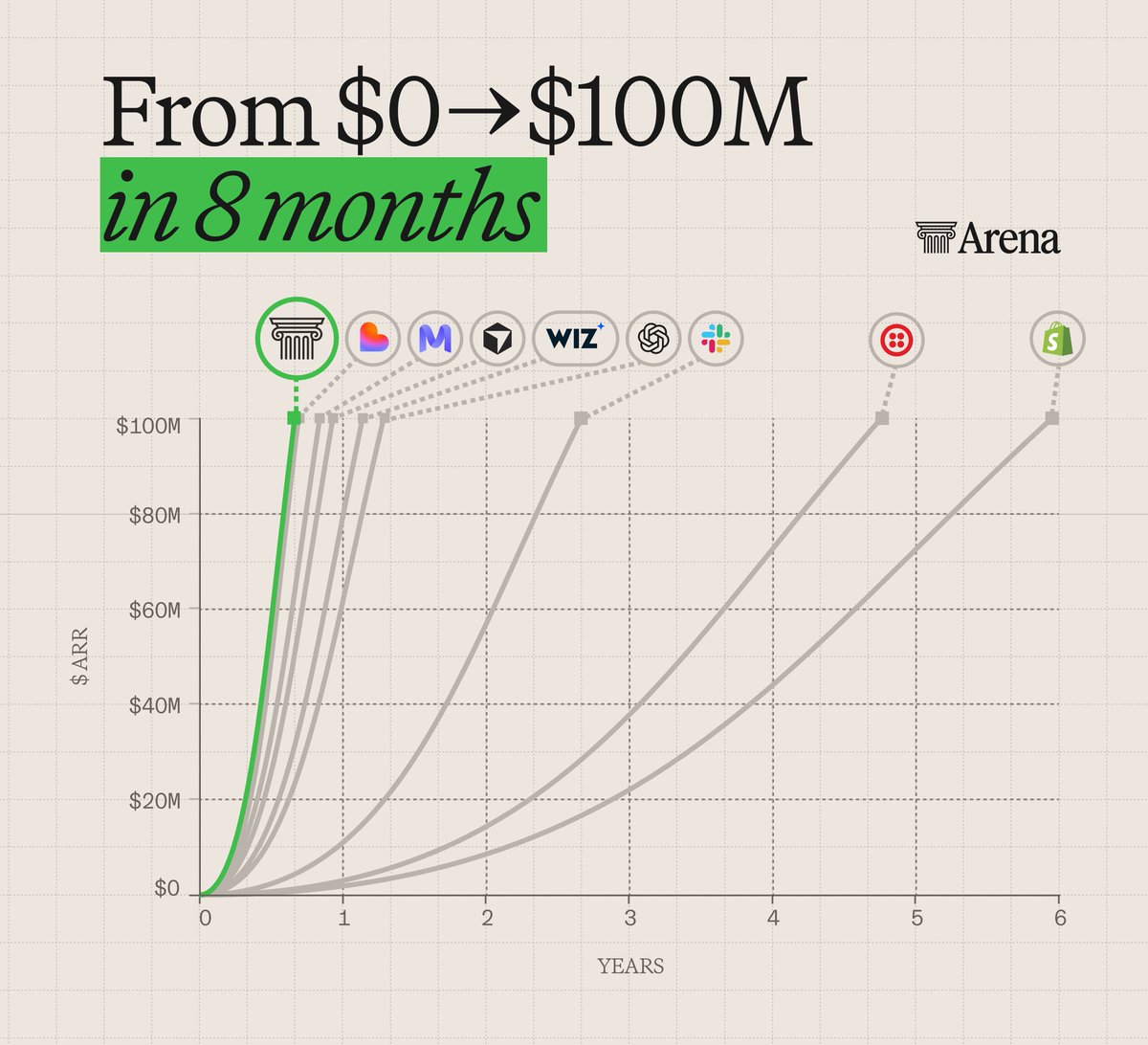
@arena reported (167 likes, 13 replies, 35,451 views, 61 bookmarks) that its evaluation product reached a $100M annual revenue run rate eight months after launch, while the quoted @ml_angelopoulos post added that millions of users are already running long multi-turn agent sessions with hundreds of tool calls and measuring task completion and hallucination rates, not just preference votes.
@Chrismccann shared (1 like, 2 replies, 379 views) an Agent Bootstrap Kit for Claude Code, Codex, and similar agents. The repo frames the project itself as the long-term source of truth through a root agent index, stable docs, and reusable skills so work can move across agents without re-explaining context.
Discussion insight: The strongest pushback came from @VK_ROXy, who replied that coordination benchmarks can collapse when synthetic eval hooks meet production latency and weak state persistence. That makes today's runtime story less "agents are solved" than "evaluation and memory design are now the real competitive surface."
Comparison to prior day: On 2026-06-26, agentic AI discussion centered on cross-functional adoption inside companies. On 2026-06-29, the feed shifted one layer deeper toward infrastructure vendors and runtime products claiming they can operationalize that adoption.
1.2 Verification became the bottleneck in both science and self-improving agents (🡕)
A second theme was that AI generation is no longer the scarce resource. Verification is. The day's strongest evidence came from scientific review tooling and recursive-improvement research, both of which treated evaluation quality as the limiting factor.
@dair_ai highlighted (63 likes, 6 replies, 4,838 views, 67 bookmarks) Google Research's paper on automating scientific review, emphasizing that AI-assisted paper generation is accelerating faster than human review capacity. The attached paper image identified the system as the Paper Assistant Tool (PAT), which ingests full manuscripts and evaluates theory, experiments, and potential flaws.

The paper itself states that PAT improved zero-shot recall on mathematical errors by 34% on the SPOT benchmark and was piloted as a pre-submission tool for STOC and ICML (paper).
@rohanpaul_ai summarized (10 likes, 3 replies, 1,887 views, 4 bookmarks) the Red Queen Godel Machine paper as a way to co-evolve agents with their evaluators instead of keeping benchmarks fixed. The paper says adding an agent-as-a-judge review signal improved coding performance while using 1.35x-1.72x fewer tokens, and increased paper-writing acceptance rates by 1.78x-1.86x.
Discussion insight: A reply to dair_ai from @yagi_dsn distilled the theme crisply: generation without verification is just noise. The replies did not dispute the bottleneck; they argued over where the value will accrue once review infrastructure becomes mandatory.
Comparison to prior day: Verification infrastructure was not a primary story on 2026-06-26. On 2026-06-29 it became explicit, with both Google Research and recursive-agent work treating evaluator quality as the new constraint.
1.3 Open-weight and local coding stacks competed on speed, cost, and autonomy rather than raw reasoning depth (🡕)
The open-weight conversation kept moving away from "which model is smartest" toward "which stack is cheapest and fastest to run in practice." The strongest posts focused on disabling long reasoning traces, serving models faster, and keeping more work local.
@KyleHessling1 announced (140 likes, 19 replies, 6,264 views, 99 bookmarks) Qwopus-3.6-35B-A3B-MTP-Coder as a fast local MoE coding model that shines with thinking disabled, saying it runs at 253 tokens per second on an RTX 5090 and works well in opencode with long, detailed prompts. His follow-up replies linked a model-generated slide deck and an RTS game demo, both presented as proof that the model stays useful even without expensive reasoning traces.
@iam_elias1 claimed (40 likes, 12 replies, 1,384 views, 12 bookmarks) that DeepSeek's DSpark made serving 57%-85% faster per user and improved aggregate throughput by roughly 51%-52% in more representative operating regimes, while open-sourcing the implementation path through DeepSpec. The post explicitly noted that the most dramatic 400% throughput number was a best-case SLA scenario rather than a universal production result.
@martechismktg argued (3 likes, 126 views, 3 bookmarks) that agentic workflows are becoming uneconomic because tool calls keep re-feeding context back into the model. The linked MarTech article quantified a typical daily workflow at 4,000-5,000 tokens per run and more than 100,000 tokens per month, while claiming owned-context filtering can reduce token bills by 60% or more.

Discussion insight: The common complaint was not model incompetence. It was wasted compute: thousands of thinking tokens, repeated context replay, and tool-heavy loops that inflate latency and bills before output quality improves.
Comparison to prior day: On 2026-06-26, local-model enthusiasm centered on sovereignty and access. On 2026-06-29, the evidence got more operational: no-think coding models, speculative decoding efficiency, and context-filtering economics.
1.4 US-China AI competition kept moving from model releases toward infrastructure and export-control blowback (🡕)
The geopolitics theme stayed strong, but the emphasis moved away from individual launches and toward the infrastructure required to sustain leadership. Posts tied open-source distribution, energy capacity, and export-control policy into one argument.
@Yuchenj_UW predicted (272 likes, 21 replies, 10,363 views, 11 bookmarks) that if a Chinese lab beats Fable 5 and GPT-5.6 within a few months, the current panic over bans will look shortsighted. Replies pushed the point further: @VibeCoderOfek argued export controls only buy time if capability itself is scarce, while another reply worried governments may next try to block inference providers.
@kimmonismus argued (109 likes, 18 replies, 9,719 views, 38 bookmarks) that the bigger US vulnerability is infrastructure, not just model policy. He cited China's open-source push, Huawei-based stack independence, and US shortages in data-center and power capacity.

The attached chart turned that argument into numbers: projected AI data-center demand rises from 11 GW in 2024 to 327 GW by 2030, above California's current total power capacity. The reply thread then questioned whether open source can be meaningfully banned once weights are already distributed.
Discussion insight: The interesting divergence was strategic, not ideological. The thread did not simply divide into "pro-China" and "pro-US" camps; it split between people who want tougher restrictions and people who think every restriction accelerates migration to open-weight alternatives.
Comparison to prior day: On 2026-06-26, US-China talk focused more on access controls and reseller economics. On 2026-06-29, the center of gravity moved to power, data-center capacity, and whether export controls make open-source alternatives more attractive.
1.5 Model continuity became a public-governance issue rather than just a customer complaint (🡕)
A fifth theme came from people treating model retirement and access loss as a policy problem, not a support-ticket problem. The #Keep4o campaign supplied the clearest evidence.
@Blue_Beba_ reported (186 likes, 24 replies, 4,156 views, 29 bookmarks) that Keep4o submitted a policy initiative to the UN Digital Cooperation Portal calling for deprecated large language models to be open-sourced as digital public infrastructure. The tweet said the filing included 17 peer-reviewed or preprint studies, 1,380 first-person testimonies, analysis of 61,846 public posts, and a CHI 2026 paper arguing model removal can cause measurable psychological harm.

A second post by @kexicheng (18 likes, 216 views) amplified the same filing and framed it as evidence that AI companies can unilaterally retire models, change terms, or degrade output even when users depend on them for accessibility, healthcare, or daily work.
Discussion insight: The images mattered here. They moved the story from activist narration to procedural proof that the campaign reached a formal institution, which makes the debate harder to dismiss as a purely parasocial reaction to a favorite model disappearing.
Comparison to prior day: On 2026-06-26, Keep4o was still arguing that discontinuation causes harm. On 2026-06-29, the story advanced into documented policy submission with public portal confirmation.
2. What Frustrates People
Long-running agent workflows burn tokens faster than quality improves
Severity: High. The clearest operational complaint in the feed was that tool-rich agent loops are expensive before they are reliable. @martechismktg pointed to a workflow that can exceed 100,000 tokens per month, and the linked MarTech article said a single daily pipeline can consume 4,000-5,000 tokens per run. @KyleHessling1 was effectively optimizing around the same pain point from the model side, praising a coding model that avoids "8k tokens of thinking before a coherent output is actioned." This looks worth building for because the workaround pattern is already visible: owned context stores, smaller draft models, and no-think local models.
AI-generated research is outrunning the human review layer
Severity: High. @dair_ai described review as the real bottleneck in AI-scientist workflows, and the attached PAT paper framed scientific evaluation as a systems problem rather than a referee staffing problem. @rohanpaul_ai reinforced that frustration from another angle: fixed evaluators get stale, easy to game, or too weak to keep recursive agents honest. Current coping strategies are pre-submission tools, reviewer agents, and human-in-the-loop checkpoints, but the feed suggests those are still early rather than settled.
Model continuity and access can disappear without meaningful user recourse
Severity: High. Keep4o's entire filing was built on the frustration that a useful model can be retired, restricted, or degraded by provider choice alone. @Blue_Beba_ cited legal complaints, policy submissions, and peer-reviewed evidence because ordinary product feedback channels were not enough. The frustration is severe precisely because some users frame these models as accessibility or mental-health support tools rather than disposable chat products.
Export controls do not solve infrastructure gaps and may intensify fragmentation
Severity: Medium to High. @Yuchenj_UW and @kimmonismus converged on a similar complaint: policy debates fixate on banning access while compute, power, and data-center buildout remain the harder bottlenecks. The projected 327 GW demand curve in kimmonismus's image made that pain concrete. The workaround people keep proposing is multi-model, multi-geography resilience rather than dependence on one sanctioned provider.
3. What People Wish Existed
Durable access to deprecated frontier models
This was the most explicit ask in the feed. Keep4o wants providers to open-source deprecated models as digital public infrastructure rather than removing them outright. The request is practical, not symbolic: users are asking for continuity, accessibility, and some protection against unilateral model retirement. Opportunity: direct.
Owned-context, multi-model agent systems that survive provider switching
Several items implied the same need from different angles. The MarTech piece argued teams should keep raw context under their control to reduce token costs, Agent Bootstrap Kit treated the repo as the agent's durable memory, and the export-control discussion implied any serious team now needs model-provider redundancy. The gap is a clean product that combines context persistence, cheap retrieval, and easy model swapping without bespoke infrastructure work. Opportunity: direct.
Verification infrastructure for science and self-improving agents
The PAT paper and Red Queen Godel Machine both assume that evaluator quality must improve alongside generator quality. What people seem to want is not another content generator, but reviewer agents, benchmark maintenance tools, adversarial judge panels, and traceable audit loops. This is still competitive because research labs, frontier-model companies, and infra startups are all moving toward it at once. Opportunity: competitive.
4. Tools and Methods in Use
| Tool | Category | Sentiment | Strengths | Limitations |
|---|---|---|---|---|
| Matrix | Agent runtime / benchmarked workflow system | (+/-) | Strong public GDPval-Bench result; framed as a full operating layer for "0-person companies" | Public evidence is benchmark-heavy; reply thread questioned whether synthetic eval gains survive real latency and state-persistence constraints |
| Arena Agent Mode / Arena.ai | Evaluation platform | (+) | Measures task completion and hallucination rates on real multi-turn agent sessions; already scaled to a large user base | Public evidence emphasizes growth and usage more than methodological detail; one reply asked for better local-model transparency |
| Qwopus-3.6-35B-A3B-MTP-Coder | Open-weight coding model | (+) | Fast local inference, strong no-think coding orientation, low-VRAM friendliness, concrete demos in opencode | Mostly self-reported performance claims; limited third-party validation in this dataset |
| DSpark / DeepSpec | Inference acceleration stack | (+) | Focuses on serving efficiency rather than retraining; claims exact-output preservation with faster generation; open-sourced implementation path | Author itself notes the most dramatic throughput number is not representative and there is no third-party reproduction yet |
| Google Paper Assistant Tool (PAT) | Scientific review agent | (+/-) | Concrete review workflow, manuscript-level checking, measurable improvement on math-error recall | Early-stage research/pilot tool; still depends on human oversight and conference-specific deployment |
| Agent Bootstrap Kit | Agent workflow / repo memory template | (+) | Gives teams a repo-native way to preserve shared context across Claude Code, Codex, and future agents | Process layer rather than an execution engine; benefits are durable but less instantly visible than model upgrades |
Overall, the tool mix suggests a satisfaction gradient away from "one bigger model fixes everything." People are actively combining cheaper local models, serving optimizations, repo-based memory, and post-deployment evaluation. The main workaround pattern is to move costly or brittle context out of the model session and into infrastructure the team owns.
5. What People Are Building
| Project | Who built it | What it does | Problem it solves | Stack | Stage | Links |
|---|---|---|---|---|---|---|
| Matrix | @matrix_build | Runtime for launching and coordinating "0-person companies" | Agent coordination and long-task execution | Publicly shown with a Matrix GPT-5.5 harness and GDPval-Bench | Shipped | tweet |
| Arena evaluation product / Agent Mode | @arena | Post-deployment evaluation for long-running agents | Measuring real-world agent quality beyond preference votes | Web platform, community feedback, objective metrics like task completion and hallucination rate | Shipped | tweet, site |
| Qwopus-3.6-35B-A3B-MTP-Coder | @KyleHessling1 | Open-weight coding model tuned for fast local execution | Reducing latency and cost for local coding-agent workflows | MoE architecture, MTP, GGUF distribution, opencode demos | Shipped | tweet |
| Paper Assistant Tool (PAT) | Google Research | Agentic scientific review assistant | Verification debt in AI-accelerated research | Manuscript ingestion, theory/experiment validation, reviewer suggestions | Alpha | tweet, paper |
| Red Queen Godel Machine | Multi-institution research team summarized by @rohanpaul_ai | Co-evolves agents with their evaluators across epochs | Stale benchmarks and weak judges in self-improving systems | Agent-as-a-judge review signal, epoch-based utility updates | Alpha | tweet, paper |
| Agent Bootstrap Kit | @Chrismccann | Template repo with root agent index, docs skeleton, and reusable skills | Context drift when handing work across coding agents and sessions | GitHub template, docs, local skills catalog | Shipped | tweet, repo |
What stands out is that builders are spending more energy on coordination, evaluation, and serving efficiency than on training a brand-new frontier model. Matrix and Arena are productizing the control layer around agents. PAT and Red Queen target the review layer that keeps those agents honest. Qwopus and DSpark show the same economic pressure from the model side: speed and cheaper execution are now product features in their own right.
6. New and Notable
Arena turned agent evaluation into a $100M ARR business in 8 months
@arena (167 likes, 13 replies, 35,451 views, 61 bookmarks) and @ml_angelopoulos (67 likes, 13 replies, 25,290 views, 21 bookmarks) supplied both the milestone and the product thesis: post-deployment evaluation of long-running agents is not niche research anymore.
Keep4o documented a UN Digital Cooperation Portal submission
The screenshots in @Blue_Beba_'s post are the day's clearest governance artifact. They show the campaign reaching a formal policy portal rather than staying confined to social protest.
Google Research framed scientific review as agent infrastructure
The PAT paper made "review stack" language concrete by naming a tool, showing the first page, and reporting benchmark gains. That is a stronger signal than generic claims about AI doing science faster.
DSpark framed inference efficiency as open infrastructure, not just a private serving trick
@iam_elias1 turned a serving-stack optimization into a community signal by emphasizing that DeepSpec was released openly rather than kept inside a proprietary API.
7. Where the Opportunities Are
[+++] Verification infrastructure for agentic work — PAT, Red Queen Godel Machine, and the reply discourse around "verification debt" all point to the same gap: evaluator agents, reviewer panels, benchmark upkeep, and audit loops that keep autonomous systems trustworthy once they leave toy tasks.
[+++] Owned-context, multi-model operations for teams — Token inflation, provider fragmentation, and repo-memory tools all suggest a strong opening for platforms that keep context outside the model, route across providers, and preserve continuity across long-running work.
[++] Model continuity and deprecation insurance — Keep4o's UN filing shows real demand for products or policies that preserve access when providers retire or restrict useful models. This is especially strong in accessibility- and support-heavy use cases.
[++] Inference-efficiency tooling for open-weight deployments — Qwopus and DSpark both show that speed and hardware efficiency are becoming first-order buying criteria. Teams want cheaper local or self-hosted performance without surrendering output quality.
[+] Infrastructure planning for cross-border AI resilience — The export-control and power-capacity discussion implies a longer-horizon opportunity around multi-region model strategy, local hosting, and compute planning that assumes policy fragmentation will persist.
8. Takeaways
- The control layer around agents is becoming a business, not just a benchmark category. Matrix and Arena were the clearest evidence that runtime design and post-deployment evaluation are now distinct product markets. (source)
- Verification is replacing generation as the scarce resource in high-end AI workflows. Google's PAT paper and the Red Queen Godel Machine both treated weak evaluators as the problem to solve next. (source)
- Open-weight progress is being sold on economics as much as intelligence. Qwopus emphasized low-latency no-think coding, while DSpark emphasized faster serving without changing model outputs. (source)
- US-China AI competition now looks inseparable from power and hosting capacity. The strongest infrastructure image in the feed projected AI data-center demand reaching 327 GW by 2030, pushing the debate beyond model releases or bans. (source)
- Model retirement is becoming a governance question. Keep4o's portal-confirmed UN submission shows that continuity, accessibility, and deprecation policy are entering formal institutions. (source)