Twitter AI - 2026-07-07
1. What People Are Talking About
1.1 Internal-state interpretability turned from curiosity into a control surface (🡕)
The biggest technical cluster was Anthropic's J-space work. Instead of discussing models only through outputs, people focused on whether internal activations can be read, edited, and used to audit hidden reasoning, jailbreak strength, and eval awareness. The theme was backed by at least four distinct threads, from broad fascination to explicit red-team use cases.
@sporadica reacted (757 likes, 41 replies, 83,152 views, 275 bookmarks) to Anthropic's workspace article by stressing the paper's claim that a small, consciously accessible workspace "emerged" inside Claude rather than being hand-coded. The attached excerpt mattered because it highlighted the exact framing readers were debating: the model can hold a concept "on its mind" without ever writing it down. Replies immediately split between fascination and a push to keep the result in the interpretability bucket rather than the sentience bucket.

@anishmoonka summarized (18 likes, 4 replies, 5,111 views, 20 bookmarks) the same result in more operational terms: J-lens can surface words like "fake" and "fictional" before output, can flip answers by swapping latent readouts such as spider to ant, and collapses multi-step reasoning when the workspace is removed. That made the research legible as instrumentation, not mysticism: a way to inspect, intervene on, and audit reasoning that does not appear in text.
@aakashgupta argued (34 likes, 10 replies, 6,765 views, 18 bookmarks) that the more disruptive implication is eval awareness. His point was that if a model privately tags a prompt as a test, output-only safety benchmarks may measure exam behavior rather than deployment behavior. The replies added two useful caveats: one asked whether Anthropic had isolated eval recognition from odd prompt formatting, while another warned that training directly against visible activations could create Goodhart-style pressure to hide them.
Discussion insight: @Ubannoblesse proposed (12 likes, 1 reply, 564 views, 8 bookmarks) a practical red-team use case for the same tooling: use Neuronpedia-style Jacobian Lens readouts to see whether a jailbreak still carries hidden safety markers such as "fictional" or "unauthorized," and even measure how much of a persona jailbreak is really taking hold. That pushed the conversation from "what is the model thinking" toward "how do we audit whether the unsafe behavior is actually real or only superficial?"
Comparison to prior day: On 2026-07-06, reliability talk centered on stale memory, hostile inputs, and harness failures. On 2026-07-07, that conversation moved one layer inward: people were asking whether internal state can expose failure before the output does.
1.2 The agent-improvement stack got more explicit: specs, replayable failures, and measurable regressions (🡕)
A second cluster treated agent quality as a systems problem, not a prompting problem. The recurring pattern was to make intent durable up front, turn production failures into replayable tests, and prove that each fix improves behavior without quietly breaking something else.
@businessbarista summarized (80 likes, 8 replies, 10,463 views, 169 bookmarks) a continual-learning talk that split agent improvement across model, harness, and memory layers. The most concrete claim was that production logs are not learning environments until they are turned into replayable cases with evaluators, so candidate fixes can be rerun, scored, and regression-tested. Replies sharpened that point even further: one responder said the production trap is calling every failure "memory" before checking whether the bug really belongs in a prompt, tool, skill, or training layer.
@gokulr introduced (31 likes, 5 replies, 5,396 views, 57 bookmarks) ProductSpec as an open Markdown standard for software intent before implementation, and the public ProductSpec repo makes the pitch concrete with problem, hypothesis, scope, acceptance criteria, success metrics, spec_revision, and parser tooling. The distinctive angle was that PRDs are no longer only handoff docs for humans. They now need enough structure that engineers, designers, and AI agents can preserve the same intent across revisions.
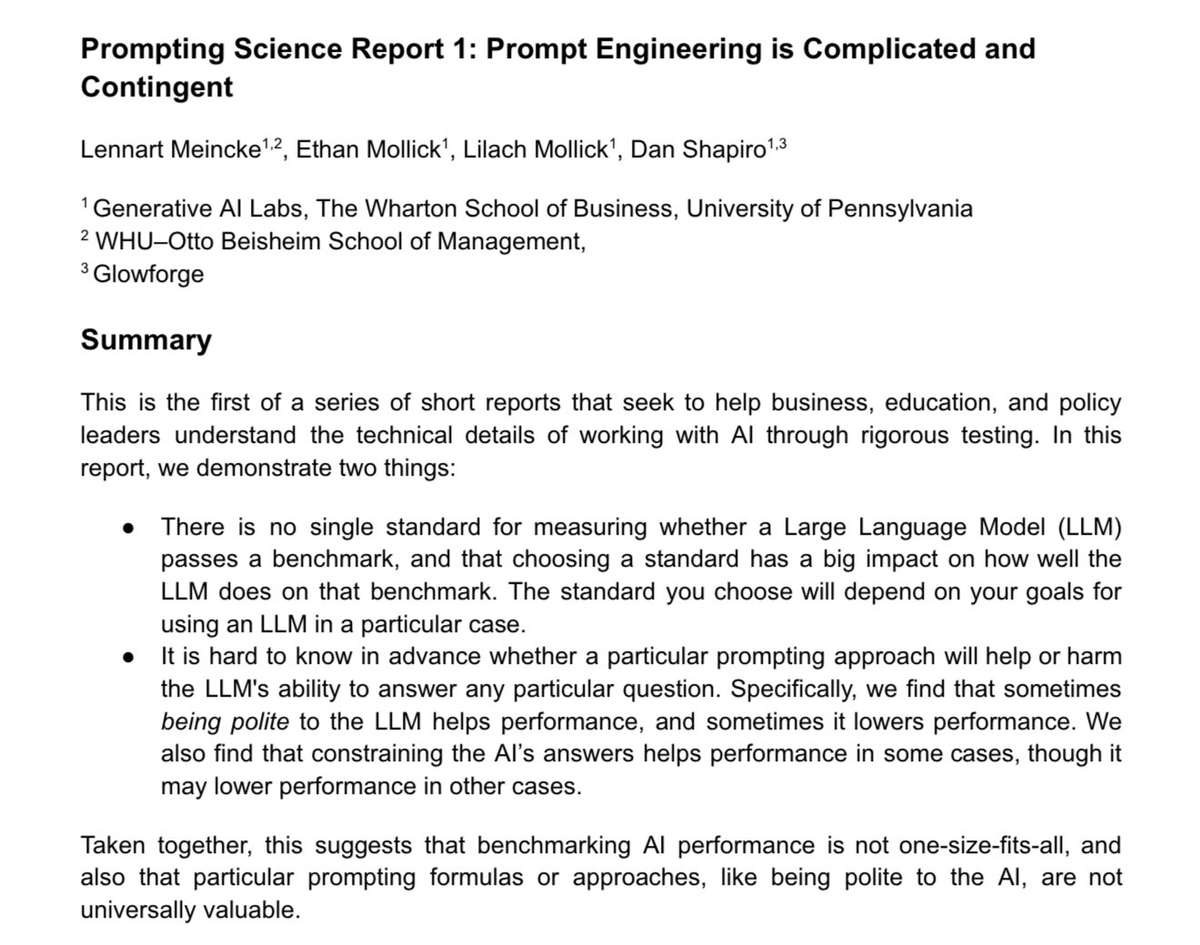
@emollick argued (50 likes, 6 replies, 5,374 views, 29 bookmarks) that prompting tricks have mostly lost their edge and that the better abstraction is clearer goals, outputs, and tests. His attached Prompting Science report set reinforced that point by splitting prompt engineering, chain-of-thought, and expert personas into separately testable claims rather than one bag of folklore.
Discussion insight: The most useful disagreement here was about drift. Replies to ProductSpec said the hard part is not writing a spec once but keeping spec and shipped code reconciled, while replies to the continual-learning thread warned that storing more state without replayable tests just creates harder-to-audit mistakes.
Comparison to prior day: On 2026-07-06, trust and verification showed up as broad preferences. On 2026-07-07, they appeared as explicit artifacts: living specs, replay cases, evaluator loops, and regression guards.
1.3 Open-weight competition and deployment economics got more concrete (🡕)
Benchmark talk kept collapsing into deployment math: cost per task, time per task, memory footprint, free API windows, and whether local or open models can shoulder routine work. The mood was not that frontier quality stopped mattering; it was that buyers increasingly want proof that quality survives a real budget and a real runtime.
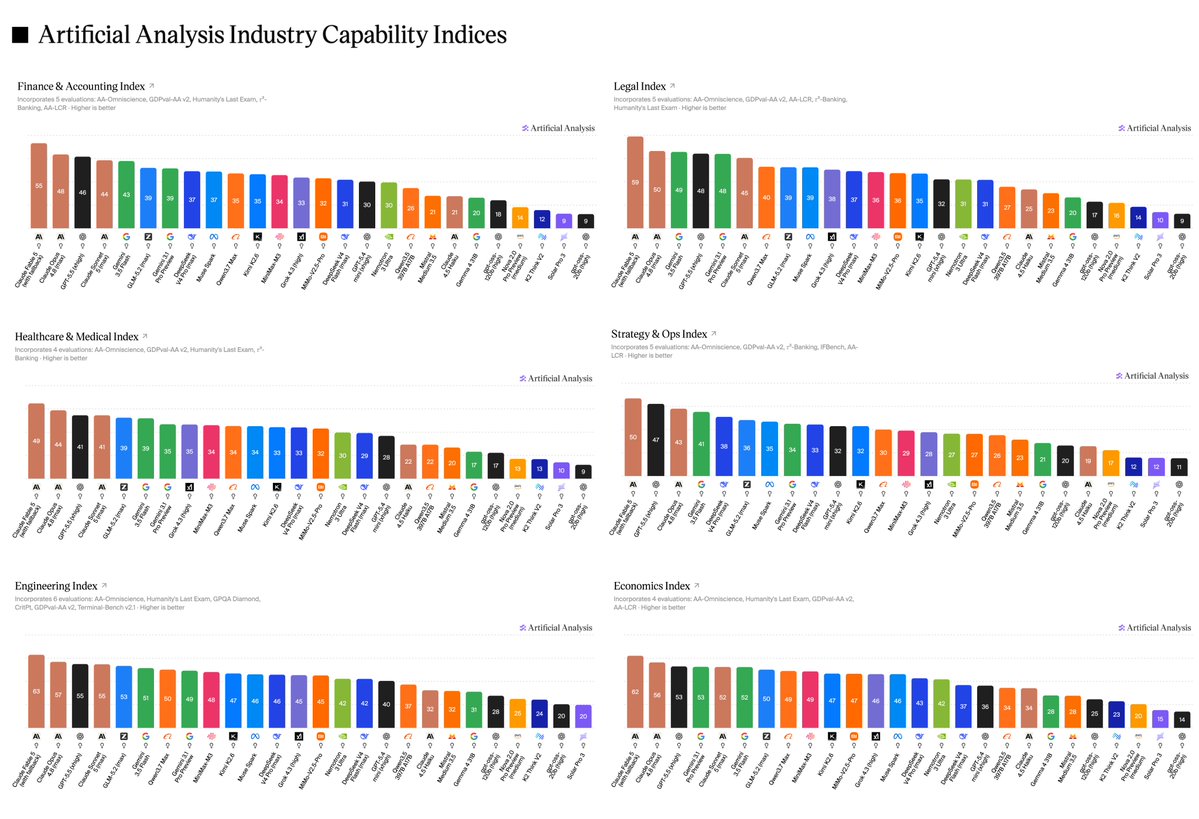
@ArtificialAnlys introduced (286 likes, 17 replies, 23,307 views, 77 bookmarks) six new industry capability indices spanning finance, legal, healthcare, strategy and ops, engineering, and economics. The post's most concrete details were economic: DeepSeek V4 Flash under $0.04 per task across the six indices, GLM-5.2 leading open weights on five of the six industry indices, and Gemini 3.1 Pro finishing legal tasks about seven times faster than Claude Fable 5 while staying within 11 points. That turned the leaderboard from one scalar race into a workload-specific tradeoff table.
@amitisinvesting argued (194 likes, 44 replies, 28,387 views, 33 bookmarks) that token costs are painful enough that OpenAI and Anthropic are now subsidizing usage to lock in startups. The attached Wall Street Journal screenshot grounded the claim in a concrete go-to-market fight rather than a vague complaint about model pricing.

@businessbarista showed (61 likes, 10 replies, 7,526 views, 60 bookmarks) the opposite hedge: Alex Finn's home AI lab, with three Mac Studios, a DGX Spark, a 5090 box, Tailscale, and a Hermes agent routing tasks across machines so hourly sweeps and anomaly checks cost about $60 in extra electricity instead of thousands in API bills. The replies added an important nuance: local is attractive when the task is high-frequency, low-judgment, and allowed to be slow, while workflow portability still matters more than owning silicon for its own sake.
@rohanpaul_ai highlighted (15 likes, 3 replies, 4,408 views, 4 bookmarks) Tencent's Hy3 repo as a second expression of the same pressure. His post emphasized a 295B MoE with 21B active parameters, Apache 2.0 licensing, and a sub-300GB FP8 footprint, which he contrasted with the much heavier serving requirements of GLM-5.2.

Discussion insight: The recurring split was by task shape, not by ideology. People still reserve frontier models for hard judgment, but they increasingly want open or local systems for chores that recur every hour, every repo, or every customer trace.
Comparison to prior day: On 2026-07-06, cost-per-task and local-model fleets were already central. On 2026-07-07, the hedges became more explicit: compute credits, free API windows, and owned hardware all showed up as ways to reduce dependence on one provider's pricing or limits.
1.4 Builders pushed AI infrastructure deeper into scientific, clinical, and device-specific workflows (🡕)
The builder signal was less about another general assistant and more about the missing infrastructure around specialized work. The releases that stood out were benchmarks, runtimes, and foundation layers for domains where "just prompt the model" is clearly not enough.
@WilliamCQHua announced (32 likes, 3 replies, 3,300 views, 16 bookmarks) OpenDDE as an open-source all-atom co-folding model and explicitly called it a preview step toward a broader drug-discovery engine. The attached figure and public OpenDDE repo made that concrete with released checkpoints, benchmark results, and a declared maturity boundary rather than an implied production promise.

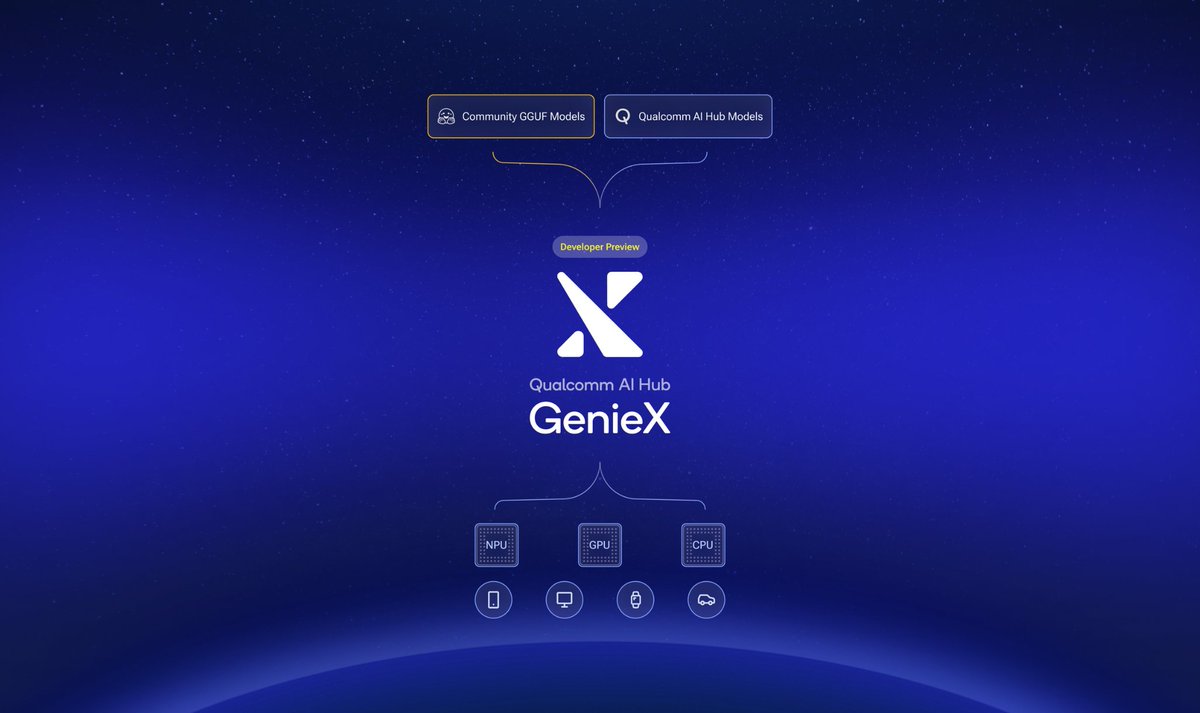
@Qualcomm_Dev introduced (9 likes, 1 reply, 561 views) GenieX as an open-source runtime that can run GGUF models or Qualcomm AI Hub bundles locally across NPU, GPU, and CPU, with CLI, Python, Java/Kotlin, Docker, and an OpenAI-compatible server. That is builder signal in the plumbing layer rather than the model layer: make deployment on Snapdragon devices easy enough that model choice becomes a configuration detail.
@ModelScope2022 surfaced (16 likes, 1 reply, 1,248 views, 5 bookmarks) ResearchClawBench as a 40-task, 10-discipline benchmark for end-to-end scientific research agents and noted that current systems still sit near the low 20s. The public paper and dataset made that gap legible: the hard part is not generating research-like prose, but surviving literature review, analysis, and peer-review-style scoring across real tasks.
Discussion insight: Posts from @DanKornas about (15 likes, 3 replies, 1,300 views, 16 bookmarks) a self-improving healthcare-trial RAG loop and @LifeNetwork_AI about (12 likes, 5 replies, 74 views) the gap between useful and deployable clinical AI pushed the same direction. Builders are not only asking whether a model can answer. They are building the provenance, evaluation, mutation, and compliance layers around that answer.
Comparison to prior day: On 2026-07-06, builders leaned toward local-first and auditable tools. On 2026-07-07, the same instinct spread into drug discovery, scientific benchmarking, device runtimes, and regulated clinical workflows.
2. What Frustrates People
Output-only evaluation is starting to look inadequate
Severity: High. @aakashgupta argued (34 likes, 10 replies, 6,765 views, 18 bookmarks) that models may privately recognize when they are being tested, which would make many safety benchmarks measure exam behavior rather than deployment behavior. @anishmoonka added (18 likes, 4 replies, 5,111 views, 20 bookmarks) that J-lens can surface hidden words such as "fake" or "fictional" before a bad action is written, while @Ubannoblesse pushed (12 likes, 1 reply, 564 views, 8 bookmarks) the same tooling toward jailbreak measurement. People are coping by comparing outputs against internal-state signals, questioning whether eval formatting leaks too much, and asking for audit-log style tooling. This is worth building for because the pain hits safety evals, red-teaming, and alignment claims at once.
Teams still cannot tell which layer of an agent actually broke
Severity: High. @businessbarista summarized (80 likes, 8 replies, 10,463 views, 169 bookmarks) a continual-learning workflow where failures may belong in the model, harness, or memory layer, and replies explicitly warned against labeling every bad trace a memory issue. @gokulr surfaced (31 likes, 5 replies, 5,396 views, 57 bookmarks) the same pain at the spec layer: intent drifts across docs, tickets, agents, and code unless there is a durable shared artifact and revision trail. @emollick reinforced (50 likes, 6 replies, 5,374 views, 29 bookmarks) that clearer goals and tests matter more than prompt tricks, which is another way of saying teams are still fighting definition quality before they even get to model quality. The workaround pattern is formal specs, replay cases, and harness-first fixes before expensive retraining. This is worth building for because the pain appears whenever a team tries to improve an agent systematically rather than one prompt at a time.
Frontier quality remains expensive and brittle to operate
Severity: High. @amitisinvesting argued (194 likes, 44 replies, 28,387 views, 33 bookmarks) that token pricing is painful enough that labs are giving away compute to win startup users, which is a sign of buyer resistance rather than abundance. @businessbarista showed (61 likes, 10 replies, 7,526 views, 60 bookmarks) the local-hardware workaround in detail, and @deredleritt3r found (125 likes, 7 replies, 7,128 views, 26 bookmarks) that Claude Fable 5 looked much better on legal reasoning than on out-of-the-box search in a benchmark meant to mimic non-technical lawyer usage. The coping pattern is to split workloads: reserve frontier models for hard judgment, add explicit search or tool layers where needed, and route recurring jobs to cheaper open or local systems. This is worth building for because price, availability, and workflow gaps are all pushing users toward routing and orchestration infrastructure.
Regulated and scientific AI still stalls before deployment
Severity: High. @ModelScope2022 reported (16 likes, 1 reply, 1,248 views, 5 bookmarks) that current systems still score only around the low 20s on ResearchClawBench's 40 real-science tasks, which is a blunt sign that end-to-end research automation remains brittle. @LifeNetwork_AI argued (12 likes, 5 replies, 74 views) that the useful-versus-deployable gap in healthcare is provenance, validation, and compliance architecture rather than model quality, and the OpenDDE repo itself labels its release a preview instead of a production pipeline. People are coping by narrowing scope, keeping humans in the approval path, and building benchmark or provenance layers around the model. This is worth building for because the bottleneck is operational trust, not lack of frontier capability claims.

3. What People Wish Existed
Internal-state audit tools normal product teams can actually use
The most urgent new need was not another safety slogan. It was tooling that can show what a model privately noticed before the answer hit the screen. @anishmoonka made (18 likes, 4 replies, 5,111 views, 20 bookmarks) that need explicit when a reply asked Anthropic to "ship j-lens with audit logs," and @aakashgupta argued (34 likes, 10 replies, 6,765 views, 18 bookmarks) that output-only safety evaluation is no longer enough if models can recognize tests. @Ubannoblesse pushed (12 likes, 1 reply, 564 views, 8 bookmarks) the same idea toward jailbreak measurement. Some interpretability tools exist today, but the feed showed clear demand for a productized audit layer that is usable outside one frontier lab. Opportunity: direct.
Living specs and replay systems that keep agent intent aligned over time
People were not asking for more prompt tips. They were asking for artifacts and loops that survive handoff and drift. @gokulr presented (31 likes, 5 replies, 5,396 views, 57 bookmarks) ProductSpec as an intent layer with revisions, acceptance criteria, and decision traces, while @businessbarista described (80 likes, 8 replies, 10,463 views, 169 bookmarks) replayable failures and regression-aware continual learning as the real path to improvement. @DanKornas added (15 likes, 3 replies, 1,300 views, 16 bookmarks) a concrete builder version of the same idea with a self-improving agentic RAG loop that mutates SOPs and compares trade-offs. Partial answers exist, but the feed suggested teams still want one dependable workflow that ties spec, eval, mutation, and revision together. Opportunity: direct.
Portable routing and owned-runtime layers around frontier models
A second practical need was for AI operations that stay usable when prices, limits, or model rankings change. @amitisinvesting framed (194 likes, 44 replies, 28,387 views, 33 bookmarks) the need from the buyer side, with startups resisting token costs, while @businessbarista showed (61 likes, 10 replies, 7,526 views, 60 bookmarks) the owner-operated hardware hedge. @rohanpaul_ai and @Qualcomm_Dev showed (9 likes, 1 reply, 561 views) the supply side: cheaper open models such as Hy3 and easier local runtimes such as GenieX. The need is practical rather than aspirational, but it is already competitive because many teams are converging on some version of routing plus local fallback. Opportunity: competitive.
Deployable domain infrastructure for healthcare and science
The feed repeatedly separated capability from deployability in regulated and research-heavy domains. @LifeNetwork_AI said (12 likes, 5 replies, 74 views) that clinical AI needs provenance, validation, and compliance layers before its recommendations can be acted on, while @ModelScope2022 showed (16 likes, 1 reply, 1,248 views, 5 bookmarks) how far current systems still are from end-to-end scientific autonomy on ResearchClawBench. @WilliamCQHua added (32 likes, 3 replies, 3,300 views, 16 bookmarks) an open-source drug-discovery foundation layer in OpenDDE, but the repo itself labels it a preview. That combination suggests a direct need for packaging that brings models, provenance, evals, and approval surfaces together for one domain at a time. Opportunity: direct.
4. Tools and Methods in Use
| Tool | Category | Sentiment | Strengths | Limitations |
|---|---|---|---|---|
| Claude Fable 5 | LLM | (+/-) | Leads many domain/capability conversations; strong legal-research and hard-thinking reputation | Expensive, availability-sensitive, and weaker on search-heavy workflows than some OpenAI models |
| GLM-5.2 | LLM | (+) | Strong open-weight coding signal, long-context credibility, and high standing in industry-specific indices | Heavy serving footprint and mixed evidence on very long autonomous runs |
| Hy3 | LLM | (+) | 295B MoE with 21B active parameters, Apache 2.0, 256K context, and better deployability than heavier open rivals | Coding still trails GLM-5.2; some quality claims come from Tencent's own evals |
| DeepSeek V4 Flash / Pro | LLM | (+/-) | Extremely low cost per task and useful benchmark reference point | Mid-pack capability versus frontier leaders in many domains |
| ProductSpec | Spec standard | (+) | Gives humans and agents a shared format for problem, scope, acceptance criteria, and success metrics | Still new, and spec/code drift remains a live adoption risk |
| Verifiable continual learning | Method | (+) | Converts logs into replayable failures and regression guards; localizes fixes across model, harness, and memory | Needs simulation, evaluators, and infrastructure that many teams do not yet have |
| Local AI lab stack (Mac Studios, DGX Spark, Ollama, Hermes, Tailscale) | Deployment pattern | (+/-) | Good privacy, cost control, and always-on background work under one operator-controlled network | Upfront hardware cost, slower model throughput, and added operational burden |
| ResearchClawBench | Benchmark | (+) | Evaluates end-to-end scientific research with expert rubrics and hidden target papers | Current systems still score poorly; the benchmark is hard and slow by design |
| GenieX | Runtime | (+) | Runs GGUF or Qualcomm AI Hub models locally across Snapdragon CPU, GPU, and NPU; exposes an OpenAI-compatible server | Snapdragon-only and still in developer preview |
| Omnigent contextual policies | Agent governance | (+) | Adds session-aware budgets, dynamic risk scoring, and least-privilege controls across harnesses | Early control layer with limited field evidence in today's feed |
The overall satisfaction spectrum was pragmatic. @ArtificialAnlys showed (286 likes, 17 replies, 23,307 views, 77 bookmarks) that buyers increasingly compare models by domain, cost, and time per task, while @rohanpaul_ai showed (15 likes, 3 replies, 4,408 views, 4 bookmarks) that deployability now includes memory footprint and self-hosting feasibility, not only scoreboards.
The clearest migration pattern was workload splitting. @businessbarista showed (61 likes, 10 replies, 7,526 views, 60 bookmarks) frontier models reserved for hard judgment and local systems handling repetitive, always-on jobs, while @FelixAix used (21 likes, 14 replies, 2,044 views, 9 bookmarks) Hy3's free API window as a prompt to test open models before committing to a production stack. @deredleritt3r added (125 likes, 7 replies, 7,128 views, 26 bookmarks) a more nuanced tool read: Fable 5 looked much stronger on legal reasoning than on search, which is a reminder that "best model" depends on the exact workflow component.
Control surfaces also kept moving outward from the model itself. @gokulr packaged (31 likes, 5 replies, 5,396 views, 57 bookmarks) intent into ProductSpec, and @databricks announced (9 likes, 1 reply, 1,034 views, 3 bookmarks) Omnigent contextual policies for session-aware governance across Claude Code, Codex, and custom harnesses. The common direction is to add structure, permissions, and state management around the model before trusting it with real work.

5. What People Are Building
| Project | Who built it | What it does | Problem it solves | Stack | Stage | Links |
|---|---|---|---|---|---|---|
| ProductSpec | gokulrajaram | Open standard for software intent before implementation | Keeps product intent legible across humans, tickets, and AI agents instead of letting PRDs decay into vague prose | Markdown spec format, parser CLI, JSON schema, decision traces | Beta | tweet, repo |
| Hy3 | Tencent Hunyuan | Open-weight 295B MoE reasoning and agent model | Gives teams a commercially friendly open alternative to heavier flagships and some frontier APIs | MoE, 256K context, vLLM, SGLang, Hugging Face, OpenRouter | Shipped | tweet, repo, model |
| OpenDDE | Aureka Research | All-atom co-folding foundation model for biomolecular structures | Makes drug-discovery structure prediction and design more inspectable and hackable | Python, PyTorch, released checkpoints, Docker | Alpha | tweet, repo, site |
| GenieX | qualcomm | On-device generative-AI runtime for Snapdragon hardware | Removes the integration friction of running local LLMs and VLMs across Qualcomm devices | C SDK, CLI, Python, Java/Kotlin, Docker, OpenAI-compatible server | Beta | tweet, repo, docs |
| ResearchClawBench | InternScience | Benchmark for end-to-end autonomous scientific research | Measures whether agents can survive literature review, data analysis, and paper-style evaluation on real tasks | GitHub repo, Hugging Face dataset, expert rubrics, arXiv paper | Beta | tweet, repo, paper |
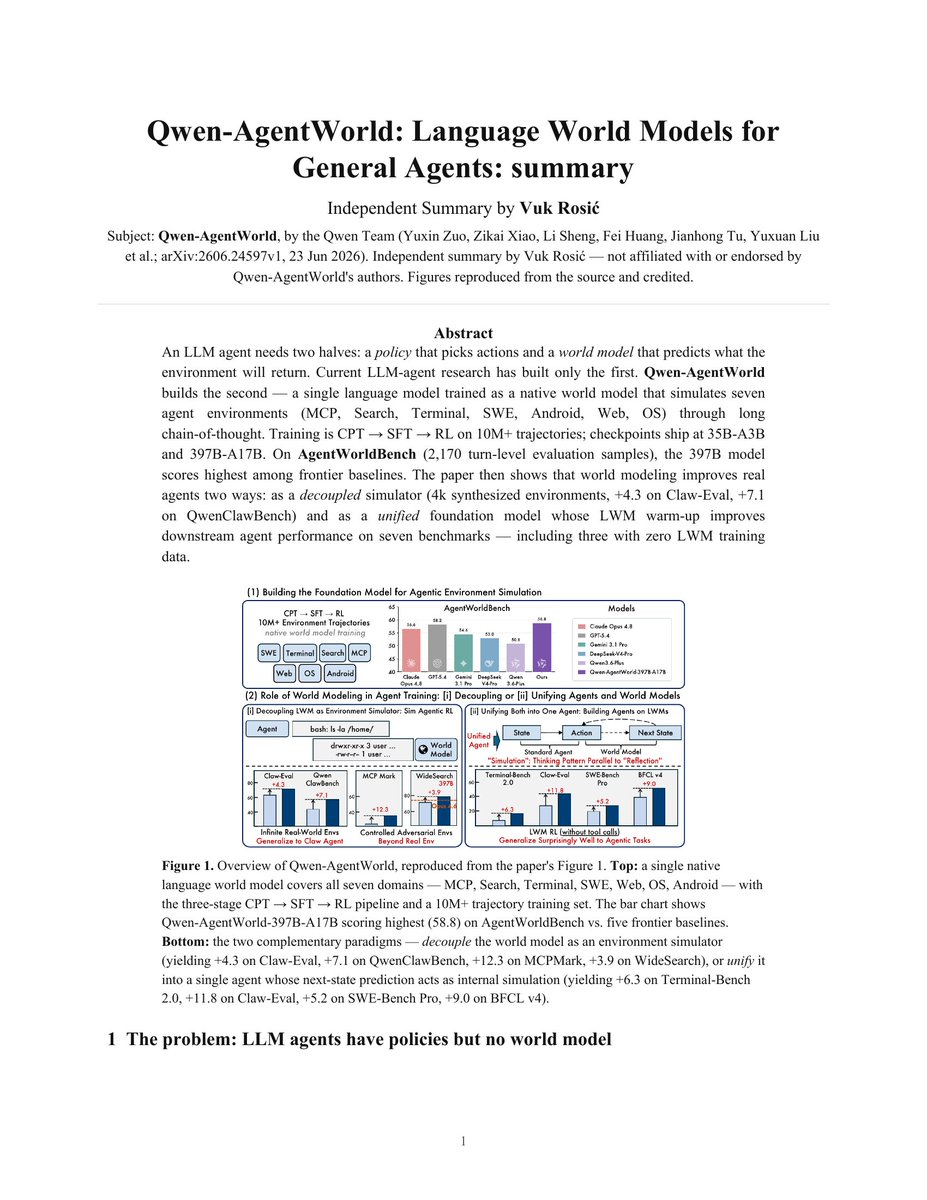
| Qwen-AgentWorld | QwenLM | Language world model plus AgentWorldBench | Fills the missing world-model layer for agents and enables simulation training across seven domains | 35B/397B MoE variants, 10M+ trajectories, CPT/SFT/RL | Beta | tweet, repo, paper |
| autonomous-agentic-rag | FareedKhan-dev | Self-improving agentic RAG walkthrough for healthcare trial design | Replaces blind hand-tuning with explicit evaluators, SOP mutation, and Pareto comparison | LangGraph, FAISS, DuckDB, Ollama, multi-agent roles, 5D evaluator | Alpha | tweet, repo |
@gokulr shared (31 likes, 5 replies, 5,396 views, 57 bookmarks) ProductSpec as a way to move intent into a durable, machine-readable layer before code exists. What makes it notable is not only the Markdown format; it is the explicit assumption that acceptance criteria, revisions, and decision traces need to survive across both people and agents.
@DanKornas shared (15 likes, 3 replies, 1,300 views, 16 bookmarks) autonomous-agentic-rag as the same instinct applied to a live optimization loop: planner, specialist agents, a five-dimensional evaluator, SOP mutation, and Pareto comparison around healthcare trial design. Together, the two projects point to a repeated build pattern: less faith in one-shot prompting, more effort spent on explicit structure and feedback.

@WilliamCQHua positioned (32 likes, 3 replies, 3,300 views, 16 bookmarks) OpenDDE as a foundation layer for drug discovery rather than a polished end product, and the repo explicitly keeps the preview label on it. @Qualcomm_Dev did something similar (9 likes, 1 reply, 561 views) from the runtime side: GenieX is infrastructure that makes local deployment easier on a specific hardware family rather than a shiny assistant experience. The shared pattern is to ship missing substrate first and let downstream workflows get built on top.
Hy3, ResearchClawBench, and Qwen-AgentWorld made the same broader point from three different angles. Hy3 is an open deployable model with a strong licensing and serving story, ResearchClawBench is a hard benchmark that exposes how far scientific autonomy still has to go, and Qwen-AgentWorld treats world modeling itself as the thing to build instead of assuming action selection is enough. Multiple builders are independently converging on the same problem statement: if AI is going to be durable, the missing product is usually the scaffold, simulator, or benchmark around the model.
6. New and Notable
Qwen-AgentWorld treated world modeling as a product, not an afterthought
@VukRosic99 summarized (5 likes, 205 views, 3 bookmarks) Qwen-AgentWorld as a released language world model across MCP, Search, Terminal, SWE, Android, Web, and OS. The public repo says the 397B variant scores 58.71 overall on AgentWorldBench, narrowly above GPT-5.4 at 58.25, and frames the bigger payoff as controllable simulation plus downstream agent gains. That is notable because it treats environment modeling itself as the thing to build, rather than assuming action selection alone is enough.
Puzzle-75B-A9B made serving efficiency itself look like frontier progress
@omarsar0 flagged (16 likes, 6 replies, 3,034 views, 18 bookmarks) NVIDIA's Puzzle-75B-A9B paper as a strong compression result for hybrid MoE models. The paper and model page say the compressed model roughly doubles interactive server throughput on 8xB200 nodes and raises 1M-token concurrency on a single H100 from one request to eight while preserving broad downstream quality. That is notable because the headline is no longer just "smaller model"; it is what kinds of agentic workloads become affordable once serving gets that much cheaper.

Scales++ reframed benchmark coverage as an item-selection problem
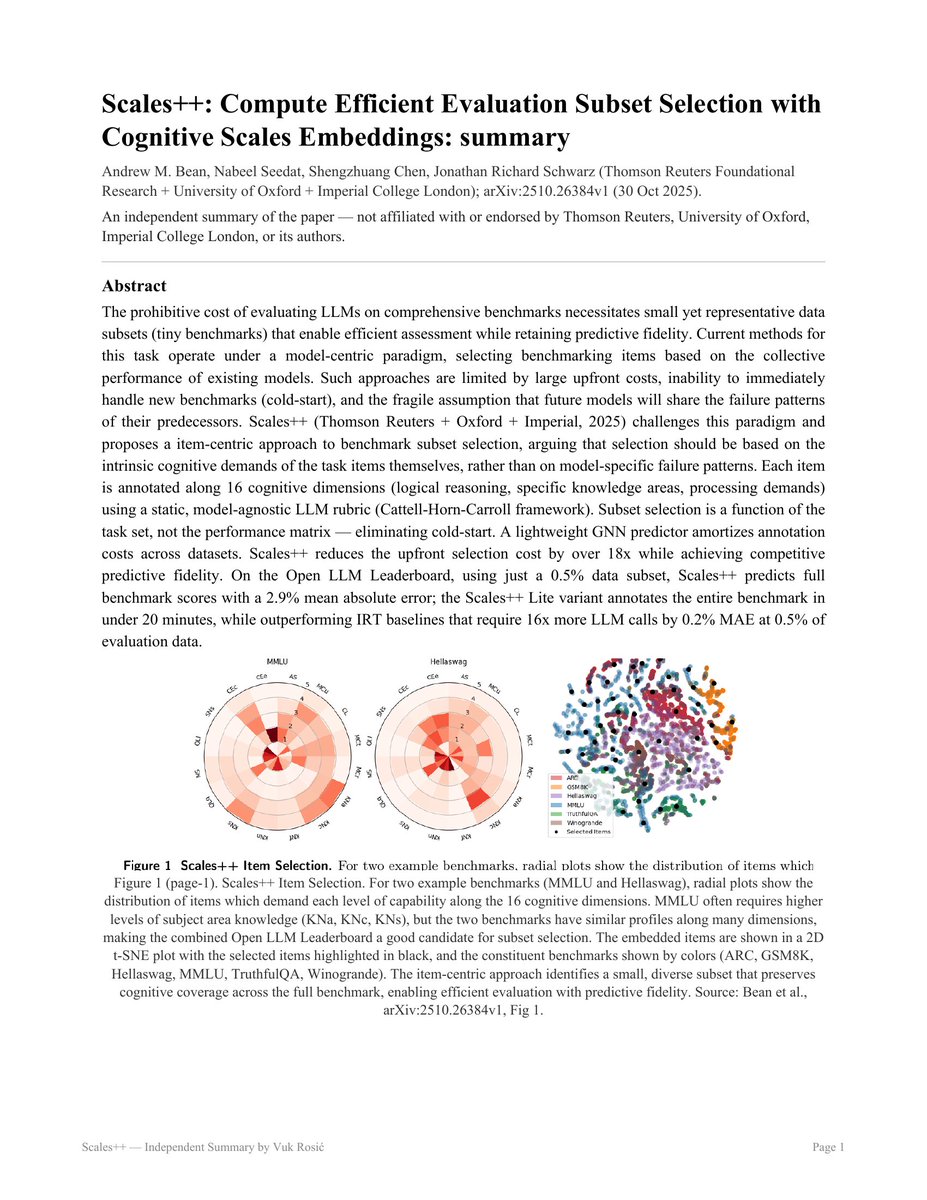
@VukRosic99 summarized (2 likes, 80 views, 1 bookmark) Scales++ as an item-centric method that predicts full benchmark scores from a 0.5% subset using 16 cognitive dimensions instead of historical model-performance logs. The notable claim was cold-start resilience: new model families or new benchmarks can be evaluated without first paying the large upfront cost of building a historical matrix. That turns evaluation cost itself into a product surface rather than a fixed tax.
7. Where the Opportunities Are
[+++] Internal-state debugging and eval-awareness tooling — Strong evidence came from multiple directions today: @AnthropicAI showed (318 likes, 20 replies, 38,913 views, 122 bookmarks) J-space/J-lens as a way to inspect internal reasoning states, while @slatestarcodex argued (13 likes, 5 replies, 6,735 views, 1 bookmark) that output-only evaluation misses how aware a model is of its own uncertainty. This is strong because the pain point and the proposed control surface matched: people want tools that tell them why a system is failing, not only whether it failed.
[+++] Spec, replay, and regression infrastructure for agents — @gokulr proposed ProductSpec as a durable intent layer, @DanKornas shared an evaluator-driven agentic RAG loop, and @yoheinakajima argued (161 likes, 18 replies, 35,400 views, 28 bookmarks) that continual improvement only works when failures are reproducible and fixes can be localized to model, harness, or memory. This is strong because several independent builders reached the same conclusion: prompting is not enough without living specs and replayable test cases.
[++] Portable owned-runtime layers for AI workloads — @wsj reported (107 likes, 20 replies, 46,861 views, 19 bookmarks) that startups are shopping compute-credit packages across vendors, @businessbarista showed a private home-lab stack for daily work, and @Qualcomm_Dev released GenieX for local Snapdragon inference. The opportunity is moderate because teams are clearly trying to escape pure API dependence, but the winning abstraction layer is not settled yet.
[++] Deployment scaffolding for scientific and regulated domains — @WilliamCQHua shared OpenDDE for biomolecular prediction, @ModelScope2022 shared ResearchClawBench for autonomous science, and @rohanpaul_ai highlighted (4 likes, 2 replies, 594 views, 2 bookmarks) a clinical-deployability framework that adds realistic error rates, utility, and safety. This is moderate because there is visible builder energy and clear unmet need, but most artifacts are still infrastructure or benchmarks rather than finished operating systems for practitioners.
[+] Cheaper evaluation and agent-governance layers — @VukRosic99 shared Scales++ for benchmark-subset selection, and @databricks shared Omnigent contextual policies for session-aware permissions and budgets. This is emerging because both posts treat evaluation cost and policy enforcement as separate product layers, but today’s evidence is still early compared with the stronger repeat signals around debugging and replay.
8. Takeaways
- Internal-state visibility was one of the day's clearest trends. Anthropic's J-space/J-lens post and the follow-on discussion around eval awareness both argued that output-only scoring is not enough for safe or reliable reasoning work. (source)
- Builders kept wrapping agents in explicit structure instead of relying on prompts alone. ProductSpec, evaluator-driven agentic RAG, and verifiable continual learning all centered on specs, replay, and localized regression rather than one-shot cleverness. (source)
- Open-weight competition was judged on deployability and economics as much as quality. Artificial Analysis compared domain-specific performance and cost, Hy3 was discussed in terms of active parameters and self-hosting practicality, and startup credit shopping made infrastructure spend part of the product conversation. (source)
- Local and owned-runtime setups looked increasingly normal for everyday work. The home-lab stack post and Qualcomm's GenieX release both showed users reaching for private, operator-controlled inference paths instead of defaulting to hosted APIs for everything. (source)
- Science and clinical AI had real builder momentum but still leaned heavily on scaffolding. OpenDDE, ResearchClawBench, and the clinical-deployability framing all focused on infrastructure, benchmarks, and evaluation realism more than turnkey production systems. (source)
- Evaluation cost and world modeling started to look like standalone product layers. Scales++ tried to shrink benchmark cost, while Qwen-AgentWorld treated simulated environments and world models as first-class training assets. (source)