Twitter AI - 2026-07-09
1. What People Are Talking About
1.1 Private evals and harness design mattered more than headline benchmarks (🡕)
Today's strongest cluster was not a generic “which lab won?” debate. It was whether anyone trusts public benchmarks enough to make purchasing decisions, how teams should measure cost per finished task, and how much of the outcome actually comes from the harness around the model. At least five retained items supported this shift across enterprise coding, practitioner reviews, and release-day benchmark talk.
@alighodsi said (161 likes, 9 replies, 14,899 views) that Databricks ran an internal evaluation on its own tasks, infrastructure, and multi-million-line codebase because it did not want to “blindly trust public benchmarks.” The linked Databricks write-up made the claim more concrete: GLM-5.2 landed in the top capability tier at about $1.28 per task, Opus 4.8 was about $1.94, and harness choice could change end-to-end cost materially even when the underlying model stayed the same.
@rohanpaul_ai reframed (16 likes, 5 replies, 3,290 views) the same result as a separation between model intelligence and agent efficiency. His thread argued that GLM-5.2 proved open-weight models could compete inside real enterprise code, while Pi proved that context discipline inside the harness can cut costs without hurting quality.

@MatthewBerman reported (150 likes, 14 replies, 15,454 views) a different kind of evidence: two months of GPT-5.6 Sol across long /goal runs, browser-based admin work, Supabase instance management, and a full Google Workspace migration. His distinctive claim was that GPT-5.6 feels 2-3x faster than Claude Fable 5 in daily use because it wanders less and takes a shorter path to solutions, while still making confident mistakes that require supervision.
Discussion insight: The trust issue did not go away just because people had better stories. @emollick questioned (155 likes, 18 replies, 16,922 views) why OpenAI omitted GDPval results for GPT-5.6 after publicly criticizing bad benchmarks, and he later argued (158 likes, 16 replies, 11,033 views) that Grok 4.5 should have shipped with a model card. Across threads, benchmark wins looked less convincing when the task set, harness, or disclosure layer was missing.
Comparison to prior day: On 2026-07-08, skepticism centered on whether public coding benchmarks were broken. On 2026-07-09, the discussion moved closer to deployment: private evals, task economics, and harness efficiency.
1.2 People wanted work-layer agents, not just better chat (🡕)
Release-day GPT-5.6 discussion became most interesting when it stopped talking about the model alone and started talking about long-running work, browser control, and background agents that know when to report back. The question was less “is the model smarter?” than “what new kinds of work surface does this unlock?”
@kimmonismus argued (267 likes, 20 replies, 18,994 views) that GPT-5.6's raw eval gains were impressive but expected, while the more interesting layer was ChatGPT Work pulling context from docs, Slack, Notion, Microsoft 365, and Google Drive and turning that into decks, documents, spreadsheets, dashboards, and interactive explanations. The attached comparison table also framed the release around workflow-facing evaluations rather than a single benchmark, listing Agents' Last Exam, GDPval-AA v2, management consulting tasks, Big Finance Bench, Artificial Analysis, SWE-Bench Pro, DeepSWE, and Terminal-Bench 2.1 side by side.

@RhysSullivan asked (139 likes, 48 replies, 9,368 views) for a prompt-to-proactive-agent UX across repo watching, Slack triage, follow-up loops, production anomaly monitoring, and growth experiments. The important line was explicit: his “dream UX” is sending a prompt to an agent and getting back a proactive setup, while current options like Codex automations, Hermes, Eve, and Flue still feel too high-friction.
Discussion insight: Replies to Rhys reduced the practical workaround to GitHub Actions plus cron, and Rhys immediately answered “thanks i hate it.” Replies to Kimmonismus asked whether ChatGPT Work actually replaces Codex or simply repackages earlier workspace-agent ideas, which suggests the demand is real even if product boundaries are still unclear.
Comparison to prior day: On 2026-07-08, orchestration talk was mostly about enterprise specs and routing layers. On 2026-07-09, it became more personal and workflow-shaped: background agents, browser control, and work-superapp UX.
1.3 Open-model adoption was framed as ownership, routing, and vendor escape (🡕)
Open-model talk was no longer only about shaving API costs. The stronger framing was ownership, portability, and escape hatches from single-provider stacks, with concrete evidence coming from both platform-scale announcements and task-specific migration stories.
@ollama said (208 likes, 29 replies, 7,836 views) that it now has 9M+ active builders and is ready to scale open models into “AI that you can own.” Ollama's own announcement added that 8.9 million developers use the platform, 85% of the Fortune 500 use it, and the company raised $88M while explicitly pitching ownership, affordability, and privacy as the core value of open models.

@samhogan said (27 likes, 7 replies, 1,236 views) that his team helped a customer move from roughly $60,000 per month across OpenAI and Anthropic models to about $12,000 per month using open-source replacements chosen through task-specific evals. The attached matrix made the migration legible by pairing GPT-5.5, GPT-5 Mini, Opus, Sonnet, and Haiku with replacements like GLM-5.2 Max, MiMo V2.5 Pro, DeepSeek V4 Flash, Gemma 4, and Kimi K2.6.

@orbiteditor positioned (17 likes, 5 replies, 849 views) Orbit Editor as a fully open-source coding-agent beta with bring-your-own-provider support from day one. The supporting site and GitHub repo made that more than a slogan: direct provider API keys, local endpoints through Ollama or a custom host, and a beta desktop app rather than a vague roadmap.
Discussion insight: The most useful pushback did not reject open models. It highlighted operating friction. One reply in the Ollama thread complained that GLM-5.2 stopped outputting correctly that day, and a reply in the Orbit thread pointed out that bring-your-own-provider freedom still leaves an open debugging and support problem when an agent produces a bad architecture.
Comparison to prior day: On 2026-07-08, open-weight discussion leaned strategic and geopolitical. On 2026-07-09, it became more operational, with concrete migration matrices, platform-scale adoption numbers, and provider-agnostic tools.
1.4 Physical AI talk centered on commercialization bottlenecks, not humanoid spectacle (🡕)
Embodied AI discussion was unusually sober. The most informative posts were less about futuristic demos than about shipment curves, bill-of-materials structure, perception failures, and the hardware constraints still limiting real deployments.
@pequityresearch summarized (37 likes, 3 replies, 5,472 views) notes from Citi and Deutsche Bank arguing that robotics is moving into commercial rollout but is still constrained by data scarcity, skilled talent shortages, battery life, edge-compute limitations, and deployment cost. The same thread argued that task-specific AMRs and specialized platforms are generating earlier returns than highly publicized general-purpose humanoids, and that actuation systems account for roughly half of system cost.
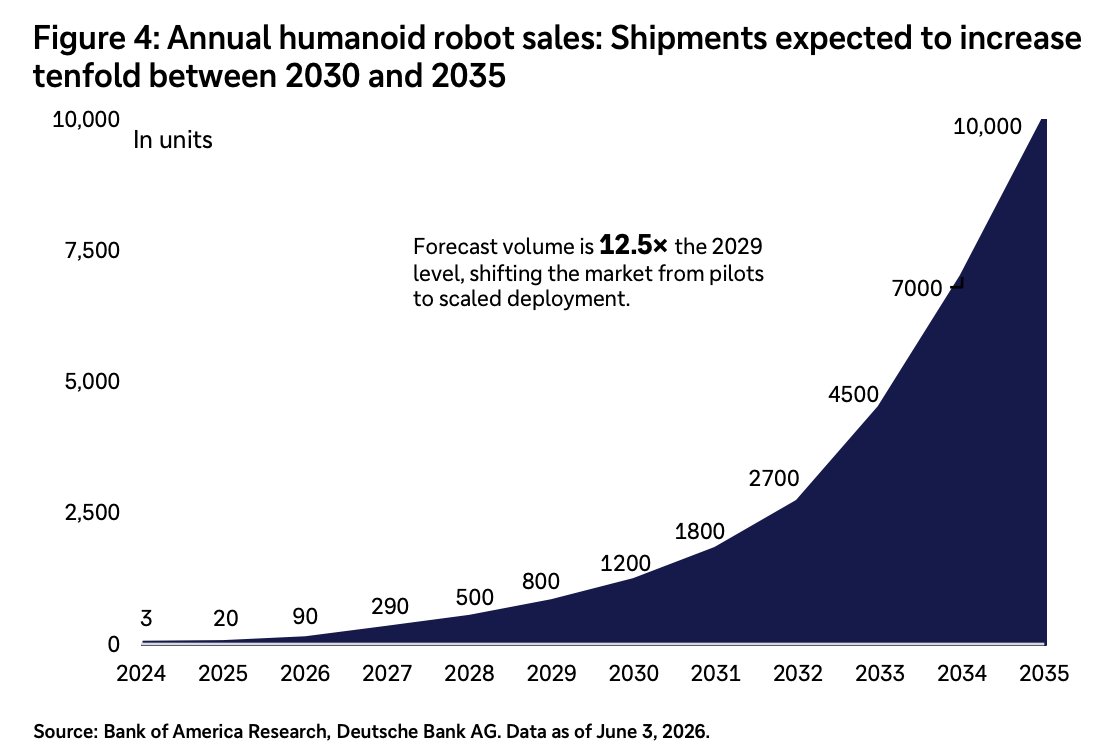
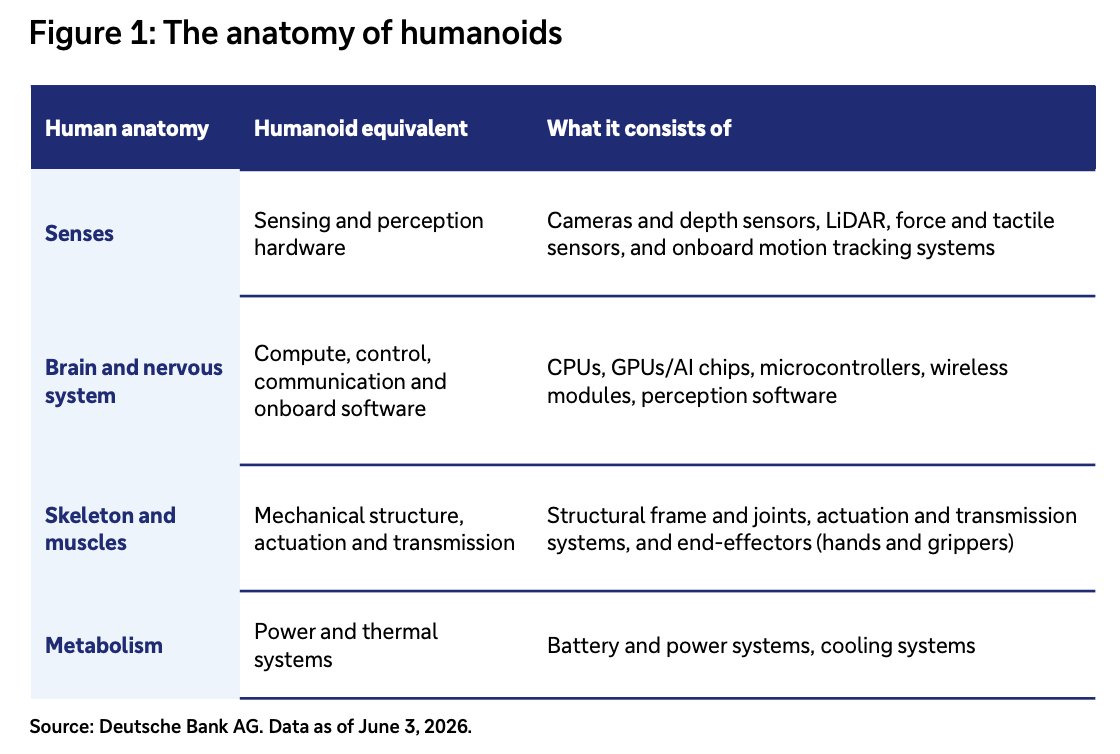
@TechByMarkandey pointed (42 likes, 13 replies, 34,424 views) to one concrete failure mode: depth cameras fail on glass, mirrors, and transparent surfaces. His LingBot-Vision and LingBot-Depth 2.0 thread mattered because it showed refined depth maps and point clouds on exactly those cases, while claiming performance kept improving as RGB-D training scaled from 3 million to 150 million samples.

A smaller corroborating thread from @pequityresearch on Schaeffler and Goldman Sachs (12 likes, 0 replies, 1,772 views) extended the same point from the supplier side: bearings, encoders, torque sensors, and actuators already make up at least half of a standard humanoid BOM, so near-term value is clustering around components and industrial partnerships, not just model software.
Discussion insight: The thread-level consensus was that near-term value sits in task-specific systems and bottleneck suppliers, not in assuming model progress alone will make general-purpose humanoids economical.
Comparison to prior day: Compared with 2026-07-08, physical-AI discussion moved away from generic AI optimism and toward shipment forecasts, cost structure, and perception edge cases.
2. What Frustrates People
Long-running agent setup still feels hacked together
Severity: High. @RhysSullivan said (139 likes, 48 replies, 9,368 views) that he wants background agents for repo watching, Slack triage, follow-up loops, production anomaly monitoring, and growth work, but existing setups still feel high-friction. The thread's most practical workaround was basically “GitHub Actions plus cron,” and Rhys' own response — “thanks i hate it” — captured the mood: people can glue triggers together today, but they do not feel they have a real prompt-to-agent product yet. @MatthewBerman added (150 likes, 14 replies, 15,454 views) a closely related frustration from the model side when he said he wished Codex automatically routed prompts across GPT-5.6 sizes and reasoning modes. This is worth building for because the demand is explicit, repetitive, and tied to real daily work.
Trust in frontier-model claims is still limited by missing evals and weak disclosure
Severity: High. @alighodsi built (161 likes, 9 replies, 14,899 views) a private benchmark precisely because public benchmarks were not enough for an 11,000-person engineering organization making real model and harness decisions. @emollick questioned (155 likes, 18 replies, 16,922 views) why GDPval results were missing for GPT-5.6, and he separately argued (158 likes, 16 replies, 11,033 views) that Grok 4.5 should have shipped with a model card. The coping pattern is to run task-specific evals, compare finished-task cost instead of token price, and trust lived use more than leaderboard marketing. This is worth building for because evaluation and disclosure are now part of the product surface.
AI image generation keeps colliding with consent and provenance
Severity: High. @HedgieMarkets argued (134 likes, 12 replies, 5,325 views) that Meta's Muse Image lets anyone generate AI images from another person's public Instagram photos without notifying them, with opt-out buried several layers deep and no promise that already-generated images disappear later. Replies in the thread pointed to Glaze and Nightshade as defensive hacks and suggested generated images may need bibliography-style provenance metadata. Right now, the coping mechanisms are opt-out toggles, poisoning tools, and legal outrage rather than durable platform controls. This is worth building for because the harm is immediate, identity-linked, and consumer-facing.
Embodied AI is still bottlenecked by physical reality
Severity: High. @pequityresearch said (37 likes, 3 replies, 5,472 views) that commercialization momentum is real, but battery life, edge-compute hardware, training-data scarcity, and deployment cost still slow rollout materially. @TechByMarkandey showed (42 likes, 13 replies, 34,424 views) the more grounded version of the same problem: standard depth cameras break on mirrors, glass, and transparent surfaces, so perception still fails on common real-world materials. The current workaround is to deploy task-specific systems and specialized perception models rather than assume one general robot stack is ready. This is worth building for because reliability, not narrative hype, is still the gating factor.
3. What People Wish Existed
Prompt-to-proactive-agent setup
The clearest ask in the feed came from @RhysSullivan saying (139 likes, 48 replies, 9,368 views) that his “dream UX” is sending a prompt to an agent and getting back a proactive setup. The examples were concrete: repo monitoring, Slack triage, follow-up reminders, production anomaly detection, and growth experiments. Today's partial answers were cron jobs, GitHub Actions, and scattered automation products, but the thread treated those as implementation details rather than satisfying products. Opportunity: direct.
Automatic model and harness routing by finished-task economics
@alighodsi showed (161 likes, 9 replies, 14,899 views) that the same model can get materially cheaper under a different harness, @rohanpaul_ai explained (16 likes, 5 replies, 3,290 views) that Pi did this by sending less repeated context, and @samhogan shared (27 likes, 7 replies, 1,236 views) an 80% spend reduction after swapping lab models for open-weight replacements chosen by task-specific evals. @MatthewBerman added (150 likes, 14 replies, 15,454 views) that he wants Codex to route prompts automatically across GPT-5.6 variants. The unmet need is a routing layer that chooses model, harness, and reasoning budget based on task success rather than token price. Opportunity: direct.
Consent-aware image generation with notification, deletion, and provenance
@HedgieMarkets described (134 likes, 12 replies, 5,325 views) a system where people may not even know their photos are being reused for image generation, while replies argued for bibliography-like metadata and surfaced defensive tools like Glaze and Nightshade. This is both a practical and emotional need: people want to know when they are the generation substrate, want a simpler way to opt out, and want previously generated material handled in a traceable way. Opportunity: competitive.
Robotics perception and deployment infrastructure for messy environments
@TechByMarkandey highlighted (42 likes, 13 replies, 34,424 views) a still-unsolved perception edge case around mirrors, glass, and transparent surfaces, while @pequityresearch described (37 likes, 3 replies, 5,472 views) the slower-moving constraints around batteries, actuators, sensors, deployment cost, and real-world data. The feed was not asking for another generic robot promise. It was asking, implicitly, for the support stack that makes perception, uptime, and safety reliable enough for actual rollout. Opportunity: direct.
4. Tools and Methods in Use
| Tool | Category | Sentiment | Strengths | Limitations |
|---|---|---|---|---|
| GPT-5.6 Sol / Ultra | LLM | (+/-) | Strong on coding, browsing, long-running goals, and broad public eval coverage | Still makes confident mistakes; higher reasoning modes can burn tokens; some benchmark disclosures remain contested |
| Claude Fable 5 | LLM | (+/-) | Strong on open-ended autonomy and still competitive on several comparisons | One practitioner found it slower and less direct than GPT-5.6 for day-to-day work |
| GLM-5.2 | Open-weight LLM | (+) | Treated as a serious coding replacement in both Databricks and migration threads | Needs good routing and harnessing; hosted/open-model availability can still be uneven |
| Pi | Agent harness | (+) | Lowered cost per task materially by managing context tightly | The benefit is workload-specific and only meaningful with a paired task suite |
| ChatGPT Work | Work-superapp / agent app | (+/-) | Pulls context from docs, Slack, Notion, Microsoft 365, and Drive into concrete outputs | Users are unclear how it relates to Codex and whether the workflow layer is actually new |
| GitHub Actions | Automation / orchestration | (+/-) | Good triggers, logs, repo integration, and cron support | Feels like a workaround, not the easy proactive-agent UX people want |
| Ollama | Open-model platform | (+) | Local/private ownership, large integration footprint, and straightforward access to open models | Model behavior and hosted availability can still vary day to day |
| Orbit Editor | Coding IDE / agent harness | (+/-) | Open-source, bring-your-own-provider, and supports local or self-hosted endpoints | Early beta; debugging and support story is still immature |
| Ship Safe | Security CLI | (+) | Scans AI-agent, CI/CD, config, secret, and dependency risks; core commands work offline | AI-assisted modes can still send matched snippets unless --no-ai is used |
| LingBot-Vision / LingBot-Depth 2.0 | Robotics vision model | (+) | Improves depth completion on glass, mirrors, and transparent surfaces; scales with more RGB-D data | Solves a narrow but important perception problem, not full robot deployment |
The day's satisfaction spectrum ran from “this is my daily driver” to “good enough but I hate it.” @MatthewBerman described GPT-5.6 as his most reliable work model, while @RhysSullivan made it clear that GitHub Actions-style automation does not satisfy the demand for proactive agents. The clearest migration pattern was not ideological open source adoption; it was task-specific routing from lab APIs toward open-weight substitutes, as shown by @alighodsi showing internal benchmark results and @samhogan showing customer cost reduction. Competitive dynamics increasingly looked like stack competition — model plus harness plus routing plus app layer plus provider portability — rather than model versus model in isolation, which is exactly how @kimmonismus framed ChatGPT Work and how @orbiteditor framed Orbit Editor.
5. What People Are Building
| Project | Who built it | What it does | Problem it solves | Stack | Stage | Links |
|---|---|---|---|---|---|---|
| Orbit Editor | @orbiteditor | Open-source AI coding editor with provider switching and local-model support | Avoids vendor lock-in in coding agents | TypeScript desktop app; Anthropic/OpenAI/Google/open-weight/local endpoints via Ollama or custom hosts | Beta | post, repo, site |
| Ship Safe | asamassekou10 (shared by @tom_doerr) | CLI scanner for AI-agent, CI/CD, config, secret, and dependency risk | Gives developers one-command checks for agent-era security issues | JavaScript CLI, SARIF/CI output, optional AI classification | Shipped | post, repo, site |
| LingBot-Vision / LingBot-Depth 2.0 | Robbyant (shared by @TechByMarkandey) | Self-supervised vision backbones and depth-completion models for dense spatial perception | Fixes RGB-D failures on mirrors, glass, and transparent surfaces in embodied AI | ViT backbones, PyTorch, RGB-D training scaled to 150M samples | Shipped | post, repo, weights |
| Universal Cell Embedding (UCE) | Rosen, Roohani, Agrawal et al. (shared by @changmyung1981) | Zero-shot foundation model that places new single-cell datasets into a shared biological space | Removes retraining and label-heavy integration work across datasets, tissues, and species | Self-supervised transformer, protein-language-model gene embeddings, 36M-cell atlas | Alpha | post, paper |
| Lumen Sovereign | @yangli_ / Cosine AI | Proposed frontier model trained on British soil with a public governance input loop | Targets national-institution use cases where jurisdiction and governance matter | Frontier-model training plus public use-case and governance intake | RFC | post, input form |
Orbit Editor is notable because its open, provider-agnostic pitch is already reflected in a real beta app, a public codebase, and support for direct provider keys or local endpoints rather than a single bundled model. That is a direct response to today's frustration with locked-in coding assistants and awkward automation surfaces.
Ship Safe shows a parallel build pattern on the security side: instead of treating AI risk as a subsection of generic AppSec, it packages prompt injection, MCP misuse, CI/CD misconfiguration, secret leakage, and dependency concerns into one CLI. The repo and site position this as something developers can run locally without a signup, which matches the day's broader preference for ownership and portability.
LingBot-Vision, UCE, and Lumen Sovereign point in three different domain directions for builders. LingBot targets a specific robotics failure mode, UCE treats cell biology as a shared latent-space problem, and Lumen Sovereign treats jurisdiction and governance as part of the product itself rather than a policy layer added later.
6. New and Notable
AI-native staffing still looked rarer than the discourse suggests
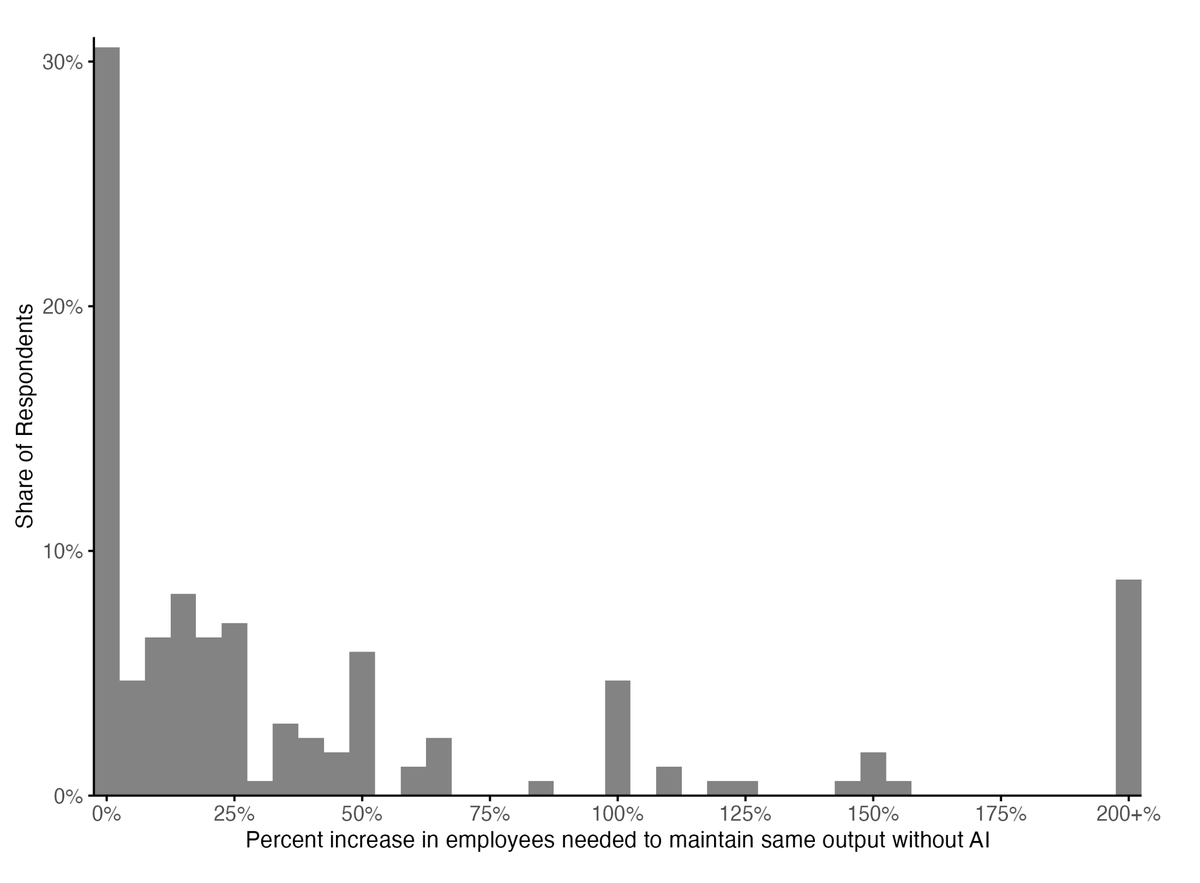
@emollick shared (65 likes, 17 replies, 12,051 views) a histogram asking startup founders how many extra employees they would need to maintain current output without GenAI. The image mattered because the biggest bar sat at 0%, while only a much thinner tail extended to 100%+ and 200%+ cases, making extreme “AI-pilled” organizations look real but still uncommon.
Universal cell embeddings pushed foundation-model logic deeper into biology
@changmyung1981 highlighted (20 likes, 1 reply, 1,252 views) Universal Cell Embedding as a zero-shot foundation model spanning 36 million cells, 300+ datasets, 50 tissues, and 8 species. The interesting part was not just scale; it was the claim that new datasets can be mapped into a shared biological space without retraining, while the accompanying figure summarized cross-species generalization and discovery of Norn-like cells in lung and heart datasets.

Sovereign AI moved from policy language to an explicit product brief
@yangli_ said (23 likes, 6 replies, 1,694 views) that Lumen Sovereign is being built as the UK's first frontier AI model trained entirely on British soil, and asked the public for input on use cases, workflows, and governance. The replies made the unusual part clear: compute geography itself became part of the design brief, with immediate questions about energy cost, grid capacity, and what it means to anchor a frontier model inside one jurisdiction.
7. Where the Opportunities Are
[+++] Prompt-to-proactive-agent control plane — Evidence appears in multiple sections. @RhysSullivan explicitly asked for an agent that can be prompted once and then monitor repos, Slack, follow-ups, and production over time, while the best workaround offered in-thread was still GitHub Actions plus cron. That gap between desire and tooling is direct, repeated, and urgent.
[+++] Task-aware model, harness, and reasoning-budget routing — @alighodsi showed and @rohanpaul_ai explained the benchmark side, showing that the same model can get much cheaper under a better harness, while @samhogan supplied the migration side with an 80% spend reduction after task-specific evals. Add @MatthewBerman asking for automatic routing inside Codex, and the opportunity looks broad rather than niche.
[++] Consent and provenance infrastructure for identity-linked image generation — @HedgieMarkets described a live product where people can be turned into generation inputs without notification, while replies reached for Glaze, Nightshade, and bibliography-style provenance only as stopgaps. The need spans notification, opt-out, deletion, and attribution.
[++] Physical-AI reliability stack — @pequityresearch showed that batteries, actuators, sensors, and data remain the bottlenecks, and @TechByMarkandey supplied one specific failure case around transparent surfaces. That points to opportunities in perception, uptime, calibration, and deployment tooling rather than only in model weights.
[+] Sovereign and regulated-domain foundation layers — @yangli_ framed compute geography and governance as product requirements for Lumen Sovereign, while @changmyung1981 highlighted a cell-biology foundation model built around domain-specific integration pain. The common opportunity is not “another general model,” but foundation layers designed around one jurisdiction or one high-friction data domain.
8. Takeaways
- Task-specific evals are replacing benchmark faith. Databricks' internal benchmark and the GDPval/model-card complaints both show that people increasingly trust private workloads, harness data, and disclosure quality more than headline benchmark wins. (source; source)
- People want agents that stay alive between prompts, but they do not want to assemble them from cron jobs. The strongest unmet need today was a low-friction control plane for background agents that know when to report back. (source)
- Open-model momentum now looks like a stack decision, not just a pricing preference. Ollama's scale story, Sam Hogan's replacement matrix, and Orbit Editor's provider-agnostic beta all framed open models around ownership, routing, and portability. (source; source; source)
- Physical AI discussion is getting more concrete and more constrained by hardware reality. Shipment curves, BOM composition, battery limits, and transparent-surface depth failures all pointed to deployment bottlenecks that software progress alone will not erase. (source; source)
- Foundation-model thinking kept spreading outward into domain and governance layers. ChatGPT Work treated enterprise context as a work surface, UCE treated cell biology as a shared embedding space, and Lumen Sovereign treated compute geography and public governance as part of the artifact itself. (source; source; source)