Twitter AI - 2026-07-15
1. What People Are Talking About
1.1 Benchmarks are still the shared language, but verification is becoming the real trust boundary (🡕)
The benchmark conversation narrowed from raw leaderboard excitement toward a harder question: what kinds of AI results are actually trustworthy enough to ship, regulate, or rely on? The strongest posts combined performance claims with explicit concern about long-horizon realism, contamination, and proof.
@billyuchenlin highlighted (44 likes, 4 replies, 3,446 views) RL work for long-horizon software-engineering tasks while quoting Proximal's FrontierSWE result for Grok 4.5. Epoch's FrontierSWE summary says the benchmark focuses on long-horizon implementation, performance, and research tasks and reports dominance rather than a single pass/fail score, which makes the post more about durable agent work than a short coding demo.
@tonylfeng argued (23 likes, 1 reply, 1,176 views) that the pace of progress is visible in the problems themselves: his four-image carousel shows benchmark questions from MATH, AIME, FirstProof, and IMO that he says AI systems now solve. That is a stronger artifact than another leaderboard screenshot because it makes the shrinking difficulty frontier concrete.

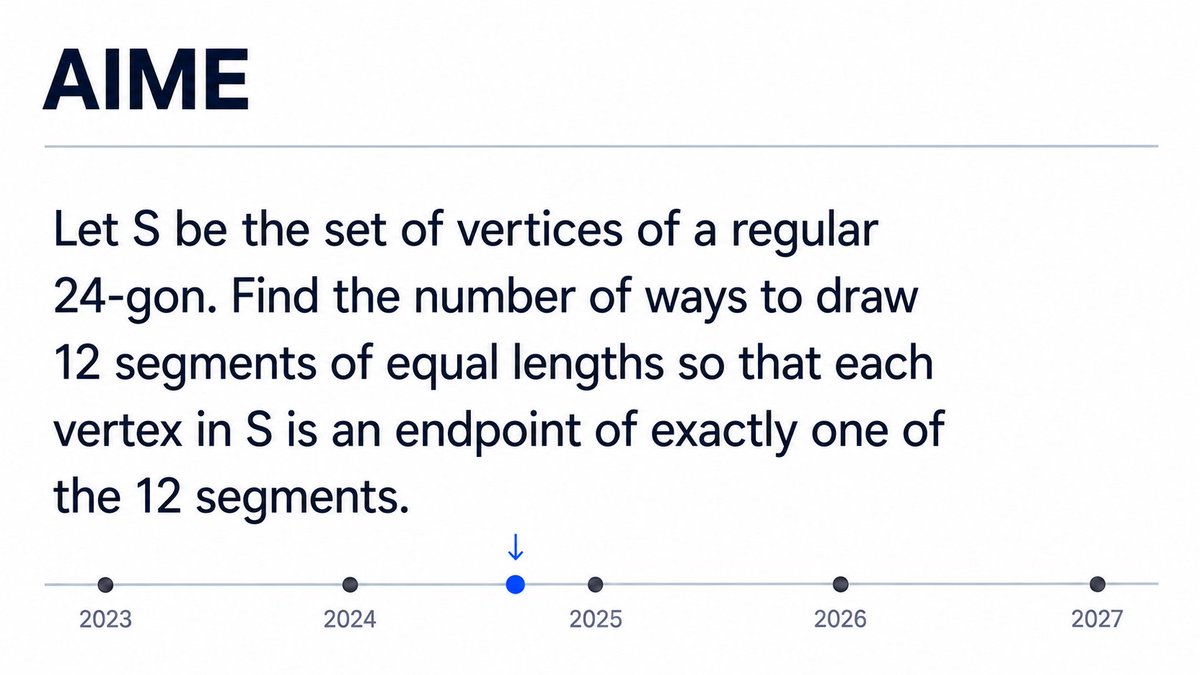

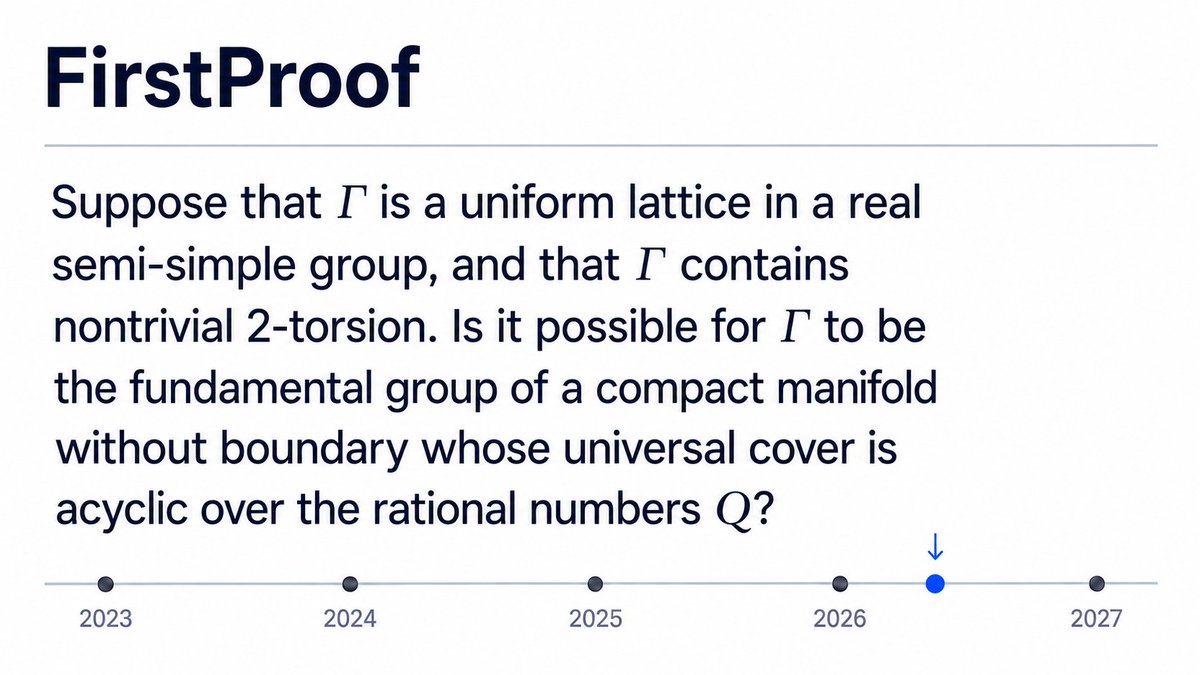
@ziv_ravid warned (15 likes, 1 reply, 2,030 views) that a proposed "FINRA for AI" would turn benchmark thresholds into law before the field has held-out, lab-independent tests that can resist contamination. @zooko added (11 likes, 1 reply, 605 views) that he is only bullish on AI-powered software engineering when results can be verified with tests, benchmarks, proofs of correctness, and cryptographic proofs, while @danfaggella mocked (7 likes, 2 replies, 804 views) incessant benchmark chatter as a distraction from larger AGI implications.
Discussion insight: Replies under the FrontierSWE post did not dispute that benchmarks matter; they argued that usefulness starts with long-horizon tasks and generalization to production settings. The sharper disagreement came from the governance side: ziv_ravid's thread says labs can study for known tests, which makes benchmark-based market access a capture risk rather than a neutral safeguard.
Comparison to prior day: The 2026-07-14 report centered on BridgeBench, G-Eval, and DeepEval as practical evaluation tooling. Today the conversation moved one layer further: not just how to evaluate, but whether benchmarks can remain credible once they become the basis for trust, regulation, or shipping decisions.
1.2 Agentic systems are being framed around adjudication, settlement, and machine-readable primitives (🡕)
The agent conversation was less about model cleverness and more about what happens when autonomous systems disagree. The high-signal posts all tried to supply missing connective tissue: a dispute layer, a validator layer, or product primitives that agents can reliably act on.
@lami_thefirst described (32 likes, 11 replies, 1,440 views) Internet Court as the missing interface for agentic commerce: identity, negotiation, obligations, escrow, execution, and dispute settlement in one flow. The quoted launch post says it is an open skill so two agents can run a deal end to end, and replies immediately stress the hard parts: bottlenecks, enforcement, ambiguous standards, and whether coordinated agents could game the layer.
@0xdelula made (3 likes, 4 replies, 74 views) a parallel argument for GenLayer as an adjudication layer for the agentic economy. The GenLayer docs say diverse validators independently evaluate transactions, majority agreement accepts a result, and appeals trigger larger validator sets until finality, which sharpens the tweet's claim into a concrete mechanism.
@NotionDevs said (13 likes, 651 views) its own lesson from early GPT-era work was having to rewrite the product harness so it was legible to both humans and agents. The distinctive claim is that Notion's text, image, and database primitives let it "leapfrog into the agentic tool calling world" because the product surface was already structured in a way agents can edit.
Discussion insight: The useful replies were not generic praise. They raised concrete failure modes: who writes neutral standards, whether tiny deals can tolerate extra dispute overhead, and whether rulings matter if they cannot automatically enforce across chains or systems.
Comparison to prior day: Yesterday's agent-infrastructure posts were about memory layers and role-routing. Today the emphasis shifted from internal orchestration to external trust: settling disagreements, encoding obligations, and making application surfaces machine-readable enough for agents to operate safely.
1.3 Local AI is getting narrower, faster, and more product-shaped (🡕)
On-device AI remained a live theme, but the examples were less about future hardware capacity and more about specific software artifacts people can run or ship now. The strongest signals were narrow models, local speech systems, image-model tooling, and an agent-native phone pitch.
@anshuc reported (13 likes, 4 replies, 947 views) using GPT-5.6 Sol plus Codex-style iteration to build a 1.7B autocorrect model on MLX that he says edges Sol on his own error-reduction benchmark, 91.02% to 90.56%, with about 40ms time-to-first-token on a MacBook GPU. A reply from the author narrows the claim in a useful way: the prototype does not yet work well for non-English text.
@GithubProjects shared (14 likes, 1 reply, 2,706 views) NeuTTS as an open-source local TTS stack with instant voice cloning. The NeuTTS repository says the Python project has more than 6,100 GitHub stars, ships GGUF quantizations for phones and Raspberry Pi-class devices, clones from as little as 3 seconds of audio, and includes watermarked outputs.
@aisearchio flagged (14 likes, 584 views) NVIDIA's PiD v1.5 release as a faster open-source upscaler for models like Qwen-Image, Z-Image, and Flux. The PiD repository describes a Python decoder with 917 GitHub stars that replaces VAE/RAE decoders by producing super-resolved pixels in one pass, and its July updates add PiD v1.5 checkpoints plus optional Boogu-Image support.
@TechBuzzChina reported (4 likes, 1 reply, 324 views) that StepFun launched STEPX with Step AOS and the Amoo agent. A Gizmochina write-up says the StepX Neo pitch is an offline-capable, agent-native phone with 32-language translation, MCP-based access to apps and system tools, and an on-device Step Edge model, although price and retail timing were still undisclosed.
Comparison to prior day: The 2026-07-14 report focused on local-AI capacity limits, runtime support, and non-CUDA programming models. Today's evidence was steadier and more user-facing: narrow local models for typing, on-device speech, image decode tooling, and a phone whose differentiator is the agent layer rather than the chipset alone.
1.4 Public-facing AI rollouts are meeting immediate backlash over provenance and tone (🡕)
Several of the day's highest-signal posts were not builder launches but reactions against how AI is being introduced to broad audiences. The backlash targeted both undeclared generative media and frontier-lab safety marketing.
@CultureCrave reported (158 likes, 24 replies, 14,724 views) that the Alvin and the Chipmunks comeback plan involves generative-AI workflow hiring and influencer-style digital rollout before the next film. A Cartoon Brew write-up, citing The Wall Street Journal, says Big Shot Pictures acquired a 25% stake, is leading with YouTube-first shorts, and is targeting a 2028 theatrical reboot; the replies were overwhelmingly hostile to the generative-AI angle.
@BackroomsForDBD said (22 likes, 1 reply, 321 views) they deleted a meme after learning Viggle AI was generative and explicitly asked to keep the DBD community AI-free. That is a small post, but it is unusually clean evidence that provenance alone can flip a creator from sharing to deletion.
@Polymarket posted (100 likes, 35 replies, 38,538 views) that Anthropic's latest AI safety commercial was prompting backlash for its apocalyptic messaging. Replies split between a minority praising honesty and a louder group calling it fear-based positioning, and Polymarket's follow-up market put the chance of an AI safety bill this year at only 15%.
Discussion insight: The replies did not reject AI on one consistent axis. Fans objected to synthetic-media workflows in entertainment, community members rejected generative content on authenticity grounds, and safety-ad critics said catastrophe framing looked more like strategic positioning than accountability.
Comparison to prior day: Yesterday's Twitter AI discussion was mostly practitioner-facing. Today, some of the strongest engagement came from audience reaction to AI's public presentation, especially when legacy media brands or safety labs tried to package the technology for mainstream consumption.
2. What Frustrates People
Benchmarks are useful, but too easy to over-trust
Severity: High. @ziv_ravid argued (15 likes, 1 reply, 2,030 views) that if benchmark thresholds become a regulatory gate, labs will have every incentive to optimize for known tests rather than the underlying capability being measured. @zooko put it (11 likes, 1 reply, 605 views) more bluntly for software engineering: he only trusts results that can be verified with tests, proofs, or cryptographic evidence. Even the optimistic benchmark post from @billyuchenlin leaned (44 likes, 4 replies, 3,446 views) on long-horizon generalization rather than leaderboard status alone. This is worth building for because the frustration is not anti-evaluation; it is a demand for evaluation that survives deployment and governance pressure.
Agentic workflows still break when systems disagree
Severity: High. @lami_thefirst said (32 likes, 11 replies, 1,440 views) current agentic commerce is a set of disconnected tools that stall when a deal goes wrong. The replies make the failure concrete: routing every dispute through one interface could create bottlenecks, plain-language obligations may mean different things to different models, and enforcement across chains or systems is unresolved. @0xdelula reframed (3 likes, 4 replies, 74 views) the same pain around delivery disputes and invoices, while the GenLayer docs explicitly describe appeals and larger validator sets as the coping mechanism. This is worth building for because the pain sits directly in transaction completion, payment release, and trust.
Public AI rollouts trigger authenticity and tone backlash fast
Severity: Medium-High. @CultureCrave reported (158 likes, 24 replies, 14,724 views) generative-AI workflow hiring around the Alvin reboot, and replies immediately treated that as a reason to distrust the project. @BackroomsForDBD deleted (22 likes, 1 reply, 321 views) a meme after learning Viggle was generative, showing how provenance alone can invalidate content for some communities. @Polymarket amplified (100 likes, 35 replies, 38,538 views) backlash to Anthropic's safety ad, where replies said the apocalyptic framing felt manipulative. This is worth building for because disclosure, consent, and presentation are now product risks, not just PR details.
3. What People Wish Existed
Verification that can survive both deployment and regulation
The recurring need is not another generic benchmark, but a verification stack that still means something after labs have time to study it and policymakers start treating it as a gate. @ziv_ravid spelled out (15 likes, 1 reply, 2,030 views) the need for lab-independent, held-out evals that move faster than frontier models, while @zooko asked for (11 likes, 1 reply, 605 views) tests, correctness proofs, and cryptographic proofs before trusting AI software engineering. @billyuchenlin added (44 likes, 4 replies, 3,446 views) the practical angle: long-horizon SWE tasks are where usefulness has to show up. Opportunity: direct.
A shared adjudication layer for agent-to-agent business
Both the Internet Court and GenLayer posts are effectively requests for the same missing component: something that can resolve a disagreement after agents negotiate, pay, ship, or verify work without dragging a human back into the loop. @lami_thefirst wanted (32 likes, 11 replies, 1,440 views) a plain-language interface that bundles reputation, obligations, escrow, and settlement, while @0xdelula wanted (3 likes, 4 replies, 74 views) validator consensus and appeals. The replies make clear that fairness, enforcement, and standards are still open. Opportunity: direct.
Local AI components tuned for one job, not every job
Today's local-AI builders were asking for narrow competence, privacy, and latency rather than another universal assistant. @anshuc built toward (13 likes, 4 replies, 947 views) a single typing workflow; @GithubProjects pointed to (14 likes, 1 reply, 2,706 views) on-device voice cloning; and @aisearchio surfaced (14 likes, 584 views) image decoding tooling that plugs into existing model pipelines. The StepX Neo story extends the same need to devices: put the agent at the system layer and keep core tasks working offline. Opportunity: competitive.
Clear provenance and better social defaults for generative media
The deletion of a Viggle-derived meme and the hostility to AI-flavored entertainment rollout both point to a softer but still practical need: audiences want to know what was generated, what was edited, and what norms apply in a given community. @BackroomsForDBD showed (22 likes, 1 reply, 321 views) the moderation-by-retreat version of that need, while the Alvin replies show the brand-risk version. Opportunity: aspirational.
4. Tools and Methods in Use
| Tool | Category | Sentiment | Strengths | Limitations |
|---|---|---|---|---|
| FrontierSWE | Benchmark / agent eval | (+/-) | Focuses on long-horizon implementation, performance, and research tasks | Still a benchmark layer, so trust depends on generalization beyond the suite |
| Tests, proofs, and cryptographic proofs | Verification method | (+) | Strongest trust boundary mentioned for AI software engineering | Harder to apply to messy, non-verifiable domains |
| Internet Court | Agentic commerce / dispute layer | (+/-) | Bundles negotiation, obligations, escrow, execution, and settlement into one agent-facing flow | Neutral standards, enforcement, and bottleneck risk are unresolved |
| GenLayer | Adjudication protocol | (+/-) | Diverse validators, appeals, and finality window for ambiguous agent disputes | Low current social proof in the dataset; still depends on protocol trust and adoption |
| MLX + T5Gemma autocorrect pipeline | Local model training | (+) | Fast, narrow, local workflow tuned for one job; reported MacBook-GPU performance | English-first today and only backed by self-reported evaluation |
| NeuTTS | On-device TTS | (+) | 3-second voice cloning, GGUF deployment, watermarking, edge-device focus | Full audio pipeline still requires codec/runtime setup |
| PiD | Image decoder / upscaling | (+) | One-pass super-resolved decode and recent support across Flux, Z-Image, and Qwen-Image | Requires model-specific setup and inherits dependence on upstream image backbones |
| Step AOS / Step Amoo | Agent-native device stack | (+/-) | Offline-capable task execution across apps and system tools | Availability, price, and benchmark claims remain unverified in the evidence here |
The tool landscape split along two trust strategies. One camp tries to make AI output more believable with long-horizon benchmarks, tests, proofs, and adjudication layers. The other tries to make AI more usable by shrinking the task: a local autocorrect model, on-device speech, a sharper decoder, or a phone that bakes the agent into the OS. @NotionDevs added (13 likes, 651 views) a third method-level lesson: stable product primitives can matter as much as the model because they determine whether agents can act on the surface at all.
Migration pressure is visible in the details. The autocorrect build moved from general frontier models to a smaller local pipeline tuned for typos; NeuTTS packages voice AI into GGUF-friendly on-device models instead of web APIs; PiD plugs into existing image-model families rather than replacing them outright. The main limitation across all three is the same: narrow wins are real, but they do not remove setup, verification, or interoperability work.
5. What People Are Building
| Project | Who built it | What it does | Problem it solves | Stack | Stage | Links |
|---|---|---|---|---|---|---|
| Internet Court | @lami_thefirst | Connects agent negotiation, obligations, escrow, execution, and dispute settlement | Agent deals break when something goes wrong and no shared dispute layer exists | Open skill, reputation, escrow, settlement flow | Alpha | post |
| GenLayer | @0xdelula | Uses AI validators and appeals to adjudicate ambiguous outcomes | Agents need a way to settle disagreements without rigid yes/no contracts | Intelligent Contracts, validator network, appeals, web data | Beta | post · docs |
| Custom local autocorrect model | @anshuc | Trains a 1.7B typo-correction model for fast local use | General assistants are slower and less optimized for one typing workflow | MLX, T5Gemma, typo simulator, custom loss, beam search | Alpha | post |
| NeuTTS | @GithubProjects | Runs local TTS and instant voice cloning on-device | Private, low-latency voice generation without cloud APIs | Python, GGUF, NeuCodec, small LLM backbones | Shipped | post · GitHub |
| PiD | @aisearchio | Decodes latent image representations into super-resolved pixels in one pass | Image-model users want sharper decode quality without a full new generation stack | Python, diffusion decoder, Hugging Face checkpoints | Shipped | post · GitHub |
| StepX Neo | @TechBuzzChina | Packages an agent-native phone around Step AOS and Amoo | Current phone AI is fragmented across buried features and app hops | Step AOS, Step Amoo, Step Edge, MCP integrations | Beta | post · article |
The strongest build pattern was not "another chatbot." It was infrastructure around completion and trust. Internet Court and GenLayer both start from the same failure mode: autonomous systems can negotiate and execute, but they still need a credible way to resolve disagreements. The difference is implementation style: Internet Court is framed as an agent-facing workflow surface, while GenLayer is framed as validator consensus plus appeals.
The second pattern was narrow local tooling. @anshuc built (13 likes, 4 replies, 947 views) a typo-correction model that trades generality for speed and task fit, while NeuTTS and PiD package reusable local components for speech and image workflows. The StepX Neo pitch extends that idea to hardware: the interesting claim is not simply "AI phone," but that the phone's operating system is rebuilt so the agent can act across apps, files, communications, and system tools.
Repeatedly, the trigger for building was friction rather than novelty. The friction was dispute resolution for agents, overly broad assistants for narrow tasks, or phone AI that still behaves like a buried feature instead of a system layer. That makes today's builder activity unusually practical.
6. New and Notable
Domain-specific chemistry reasoning is getting its own orchestrated LLM stack
@ChineseChemSoc shared (5 likes, 72 views) a paper on chemical knowledge question answering and retrosynthetic reasoning that is more specific than the average daily paper link. The paper summary identifies the system as ECNU-ChemGPT, using prompt-distilled chemistry QA data, a cleaned Pistachio reaction dataset, and a BrainGPT scheduler to route across chemistry tasks; the summary also reports 68.3% top-1 accuracy on USPTO-50K. The attached diagram matters because it shows the architecture explicitly combining chemical QA, retrosynthesis, and a coordinating controller rather than presenting chemistry as just another generic prompting benchmark.

Agent-native devices are now being pitched as a systems problem, not an app problem
@TechBuzzChina reported (4 likes, 1 reply, 324 views) the launch of StepFun's STEPX brand with Step AOS and the Amoo agent. The Gizmochina report says the phone is built around an agent operating system, MCP-based capability routing, offline task execution, and 32-language translation. Whether or not the product succeeds, the notable shift is architectural: the claim is that AI belongs in the control plane of the device, not as one more assistant tab.
7. Where the Opportunities Are
[+++] Agent dispute-resolution infrastructure — Internet Court and GenLayer approached the same gap from different angles: escrow plus obligations on one side, validator consensus plus appeals on the other. The replies supplied the product requirements for free: neutral standards, low-friction small-case handling, and real enforcement rather than advisory verdicts.
[+++] Verification-first agent evaluation — FrontierSWE, zooko's verification bar, and ziv_ravid's critique of benchmark-based regulation all point to the same opening: evaluation products that connect long-horizon tasks, held-out tests, deployment checks, and stronger proof layers. The need spans builders, buyers, and policymakers.
[++] Narrow local AI components for concrete workflows — The autocorrect build, NeuTTS, PiD, and StepX Neo all reflect willingness to adopt smaller local systems when they are faster, private, and clearly scoped. The opportunity is not a monolithic local model; it is composable local parts that solve one workflow well.
[+] Provenance and audience-control tooling for generative media — The Alvin backlash and Viggle deletion show that disclosure and community norms are becoming adoption blockers. Tools that make provenance visible, permissions explicit, and AI use adjustable by audience could turn a reputational problem into a product feature.
8. Takeaways
- Verification pressure is rising faster than benchmark enthusiasm. Long-horizon SWE benchmarking was still active, but the more durable signal was the demand for tests, held-out evals, and proof-like guarantees before trusting AI in production. @billyuchenlin highlighted (44 likes, 4 replies, 3,446 views) the long-horizon side of that shift.
- Agent commerce is moving from orchestration toward adjudication. Today's most distinctive agent posts were about what happens after agents disagree, not how to make them talk in the first place. @lami_thefirst described (32 likes, 11 replies, 1,440 views) the missing settlement layer.
- Local AI is winning through specialization, not universality. A typo-fixing model, an on-device TTS stack, an image decoder, and an agent-native phone all made the same argument: narrow local components can be more compelling than a general remote assistant for the right job. @anshuc showed (13 likes, 4 replies, 947 views) the clearest single-workflow version.
- Public AI backlash is now a product-level constraint. The Alvin reboot discussion, the Viggle deletion, and criticism of Anthropic's safety ad show that provenance and tone can drive rejection before product details even land. @CultureCrave reported (158 likes, 24 replies, 14,724 views) the day's strongest example.
- Niche domain stacks continue to advance outside the main consumer narrative. The ECNU-ChemGPT paper shows domain-specific reasoning systems still gaining sophistication through task routing and specialized data, even while the broader timeline discourse stays fixated on agents, benchmarks, and backlash. @ChineseChemSoc shared (5 likes, 72 views) that signal.