Twitter AI - 2026-08-02
1. What People Are Talking About
1.1 AI engineering got operational, teachable, and benchmarkable (🡕)
The strongest shift in today's feed was not a new model release by itself. It was the sense that AI work is being broken into explicit operating disciplines: inference serving, context engineering, observability, retrieval, memory, and evaluation. Three retained items supported that theme directly, and they all described a concrete artifact or skill stack rather than generic "learn AI" advice.
@akshay_pachaar shared (230 likes, 18 replies, 11,413 views, 309 bookmarks) a 10-week inference-engineering plan built around one deliverable: an OpenAI-compatible inference service with TTFT, inter-token latency, throughput, queue-depth dashboards, 1,000+ concurrent load tests, quantization/speculative-decoding sweeps, and a cost-aware router. The linked repo made the point sharper than the tweet alone because it spelled out the exact stack: vLLM, SGLang, Grafana, Prometheus, Docker, and Kubernetes, with the roofline model as the conceptual starting point.

@databricks announced (12 likes, 1 reply, 1,369 views, 8 bookmarks) a new Context Engineer Associate exam, and the linked certification page plus launch post defined the job as prompt design, retrieval, memory, compaction, MCP integrations, and governance with Unity Catalog. @e_opore added (13 likes, 1,011 views, 6 bookmarks) the grassroots version of the same idea with a stack map covering planner/executor architectures, RAG, vector databases, LangGraph or CrewAI, FastAPI or Node.js, PostgreSQL or Redis, Docker, Kubernetes, observability, evals, and guardrails.
Discussion insight: The best reply to Akshay's post was not another tool recommendation; it was a correction about practice. One reply said to read your own p99 before touching kernels, and another said inference engineering still has "no bootcamp," which shows the appetite is for operational discipline, not more model-release summaries.
Comparison to prior day: August 1 already treated evaluation as core product work. August 2 broadened that into a fuller operations curriculum: serving, routing, compaction, observability, and context engineering as named specializations.
1.2 Benchmark talk turned against toy demos and toward real work (🡕)
Evaluation skepticism was one of the clearest themes in the dataset. The strongest posts did not say benchmarks are useless; they said today's most popular tests often miss the things practitioners now care about: backlog completion, human collaboration quality, long-horizon coherence, and open-ended scientific reasoning. At least six retained items pointed in the same direction.
@kunchenguid argued (266 likes, 35 replies, 13,090 views, 149 bookmarks) that newer frontier models feel "more robotic" because RLVR scales better than RLHF and rewards machine-verifiable success more than human-likable interaction. A reply from @leo_linsky sharpened that claim rather than merely cheering it, arguing that coding intelligence and social/coordination intelligence now look like separate measurable axes. @kimmonismus argued (179 likes, 23 replies, 16,660 views, 22 bookmarks) that pelican-on-a-bicycle SVG prompts no longer separate top models, using Andrej Karpathy's quoted Lord-of-the-Rings-to-Three.js experiment as evidence that better tests now look like long, janky, but real artifacts.
@Da7_Tech argued (25 likes, 7 replies, 2,278 views) that he no longer trusts a one-prompt showcase at all, and instead makes a model his primary assistant for several days across planning, research, product decisions, design, debugging, production, and review. @HowToPrompt__ shared (50 likes, 4 replies, 3,406 views, 45 bookmarks) a summary of the Evaluating Large Language Models in Scientific Discovery paper, which tests models on scenario-based biology, chemistry, materials, and physics work rather than multiple-choice science recall. @ericweinstein argued (522 likes, 105 replies, 77,031 views, 250 bookmarks) from a more public-facing angle that the right standard is not another tricky math puzzle, but whether models can contribute to unsolved theory-building problems in math and physics.
Discussion insight: The disagreement today was not over whether models improved. It was over whether a benchmark should look like a human's actual job, a real research loop, or a genuine long-horizon artifact. Even the pushback accepted that old leaderboard-friendly prompts are running out of diagnostic value.
Comparison to prior day: August 1 framed evaluation as part of shipping. August 2 went one step further by attacking the tests themselves: toy coding prompts, canned demos, and static science benchmarks were all treated as inadequate proxies for real work.
1.3 Open models were judged by accepted work, price, and portability—not hype (🡕)
The open-versus-frontier conversation did not disappear after July 31 and August 1. It got more practical. People were still excited about Kimi K3 and DeepSeek V4 Flash, but the interesting part was how quickly the conversation moved from launch charts into provider pricing, Codex compatibility, human review time, and whether a model actually closes backlog tasks.
@nykdotdev argued (44 likes, 9 replies, 3,480 views, 8 bookmarks) that Kimi K3 should be tested on five real backlog tasks with frozen conditions, prewritten acceptance tests, and tracked human correction minutes because "cost per accepted task" is the only number that matters. That caution mattered because the quoted Kimi K3 release is a serious artifact: open weights, 2.8T parameters, 104B active parameters, native multimodality, KDA/AttnRes, and a 1M-token context window. @Jason said (83 likes, 32 replies, 9,319 views) the difference between the open-source models he uses and frontier models is already negligible, and the replies made that claim more specific by restricting the gap to a narrow tail of tasks rather than denying it entirely.
@slash1sol reported (54 likes, 14 replies, 1,162 views, 32 bookmarks) that DeepSeek V4 Flash 0731 was already available at zero cost on ZenMux while official API pricing remained low. The linked DeepSeek Codex docs confirm that deepseek-v4-flash was the only DeepSeek model then wired into Codex via the Responses API, and the ZenMux page explicitly called out a rate-limited free variant plus the note that only DeepSeek itself had the official 0731 build. @ZhihuFrontier shared (28 likes, 1,689 views, 3 bookmarks) a practitioner review arguing that a 300B-scale model can now be good enough for many engineering tasks, while still showing where DeepSeek V4 Flash remains weaker than Kimi K3 or Claude Opus 5.

Discussion insight: The replies immediately converged on hidden labor. People asked about human edit minutes, whether free endpoints were temporary subsidies, and whether low token cost survives when a model takes more steps or burns more cache reads.
Comparison to prior day: July 31 focused on open-weight price/performance pressure and August 1 moved that story into routing and workflow ownership. August 2 added an even stricter filter: can an open model finish accepted work cheaply enough, inside existing toolchains, to justify a swap?
1.4 The product surface expanded into workflows, compliance, and post-deploy trust (🡕)
A final theme was that more of the interesting action sat outside the model itself. Builders were packaging AI into workflow-sharing communities, industrial inspection systems, compliance interfaces, and security warning layers. That does not look like another chatbot wave. It looks like an ecosystem trying to solve everything around the model.
@rowancheung launched (30 likes, 9 replies, 5,780 views, 22 bookmarks) what he called the "Reddit for AI use cases," and the replies are what made it useful evidence: a personal AI recruiter, a searchable "boss clone," and a roughly one-cent local meeting assistant that transcribes, extracts action items, and files tasks. @lukas_m_ziegler shared (22 likes, 4 replies, 1,288 views, 8 bookmarks) Codya's assembly-line verifier, and the linked Codya page clarified that the company sells video-analytics systems for operational monitoring while the tweet contributed the important implementation detail: this use case depended on tracking bolts through hand occlusion rather than just spotting them frame by frame.
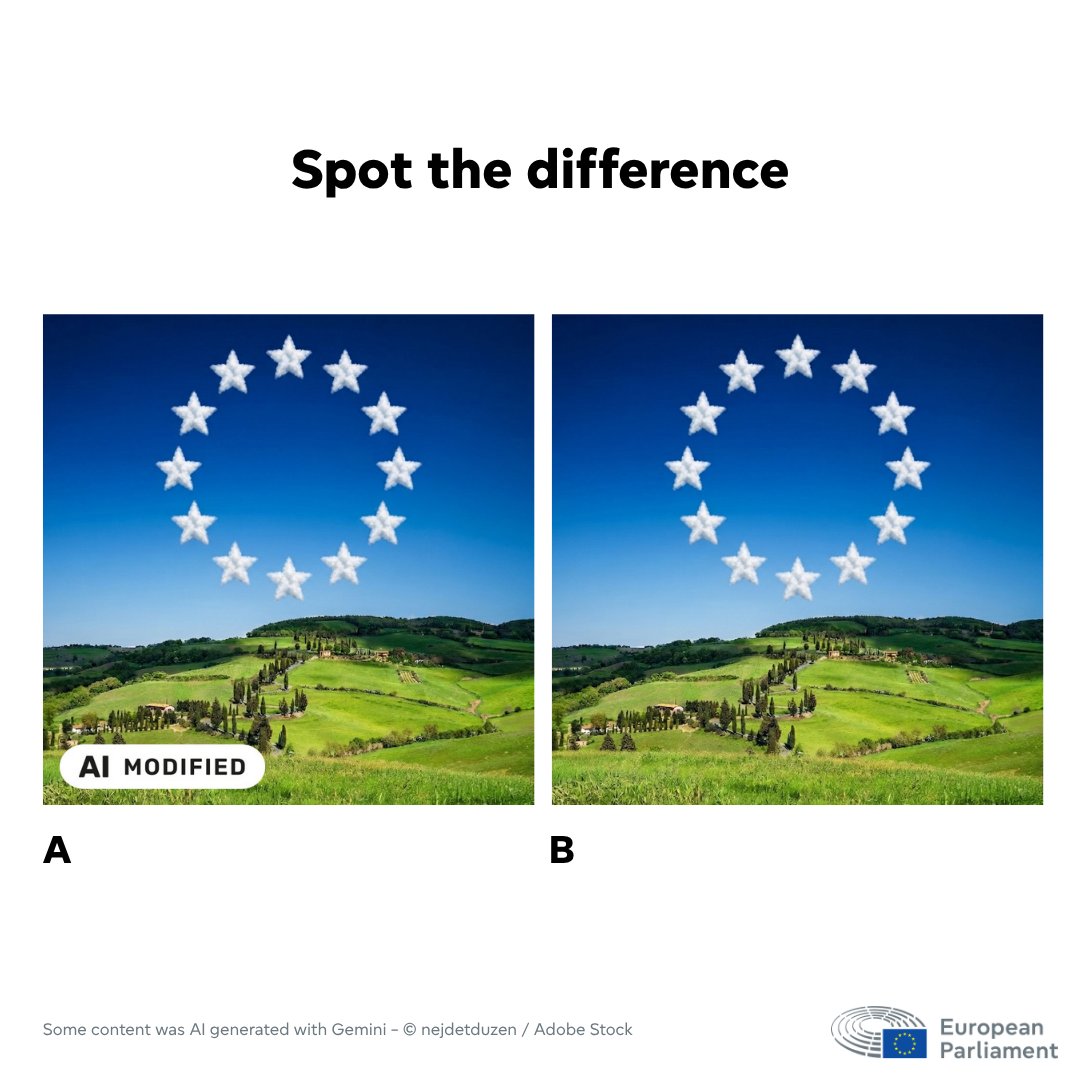
@Europarl_EN reported (28 likes, 5 replies, 2,998 views) that EU transparency rules now require disclosure for certain AI-modified content, unreviewed public-interest text, and chatbots. The linked EU code of practice makes that concrete by spelling out deployer obligations for deepfakes and certain text publications, while the attached image shows exactly what an "AI MODIFIED" label looks like in practice. @mardehaym argued (14 likes, 6 replies, 987 views) that vibe-coded apps are shipping faster than their security review, and the linked Escape report plus methodology writeup back the claim with a 5,600-app scan that found 2,038 critical vulnerabilities, 400+ leaked secrets, and 175 exposed PII instances.
Discussion insight: This cluster drew less ideological argument than the benchmark debates. The common question was operational: once AI is in a workflow, who can inspect it, label it, secure it, or recover from its mistakes?
Comparison to prior day: August 1's builder energy centered on memory, serving, and native creative tooling. August 2 pushed outward into use-case communities, factory QA, mandatory labeling, and app-layer security hygiene.
2. What Frustrates People
Benchmark-friendly models that still feel bad or fail on real work
Severity: High. The most repeated complaint was not that models are weak in general, but that common proof points are no longer aligned with daily work. @kunchenguid argued (266 likes, 35 replies, 13,090 views, 149 bookmarks) that RLVR-heavy training is making frontier models more robotic and verbose even as they improve on machine-verifiable tasks. @kimmonismus argued (179 likes, 23 replies, 16,660 views, 22 bookmarks) that older test prompts like pelican-on-a-bicycle SVGs no longer reveal much, while @Da7_Tech argued (25 likes, 7 replies, 2,278 views) that a real evaluation means living with a model across planning, design, debugging, and production for days. The scientific-discovery benchmark paper amplified by @HowToPrompt__ and the open-problem challenge from @ericweinstein point to the same frustration from another angle: high benchmark scores still do not prove theory-building or research competence. People cope by writing acceptance tests, using domain-specific benchmarks, and discounting polished demos. That makes this clearly worth building for.
Long context that expands the window but not reliability
Severity: High. @0x_Anni argued (48 likes, 8 replies, 1,534 views, 35 bookmarks) that models often start repeating themselves or forgetting earlier instructions by message 20, and he linked that behavior to longer context rather than intelligence collapse. Chroma's Context Rot study gives the strongest public backing in today's evidence set: 18 models degraded as input length rose even on controlled tasks. Anthropic's own Claude 5 context-engineering post points in the same direction from the vendor side by arguing for simpler prompts, better interfaces, and progressive disclosure instead of more prompt bulk. Severity stays High because the coping strategies—compaction, retrieval, prefix reuse, manual prompt trimming, and better memory design—are still mostly bespoke.
Open-model price wins that still have to survive backlog reality
Severity: Medium. The feed liked cheap access and open weights, but it did not fully trust them. @nykdotdev argued (44 likes, 9 replies, 3,480 views, 8 bookmarks) that a model only earns a place in the stack if it improves cost per accepted task after retries, failed tool calls, and human review minutes are counted. @slash1sol reported (54 likes, 14 replies, 1,162 views, 32 bookmarks) that DeepSeek V4 Flash 0731 was effectively free on one provider while official pricing stayed low, but the replies immediately asked whether that was durable or just an acquisition tactic. @ZhihuFrontier shared (28 likes, 1,689 views, 3 bookmarks) a review showing DeepSeek V4 Flash strong in some web and game workloads but weaker in Rust and iOS-plus-server tasks, while @Jason said (83 likes, 32 replies, 9,319 views) open models are already close enough for most of his jobs. Teams cope by running the same backlog against multiple providers and counting human cleanup. That keeps the pain moderate but persistent.
Shipping public AI products without default security and disclosure rails
Severity: High. @mardehaym argued (14 likes, 6 replies, 987 views) that vibe-coded apps are carrying critical vulnerabilities, and the linked Escape research supports that with thousands of exposed issues and hundreds of leaked secrets across 5,600 scanned apps. On the compliance side, @Europarl_EN reported (28 likes, 5 replies, 2,998 views) that AI-modified content, some public-interest text, and chatbots now need disclosure under the EU regime that took effect on August 2. The visible coping behavior is either reactive—security scans after launch—or interface-level labeling once the law requires it. That makes this worth building for because the market is clearly ahead of the defaults.
3. What People Wish Existed
A real inference-and-context engineering path that ends in a working system
What people appear to want is not another generic AI course, but a path from theory into operating infrastructure. @akshay_pachaar shared (230 likes, 18 replies, 11,413 views, 309 bookmarks) a roadmap that ends in one deployable service with dashboards, load tests, and a router, while the strongest reply said inference engineering still has "no bootcamp." @databricks announced (12 likes, 1 reply, 1,369 views, 8 bookmarks) a context-engineering certification precisely around retrieval, memory, compaction, MCP, and governance. @e_opore added (13 likes, 1,011 views, 6 bookmarks) a practical stack map that treats agent-building as a systems discipline. Opportunity type: direct.
Evaluation that scores accepted work, not screenshots or launch charts
The strongest explicit ask in today's feed is for evaluation that tracks what a team actually ships. @nykdotdev argued (44 likes, 9 replies, 3,480 views, 8 bookmarks) for cost per accepted task, with retries, failed tool calls, review minutes, and acceptance tests baked in. @Da7_Tech argued (25 likes, 7 replies, 2,278 views) that only several days of real workflow use reveal weak judgment, long-context failure, inconsistency, and rework. @kimmonismus argued (179 likes, 23 replies, 16,660 views, 22 bookmarks) that benchmark tasks themselves must evolve now that older toy prompts are saturated. Opportunity type: direct.
Memory and compaction layers that keep long-context agents coherent
The language around context today was remarkably consistent: bigger windows are not enough. @0x_Anni argued (48 likes, 8 replies, 1,534 views, 35 bookmarks) that more context can actually bury the instructions that matter, and his replies explicitly said "transcript is not memory." Anthropic's Claude 5 guidance adds a vendor-side version of the same need by recommending progressive disclosure and better interfaces over giant prompts. The practical wish here is clear: memory systems, retrieval, and compaction that preserve intent without forcing teams to stuff everything into one window. Opportunity type: direct.
Default compliance and security rails for public AI products
A second concrete need is AI infrastructure that makes the safe or compliant path the default path. @Europarl_EN reported (28 likes, 5 replies, 2,998 views) that AI-modified content, some public-interest text, and chatbots now need disclosure, while the official EU code of practice provides the framework and icons. @mardehaym argued (14 likes, 6 replies, 987 views) that thousands of vulnerabilities are already showing up in public vibe-coded apps. Opportunity type: direct.
Peer workflow libraries built from real users instead of influencer templates
@rowancheung launched (30 likes, 9 replies, 5,780 views, 22 bookmarks) a community organized around real AI use cases, and the featured examples all point to the same missing product layer: a place where builders can see what other builders actually automated, how they structured it, and what it costs to run. The tweet positioned this explicitly against generic influencer workflow content. Opportunity type: emerging.
4. Tools and Methods in Use
| Tool | Category | Sentiment | Strengths | Limitations |
|---|---|---|---|---|
| vLLM | Inference serving | (+) | Central reference point for production serving, paged attention, and OpenAI-compatible endpoints in Akshay's roadmap | Teams still need to read the scheduler/block manager and benchmark their own workloads; not a turnkey answer by itself |
| SGLang | Inference serving | (+) | Useful contrast to vLLM for prefix reuse and batching behavior; explicitly named as something engineers should deploy and inspect | Adds more design-space complexity; benefit depends on workload mix and prefix reuse |
| Grafana + Prometheus | Observability | (+) | Clear operational metrics: TTFT, inter-token latency, throughput, queue depth, and cost-per-request dashboards | Only useful if instrumentation comes before tuning; does not solve model-quality issues on its own |
| Context engineering | Method | (+) | Retrieval, memory, MCP integration, compaction, and governance are now being treated as a core skill set | Still an emerging discipline with fragmented tools and a visible skills gap |
| Kimi K3 | Open model | (+/-) | Open weights, 1M context, native multimodality, and strong long-horizon coding/knowledge-work claims | Today's strongest practitioner guidance was still to test it on real backlog tasks and count human correction time |
| DeepSeek V4 Flash 0731 | Model/API | (+/-) | Cheap or even temporarily free access, Codex/Responses API compatibility, and strong web/game agent scores in third-party review | Provider benchmarks need independent checking; review evidence still shows weak spots in Rust and iOS-plus-server tasks |
| Claude 5 / Claude Code | Frontier model + harness | (+/-) | Remains a high reference point for coding quality and long-horizon work; Anthropic now encourages lighter prompting and better interfaces | Users complained some newer frontier models feel more robotic, and long-context reliability still degrades |
| Cost-per-accepted-task | Evaluation method | (+) | Forces retries, review minutes, hidden labor, and acceptance tests into one decision metric | Slower and harder to run than screenshot-friendly public benchmarks |
The overall satisfaction spectrum ran from clearly positive on inference plumbing and observability to mixed on model selection. Teams liked having more choices—especially Kimi K3 and DeepSeek V4 Flash—but repeatedly warned that cheap or open does not equal production-ready. The common workarounds were to benchmark on the actual backlog, instrument queue depth and latency before optimizing kernels, use retrieval or compaction instead of blindly enlarging prompts, and route by cost, latency, and quality together. The competitive dynamic stayed the same as July 31 and August 1: open models are now forcing price and compatibility pressure, but they still have to survive real workflow evaluation before they displace frontier defaults.
5. What People Are Building
| Project | Who built it | What it does | Problem it solves | Stack | Stage | Links |
|---|---|---|---|---|---|---|
| time-to-first-token | @akshay_pachaar | A 10-week roadmap that leaves you with a deployable OpenAI-compatible inference service and reproducible benchmark harness | Closes the gap between reading about inference and actually running, measuring, and tuning it | Python, vLLM, SGLang, Grafana, Prometheus, Docker, Kubernetes | Shipped | tweet, repo |
| Kimi K3 | @Kimi_Moonshot | Open-weight multimodal frontier model for long-horizon coding, knowledge work, and reasoning | Gives teams a frontier-class open model to test against closed defaults | 2.8T MoE, KDA, AttnRes, MoonViT-V2, 1M context | Shipped | tweet, blog, repo |
| DeepSeek V4 Flash 0731 | @deepseek_ai | Efficiency-oriented agentic coding model exposed through the Responses API and Codex-compatible tooling | Lowers the cost of trying strong agent workflows inside existing coding tools | 284B MoE, 13B active parameters, 1M context, Responses API | Beta | tweet, docs, provider page |
| Codya Video Analytics | Codya (shared by @lukas_m_ziegler) | Video-analytics system for assembly verification and operational monitoring | Handles factory-line edge cases like bolt tracking under hand occlusion, where simpler CV breaks down | Computer vision, video analytics, ML monitoring | Shipped | tweet, site |
| Databricks Certified Context Engineer Associate | @databricks | Certification and training track for context engineering in reliable AI agents | Addresses the skills gap around retrieval, memory, compaction, tool integration, and governance | Databricks, AI Search, Lakebase, MLflow, MCP, Unity Catalog | Beta | tweet, page, blog |
The time-to-first-token repo stood out because it treats AI infrastructure as something you prove by shipping: one service, one dashboard stack, one load test harness, then increasingly expensive optimizations only after the measurements exist. That matches the day's broader frustration with disconnected tutorials and benchmark screenshots.
Kimi K3 and DeepSeek V4 Flash show the same builder pattern from the model side: both are being positioned less as abstract research releases and more as things you can actually plug into coding and agent workflows today. The difference is that Kimi K3 arrived as the big open-weight frontier bet, while DeepSeek V4 Flash arrived as the cheap, swappable workhorse people could test through existing Codex-style interfaces.
Codya is the cleanest non-model builder example in the dataset. The interesting part is not "AI watches an assembly line" in the abstract, but that the product has to remember which bolt is which even when a worker's hand blocks the view. That is exactly the sort of narrow, valuable production problem people trust more than a generic assistant claim.
A repeated pattern across these projects is that builders are productizing invisible layers: serving, context, evaluation, compliance, and workflow discovery. @rowancheung launching a use-case community is part of that same shift. Instead of building a new model, he built a surface for finding proven workflows from other users.
6. New and Notable
EU transparency rules became a real interface requirement
@Europarl_EN reported (28 likes, 5 replies, 2,998 views) that new disclosure obligations took effect on August 2 for certain AI-modified content, unreviewed public-interest text, and chatbots. The official EU code of practice and linked guidelines matter because they turn "label your AI" from a vague norm into a concrete deployer/provider framework with standard icons and machine-readable marking expectations.
Databricks tried to define context engineering as its own role
@databricks announced (12 likes, 1 reply, 1,369 views, 8 bookmarks) the first Context Engineer Associate exam. That is notable less for the tweet's engagement than for what the official materials say the job now includes: retrieval, memory, compaction, tool integration, and governance at inference time. It is a concrete signal that context engineering is becoming a recognized specialization rather than a buzzword.
Open models crossed from release chatter into plug-in workflow status
The combination of @nykdotdev on Kimi K3 and @slash1sol on DeepSeek V4 Flash marked a notable maturity point. Kimi K3 arrived with open weights, multimodality, and long-horizon claims, while DeepSeek V4 Flash arrived with immediate Codex compatibility and even temporary free access on some providers. The interesting thing was not just that both existed; it was how quickly the conversation turned to acceptance tests, correction time, and base-URL swaps inside real tooling.
7. Where the Opportunities Are
[+++] Workload-based AI QA and routing — Evidence showed up across sections 1, 2, and 4: people want to measure accepted tasks, retries, human review minutes, long-context failures, and recovery behavior instead of trusting demos or public leaderboards. This is strong because the pain is repeated by both practitioners and high-engagement commentators, and because today's coping behavior is still manual.
[+++] Inference and context engineering operating layers — Akshay's repo, Databricks' certification push, and the repeated stack diagrams all point to the same gap: teams need serving, observability, retrieval, memory, compaction, and governance assembled into something usable. This is strong because the missing layer is not a model; it is the operating system around one.
[++] Long-context memory compaction and state management — The context-rot discussion, Anthropic's prompt simplification, and the repeated distinction between transcript and memory all suggest a real product gap. The evidence says longer windows are not solving coherence by themselves, which leaves room for tools that compress, retrieve, and preserve intent more intelligently.
[++] Compliance and security defaults for public AI apps — The EU labeling regime and the Escape scan of vibe-coded apps point to the same opportunity from different directions: teams need default disclosure, policy checks, secret scanning, access-control review, and safe publishing rails before launch. The opportunity is moderate to strong because regulation and security failures are already visible, not hypothetical.
[+] Workflow libraries and peer use-case communities — The use-case community launched by Rowan Cheung suggests a smaller but real emerging need: builders want examples from other operators, not just influencer prompt packs. This is an early signal, but it aligns with the broader shift from model fascination toward workflow implementation.
8. Takeaways
- AI Twitter spent August 2 operationalizing the stack around the model. The clearest energy went into serving, observability, context engineering, retrieval, and memory rather than another generic model comparison. (source)
- Benchmark skepticism hardened into a demand for real-work evaluation. Practitioners wanted accepted tasks, multi-day workflow trials, and harder artifact-level or scientific tests instead of launch charts and toy prompts. (source)
- Open models are now close enough to force real swapping experiments, but not close enough to eliminate review overhead. Kimi K3 and DeepSeek V4 Flash were treated as serious options, yet the discussion kept returning to correction time, weak domains, and provider differences. (source)
- Long context is still a reliability problem, not a solved feature. The most actionable advice today was to compact, retrieve, and progressively disclose context rather than keep stuffing more tokens into the window. (source)
- The non-model surface is now part of the product. Use-case communities, factory QA systems, AI labels, and security scans all showed that value and risk increasingly sit in workflow packaging, compliance, and post-deploy controls. (source)