Twitter AI - 2026-08-03
1. What People Are Talking About
1.1 Human-fit became part of model evaluation again (🡕)
Today's strongest thread was not about raw benchmark wins. It was about whether frontier models still feel good to work with. Four high-signal posts pushed the same point from different angles: RLVR can improve machine-verifiable performance while narrowing conversational behavior; preserved human-preference style is becoming a nostalgic feature; persistent memory still feels intrusive when it retrieves the wrong details; and developers now treat odd session artifacts as trust failures, not harmless quirks.
@kunchenguid argued (792 likes, 89 replies, 40,376 views, 428 bookmarks) that newer frontier LLMs have become "more robotic" because RLHF optimizes for likability while RLVR optimizes for machine acceptance, making coding and reasoning gains compatible with worse day-to-day chat behavior. A reply from @leo_linsky added (37 likes, 4 replies, 2,114 views) that coding intelligence and social/coordination intelligence now look like separate measurable axes.
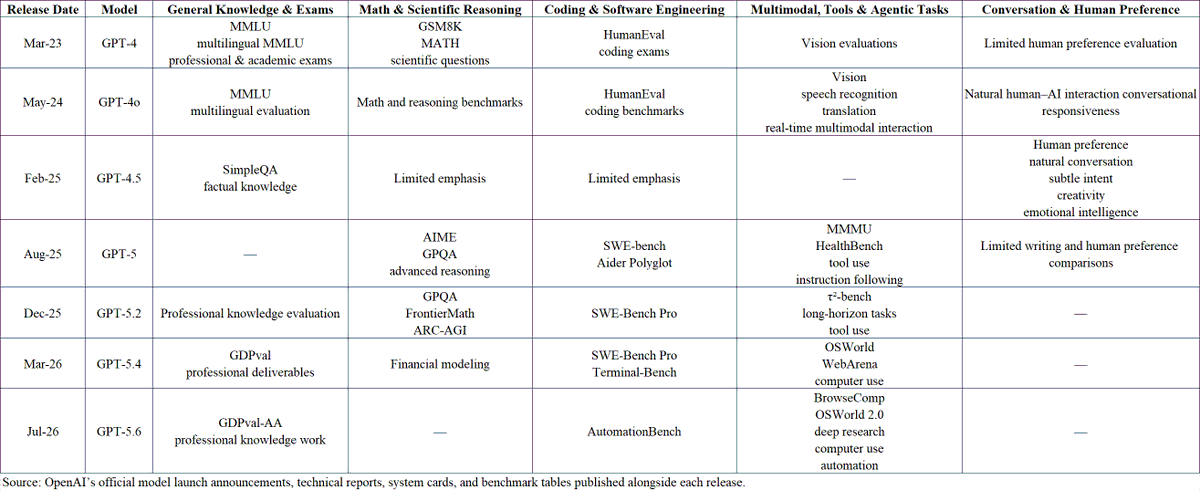
@Ivywen_W argued (29 likes, 440 views) that GPT-4o's conversational vitality may have been a product of an earlier training and evaluation balance, before coding, tool use, and agentic benchmarks became the dominant release story. The attached comparison table made that claim concrete by showing human-preference-heavy positioning for GPT-4o and GPT-4.5, then progressively more emphasis on SWE-bench, Terminal-Bench, tool use, and automation in later releases.
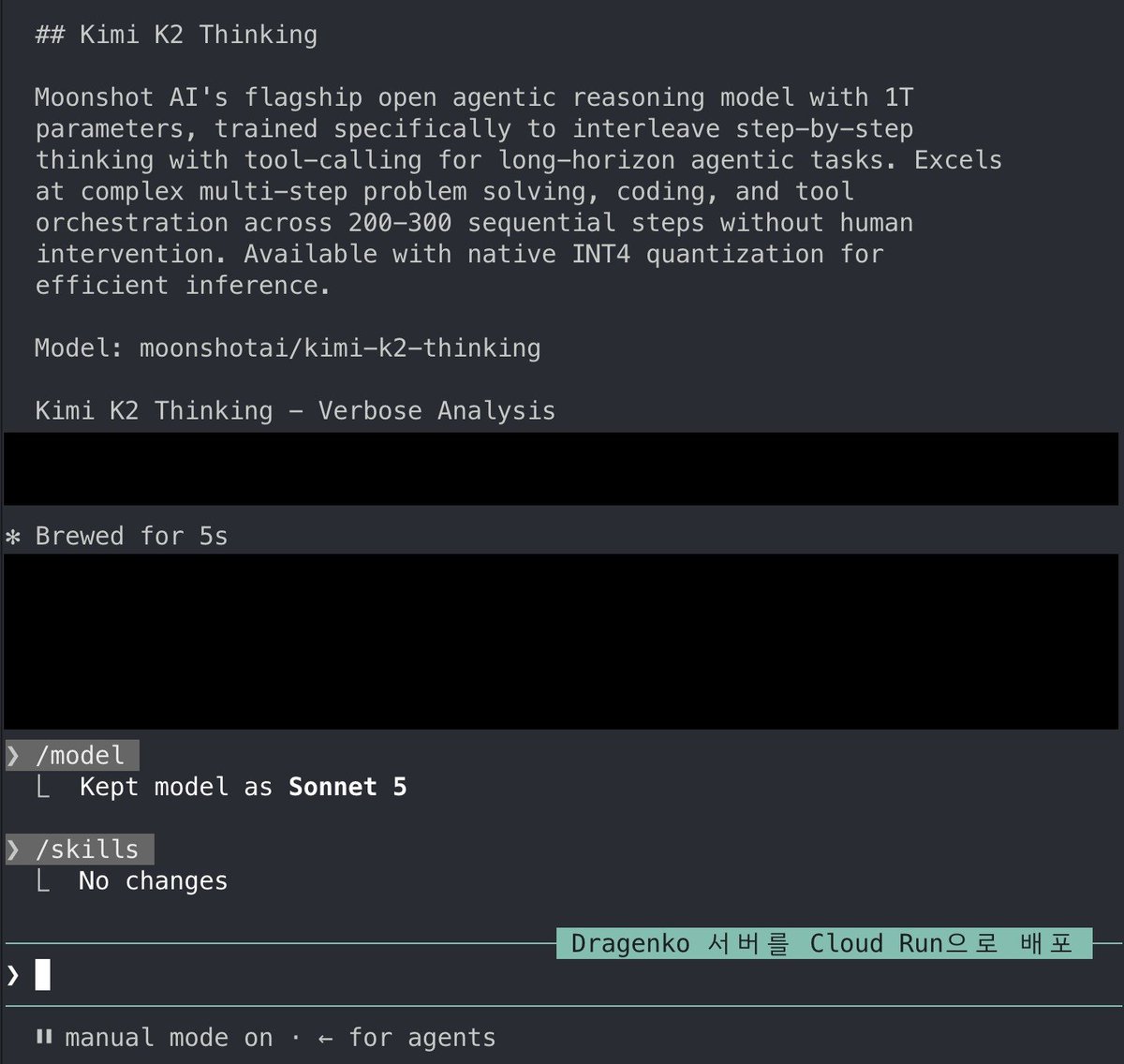
@RoundtableSpace showed (36 likes, 10 replies, 3,225 views) a Claude Code session that suddenly rendered a Kimi K2 Thinking description while the CLI still reported Sonnet 5. That gave the feed a concrete artifact for worries about backend routing, session isolation, and ghost output inside persistent coding environments.
@tenobrus asked (38 likes, 21 replies, 3,923 views) whether a model with significant memory and context had ever told users they were a bad person. Replies turned that into a memory-quality discussion, with one user saying models still pull in wildly irrelevant details even when persistent memory is turned on.
Discussion insight: The replies did not really defend current model behavior. They either split intelligence into multiple axes, or reframed session isolation and memory quality as product-level trust issues.
Comparison to prior day: August 2 already had benchmark skepticism and RLVR complaints. August 3 extended that into memory behavior, preserved conversational style, and CLI integrity artifacts.
1.2 Enterprise AI got packaged as governed software, not just model access (🡕)
High-signal posts moved AI from abstract adoption to concrete operating surfaces: office suites, secure AWS deployment lanes, and vendor revenue claims tied to sovereignty. Four posts anchored this theme directly.
@GeekParkHQ reported (75 likes, 24 replies, 19,433 views, 126 bookmarks) that Genspark open-sourced GenOffice and quoted Eric Jing arguing that "all-in-one context" matters more than one interface with many features. The linked GenOffice repo and product page show a desktop suite for docs, sheets, slides, and PDF, with shared AI panels across apps rather than a separate chatbot tab.
@bradmenezes launched (54 likes, 23 replies, 30,968 views, 14 bookmarks) Superblocks 3.0 as a way to import vibe-coded prototypes, run security-agent swarms, and deploy the resulting app, database, and inference stack inside a private AWS environment. The accompanying launch post makes the governance layer explicit: AWS VPC deployment, Bedrock-based inference, automatic Aurora and S3 provisioning, private registries, and organization-level policy agents.
@aiwithsally argued (220 likes, 61 replies, 24,773 views) that the AI story is moving from benchmarks to revenue, quoting a thread from @KobeissiLetter (source) on AI-exposed companies beating Q2 estimates by 27% in the S&P 500, 55% in the Nasdaq 100, and 71% in the Bloomberg AI Value Chain index. @MikeLongTerm summarized (88 likes, 5,422 views, 14 bookmarks) Palantir's Q2 letter as an "AI sovereignty" story backed by $1.935B quarterly revenue, $1.573B U.S. revenue, and $1.062B GAAP net income.
Discussion insight: The common language across GenOffice, Superblocks, and Palantir was control: keep the context in one surface, keep apps inside your cloud, and keep prompts, workflows, and data from turning into somebody else's training advantage.
Comparison to prior day: August 2 already connected AI to earnings. August 3 added concrete, governed product forms around that demand: an AI office suite, a private-cloud vibe-coding lane, and sovereignty as a sales message.
1.3 Open weights only mattered when paired with packaging, bandwidth, and capex math (🡕)
The open-model conversation stayed active, but it was less about one more launch chart and more about what people could actually run, afford, and serve. Four posts supported that shift directly.
@Haleeeemahh amplified (23 likes, 14 replies, 563 views) the official Qwen3.8-Max announcement, which promised open weights next week for a 2.4T-parameter model, vendor-reported long-horizon coding and cowork tasks, native multimodality, and $2 input / $6 output per million token pricing. @testingcatalog highlighted (19 likes, 4 replies, 3,082 views) a quoted Atomic release of 14 DeepSeek V4 Flash 0731 quants, while the attached graph compared 38 GGUF variants by file size and divergence and singled out AD-IQ2_M as a 128GB-hardware fit.

@TheAhmadOsman argued (33 likes, 8 replies, 2,215 views, 18 bookmarks) that local AI buying decisions should start with memory capacity, bandwidth, and software stack instead of a vague "best GPU" question. His chart put RTX PRO 6000 Blackwell and RTX 5090 at the top of the bandwidth stack, while giving Apple, DGX Spark, Strix Halo, and Tenstorrent different one-box roles.

@pequityresearch shared (77 likes, 5 replies, 11,635 views, 41 bookmarks) BofA figures showing roughly $270.1B of 2026 capital raises across the top five hyperscalers, projected cloud FCF margin compression into 2027-28, and a 2030 OpenAI segment mix where agents contribute about $56B of an expected $284B total. The infrastructure side of the feed was clear: cheaper open models do not remove the need for capital, power, bandwidth, or packaging.
Discussion insight: Even the optimistic posts were operational. People cared about quant formats, one-box memory ceilings, and whether agent revenue justifies the capex curve more than they cared about one more abstract leaderboard win.
Comparison to prior day: August 2 focused on DeepSeek V4 Flash access and price. August 3 extended that into Qwen open-weight anticipation, local quantization choices, hardware selection heuristics, and hyperscaler financing.
2. What Frustrates People
Benchmark-smart models that still feel wrong in conversation
Severity: High. The dominant complaint was not that models are weak, but that common training and evaluation targets are pulling them away from human-fit behavior. @kunchenguid argued (792 likes, 89 replies, 40,376 views, 428 bookmarks) that RLVR-heavy pipelines reward machine acceptance more than pleasant interaction, while @Ivywen_W argued (29 likes, 440 views) that later model releases increasingly foreground software-engineering, tool-use, and agentic benchmarks instead of human-preference signals. @tenobrus asked (38 likes, 21 replies, 3,923 views) whether memory-rich models had ever judged users harshly, and the replies quickly shifted to a second frustration: memories that surface but do not stay relevant. People cope by switching to the models they still find tolerable, trimming context, and treating conversational quality as a separate criterion from coding or reasoning. This is clearly worth building for.
Autonomous agents that still cannot be trusted with unreviewed execution
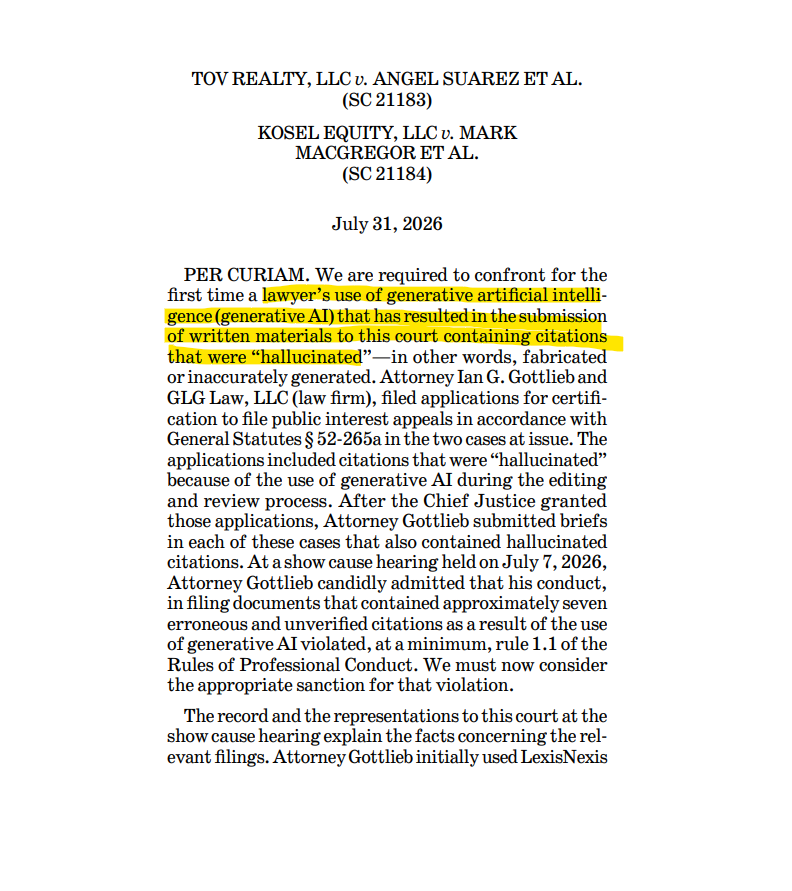
Severity: High. The security and reliability gap around agentic tooling was concrete today. @mardehaym warned (9 likes, 3 replies, 371 views) that prompt injections in README files, config files, or comments can steer coding agents into attacker-controlled execution, and the linked AI Now exploit brief confirms a proof-of-concept RCE against Claude Code auto-mode and Codex auto-review when reviewing third-party code. @RoundtableSpace showed (36 likes, 10 replies, 3,225 views) that even without an exploit, a ghost reference to Kimi K2 inside a Sonnet 5 session is enough to trigger session-isolation worries. @RobertFreundLaw reported (14 likes, 2 replies, 1,886 views) that a Connecticut lawyer was sanctioned after ChatGPT introduced hallucinated citations into court filings, reminding readers that the human user still owns the error. The visible coping strategies were least-privilege sandboxes, audit trails, manual review gates, and private-cloud deployment lanes like the one @bradmenezes pitched (54 likes, 23 replies, 30,968 views, 14 bookmarks) with Superblocks 3.0. This is also worth building for.
Discovery that depends on AI search but can be broken by the wrong crawler rule
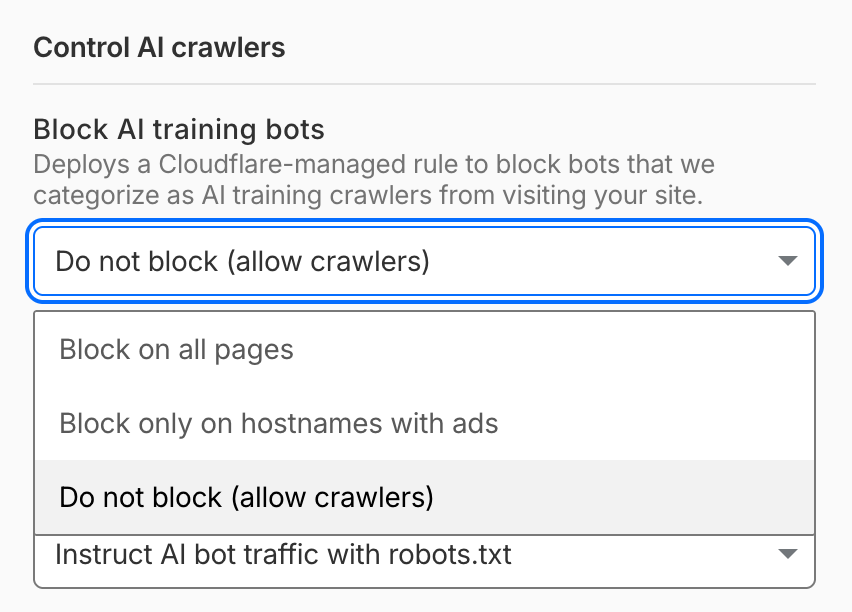
Severity: Medium. @alexgroberman argued (40 likes, 3 replies, 2,430 views) that Cloudflare's split between Search, Agent, and Training traffic creates a new failure mode for businesses that need to be crawlable by ChatGPT, Claude, Gemini, Perplexity, and Google while still limiting extractive bot traffic. His thread said the winning pages are pricing, comparison, use-case, implementation, and documentation pages, and warned that mixed-purpose crawlers can be blocked by the most restrictive rule. The coping behavior he recommended was equally operational: render without JS, keep technical SEO clean, publish decision-stage pages, and monitor crawler logs rather than thinking of "AI bots" as one bucket. This looks worth building for because it is already a workflow problem for commercial sites.
Local AI that fits in memory but still fails on throughput, software, or cost
Severity: Medium. @TheAhmadOsman argued (33 likes, 8 replies, 2,215 views, 18 bookmarks) that "fitting" a model is not the same thing as serving it, because decode bandwidth, KV-cache growth, batching, scheduler quality, and framework overhead still decide whether a machine is actually usable. @testingcatalog highlighted (19 likes, 4 replies, 3,082 views) quantized DeepSeek V4 Flash variants specifically for 128GB-class hardware, which shows the demand for packaging around those limits. @pequityresearch shared (77 likes, 5 replies, 11,635 views, 41 bookmarks) the bigger infrastructure version of the same problem: agent demand still sits on capital raises, power, and long-run compute economics. People cope with quants, one-box heuristics, and aggressive hardware triage. The opportunity is real, but the market is more technical and competitive than the other frustrations above.
3. What People Wish Existed
Evaluation that rewards human collaboration quality, not only machine-verifiable success
The strongest unmet need was for evaluation that captures whether people actually enjoy and trust working with a model. @kunchenguid framed the problem as RLVR scaling faster than RLHF, while @leo_linsky replied that coding and social intelligence may be separate measurable axes. @Ivywen_W pushed the same need from another direction by arguing that benchmark concentration is washing out conversational range, and @RoundtableSpace showed how a single routing glitch can damage trust in a coding environment. Partial answers exist in chat-model releases and preference tuning, but today's evidence suggests those are not enough. Opportunity type: direct.
A safe enterprise path from prompt-built prototype to production
This was a practical need, not a vague aspiration. @bradmenezes positioned Superblocks 3.0 around the exact gap: people already vibe code, but IT and Security want a governed path into private infrastructure. @mardehaym warned and the linked AI Now brief showed why that demand is urgent by demonstrating that defensive use of coding agents can itself become an attack path. @RobertFreundLaw added the downstream reminder that the human operator still carries the liability when the model invents facts. The need is already partially addressed by private-cloud deployment, policy agents, and least-privilege review flows, but the market is clearly still open. Opportunity type: direct.
AI-discovery tooling that separates visibility from extraction
The wish here is for distribution infrastructure that lets businesses stay visible in AI search without donating everything to training and agent traffic. @alexgroberman described a world where companies must decide which crawlers create discovery, which enable transactions, and which mainly extract value. His proposed fixes—commercial pages that answer buying questions, crawler monitoring, and careful bot-category settings—show that teams are already improvising a discipline that did not exist in classic SEO. Existing controls are partial because they solve permissions, not attribution or no-click value recovery. Opportunity type: direct.
Local-model packaging that tells people what really works on their hardware
People are not only asking for cheaper models; they want realistic guidance about what they can actually run. @testingcatalog highlighted DeepSeek V4 Flash quants specifically around a 128GB hardware target, while @TheAhmadOsman reduced the choice to three questions: what must fit, what bandwidth tier is needed, and what stack can deliver it. The official Qwen3.8-Max announcement raises the pressure further by promising open weights for a 2.4T-parameter model, which only makes packaging and serving advice more valuable. Some of this is addressed by quant publishers and hardware guides, but the need remains practical and urgent for builders. Opportunity type: direct.
4. Tools and Methods in Use
| Tool | Category | Sentiment | Strengths | Limitations |
|---|---|---|---|---|
| RLHF | Post-training method | (+/-) | Produces more pleasant, human-legible chat behavior according to @kunchenguid | Expensive to scale and can impose an "alignment tax" on verifiable tasks in the thread's framing |
| RLVR | Post-training method | (+/-) | Scales well on coding, reasoning, and other machine-verifiable tasks | Multiple posts argued it narrows behavior and rewards standardized, robotic interaction |
| Claude Code | Coding agent CLI | (+/-) | Powerful enough to be used for autonomous code work and security review | AI Now showed prompt-injection RCE risk, while @RoundtableSpace highlighted routing/session-isolation worries |
| Codex CLI | Coding agent CLI | (+/-) | Positioned for automated review and patching workflows in third-party code | The same AI Now brief described an out-of-the-box exploit path in auto-review mode |
| Superblocks 3.0 | Enterprise app platform | (+) | Imports prototypes, deploys inside AWS VPCs, uses Bedrock, security agents, and smart routing | Best fit is heavily governed enterprise environments rather than casual prototyping |
| GenOffice | AI office suite | (+) | Open-source docs, sheets, slides, and PDF apps with shared AI panels and tight file workflows | README says model calls route through Genspark services rather than local model keys |
| Qwen3.8-Max | LLM | (+/-) | Official announcement promised open weights, long-horizon coding/cowork tasks, and aggressive pricing | Most performance claims in today's feed were still vendor-reported rather than independently verified |
| DeepSeek V4 Flash 0731 | LLM / open model | (+) | Strong quality-size packaging story through GGUF quants and local-hardware targeting | Practical value still depends on quant tradeoffs, memory ceilings, and serving stack quality |
| Cloudflare AI crawler controls | Web infrastructure | (+/-) | Clearer separation of Search, Agent, and Training traffic | Wrong settings can accidentally block discovery on mixed-purpose crawlers |
| Bandwidth-first local hardware heuristics | Deployment method | (+/-) | Gives buyers a clearer model for choosing between GPUs, unified-memory Macs, and dev appliances | Fitting a model still does not guarantee useful throughput, concurrency, or cost efficiency |
| Two-Clock Contract | Agent deployment method | (+) | Keeps open-ended reasoning outside irreversible execution paths and emphasizes reconciliation, pinning, and stable order identity | @nykdotdev also noted the evidence base is still thin in closed-loop agentic trading studies |
- Tool — the specific tool, framework, service, model, or method people mention
- Category — the broad grouping it belongs to
- Sentiment — overall feeling: (+) positive, (+/-) mixed, (-) negative
- Strengths — the specific advantages people called out
- Limitations — the failure modes, constraints, or complaints attached to it
Overall, the satisfaction spectrum ran from cautious approval to explicit distrust. Open and frontier models were rarely discussed as single-tool choices; the more common pattern was routing high-value planning to stronger models and pushing routine work toward cheaper or quantized ones. The workarounds were operational: pin the model and prompt, reconcile state before action, keep apps inside private infrastructure, publish AI-search-readable commercial pages, and choose hardware by bandwidth and stack efficiency instead of headline parameter counts alone.
5. What People Are Building
| Project | Who built it | What it does | Problem it solves | Stack | Stage | Links |
|---|---|---|---|---|---|---|
| GenOffice | @genspark_ai | AI-native office suite for docs, sheets, slides, and PDF work | Keeps file editing and AI assistance in one surface instead of bouncing between office apps and chat tools | Electron, TypeScript engine packages, Rust sidecar for sheets, pdf.js/pdf-lib, Univer | Shipped | tweet, GitHub, site |
| Superblocks 3.0 | @bradmenezes | Imports vibe-coded prototypes, secures them, and deploys them inside private AWS infrastructure | Gives enterprises a governed path from prompt-built prototype to production app | AWS VPC, Bedrock, Aurora, S3, security-agent swarm, private registries, smart router | Shipped | tweet, blog |
| DeepSeek V4 Flash 0731 quants | @atomic_chat_hq | Publishes quantized GGUF variants for local DeepSeek deployment | Makes a huge open model usable on 128GB-class hardware instead of only server-grade setups | DeepSeek V4 Flash 0731, GGUF, MXFP4/FP8/BF16 quantization | Shipped | quote tweet, amplifying tweet |
- Stage — where the project stands: Shipped, Beta, Alpha, or RFC
- Stack — the languages, frameworks, models, or services named in the public evidence
- Problem it solves — the specific user or operator pain point that motivated the build
- Links — public references to the project page, repo, blog post, or launch thread
GenOffice stood out because it treated AI as a first-class office workflow rather than a chatbot bolted onto existing files. The GitHub README showed four file-native editors sharing one AI layer, which is a stronger artifact than a generic "AI assistant for documents" claim.
Superblocks expressed the same broader market move in enterprise terms: the demand is not merely to generate code faster, but to move generated code through IAM, VPC, package-registry, and audit constraints that a security team can live with. That is a repeated build pattern across today's feed: turn raw model capability into a controlled operating surface.
Atomic's DeepSeek quants showed the infrastructure-side version of the same pattern. The interesting work was not inventing a new model, but packaging an existing one into formats that match real hardware ceilings and developer constraints.
6. New and Notable
Cloudflare turned AI discovery into a settings problem
@alexgroberman argued (40 likes, 3 replies, 2,430 views) that AI-era discovery now depends on correctly separating Search, Agent, and Training traffic instead of treating all AI crawlers as one class. That mattered because his screenshot showed the problem at the interface level: this is no longer a theory about AI search, but a set of rules a site owner can misconfigure.
The AI Now exploit brief made prompt injection a concrete CLI RCE story
@mardehaym warned (9 likes, 3 replies, 371 views) that coding agents can be weaponized through hostile repository content, and the linked AI Now exploit brief backed that with a specific proof of concept against Claude Code auto-mode and Codex auto-review. The notable part was not merely that prompt injection exists, but that the brief claimed remote code execution without hooks, plugins, MCP servers, or configuration tricks.
A Connecticut court order turned hallucinations into an explicit competence issue
@RobertFreundLaw reported (14 likes, 2 replies, 1,886 views) that the Connecticut Supreme Court sanctioned a lawyer after ChatGPT introduced hallucinated citations into filings. The linked order matters because it is not a generic warning; it is a named court action tying AI misuse to professional responsibility.
The Two-Clock Contract gave agentic finance a clearer safety pattern
@nykdotdev argued (60 likes, 14 replies, 3,983 views, 10 bookmarks) that open-ended reasoning should stay on a slow evidence-building clock while execution runs on a faster promoted-intent clock rebuilt from current market state. That stood out because it turned a broad "agents in trading are risky" sentiment into a concrete deployment rule tied to model pinning, reconciliation, and duplicate-order prevention.
7. Where the Opportunities Are
[+++] Governed production lanes for AI-built software — Evidence appears across sections 1, 2, 5, and 6. Superblocks 3.0 exists because enterprises already have prompt-built prototypes but do not trust consumer tooling with data, infra, and deployment. The AI Now exploit brief, the Claude Code routing artifact, and the Connecticut court order all point to the same gap: organizations need secure execution boundaries, reviewable workflows, and operator accountability around agentic systems.
[+++] Human-fit evaluation and trust instrumentation — The strongest discussion today was about model ergonomics, not just raw capability. @kunchenguid, @Ivywen_W, @tenobrus, and @RoundtableSpace all supplied evidence that tone, memory quality, and session integrity are now practical product criteria. Anything that measures or preserves those qualities has strong demand signals.
[++] AI-discovery and attribution operations — The Cloudflare thread showed that AI search visibility is becoming a new operating discipline with real configuration risk. Businesses now have to decide which crawlers create discovery, which enable actions, and which mainly extract value, while also dealing with low-click citation behavior. This is a direct pain point, but the market already has early vendors and service layers, so competition is likely.
[+] Hardware-aware packaging for open models — Qwen3.8-Max open-weight anticipation, DeepSeek V4 Flash quant releases, local bandwidth charts, and hyperscaler capex math all point in the same direction: open models are only as useful as the packaging and serving guidance around them. The opportunity is real, but it is more technical, infrastructure-heavy, and likely narrower than the workflow and trust opportunities above.
8. Takeaways
- Human-fit has become a real model-selection criterion again. The strongest discussion in the feed was about robotic tone, narrowed conversational behavior, memory quality, and session trust rather than another leaderboard result. (source)
- Enterprise AI demand is moving toward controlled product surfaces. GenOffice, Superblocks 3.0, and Palantir's sovereignty framing all pointed to the same buyer preference: keep context, code, and data inside a governed environment. (source)
- Open-weight momentum now depends on packaging as much as model release. Qwen3.8-Max drew attention for its promised open weights, but the more actionable evidence came from DeepSeek quants and hardware-selection heuristics that help people actually run the models. (source)
- Agent trust gaps are already showing up as security and professional-liability problems. Today's evidence set included a prompt-injection RCE brief against coding agents and a court sanction tied to hallucinated citations. (source)
- AI search has become an operational channel, not a side topic for SEO teams. The Cloudflare crawler-control debate showed that discovery, extraction, and bot permissions now need active configuration work. (source)