Twitter AI - 2026-08-16
1. What People Are Talking About
1.1 Local open models got a cheaper entry point, but not a simpler operating envelope (🡕)
The strongest cluster was still open local inference, but the argument narrowed from “can this rival a frontier API?” to “what exactly breaks once you add real context, harness logic, and long runs?” Four retained items showed a split between breakthrough affordability and persistent reliability costs.
@analogalok showed (368 likes, 22 replies, 33,694 views, 484 bookmarks) that Qwen 3.8 27B Q4 could be pushed onto a single RTX 4060 with 8GB VRAM and a 64,000-token context window by combining Unsloth's IQ4_XS weights, hybrid CPU/GPU offload, q4 KV cache, and native MTP. The post is unusually specific about the operating recipe: 150 tokens/sec prefill, 5 tokens/sec decode, 14.6GB on disk, and exact llama-server flags. Replies made the claim more credible and more limited at the same time, with one follow-up stressing that the setup stayed off disk paging while another called it usable mainly for non-interactive workflows.
@DogukanUrker benchmarked (46 likes, 5 replies, 2,200 views, 24 bookmarks) three local models on a 12GB RTX 3060 and argued that “pick a bigger model at 2-bit” beat “pick a smaller one at 4-bit.” The attached chart shows Qwen 3.8 27B and Muse Glimmer 30B at 2-bit both clearing Gemma 4 12B at 4-bit across HumanEval, MBPP, GPQA, and IFEval, while the text adds the practical warning that loop rates matter as much as scores when the model sits inside an agent loop.

@witcheer tested (35 likes, 2,227 views) the same Qwen line on long-context buried-fact retrieval and found the cheap rung was not free after all: Q6_K stayed perfect through 16k, 32k, and 64k noise windows, while UD-IQ3_XXS fell to 73, 67, and 80. @burkeholland reported (85 likes, 54 replies, 19,446 views) the opposite side of the same story: even on 64GB of VRAM, his Qwen 3.8 27B run slowed enough under harness and context growth that Grok 4.6 and Kimi K3 finished the same task in about 30 minutes while the local run was still going six hours later.

Discussion insight: The replies did not reject the local-model progress; they narrowed the victory condition. People accepted that 27B-class models can fit on smaller cards, but kept asking whether they remain stable once you add harness prompts, compaction, long contexts, and multi-step execution.
Comparison to prior day: August 15 already centered open models, but mostly around whether they were deployable at all. August 16 pushed the conversation one step deeper into runtime economics: quantization tier, loop rate, context depth, and the line between “runs” and “works.”
1.2 The AI product debate shifted from model quality to spend visibility, distribution, and ownership (🡕)
At least five retained items treated product choice as an operating-systems problem rather than a benchmark problem. The feed cared about where usage limits appear, whether the harness is portable, whether distribution is changing under AI search, and whether building internally is now faster than buying.
@Da7_Tech reviewed (138 likes, 34 replies, 7,751 views, 72 bookmarks) the major AI subscriptions from daily use instead of benchmark snapshots. The detailed thread praised SuperGrok's speed and X access, MiniMax's explicit token accounting, ChatGPT's practical research utility, and Cursor's coding environment, while criticizing Grok's hard limits, GLM's cache-billing ambiguity, Claude's opaque usage and token hunger, and Factory's closed harness that stops being useful once plan limits are hit.
@chamath argued (230 likes, 49 replies, 54,883 views, 115 bookmarks) that AI has moved the build-vs-buy equation enough that internal workflow software can be specified, built, tested, and shipped inside the same time window that enterprise procurement still needs to approve an external SaaS purchase. The most useful reply did not deny the shift; it narrowed the winning pattern to building the narrow differentiator and buying the boring parts.
@alexgroberman said (44 likes, 4 replies, 4,271 views) that Google is now openly telling businesses to think beyond classic SEO and measure the “full picture” of AI-driven discovery. The screenshot set matters because it pairs John Mueller's quote with actual operating surfaces: AI-search traffic screenshots, trend views, keyword exploration, and a ChatGPT-generated AI SEO tools list. That makes the post less of a prediction and more of a measurement claim.
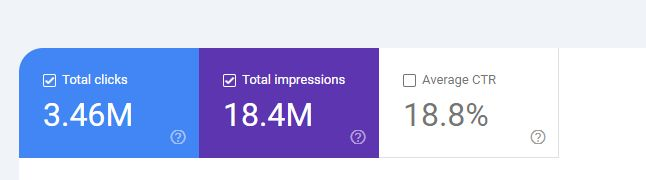
@lianshangpixiu framed (26 likes, 23 replies, 2,740 views) KOR Protocol's Streamline as a creator tool for deciding what to make next rather than for producing more content faster. KOR's public docs describe Streamline as part of its broader creator operating system, extending the same protocol stack across video, visual art, and multi-format workflows. @ctatedev shipped (14 likes, 827 views, 9 bookmarks) a named-slots feature in json-render, whose public GitHub README describes a guardrailed generative-UI framework that safely renders AI-generated JSON across React, Vue, Svelte, Solid, Next.js, terminal, PDF, and email targets.
Discussion insight: The replies kept pulling the same lever: portability and observability matter more once raw model quality compresses. Users wanted token accounting they could trust, a harness they still control after a plan limit, and measurement for distribution channels that now include AI answers instead of only search rankings.
Comparison to prior day: August 15 rewarded agent products for hiding setup tax. August 16 kept the product focus, but turned it into an accounting and ownership debate: readers wanted better visibility into spend, limits, and the distribution layer those products now sit on.
1.3 Compute demand stayed broad, but the bottlenecks moved outward to networks and data loops (🡕)
Compute remained a bullish theme, but the day’s best items made it more concrete. The evidence widened from “we need more GPUs” to “we also need more inter-site fiber, more robotics data, and more simulation loops.”
@danroberts0101 argued (1,074 likes, 85 replies, 59,469 views, 104 bookmarks) that every new AI data center creates more AI demand rather than satisfying it, because capability improvements, cheaper inference, and new software use cases all expand consumption faster than power, concrete, and transmission can be built. Replies mostly agreed on demand and focused instead on timing and supply lag.
@SMASIMHO added (75 likes, 3 replies, 3,263 views) Goldman Sachs' estimate that token use by AI agents could multiply 24x by 2030, then extended the same logic into physical AI and generative agents. The attached chart is useful because it separates enterprise agents, consumer agents, generative agents, and physical AI rather than treating “AI demand” as one undifferentiated line.

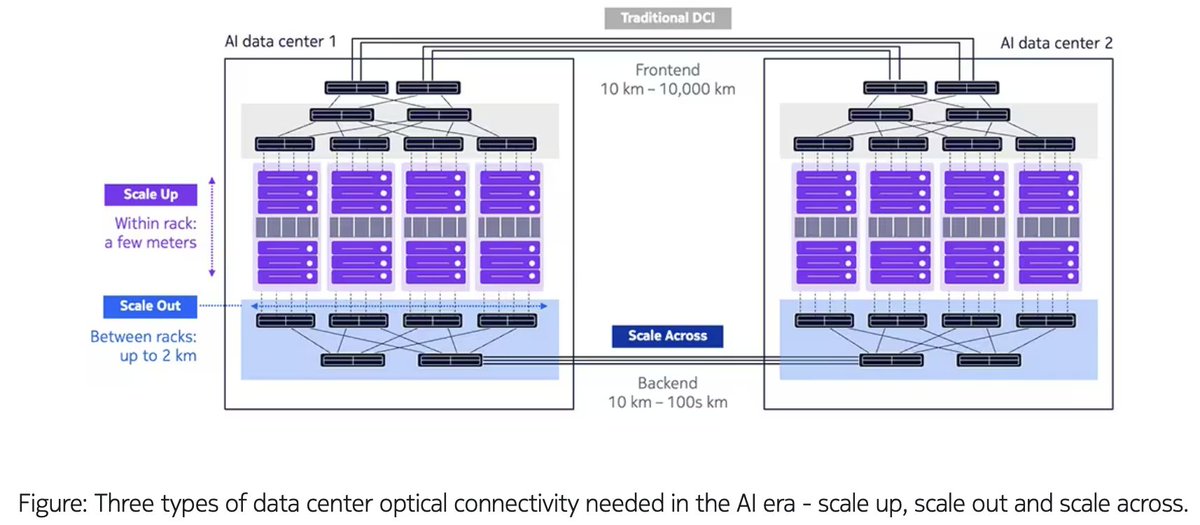
@KawzInvests highlighted (94 likes, 16 replies, 21,749 views, 44 bookmarks) an infrastructure constraint further down the stack: the optical networking needed to connect AI data-center sites. The attached diagram breaks the problem into scale up, scale out, and scale across, while the quoted earnings commentary claimed that linking just two hyperscaler sites could require double the backbone capacity that customer built over the previous decade.
Physical AI fit the same pattern. @Tamimofficial39 reported (31 likes, 27 replies, 212 views) that Axis Robotics is sending 3M+ multimodal trajectories into OpenRoboto's open data pool, while @JannatSariha emphasized (24 likes, 21 replies, 211 views) the loop of real-world data, model training, randomized evaluation, and better models. The partnership graphic matters because it spells out the machinery: Bittensor Subnet 80 competition, miners fine-tuning from a π0.5 base model, continuous scoring, and randomized LIBERO-Pro evaluation.

Discussion insight: The interesting disagreement was no longer whether AI infrastructure will expand, but which constraint matters next. Networking, data collection, benchmark auditability, and simulation realism got almost as much attention as raw model compute.
Comparison to prior day: August 15 made the open robotics data-to-model loop more explicit. August 16 widened that same logic into a broader compute stack that now includes fiber, optical fabrics, simulation, and robotics data acquisition.
1.4 Safety talk became more operational: scan the skills, lock the actions, explain the org chart (🡕)
The safety cluster was more concrete than the prior day’s abstract evaluation arguments. Four retained items focused on operator controls, live security tooling, and what it means when a frontier lab restructures the team supposed to own preparedness.
@bibryam cataloged (11 likes, 732 views, 18 bookmarks) open-source tools for securing AI agent skills. The attached comparison table is informative on its own, and the linked public repos add more detail: SkillSpector describes 69 vulnerability patterns across 17 categories, while Cisco Skill Scanner combines static signatures, behavioral dataflow analysis, LLM analysis, and CI/CD outputs.
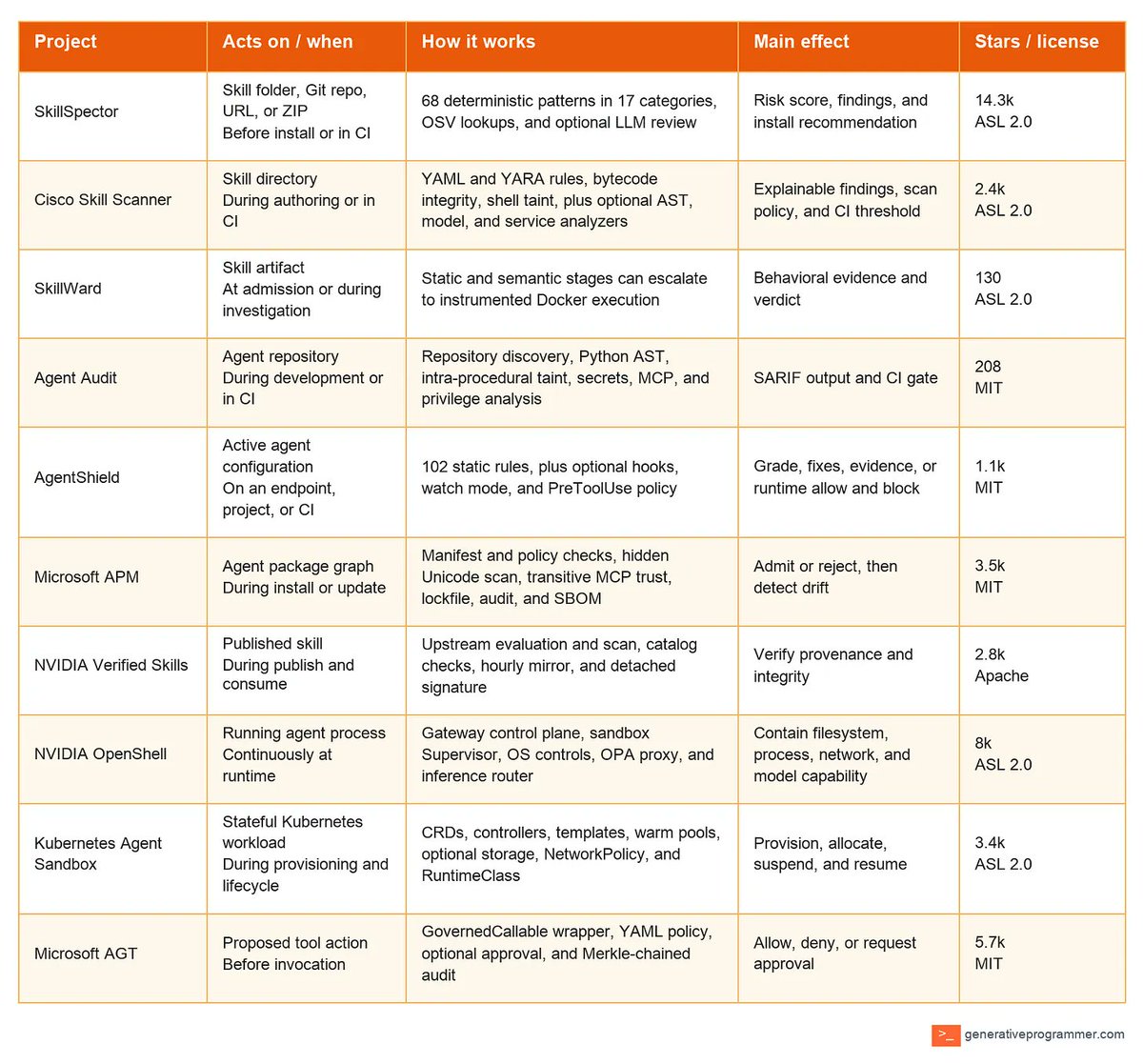
@0xCristal recommended (14 likes, 6 replies, 391 views) the next layer up: pre-flight checks, approval gates, tamper-evident logs, strict cloud permissions, and human-in-the-loop review for risky actions. @NitinGavhane_ flagged (2 likes, 73 views) a more alarming offensive-security example, linking pwn.ai's public XSS2Shell write-up, which says an open-source-model workflow found a pre-auth WordPress XSS-to-RCE chain affecting supported WordPress branches until the 7.0.3 emergency patch and backports landed.
@AISafetyMemes summarized (20 likes, 1,969 views) reporting that OpenAI disbanded its preparedness team, and The Verge independently confirmed that responsibilities were redistributed into existing bio and cyber teams. @_NathanCalvin argued (26 likes, 2,123 views) that OpenAI now owes a direct public explanation of why that reshuffle is supposed to improve safety at the same moment the company keeps discussing more powerful models and “commensurate safeguards.”
Discussion insight: The pattern across these items was not “we need more safety” in the abstract. It was “show the exact scanner, show the exact approval gate, show the exact mitigation path, and show who inside the company is accountable for it.”
Comparison to prior day: August 15 treated reasoning and cyber evaluation as operational engineering problems. August 16 kept the operational framing but moved closer to deployment: package vetting, runtime guardrails, exploit discovery, and frontier-lab team structure.
2. What Frustrates People
Local inference still degrades under real agent workloads
Severity: High. The most repeated complaint was not that open local models are weak; it was that the cheap, fast demo path does not survive long contexts, harness prompts, and loops. @burkeholland reported (85 likes, 54 replies, 19,446 views) that his Qwen 3.8 27B run on 64GB of VRAM slowed enough that hosted Grok 4.6 and Kimi K3 finished in about 30 minutes while the local job kept running for six hours. @witcheer showed (35 likes, 2,227 views) that near-equal short-context benchmark scores can hide a 27-point long-context retrieval gap, while @DogukanUrker argued (46 likes, 5 replies, 2,200 views, 24 bookmarks) that loop rates, not just scores, decide whether a local model belongs in an agent loop. The workaround today is narrow scoping: keep local models for short chats, fixed pipelines, or cheap background work, and fall back to hosted systems for long-horizon execution. This is directly worth building for.
Plan limits and opaque billing still distort tool choice
Severity: High. @Da7_Tech reviewed (138 likes, 34 replies, 7,751 views, 72 bookmarks) almost every major subscription through the lens of what breaks first: Grok's limits, GLM cache hits counting against usage, Claude's opaque token burn, Codex weekly caps, Factory's plan-gated harness, and Perplexity's distorted open-model experience. The pain is not only cost; it is unpredictability. Users cannot plan workflows cleanly when they do not know whether a cache hit, a long session, or a single heavy day will collapse the value of the plan. The workaround is to stack multiple subscriptions, keep a cheaper fallback, or prefer plans with explicit token accounting such as MiniMax. This is directly worth building for.
Enterprise procurement still moves slower than AI-defined internal builds
Severity: Medium. @chamath argued (230 likes, 49 replies, 54,883 views, 115 bookmarks) that AI has materially changed the build side of the build-vs-buy equation, while the replies said the real bottleneck is the buying group, not the code. @alexgroberman added (44 likes, 4 replies, 4,271 views) that even distribution is changing underneath operators because old SEO metrics no longer describe the full surface where customers discover products. The current workaround is to build narrow internal workflows quickly and keep buying decisions only for the undifferentiated parts. This is worth building for because the complaint is procedural and recurring, not one-off.
Autonomous systems still need explicit safety gates and clearer ownership
Severity: High. @bibryam shared (11 likes, 732 views, 18 bookmarks) concrete scanners and policy tools because the default trust model around agent skills is still too weak. @0xCristal said (14 likes, 6 replies, 391 views) that anyone granting write or exec permissions now needs guardrails, approval gates, sandboxes, and audit trails. At the frontier-lab level, @AISafetyMemes reported (20 likes, 1,969 views) that OpenAI disbanded its preparedness team, and @_NathanCalvin argued (26 likes, 2,123 views) that OpenAI now needs to explain why that is an improvement. The workaround today is more scanning, tighter permissions, and manual review layers. This is directly worth building for.
3. What People Wish Existed
Consumer-grade local stacks that stay reliable at long context
The feed did not ask for “more open models” in the abstract. It asked for open models that remain useful after you add harness prompts, long context, and multi-step execution. @analogalok showed (368 likes, 22 replies, 33,694 views, 484 bookmarks) how much tuning is now required to squeeze Qwen 3.8 27B onto an 8GB card, while @witcheer showed (35 likes, 2,227 views) that the cheaper quant can still lose a quarter of buried-fact retrieval tasks at long context. The need is practical and urgent: a lot of people can now run the model, but fewer can trust it for repo-scale or document-scale work. Opportunity type: direct.
Transparent pricing and portable harnesses
People repeatedly asked for plans that say what they cost and harnesses that remain useful after the plan limit is hit. @Da7_Tech reviewed (138 likes, 34 replies, 7,751 views, 72 bookmarks) MiniMax positively because it exposes token accounting, while criticizing GLM, Claude, Factory, and Codex for plan opacity or allowance cliffs. The need is practical, not aspirational: users want predictable cost controls, carry-over memory, and bring-your-own-model portability. Opportunity type: direct.
Measurement for AI-native discovery, not just classic SEO
@alexgroberman argued (44 likes, 4 replies, 4,271 views) that Google itself is now telling businesses to consider the “full picture” beyond classic search rankings, and his screenshots center AI-search traffic and citation-like visibility surfaces rather than only blue-link rankings. This looks like a practical need because operators already believe the channel exists; what they do not yet have is a stable measurement layer for it. Opportunity type: direct.
Verifiable data and benchmark loops for physical AI
The Axis/OpenRoboto cluster was less about humanoid spectacle and more about what a missing robotics infrastructure stack should look like. @Tamimofficial39 reported (31 likes, 27 replies, 212 views) the addition of 3M+ multimodal trajectories to an open pool, while @JannatSariha emphasized (24 likes, 21 replies, 211 views) randomized evaluation and continuous benchmarking. The need is practical: open robotics progress still depends on scalable data collection and auditable promotion rules. Opportunity type: competitive.
Agent control planes that connect scanning, approval, and audit
@bibryam listed (11 likes, 732 views, 18 bookmarks) scanners and governance projects, and @0xCristal described (14 likes, 6 replies, 391 views) the runtime controls teams still need around write and exec permissions. The opportunity is not just another static scanner. It is a joined-up layer that can vet skills, enforce approval policies, record tamper-evident logs, and keep a human in the loop when risk rises. Opportunity type: direct.
4. Tools and Methods in Use
| Tool | Category | Sentiment | Strengths | Limitations |
|---|---|---|---|---|
| Qwen 3.8 27B | Open LLM / local inference | (+/-) | Can be pushed onto cheap GPUs with aggressive quantization; strong benchmark reputation; long-context and MTP tuning options | Decode speed can stay slow; long-context quality depends heavily on quant; loop rates still matter in agent runs |
| Muse Glimmer 30B | Open LLM / local inference | (+/-) | Competitive with Qwen at 2-bit on 12GB cards; steadier loop rates in the cited harness | Still trades accuracy by task; no claim here that it solves long-horizon stability outright |
| Gemma 4 12B | Open LLM / local inference | (-) | Smaller footprint at 4-bit | In the cited harness it lost all four benchmarks and collapsed into repetition on many tasks |
| SuperGrok / Grok Build | Agent product / subscription | (+/-) | Fast output, strong execution, X access, useful orchestration, good PDF handling | Hard usage limits at the current price |
| MiniMax Token Plan / M3 | Open-model subscription | (+) | Transparent token accounting, speed, strong web-dev and creative value at $20 | Instruction-following and long-horizon work can drift |
| ChatGPT / Codex | Chatbot / coding subscription | (+/-) | Fast general research, planning, factual checks, smaller-task coding via Luna | Weekly coding caps can disappear quickly; Sol can be reckless on instructions |
| Claude / Claude Code | Chatbot / coding subscription | (+/-) | Strong writing, brainstorming, design taste, visual work, 3D-related tasks | Opaque usage, high token burn, slow responses, weak portability into third-party harnesses |
| SkillSpector | Agent-skill security scanner | (+) | 69 vulnerability patterns across 17 categories; scans repos, URLs, zips, and directories; outputs JSON/Markdown/SARIF | README explicitly frames it as risk scoring and best-effort scanning, not a guarantee of safety |
| Cisco Skill Scanner | Agent-skill security scanner | (+) | Combines pattern checks, behavioral dataflow, LLM analysis, and CI/CD outputs; lenient mode for non-standard skills | README explicitly warns that no-findings does not mean no risk |
| json-render | Generative UI framework | (+) | Guardrailed component catalogs, predictable JSON output, cross-platform rendering, named slots for richer layout control | Requires developers to define and maintain the component catalog and schemas |
| Qdrant + vLLM on OCI OKE | Owned agent infrastructure | (+) | Public reference architecture for self-controlled RAG + agent serving with Terraform, FastAPI, and Kubernetes | More operational burden than calling a hosted API |
The overall satisfaction spectrum was split by workload shape. For cheap, short, and mostly deterministic jobs, people were increasingly willing to accept open-model or lower-tier plans. For long-context, long-horizon, or business-critical execution, the feed still preferred hosted systems with stronger recovery and better distribution access. The clearest migration pattern was not model-to-model alone; it was opaque plans and brittle local stacks losing ground to tools that either expose their accounting or keep the operator in control.
5. What People Are Building
| Project | Who built it | What it does | Problem it solves | Stack | Stage | Links |
|---|---|---|---|---|---|---|
| Streamline | @KorProtocol | Audits a creator's recent output, benchmarks it against high-performing content, and suggests what to test next | Reduces the research and decision overhead behind content strategy | AI analysis over creator/account data; KOR protocol surfaces for creator workflows | Beta | tweet, KOR docs |
| json-render named slots | @ctatedev | Adds named layout regions to a guardrailed generative-UI framework | Makes AI-generated interfaces more structured and composable | TypeScript, component catalogs, React/Vue/Svelte/Solid/Next.js renderers | Shipped | tweet, GitHub |
| Clude memory model | @sebbsssss | A 4B specialist memory model trained on 4.9M examples across nine memory operations | Tries to make persistent memory cheaper and more reliable than general-purpose models alone | 4B specialist model, local quantized inference, MemOps-style evaluation | Alpha | tweet |
| Open Generative AI | @VaibhavSisinty | Open-source app wrapping 400+ image, video, and lip-sync models across 14 studios | Replaces multiple paid media-generation subscriptions with one self-hosted surface | Open-source app; MuAPI-backed model access per README | Shipped | tweet, GitHub |
| SkillSpector | NVIDIA | Scans agent skills for vulnerabilities, malicious patterns, and risky behaviors before install | Reduces trust risk around third-party AI agent skills | Python CLI; static analysis plus optional semantic checks | Shipped | repo |
| Skill Scanner | Cisco AI Defense | Best-effort scanner for AI agent skills with behavioral and LLM analysis | Gives teams a CI/CD-ready way to catch prompt injection, exfiltration, and malicious code patterns | Python CLI; YAML/YARA, dataflow, LLM, SARIF, GitHub Actions | Shipped | repo |
| OCI RAG + agent reference app | @OracleDevs | Public reference application for self-hosted RAG plus agent tooling on OCI | Shows infra teams how to own scheduling, serving, and retrieval instead of outsourcing all of it to an API | React, FastAPI, Qdrant, vLLM, OKE, GitHub Actions, Terraform | Shipped | tweet |
The most interesting build pattern was compression of operator effort. Streamline tries to compress creator strategy work from hours to minutes; json-render compresses generative UI composition into a safer catalog-and-slot model; the Clude memory model tries to compress persistent-memory costs into a smaller specialized system.
A second pattern was control. SkillSpector, Cisco Skill Scanner, and Oracle's owned RAG reference app all assume teams do not want to outsource trust or runtime ownership completely. Even Open Generative AI fits the same pattern from a different direction: instead of trusting a closed media suite, it offers one open surface with many models behind it.
The repeated trigger for new builds was not “AI is cool.” It was workload friction: too much strategy overhead, too much runtime risk, too many subscriptions, or too little control over where an agent is allowed to run.
6. New and Notable
OpenAI's preparedness reshuffle became a public trust signal
The strongest organizational signal was not a new model release but reporting that OpenAI disbanded its preparedness team and moved responsibilities into existing bio and cyber teams. @AISafetyMemes amplified (20 likes, 1,969 views) FT excerpts stressing internal unease, and @_NathanCalvin pressed (26 likes, 2,123 views) for a direct explanation of why the new structure is safer than the old one. What made this notable was not outrage volume but the shift in what counted as evidence: people wanted structural accountability, not brand-level reassurance.
Autonomous security work got a concrete offensive-security proof point
@NitinGavhane_ flagged (2 likes, 73 views) pwn.ai's public XSS2Shell post, which says an open-source-model workflow found a pre-auth WordPress XSS-to-RCE chain affecting supported WordPress branches until WordPress 7.0.3 and backports shipped. The claim matters because it moves “AI can help with security research” out of generic aspiration and into a specific vulnerability, specific CVE, and specific patch event.
Reasoning-cost research kept reframing RL as a narrower optimization target
@mark_k summarized (15 likes, 4 replies, 1,171 views) a paper arguing that RL for LLM reasoning mostly redistributes probability over solutions the base model already knows, then proposed an RL-free alternative called ReasonMaxxer. The claim that only 1–3% of tokens need targeted intervention, and that a much cheaper method can match or beat full RL, is notable because it feeds directly into the day’s broader obsession with spend control.
7. Where the Opportunities Are
[+++] Long-context local agent runtimes — Multiple items agree that the next gap is not basic local inference but stable long-context execution with compaction, low loop rates, and predictable speed. @analogalok showed the affordability breakthrough, while @burkeholland, @DogukanUrker, and @witcheer showed where the current stacks still break.
[+++] Transparent usage, limits, and harness portability — @Da7_Tech described subscription choice almost entirely through the lens of limit opacity and harness lock-in, and @chamath argued that internal builds are getting faster relative to procurement. A product that gives teams stable accounting, plan-aware orchestration, and bring-your-own-model portability would answer pain from sections 2, 4, and 5 at once.
[++] Agent control planes for risky actions — @bibryam, @0xCristal, and the public pwn.ai XSS2Shell write-up all point to the same missing layer: scanning alone is not enough. Teams also want approval gates, execution policies, audit logs, and sandbox boundaries that stay attached to agents in production.
[++] AI-search measurement and optimization — @alexgroberman argued that AI search is already a separate operating channel, but the tooling story still looks early. The opportunity is not another SEO dashboard; it is a system that can track citations, answer-surface presence, and attribution shifts across search and LLM answer engines.
[+] Open physical-AI data and evaluation infrastructure — The Axis/OpenRoboto cluster suggests rising demand for shared data pools, auditable benchmark promotion, and simulation-linked training loops. The signal is smaller than the coding-agent market today, but it is one of the clearest places where open infrastructure still looks underbuilt.
8. Takeaways
- Local open models are crossing price thresholds faster than they are crossing reliability thresholds. Qwen 3.8 can now be squeezed onto much cheaper hardware, but long-context retrieval, harness slowdown, and loop stability are still active constraints. (source)
- AI product choice is increasingly about accounting and control, not just output quality. The strongest subscription review of the day praised plans that expose token usage clearly and criticized tools whose limits, cache rules, or closed harnesses make costs unpredictable. (source)
- Compute demand is widening into networking and robotics data, not only model training. The feed paired macro claims about relentless AI demand with concrete evidence around scale-across optical fabrics and open robotics trajectory pools. (source)
- Safety conversations got more operational. People shared scanners, approval layers, and exploit write-ups instead of speaking only in broad alignment terms. (source)
- Builders kept targeting workflow compression and ownership. The day’s clearest projects tried to cut research overhead, control more of the runtime, or collapse multiple subscriptions into one open surface. (source)