Twitter AI - 2026-08-22
1. What People Are Talking About
1.1 Agent work is moving up-stack into harnesses and context control (🡕)
The densest cluster today was not a single model launch. It was the layer around models: context compression, reusable skills, agent traces, and automation harnesses. Across one high-engagement thread and several lower-volume builder posts, the shared thesis was that prompt wording matters less than what the agent is allowed to see, store, reuse, and evaluate.
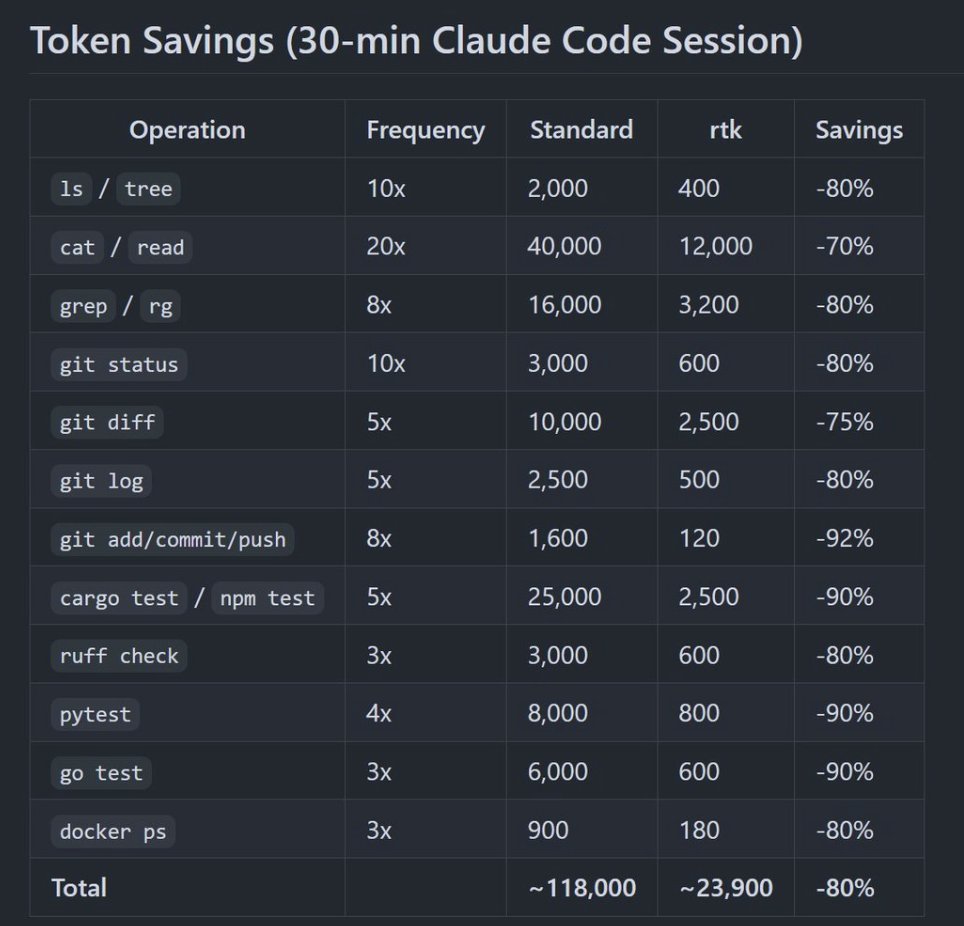
@sairahul1 argued that coding agents are wasting far more budget on terminal output, repo dumps, logs, MCP payloads, and verbose responses than on the prompt itself (post, 115 likes, 10 reposts, 25.2k views). The attached table makes the point tangible: a 30-minute Claude Code session falls from roughly 118,000 tokens to about 23,900 when noisy command output is compressed before it reaches the model.
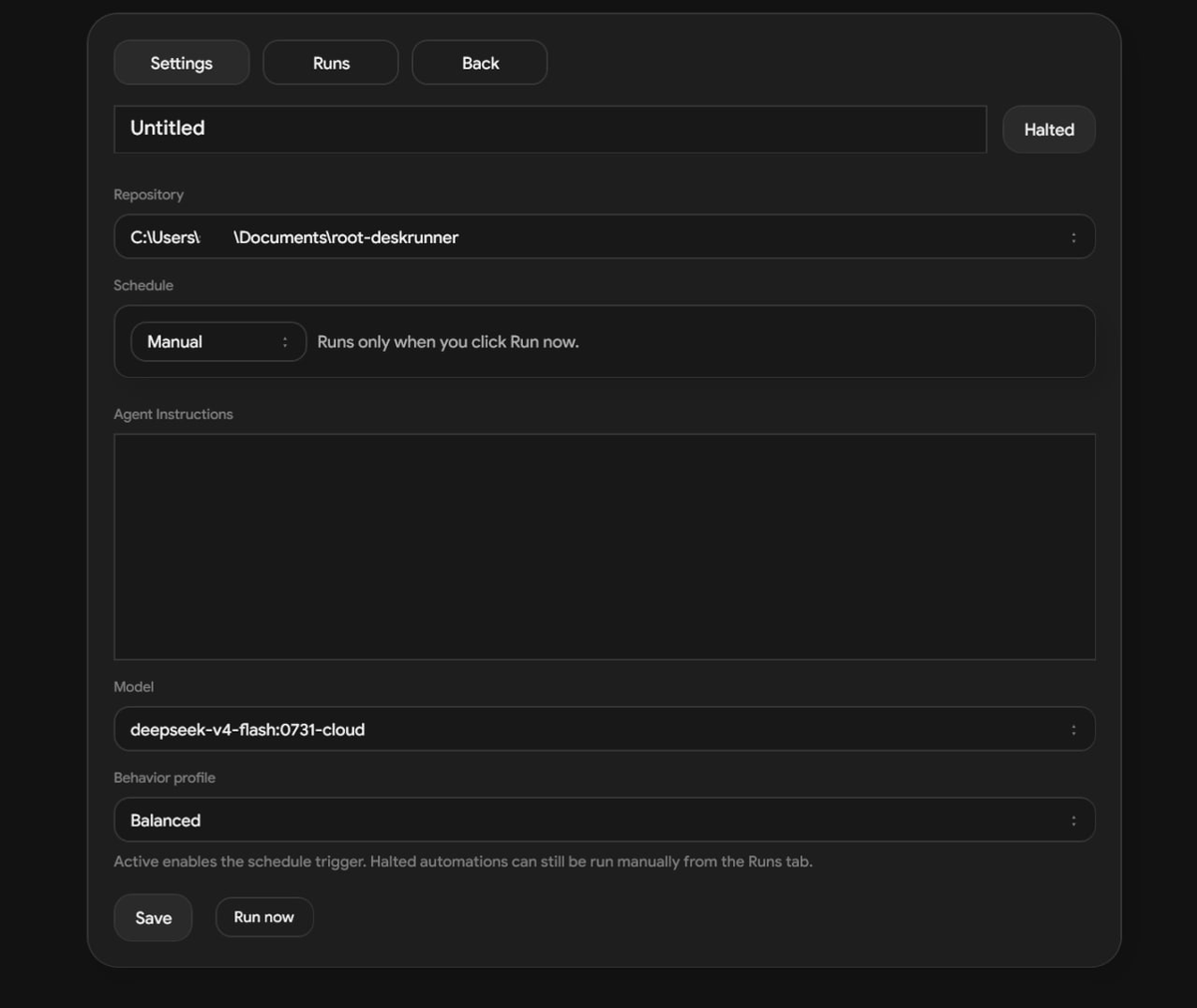
@palmaierc showed /root automations as reusable agent jobs with stack-aware prompt adjustment and dynamic evaluation rather than one-off prompts (post, 28 likes, 16 reposts, 884 views). The public site is still sparse, but the screenshots show a concrete harness UI with reusable templates, repo-path selection, schedules, and model-selection controls.
@DanKornas posted two complementary control-plane projects: PandaProbe for tracing, evaluation, monitoring, and debugging (post, 6 likes, 1 repost, 800 views), and SkillNet for packaging skills so they are searchable, installable, evaluable, and composable across agents (post, 5 likes, 2 reposts, 764 views). Together they point to the same architectural shift as the token thread: move state, logs, and reusable capabilities out of ad hoc chat turns and into durable infrastructure.
Discussion insight: The most useful reply under the token thread did not recommend shorter prompts. It recommended routing exploratory work through subagents that return summaries instead of raw logs, which matches the broader move toward traces, skill packaging, and externalized context rather than bigger windows alone.
Comparison to prior day: The previous day already had posts arguing that AI products win on approval flows, guardrails, and integration discipline. Today that abstraction turned into concrete tooling for context compression, automations, observability, and reusable skills.
1.2 Benchmarking is being rebuilt around real tasks, budgets, and investigation quality (🡕)
The second major theme was dissatisfaction with static answer-key benchmarks. Posts across benchmarking, research, and security review all converged on the same complaint: good-looking scores are easier to inflate than reliable performance on messy tasks, so evaluation has to move closer to real workflows.
@coastyai launched CoArena as a crowdsourced computer-use arena where two frontier agents run the same real task in identical sandboxes and humans judge the result blind (post, 44 likes, 5 reposts, 3.3k views). The launch numbers were intentionally unflattering: only about 66% of agent runs finish tasks at all, the best frontier agent completes about 87% of identical runs, the worst about 42%, and roughly 7% of battles end with both agents failing.
@Nozelcode highlighted TRACES, which grades the investigation itself rather than only the final answer, using tools, repair, alternatives, coherence, evidence, and scope as separate dimensions (post, 105 likes, 1 repost, 2.9k views). The public TRACES site and how-it-works page make the same case explicitly: the harder scientific problems are the ones without answer keys, so the benchmark has to score how an agent explores and justifies.
@marfinxx summarized Google DeepMind's BATS work as a harness-side fix for runaway tool use, claiming 51.4% to 84.6% gains in complex multi-step completion while redundant calls fall 54.2% (post, 18 likes, 393 views). The public budget-aware-agent repo frames the same approach as explicit budget tracking, verification, and replanning inside the agent loop. Meanwhile, @XFreeze shared the updated Artificial Analysis τ³-Banking chart, where Grok 4.6 leads but still only reaches 51% on a rule-heavy banking workflow (post, 56 likes, 12 reposts, 3.9k views).

@ChainfireXDA added a practical reviewer's objection: Claude found known problems in a project, but missed the critical logic bugs because it never compared the implementation against the correct domain model (post, 8 likes, 2 reposts, 571 views). That is the same theme in another form: pattern-matching audits are not enough when the task is to reason from evidence about how the system should behave.
Discussion insight: The most striking benchmark numbers today were not the winners. They were the failure bars: one-in-three tasks dying before score in CoArena, and first place in banking still sitting at roughly half the tasks solved.
Comparison to prior day: Yesterday's conversation already leaned toward approval gates and evaluation layers. Today the conversation got harsher and more empirical, with new arenas, explicit failure rates, and benchmark designs aimed at unknown-answer work.
1.3 Physical AI talk centered on data engines and correction loops, not robot bodies (🡕)
Physical AI remained active, but the emphasis was not humanoid demos or generic robotics optimism. The strongest posts were about how to create, filter, and apply useful interaction data: short corrections, better scene coverage, and loops that connect simulation back to physical output.
@BossMon_02 summarized Axis's result that 660 human corrections collapsed to only 161 training-worthy snippets, that direct imitation actually dropped success from 40.0% to 36.7%, and that verified short corrections raised the three-seed average to 48.3% (post, 134 likes, 393 views). That is a strong argument that filtering and verification matter more than raw correction volume.

@Etheliaeth framed the broader issue as "the data problem in physical AI," arguing that robotics needs infrastructure for producing interactions, not only better models (post, 48 likes, 762 views). The public AXIS overview and research page support that framing with 207 tasks, more than 50,000 trajectories, more than 60,000 scene variants, and a reported gain for π0.5 from 83.9 to 88.8 on LIBERO-Plus when trained with the full AXIS set.

@starlitmatcha amplified Generalist AI's GEN-1.5 result: 3 to 12 seconds of demonstration is enough for one-shot task transfer with 59% mean success across 10 tasks, rising to 83% after 10 gradient steps on about 5 minutes of data (post, 33 likes, 1 repost, 3.3k views). The public GEN-1.5 write-up adds the same one-shot and few-shot details. @ProfBuehlerMIT pushed the same theme into a maker workflow by describing agents that went from images to simulator generation to 47 experiments to STL export and 3D printing on a Bambu Lab H2D (post, 129 likes, 26 reposts, 22.0k views).
Discussion insight: The shared operational idea across these posts is that physical-AI progress depends on the quality and structure of the interaction loop: short verified corrections, diverse scenes, and fast iteration from simulation back into the physical world.
Comparison to prior day: Physical AI was already present on the previous day, but today's posts were more specific about the data engine behind the models and the measurable lift from better correction handling.
1.4 Local and multimodal deployment got more practical, but only when the target machine is explicit (🡕)
The last strong theme was practical deployment fit. The most useful posts were not generic "local AI is coming" claims, but concrete examples tied to a modality or a machine: local voice input on macOS, faster prototyping with a smaller frontier model, multimodal release tables, and hardware-fit charts for single-box inference.
@elliotarledge launched Phonon as local voice typing for macOS with screen-context OCR, Parakeet ASR, and Gemma-based correction, all kept on-device after install (post, 12 likes, 1 repost, 1.0k views). The public Phonon site and repo describe the same local-first pipeline in more detail. @rakyll gave a first-hand productivity comparison in the same direction: an office simulator that took 50+ attempts with a pro model 18 months ago took 7 to 8 shots with Gemini Flash 3.7 (post, 69 likes, 3 reposts, 5.4k views).
@RoundtableSpace circulated DeepSeek-V4-Flash-Vision-Exp with a benchmark table that positioned the fast vision model as roughly text-parity with V4 Flash while improving multimodal-agent performance (post, 21 likes, 19.4k views). The official DeepSeek update gives the detail missing from the tweet: 83.9 on Terminal Bench 2.1, 59.3 on DeepSWE, 36.5 on ApexBench Pass@1, 64.3 on Chartography, and 35.0 on ZeroBench.
@sudoingX supplied the sharper operator view by mapping which "flash" models actually fit a single DGX Spark and which do not (post, 6 likes, 951 views). Their chart shows only a narrow 118B-124B band comfortably fitting the box, while Step 3.7 Flash misses the usable memory budget by about 13GB.

Discussion insight: "Flash," "lite," and "mini" were treated skeptically today. The meaningful question was whether the model fit the intended hardware and workload, not whether the marketing label implied efficiency.
Comparison to prior day: The previous day had more generic hybrid-routing talk. Today's posts were more operational: local speech input, single-machine fit constraints, and concrete before-versus-after workflow gains.
2. What Frustrates People
Benchmark realism and hidden failure rates
Severity: High. Multiple posts were frustrated less by low scores than by misleadingly tidy benchmark narratives. @coastyai said real computer-use tasks only completed about two-thirds of the time in CoArena, with one-in-three runs failing before any score existed (post, 44 likes, 5 reposts, 3.3k views). @XFreeze then showed a banking benchmark whose leading model still solved only 51% of tasks (post, 56 likes, 12 reposts, 3.9k views). This looks worth building for because the gap is not abstract: builders want evaluation systems that show failure modes before deployment, not after.
Context bloat in coding-agent workflows
Severity: High. The most explicit frustration today was that coding agents keep burning budget on the wrong things. @sairahul1 argued that terminal logs, repo dumps, MCP payloads, and agent verbosity can waste 10x to 50x more tokens than necessary, and attached a table showing command output dominating a working session's token bill (post, 115 likes, 10 reposts, 25.2k views). The practical coping strategy visible in the thread was not "write shorter prompts" but summarize raw output, route exploratory work through subagents, and externalize large tool responses.
Domain logic still slips past AI review
Severity: High. @ChainfireXDA described a concrete review failure where Claude flagged known issues but missed the critical bugs because it never compared the code against the domain rules the reviewer expected it to apply (post, 8 likes, 2 reposts, 571 views). That matches the demand behind TRACES and BATS: people do not only want fluent outputs, they want agents that can reason from evidence, conserve budget, and know when their current line of reasoning is not enough.
Data quality, not raw volume, in physical AI
Severity: High. The frustration in robotics posts was with noisy or unhelpful data. @BossMon_02 reported that only 161 of 660 human corrections were good enough to keep, and that naive imitation made results worse before verified snippets improved them (post, 134 likes, 393 views). @Etheliaeth generalized that into a broader complaint that physical AI still lacks enough infrastructure for collecting the right interactions in the first place (post, 48 likes, 762 views). This also looks worth building for because the pain sits below the model layer and appears repeatedly across separate posts.
Local deployment guidance is still fragmented
Severity: Medium. @sudoingX argued that model cards publish parameter counts and benchmark scores but rarely explain what actually runs on a specific box, then published a DGX Spark fit chart to fill that gap (post, 6 likes, 951 views). The reply was blunt: too much of this knowledge still lives in scattered timelines. Phonon and Gemini Flash 3.7 show that local and smaller-model workflows can work well, but only once the operator knows the exact modality, memory budget, and task shape.
3. What People Wish Existed
Evaluation that rewards investigation, not just lucky answers
This was the clearest practical need in the dataset. TRACES exists because many important tasks do not have a known answer key, and CoArena exists because static computer-use suites keep saturating once examples leak into training (TRACES post, 105 likes, 1 repost, 2.9k views), 44 likes, 5 reposts, 3.3k views). The need is urgent rather than aspirational: people want benchmarks that score tool use, evidence, recovery, and step quality on live tasks. Opportunity: direct.
Reusable agent control planes instead of one-off prompt craft
Several builders were effectively asking for the same missing layer: a place to save automations, inspect traces, package skills, and run evaluations outside the chat transcript. /root turns automations into reusable jobs, PandaProbe centralizes traces and evaluations, and SkillNet turns prompts, repos, docs, and traces into installable skill packages (/root post, 28 likes, 16 reposts, 884 views), 6 likes, 1 repost, 800 views; SkillNet post, 5 likes, 2 reposts, 764 views). This looks like a practical workflow need rather than a novelty feature. Opportunity: competitive.
Local-first interfaces that keep private context on-device
Phonon is evidence that there is real demand for private, local interaction layers around models, not only local models in the abstract (post, 12 likes, 1 repost, 1.0k views). The DGX Spark fit thread adds the missing operations need: people also want trustworthy guidance on which models actually fit their machine and workload (post, 6 likes, 951 views). Together these posts point to a practical need for local-first UX plus deployment clarity. Opportunity: direct.
Vertical harnesses for regulated work
The most explicit domain-specific request came from finance. @FundamentEdge argued that Wall Street does not need generic Claude Code patterns as much as vertical systems with domain experts, harnesses, evaluation sets, context maps, and workflow-specific knowledge (post, 70 likes, 3 reposts, 13.2k views). Combined with the rough banking benchmark scores, this reads as a concrete ask for domain-tuned operating systems around models. Opportunity: competitive.
4. Tools and Methods in Use
| Tool | Category | Sentiment | Strengths | Limitations |
|---|---|---|---|---|
| RTK / context-reduction stack | Coding-agent workflow | (+) | Cuts noisy command and tool output before it reaches the model; large token savings in active sessions | Requires extra workflow plumbing and does not fix weak task decomposition by itself |
/root |
Agent workspace / harness | (+/-) | Reusable automations, dynamic prompt adjustment, evaluation hooks, model-selection UI | Public evidence is still mostly screenshots and launch messaging rather than deep docs |
| PandaProbe | Agent engineering platform | (+) | Unified tracing, evaluations, monitoring, debugging, cloud or self-hosted deployment | Early-stage project with small public usage signal so far |
| SkillNet | Skill packaging / orchestration | (+) | Searchable and installable skills; can generate skills from prompts, repos, docs, or traces | Public evidence today is mostly the README screenshot and launch thread |
| Phonon | Local voice interface | (+) | On-device audio, OCR context, open-source stack, focused UX for dictation into models | macOS-specific and optimized for a narrow interaction mode |
| Gemini Flash 3.7 | Model | (+) | Faster prompt-to-working output in at least one first-hand prototyping workflow | Evidence here is anecdotal rather than benchmark-heavy |
| DeepSeek-V4-Flash-Vision-Exp | Multimodal model / API | (+) | Strong public benchmark table for visual-agent tasks while keeping text ability near V4 Flash | Still a hosted model story, not a local deployment answer |
| DGX Spark fit band | Deployment method | (+/-) | Makes single-box inference planning concrete instead of relying on marketing labels | Useful fit information is still fragmented and manually assembled |
| BATS | Agent execution method | (+) | Budget-aware tool use, replanning, and self-verification improve completion without retraining | Research method rather than turnkey product |
| EnvHarness | Benchmark / environment method | (+) | Reshapes static environments with plugins while preserving original verifiers | Still research infrastructure, not a broad production tool yet |
Overall sentiment skewed positive toward infrastructure that makes agent behavior observable, cheaper, or more reusable, and mixed toward anything that was still mostly promise or screenshot. The common workaround pattern was to move expensive state outside the main conversation: compress output, store traces separately, turn repeated workflows into automations, and package successful behaviors as reusable skills rather than rewriting prompts each time (sairahul1 post, 115 likes, 10 reposts, 25.2k views; PandaProbe post, 6 likes, 1 repost, 800 views; SkillNet post, 5 likes, 2 reposts, 764 views).
There was also a visible split between tools that make agents easier to operate and models that make specific workloads easier to run. Phonon, Gemini Flash 3.7, DeepSeek-V4-Flash-Vision-Exp, and the DGX Spark fit chart all point to narrower, better-specified workloads instead of a universal "best model" story (Phonon post, 12 likes, 1 repost, 1.0k views; rakyll post, 69 likes, 3 reposts, 5.4k views; sudoingX post, 6 likes, 951 views).
5. What People Are Building
| Project | Who built it | What it does | Problem it solves | Stack | Stage | Links |
|---|---|---|---|---|---|---|
| /root | @palmaierc | Local AI workspace with reusable automations, dynamic prompt adjustment, and evaluation-aware runs | Replaces repeated manual prompt setup for recurring agent jobs | Desktop harness UI, stack-aware prompting, evaluation hooks, model-selection controls | Beta | site, tweet |
| Phonon | @elliotarledge | Local voice typing for models with OCR-based screen context | Gives users a private, low-latency input layer instead of cloud dictation | macOS app, Parakeet ASR, Gemma correction, OCR context | Shipped | site, repo, tweet |
| PandaProbe | @DanKornas | Agent engineering platform for traces, evaluations, monitoring, and debugging | Makes agent failures inspectable instead of opaque | FastAPI, Next.js, PostgreSQL, Redis, Celery, LiteLLM | Beta | site, repo, tweet |
| SkillNet | @DanKornas | Searchable, installable, evaluable skill packages for agents | Stops teams from rebuilding the same agent capability from scratch | Python SDK, CLI, skill packaging, search and evaluation layer | Alpha | tweet |
| CoArena | @coastyai | Blind human-judged arena for computer-use agents on real user tasks | Exposes benchmark saturation and hides less failure than static suites | Identical sandboxes, frontier agents, battle recording, human judging | Beta | tweet |
@palmaierc positioned /root as a harness for recurring automations rather than a general-purpose chatbot shell (post, 28 likes, 16 reposts, 884 views). That is notable because the product framing is explicitly about adapting prompts and evaluation logic to the repo or task instead of asking users to keep redoing setup by hand.
@DanKornas shipped PandaProbe and SkillNet as two different answers to the same operational problem: agents are hard to improve when failures are black boxes and skills are trapped inside individual prompts (PandaProbe post, 6 likes, 1 repost, 800 views; SkillNet post, 5 likes, 2 reposts, 764 views). PandaProbe turns execution into traceable evidence; SkillNet turns useful behaviors into reusable packages.


The common build pattern was clear: builders are not only launching new models, they are building the surrounding operating system for agents. Even Phonon fits that pattern. It is a narrow interface layer with a clear stack and privacy promise, not a broad “AI assistant” claim, while CoArena shows the same urge on the testing side by productizing real-task evaluation instead of another static leaderboard.
6. New and Notable
CoArena makes frontier failure rates public
CoArena was one of the clearest new launches in the dataset because it came with a live leaderboard, a human-judged workflow, and uncomfortable baseline numbers on real tasks instead of polished demo clips. The launch itself matters less than the framing: @coastyai is trying to make benchmark saturation and hidden failure visible at the product layer (post, 44 likes, 5 reposts, 3.3k views).
DeepSeek extends its fast line with a vision-focused release
DeepSeek-V4-Flash-Vision-Exp stood out because the tweet was backed by an official changelog with concrete multimodal-agent benchmarks. @RoundtableSpace highlighted the comparison table, and DeepSeek's own update positioned the release as near-parity with V4 Flash on text while improving visual-agent tasks (post, 21 likes, 19.4k views).

Phonon turns local speech-to-model use into a concrete product
Phonon was notable not because local voice input is a new idea, but because the implementation details were public enough to trust: open-source repo, named ASR and correction models, clear on-device privacy promise, and a narrow workflow that maps directly to daily use. That made @elliotarledge's launch one of the more credible local-first product signals in today's feed (post, 12 likes, 1 repost, 1.0k views; repo).
7. Where the Opportunities Are
[+++] Agent reliability and evaluation infrastructure — Strongest opportunity of the day. CoArena, TRACES, BATS, PandaProbe, and the ChainfireXDA review failure all point to the same gap: teams need better ways to test, trace, score, and debug agent behavior on real tasks before it reaches production (CoArena post, 44 likes, 5 reposts, 3.3k views; TRACES post, 105 likes, 1 repost, 2.9k views; PandaProbe post, 6 likes, 1 repost, 800 views).
[+++] Physical-AI data refinement and correction tooling — Axis, GEN-1.5, and the Buehler workflow all suggest that the leverage point is not raw robot-data volume alone but systems for collecting better interactions, filtering corrections, and turning small demonstrations into useful training signals (BossMon_02 post, 134 likes, 393 views; starlitmatcha post, 105 likes, 17 reposts, 4.8k views; ProfBuehlerMIT post, 17 likes, 4 reposts, 502 views).
[++] Local-first agent interfaces and deployment guides — Phonon, the DGX Spark fit chart, and the Gemini Flash 3.7 prototyping anecdote point to a practical opening for products that pair the right local workflow with the right model and hardware envelope, instead of selling local AI as a vague identity (Phonon post, 12 likes, 1 repost, 1.0k views; sudoingX post, 6 likes, 951 views; rakyll post, 69 likes, 3 reposts, 5.4k views).
[+] Vertical harnesses for regulated domains — The Wall Street post and the banking benchmark both suggest that generic copilots are not enough for domains where the workflow, evidence trail, and failure cost are specialized. The signal is smaller than the infrastructure themes above, but it is concrete (FundamentEdge post, 70 likes, 3 reposts, 13.2k views; XFreeze post, 56 likes, 12 reposts, 3.9k views).
8. Takeaways
- The operating system around the model mattered more than the model itself today. Context compression, reusable skills, traces, and automations were the strongest repeated pattern across both high- and low-engagement posts. (sairahul1 post, 115 likes, 10 reposts, 25.2k views; PandaProbe post, 6 likes, 1 repost, 800 views)
- Benchmark conversation is getting more realistic and less flattering. CoArena's one-in-three pre-score failure rate and τ³-Banking's 51% leader both make the reliability gap hard to ignore. (CoArena post, 44 likes, 5 reposts, 3.3k views; XFreeze post, 56 likes, 12 reposts, 3.9k views)
- Physical AI posts converged on data refinement, not dataset maximalism. Axis and GEN-1.5 both emphasized that short, useful demonstrations and verified corrections can outperform brute-force collection. (BossMon_02 post, 134 likes, 393 views; starlitmatcha post, 105 likes, 17 reposts, 4.8k views)
- Local AI looked strongest when attached to a specific interface or machine. Phonon gave a credible on-device speech workflow, while the DGX Spark fit chart turned local deployment into a concrete hardware-planning problem. (Phonon post, 12 likes, 1 repost, 1.0k views; sudoingX post, 6 likes, 951 views)
- Vertical domain systems remain an opening. Finance posts argued for domain-tuned harnesses and evaluation sets rather than generic copilots, and the rough banking scores support that claim. (FundamentEdge post, 70 likes, 3 reposts, 13.2k views; XFreeze post, 56 likes, 12 reposts, 3.9k views)