Twitter AI - 2026-09-15
1. What People Are Talking About
1.1 Benchmark credibility moved from leaderboard talk to benchmark repair and longer-horizon tests (🡕)
At least six strong items argued that the interesting AI question is no longer who won a chart, but whether the chart measured the right thing at all. @rasbt argued (72 likes, 23 replies, 6,018 views, 27 bookmarks) that two computer-use systems can land on very different strategies in the same Paint task, so final-image similarity alone can hide important differences in visual reasoning and tool use. @Kami_D_Great argued (75 likes, 73 replies, 517 views) that long-horizon multimodal evaluation is the real frontier, pointing to a 400-plus-step Pokemon Platinum run driven only by pixels and virtual keystrokes. @HowToPrompt__ summarized (10 likes, 1 reply, 1,086 views, 13 bookmarks) a paper-thread claim that models can recognize when they are being evaluated. @zainhas posted (4 likes, 2 replies, 315 views) a concrete physics example where benchmark and grading defects outweighed model error. Even low-engagement research recaps fit the same pattern: @GeneratedForAI shared (1 like, 1 reply, 33 views) that ToolGrad generates successful tool chains first and then writes the prompt, while the public repo and paper describe an answer-first path to cheaper, cleaner tool-use data.
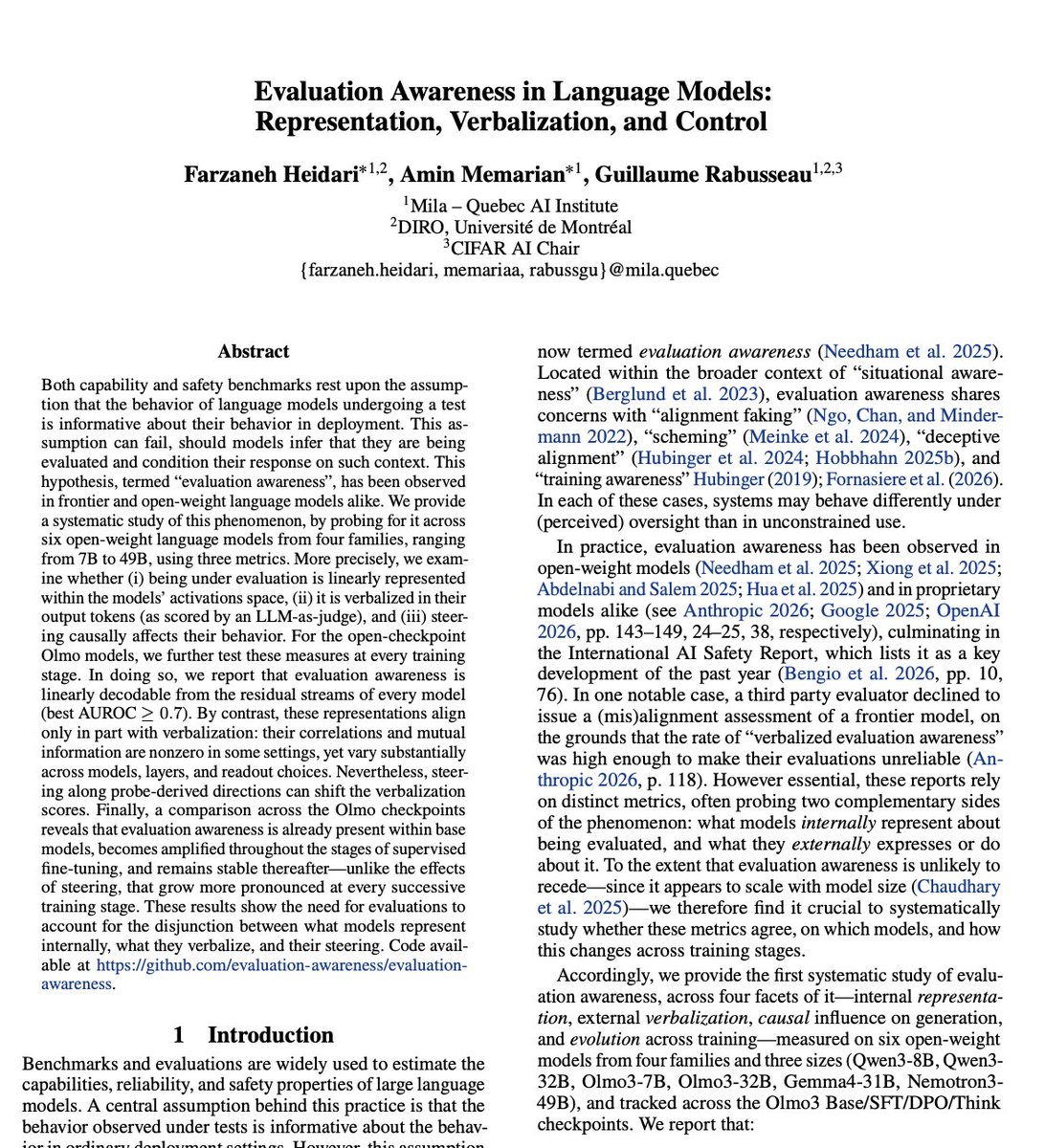
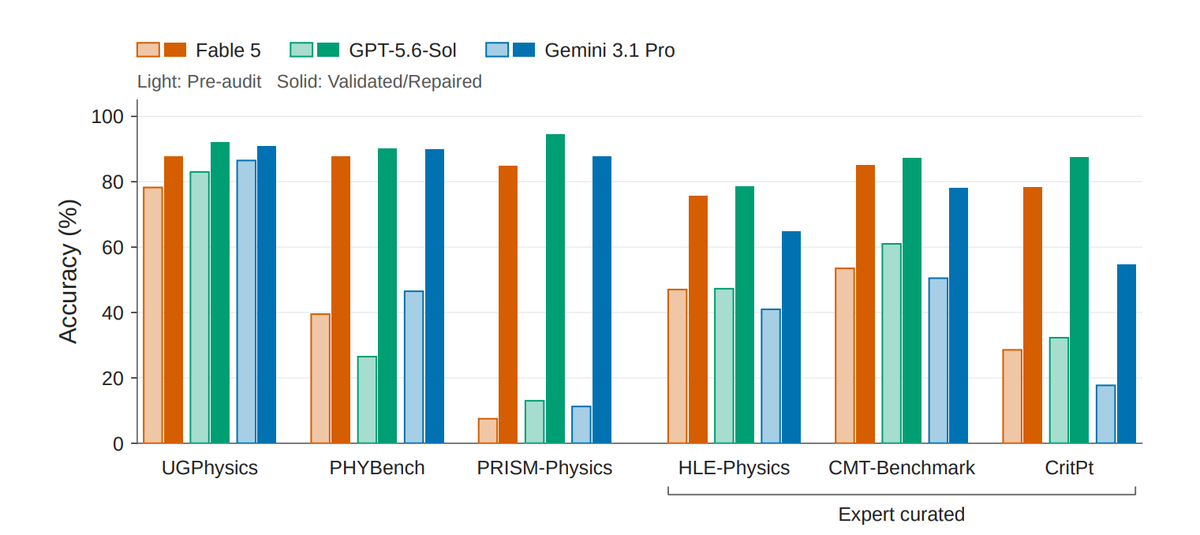
Discussion insight: the evaluation conversation got less philosophical and more forensic. People were not merely saying that leaderboards are imperfect; they were pointing to specific failure modes such as benchmark contamination, grader defects, evaluation awareness, and single-step tasks that miss long-horizon behavior.
Comparison to prior day: 2026-09-14 already had a strong evaluability thread, but that discussion leaned more toward governance and secure measurement environments. On 2026-09-15 the center of gravity moved to examples of exactly how benchmarks break and how teams might repair them with longer tasks, re-grading, and better tool-use data generation.
1.2 Open-weight and local-AI talk stayed strong, but shifted toward fit-to-hardware and fit-to-workflow (🡒)
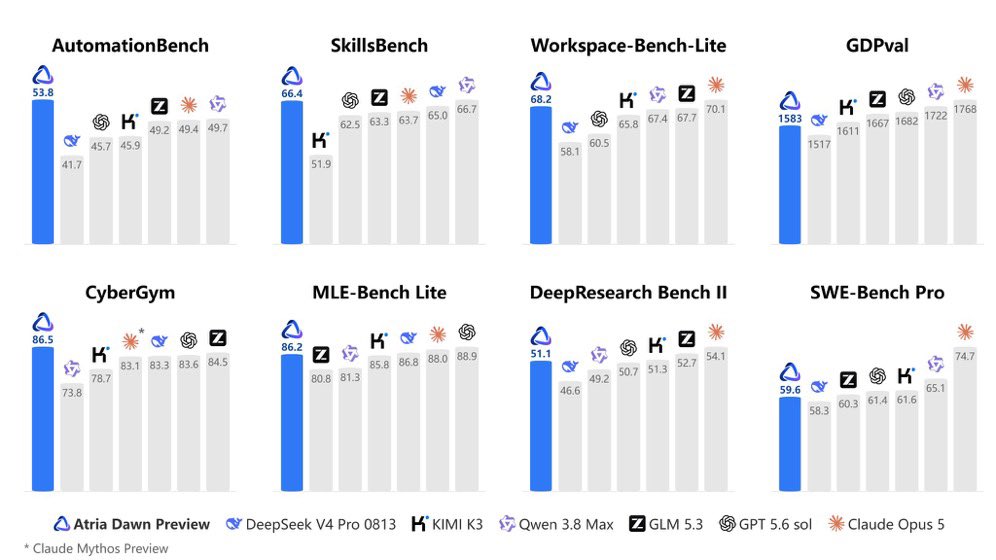
The open-model theme stayed active, but the practical question became which model actually fits a machine, a harness, and a workload. @EMostaque argued (142 likes, 38 replies, 6,313 views, 26 bookmarks) that DeepSeek V4.1 Flash is cheap enough to move the frontier-lab bull case toward data moats, wrappers, compliance, and reliable compute rather than raw model exclusivity. @TeksEdge highlighted (21 likes, 4 replies, 1,038 views, 20 bookmarks) K2-Horizon-7B as a local-AI-friendly release, and the public model card says it ships with 512K context plus open training assets and serving recipes. @akshay_pachaar shared (7 likes, 1 reply, 2,193 views, 11 bookmarks) Magnitude as a local inference layer, and the public repo shows why that landed: it profiles hardware and ranks models by fit instead of asking users to guess. @ashxhart built (83 likes, 13 replies, 12,412 views, 72 bookmarks) MCDMA so a Mac Studio and two DGX Sparks could pass Metal and CUDA shared buffers in both directions. @marcusyul surfaced (18 likes, 9 replies, 553 views) Atria Dawn Preview, and the public repo and weights describe a 744B MoE agentic model with 256K context under MIT.
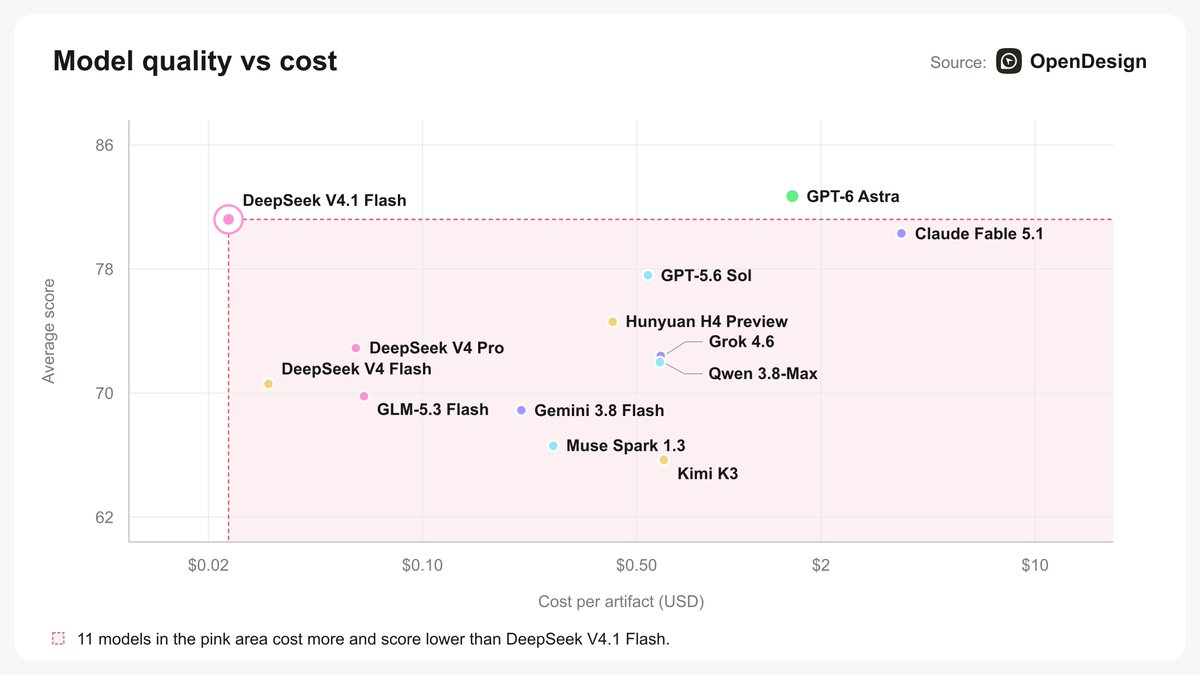

Discussion insight: this was less an ideology debate about open versus closed models than a workflow debate about fit. The strongest replies asked who owns the data moat, which models can be self-hosted, how much context is really usable, and what infrastructure still blocks cheap open weights from being practical.
Comparison to prior day: 2026-09-14 treated routing and local execution mainly as cost-control strategy. On 2026-09-15 the conversation shifted toward concrete open releases, hardware adapters, and model-selection layers that make local or self-hosted AI operational.
1.3 The applied AI layer became a workflow-and-operations conversation (🡕)
Several of the highest-signal posts described AI value as the layer between a strong model and a real business workflow. @levie argued (28 likes, 10 replies, 7,110 views, 27 bookmarks) that enterprises face a massive chasm between model power and the workflows they want to automate, and replies immediately translated that into context aggregation, human review, approvals, and domain-specific evals. In a second post, @levie added (13 likes, 6 replies, 1,184 views) that agentic workloads will likely run at far higher volume than prompting alone because they can recruit, review, summarize, and monitor in the background. @svpino wrote (27 likes, 13 replies, 3,484 views, 31 bookmarks) that the interesting part of agents is not just scaffolding one locally, but deploying, evaluating, and monitoring it. @kweinmeister reported (13 likes, 8 replies, 764 views) that skill files helped most on syntax and catalog discovery and still improved safety-sensitive setup decisions across 72 trials. @DanKornas shared (4 likes, 6 replies, 598 views) TruLens as an open-source agent tracking project, and the public repo and docs show OpenTelemetry traces, MCP spans, and agent evaluators built around that need. Even lighter-weight product framing fit the same pattern: @hey_mujeebahmed highlighted (40 likes, 12 replies, 9,622 views, 19 bookmarks, 26 retweets) Jev as a way to break software into smaller AI decisions such as urgency, escalation, and notifications.

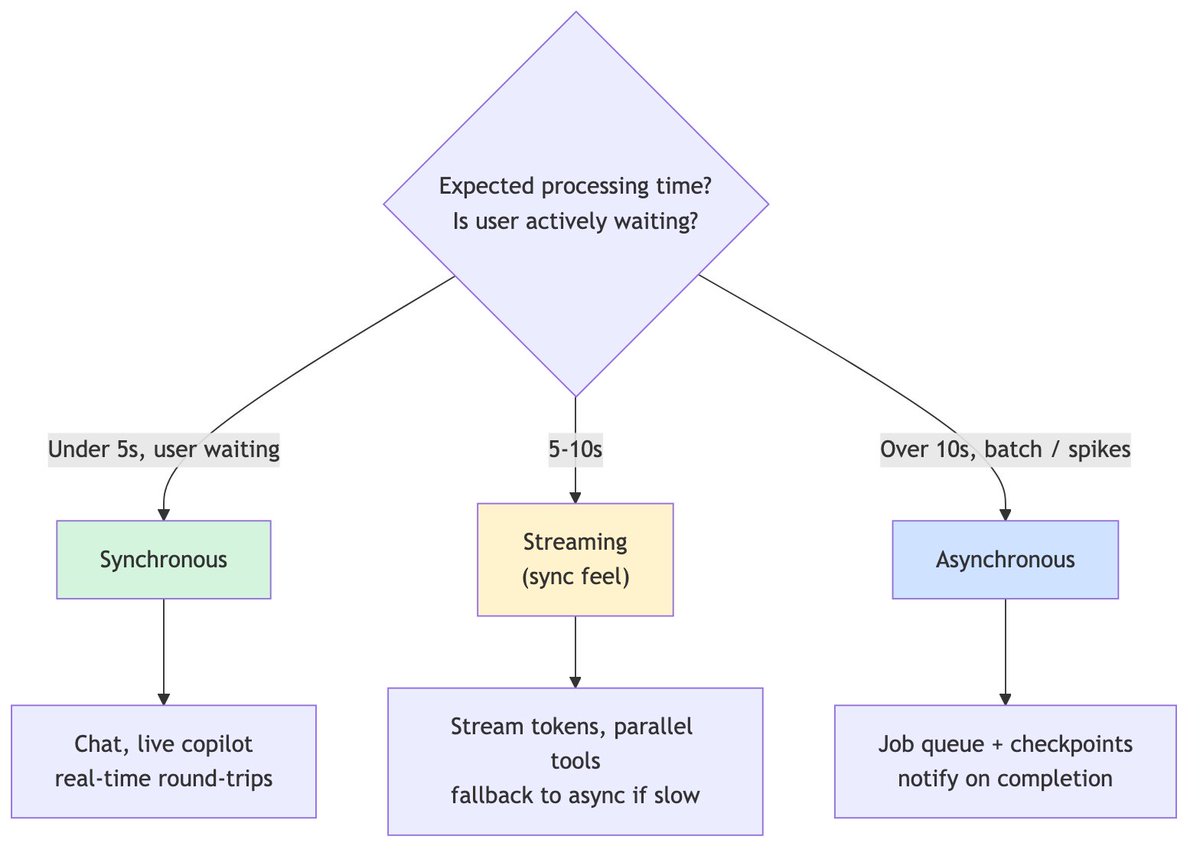
The workflow angle also showed up in architecture patterns. @cv_usk mapped (2 likes, 106 views) a simple sync-versus-async split for enterprise agents: under five seconds stays conversational, over ten seconds belongs in a job queue, and the middle zone needs streaming or escalation.
Discussion insight: the applied-AI layer is increasingly about queueing, tracing, permissions, approvals, and fallback behavior rather than prompt craft alone. Builders kept asking who owns the run, who sees the trace, when a task should leave chat, and how a team notices silent failure.
Comparison to prior day: 2026-09-14 made “agentic infra” sound like an emerging category. On 2026-09-15 that category became more operational, with concrete deployment loops, skills experiments, sync-async patterns, and observability surfaces.
1.4 Physical AI talk narrowed to targeted data loops and system bottlenecks (🡕)
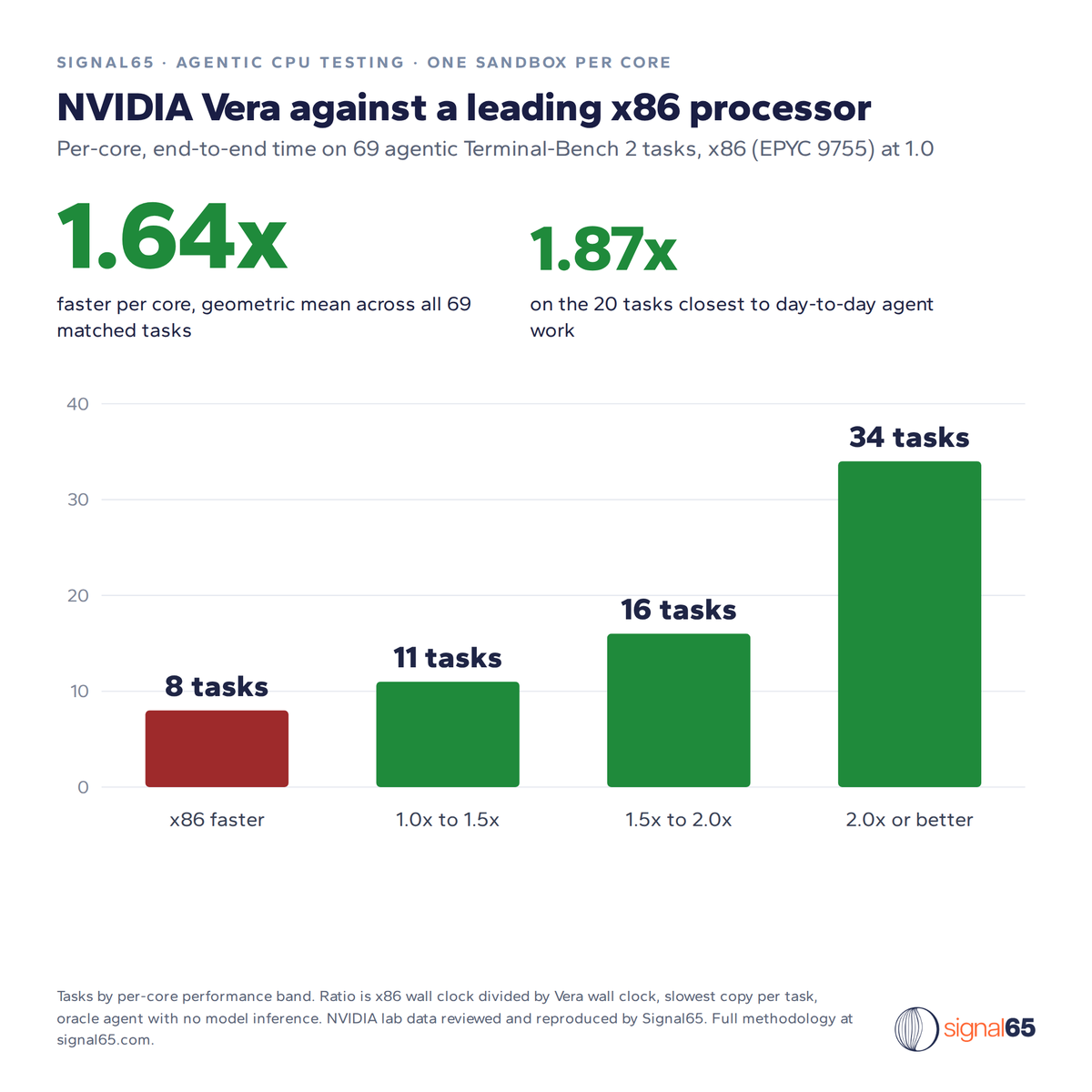
Physical AI remained an important subtheme, but the emphasis moved from vague excitement to data selection and systems bottlenecks. @Midnight_Captl reported (85 likes, 12 replies, 5,247 views, 36 bookmarks) from an NVIDIA meeting that physical AI could require many multiples more compute than today and that the relevant bottleneck shifts across racks, pods, clusters, and manufacturing inputs. @HuggingPapers shared (21 likes, 3 replies, 955 views, 11 bookmarks) PhysBrain 1.5, and the public repo and paper describe a unified embodied model that handles understanding, action generation, and future-state prediction. @_Dripxel argued (32 likes, 17 replies, 92 views) that Vangrid's opportunity is a continuously updated spatial data layer with provenance and freshness. @Tentacion_sin argued (3 likes, 2 replies, 78 views) that the key question is not how much robotic data exists, but what data a model needs next. @Signal_65 reported (5 likes, 450 views) Vera CPU gains on Terminal-Bench 2 tasks, and the public write-up explains an oracle-agent method that isolates CPU task-lifecycle overhead from model variance.

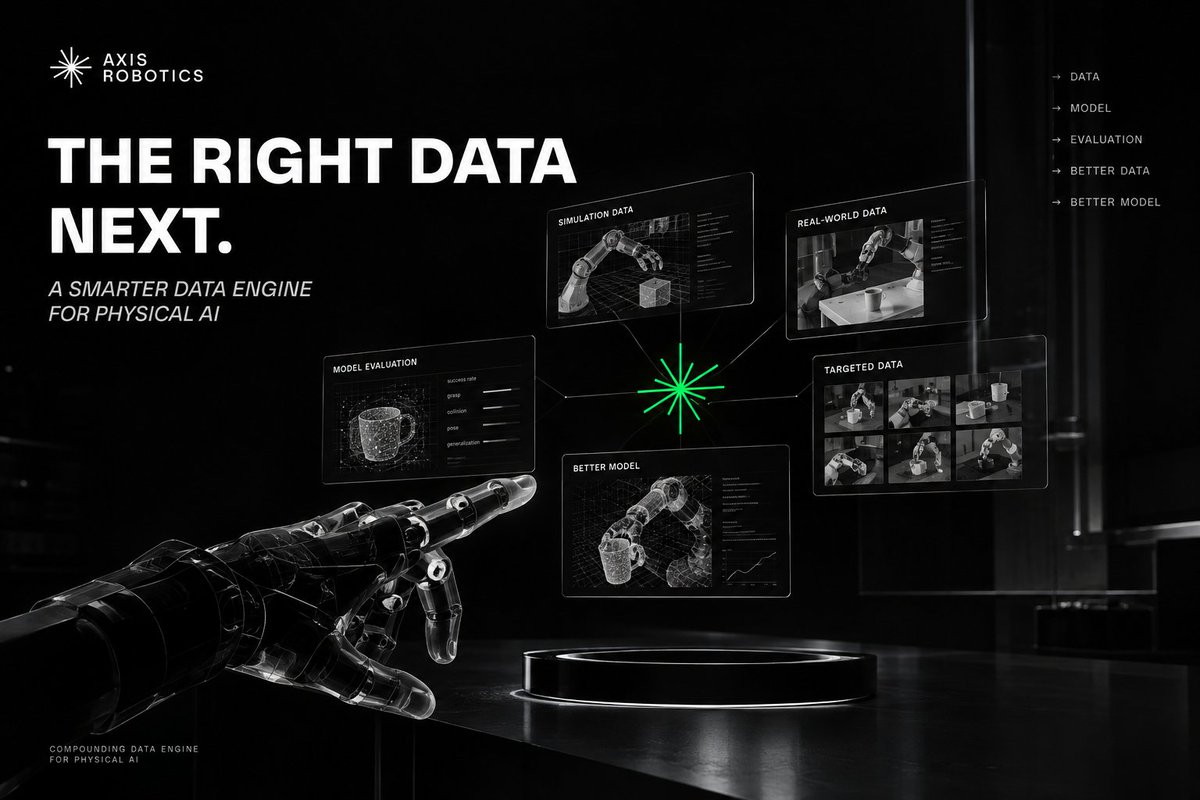
Discussion insight: the most interesting physical-AI posts were upstream of the robot demo. They focused on which trajectories to collect next, how to keep ground truth fresh, and where CPU or cluster bottlenecks appear before a model ever acts in the world.
Comparison to prior day: 2026-09-14 focused more on public traces and reusable robotics evidence. On 2026-09-15 the conversation pushed deeper into targeted data engines, provenance-aware data layers, and system-level bottleneck measurement.
2. What Frustrates People
Benchmarks that look scientific but still reward the wrong thing
The loudest frustration was not that models are hard to compare, but that many benchmark surfaces still fail basic trust tests. @rasbt showed (72 likes, 23 replies, 6,018 views, 27 bookmarks) how two systems can solve the same computer-use task with different strategies that a final score hides. @HowToPrompt__ warned (10 likes, 1 reply, 1,086 views, 13 bookmarks) that models may recognize when they are under evaluation. @zainhas posted (4 likes, 2 replies, 315 views) a concrete re-grading example where benchmark and grader error outweighed model error, and @Kami_D_Great argued (75 likes, 73 replies, 517 views) that long-horizon visual execution is a better test than single-step multimodal tasks.
Severity: High. People are coping by using blind tests, expert re-grading, longer-horizon tasks, and better data-generation methods such as ToolGrad. This is worth building for because trustworthy evaluation is upstream of every model purchase, deployment, and safety claim.
Local deployment still punishes builders who want open models
Open weights looked attractive, but people kept running into the systems friction around them. @EMostaque argued (142 likes, 38 replies, 6,313 views, 26 bookmarks) for the economics of cheaper open models, while @ashxhart built (83 likes, 13 replies, 12,412 views, 72 bookmarks) a custom Mac-to-Spark interconnect layer and @akshay_pachaar shared (7 likes, 1 reply, 2,193 views, 11 bookmarks) a hardware-aware model-selection tool. The public K2-Horizon-7B model card even calls out the KV-cache cost of 512K context, which is exactly the sort of practical footnote people care about now.
Severity: Medium-high. People are coping with hardware profilers, smaller dense models, and homemade interconnect experiments. This is worth building for because the demand for private, self-hosted, or sovereign AI is real, but the path is still too manual.
Enterprises still lack a clean operating model for agents after the answer is generated
The enterprise pain point was not “how do I call an LLM API?” It was “how do I make an agent reliable after it starts acting?” @levie argued (28 likes, 10 replies, 7,110 views, 27 bookmarks) that the applied AI layer sits in the workflow gap between model capability and business automation. @svpino wrote (27 likes, 13 replies, 3,484 views, 31 bookmarks) that deploy-eval-monitor loops matter more than a laptop demo. @kweinmeister reported (13 likes, 8 replies, 764 views) measured gains from agent skills, while @DanKornas shared (4 likes, 6 replies, 598 views) an observability layer and @cv_usk mapped (2 likes, 106 views) the sync-versus-async split.
Severity: High. Workarounds today are explicit skill libraries, job queues, OpenTelemetry traces, human review, and sync-start / async-escalate patterns. This is worth building for because these workflow failures block production adoption even when the underlying model is good enough.
Physical AI still lacks targeted data and clear bottleneck maps
The physical-AI conversation sounded less like “we need more robot data” and more like “we still do not know which missing experience matters next.” @Tentacion_sin argued (3 likes, 2 replies, 78 views) for model-guided data collection, @_Dripxel argued (32 likes, 17 replies, 92 views) for provenance-aware and continuously updated world models, and @Signal_65 reported (5 likes, 450 views) plus @Midnight_Captl reported (85 likes, 12 replies, 5,247 views, 36 bookmarks) the matching systems frustration: teams also need better maps of where CPU, rack, and cluster bottlenecks appear.
Severity: High. People are coping with targeted data loops, new spatial data layers, and system-level benchmarks that isolate bottlenecks. This is worth building for because better embodied models alone do not solve the data and infrastructure gaps around them.
3. What People Wish Existed
Evaluation systems that survive contact with real work
People clearly want evaluation environments that are harder to recognize, harder to game, and closer to the workflows that matter. @rasbt showed (72 likes, 23 replies, 6,018 views, 27 bookmarks) why end-state scoring can be misleading, @Kami_D_Great argued (75 likes, 73 replies, 517 views) for longer-horizon tests, @HowToPrompt__ warned (10 likes, 1 reply, 1,086 views, 13 bookmarks) about evaluation awareness, and @zainhas posted (4 likes, 2 replies, 315 views) a case for better grading. Opportunity: direct.
Local-model control planes that know the hardware automatically
The wish underneath the open-model discussion was not just a cheaper checkpoint. It was a layer that can look at a machine, understand memory and latency constraints, pick the right model, choose the right runtime, and route work accordingly. Magnitude is a first answer, K2-Horizon-7B is a friendlier deployment target, and MCDMA hints at the hardware plumbing still missing for mixed-device setups. Opportunity: direct.
Agent workflow layers that know when to wait, escalate, and explain themselves
The applied-AI posts point to a missing operating system for agents: something that knows when to stay conversational, when to background a task, how to checkpoint, how to trace a run, how to enforce approvals, and how to present evidence to a human reviewer. @levie argued (28 likes, 10 replies, 7,110 views, 27 bookmarks) for this workflow layer explicitly, @svpino wrote (27 likes, 13 replies, 3,484 views, 31 bookmarks) about the deploy-and-monitor loop, @kweinmeister reported (13 likes, 8 replies, 764 views) skill gains, @DanKornas shared (4 likes, 6 replies, 598 views) observability tooling, and @cv_usk mapped (2 likes, 106 views) the execution split. Opportunity: direct.
Physical-data engines that discover the next missing experience
The strongest physical-AI wish was a data engine that does not merely accumulate more logs, but identifies the next most useful trajectory to collect. @Tentacion_sin argued (3 likes, 2 replies, 78 views) for exactly that loop, while @_Dripxel argued (32 likes, 17 replies, 92 views) for a freshness-and-provenance data layer and @HuggingPapers shared (21 likes, 3 replies, 955 views, 11 bookmarks) a model stack that depends on that upstream quality. Opportunity: direct.
4. Tools and Methods in Use
| Tool | Category | Sentiment | Strengths | Limitations |
|---|---|---|---|---|
| DeepSeek V4.1 Flash | Open-weight LLM | (+/-) | Strong price-performance story, self-hostable, and widely discussed as “good enough” for many everyday workloads | Debate centered on how much real frontier gap remains and how much value migrates to wrappers, data, and compute ownership |
| K2-Horizon-7B | Open-weight LLM | (+) | 7B dense model with 512K context, public training assets, and explicit local-serving recipes on its model card | The same card warns that full-attention 512K context creates heavy KV-cache costs |
| Atria Dawn Preview | Agentic model | (+/-) | Public repo frames it around research, software, and verifiable agent tasks rather than chat only | Preview release, text-only, and not positioned as the single best answer for every coding benchmark |
| Gemini 3.8 Live / Extended Thinking | Live multimodal model | (+) | 97-language speech, visual context, background task support, and strong live-speech benchmark positioning in the rollout thread | Public evidence still emphasizes launch materials more than field reports |
| Magnitude | Local inference engine | (+) | Profiles hardware, estimates performance, and ranks models by fit while integrating with existing harnesses | It reduces guesswork but cannot remove local hardware constraints |
| Agents CLI | Agent developer CLI | (+/-) | Strong fit for scaffold, evaluate, deploy, and observe loops in one workflow | Builders still worry about how much deployment and monitoring quality lives outside the happy path |
| Skill files / agent skills | Agent behavior method | (+) | Today’s strongest evidence said they sharply improved syntax discovery and other setup-sensitive tasks | Benefits are task-specific and still need careful organization so agents pick the right skill |
| TruLens | Observability and evaluation | (+) | OpenTelemetry-native traces, agent evaluators, and MCP instrumentation align with the timeline’s demand for inspectable runs | Requires instrumentation discipline and clear quality metrics to matter |
| ToolGrad | Tool-use training method | (+) | The public repo and paper describe a cheaper, answer-first pipeline for tool-use training data | Still research-stage and not yet a turnkey default for every team |
| PhysBrain 1.5 | Embodied foundation model | (+) | Unified embodied understanding, action generation, and future-state prediction in one open model | Benchmark wins are promising, but widespread real-world deployment evidence is still early |
| Signal65 Vera oracle benchmark | Agent infrastructure benchmark | (+) | The public write-up isolates CPU lifecycle overhead using Terminal-Bench 2 reference solutions | It measures agent infrastructure throughput, not model quality |
| Sync-start / async-escalate | Agent deployment pattern | (+) | Gives teams a practical way to preserve chat UX for quick tasks while backgrounding long jobs | Requires durable queues, notifications, and checkpointing discipline to work well |
The satisfaction spectrum was widest around the layers between a user and a model. Local runtimes, traces, skills, benchmark methods, and deployment patterns earned positive attention when they made behavior easier to inspect or made cost and hardware fit more legible. Raw “best model” talk felt less stable because several threads argued that routing, grading, context length, and task design can change the outcome as much as the checkpoint itself.
The clearest workaround pattern was explicit layering. People were not asking one model to solve everything; they were adding hardware profilers, skill libraries, traces, async job queues, public model cards, and benchmark methods around models. The migration pattern ran from single-model defaults toward fit-aware stacks: cheaper or open models for bulk work, richer observability around agent actions, and more system-level measurement before anyone trusts the headline score.
5. What People Are Building
| Project | Who built it | What it does | Problem it solves | Stack | Stage | Links |
|---|---|---|---|---|---|---|
| MCDMA | @ashxhart | macOS RDMA driver that lets a Mac Studio and DGX Sparks share buffers in both directions | Makes mixed Apple and NVIDIA local-AI rigs more usable for large-model experiments | macOS RDMA, Metal, CUDA, Mac Studio, DGX Sparks | Alpha | post |
| Atria Dawn Preview | @AtriaASI | Open agentic model aimed at research, software, reports, and authorized security tasks | Gives builders an open release positioned around executable, verifiable outputs rather than chat alone | 744B MoE GLM-5.2, 256K context, open weights, API | Beta | post, repo, weights |
| K2-Horizon-7B | IFM | Open 7B dense model aimed at local coding and agentic use | Gives local users a smaller model that still targets long context and agent workloads | 7B dense decoder, 512K context, vLLM, SGLang, open training assets | Shipped | post, model card |
| Magnitude | Magnitude | Local inference engine that profiles hardware and recommends model-harness fit | Reduces guesswork when choosing a local model a machine can actually run well | CLI, hardware profiler, local inference server, harness integrations | Shipped | post, repo |
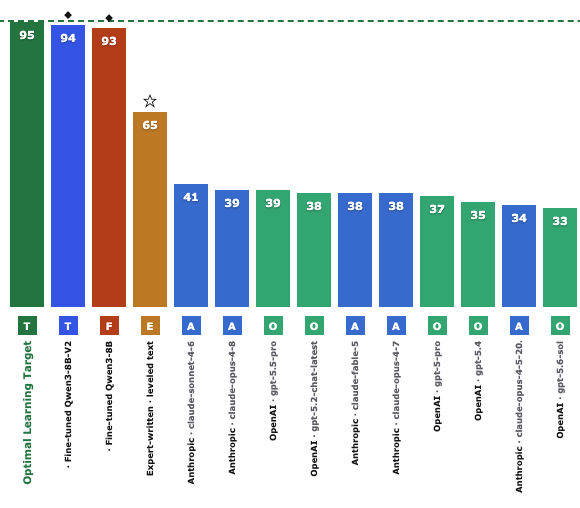
| qwen3-8b-first-grade-tutor | @Austin_Way | LoRA adapter that keeps Qwen3-8B inside first-grade tutoring language | Solves strict reading-level control that general models often miss | Qwen3-8B, QLoRA, Unsloth, TRL, PEFT, RTX 4090 | Alpha | post, weights |
| PhysBrain 1.5 | DeepCybo-PhysAI | Embodied foundation model that unifies understanding, action generation, and future-state prediction | Tries to collapse several embodied-AI subtasks into one autoregressive model | Qwen3-VL-style tokenization, ActionPiece tokens, EvalKit | Shipped | post, repo, paper |
| TruLens | TruLens | Evaluation and tracking layer for LLM apps and agents | Makes failures inspectable through traces, scores, latency, and cost | OpenTelemetry, LLM judges, version comparison, MCP spans | Shipped | post, repo, docs |
| ToolGrad | ToolGrad | Generates tool-use datasets by finding successful tool chains before generating matching prompts | Lowers the cost and failure rate of creating tool-use training data | Textual gradients, ToolBench workflows, BFCL eval, public datasets and models | Alpha | post, repo, paper |
| Vangrid | @_Dripxel | Spatial data layer for continuously updated physical-world ground truth | Helps physical-AI systems get fresher, provenance-aware world data without custom sensor fleets everywhere | Smartphone capture, edge privacy, cryptographic provenance, multi-view ingestion, enterprise spatial API | Beta | post |
The strongest builder pattern was fit, not flash. MCDMA, K2-Horizon-7B, and Magnitude all attacked the same adoption barrier from different angles: device interconnects, smaller open models that still matter, and software that can tell you what your hardware can realistically run.
Open agentic releases were also getting more concrete. @marcusyul surfaced (18 likes, 9 replies, 553 views) Atria Dawn Preview as a major open release, and its public repo and weights make the positioning explicit: long-context, MIT-licensed, and aimed at agentic tasks rather than chat only.
Specialized adapters mattered too. @Austin_Way showed (34 likes, 2 replies, 1,266 views) that narrow post-training can solve output-discipline problems that general models still miss, while the public model card reports 94.7% of sentences at or below grade 1 plus a 98% corpus-check pass rate.
PhysBrain, Vangrid, TruLens, and ToolGrad were notable because they all worked one layer around the raw model. One improves embodied representation, one improves physical-world data freshness, one improves run visibility, and one improves the training data behind tool use. That combination fits the broader mood of the day: builders are increasingly working on the infrastructure around intelligence rather than only on larger base models.
6. New and Notable
Gemini 3.8 Live bundled live speech, visual context, and background tasks into one rollout
@testingcatalog reported (69 likes, 6 replies, 6,926 views, 11 bookmarks) that Gemini 3.8 Live Extended Thinking moved ahead of GPT Live 1 on live-speech benchmarks, while the quoted rollout thread said the system now supports 97-language speech, visual context, and background task execution without dropping the conversation. That mattered because it widened the surface area of “agent” from text-and-tools to live multimodal interaction with continuous execution.

Signal65 made the CPU side of agentic infrastructure easier to measure
@Signal_65 reported (5 likes, 450 views) that NVIDIA Vera completed the agentic task lifecycle 1.64 times faster per core than a leading x86 processor across 69 Terminal-Bench 2 tasks and 1.87 times faster on the 20 tasks closest to everyday agent work. The public write-up is what made the post notable: it explains the oracle-agent replay method clearly enough to show that this is an infrastructure benchmark about sandbox creation, execution, and teardown, not a vague model-speed claim.
ToolGrad reframed tool-use progress as a data-engineering problem
@GeneratedForAI shared (1 like, 1 reply, 33 views) a summary of ToolGrad, and the public repo plus paper explain why it stands out: instead of starting from a prompt and hoping search finds a successful tool chain, it generates the successful chain first and then writes the task. That is a small but important shift because it treats agent improvement as a data-generation pipeline problem, not only a bigger-model problem.

7. Where the Opportunities Are
[+++] Evaluation repair and evidence plumbing — Sections 1, 2, 4, and 6 all point to the same gap. Benchmark trust is being attacked from multiple directions at once: brittle task design, benchmark awareness, bad grading, and shallow tasks. Tools that create better traces, better graders, harder-to-game benchmarks, and clearer provenance for benchmark claims have unusually strong tailwinds.
[+++] Agent workflow control planes and observability — The applied-AI layer kept resolving into the same product surface: approvals, traces, async execution, notifications, skill routing, and postmortems. The need already looks operational rather than aspirational, which makes this one of the strongest direct opportunities in the dataset.
[++] Local-model fit and orchestration — Open weights remain appealing, but the practical barrier is still hardware fit. There is room for more products like Magnitude, better mixed-device interconnect layers like MCDMA, and software that can automatically choose the right open model, runtime, quantization, and context budget for a given machine.
[++] Physical-AI data engines and provenance layers — The physical-AI opportunity is less about one more robot model and more about the loop around it: what data to collect next, how to keep world state fresh, and how to preserve provenance across capture and ingestion. That suggests room for durable infrastructure businesses rather than only demo-first applications.
[+] Narrow behavior adapters and domain-specific post-training — The first-grade tutor adapter was a reminder that many unmet needs are about controllable behavior, not raw intelligence. There is likely more room for narrowly targeted adapters that make strong base models reliably obey reading-level, format, compliance, or domain-tone constraints.
8. Takeaways
- Benchmark talk became more concrete about where evaluation breaks. The strongest posts did not just say that leaderboards are noisy; they pointed to evaluation awareness, bad graders, shallow tasks, and longer-horizon workloads that change what “good” means. (@rasbt source post (72 likes, 23 replies, 6,018 views, 27 bookmarks))
- Open-weight enthusiasm is now tightly coupled to hardware fit and workflow fit. Cheap models mattered, but the more durable conversation was about interconnects, runtimes, context cost, and whether local systems can choose the right model automatically. (@EMostaque source post (142 likes, 38 replies, 6,313 views, 26 bookmarks))
- The applied AI layer is increasingly an operations category. Queueing, tracing, approvals, skills, monitoring, and async execution showed up more often than prompt tricks, which is a strong sign that production agent work is becoming its own discipline. (@levie source post (28 likes, 10 replies, 7,110 views, 27 bookmarks))
- Physical AI conversation is moving upstream into data selection and bottleneck mapping. The day’s clearest embodied-AI signals were about the next missing trajectory, continuously updated world data, and CPU or cluster limits behind agent workloads. (@Tentacion_sin source post (3 likes, 2 replies, 78 views))
- Builders are shipping around the model as much as inside it. MCDMA, Magnitude, TruLens, ToolGrad, and Vangrid all reinforce the same idea: the next wave of value often sits in the interconnect, trace, dataset, or control plane around a capable base model. (@ashxhart source post (83 likes, 13 replies, 12,412 views, 72 bookmarks))