Twitter AI - 2026-09-27
1. What People Are Talking About
1.1 Smaller decision models and self-optimizing skills moved closer to the agent runtime 🡕
The clearest software-agent theme was architectural subtraction. Instead of asking one large model to do everything, people kept posting bounded sidecars: trainable skill documents, calibrated judges, fast action selectors, and harnesses where the model is allowed to abstain. At least six reviewed posts supported this, and most of them cared more about cost, latency, and inspectability than about raw model flair.
@RoundtableSpace reported (35 likes, 11 replies, 49,687 views, 39 bookmarks) that Microsoft's open-source SkillOpt evaluates agent performance, rewrites its own instructions, rejects changes that fail benchmarks, and can transfer an optimized skill across models. The public SkillOpt README pushes the same idea further: treat the skill document as trainable state for a frozen agent, accept edits only when they improve held-out validation, and ship the resulting markdown artifact without adding extra inference-time calls.
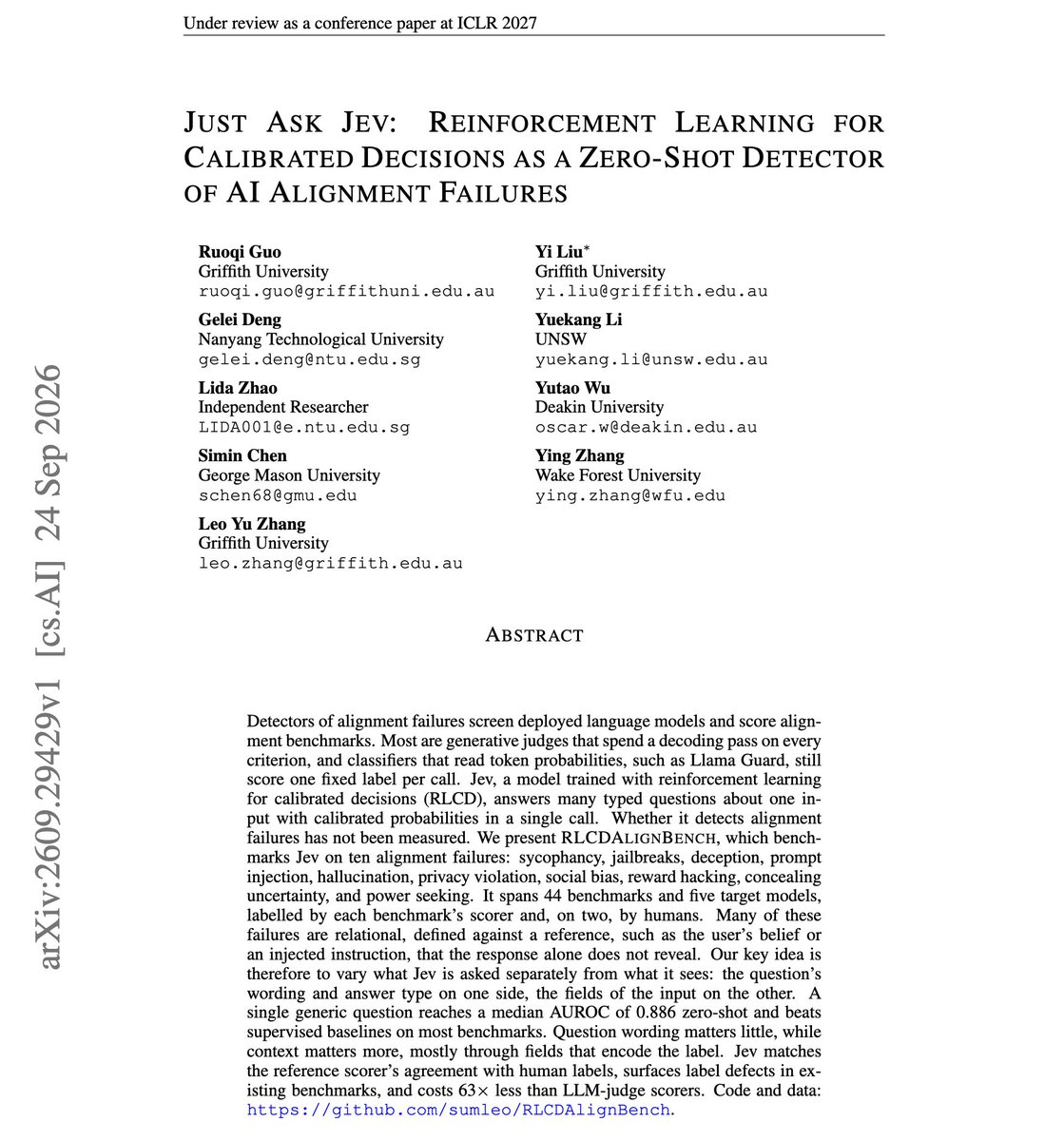
@omarsar0 reported (54 likes, 18 replies, 4,551 views, 47 bookmarks) a Jev paper that uses one generic yes/no question plus a calibrated probability to score alignment failures. The concrete claims were what made it travel: median AUROC of 0.886, RLCDAlignBench built from 44 benchmarks across ten failure types, and a reported $0.30 Jev pass versus $18.96 for the LLM judges used by those benchmarks.
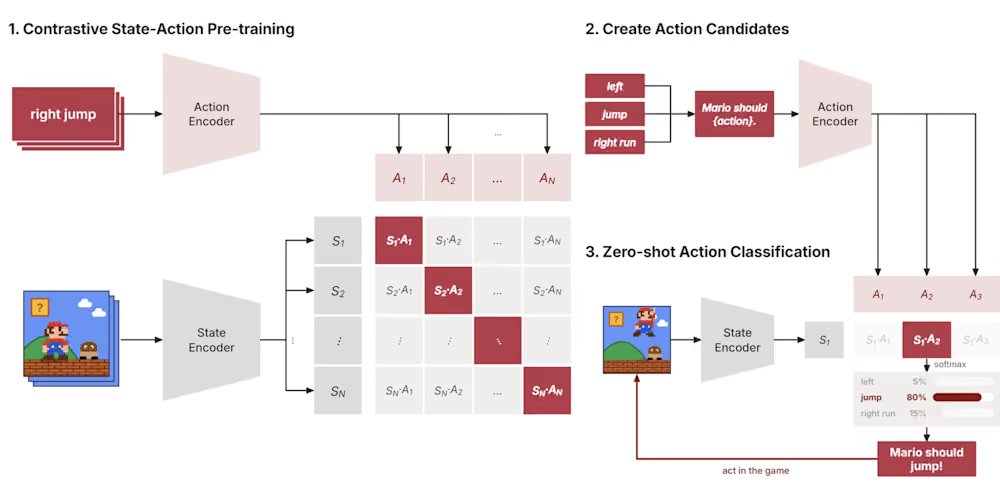
@bendee983 argued (10 likes, 4 replies, 690 views, 5 bookmarks) that Stanford and Nvidia's CLM-8B is the first serious public open-weight rival to Jev-style decision models. His summary said CLM encodes and matches states and actions, can judge outputs from reasoning models, and ran up to 9x faster than Jev in the reported experiments, while also noting the caveat that the reference setup is text-only with a shorter context window.
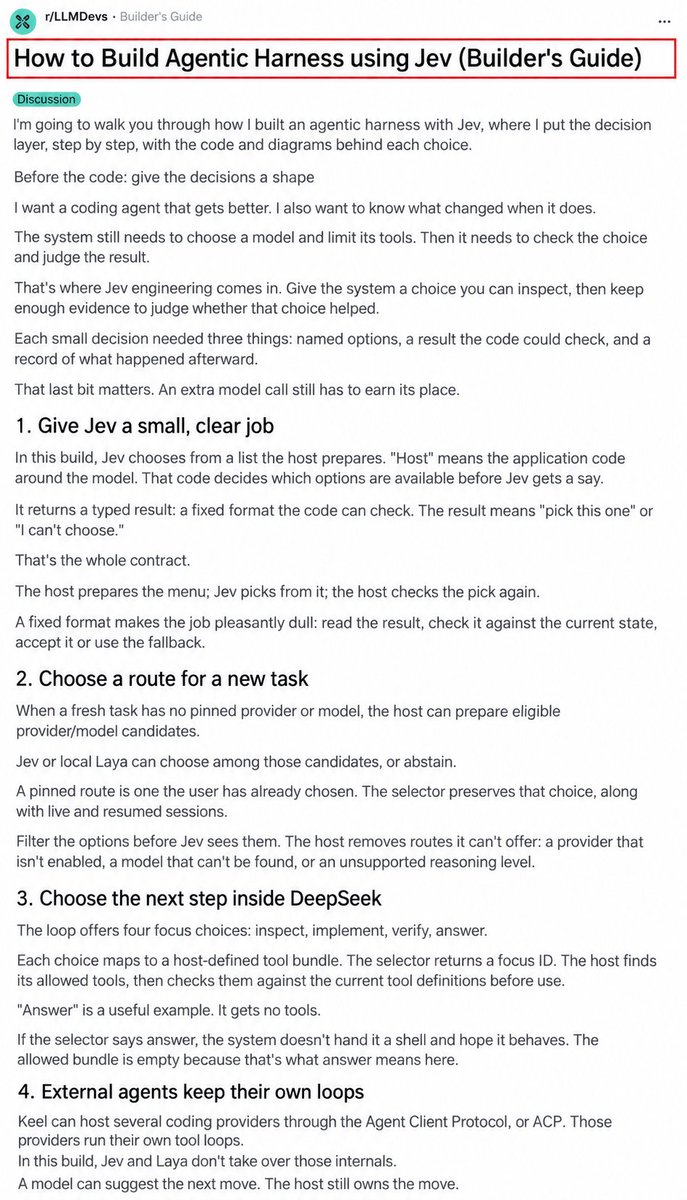
@omarsar0 highlighted (28 likes, 12 replies, 6,101 views, 42 bookmarks) a Jev-as-fuzzy-linter harness that deliberately narrows the problem: keep only tiny rules that are easy to judge, test them with a synthetic eval plus a held-out set, and use medium-confidence outputs to trigger a double-check rather than automatic acceptance. A separate recap from @0xGrimmer_ framed (9 likes, 52 views, 8 bookmarks) the same design instinct even more bluntly: a healthy agent loop sometimes needs a model that can simply say "I can't choose," while the host code still owns the move.
Discussion insight: Replies focused less on whether these layers are real and more on whether their evals are hard enough. In the SkillOpt thread, the sharpest reply said the benchmark becomes the real product if self-rewrites can game it. In the Jev paper thread, the strongest criticism was that label distribution can drift in production faster than a good AUROC score suggests.
Comparison to prior day: On 2026-09-26, the control-plane conversation was mostly about routers, memory, and graduated autonomy. On 2026-09-27 it moved one layer deeper into trainable skill documents, open-weight decision models, and explicit abstention rules.
1.2 Efficiency talk moved from slogan to mechanism: repeated tool calls, repeated reasoning, and cache literacy 🡕
A second theme was that agent inefficiency is now something teams are debugging in public. The strongest posts did not complain in the abstract about cost; they named the exact waste pattern, explained why it slipped through training, and showed which systems concepts a builder has to understand to keep an agent loop from burning time and context.
@XiaomiMiMoDevs reported (187 likes, 14 replies, 8 quotes, 4,278 views, 28 bookmarks) that MiMo-V2.6 had been repeating identical or near-identical tool calls because its reward tracked final-answer correctness while missing inefficient intermediate behavior. The most memorable detail was the threshold bug itself: the flooding penalty only activated above 32 tool calls per turn. Xiaomi said it fixed the issue with a lightweight repetition-specialized RL teacher trained for 12 steps on about 7,000 examples, then merged the result back into the main model via MOPD at roughly 4% of the cost of a full retrain.
@cline said (8 likes, 2 replies, 629 views) Fireworks' Ember-1 tackles a neighboring failure mode: repetitive reasoning. The claim was unusually specific for a public efficiency post: Ember-1 used about 40% fewer tokens overall on benchmarks, and in a live A/B test on coding traffic used 71% fewer reasoning tokens and 39% fewer total tokens than Kimi K3 at the same success rate.
@TheAhmadOsman posted (357 likes, 17 replies, 22,373 views, 523 bookmarks) a free guide whose whole pitch was builder literacy around the mechanics that decide whether open-weight and local AI runs stay useful: KV cache, prefill versus decode, quantization, VRAM math, failure modes, serving modes, and practical setup paths. That aligned with @attharrva15 sharing (111 likes, 5 replies, 3,519 views, 129 bookmarks) a vLLM article that drew a reply praising PagedAttention as the real systems insight worth studying.
Discussion insight: The most revealing replies were educational rather than promotional. One reply to Ahmad Osman asked whether a reader could predict latency and failure modes after finishing the guide, while the strongest vLLM reply ignored general hype and went straight to KV-cache management. That is a sign that builders increasingly care about operational mechanics, not just model names.
Comparison to prior day: Compared with 2026-09-26's benchmark skepticism, 2026-09-27 supplied more root-cause analysis and more concrete explanations of where agent loops waste compute once they start doing real work.
1.3 Open-source AI workbenches won attention by packaging the whole workflow, not just a model endpoint 🡕
The most positive tooling cluster came from products that package a whole working surface around the model: files, tools, code execution, provider choice, and a visible trace of what happened. The feed treated this as more meaningful than yet another base-model announcement because it maps closer to how people actually work.
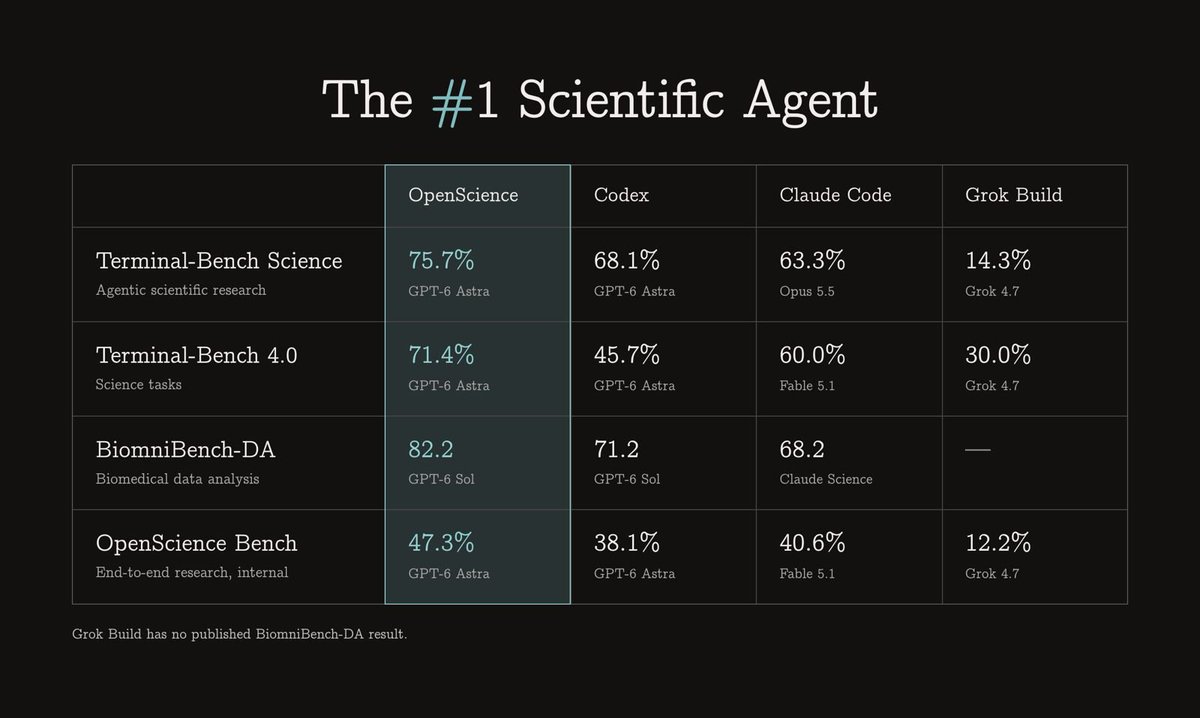
@AIStackLabX reported (137 likes, 2 replies, 19,690 views, 23 bookmarks) that OpenScience led four science benchmarks and linked directly to the repo. The quoted launch post said the product was out of beta, bundled 300+ research skills and 50+ scientific tools and databases, and was already in use at 30+ universities and research labs. The public OpenScience README adds the operational framing: a scientific workbench with shell access, Python and R, visible traces, and benchmark results including 53/70 on Terminal-Bench Science and 10/14 on the science subset of Terminal-Bench 4.0.
@rohanpaul_ai added (14 likes, 7 replies, 2,638 views, 6 bookmarks) a more explicit benchmark comparison, saying OpenScience solved 53 of 70 Terminal-Bench-Science workflows for 75.7% and beat the cited Codex and Claude Code science scores in that comparison.
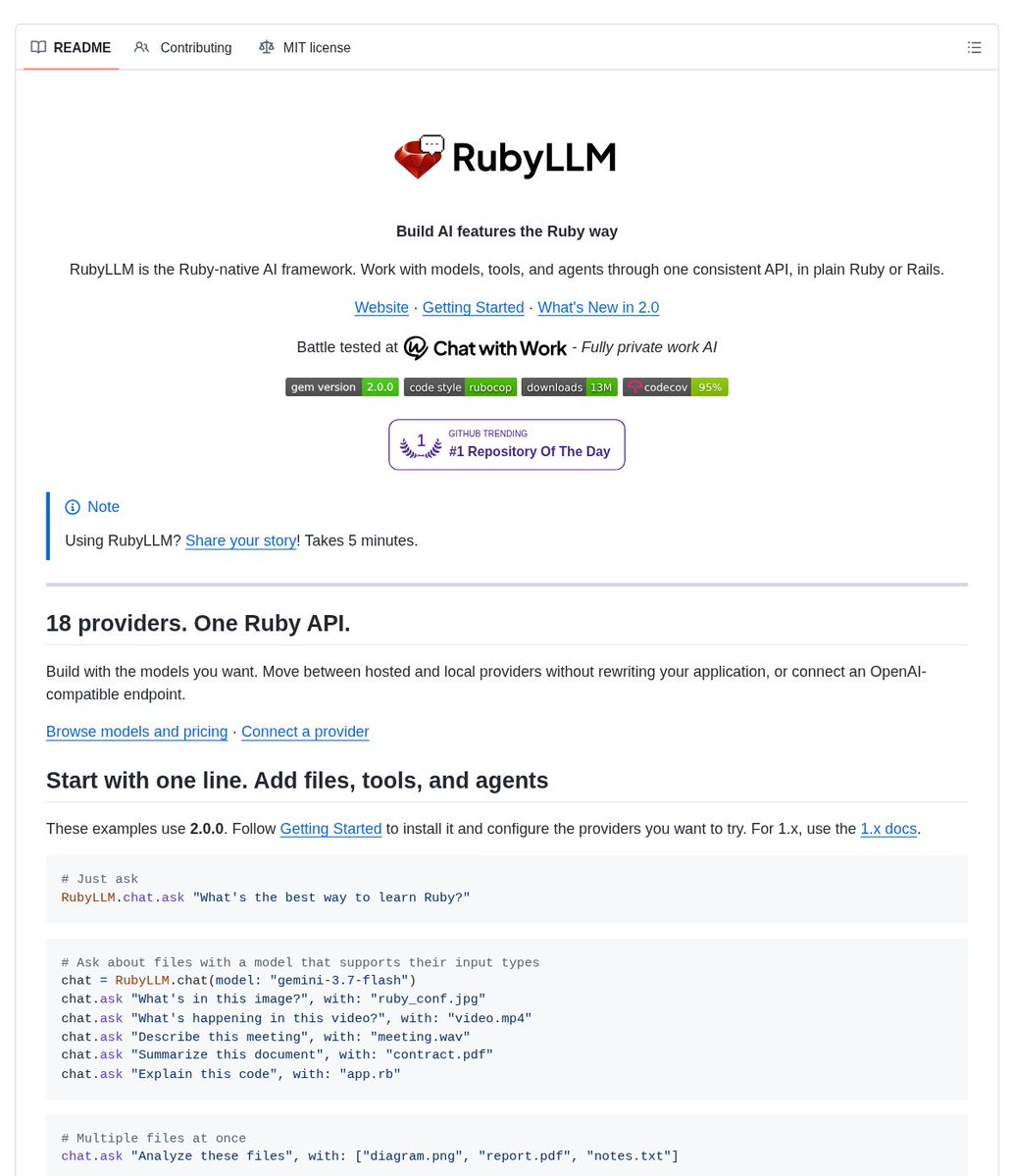
@DanKornas argued (8 likes, 2 replies, 627 views, 4 bookmarks) that RubyLLM solves a different but related workflow problem: Ruby developers should not have to juggle a different SDK for every model provider. The tweet framed it as one Ruby API across 18 providers, while the current RubyLLM README now says 19 providers and confirms multimodal file handling, tools, agents, embeddings, reranking, and Rails integration.
Discussion insight: The praise here centered on boring systems surfaces rather than model personality: visible traces, files, secure execution, provider swaps, and app-framework integration. That is usually a stronger builder signal than generic excitement because it points to recurring work that teams already need done.
Comparison to prior day: Compared with 2026-09-26, when adoption talk leaned toward ROI and workflow redesign, today's tooling posts were more repo-shaped and installable. The interesting claim was not "AI matters" but "here is the surface where it can actually be operated."
1.4 Physical AI stayed a data-provenance and moving-benchmark story, not a model story 🡒
Physical-AI discussion stayed focused on the same bottleneck as earlier in the week: trustworthy real-world data and evaluation surfaces that do not freeze into memorization games. The notable difference on 2026-09-27 was how often people tried to make that bottleneck legible with concrete counters, pipeline diagrams, and anti-static-benchmark language.
@0xebii said (23 likes, 20 replies) that Vangrid's Explorer was already showing 2.3M+ grid events, 1.13M+ captures, 4,097 attestations, 437K+ active nodes, and $436K+ USDC settled. The attached screenshot mattered because it turned a vague "spatial-data network" pitch into an activity dashboard.

@VPhm23380671 made the strongest skeptical case (17 likes, 13 replies) for why those numbers are not enough on their own. His post argued that Vangrid's real challenge is turning millions of smartphone captures into consistent, commercially valuable spatial datasets without failing on privacy, quality, or buyer demand. @SheviaXO framed (83 likes, 109 replies, 1,766 views) the same project as an end-to-end infrastructure loop: capture, reconstruct, explore, contribute, trade, and integrate.

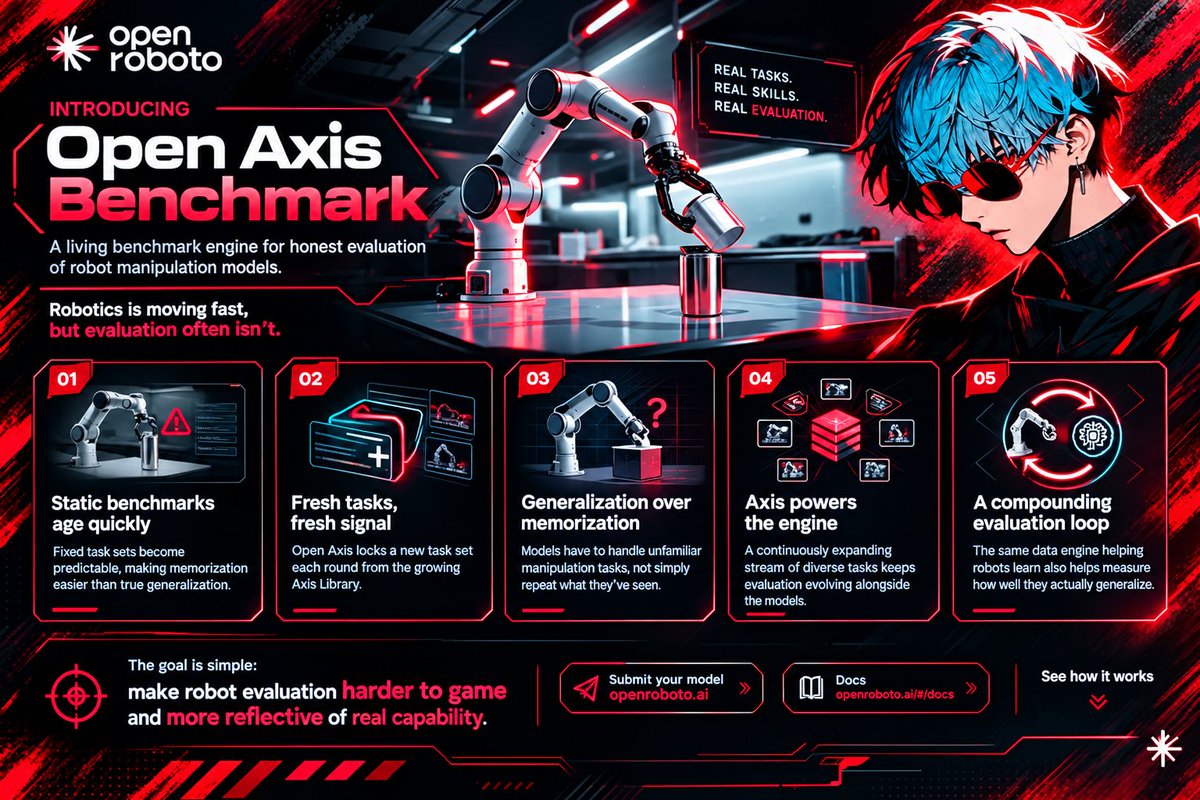
@Md_Lokman_71 argued (33 likes, 33 replies) that Axis's real contribution is dynamic evaluation: pull unseen tasks from the Axis Library, validate successful trajectories into modular skills, and link contribution back to model refinement. @SamiulA84391909 said (23 likes, 19 replies) the same thing even more directly: frozen robotics benchmarks age quickly, so each Open Axis round has to lock a fresh task set if the result is meant to measure generalization rather than memorization.

Discussion insight: Many replies in this cluster were generic support, but the useful criticism kept returning to the same two questions: can the data be trusted, and can the benchmark stay fresh enough to stay meaningful? That is why the anti-static language around Open Axis and the provenance language around Vangrid kept recurring.
Comparison to prior day: Compared with 2026-09-26, the same physical-AI bottleneck persisted, but today's posts added more explicit activity counters and clearer diagrams for how capture, verification, and evaluation are supposed to connect.
2. What Frustrates People
Agent loops still optimize final correctness while wasting work
The day's clearest frustration was that an agent can still "succeed" while wasting huge amounts of compute along the way. @XiaomiMiMoDevs said (187 likes, 14 replies, 4,278 views, 28 bookmarks) MiMo was repeating tool calls because the reward function only cared about final correctness, not about inefficient intermediate behavior. @cline said (8 likes, 2 replies, 629 views) reasoning models can also re-think the same thoughts on every step, which is why Ember-1's token cuts were pitched as the real improvement rather than a raw score increase.
Severity: High. The visible workarounds were repetition-specific post-training, held-out harness evals, and smaller system-one layers that can say "I can't choose" instead of hallucinating confidence. This is worth building for because the waste pattern is explicit, measurable, and expensive.
Fast decision layers still need better monitoring and harder evals
The agent-control posts were optimistic, but the strongest replies kept pointing at the same risk: a fast judge or self-improving skill can look great on paper while drifting or gaming its eval in practice. In the Jev thread, a reply warned that weekly label drift can quietly erode a good AUROC if nobody monitors the judge itself. In the SkillOpt thread, the sharpest reply argued that if the benchmark is easy to game, the skill can get "better" while becoming worse at the thing the builder actually wanted. @bendee983 also noted that CLM-8B's current comparison should be read with the text-only and shorter-context caveat attached.
Severity: High. The coping mechanisms today are held-out validation gates, synthetic evals, human review, and narrow task scoping. This remains worth building for because almost every modern agent stack seems to want a cheaper judge, router, or selector, but very few have obviously production-safe evaluation loops yet.
Open and local AI still ask users to learn systems concepts the hard way
A different frustration was educational. @TheAhmadOsman posted (357 likes, 17 replies, 22,373 views, 523 bookmarks) a guide covering KV cache, prefill versus decode, quantization, VRAM math, runtime choices, and failure modes, and the replies made clear why that spread: people still find themselves re-googling basic but consequential systems concepts. @DanKornas framed (8 likes, 2 replies, 627 views) RubyLLM as an answer to provider-SDK sprawl, while the strongest vLLM reply focused on PagedAttention rather than demo polish.
Severity: Medium-High. The workaround today is a mix of giant field guides, repo README deep-dives, and framework abstractions. This is worth building for because the demand signal is large, recurring, and tied directly to whether open-weight and local tooling become usable outside a small expert circle.
Physical AI still cannot separate scale claims from trust claims
The physical-AI cluster kept circling the same two unresolved issues: whether the data can be trusted and whether the benchmark can stay fresh. @VPhm23380671 spelled out (17 likes, 13 replies) Vangrid's execution, data-quality, privacy, and demand risks, while @SamiulA84391909 argued (23 likes, 19 replies) that static robotics benchmarks inevitably become too predictable. Even the pro-Vangrid and pro-Axis posts kept needing to explain why provenance and fresh tasks matter.
Severity: High. The visible workarounds were explorer dashboards, attestation layers, locked fresh-task rounds, and explicit anti-memorization design. This is worth building for because the bottleneck is stated directly by the people posting about the category: more data is not enough unless the data is trusted and the eval is still hard.
3. What People Wish Existed
Practical local-AI onboarding that starts from latency, VRAM, and failure modes
The biggest educational post of the day was not asking for inspiration; it was trying to compress a working body of systems knowledge into one readable guide. @TheAhmadOsman offered (357 likes, 17 replies, 22,373 views, 523 bookmarks) exactly that, and the replies immediately zeroed in on whether it teaches prediction of latency and failure modes rather than only vocabulary. The vLLM conversation echoed the same need from the infrastructure side by elevating PagedAttention as the kind of mechanic builders actually need to understand. This is a practical need with high urgency. RubyLLM partially addresses it from the app-framework side, but the feed still suggests that many builders learn the hard parts piecemeal. Opportunity: direct.
Decision layers that can abstain, transfer across models, and stay auditable
The Jev, SkillOpt, and CLM-8B posts all pointed to the same missing product shape: a fast bounded model layer that can make typed decisions, admit uncertainty, survive held-out evaluation, and move between base models without turning into a black box. @omarsar0 showed a harness design that uses confidence tiers and held-out evals, @RoundtableSpace showed a system that rewrites and validates its own skill document, and @0xGrimmer_ argued that agents behave better when the model is allowed to say "I can't choose." This is a practical need with high urgency. Early systems exist, but the field already looks competitive. Opportunity: competitive.
Workflow-native AI surfaces that keep the trace, the tools, and the model choice together
The OpenScience and RubyLLM posts implied the same preference from different directions: people want AI embedded inside a surface where file access, tool use, provider choice, and outputs are all inspectable instead of split across disconnected services. @AIStackLabX linked OpenScience as a scientific workbench with skills, tools, and benchmarked performance, while @DanKornas pitched RubyLLM as the missing abstraction for Ruby and Rails developers tired of provider churn. This is a practical need with medium-high urgency. OpenScience and RubyLLM partially address it today, but the demand still looks broader than either surface. Opportunity: direct.
Physical-AI loops that prove provenance and stay hard to game over time
The robotics and spatial-data posts kept implying the same missing system: gather trusted real-world data, expose its provenance, and keep the evaluation surface moving so models cannot memorize it. @0xebii wanted visible proof that the network is alive, @VPhm23380671 wanted privacy, quality, and demand risk taken seriously, and @Md_Lokman_71 wanted dynamic tasks that keep generalization honest. This is a practical need with high urgency. Vangrid and Open Axis partially address it today. Opportunity: direct.
4. Tools and Methods in Use
| Tool | Category | Sentiment | Strengths | Limitations |
|---|---|---|---|---|
| Jev | Decision model / judge | (+/-) | Calibrated probabilities, typed outputs, and much cheaper judging in the reported comparisons | Thresholds do not transfer cleanly across benchmarks, and replies worried about drift once the label distribution changes |
| SkillOpt | Skill optimizer | (+) | Validation-gated self-rewrites turn prompt/skill tuning into a repeatable optimization loop | If the benchmark is gameable, the optimization loop can reward the wrong thing |
| CLM-8B | Open-weight decision model | (+/-) | Open weights, reusable state/action embeddings, and reported speed gains over Jev | Public evidence still comes with a text-only, shorter-context caveat |
| MiMo repetition-specialized RL teacher + MOPD | Post-training method | (+) | Cheap targeted fix for repeated tool calls without a full retrain | Solves one pathology, not the broader problem of reward misspecification |
| OpenScience | Scientific agent workbench | (+) | Benchmarked science performance, real tools, files, code execution, and visible traces in one surface | Science-specific, and the category is still young enough that benchmark quality matters a lot |
| RubyLLM | Framework / app integration | (+) | One Ruby API across many providers, multimodal files, tools, agents, and Rails integration | Strongly optimized for the Ruby ecosystem rather than general cross-language adoption |
| vLLM | Inference / serving engine | (+) | Still attracts admiration for systems ideas like PagedAttention and KV-cache management | In this dataset, the discussion was more appreciative than diagnostic, so fresh limitations were thin |
| Vangrid | Spatial-data network | (+/-) | Smartphone capture, provenance language, marketplace framing, and concrete explorer counters | Trust, privacy, quality control, and buyer demand all remain unresolved |
| Open Axis Benchmark | Robotics benchmark | (+) | Fresh task rounds and a compounding eval loop push against memorization | Still early, and its value depends on sustained task generation and external use |
Overall satisfaction was highest when the tool solved one narrow operational seam well. Jev, SkillOpt, RubyLLM, and OpenScience were praised because their interfaces are specific: judge this, optimize this skill document, hide provider sprawl, or run scientific work end to end. The more a project depended on claims about future network effects or broad ecosystem behavior, the more mixed the reaction became.
The common workaround pattern was decomposition. Use a cheaper decision layer for bounded questions, a bigger model for open-ended generation, a portability layer for provider churn, and a benchmark that looks more like the real workflow than a toy prompt. In physical AI, the same pattern showed up as a split between data capture, provenance, dynamic tasks, and downstream evaluation.
The migration trend was away from monolithic "one model does everything" thinking. The competitive dynamic now looks more like specialized layers competing for the right to sit next to the model: skill optimizers, judges, routing abstractions, provider bridges, and living benchmark loops.
5. What People Are Building
| Project | Who built it | What it does | Problem it solves | Stack | Stage | Links |
|---|---|---|---|---|---|---|
| SkillOpt | Microsoft Research | Self-evolving skill optimizer that edits and validates a skill document for a frozen agent | Replaces manual prompt/skill tuning with a validation-gated optimization loop | Python CLI, skill markdown artifact, held-out validation gate, multi-backend chat/exec harnesses | Beta | tweet, repo |
| OpenScience | @SynScience / Synthetic Sciences | Open-source scientific research workbench that reads literature, writes and runs code, and records the trace | Gives scientific agents one visible surface for research work instead of a bare model endpoint | Desktop/browser/CLI, shell, Python/R, scientific connectors, benchmarked workbench, 300+ bundled skills | Shipped | tweet, repo |
| RubyLLM | @DanKornas / crmne | Ruby-native AI framework that unifies tools, agents, files, and model providers | Removes provider-SDK sprawl for Ruby and Rails AI apps | Ruby, Rails, multimodal files, tools, agents, embeddings, rerankers, provider abstraction | Shipped | tweet, repo |
| Open Axis Benchmark | @axisrobotics / @openroboto | Living benchmark engine for robot-manipulation models with fresh tasks every round | Keeps robotics evals from aging into memorization contests | Axis Library, browser data collection, skill extraction, dynamic task locking, simulation platform | Beta | tweet |
| Vangrid | @vangrid_io | Spatial-data capture, attestation, and marketplace layer for physical-AI workloads | Produces provenance-aware real-world ground truth using smartphones instead of specialized fleets | Mobile capture, 3D reconstruction, explorer metrics, Base + EAS attestations, USDC settlement, APIs | Beta | tweet |
SkillOpt and the Jev-related posts pointed to one repeated build pattern: smaller control layers that constrain or optimize agent behavior instead of replacing the base model. OpenScience and RubyLLM showed the same instinct on the workflow side. The product is not just "an AI model"; it is a surface where tools, files, traces, and provider choices become manageable.
Open Axis Benchmark and Vangrid showed the parallel pattern in physical AI. One project keeps the evaluation target moving; the other tries to make the physical world cheaper to capture and easier to trust. They solve different problems, but both are responses to the same bottleneck: embodied systems need fresher external reality than a static benchmark or synthetic demo can provide.
6. New and Notable
MiMo published the clearest public failure analysis of the day
@XiaomiMiMoDevs shared (187 likes, 14 replies, 4,278 views, 28 bookmarks) an unusually concrete postmortem: repeated tool calls came from a reward blind spot, the flooding penalty started too late, and a small repetition-specialized RL teacher plus MOPD fixed it at a fraction of full retrain cost. That was notable because it exposed an exact training pathology instead of hiding behind a vague "we improved the model" claim.
Ruby-native AI framework competition became visible
@DanKornas highlighted (8 likes, 2 replies, 627 views, 4 bookmarks) RubyLLM as a Ruby- and Rails-first abstraction over many model providers. The public README now says 19 providers, plus built-in tools, agents, multimodal files, structured output, and Rails integration. That is notable not because it is the biggest framework of the day, but because it shows AI application infrastructure becoming language-ecosystem specific rather than staying concentrated in Python and JavaScript.
Fly-brain mapping re-entered the feed as an AI-efficiency thought experiment
@trajektoriePL argued (84 likes, 4 replies, 3,946 views, 26 bookmarks) that a newly mapped fly connectome, with 166,700 neurons and 125 million synapses, matters to AI because biology keeps solving navigation and adaptation at tiny power budgets. The tweet's real importance was not the meme layer about Minecraft and Bitcoin; it was the reminder that energy-efficient cognition is still an open systems question for AI builders.
7. Where the Opportunities Are
[+++] Process-aware agent optimization and decision layers — MiMo's tool-loop fix, Jev's calibrated judging, SkillOpt's validation-gated self-rewrites, CLM-8B's open-weight positioning, and Ember-1's token-efficiency claim all point to the same gap: teams need systems that optimize the path an agent takes, not just the final answer it lands on.
[+++] Open-source workflow surfaces with visible traces and real tools — OpenScience and RubyLLM both won attention by packaging files, tools, model choice, and execution traces into one usable surface. This looks strong because the demand is tied to recurring work, not to one benchmark cycle.
[+++] Physical-AI provenance and living-eval infrastructure — Vangrid's provenance-heavy data-supply story and Open Axis Benchmark's fresh-task loop converge on the same bottleneck: embodied systems need trusted external reality and benchmarks that do not go stale. The opportunity is strong because the pain point is explicit and repeated.
[++] Local and open-weight AI onboarding plus diagnostics — The day's strongest educational post was about KV cache, prefill versus decode, VRAM math, and failure modes, while vLLM praise focused on cache management internals. That suggests a real market for products that teach, diagnose, and operationalize open-weight AI rather than merely listing model options.
[+] Language-specific AI application layers — RubyLLM is a small but useful signal that provider portability and agent abstractions will keep getting rebuilt for ecosystems outside the mainstream AI stack. This is still emerging, but it points to a broader spread of AI infrastructure into language- and framework-specific developer communities.
8. Takeaways
- Smaller bounded models are becoming default complements to larger agents. SkillOpt, Jev, and CLM-8B all framed the interesting work as skill editing, judging, routing, or action selection around a larger model rather than replacing it outright. (source)
- The public conversation is getting better at naming exact agent-loop failure modes. MiMo's repetition bug and Ember-1's repeated-reasoning reduction both translated "efficiency" into a mechanism you can actually debug. (source)
- Open-source AI tooling wins the most attention when it packages a whole workflow. OpenScience and RubyLLM both mattered because they combined provider choice with tools, files, and execution surfaces that match real work. (source)
- Physical AI is still bottlenecked more by trusted reality than by missing model ambition. Vangrid and Open Axis kept returning to provenance, task freshness, and anti-memorization design rather than to one more foundation-model release. (source)
- Local and open-weight AI literacy is now a product surface of its own. The day's strongest pure learning signal was a long, practical guide on model mechanics, runtime choices, and hardware math that people bookmarked heavily. (source)
- AI builders are still looking to biology for efficiency clues. The fly-connectome post mattered because it turned low-power animal cognition into a systems benchmark that current AI still struggles to match. (source)