YouTube AI - 2026-08-13
1. What People Are Talking About
1.1 Open weights stopped being a model-release story and became a full-stack fight over local agents, inference, and infrastructure 🡕
At least ten items supported this theme. Compared with 2026-08-12, when open weights mostly centered on deployment control and the workspace around the model, the 2026-08-13 feed pushed the story deeper into the stack: strategy, local hardware fit, inference engineering, and capital spending all showed up as part of the same competition.
CNBC supplied the broadest strategic framing with 147,362 views, 2,316 likes, and 588 comments. Its segment argued that the United States has protected the chip layer but still lacks an open-source AI strategy, even as open weights from China become cheaper, easier to run on private servers, and more central to what enterprises actually deploy. The distinctive angle is that open models were treated as national and enterprise leverage, not just as a developer preference (video).

WorldofAI added the clearest local-hardware test with 13,348 views, 223 likes, and 17 comments. Meta's launch post says Muse Glimmer is a 30B Apache 2.0 model optimized for always-on local agent workflows, with quantization and speculative decoding that fit a 24GB-to-32GB local envelope, and WorldofAI evaluated that promise against Qwen on real consumer hardware. The distinctive angle is that the day judged open weights on whether they actually work as local agents, not just on whether they are downloadable (video, Meta blog).

Latent Space carried the strongest operations-side signal with 47,120 views, 265 likes, and 21 comments. Baseten's inference-engineering guide says the work after a model release now spans runtime, hardware, software, and optimization techniques such as quantization, speculative decoding, KV-cache reuse, model parallelism, and disaggregation. The distinctive angle is that open-model momentum still translated into systems-design labor rather than frictionless adoption (video, guide).
Discussion insight: Better Stack pulled the same theme into hard operating economics with ThinkingCap-Qwen3.6-27B's reported 46% reduction in reasoning tokens on average, while The Information and Bloomberg Tech showed that open-model competition is also a compute-spending race, with Nvidia reportedly pushing toward a $30 billion cloud-compute plan and Anthropic exploring a $6 billion infrastructure bet.
Comparison to prior day: 2026-08-12 made open weights feel strategically important and operationally useful. On 2026-08-13, the same story widened into infrastructure, quantization, and capital deployment.
1.2 The trust boundary got sharper: users wanted either much less AI, much more local control, or very explicit context shaping 🡕
At least six items supported this theme. Compared with 2026-08-12's trust in visible wrappers and bounded workflows, the 2026-08-13 feed made the boundary itself the point: one creator rejected AI coding outright, another migrated toward self-hosted search, and Meta's local-agent pitch was framed around how much of a person's life an assistant would need to see.

Brett Codes delivered the strongest backlash signal in the dataset with 287,265 views, 15,496 likes, and 5,300 comments. His linked post says AI coding pushed him into apathy, existential dread, depression, and a role where he mainly reviewed and tested code he no longer felt ownership over. The distinctive angle is that the anti-AI case was grounded in craft, authorship, and mental health rather than in abstract safety or labor politics (video, post).
Fireship carried the largest single Muse Glimmer explainer in the day's file with 369,393 views, 10,973 likes, and 506 comments. Meta's launch post explicitly says a useful local agent needs deep access to personal context such as files, messages, schedules, and screenshots, which made the video's framing less about a faster model and more about the trust cost of giving an agent that kind of reach. The distinctive angle is that the biggest open-weight release of the day was also a personal-boundary story (video, Meta blog).

Switch and Click added the clearest opt-out response with 115,117 views, 5,332 likes, and 324 comments. Its tutorial makes the case for self-hosting SearXNG because Google search feels ad-heavy and AI-heavy, while the SearXNG project itself describes a metasearch engine where users are neither tracked nor profiled. The distinctive angle is that one visible reaction to AI saturation was not better AI, but a deliberate move toward private, inspectable, AI-free retrieval (video, repo).
Discussion insight: IBM Technology explained why this trust theme keeps recurring: context retrieval and context generation have to be shaped together if agents are going to act reliably. Tech With Tim and PCWorld pointed to two practical responses - a self-hostable workspace with swappable models and harnesses on one side, and consumer-hardware local-agent setup on the other.
Comparison to prior day: 2026-08-12 still rewarded explicit wrappers. On 2026-08-13, the feed made trust, authorship, privacy, and context control the real gating issue.
1.3 Workflow-first AI kept beating black-box magic, especially in creator tools and one-job agents 🡒
At least seven items supported this theme. Compared with 2026-08-12's emphasis on wrappers and templates, the 2026-08-13 feed kept rewarding products that show the whole recipe: explicit delegation roles, creator-ready local workflows, and assistants that handle one painful task end to end.
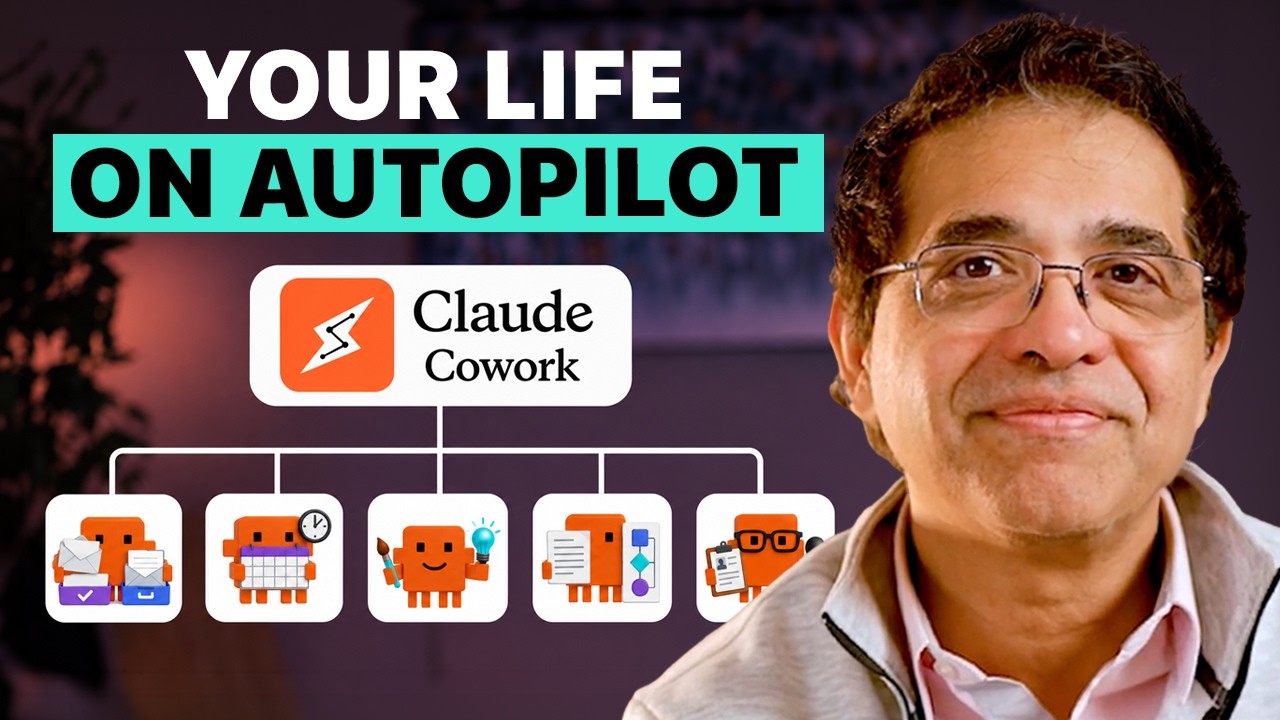
Sandeep Swadia remained the single biggest broad-interest workflow signal with 658,289 views, 17,658 likes, and 410 comments. His Four Cs framework turns agents into repeatable roles around coordination, creativity, clarity, and coaching instead of treating them like a vague future capability. The distinctive angle is that AI was still being sold most effectively as a visible operating habit, not as a hidden backend (video).

AI Search carried the biggest creator-workflow signal with 198,069 views, 9,733 likes, and 1,200 comments. ComfyUI's docs say MiniMax H3 ships with native text-to-video, image-to-video, and reference-to-video templates, multimodal references, stereo audio, and up to 2K output, so the attraction was a ready-made local production recipe rather than another generic model drop. The distinctive angle is that creator attention still followed workflow shape more than raw model prestige (video, docs).

Techno Mike supplied the clearest narrow-domain agent proof point with 135,616 views, 2,105 likes, and 423 comments. The video tests Pine AI on a real car-insurance negotiation, and Pine's site says the service now has 150k+ users, a 93% negotiation success rate, and 270 minutes saved on average. The distinctive angle is that an "agent" looked believable precisely because it handled one bureaucratic task with visible outcomes instead of promising to do everything (video, site).
Discussion insight: BMF MEDIA and Curious Refuge kept the creator side grounded in production reality. One emphasized interpolation, inpainting, outpainting, restyling, and LoRA training in LTX-2.3, while the other argued that MiniMax H3's open-weight strengths still come with licensing restrictions and weaker physics or multi-shot storytelling than Seedance (review).
Comparison to prior day: 2026-08-12 already rewarded visible workflows. On 2026-08-13, that preference stayed steady and shifted further toward editing control, local setup, and hard outcome metrics.
2. What Frustrates People
AI coding still breaks down when the human becomes reviewer, tester, and liability sink
This is High severity because Brett Codes gives the clearest firsthand account in the dataset: AI coding left him detached from the software, pushed him into review and QA instead of authorship, and made him feel he was learning less rather than more. IBM Technology explains the systems version of the same problem by arguing that more raw context does not automatically produce reliable outputs; context has to be retrieved and shaped deliberately. The visible coping behavior is either opting out of AI coding altogether or narrowing the role AI plays so the human still owns the reasoning path. This is directly worth building for.
Open-weight adoption still dumps hardware, routing, and serving complexity on the operator
This is High severity because CNBC, WorldofAI, Latent Space, Better Stack, The Information, and Bloomberg Tech all describe different pieces of the same burden. Teams now have to evaluate open-model provenance, local hardware fit, token efficiency, inference-stack design, and the capital intensity of compute before the model is useful in production. The visible workaround is routing, quantization, fine-tuning for efficiency, and heavy investment in infrastructure rather than straightforward deployment. This is directly worth building for.
Creator AI video still forces routing between local control, free access, editing depth, and distribution rights
This is High severity because AI Search, BMF MEDIA, and Curious Refuge all point at the same tradeoff from different directions. One path emphasizes ready-made local templates, another emphasizes interpolation, inpainting, restyling, and LoRA training, and the strongest outside review still says licensing limits and motion quality can block public use even when an open model looks attractive. The visible workaround is constant tool comparison and route switching rather than settling on one stable creator stack. This is directly worth building for.
Personal assistants only feel acceptable when privacy, context, and scope are explicit
This is High severity because Fireship, Switch and Click, Techno Mike, and Tech With Tim reward the same product behavior from different angles. People either want less AI, as in self-hosted search, or a much narrower and more inspectable assistant, as in bill negotiation or a self-hostable coworker with model switching and explicit memory. The visible workaround is self-hosting, vendor diversification, and sharply bounded workflows instead of one universal personal agent. This is directly worth building for.
3. What People Wish Existed
AI coding review and authorship ledger
Brett Codes and IBM Technology imply demand for tooling that records what the AI wrote, how much human review it actually received, where context quality broke down, and whether the developer still understands the final system well enough to own it. This is a practical need with High urgency because the strongest anti-AI coding evidence is about lost authorship and overloaded review, not just bad code completion. IDE telemetry and code-review tools solve pieces today, not the full authorship-and-accountability loop. Opportunity: direct.
Open-model routing and local deployment cockpit
CNBC, WorldofAI, Latent Space, Better Stack, The Information, Bloomberg Tech, and PCWorld imply demand for one surface that compares provenance, hardware fit, token efficiency, serving choices, and infrastructure cost across open and proprietary models. This is a practical need with High urgency because the evidence keeps splitting the operating decision across strategy coverage, local benchmarks, inference engineering, and capital-market news. Routers and benchmark dashboards solve pieces today, not the full operating cockpit. Opportunity: direct.
Trust-preserving personal AI workspace
Fireship, Tech With Tim, Switch and Click, and IBM Technology imply demand for a workspace that keeps permissions, memory, retrieval, and model choice legible while letting users decide what stays local, what gets shared, and what stays out of AI systems entirely. This is a practical need with High urgency because the day repeatedly treated context access as the main trust boundary. Self-hosted tools and coworker apps solve pieces today, not the full privacy-and-control layer. Opportunity: direct.
Creator workflow and rights router
AI Search, BMF MEDIA, and Curious Refuge imply demand for a product that compares local workflows, editing capabilities, hardware burden, output quality, and regional distribution rights before creators commit time or money. This is a practical need with High urgency because the strongest creator evidence still fragments across tutorials, reviews, and licensing caveats. Docs and review channels solve pieces today, not the route-selection problem. Opportunity: direct.
Outcome-tracked service agents for consumer admin
Techno Mike and Sandeep Swadia imply demand for assistants that tackle one repetitive, annoying task at a time while keeping permissions, status, and savings visible. This is a practical need with Medium urgency because the value proposition is extremely clear, but Pine already shows the category is moving from concept to product. Generic copilots solve pieces today, not the full task-specific execution layer with measurable ROI. Opportunity: competitive.
Private search and provenance-first discovery
Switch and Click implies demand for products that preserve visible links, privacy, and engine choice without requiring users to become homelab operators. This is a practical need with Medium urgency because the behavioral signal is real but narrower than open-model deployment or creator tooling. Metasearch engines solve pieces today, not the migration-and-management layer for mainstream users. Opportunity: competitive.
4. Tools and Methods in Use
| Tool | Category | Sentiment | Strengths | Limitations |
|---|---|---|---|---|
| MindsHub Cowork | Agent workspace | (+) | Swappable open or proprietary models, interchangeable agent harnesses, connected data, memory, and artifacts make the workspace itself durable | Still requires users to decide what context and permissions the agent should receive |
| Muse Glimmer | Local agent model | (+/-) | Apache 2.0 release, local-agent focus, multimodal input, tool use, and a 24GB-to-32GB local target make local agents feel practical | Personal-context demands, hardware limits, and local setup still keep the trust bar high |
| ThinkingCap-Qwen3.6-27B | Reasoning-model optimization | (+) | Roughly 46% fewer reasoning tokens on average makes latency and inference cost easier to control | Still needs workload-specific validation and inherits broader Qwen deployment choices |
| SearXNG | Search | (+) | Self-hosted metasearch with no tracking or profiling gives users a private, AI-light retrieval surface | Requires self-hosting, maintenance, and a willingness to manage your own search stack |
| MiniMax H3 + ComfyUI workflows | Local video workflow | (+/-) | Native T2V, I2V, and R2V templates, stereo audio, multimodal references, and local control make creator workflows repeatable | GPU burden, workflow setup, and licensing or quality caveats still slow adoption |
| LTX-2.3 | AI video model | (+/-) | Strong editing surface with interpolation, Retake, inpainting, outpainting, restyling, and LoRA training | Still demands hardware planning and may trail stronger models on motion or overall output quality |
| Pine AI | Consumer negotiation agent | (+) | Concrete outcome metrics and visible task boundaries make the agent proposition easy to understand | Narrow domain coverage means privacy and trust must be earned one workflow at a time |
| Context engineering | Agent method | (+/-) | Improves reliability by turning raw retrieval into structured, actionable model input | Depends on upstream retrieval quality and careful system design rather than a single turnkey tool |
| Inference engineering stack | Serving method | (+/-) | Routing, quantization, cache reuse, and disaggregation make open models usable in production | Operational overhead is high and the toolchain changes as fast as the models do |
The strongest positive sentiment sat with tools that either restored user control or finished a narrow job: model-swapping workspaces, private search, token-efficiency tuning, repeatable creator workflows, and negotiation agents. These all make the AI surface more legible, not more magical.
Sentiment turned mixed whenever the user still inherited too many hidden decisions. Local agent models, video stacks, context-engineering methods, and inference stacks all looked useful, but they also left the operator holding some combination of hardware burden, rights analysis, orchestration complexity, or trust risk.
Migration patterns favored self-hosting, routing layers, and narrow assistants over one-model defaults. The competitive dynamic was shifting away from "whose base model is smartest" and toward "which surface makes the model usable without surrendering too much control."
5. What People Are Building
| Project | Who built it | What it does | Problem it solves | Stack | Stage | Links |
|---|---|---|---|---|---|---|
| MindsHub Cowork | MindsHub | Workspace where you brief an entire project, switch models or harnesses, and keep results, memory, and data in one place | Users want agent workflows that outgrow a chat transcript without accepting vendor lock-in | Model Router, Anton/Hermes harnesses, connectors, memory, artifacts, scheduling | Shipped | site, repo, video |
| SearXNG deployment | SearXNG contributors | Self-hosted metasearch engine with no tracking or profiling | Search users want private, inspectable retrieval instead of AI-heavy defaults | Metasearch engine, self-hosting, configurable engines | Shipped | repo, video |
| ThinkingCap-Qwen3.6-27B | BottleCap AI | Fine-tuned Qwen variant that overthinks less while preserving most performance | Teams want cheaper and faster reasoning without swapping model families entirely | Qwen3.6-27B, fine-tuning, Apache 2.0 release, Hugging Face distribution | Shipped | post, video |
| Muse Glimmer | Meta | Open 30B local agent model for coding, tool use, multimodal reasoning, and long-running workflows | Developers want locally runnable agents instead of pure cloud dependence | 30B model, 4-bit quantization, DFlash speculative decoding, local runtimes and serving integrations | Shipped | blog, video |
| MiniMax H3 workflow stack | MiniMaxAI | Open-weight creator workflows for text-, image-, and reference-to-video with native stereo audio | Creators want repeatable local video generation instead of fragile one-off prompting | MiniMax H3, ComfyUI, T2V/I2V/R2V templates, local GPUs, Hugging Face weights | Shipped | docs, video, review |
| Pine AI | Pine | AI assistant that calls, negotiates, handles complaints, and cancels subscriptions | People want to outsource painful life-admin tasks instead of only receiving advice | Voice calls, workflow automation, negotiation flows, consumer account actions | Shipped | site, video |
| Gemini Robotics ER 2 | Google DeepMind | High-level embodied-reasoning model that chats, plans, calls tools, and coordinates multistep physical tasks for robots | Developers want robots that can reason through real-world tasks and recover when things go wrong | Embodied reasoning model, Gemini API, tool calling, VLA handoff, multimodal streams | Beta | blog, video |
MindsHub and SearXNG represent the same builder instinct in different domains: trust lives in the surface around the model. One wraps agents in routing, memory, connectors, and artifacts, while the other wraps search in privacy, self-hosting, and visible links.
ThinkingCap and Muse Glimmer show a second pattern: compress the cost and control layer until open models feel operational instead of ideological. Neither mainly sells abstract intelligence; both sell a more usable way to run or deploy a known model family.
MiniMax H3, Pine, and Gemini Robotics ER 2 show a third pattern: the most believable AI products still draw a hard workflow boundary. Creator pipelines, consumer negotiations, and physical multistep tasks all feel stronger than generic "assistant for everything" claims.
6. New and Notable
AI coding rejection became a mass-engagement creator topic
Brett Codes was notable because the backlash was not framed as a policy argument or a benchmark complaint. It was a firsthand account of lost authorship, deteriorating craft, and a developer being reduced to review and QA, and it drew 5,300 comments - one of the strongest engagement signals in the file.
Muse Glimmer made local-agent discourse about personal context, not just model weights
Fireship and WorldofAI were notable because they treated Meta's release as both a local-performance story and a trust story. Meta's own post says useful agents need deep access to personal context, which raised the question of what users are willing to expose in exchange for local autonomy (blog).
The compute race around open models got explicit
The Information and Bloomberg Tech were notable because they shifted the open-model conversation from features to balance sheets. Nvidia's reported $30 billion compute push, Anthropic's possible $6 billion infrastructure deal, and the surrounding CoreWeave and Cerebras commentary all made it clear that deployment economics are becoming headline content.
Gemini Robotics ER 2 extended the agent story into physical systems
TheAIGRID was notable because the underlying Google launch goes beyond chat and desktop use. Google says Gemini Robotics ER 2 can chat, reason over the physical world, call tools, adapt from continuous video feedback, and support multi-robot collaboration, which makes "agentic AI" feel less confined to screens (blog).
AI-free search behavior stayed visible
Switch and Click was notable because it turned dissatisfaction with AI-shaped search into a concrete self-hosting migration path. The signal is not just distrust of Google; it is willingness to run a replacement that explicitly prioritizes privacy, inspectability, and the absence of tracking or profiling (repo).
7. Where the Opportunities Are
[+++] Open-model routing and local deployment workspace - CNBC, WorldofAI, Latent Space, Better Stack, The Information, and Bloomberg Tech all point to a strong need for one surface that joins provenance, cost, hardware fit, inference choices, and deployment risk. This is strong because the same pain shows up from policy coverage down to local setup.
[+++] AI coding authorship, review, and rework plane - Brett Codes and IBM Technology imply a strong need for products that show where AI generated code came from, how much review it really received, and whether the human still understands the resulting system. This is strong because the pain is both emotional and operational.
[+++] Trust-preserving personal AI context vault - Fireship, Tech With Tim, Switch and Click, and IBM Technology all imply a strong need for products that keep permissions, retrieval, memory, and local-versus-remote boundaries explicit. This is strong because personal-context access was one of the day's most repeated trust barriers.
[++] Creator workflow and rights router - AI Search, BMF MEDIA, and Curious Refuge imply a moderate-to-strong need for one place to compare templates, editing features, hardware demands, output quality, and licensing constraints before creators choose a stack. This is moderate to strong because the pain is repeated and practical, but concentrated in one audience segment.
[++] Narrow service agents with visible ROI - Techno Mike and Sandeep Swadia suggest a moderate-to-strong opportunity for assistants that handle one repetitive task at a time while keeping permissions, savings, and status legible. This is moderate to strong because trust rises sharply when the scope and outcome are concrete.
[+] Private search and provenance-first discovery surfaces - Switch and Click suggests an emerging opportunity for products that preserve visible links and privacy without requiring users to self-host their own stack. This is emerging because the behavioral signal is real, but narrower than the model-deployment and coding-trust categories above.
8. Takeaways
- Open weights are now a full-stack operating problem, not just a release event. CNBC framed the strategy layer, WorldofAI tested the local-hardware layer, and Baseten mapped the inference-engineering layer that starts after the weights ship. (source, source, source)
- The trust fight is really about boundaries around context, authorship, and privacy. Brett Codes rejected AI coding on craft grounds, Meta's Muse Glimmer pitch assumed deep personal context access, and SearXNG represented the opt-out path toward private retrieval. (source, source, source)
- Visible workflow recipes still beat black-box AI promises. Sandeep's Four Cs, ComfyUI's MiniMax H3 templates, and Pine's negotiation flow all made the product legible by showing the operating shape up front. (source, source, source)
- The competitive edge is moving toward control and efficiency rather than pure model mystique. ThinkingCap's token-efficiency pitch, MindsHub's swappable workspace, and Muse Glimmer's local-agent target all sell a more usable operating surface instead of just a bigger model story. (source, source, source)
- Compute economics and embodied agents are the adjacent frontiers to watch. The Information and Bloomberg made infrastructure spend headline material, while Google's Gemini Robotics ER 2 pushed the same agent conversation into physical tasks and multi-robot coordination. (source, source, source)