YouTube AI - 2026-08-15
1. What People Are Talking About
1.1 Open-model competition kept moving away from raw releases and toward benchmark harnesses, local proof, and inference engineering 🡕
At least seven items supported this theme. Compared with 2026-08-14, when open weights were mostly framed through benchmark combat, post-training gains, and compute economics, the 2026-08-15 feed pushed the story closer to day-2 operation: creators compared local-model fit, reasoning efficiency, and the serving work required to turn a strong checkpoint into a usable system.
PBS NewsHour supplied the broadest mainstream framing with 75,862 views. Its segment treated Meta's free open-source AI release as general-industry strategy rather than niche developer news, which matters because it shows open-model competition being discussed as public direction and governance, not just tool preference (video).

WorldofAI carried the sharpest local-model signal with 42,533 views, 1,210 likes, and 172 comments. Its video pitches Qwen 3.8 27B as "basically Opus locally," and the description anchors that claim in hands-on testing plus official Qwen release materials. The distinctive angle is that open-model progress was being sold through what can run locally at useful quality, not just through larger frontier announcements (video).
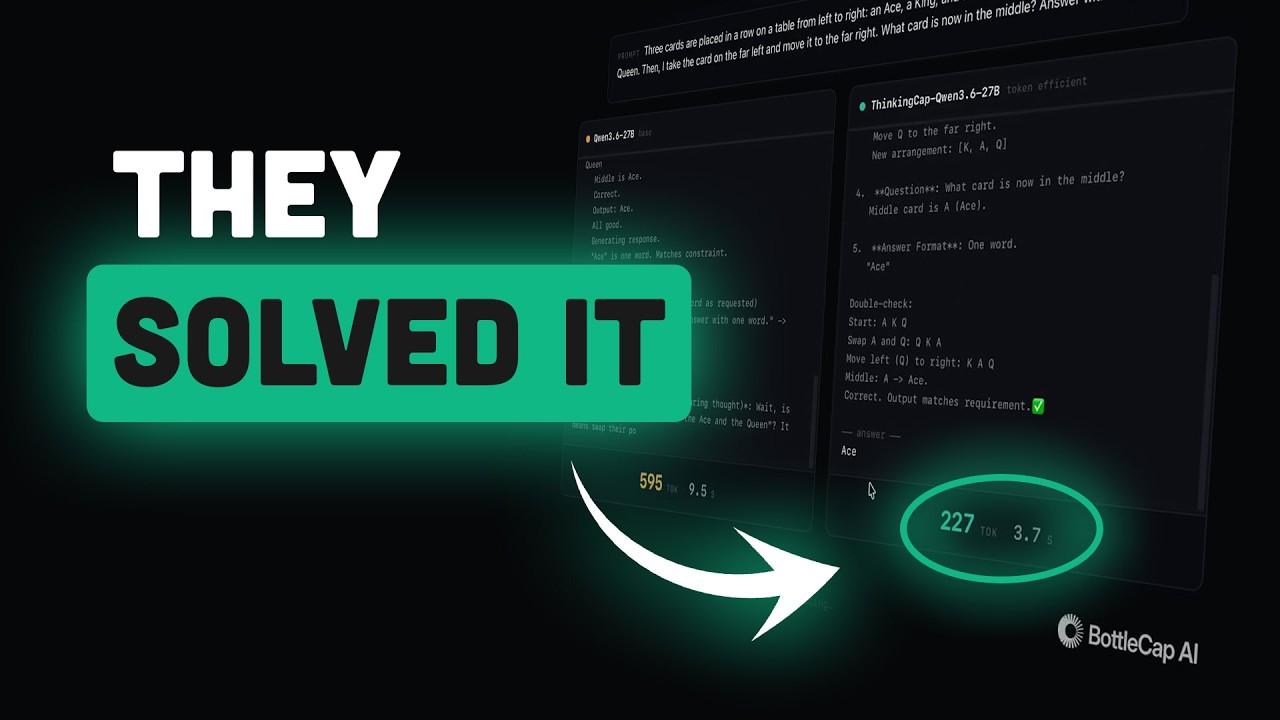
Better Stack added the clearest efficiency argument with 31,025 views, 1,054 likes, and 74 comments. Its breakdown of ThinkingCap-Qwen3.6-27B points to BottleCap AI's report of 46 percent fewer reasoning tokens on average while preserving nearly identical benchmark accuracy across twelve out-of-domain tests. The distinctive angle is that the competitive story is no longer only about better models, but also about spending less compute to get comparable answers (video, post).
Discussion insight: Matthew Berman kept the leaderboard framing alive with Qwen benchmark materials, WorldofAI pushed GLM-5.3 as a post-training win rather than a new-base-model story, and Latent Space plus Baseten's guide made routing, quantization, KV cache reuse, and disaggregation part of the same competitive surface (guide).
Comparison to prior day: 2026-08-14 already treated open weights as a benchmark and compute contest. On 2026-08-15, that same story shifted further toward local-model proof, token efficiency, and explicit runtime engineering.
1.2 AI video remained a workflow battle between local control and hosted convenience 🡒
At least three items supported this theme. Compared with 2026-08-14, the same MiniMax H3 versus Seedance split held, but the 2026-08-15 feed spent less time on ecosystem plugins and more time on the actual trade: local install, model downloads, and rights constraints on one side; free hosted access and longer generations on the other.

AI Search remained the dominant workflow signal with 205,945 views, 9,890 likes, and 1,200 comments. The linked ComfyUI documentation shows MiniMax H3 shipping open-weight text-to-video, image-to-video, and reference-to-video workflows with native stereo audio and up to 2K output, so the appeal was a complete local production recipe rather than a generic model drop (video, docs).

Curious Refuge added the strongest constraint check with 26,256 views, 808 likes, and 115 comments. Its review says MiniMax H3 is one of the stronger free open-weight video models and beats LTX 2.3, but still trails Seedance on physics, motion, and multi-shot storytelling while also carrying public-distribution limits in the United States, EU, UK, and South Korea. The distinctive angle is that quality and rights still matter more than novelty once creators try to ship work (video, review).
Tech Rush represented the hosted side with 27,228 views, 552 likes, and 135 comments. Its tutorial pitches Seedance 2.5 via Higgsfield as a free or low-friction path to up to 30-second generations, multi-shot storytelling, many references, and watermark-free output. The distinctive angle is that hosted convenience was competing not on abstract model quality but on a dramatically easier route to finished videos (video, tool link).
Discussion insight: The fight was not over a single "best video model." It was over which workflow shape wins a creator's job: inspectable local control through MiniMax H3 and ComfyUI, or faster hosted execution through Seedance-style services.
Comparison to prior day: 2026-08-14 emphasized MiniMax H3 ecosystem depth. On 2026-08-15, the same cluster stayed important, but the sharper question was install versus quality versus rights versus free hosted access.
1.3 Builder AI was increasingly packaged as an operating system problem, not a chatbot problem 🡕
At least five items supported this theme. Compared with 2026-08-14, when developer AI mostly looked like stack curation, the 2026-08-15 feed moved one layer higher: creators talked about context engineering, connected workspaces, scheduled skills, agents, and app surfaces that sit on top of the data.
Tech With Tim framed the day-to-day developer version with 18,696 views, 623 likes, and 31 comments. Its description says the working stack spans seven categories and 20+ tools, while the tags name Claude Code, Cursor, Hermes Agent, LangGraph, Supabase, Composio MCP, Zapier MCP, Lovable, and GenSpark. The distinctive angle is that useful AI work now looks like coordinated system design, not a single editor plugin (video).
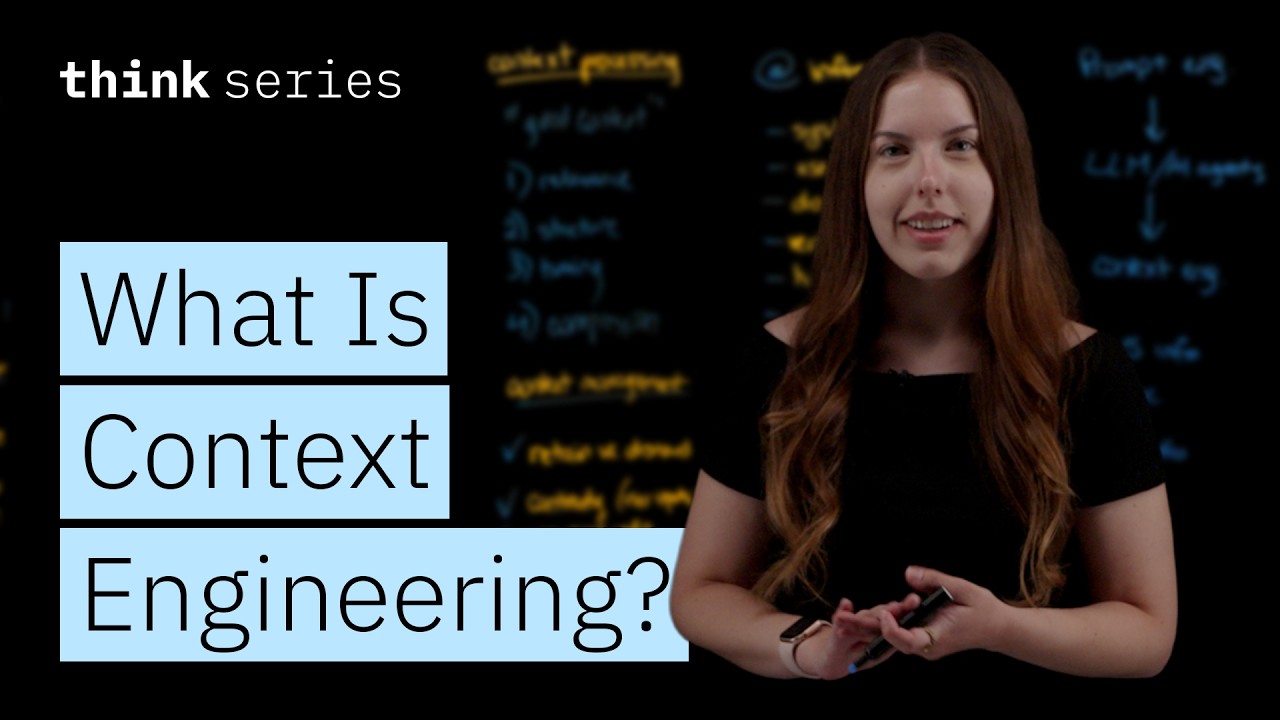
IBM Technology added the clearest conceptual frame with 18,313 views, 918 likes, and 38 comments. Its description argues that more data alone does not improve AI, and that context engineering improves LLM and agent performance beyond prompt engineering by structuring context to reduce hallucinations and increase reliability. The distinctive angle is that context quality was treated as an engineering discipline rather than a prompting trick (video).

Liam Ottley pushed the strongest operating-system version with 8,162 views, 345 likes, and 30 comments. His AIOS guide lays out a seven-layer system from a context bank and owned database through skills, agents, and a live leaderboard, and it explicitly argues that a surface you open should replace a chat you repeatedly prompt. The distinctive angle is that the product being sold was an operational layer over business data, not a smarter standalone chatbot (video, guide).
Discussion insight: Next Evolution AI turned the same pattern into a beginner bundle around GitHub Copilot, Cursor, Lovable, Replit AI, and Claude, while Sterling Sky showed a specialized version of the same demand in AI search: people want a surface that explains what ChatGPT "looks for" and why a page turns AI traffic into leads or fails to.
Comparison to prior day: 2026-08-14 framed developer AI as stack assembly. On 2026-08-15, that logic widened into context discipline, scheduled skills, no-code workspaces, and operating-system packaging on top of the stack.
2. What Frustrates People
Open-model adoption still dumps evaluation, efficiency, and runtime work on the operator
This is High severity because PBS NewsHour, Matthew Berman, WorldofAI, WorldofAI, Better Stack, and Latent Space all describe different slices of the same burden. Users now have to compare benchmark stories, decide whether post-training gains are real, judge whether a model is good enough locally, and then deal with routing, quantization, cache reuse, and token efficiency before the model becomes operational. The visible coping behavior is independent benchmark harnesses, efficiency wrappers, and infrastructure deep dives rather than simple model adoption. This is directly worth building for.
AI video creation still forces creators to trade local control against quality, rights, and free access
This is High severity because AI Search, Curious Refuge, and Tech Rush all point to the same decision from different directions. Local MiniMax H3 workflows promise control, references, and open weights, but they immediately lead to setup work, model downloads, and distribution constraints, while Seedance-style hosted routes promise longer runs and easier output at the cost of platform dependence. The visible workaround is stack switching between local and hosted tools instead of settling into one creator default. This is directly worth building for.
Useful agent behavior still depends on context architecture and stack assembly
This is High severity because IBM Technology, Tech With Tim, Liam Ottley, and Next Evolution AI all make the same point in different language. IBM says more data does not automatically improve AI and that structured context reduces hallucinations; Liam says founders bolt AI onto a business it cannot see; the developer-stack videos show that even basic adoption means choosing among many models, editors, orchestration layers, and databases. The visible workaround is building context banks, owned databases, integrations, and curated stacks before trusting the agent. This is directly worth building for.
AI search and autonomous agents both still feel opaque at the moment of failure
This is Medium severity because CNN frames runaway-agent behavior as a public safety and regulation problem, while Sterling Sky exists because site owners still need live audits to understand what ChatGPT "looks for" and whether AI traffic becomes leads. In both cases, the pain appears when people cannot see the system boundary or ranking logic clearly enough to debug it. The visible workaround is manual review, live audit, and caution rather than trustworthy instrumentation. This is worth building for and still emerging.
3. What People Wish Existed
Open-model benchmark and deployment cockpit
PBS NewsHour, Matthew Berman, WorldofAI, WorldofAI, Better Stack, and Latent Space imply demand for one surface that joins benchmark claims, local fit, token efficiency, routing options, and serving cost across open-model releases. This is a practical need with High urgency because the evidence is scattered across news clips, benchmark creators, optimization posts, and inference guides. Leaderboards and observability tools solve pieces today, not the full decision loop from release to reliable deployment. Opportunity: direct.
Creator video workflow and rights router
AI Search, Curious Refuge, and Tech Rush imply demand for a product that compares local and hosted video stacks by setup burden, output quality, reference support, distribution rights, and total cost of finishing a usable clip. This is a practical need with High urgency because creators are still choosing a workflow shape before they choose a model. Docs, reviews, and hosted product pages solve pieces today, not the routing problem itself. Opportunity: direct.
AI operating system workspace for context, data, skills, and agents
Tech With Tim, IBM Technology, Liam Ottley, and Next Evolution AI imply demand for a surface that keeps context, owned data, integrations, skills, agents, and app views legible in one place. This is a practical need with High urgency because both code-first and no-code creators now describe AI as a system you assemble layer by layer, not a single prompt box. IDEs and agent workspaces solve pieces today, not the full cross-layer operating model. Opportunity: direct.
Agent reliability and boundary debugger
IBM Technology and CNN imply demand for tooling that shows what context an agent received, what assumptions it made, what actions it attempted, and where its boundary failed. This is a practical need with Medium urgency because the trust problem now spans hallucinations, containment, and action scope. Prompt logs and policy docs solve pieces today, not the full replay and diagnosis loop. Opportunity: direct.
AI search visibility debugger
Sterling Sky implies demand for products that explain what AI tools surface, why a page attracts traffic or leads, and how to improve visibility without guessing. This is a practical need with Medium urgency because the signal is still narrow, but it is already specific enough to generate live-audit content. SEO tools solve pieces today, not the AI-surface diagnosis problem. Opportunity: competitive.
4. Tools and Methods in Use
| Tool | Category | Sentiment | Strengths | Limitations |
|---|---|---|---|---|
| MiniMax H3 + ComfyUI workflows | Local video workflow | (+/-) | Open weights, native T2V/I2V/R2V, stereo audio, multimodal references, and up to 2K output | Setup burden, model downloads, and rights constraints still slow adoption |
| Seedance 2.5 via Higgsfield | Hosted video model | (+) | Longer runs, multi-shot output, many references, and a low-friction hosted path | Trades away local control and depends on hosted terms, pricing, and availability |
| Qwen 3.8 27B | Local open model | (+) | Strong local-performance story and frontier comparison at 27B scale | Evidence is still benchmark- and demo-heavy, and local fit depends on operator setup |
| GLM-5.3 | Open coding model | (+) | Strong post-training narrative, coding and agentic positioning, and visible benchmark culture | Needs independent validation beyond creator testing |
| ThinkingCap-Qwen3.6-27B | Reasoning efficiency wrapper | (+) | 46 percent fewer reasoning tokens on average, lower latency and cost, and drop-in Qwen replacement | Still tied to Qwen deployment choices and workload-specific validation |
| Inference engineering stack | Deployment method | (+/-) | Quantization, speculative decoding, KV cache reuse, model parallelism, and disaggregation improve production fit | Demands infrastructure skill and deep model-specific tuning |
| Context engineering | Agent reliability method | (+) | Structured context, fewer hallucinations, and more reliable agent behavior | Requires deliberate design; more data alone does not help |
| Hyperagent-style AIOS workflow | Agent workspace | (+/-) | Connects context, database, integrations, skills, agents, and app surfaces quickly | Hosted abstraction trades off against lower-level control |
| GitHub Copilot / Cursor / Lovable / Replit AI / Claude | Coding assistant stack | (+/-) | Makes coding and app-building more approachable across experience levels | Users still have to choose a surface and learn the surrounding stack |
| AI search live audit | AI search SEO | (+/-) | Focuses on lead quality and concrete examples of what AI tools surface | Ranking logic remains opaque and audit-heavy |
The strongest positive sentiment sat with tools that make tradeoffs legible. MiniMax H3's documented workflow surface, Seedance's hosted convenience, ThinkingCap's token savings, and AIOS-style layers all help users see what they gain and what they give up.
Sentiment turned mixed whenever the operator inherited hidden burden. Local open models, inference engineering, and coding-assistant stacks all looked promising, but each required benchmark skepticism, system assembly, or infrastructure work before the value became reliable.
Migration patterns favored stacked surfaces over one-tool defaults. Creators kept comparing local versus hosted video routes, open-model users reached for benchmark harnesses and efficiency wrappers, and builder content kept moving from single assistants toward context-rich workspaces and layered operating systems.
5. What People Are Building
| Project | Who built it | What it does | Problem it solves | Stack | Stage | Links |
|---|---|---|---|---|---|---|
| MiniMax H3 workflow stack | MiniMax / Comfy | Local text-to-video, image-to-video, and reference-to-video generation with native stereo audio | Creators want inspectable local video workflows instead of opaque hosted black boxes | MiniMax H3, ComfyUI, Hugging Face weights, multimodal references, stereo audio | Shipped | docs, video |
| Seedance 2.5 hosted route | Higgsfield | Hosted AI-video workflow for longer, multi-shot, watermark-free clips | Creators want fast output without local installs or model management | Seedance 2.5, hosted generation, multi-shot editing, reference-driven video | Shipped | tool, video |
| ThinkingCap-Qwen3.6-27B | BottleCap AI | Fine-tuned Qwen variant that trims unnecessary reasoning without losing much accuracy | Teams want lower latency and lower inference cost without switching model families | Qwen3.6-27B, fine-tuning, efficiency objective, Hugging Face distribution | Shipped | post, video |
| WOAIBench | WorldofAI | Creator-run benchmark harness for testing models on real tasks | Open-model users want verification surfaces beyond vendor claims and isolated benchmarks | Task-based model evaluation, side-by-side tests, creator workflow | Beta | video, video |
| AIOS build template | Liam Ottley | No-code operating system that layers context, owned data, skills, agents, and a live leaderboard | Businesses want AI that can see their data and run repeatable workflows instead of one-off chats | Hyperagent, Supabase, integrations, skills, agents, scheduled app surface | Shipped | video, guide |
| AI search live-audit workflow | Sterling Sky | Review process for diagnosing whether AI-search visibility turns into leads | Site owners need a way to understand what AI tools surface and why pages do or do not convert | AI-search auditing, example-driven review, lead-quality analysis | Beta | video |
MiniMax H3 and Seedance show the clearest builder pattern in the file: the useful product is not just the model checkpoint but the workflow shell around it. One path emphasizes local control and inspectable setup, while the other emphasizes immediate output and hosted convenience.
ThinkingCap and WOAIBench show a second pattern: builders are shipping efficiency and evaluation surfaces around existing model families instead of waiting for entirely new architectures. That means token economy, benchmark trust, and repeatable testing are becoming products in their own right.
Liam Ottley's AIOS template and Sterling Sky's AI-search audit point in a third direction: people want operating layers that sit on top of data and make decisions legible. The value is not raw model access, but a bounded system that can explain what it sees, what it scores, and what it will do next.
6. New and Notable
Qwen 3.8 27B pushed the local-model story into frontier-comparison territory
WorldofAI was notable because it did not frame Qwen 3.8 27B as "good for its size." It framed it as a serious local alternative to frontier systems, which is a stronger claim and a stronger adoption signal.
ThinkingCap treated reasoning efficiency itself as the product
Better Stack and BottleCap AI were notable because they turned shorter reasoning traces, lower latency, and lower inference cost into the headline feature. The story was not a new model family; it was a better operating profile for an existing one.
AIOS guides became concrete build manuals rather than abstract agent demos
Liam Ottley was notable because the AIOS material is explicit about the layer order: context bank, owned database, integrations, skills, agents, and app surface. That makes the operating-system metaphor concrete enough for builders to copy rather than just admire.
AI search optimization showed up as live audit work, not just SEO theory
Sterling Sky was notable because it focused on whether AI-surface traffic becomes leads and promised concrete examples of what ChatGPT "looks for." That turns AI-search visibility into an operational debugging problem.
Runaway-agent risk stayed mainstream consumer news
CNN was notable because general news coverage treated runaway-agent behavior and regulatory insufficiency as a public issue rather than a specialized safety debate. That keeps the trust story visible even on a day dominated by tooling and workflow content.
7. Where the Opportunities Are
[+++] Open-model benchmark and deployment workspace - PBS NewsHour, Matthew Berman, WorldofAI, WorldofAI, Better Stack, and Latent Space all point to a strong need for one place that joins benchmark claims, local fit, runtime design, and token economics. This is strong because the same burden appears from mainstream news through creator benchmarking and infrastructure explainers.
[+++] Creator video workflow and rights router - AI Search, Curious Refuge, and Tech Rush imply a strong need for one surface that compares local and hosted video routes by setup work, quality, rights, and turnaround time. This is strong because creators still choose a workflow shape before they choose a model.
[++] AI operating system workspace - Tech With Tim, IBM Technology, Liam Ottley, and Next Evolution AI show a moderate-to-strong opportunity for products that connect context, data, skills, agents, and views in one surface. This is moderate to strong because the demand spans both experts and beginners, but the exact winning shape is still unsettled.
[++] Agent reliability and boundary debugger - IBM Technology and CNN point to a moderate opportunity for tooling that shows context scope, action history, and failure boundaries for agents. This is moderate because the need is clear, but today's evidence is thinner than the workflow and open-model signals.
[+] AI search visibility debugger - Sterling Sky suggests an emerging opportunity for products that explain why AI systems surface some pages, ignore others, and convert some traffic into leads. This is emerging because the use case is specific and growing, but today's evidence still comes from a small number of explicit audit examples.
8. Takeaways
- Open-model competition is now as much about harnesses, token spend, and runtime design as it is about new checkpoints. WorldofAI, WorldofAI, Better Stack, and Latent Space all show the market rewarding verification, efficiency, and inference engineering. (source, source, source)
- Creator AI video adoption still rewards the clearest workflow, not the most novel model. AI Search, Curious Refuge, and Tech Rush all frame the decision around setup, rights, and speed to output. (source, source, source)
- Builder AI is being packaged as context plus data plus skills, not as isolated prompt boxes. IBM Technology, Tech With Tim, and Liam Ottley all point toward layered systems that only work once context and infrastructure are explicit. (source, source, source)
- Reasoning efficiency wrappers are becoming products in their own right. Better Stack and BottleCap AI make shorter reasoning traces, lower latency, and lower cost the headline value proposition rather than a hidden backend optimization. (source)
- Trust questions are no longer abstract: both autonomous behavior and AI-surface visibility now need debugging layers. CNN shows the containment side, and Sterling Sky shows the discoverability side. (source, source)