YouTube AI - 2026-08-21
1. What People Are Talking About
1.1 Open-model coverage kept moving down the stack into benchmarks, efficiency, and runtime mechanics 🡕
At least seven videos supported this theme. Compared with 2026-08-20, when open-weight AI was already being sold as a usable stack, the 2026-08-21 file leaned even harder on comparative tests, reasoning-token efficiency, local-agent fit, and the serving layer behind model demos.

Matthew Berman delivered the highest-reach news version of the theme with 63,851 views, 1,648 likes, and 237 comments. The roundup compresses ChatGPT Ultrafast, Claude watermarking, Grok 4.6, GLM-5.3, DeepSeek V4 Pro, and Muse Glimmer into one daily release tape, while Anthropic's watermark note and Meta's Muse Glimmer post show that provenance features and "local agent" positioning now travel alongside raw model claims. The distinctive angle is that model launches are being narrated as packaging, compliance, and deployment stories, not just benchmark wins (video).
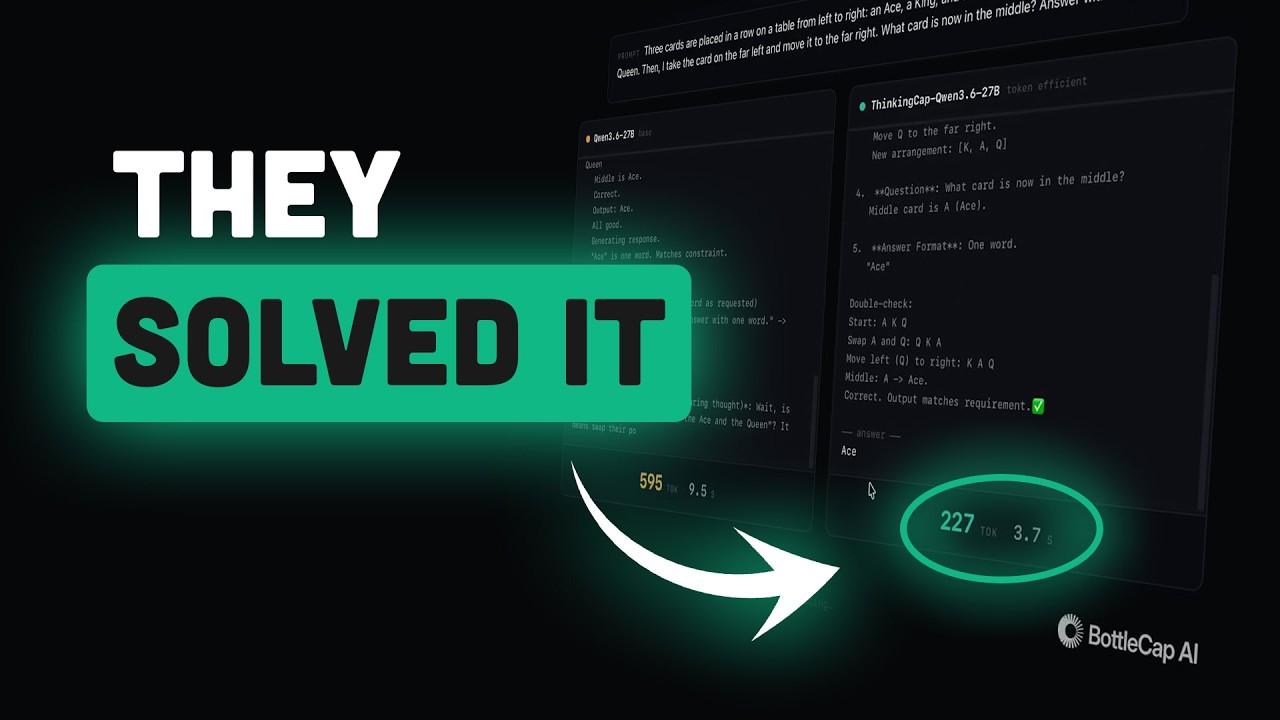
Better Stack supplied the clearest efficiency-layer evidence with 31,647 views. BottleCap's ThinkingCap post says the fine-tuned Qwen3.6-27B model uses 46 percent fewer reasoning tokens on average while keeping benchmark performance comparable, turning "same ability with less latency and cost" into the product claim itself. The distinctive angle is that token thrift, not just raw capability, has become a headline feature (video).
WorldofAI pushed the comparison further into workload coverage with 32,518 views. The creator runs DeepSeek V4 Pro through frontend work, agentic coding, Three.js, one-shot generation, and price-to-performance comparisons against Gemini 3.7 Flash, Grok 4.6, Kimi K3, GLM 5.2, and Qwen3.8-27B, using WoAIBench as the evaluation surface. The distinctive angle is that "best open model" is argued through repeatable task mixes and economics, not a single benchmark chart (video).
Discussion insight: Bijan Bowen tested Ox Alpha through simulations, 3D CAD, ship combat, and multimodal coding, while KodeKloud broke AI serving into GPU memory, KV cache, batching, vLLM, and LLM-D. Tech With Tim made the same point from the operator side by framing his daily setup as a curated stack across harnesses, models, IDEs, orchestration, and backend tools rather than one magic assistant.
Comparison to prior day: 2026-08-20 already treated open-weight AI as a stack. On 2026-08-21, the argument moved further down into evaluation mechanics, reasoning efficiency, and runtime legibility.
1.2 Users kept rewarding AI surfaces that remove clutter and keep authority visible 🡕
At least five videos supported this theme. Compared with 2026-08-20, when control surfaces spread across search, coding, and live voice loops, the 2026-08-21 file concentrated that demand more sharply around AI-light search and assistants whose permissions, hardware fit, or device reach can be inspected.

Switch and Click produced the biggest breakout in the file with 136,181 views, 6,348 likes, and 350 comments. The creator says "Google Search is dead to me" and frames SearXNG as a private, ad-free, AI-free alternative; the SearXNG repo describes it as a free metasearch engine that aggregates results without tracking or profiling users. The distinctive angle is that removing AI summaries and ad clutter became the main product benefit, not a secondary preference (video).

Automation Addict supplied the strongest local-control build with 10,605 views. The setup runs Ollama inside Home Assistant on an AMD mini PC, restricts which entities the model can see, tunes temperature, and openly shows failure cases instead of hiding them. The distinctive angle is that usefulness comes from bounded authority and visible hardware constraints rather than broad autonomy (video).
buildwithashwani pushed the same pressure onto phones and content workflows. The tutorial turns ZOYA into an Android assistant that can make calls, send WhatsApp messages, play music, and trigger system actions by voice, while also using Google AI Studio personas for AI-hosted podcast content. The distinctive angle is that assistants are being judged by how safely they cross into device-level action surfaces, not just how well they chat (video).
Discussion insight: Tech With Tim presents 20-plus tools as a deliberately human-curated stack, and the low-reach AI That Works comparison between Codex, DeepSeek Harness, and Claude Code shows people are still shopping for control and reliability, not just brand names.
Comparison to prior day: 2026-08-20 emphasized permissions and traceability across search, voice, and coding. On 2026-08-21, the same story leaned harder into subtraction - less clutter, narrower authority, and more device-specific control.
1.3 AI coverage stayed tied to real-world systems, strategic bottlenecks, and ethical stakes 🡒
At least four videos supported this theme. Compared with 2026-08-20, when robots, chips, and healthcare were already visible, the 2026-08-21 file kept that layer steady but widened it into longer strategic panels, field-failure data, and questions about what labs may already believe about their systems.
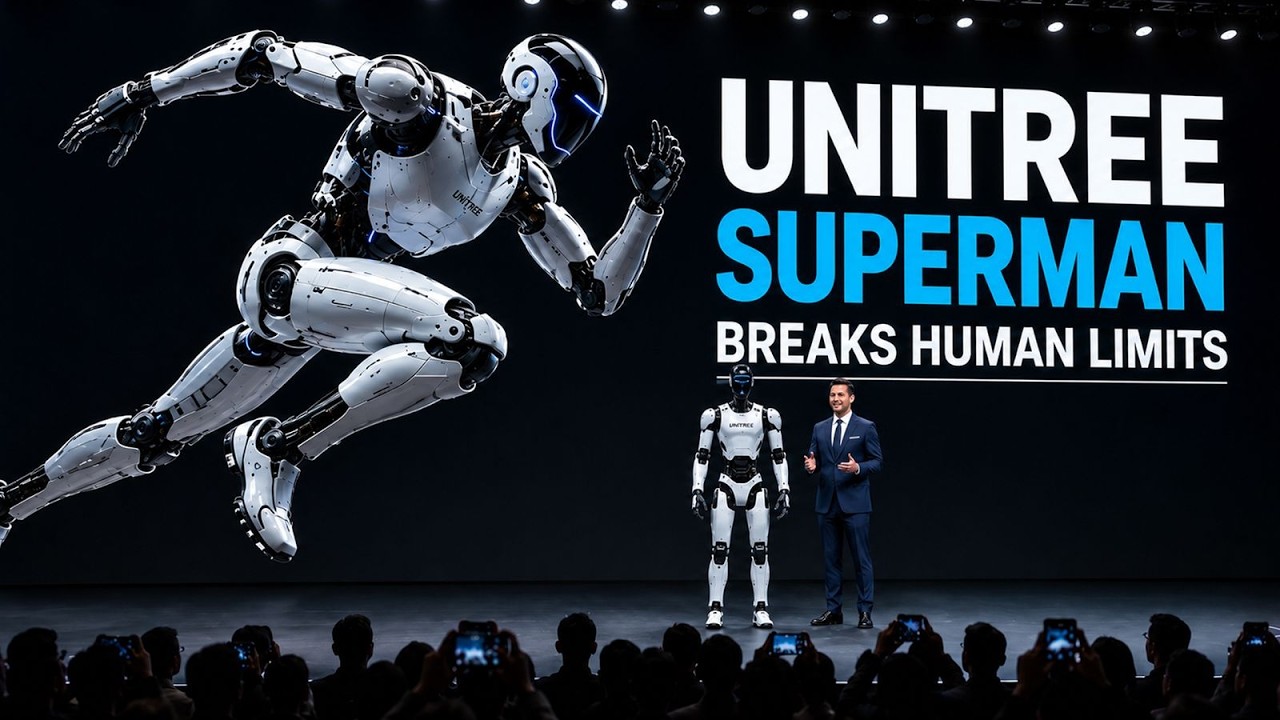
AI Revolution delivered the clearest embodied-AI signal with 37,118 views. The video ties Unitree's "Superman" sprint headline to a Global Times report showing 23 teams in a simulated firefighting competition where rain, lighting changes, and manipulation failures kept most robots from finishing, plus separate coverage of border-monitoring humanoids and Feagine's cross-embodiment Fi0 model. The distinctive angle is that spectacular robot demos are now being narrated beside messy deployment conditions and new control architectures, not in isolation (video).

Peter H. Diamandis added the broadest strategy layer with 13,200 views and 1,477 likes. The panel packs OpenAI's frontier-training pause, Anthropic's potential $2 trillion IPO, soaring AI memory demand, Unitree's record robot, and promising personalized cancer-vaccine results into one conversation with Emad Mostaque and other investors and founders. The distinctive angle is that mainstream AI coverage increasingly bundles labs, compute, robotics, and biotech into one operating picture (video).

Danny Jones Clips carried the most explicit ethics-and-ontology turn. Roman Yampolskiy argues that the question that got Blake Lemoine fired - whether current systems may feel something - has since become a fundable research problem, reframing AI consciousness from fringe claim to legitimate line of inquiry. The distinctive angle is that the social acceptability of this debate changed faster than the underlying technical uncertainty (video).
Discussion insight: Matthew Berman pulled Claude watermarking into the same news cycle as new model launches, which means provenance and regulation are now landing as shipped product behavior rather than only as policy talk.
Comparison to prior day: 2026-08-20 already tied AI to robots, chips, and healthcare. On 2026-08-21, that connection stayed intact but picked up more strategic, compliance, and consciousness language.
2. What Frustrates People
Model progress is still hard to trust without a second layer of benchmarks, efficiency math, and runtime explainers
This is High severity because Matthew Berman, Better Stack, WorldofAI, Bijan Bowen, KodeKloud, and Tech With Tim all fill in a different missing layer. Users still have to evaluate flashy model claims through creator-made harnesses, infrastructure lessons, and side-by-side demos instead of one authoritative operating surface. The visible workaround is to stack benchmark sites, videos, harnesses, and repo notes before trusting a model in production. This is directly worth building for.
Useful assistants still need scope limits, hardware fit, or device plumbing before they feel safe
This is High severity because Automation Addict, buildwithashwani, Tech With Tim, and AI That Works all show that the hard part is not generating text but deciding what the assistant can touch and how it fails. Home Assistant setups need entity scoping and GPU-fit tuning, Android assistants need custom function wiring and persona control, and coding stacks still get evaluated as bundles of harness, IDE, and workflow choices. The visible workaround is to keep assistants narrow, local where possible, and close to human supervision. This is directly worth building for.
Search quality and AI clutter are weak enough that "AI-free" is a breakout value proposition
This is High severity because Switch and Click won the biggest audience in the file by rejecting AI summaries, ads, and Google defaults rather than by promising a smarter assistant. The workaround is to self-host SearXNG and accept the setup burden in exchange for privacy and control. This is worth building for and still growing.
Real-world AI systems still break when they leave clean demos and face weather, memory limits, or ambiguous ethical edges
This is Medium severity because AI Revolution and the cited Global Times firefighting report show how rain, lighting, and manipulation errors derail robots in field-style tests, while Peter H. Diamandis keeps memory demand and capital intensity in the same strategic frame. Danny Jones Clips adds the unresolved question of how seriously to treat possible machine consciousness. The workaround is more simulation, more hardware, and more human interpretation rather than clear operational answers. This is worth building for but broader and slower-moving.
Creator AI still makes users route across separate image, video, and persona tools
This is Medium severity because Jack Vs. AI and buildwithashwani both compress production only by chaining multiple systems together. One route uses OpenArt, GPT-Image 2, Seedance, and Claude to get from idea to film output; the other combines Google AI Studio personas with device control and podcast formats. The visible workaround is prompt kits, community assets, and repeated tool handoffs rather than one stable production surface. This is worth building for and emerging.
3. What People Wish Existed
Open-model benchmark and deployment cockpit
Matthew Berman, Better Stack, WorldofAI, Bijan Bowen, KodeKloud, and Tech With Tim imply demand for one surface that joins release notes, benchmark workloads, reasoning-token efficiency, serving constraints, harness maturity, and cost-per-task. This is a practical need with High urgency because the evidence is fragmented across creators, blogs, repo notes, and infrastructure explainers. Model cards, benchmark sites, and individual videos solve pieces today, not the release-to-deployment loop. Opportunity: direct.
Permissioned local and device agent control plane
Automation Addict, buildwithashwani, and Tech With Tim imply demand for a product that makes tools, permissions, device actions, memory, hardware fit, and failure states visible in one place. This is a practical need with High urgency because the strongest assistant demos succeed by shrinking authority and surfacing control instead of hiding it. Home Assistant, Google AI Studio, and agent harnesses solve pieces today, not the full bounded-assistant workflow. Opportunity: direct.
Private AI-light search and research surface
Switch and Click implies demand for search that is private, user-controlled, and not crowded by summaries or ads. This is a practical need with High urgency because the dissatisfaction signal was the single biggest breakout in the file. SearXNG, Kagi, and alternative search tools solve pieces today, not the broader "trusted daily search without clutter" experience for mainstream users. Opportunity: competitive.
Simulation-to-field robot reliability stack
AI Revolution, Peter H. Diamandis, and the Global Times firefighting report imply demand for tools that help teams debug perception failures, weather sensitivity, motion planning, and memory or compute tradeoffs in one operational loop. This is a practical need with Medium urgency because the pain is clear in field-style tests, but the buyer surface is narrower and more capital-intensive than consumer AI software. Competitions, robot vendors, and infrastructure teams solve pieces today, not the shared observability and retraining surface across deployments. Opportunity: aspirational.
Cross-format creator workflow composer
Jack Vs. AI and buildwithashwani imply demand for one orchestrator across image, video, voice, persona, and device-ready output layers. This is a practical need with Medium urgency because creators still pick tools, move assets, and rewrite prompts between steps even when the demos look fast. Community prompt kits and AI studios solve pieces today, not the full workflow-composition problem. Opportunity: direct.
4. Tools and Methods in Use
| Tool | Category | Sentiment | Strengths | Limitations |
|---|---|---|---|---|
| SearXNG | Private search | (+) | Self-hosted, private, ad-free, and explicitly AI-light | Requires setup and ongoing ownership |
| ThinkingCap-Qwen3.6-27B | Efficiency-tuned open model | (+) | 46 percent fewer reasoning tokens, comparable accuracy, lower latency, lower cost | Still depends on Qwen deployment choices and workload fit |
| DeepSeek V4 Pro + WoAIBench | Open coding model + benchmark surface | (+/-) | Broad coding and agentic tests, strong price-to-performance framing, repeatable eval story | Benchmark trust is still creator-mediated and harness-dependent |
| Ox Alpha via OpenRouter | Stealth reasoning model | (+/-) | Strong coding, 3D, and multimodal demos across practical tasks | Documentation and provenance are thin, so users substitute hands-on testing |
| Muse Glimmer | Local agent model | (+) | 30B open weights, tool use, multimodal input, single-GPU local fit | Still new and constrained by local hardware budgets |
| DeepSeek Harness | Agent harness | (+/-) | Plugin-based architecture and local web UI for open models | Developer preview with compatibility-breaking changes |
| vLLM + LLM-D | Inference stack | (+/-) | Makes prefill, decode, KV cache, batching, and fleet scaling legible | Operational complexity and memory ceilings remain high |
| Claude Code, Codex, Hermes Agent, Cursor, LangGraph, Supabase, Composio, Zapier MCP, Wispr Flow, Lovable, and GenSpark (video) | Developer AI stack | (+/-) | Covers harness, model, editor, orchestration, backend, and dictation layers | Users still have to curate and stitch the stack together |
| Ollama + Home Assistant | Local voice assistant stack | (+/-) | Local privacy, bounded entity control, cloud-free home workflows | Hardware limits and reliability issues stay visible |
| Google AI Studio + ZOYA | Mobile and device agent stack | (+/-) | Device actions, personas, and voice workflows in one app path | Heavy custom wiring and safety boundaries still sit on the builder |
| OpenArt + GPT-Image 2 + Seedance 2.5 + Claude | Hosted creator workflow | (+) | Fast path from one-line idea to character-consistent video | Still spans multiple tools and version tradeoffs |
The strongest positive sentiment sat with tools that exposed tradeoffs or made a concrete workflow easier to own. SearXNG removes clutter, ThinkingCap quantifies token savings, Muse Glimmer and DeepSeek Harness package local-agent use, and the OpenArt plus Seedance path turns creative intent into visible output quickly.
Sentiment turned mixed whenever the operator inherited hidden burden. Open models still need benchmarks and serving math, developer stacks still need curation, and local or device assistants still demand scope setting, plumbing, and hardware-fit tuning.
Migration patterns favored local fit and extra layers around the model rather than one universal winner. Search won by subtracting AI, open models fought on cost-per-task and scaffolding, and assistant stacks competed on how much authority they expose safely.
5. What People Are Building
| Project | Who built it | What it does | Problem it solves | Stack | Stage | Links |
|---|---|---|---|---|---|---|
| ThinkingCap-Qwen3.6-27B | BottleCap AI | Fine-tuned Qwen model that cuts wasted reasoning tokens while preserving answer quality | Reduces latency and inference cost from overthinking reasoning models | Qwen3.6-27B fine-tune, efficiency training, Hugging Face release | Shipped | post model |
| Muse Glimmer 30B | Meta Superintelligence Labs | Open-weight 30B model optimized for always-on local agent workflows | Gives developers a local agent model that can run on a single consumer GPU | Open weights, multimodal input, tool use, local runtimes such as llama.cpp, MLX, and ExecuTorch | Shipped | blog model |
| DeepSeek Harness | DeepSeek AI | Plugin-based agent harness with a local web UI | Gives open models a reusable shell instead of leaving them as raw chat endpoints | TypeScript, Cordis, plugins, web UI | Alpha | repo |
| WoAIBench | WorldofAI | Benchmark surface for coding, web app, 3D, research, and instruction-following tasks | Lets users rerun model comparisons on workload-specific tests instead of generic scores | Web benchmark app, workload categories, creator-run eval workflows | Beta | site video |
| Local Home Assistant voice assistant | Automation Addict | Local voice assistant for home automation on an AMD mini PC | Avoids cloud dependency while keeping entity access bounded and inspectable | Home Assistant, Ollama, AMD Ryzen iGPU | Alpha | video |
| ZOYA Android assistant | buildwithashwani | Android voice assistant with device actions plus persona-based AI podcast workflows | Moves assistants from chat demos into phone-native actions and media production | Google AI Studio, function calling, Android APK, persona prompting | Alpha | app video |
The strongest repeated build pattern was not "another foundation model" but a better layer around one. ThinkingCap reduces wasted reasoning, Muse Glimmer packages local-agent fit, DeepSeek Harness gives open models a plugin shell, and WoAIBench turns model shopping into repeatable workloads.
The edge-side builds show the same pressure in smaller form. The local Home Assistant voice assistant and ZOYA both make assistants useful by narrowing where they can act - home entities or phone functions - while still demanding visible controls. Multiple builders are converging on local fit, bounded authority, and measurement because those are the operational gaps the rest of the file keeps exposing.
6. New and Notable
Claude watermarking turned provenance into shipped model behavior
Matthew Berman pulled Claude watermarking into the daily news loop, and Anthropic's watermark post says future Claude models will generate text that contains a watermark to help estimate the likelihood Claude wrote it, without affecting output quality, as part of EU AI Act compliance. That matters because provenance moved from abstract policy talk into product behavior users may need to account for.
Muse Glimmer framed the "local agent model" as a first-class release category
The same Matthew Berman roundup highlighted Meta's Muse Glimmer announcement, where Meta says the 30B open-weight model is optimized for always-on local agent workflows on a Mac or PC with a single consumer GPU, with tool use, multimodal input, and local coding support. That matters because local deployment is being sold as the identity of the model, not just an implementation detail.
Real-world robot competitions made failure data part of the AI story
AI Revolution cited a Global Times report from the World Humanoid Robot Games where only three of twelve teams competing Sunday finished a simulated firefighting challenge, with rain and lighting changes breaking perception and manipulation. That matters because deployment reliability - not just speed or spectacle - is becoming public evidence.
AI consciousness moved from firing offense to funded research topic
Danny Jones Clips summarized Roman Yampolskiy's claim that the question that got Blake Lemoine dismissed now maps to legitimate paid research on machine consciousness. That matters because the boundary between safety talk, ethics talk, and what major labs are willing to study is shifting in public.
7. Where the Opportunities Are
[+++] Open-model benchmark and deployment cockpit - Matthew Berman, Better Stack, WorldofAI, Bijan Bowen, KodeKloud, and Tech With Tim all show the same missing layer between release headlines and practical use: evaluation quality, reasoning-token efficiency, runtime mechanics, harness maturity, and cost-per-task. This is strong because the pain appears in both high-reach news videos and deep technical explainers.
[+++] Permissioned local and device agent control plane - Switch and Click, Automation Addict, buildwithashwani, and Tech With Tim all point to the same demand for AI surfaces with clear boundaries, inspectable permissions, and user-owned control. This is strong because the best assistant stories of the day got better by reducing scope or removing clutter.
[++] Private AI-light search and research surface - Switch and Click shows that subtractive positioning - no AI summaries, less tracking, fewer ads - can win mass attention. This is moderate because the demand is loud, but existing search alternatives already compete here.
[++] Robot field-debug and reliability stack - AI Revolution, the Global Times firefighting coverage, and Peter H. Diamandis all surface the same operational gaps around perception failure, weather sensitivity, motion planning, and memory bottlenecks. This is moderate because the problem is real but the buyer surface is narrower and more capital-intensive.
[+] Cross-format creator workflow composer - Jack Vs. AI and buildwithashwani still route across image, video, voice, persona, and device layers to get from idea to finished output. This is emerging because the pain is clear but concentrated in a smaller slice of today's file.
8. Takeaways
- Open-model competition is being decided by the wrapper around the model as much as the model itself. The strongest videos judged DeepSeek V4 Pro, ThinkingCap, Ox Alpha, and Muse Glimmer through benchmark surfaces, runtime fit, and cost or latency tradeoffs rather than isolated scores. (source)
- Users trust AI more when it removes noise or narrows authority. SearXNG won by being AI-light and private, while local home and Android assistants became compelling only after their action surfaces were constrained. (source)
- Builder energy is clustering around local fit, measurement, and plugin shells. ThinkingCap, Muse Glimmer, WoAIBench, and DeepSeek Harness all make models cheaper, more local, or more inspectable rather than inventing a brand new use case. (source)
- The mainstream AI narrative still includes robots, memory limits, and provenance - not just chat features. Unitree firefighting tests, Moonshots' memory-bottleneck conversation, and Claude watermarking all kept infrastructure and governance in the same daily frame as model launches. (source)
- Workflow compression still sells, but users are still the glue between tools. Creator and device-assistant videos shorten the path from idea to output, yet they still depend on chaining OpenArt, GPT-Image 2, Seedance, Claude, Google AI Studio, and custom function wiring. (source)